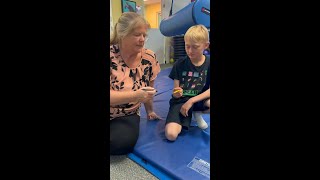
Mary Kostka breaks down in-hand manipulation, the one-handed fine motor skills behind pencil twirling and writing. She covers specific techniques like translation and palm-to-tips movements, explains why web space and trapezius muscles matter for grip stability, and walks through the anatomy of pencil grip challenges.
Are we ready? So there are. There are several skills that are called in hand manipulation skills. And what that means by in hand is. It's one handed. Okay. It's in your hand.
So like twirling a pencil, running your fingers without.
That is one of them. That is totally one of them. So the twirl is one of them. Can you do that? And you can.
There's one where there's a botanical. Well, is it called a botanical? My mom has one. She instead of just doing it with these like that, she would do like travel across the entire.
That is fingering a cool one. But I don't think I've ever done that one. I would say that's next level.
That's definitely very cool.
Okay, so that's like. We're kind of going for like the most advanced one first. So this one's called translation. And it just. We also call it inchworm. It's just bending and straightening so. So that you can shift your shift up and down. Okay. There's one that's just palm to the tips. So you go from palm and then you can get all the way out to the tips. Okay. And. Oh, keep it rolling. I gotta grab something for the next one. I forgot that we needed to.
See ya.
You can do something entertaining. Show your pencil grip while they're waiting, Mary. Because sometimes you used to have a lot of trouble with your pencil grip. I don't know if it's still the same an issue.
Yeah, that's good.
Yeah, that's good. One of the challenges for pencil grips is a lot of times people haven't developed their web space here. And that's why we love the trapeze for that. Because these muscles here actually are what you need for a good grip. That's why I like you guys to have the thumb around, because it makes you need these muscles to be strong, to be able to. You want this to be able to be a nice circle, to be able to hold. Okay. So another thing is hiding things under your pinky. Being able to separate the two sides of your hands. So there's a nerve that goes through these fingers and then the radial nerve and then the ulnar nerve, which is the one that you.
Isn't that basically the liver prosper thing?
Pretty much. When you get your funny bone right here, that's the ulnar nerve. And have you ever noticed it just makes these two numb?
Yeah.
And not the other ones. That's because it's the other nerve, but they actually both kind of go into the middle one. So that one's kind of special. But anyway, so advanced skills require you to be able to have a separation of the two sides of your hand. And this part of your hand is for stability. So like you'll notice like if you tune the radio or something, you kind of rest these fingers and then you do that. And when you. Same thing when you write whoops. You want to be able to give yourself stability and then mobility. So they've got two different jobs. So one of the ways we kind of see if you have the muscles for that is you pick things up and you put it under and so you're basically holding while you're moving.
So what about that? Does that have any like.
Well you could, you could be putting. You could also do it like this. You could, you could do this with coins, all kinds of things. But then you can also have it hiding under here and then you got to dig them out. Are you gonna hide it under two fingers? Bruce, Wanna try it? So you're gonna hide it under here, these two. And then one handed you gotta use these to get it out. So you kind of use your thumb to get over there and then you're gonna move it to there. So these are just some. And see if you can flip it around. There you go. But though all those skills that I just showed you, we need all of those to write. And that's why some kids will just like grab, grab it like this because they don't have the advanced to you know, two sides of the hand.
And also of other. I've seen tons of other kids do this which is like not really a proper way. Could give you a blister right here. But yeah, I don't think that this way is useful. Well, you used to also have your.
Pencil straight up and down. Yeah, well the thing is one of the problems is that we're putting pencils in kids hands too soon. And so they're going to do.