Sensory Hero App walk through
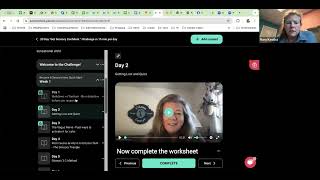
Mary Kostka walks through the Sensory Hero app for parents and teachers supporting kids with sensory challenges. The core offering is a 30-day "Get Sensory Confident" Challenge with daily lessons under 15 minutes covering vagus nerve activation, the "3C" method, sensory tools, and environment tips. You can try the first few days free, then choose lifetime purchase or monthly subscription.
Hey everyone, Mary Koska here and I am going to give you a quick walk through the Sensory Hero app, which was developed for parents, but it's also great for teachers and therapists helping children with sensory struggles help team the tantrums meltdowns and help calm them through their sensory struggles. So here you can see this is what the app looks like on your phone and this is the home page essentially. So it talks about what's included and it has, you know, the purchasing information and all of that. So that always stays as the homepage. Then where it says my stuff, that is where the different programs are. And right now the program that we have in it is the 30 day get sensory confident Challenge. And I'll go through that in a minute. The other thing on here is just a frequently asked question. So I'll come back back to that in a minute. But I want to show you that there's a community within the app and you can introduce yourself under newbies, celebrate your wins, ask the community a question, share tips and tricks, all of that. So going back to the my stuff. So when you click on the 30 day get sensory confident Challenge, you'll see that there is an introduction to the challenge. And by the way, the first few days are free and then you can just upgrade to pay for the app, but you can get in it and check it out. So there's an intro to the challenge and you'll see that for everything there is, there's video, there's on some of them, there's handouts, PDFs you can download, there's a little worksheet that's optional but it's a quick little thing to reinforce your learning and so that you can and you'll get emailed your answer. So if you deciding what you're going to apply, it really helps out. So I'm going to switch the view to the computer view next just because it'll be easier to kind of show you everything if I go to the computer view. So week one, well, I guess I should show you this, the breakdown here. So there's, there's 30 days of under 15 minutes of learning. So there, like I said, there'll be a video, there might be a handout, that sort of thing. So the first week is becoming a sensory hero. Quick start. So there's things to get you started right away and those things are going to include what's the difference between a meltdown and a tantrum, some tips to help you like getting low and quiet the vagus nerve, how to, how to activate the vagus nerve so they can be more, more calm. And I backed up to the wrong spot there really understanding the root causes, the underlying why the child might be behaving the way they are. An overview of the 3C method that we have here at Ohana. And so the three Cs are calming yourself so that you can co regulate. It's these kids are very overstimulating to us. So you really have to know how to take care of yourself, how to calm the environment and calm the child. And just right off the bat in that first week I give you some tips for when knows a trigger because most of our kids there's. It's a trigger and then day seven is celebrate. So in the first week of calm your self you're going to go through.
And you are going to list your sensory preferences, things that, things that you seek and things that you avoid so you understand your own sensory system. See where I was.
Here we go.
You're going to learn about the science of mirror neurons. So kids imitate us and they feed off of our energy. So you're going to learn about, about.
The neurology of it and then get.
That closed so it's a little easier to look.
We're going to talk about how to.
Protect your nervous system from overload because when we're on overload we're not going.
To be able to help our child as much.
And then we're going to talk about the zones of self regulation which I designed this whole thing based on what our parents here said they would like to have known while they were waiting as I really designed this initially for our huge wait list but it's also great for our current clients and really everybody. But they said to please talk about the zones of self regulation because they really love that tool. So there's information about that and how to get in the links to their website and everything. How to make your own sensory toolbox is in here. And then as you can see it's just lots of things and the sensory mismatch is a really big one because that's usually where the conflicts are. So it's when you and your spouse have different sensory systems, you and your child or the siblings. Week three is all about calming the environment. So we're going to talk about lighting, sounds, touch, how to make safe spaces. Just the environment really can trigger a lot with the environment with the child. Lighting is a huge one. So fighting sounds, visual clutter, tactile sensations, texture sense and like I said, how to create a Safe space, then.
How.
To calm your child.
So one of our really effective techniques that we teach is the brush and squish. So I actually teach you how to do it in here and how to do it in a way that is going to really help your child be calm. We have everything from the body socks to the galaxy light, all our top things that the kids really respond to well. So I talk about all of those things and then yeah, body sock, bubbles, straws, noise reduction headphones, we to blanket just all, all the, the top, most commonly effective tools that help our kids. But I go into explain how to use it, when to use it, how it works, all of that. And I also talk about compression clothing and weighted vests. And then I have a whole section on best ways to play for self regulation. There's an ebook in here. The best sports and activities for sensory kids. Which ones tend to be regulating, which ones tend to be dysregulating. So there's a whole, there's a whole ebook in here and an audio to that. Then I go into detail about the vestibular system, the proprioceptive system, these, these invisible sensory systems that are so important. Primitive reflexes and tips for going out and about. So that is it in a nutshell. And you can get it as, you can get it as a lifetime access for the app where they, you just get the videos and they're yours forever. Or you can pay monthly and cancel any time. You can go at your own pace. It's set up so you could do it in 15 minutes a day for 30 days. But if you want to binge watch and then not watch one day, you can do it however you like. And that's basically it. Loha.










