Alan Stein Jr. Shares the Key to Leading Through Life and Career Transitions
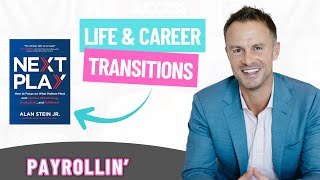
In this interview, keynote speaker and former elite‑athlete performance coach Alan Stein Jr. discusses how the "Next Play" mindset—originally taught by Coach K and later expanded by Stein—guides both micro‑level moments (e.g., a missed shot) and macro life transitions (career changes, divorce, empty‑nest, aging parents). He distinguishes two types of change—imposed (external events) and initiated (deliberate actions)—and urges leaders to accept reality, focus on what they can control, and deliberately choose their response. Stein introduces practical, in‑the‑moment frameworks he uses on stage: E + R = O (Event + Response = Outcome) and WIN (What’s Important Now), both of which reinforce a process‑first, outcome‑second philosophy. He shares his writing process, emphasizing co‑author partnerships, a disciplined note‑capture system, and selective use of AI as a supplemental tool rather than a replacement. The conversation also covers his transition from basketball performance coaching to corporate keynote speaking, the pivotal Walter Bond talk that sparked his speaking career, and his signature Kobe Bryant story that illustrates the power of mastering fundamentals. Stein explains how he iterates keynotes—testing stories, gathering peer feedback, filming performances, and refining over months—while acknowledging that some stories (e.g., the Las Vegas twins anecdote) initially flopped before finding their rhythm. Throughout, he offers advice for leaders and entrepreneurs navigating career upheavals, stressing proactive planning, negative visualization, and the importance of loving the work and the process.
Chapters
You know, I try and figure out if I want to be the best speaker, if I want to be the best father, if I want to be the best business owner, if I want to be the best son, like, what are the basic building blocks to excellence in each of those domains? And what are the fundamentals that I need to work towards mastery of during the unseen hours to give myself a fighting chance to be pretty good in those areas? And that's how I approach everything, right?
Like, you bring a guy like Alan in, you expect people to leave inspired, you expect people to be hanging on the edge of their seat, you expect them to be in their chair, not getting up, going to the bathroom, not going to get coffee. He does the job. Welcome to Payrollin', the show where you will learn how to operate and grow your payroll business from the most dynamic minds in the business. If your company offers payroll services, this is the podcast for you. And now, here's your host, Matt Vadie. Let's go. Alan, you spent more than 15 years training some of the most elite athletes on the planet, dudes like Kobe, Durant, Steph. At what point did you realize that some of the lessons you were teaching those guys applied in the business world and start to make that transition into business?
I think I just started to organically and naturally notice that the stuff that I was preaching and teaching on the court and in the weight room I was applying to other areas of my life. I mean, whether it was business or parenting or anything in between. So, I don't even think there was like an epiphanal moment. I just think I gradually just started to notice that. And when I decided to leave the basketball world to pursue corporate keynote speaking full-time, that's when I really started to drill down on what are the principles that have the highest utility that would apply to anywhere in life. That's one of the reasons I'm so passionate about what I do is the stuff that I, I get to preach and teach on stage and on page every single day, it applies everywhere. I mean, I, I use it in my life all of the time, which gives me even more confidence and optimism to share it when I'm working with groups.
Yeah, it's funny the way there's that intersection of all facets of life. I remember one time we had a new hire, we were going through our core values and we got done. She was an intern, she was like 21 years old, and we We got done with all the core values and she's like, "Those are just like life principles. That's how I should live my life right there." And I was like, "Yeah, that's kind of how this works, right?" I mean, work, play, family, faith, it all intertwines in those core principles and how we go about things, which is why I love the theme in your upcoming book, Next Play, where you talk about doing less but better. Talk to me about that concept, where that came from, and some of the core principles you talk about when you pull on that thread of less but better.
So, the first time I heard the concept Next Play was when I read Coach K's first book, Leading with the Heart. And I read that in the very early 2000s. And I remember reading it, that was one of the most influential books that I've ever read. It really shifted my perspective on leadership and building teams and core values. And even though I understood the concept and it made sense, I was a little slow to start applying it. It probably took close to 15 years later when I was working at DeMatha Catholic High School for a coach named Mike Jones, who was implementing NEXT Play in everything that he did on and off the court with the players and staff at DeMatha. So, it wasn't until I actually got to see it put into practice all of the time that it really started to resonate strongly. And then, I started to use it in my life. You know, even to this day when I'm giving a keynote, the concept of NEXT Play tends to be one of the stickiest things that I share. It's one of the most often brought up when I'm meeting with attendees after I speak is they're talking about how that can be a really helpful tool or helpful framework for what they do. And really the way Coach K originated it was more in the micro. It was more about being in the moment. It was more about don't worry about the play that just happened, focus on the play that's right in front of you right now. And in basketball, that's very easy to visualize. You know, you missed the shot, next play. You turn the ball over, next play. The referee doesn't call a foul, next play. And that's really how I kind of conceptualized it for many years was when something doesn't go the way that you prefer, quickly wipe the slate clean and move to the next play. But I've tried to expand on that definition because I think it has other applications. One, we tend to use it, or at least I've tended to use it when something, let's just say negative happens, when something happens that you didn't want to happen.. But I think it's equally important to have it when things go well. Another great basketball example is, you know, after you make a wide open 3-pointer, you don't need to dance around for 5 minutes. Like, you did your job, you made a shot, next play. You know, I mean, it's okay to feel good about it, but we don't need to have this big long celebration. So, I'm all about feeling the moment. I'm all about celebrating wins, the small and the large. But I also believe in then quickly turning the page to the next play. But that the one area that I'm really fascinated with is looking at Nexplay through a macro lens. And we all have different transitions in our lives. And you can even think, you know, you transition from elementary school to middle school to high school, and many times high school to college. You go from being unemployed to having your first job. You go from being single to being married or being married to then having kids. And then many times on the other end of that, case in point with myself, you go from being married to being divorced, or you go from working in one industry or at one job to a transition to a completely different industry and a different job. So, maybe you get let go, maybe your company gets acquired. You know, you go from having healthy parents to maybe having aging parents that aren't doing so well. Like, there's so many transitions in life, and I really try to apply NEXTPLAY through that lens. You know, if I've identified as an athlete my entire life, Well, when I graduated college and I was no longer a competitive athlete, I needed to reidentify and reacclimate. So, what was my next play going to be as a nonathlete? You know, what is my next play as someone who is divorced? What is my next play when I just got a new job? So, for me, it's not just looking at it in the micro, but it's looking at it in the big picture and how can I make sure that my next play is my best play.
Man, I love that. And so much to unpack there. First and foremost, if you haven't read Coach K's book and you're listening to this, I highly suggest it. Fantastic book. And if, you know, you're not a Duke fan— I'm not, I actually grew up a Tar Heel fan, strangely enough, in upstate New York, and then eventually became a Syracuse fan, and now I'm a Gamecock. And so that's a messy bloodline there. But, uh, the— that is just such a tremendous book, and you'll gain such an amount of respect for his leadership and understand where all of his success comes from, just again based on those simple principles that he follows as consistently and as disciplined as anybody who's ever done it. So really inspirational, a great book there. Now, in my research on this, Alan, now you and I have in the past and we've had great conversations and I've enjoyed getting to know you over the years. But, I found that you actually had a fourth book I didn't know about, about youth sports, being a youth sports parent, right? And, I'm in the throes of that right now. I'm a youth coach. I coach 12-year-old baseball. I coach some football. But, one of the things I find myself that I get a little bit out of shape with is that I coach these kids, we call flush it, right? So, we have them visualize like, "Alright, make the flush with your fingers, breathe in through your nose, out through your mouth, and move on to that next play, right?" And, just forget about it, and I don't apply it in any other area of my life as well as I should, right? I teach these kids all these great lessons, and then I walk off and I find myself going, man, I'm not following these great lessons I'm teaching these kids. So I'm trying to get a lot better about that. I found myself— my son and I are reading Leadership 101 by John Maxwell. We're listening to it on the way to school every day, and then we're talking about the lessons, and he's got a little assignment he does on his way into school, and then I'm doing the same thing, and I'm talking about how I applied it during the day. Because we don't want to just talk about it, we want to be about it, right? Like, that's what leadership is. It's not just talking about it, leading with, with Action. And you had something, and I'm going to butcher the language, I was doing a whole bunch of homework on you here leading up to this. Something about being rooted in reality is kind of your mindset. You just kind of talked about it there and 100% rooted in reality and just what life is. When you talk about that macro of all these phases of your life are going to change, all those things are— we're all going to go through the progression of life and it's going to be hard. There are going to be ups and downs. I always like to say when you zoom in on the graph and you get in tight, you see the real up and down of it. It goes from the bottom left to the top right. But when you really zoom in, you see that up and down. How do you help organizations and leaders manage change? How do you help them make those transitions in the moment?
Well, first and foremost, they have to recognize that change is inevitable. Nothing is ever going to be stagnant. And ultimately, there are two types of change. There's the change that is imposed upon us, and that is from outside circumstances and events. That might be the economic climate. That might be a pandemic, which obviously we all went through several years ago. That might be new government regulations. Depending on what industry you're in or what business you're in, there's always going to be a series of, of changes that are imposed upon you that you have no control over. Now, what you do have control over is your response to those changes. And I always try and encourage groups to, even if it's not your preference, and even if you don't like it, accept the reality of what is. It's not going to serve any purpose for you to try to buck against or resist the reality of what is, but be very thoughtful and intentional and purposeful in your responses to those things. So, even when things happen that are not your preference, that you don't like, what response can you have that will at least inch you just a little bit forward? So, on one half of the equation, we have imposed changes. Then, the other type of change is initiated change. And that is change that you and I and all of your listeners and viewers choose to make because we realize that what we've been doing isn't working as well as we'd like. So, we know that if we keep doing what we've been doing, we'll keep getting what we've been getting. So, if we don't like what we've been getting, we need to change what we've been doing. So, that's when someone says, you know, "Hey, I don't like the way I look or feel, so I'm going to make a change to my diet," or "I'm going to make a change to my workout regimen." You know, someone, you know, regardless of what it is or what area of life, that's just an easy example, but it's the changes that we initiate because people need to inherently know that if nothing changes, well, nothing changes. So, if you want something to change as far as your outputs and your results, then you need to change something as far as the inputs. And so, I encourage organizations and leaders to get comfortable being uncomfortable with both of those types of change, both the imposed and the initiated, because, you know, the imposed are going to happen consistently and the initiated are ones that we need to drive.
All right. So, you sound like a motivational speaker, which is kind of what you are, right? The, like, talk to me about that on the real though, man. I'm sitting here, I'm at my office right now. It's 2:43 on a Tuesday. I don't know if it's Tuesday or Wednesday, like, and everything's coming at me. I got texts coming in over here. I got chat coming in over here. I got somebody waiting at my door. I got an angry customer. I got a happy customer. I got another opportunity. How do I manage that stuff? What are some practical tools and tips I can literally package up and use in the moment, day to day?
Well, the first thing, and this is all advice that I tell myself, because please know that every single thing that I share with you on stage and on page, I'm not coming from a place of mastery. This is all stuff that I'm still really working on, and everything that you just mentioned, I face those exact same type of challenges. Now, what I will say with a huge smile is I'm getting better at handling these things today than I've been at any other previous time in my life. So I'm very grateful and proud of the direction that I'm going, but I still slip up and I still find myself struggling as well. For me, it all starts with, we kind of touched on it a moment ago, is an acceptance of reality, an acceptance of what is, and then quickly shift to focus on what do I have control over? And I'm a big believer that, that really the only things we have control over are the effort we choose to give and the attitude we choose to have. Now, mixed into attitude and effort is your response. As I already said, we are absolutely in control of our response to every situation. But to me, that's the most important part. And one of the words that gets thrown around a lot in today's day and age, very understandably, and I feel like you were kind of leading to it, is we constantly feel stressed. And for me, when I heard Eckhart Tolle, who's kind of a modern-day philosopher, when I heard his definition of stress, it changed everything for me. I heard several years ago, Eckhart Tolle said, stress is nothing more than our desire for things to be different than they are in the present moment. So that's all stress is. So stress is not actually caused by the angry customer that's waiting at your door right now. Stress is caused by your resistance to that and you wishing that there was not an angry customer at your door. That's where the stress is. If you learn to accept what is, and even if it's not your preference— I'm not delusional, I'm not saying that anyone would prefer to have an angry customer at their door— but if you accept that that's the reality And then you say, okay, what is the response that I can have that can make this situation better? You know, can I listen empathetically to whatever it is that they're angered about? Can I offer some compassion and some potential solutions to resolve whatever they're angry about? Like, if you lean into that, then what could have been a really ugly situation could actually turn out to be the exact opposite. In a few moments, you could actually convert that person to being one of the biggest evangelists of your business because you took the time to hear them, to listen, to empathize, to have compassion, and to resolve. So what could have been something really bad can actually turn into something really good. And the only thing that changed was your response to it. Now, obviously, what if you chose a different approach? What if you chose to challenge them? What if you chose to tell them that they're wrong? What if you chose to tell them, hey, this is the way we do our business. If you don't like it, take your business elsewhere. Well, you'd get a different result. In both cases though, the stimulus was the same. It's an angry customer, but your response and your acceptance of what is and your ability to control and regulate your attitude and effort completely changed the outcome. And all of us, even though we should be process-centered, we live in a very outcome-based society. You know, we measure wins and losses. We keep a scoreboard in every area of our life. So, if you want to start to improving the outputs and the outcomes and the results you get, then you need to start changing how you respond to situations and focusing on what you have control over. I love all that.
I got two acronyms I want to talk about, one that you know already. I know you know. And then one I'm not sure you've— you're dancing all over it, so I got to bring it up. But I'm going to— I'm going to plant the seed with you. This is both for you to think about and a tease for the audience of towards the end of the conversation. I want to hear your favorite story that you tell from stage that always hits. And I think I know one of the two it will be because I've heard them a couple of times and then one that just flopped. You tried this story a couple times on stage and you're like, dang, that just did not land and it stunk it up. So I want to hear the stinky one too. All right, but so the E R O, you ever hear this acronym before? Absolutely. All right, so you're all over it, 'cause this one I love. Event plus response equals outcome, right? So Alan's telling us all about like whatever happens in our life, our response to it is what dictates the outcome. For me, that's the really practical way. I've got that on so much stuff I own. If I was all tatted up like you, I can tell you E R O would be right here on my forearm, which for the record, you have the exact— like I always tell my wife, I'm like, I couldn't just get one tattoo. I'd have to have sleeves up and down my arms. It's the only way I'd roll. And then the other acronym, and look, I mean, you could do a whole sermon on E+R=O. I mean, you just kind of did there, right? Where it's like how we respond to things in the moment are going to dictate the outcomes, both micro and macro. I've had it happen early in my life. I had bad responses, got bad outcomes. It took me to be 28, 30 years old before I finally realized like, This is me, not the world. Like, you know, I'm the one who responded that way. It doesn't matter. I can't change the event. All I can change is how I respond to the event. And that's how I get those outcomes. But now the other one, I did not realize you were my brother in WIN, W-I-N. So where I met you ironically was through the IPPA, Independent Payroll Providers Association. And last year at the summit, I had a t-shirt on that said WIN. And I talked about what's important now on stage. Tell the people out there that weren't there, what's WIN? What's Important Now? Why is that important to you?
Yeah, I cannot remember when I first heard WIN. I mean, it's been well over a decade, but that's another one of those— it seems blatantly obvious, but when I heard it, it just hit me like a bolt of lightning. I actually think, if I'm not mistaken, it might have been Lou Holtz, the former Hall of Fame coach at Notre Dame, that might have said it first. At least that's where I had heard it from. And yeah, it stands for What's Important Now? Which the way I internalize that is at any given moment of any given day, and we all have some pretty chaotic days, you should be able to just take a breath and take a beat and take a pause and ask yourself, am I choosing to consciously focus on what I believe is most important in this moment? And as obvious as that may sound, we often allow things or people to steal our attention and we start directing our attention at something that we know is not near as important. You know, I'm having lunch with you, but I'm staring at memes on Instagram. I know consciously that my relationship with you is way more important than something that's on Instagram, but my behavior is not in alignment with that belief, not at least in that moment. So, I just want us to be very intentional with where we place our attention. And the other part about the, you know, E R O, and I believe I first heard that from Jack Canfield, where he wrote a book, the guy from Chicken Soup for the Soul.. And I think it was called The Success Principles. And that was the first time I had heard it. Once again, I don't know if he was the originator of it, but that's where I had first heard it. Changed everything for me as well, because what's most important about that equation is we have zero control over the event, the E. We have 100% control over the R, the response. And yet many people live their lives in the inverse. We're doing everything we can to try to wrestle with the event, to try to change the event, to try to will the event. And then blame, complain, and make excuses about the event when we have no control over it. And we just assume that our response needs to be dictated by emotion. See, most people tend to react instead of respond. And we all have visceral reactions. I mean, even to this day, no matter how much work I've done on myself, there are still things that will trigger my impatience, trigger my intolerance, you know, whether it's an inept cashier at Target or a traffic jam, like those things inherently get me riled up. And it takes practice and purposefulness and thoughtfulness for me to slow down and go, okay, I don't like the event, but what is a response that I can have that at least makes the current situation a little more tolerable? So, I'm getting better at that, but it's only because I finally realized I have no control over the E, I have 100% control over the R, And I've stopped flip-flopping those.
I buy Success Principles for everyone on my team. Behind the Bible, that is the number one book that has changed my life for the better. The vision exercises, E R O. I mean, it is just a fantastic, fantastic book. The guy just basically summarizes every like principle of high performers into one book and just does a really good job. It's a, now look, it's a big book. You're gonna take, it's gonna take you a while to read it and that's okay. But you definitely, if you've not read that one, highly, highly, highly suggest. We're giving everybody a book club. To walk away from here with, but which I see, of course, stacked up behind you, Next Play. First of all, why another book? Like, again, we talked about you've written a couple books before. Why this one? Why now?
Well, what makes this book a little unique is, so my first two books, Raise Your Game and Sustain Your Game, were your traditional nonfiction books. You know, they're 15 chapters, there's 75,000 words. And this book, I decided it's only about a third of the word count, a third of the page count, The physical size is actually smaller. I just wanted to take one concept and go really deep on that concept. My first two books were more of a collage on performance and leadership and culture and came at it from different angles. And in fact, I referenced Next Play in both of my previous books, but I really wanted to lift up the hood and go to work on this. And the main reason for writing this one now is for two reasons. One, as I'm approaching almost a decade in the keynote speaking space, as I mentioned, Next Play tends to be one of the stickiest concepts that most people talk about. I get DMs and emails and people come up after my talk and say, "Yeah, I need to apply Next Play," or, "I can't wait to share that with, you know, my son or daughter who plays high school sports." So, I realize that it's something that's piqued people's interest. But the other— and I know what an impact it's had in my life. But the other reason, as I mentioned before, now that I'm looking at it through a macro lens and I say, "All right, what are some of the upcoming transitions that I have in my life?" Well, one that will be happening in the next several years is I'll be an empty nester. I have 3 teenage kids. I have 15-year-old twin sons and a 13-year-old daughter. And in a blink of an eye, all 3 of them will be 18, out of the house and grown. And I'll have to kind of reacclimate and reidentify as now someone whose kids are grown. And what will my next play be then? Where will I live? What changes will I make when, when that happens? I mentioned also earlier about having parents that that aren't in great health. And unfortunately, at present, my parents are not in great health. And that's something that I'm wrestling with, like, what does that next play look like? First of all, what does that look like for them? Certainly while they're still here, but eventually, what's that next play going to look like for me as they have, you know, the ultimate transition? So these are all things that I'm just kind of wrestling in my mind. But at present, I'm divorced and single. I hope at some point I attract my person and that changes. If I decide to remarry, what's that next stage or that next play going to be in my life? So, these are all things that have got me thinking. So, that's really the impetus for the book was I hear a lot of people talking about it and it's something that I want to wrestle with on the macro.
Did you hear that, ladies? Yeah.
That was my unofficial push.
Yes. Both of the ladies who listen to the show. Well, we skew highly male. I know you'd be shocked to learn that. So, well, you know, you bring me— I'm having this conversation with people constantly right now. I'm no young buck myself here. I'm 46 years old. So, I've got a lot of friends that are in that age range, if not a few years older. And I'm starting— Guys are getting laid off in their 50s and they've been in corporate America for 20, 30 years and now they go, "What's my next play?" And it's a challenging time. And I tell people all the time, I'm like, "Maybe the only astute observation I ever had in my career." I'm not a particularly bright guy. And I know I don't need to tell you that. You've talked to me enough to know it. But when I was in my early 20s, I'm looking around the office, I get my first corporate job in America and I'm looking around going, "Yeah, where are all the dudes over 40 in this company?" There weren't too many of them. And as I started, this company particularly was ruthless about like, if you were 55 years old and they could get a 35-year-old to do your job for two-thirds, a half of what they paid you, you gone, man. And then I was at a big Fortune 500 company in the 2008 through 2012 crisis. And guess what? All those dudes in their 50s and 60s who'd been working there for years and were making high six figures and been there a long time, big golden handcuffs. Well, those golden handcuffs can get released by the other anytime. And so, these guys were being left out in the lurch and a lot of people right now looking for what is my next play? And this is a cycle that's continued all throughout history of like, what does technology look like for me in my 50s if I'm trying to get back out there and learn AI now? If I'm somebody who's 55 years old starting over, used to making a high income and now I'm trying to figure out where do I fit next? Am I going to go into entrepreneurship? Am I going to go into consulting? Am I going to take a haircut on my wage and go out there? You've got decisions to make, but I'll tell you if you're not there, you need to make sure that you're hedging your life for these things because inevitably, that next play is a-comin', my friend. And that's why, you know, listen, I'm bullish on entrepreneurship. I know it's not for everybody. Alan, obviously, you've taken your career into your own hands and went out there on your own, which I think is a good segue. First of all, tell me, before I go into your speaking career, I want to know about your writing process. Tell me a little bit about how you write, how often you write, what's that process look like for you?
Sure. And before I do that, I want to put a pin in that real quick, but you said something really important, and that is, We need to be prepared to make the change before we're forced to make the change. So, don't wait till someone hands you that pink slip for that to be the first time that you even think, "What's my next play going to be?" I want you to be able to prepare the same way a coaching staff would prepare for a game. And they, you know, they're going to study the film of what the other team does, their tendencies, their personnel. They're going to know what they do well. They're going to put together a game plan, but they're also going to come up with every type of contingency plan that if we try to run this play and it doesn't work, well, what are we going to pivot to? Or if they do this, how are we going to respond? So, I believe in being very proactive in figuring out what is that next play going to be and just make it a fun exercise. And for me, and I don't know if you want to call me optimistic or delusional, I'll take either one. But even though I'm almost 50 years old, I actually believe I'm only at the halftime of my life. I have full belief that I'm going to live another vivacious 50 years on this planet. So, I'm only at halftime. So, for me, I have learned so many lessons in the first 50, many of which through making my own boneheaded mistakes. So, now, I want to take all of those lessons and apply them to make sure my next 50 is my best 50. But in order to do that, I've got to be forward-thinking and I've got to think, "Well, what is my next play going to be?" As I mentioned, I've got next plays when I'm thinking as far as my parents and their health, my kids when they're going to fly the coop and leave the nest. You know, all of those types of things. So, I want folks to take control by being proactive and giving it some thought now and talk it over with your loved ones. You know, hey, what are we going to do if and when this happens? And then I believe that extra level of preparation will actually give you more confidence if and when any of those things happen. This is not about thinking, oh, the sky is falling and what happens if all of this bad stuff happens and catastrophizing No, it's just being proactive and saying, if some of these big changes were to occur, what's the next step or the next play for me or for us moving forward? Now, with that—
oh, go ahead. One quick thing on that, and this goes back to Stoicism, right? So, Stoics were huge on negative visualization, right? If I were to lose everything, you know, what would my life look like? And so, having that negative visualization, I think it's imperative and something people people don't do enough of. It's also if I'm tempted in a way, if I go to this party this afternoon and I don't eat ice cream and I know all they're gonna have there is a bunch of ice cream, pizza, and I'd like to take good care of my body, how am I gonna eat? What am I gonna eat before I go? What am I gonna eat when I'm there? Those sorts of things. Like if I'm tempted by a woman and I'm a married man, like how am I gonna overcome that, right? Like visualizing the things that could go wrong in your life and how you're gonna overcome them and visualizing when things inevitably do go wrong, how are you going to respond is something people just want to turn a blind eye to. And it's just, it's not rooted in realism, like you said earlier. And that's the same for business too. Like you've got to have an eye on, you know, again, I got, I kind of got a little jaded with that 2008 through 2012. Like that was a core moment in my career where all of a sudden the sky was falling and I was like, dude, does this happen all the time? And I learned, yeah, it does. It happens, you know, every 8 to 20 years depending on market cycles. And so it's like, yeah, you should be prepared for this stuff. And I think it's really helped me in business because I've always had one eye over my They're waiting for the other shoe to drop. But, you know, one last thing on visualization. I'm a big visualization guy, personal, professional, sports, all the above. But I heard a great quote the other day. I forget who the athlete was, but he said, everything happens twice. First in my mind and then in life. And I love that, man. I love that. I talk to founders in the payroll, HR, and accounting industry every single day. And they all tell me they need more of one thing. It's not more money. It's not more AI tools, it's more time. How do I get more time? Well, I hired a virtual assistant through OutsourceScale.com that helps me manage my inbox, manage my calendar, handles administrative tasks for me, helps support my marketing efforts, and much, much more. The cool thing about OutsourceScale is that they actually train the virtual assistants on the latest and greatest AI tools to make sure that they can only do that administrative work work for you that you need to get off your plate, but they're doing it in the most efficient and effective ways possible. I've been so happy with my assistant from Outsource Scale that I've actually added multiple other teammates to our other companies through them. Their pricing starts at only $7.99 a month, and they make it super easy to get a new teammate onboarded and part of your team very quickly. Check them out today at outsourcesscale.com. All right, now let's go on your writing process.
Sorry, brother. So for me, for all 3 books, I've chosen to hire a co-author and what I would call a writing partner. And that's really stemmed from having the self-awareness of knowing what things I'm pretty good at and what things I'm not very good at and what things I don't love to do. For me, I do not enjoy the research process. So one of the main things that I hire a writing partner for is to do some research. The other thing is I like having someone help be an outside voice to offer different perspectives on ideas and concepts that I almost have blinders on because it's the way that I see it. So, for example, you know, a writing partner will say, "Hey, Alan, you know, you keep saying the lesson from that story is this, but do you realize there's also an alternative lesson?" And they'll share that. And it's not anything that I'd even considered. Or it might be something where, Alan, you know, you're sharing this story and you have it in chapter 12, but I actually think it's a better fit for chapter 3, and here's why. So really, they're a sounding board to help me get out of my own head and see blind spots that I know I have. And then lastly, I also love having a writing partner to help hold me accountable to what needs to be done and when it needs to be done. I'm pretty diligent about getting stuff done, and I'm a pretty organized guy. But when it comes to writing, I can have just a million different ideas and I need someone to help me compartmentalize those. You know, I need to just do the brain dump of saying, here's every story and every lesson that I can conceive of when it comes to the next play and someone to help me put some guardrails up and decide where that needs to go. So for me, I like being kind of the idea person, the concept person, the story person, the emotion person, and then I have someone else that can rein all of that in. And that's really my process.. And I write when I'm feeling inspired. So, you know, now, which is somewhat contradictory to other areas of my life because like I don't only work out when I feel like working out, uh, because then I'd hardly ever work out. I work out because I've made the disciplined decision to prioritize my physical well-being. But writing's a little bit different for me because I don't, I don't identify as being an author. I identify as being a coach who is also a speaker, who has enough to say to put some of those words on page. So if I was— if I identified as an author, I would probably have a daily practice where I'm going to write for a couple hours every day regardless of how I feel. For me, that's not how I operate. When I'm feeling inspired and I'm feeling the, you know, energy of next play, I'll sit down and go heads down and I'll type for a couple hours sometimes, but I might only do that once a week. But then the writing partner will say, all right, well, I need you to come up with a story about this, or I need to learn the lesson on this. And then when I'm given the specific task, I can actually work on that. So for me, that's just the process that's worked well. You know, I also like to believe that if I'm growing at the rate I believe I should be growing and learning, then for me personally, about every 3 years, I feel like I should have enough to say that warrants writing a new book. Book. Now, I'll never force a book. If I don't have something that I believe would be worth someone's time to read, I won't just package some garbage and put it out there. But that's a challenge that I make to myself. And if for any reason I wake up 3 years after Next Play comes out and I ain't got nothing new to say, then I'm going to look in the mirror and ask why I'm not growing or developing at the rate that I believe that I should. So you can— well, I won't make any promises. You can almost count on that every 3 or 4 years I'll be putting out a new book. And I love that rhythm.
Wow. That's a really good thought process in terms of how much, how quickly we should be growing. Right. And there's the old phrase, if you're not growing, you're dying. Right. It's a little cliché, but it's true, man. It's true. Like, we should be looking to grow every single day. We should be able— there's so few. I think it's about 29,000 days the average person lives. Like, when you think about it in those terms of like, man, I just checked off one of 29,000. Was that worth it? Did I do something productive today? Did I make the most of my time here of that 1 of 29,000? That doesn't seem like a lot when you put it that way, man. Let me ask, so like the actual process though, are you typing into a Google Doc? Are you voice, uh, are you, is this person interviewing you, the co-author? Take me a level deeper on that.
It's a little bit of both. Um, so I, I do have somewhat of a writing system and process, uh, for my social media content. So for me, uh, and I really, I don't use any fancy apps or I don't use any fancy programs. I'm a Microsoft Word guy. And then I have the Notes section in my iPhone. And anytime I'm just navigating the world, if I see or hear something that sparks an idea that I think potentially could be a social media post that would add value to my following, then I'm going to take some notes in my phone. And I might write down a couple of words. I might write down, you know, 3 or 4 sentences, whatever it may be.. And then I have like this running list, and literally the title is just Social Media Content, of running stuff. And then at different times, sometimes it's while I'm sitting on a plane, sometimes it's, you know, I feel inspired while I'm on the couch watching Netflix, sometimes I'm actually in my office. But then I'll take those concepts and I'll start to expand on them, and I'll start to write even more. Now with the advent of, of, you know, OpenAI and ChatGPT, I use that as an assistance tool. Where I may say, you know, I might type in some prompts to help facilitate the writing process, or I do it in the other way where I actually write a post and I feed it to ChatGPT and ask ChatGPT to tighten it up a little bit, you know, remove 15% of the fluff that's unnecessary to actually make this a sharper post. So I'm all about using AI as a supplemental tool, and the reason I say supplemental is I want to continue to do the work myself. I did not use AI to write one word of the book Next Play. And that was very purposeful and intentional because it's not just about putting out a new book. It's about the man that I become through the process of writing the new book. To me, that's way more important than the book. If the goal was only to put out a book, I could put out a book a week using ChatGPT. I mean, I could literally say, hey, write, you know, 20,000 words about the concept of Next Play in the voice of Allen Stein Jr. and put it into 10 clean chapters. And it could do it like that. And funny enough, it'd probably be better than if I wrote it myself, but that's not the reason I'm doing it. I'm doing it because I want to become a better version of myself through the process. It's the same thing if we ever get to the point where I can hire an AI robot to do my push-ups for me. I'm not going to let them do that because then I won't get any stronger. I want to do my push-ups because I want to reap the benefit. I want to do the writing because I want to reap the benefit. So So for me, I want to embrace those tools because I think they're incredible and they're valuable, but I'm never going to outsource the heavy lifting, if you will. So I'm always writing stuff for social media, and I use that as kind of a test. So if I put out a post about looking at Next Play through this lens and it gets a lot of engagement, several comments, and people seem interested, then I go, oh, okay, that might be something to really tug on to put into the book.
Book.
So I'm constantly curating my social media and then using that as inspiration for future book ideas.
I love all that, man. So the— you know, I've literally stopped the lawnmower in the yard before, pulled the phone out, put a note down, and been like, ooh, there's a story right there, like, I've got to capture it down. And I think a lot of people struggle with that. Where do the ideas come from? You mentioned a great thing there, right? It's like, you know, the people that tell me, hey, I don't have any good ideas to write about, then they go into ChatGPT and then they spit out garbage. In the last week, I've had to let one person know, hey, you left the prompt at the beginning of that post that you just copied and pasted into your LinkedIn. It literally says, write me a post about XYZ. Here's a great post about it before their post. And I'm like, I just don't want you to be embarrassed that you saw that. I let another friend know, and I know he's offended. He might be listening right now, but he's like, I told him like, hey, these comments that your assistant is leaving in ChatGPT on people's LinkedIn posts are garbage. Like people are joking about it behind your back. Like you need to delete this stuff and write from yourself. It takes 30 seconds to write something. But if you do need to use ChatGPT for ideas, then it might give you an idea about a story that's actually happened to you. I just did it on Monday, great ideation session, gave me about 50 different concepts and I was like, oh yeah, yeah, yeah, I remember that one time I had this thing happen that was really similar to that. Let me take that and run with it. And I will just say, as a human being, I, I've often said if I could hire people based on one thing alone, well, number one trait being resourcefulness, but like a process itself, it would be writing. I would chat with you or email you over inter— or email an interview and see how you respond better, more so than communicating with you verbally. So much communication is written nowadays. Like, your writing matters. Copywriting is such an underrated skill in today's day and age. There's a really cool course I recommend people check out called Copy That, where you literally just handwrite really good pieces of copy. It gives you one, it says, all right, now you just literally copy it down by hand today. And then go write after you're done with that. And so what it does gets you in a neat habit of writing every day and seeing what good copy is. And it tells you why it's good copy and it talks to you about how copy should be arranged, the sort of inverted pyramid headline style stuff. But then it just gets you into the writing habit and clear writing is clear thinking. And so I love that, man. Really good stuff. All right, let's, we're getting close up on here on time. So one quick question on like measurement and outcome. So I'm a scoreboard driven guy. Now I grew up playing sports. I was in sales. Like I love a scoreboard. If you put scoreboard up, I'm gonna try to win the game, whatever it is. Not everybody operates that way. How do you motivate and sort of inspire and get people to think about things when they're not as outcome-driven that way, when they don't care about the score?
Well, I personally, I mean, I love outcomes as much as the next person, and I still consider myself an athlete and want to do everything I can to make sure that my team's score on the scoreboard when the final buzzer goes off is more than the other guys. But what I've learned is that the best way or the most effective and efficient way to increase the chance of that actually happening is to focus on the process, is to focus on what are the things that I need to do day by day. You know, in business, we call them KPIs. You know, what are the key performance indicators that if we focus on these handful of things religiously, we greatly increase the chance that we'll get the scoreboard to reflect in our favor. So, for me, if someone is not very outcome-driven, get them to fall in love or continue to fall in love with the process. Get them to learn to love the work. To me, that's kind of the secret to life is when you learn to love the work, then you've already won in advance. See, many of us that do get tethered to the outcomes, you know, you live and die by those. When you, when you get the outcome that you want and you win, you feel great. When you don't get the outcome you want and you lose, you feel awful. And, you know, that's a tough way to live. You know, I even— I made a post even earlier today, funny enough, about what basketball players need to learn how to do. And I say this with a smile and a wink for anyone that's listening just via audio: basketball players need to learn how to miss. And what I mean by that is, obviously, they don't want to miss, and they do everything in their training to make as many shots as they can. But even the best shooters in the world, even Stephen Curry, who will go down in history as the greatest shooter of all time, will have missed half of every shot he's ever taken when his career is over. So, the best in the world misses half of his shots. So, how does he behave when he misses? That's going to heavily influence his ability to make shots. If he can, promotion included, move to the next play and just say, "All right, I missed that shot, no big deal," and not drag the baggage of a missed shot into the next shot, well, that's gonna increase his ability to make shots in the future. So, for me, get people to learn how to love the work, get them to feel that they are doing something meaningful and significant, get them to want to make a contribution to the greater good, and get them to love the work and love the process. And then, the outcomes will be what the outcomes will be.
I love it. E R O, right there again, right? I mean, the stuff is so simple. And I think that's the one thing I loved about having you come and speak to our group. So, I had Alan come and speak to a group here in Columbia, a conference we throw. Called the Growth Summit. We had about 400 people there. They loved it. I mean, the ultimate compliment any speaker can get is people reaching out to me saying, "Hey, can you send me his contact information? We want to have him at an event. I mean, he's amazing." Does the job, right? Like, you bring a guy like Alan in, you expect people to leave inspired. You expect people to be hanging on the edge of their seat. You expect them to be in their chair, not getting up, going to the bathroom, not going to get coffee. He does the job, right? And so that's the ultimate compliment, I think, for any— Again, going back to the process? Do you do the job that you're hired to do? Right? So let's go into this. Two things. I'm going to come— I want to hear those stories. And I want to hear a little bit though before, how did you get into speaking? Like, what did that process actually look like? But before we do that, I'm going to remind people of the gentleman's agreement and the lady's understanding. Have you ever heard of the gentleman's agreement and the lady's understanding, Alan? No, I don't think so. Like, Alan and I are giving our time to you for free here. Like, I mean, this take, it's going to take us an hour out of our day. I got an editing team that's going to put this stuff together. They're going to put it on YouTube, they're going to put it on Spotify, they're going to put it on whatever you're listening to this on right now. Somebody put 5 to 10 hours of work into making that happen. It'll take you about 10 seconds to hit the like button, hit the subscribe button, hit the 5-star. That's all we ask. This is a gentleman's agreement. The ladies understanding. We do this for you. You do that for us. It's that simple. Just do it for us, people. And, you know, maybe go out and buy Alan's book that's about to launch here in early November. Next play, buy the book. I'm— I know I'm gonna buy it.
Um, another part of the gentleman's agreement and the ladies' understanding is a mantra that I live by, which is a candle loses nothing by lighting another candle. So after you've hit the like, after you've hit the subscribe, after you've left the rating and review, then also share the episode. If there was anything that we've said today that you found even remotely valuable, don't keep that to yourself. Share it with someone you care about. Share it with a family member, share it with a work colleague. You know, very parallel to that is another mantra I live by, which is a compliment unshared is an act of selfishness. If you have something nice to say to someone and you don't say it, you are being selfish. So, in that same vein, if we have said anything in the last 45 minutes that has been even remotely helpful, do not keep that to yourself, pay that forward to someone else. And when you can start to create that type of energy and momentum,, then you'll also find people will start sharing stuff with you. They'll start reaching out to you and say, hey, have you heard this? Or check this out. And now you've created this ecosystem where everyone's developing and getting better. So I love the Gentleman's Agreement and the women's understanding or ladies' understanding.
Well, and the way I put it to my son, our leadership lesson yesterday, I couldn't get the book to play for some reason on my phone. And I was like, all right, here's an easy one I saw from this weekend you can take. And I had to put it in his language. He's 12. I said, be a brother. Bro. Like, a bro doesn't wait back to get complimented. A bro steps up and compliments all the other bros and ladies around him. They talk about how great he played, how awesome she is at art, how wonderful— like, if you're the person dishing out the assists all day, inevitably people are going to gravitate around you. So be the bro. Lift everybody else up around you, right? And to your point, then your circle will get stronger, and then you'll ultimately elevate yourself by elevating others. So in the 12-year-old terminology, be a bro. Let's hear about this speaking career and how you got into it, and then I want to hear the story that always lands and the one that you couldn't get to land that you wanted to.
Sounds good. So in the early 2000s, when I was still working in the basketball performance space, I was doing an event for the NBA Players Association's Top 100 Camp, where the NBA would bring in the top 100 high school players in the country and allow them to be mentored and taught and coached by current and former NBA players. And while I was there as the performance coach, they brought in a motivational speaker named Walter Bond, who was a former NBA player. To his own admission, he only had a quick cup of coffee in the NBA, wasn't there very long, but was now a corporate keynote speaker. And I remember sitting there listening to Walter, and I was just mesmerized by him. He was charismatic, and he was funny, and he was charming, and he told great stories, but he also made me think. And then he got this room of alpha males literally to almost tear up because he was telling a very emotional story. So he took us on this roller coaster of emotions. And at the time, I don't even think I really realized that, that being a speaker could be a full-time job. I mean, yeah, of course, I knew of Tony Robbins and Brian Tracy and, you know, Zig Ziglar and some of the GOATs, but they were kind of on a Mount Rushmore. I didn't know that an everyday person could actually make a living, a full-time living being a speaker. So, that seed was planted that day. Now, I didn't want to do anything with it because I was loving the basketball training I was doing at the time, but if you fast forward 15 years, I started to feel burnt out in the basketball training space and I needed to make a change in my life. I needed to move to a next play. And that's when it hit me. That's when I needed to start to water and put some sunshine on the seed that Walter had planted and decided to take a leap and become a corporate keynote speaker. I'm so glad that I made that decision. It's one of the better ones that I've ever made because I love what I do and I'm so grateful for the opportunity to do it. But one of the major lessons to pull from that, now, I've sent met Walter. We've shared the stage before. I've told him this story, which means a lot to me, and I know means a lot to him. But one of the lessons that I hold very dear to my heart is, as a speaker, or as a podcast host, or as an author, you have no idea the impact you're making in most of the people that will hear your message. You know, yes, there's always a select few that will come up after and say thank you, but you're still planting seeds with other people. Like, Walter had no idea for 20 years that he planted a seed in me that would change the trajectory of my life forever. And I know he's proud of the ability to do that, and I'm forever grateful. So, I also remind myself that when I'm on a stage, whether it's at your event or someone else's and I'm speaking, I might say something that could change someone's life. And I take that very seriously, and I'm indebted with gratitude for an opportunity to do it. But that's, yeah, that's where that all started. And had Walter never spoken that day, I don't know that I'd be doing this today. It was cemented so strongly in me with such emotional connotation at the time that it left an impact that I felt 15 years later. Wow.
What a blessing that you can use your gifts to bless others. And to your point, like plant seeds in them of things you've learned and just be that conduit, man. It's such a cool thing for those all to come together. All right. So, let's hear those stories. Let's hear the one that always lands and the one that you just wish. I hope you have one for me, the one that just wish.
Well, and I'll use this word very loosely with air quotes and a huge smile and a wink. I think the story that I'm famous for— that's the joke because I certainly am not famous— but my opening story almost all of the time is about the first time I met Kobe Bryant. And the reason I start with that, certainly the name recognition of an icon like Kobe increases my credibility and gets people to lean in a little bit. But, but more importantly, was it really was something that, that fundamentally changed the way I saw the the world. And, you know, the short version of it— and I know you've heard this story several times— but I got to meet Kobe in 2007 and watch one of his early morning workouts. And at the time, he was the best player in the world, so I made the faulty assumption that he was going to be working on some, some pretty wild and crazy drills. And instead, he was just drilling down on the basic fundamentals over and over. And when I asked them why a player at his level would focus on the basics, he said something that really changed my perspective on everything. He said, "The reason I'm the best in the world is because I never get bored with the basics." And I've really tried to apply that lesson to every area of my life. You know, I try and figure out if I want to be the best speaker, if I want to be the best father, if I want to be the best business owner, if I want to be the best son, like, what are the basic building blocks to excellence in each of those domains? And what are the fundamentals that I need to work towards mastery of during the unseen hours? To give myself a fighting chance to be pretty good in those areas. And that's how I approach everything. And that story tends to do well. What was remarkable— and I've been telling that story for a decade— so what I find so interesting was, and it's hard to believe that this January will be 6 years since Kobe passed away, but when that happened in January of 2020, I cannot tell you how many emails, text messages, and DMs I received from people that I had no idea who they were. I had never met them, but they were saying something to the effect of, you know, "Alan, you spoke at an event we had 2 years ago. I'll never forget that Kobe story." So, people took the time to reach out to me to let me know that that story had an impact on their life. And, you know, unfortunately it took Kobe's passing to be the impetus for them to make that reach out. But that's when I knew that that story certainly had some legs. And it's one of my favorites to tell, even though I've told it thousands of times. Times, but it's one that ends up being one of the stickiest, and it really is the foundation to which everything else I preach and teach is built. So that one is a keeper. But what will be interesting is I'm designing right now and writing a brand new keynote to go with the new book, Next Play, and I have promised myself that it will be 60 minutes of brand new material. I am not bringing one syllable from my previous keynote into the new one, and I say that because I'm gonna have to retire the Kobe Bryant story because it's not going to make it into the one. Now, if someone hires me for the old talk, I'll still do it, but this new keynote is going to be all new material. So I'm— and it's equal parts exciting and exhilarating, but also a little bit nerve-wracking for me to, to let go of my babies and to let go of stories that I've been telling for a decade and really put myself out there and have the courage to try stuff that's brand new. But I'm kind of excited for that. I'm excited to be a rookie again. So that's the story that's worked.
So will you work through that material just real quick on that? Kind of like a standup does where it's like, you know, I'm going to— I'm working through my 60 minutes worth of material and, you know, the first 3 shows, I realize these 3 jokes just aren't hitting or I need to tweak them because clearly the punchline's not getting. And then kind of keep working through those. Is it an active process like that as you keep working through it?
Absolutely. So the current process is right now I'm in kind of outline outline, a skeleton of what I believe based on now 10 years of experience in the corporate speaking world of what I believe will work and what's aligned with the book. The next step will be I've got a few trusted colleagues that are also fellow speakers but also are familiar with me, familiar with what they believe I do well with my material. And I'll run some of the bits and things by them to just gauge their thoughts on it. You know, give me the thumbs up or the thumbs down. You know, what did you like, what should I move around. And then after that, I'll, I'll just have to debut it at some point. I am doing an official book launch event on December 10th here in the DC area, and at present, that will be the first time that I, I debut the new keynote. Now, if someone hires me to deliver it before December 10th, I'll certainly have it ready by then, but that'll probably be when the first time that I'll do it. But yes, it'll be a very iterative process. I'll certainly film the entire thing, and I'll go back and break it down, and I'll combine how I actually felt when I was delivering it on stage and how I felt the audience responded. Then I'll let my emotions subside, and I'll go back and watch it, the video, through a sterile lens and take notes. And then I'll figure out what things do I need to switch or iterate as I move forward. And, you know, for me, I will make sure that if someone's going to write me a big check to come speak for them, I'm not up there just willy-nilly just trying new stuff out. It's not an open mic night. I will do everything in my power to make sure it an incredibly compelling message. But I also know that it'll probably take at least 6 months of giving that talk regularly till it's kind of in its final form. It'll be in its larva stage up until then, and I'll still be moving some things around. I'll say what worked, what didn't, which kind of leads me to, you know, your question about what story didn't work. And I don't know that I've had an entire story that I would say has flopped. I've absolutely had some lines that have not worked, some things that I thought would elicit a laugh that didn't. I do tell a couple of stories, and I say this with a huge smile, I think I like them better than the audience does. Like, I think because the lesson from it is so powerful to me, and I try to convey that to the audience. And some audiences dig it, some don't. But I do know there was a story, and you heard me tell it, I told a story about bringing my twin sons to Las Vegas to me speak and that I look out in the audience and they're both basically asleep, not paying attention to anything that I'm saying. And the lesson of the story is to just remind yourself that no matter how important you think you are, trust me, it's not about you. There's someone out there that doesn't think you're that big of a deal. And that story, I've moved it around in my program. I've told it different ways. I've changed the timing. I've added things. That's one story in particular that it took me probably 6 or 7 gigs of iterations before I finally found it where it works. And now it works. I can almost bet you everything I own that I know exactly when I'm going to get a laugh and how big the laugh is going to be. But, but it wasn't always that easy. So yes, very similar to a stand-up comedian. You know, I— the first few times I told that story, it didn't land. Some of it was where I was telling it, some of it was how I was telling it. And that's okay for me, as long as I know in my heart that I'm doing everything to add value to the audience and to be in service of the audience, then I'm okay with things being a little bit messy until I can tighten them up. But one thing that I hold very near and dear is the respect I have for the audience's time and attention. And I will never just try and get up there and wing it, get up there and just be willy-nilly. Now, I give myself the freedom to be present and to try new things. And if I'm inspired in the moment, moment, maybe say a new line. I don't want to be robotic and I don't want to be formulaic, but for me, I show my respect to the audience through my discipline and my preparation. And I just know that no one is shooting 100% right out of the gate. I already know that the first time that I give the Next Play keynote on December 10th, it ain't gonna be perfect, but it will be the best that I'm capable of on December 10th. And people will know that I had rehearsed and practiced for the months leading up to and that's what's most important. But if you see me on December 10th and then you hire me on March 10th to give the talk to your company, it will have changed by then, and I can promise you that. But it will have changed for the better because I'll listen to the feedback.
Love it. Nobody will ever be disappointed if they come and see you speak or if they hire you to speak. This much I know, brother. Well, thank you so, so, so much for your time. Everybody make sure you follow Alan on LinkedIn and Twitter. Great follow, actionable nuggets every single day. Plus you can follow his journey on all around the world all the time. I'm always living vicariously through him on his flights, keeping up with his Js of the day. I always want to see what he's going to be wearing, the kicks he's going to be wearing. Dude rocks. I don't even know how he's got the budget for all these awesome shoes, man. But, and yeah, just listen. Thanks again, Alan. Hey everybody, ABV. I think one last acronym for you, always be valuable. Thanks for tuning in with Alan and I today. Have a blessed day, y'all. Thank you.










