How Can I Get My Team to Care About My Company Like I Do?
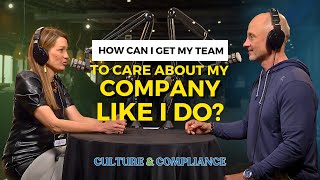
Ranan Pour, CEO of Forge Search, explains why your team won't care like you do and how to close the gap. Hire for shared mission, test cultural fit ruthlessly, and focus on ELF customers (Easy, Lucrative, Fun). Trust the process more than immediate results.
Chapters
How do you get your team to care as much as you do as the founder of the company? How do you grow a culture from scratch? The first, second, third, fourth hire. These are some of the hardest things we have to deal with as entrepreneurs. I was blessed and fortunate to sit down with Ranan Pour, the CEO of Forge Search in Greenville, South Carolina at our Growth Summit this year. And we covered those topics and more. She's been recruiting for more than 15 years and she has a ton of insight. She's somebody I'm really, really proud to call a friend that we finally met in person after years of knowing each other online and kind of swimming in the same lanes. It was wonderful to sit down with her and have this wide-ranging conversation about both entrepreneurship and culture and everything it takes to grow a team and a company that matters. I think you're going to really enjoy this conversation. Tune in till the end where we share some special things that will help you to grow a better culture for your team. Thanks for joining me on Culture and Compliance. My name is Matt Vaadi. I hope you enjoy this conversation. If you do, share it with somebody you care about. Have a blessed day. You've owned your own business for how many years now?
4 years almost. Crazy.
I know. Yeah. So you're coming right up on the pivotal 5 years. 80% of businesses don't make it past 5 years. You're past that. You're gonna cruise past that.
We're gonna get there.
What has been the biggest unforeseen struggle in your entrepreneurial journey so far?
Yeah, that's a great question. I think, you know, a lot of times we see the, the butterflies and sunshine. I think the hardest thing is really saying you know, you're building something from scratch and realizing that you're going to build up a team and they're amazing, but nobody is ever going to have that same kind of fire inside of you as the owner, right? So you've put your blood, sweat, tears, savings, all that kind of stuff into it. And so you, you know, have to also have that realistic expectation of your team to do obviously excellent work, which they all do, but then also you at the end of the day, you know, it's on your shoulders.
It's so funny because that's the number one question I'll get from a lot of clients on the HR side is, how do I get my people to care more? How do I get them to embrace it and love it way I do. And I'm like, you don't. It's not theirs. Like, they're, they're here to do their job and they're going to do a wonderful job, right? But they're not going to care the same way you or I do. It's just not that way, right? So what are some things— so how did you course correct after understanding that? What were some ways that you helped to, to make sure that you're there for your team, make sure that you're developing the culture, the type of place they want to work, while still understanding it's their job, it's not their livelihood the way it's our livelihood, right?
Well, and I think a lot of it was realizing, like, you know, hiring people that are motivated by the same mission and vision that you are. Right? So like back to that core, like what are we here for? And like what is our purpose and driver in what we do? And then when you can really clearly identify that, like some of the sessions this morning, it's like really clearly identify this is who we are and this is where we're headed. And then finding people who buy into that, those are going to be the people the most motivated to go the extra mile with your clients, to really kind of push things forward. But you know, that takes trial and error, right? You don't know that always the first time. That takes kind of like some trial and error of hiring and making those mistakes and thinking along those lines. I'm sure you've never made any mistakes with hiring.
Even a donkey can act like a thoroughbred for 3 interviews.
That's right.
That's right. That's always been the biggest thing. And I'd love to hear some of your tips on that is like, yeah, it's very easy to, you know, we add all of our core values into the interview process. We talk about them, we make sure that we're advocating for them. We make sure that we're asking questions around it. We're trying everything we can to get value and vision alignment throughout that process. But to your point, it doesn't always work. What are some of the ways that you've tried to make sure that you hit more than you miss?
Oh yeah, gosh, that's a great question. Go slow. Yeah, like don't move too fast. You know, every time I've moved fast, I've regretted it. I have your kind of unspoken rules that you don't tell the candidates about. No, that sounds horrible, like you're testing them, but you kind of are. Like, you want people who want to be there. So one of mine is I never hire anybody who doesn't follow up with a thank you note. Um, doesn't have to be handwritten, but they need to follow up and send me some. So, so I even kind of give a test to be like, hey, you know, follow up and let me know if you're interested in forward. I'm like, I'm giving you breadcrumbs here.
Um, and it is shocking how many people do not follow the breadcrumbs. It is. I just spoke to a college class last week and they were like, how do we get prepared for interviews? And I was like, oh, it's really, really simple. You prepare. Like, 90% of people that walk in for an interview are unprepared and they think that the preparation is, oh, I know my— I read my resume. Well, yeah, no crap, dude. You wrote your resume with your actions or with AI. Yeah, right.
Yeah.
But it's like, all you have to do is show up prepared, show up looking great, follow up after the fact, have great questions ready, and you're ahead of 80% of candidates, right? And I'm the same way as you. Preparation is my number, number one thing. My, my sort of Trojan horse on everything else is my favorite question to ask in the first interview every time is, what did you do to prepare for this interview? And to me, it tells me everything I need to know.
I know. Did you get a chance to look at our website?
Right.
Well, if you didn't have a chance, like, what's wrong? Yeah, but we also see that from our clients. Like, the clients, if they don't— you know, if a candidate doesn't research enough about the company to show they're interested, they'll almost always tell us and be like, hey, we're not interested in moving forward. And I get that. You want somebody who's bought in, right?
Right. We had an agency one time and a woman showed up for an interview for us that we had brought in through an agency, and she was like, what's this role again? Oh no. Yeah. And I was like, come on, man, I came out of the recruiting world. That's like the number one thing you're doing is locking them down for, hey, here's what the role is. I mean, they're practically giving you all the answers to the test if you want them, right? They'll have everything for you. And if you don't even know what role you're showing up for, dude, it's— uh, now to be fair, this was a pretty fun one. So at the time we had a 10 by 13 room that was our office, and we had 3 people in there, and 2 of those seats were folding camp chairs like you would bring to like a, your kid's baseball game.
So maybe she didn't want the job.
She thought maybe, you know, was she concerned about getting murdered in there? Possibly, um, and validly so in the terms of how it looked. But yeah, so maybe she didn't want it.
She was trying to get it, get a way out there. Yeah.
But, but that kind of goes back to like the less than glamorous piece of this whole thing, right? It's like that was our first office. I think it was $150 a month. It was a room in a building that was like somebody else's conference room that they weren't using. And they just were like, you want this? I was like, yeah, it's all I can afford. Let's do it. But what are some of those things you've had to do in these first 4 years to make this work? Like, what are some ways that you've cut costs, made, you know, just made sacrifices to make sure that this thing makes it past that 5-year mark like we've talked about?
Yeah, great question. So I was funny when we were talking about— I was talking about starting Forge, and I remember vividly I was standing in the kitchen with my husband. I was like stirring a pot of spaghetti, you know, and he said, how long are you going to give it? Like, how long are you going to give it till you essentially— before you quit? Because I don't, you know, I was like, well, I'm not going to do anything that fails, clearly. But, um, you know, and I remember saying— thinking— I said to him 6 months, but I remember in my head I was thinking 6 weeks. Like, if we don't have any revenue in by 6 weeks, like, I'm not gonna, you know No, I'm not going to invest in this, which looking back was so naive, right? You know, because you don't understand how complicated and hard the business world is. But we did a lot of things. I mean, we took our savings, right? We invested it in the savings, our savings into the company to start it. Um, we, same as you, we had like a little very ghetto-like type office. It's a little sketch there. Um, I was literally like painting some walls. That's okay. And then I remember, this is like the most vivid, we didn't have a like a kitchenette in the space or anything. So we had this water dispenser, so I would go to like Publix to get the 5-gallon jugs of water. Yeah. And I still remember, it was like one morning at 7:30, I'm in my heels and dressed like— and then I'm carrying down Main Street in Greenville this 5-gallon jug of water, and this homeless man is on the street there. He stopped, he's like, do you need any help?
You're like, I think I do, actually.
Well, you know, but you do that, and it is the blood, sweat, and tears, but Like nothing else compares to also that feeling of like when I walk in there today and I see these, you know, highly engaged, amazing team members where the company's been able to provide them with a way to make a difference in their lives and the lives of our candidates. And like, same thing with you guys and your clients, you know, it's like you see that and you're like, this is work that's worth doing, right? And this is why you get up and you do it again the next day and the next day and the next day.
Yeah, and it's funny because you watch the transformation over the years and, you know, we were bootstrap company to start. We've taken on rounds later, but, you know, from those first 8 years before we raised any money, it was, hey, you hit on it earlier, how much money do you need? Well, I always tell people, you know, whatever amount you've got budgeted, uh, that's your first smart number, then double it, then double it again, and maybe just double it one more time just to be safe. Because to your point, like, you think you're going to start making money in 6 weeks, like, yeah, you would be one of one, right? And then, you know, we had our first check in the door before we actually, you know, quote unquote started in that I was— I still had a job. I quit a month after I got that first check thinking that like, man, the world's about to explode. I just got a $300 check, right? So the floodgates are about to open. And then it was like crickets for a while, you know? And then the reality of the sales cycle started to set in and like, oh, people don't just buy right away when you walk in the door and. And then, you know, first year is this, second year is that, third year is that. And it takes a long time for that stuff to snowball for most of us.
When did you find that it started to compound?
Yeah. You know, about the time I found it started to compound was about 3 years in. And then immediately we lost our 3 biggest clients all in the source of a quarter. And we went from like, you know, riding high, finally cutting myself a paycheck after 3 years. And next thing you know, I'm looking there. I, I'll never forget it. I was, to your point, I'm in the bonus room at the house. That was the first office. I got my little kids down on the floor. This is 2017, so they're just a few years old at the time. And I'm going, they're going to know. They're, you know, I'm hoping they're not old enough to remember that I'm a failure because this business is about to go under. And so like, that's where I was at the end of 2017 because it just— we took such a huge step back. And then in 2018, it was like all the advice you read about and you heard today here at the Growth Summit in 2024 is like, you know, get focused, get rid of the services that aren't true and core to your offering. Stop chasing markets that aren't your ELF customers. We call them ELF customers— easy, lucrative, and fun. Yeah. And so once we finally got a little more focused, started to put the energy in the right places, then that's when it felt like the business takeoff. It wasn't necessarily a revenue thing. It was more of like, ooh, now we've got a product that a market is looking for and we're actually having success with them rather than trying to take anybody and everybody on every different service we offered. How about you?
Yeah, so I mean, I think the same thing, like staying in your swim lane. You know, we talk a lot about that— know your swim lane and stay in it— because this is where we're good. So we try to look at the data and say, okay, where are we consistently exceeding expectations, right, for our team and for our clients? Because that's the other part of it too, is like, if I don't keep my team happy, we don't— you know, I'm not gonna have any recruiters, you know. So that's a big piece of it. But, but honestly, like having that— okay, not being afraid to say no to the wrong client is just as important as saying yes to the right client. But I have felt like, I mean, we're, you know, we're still obviously a lot younger than, than you guys are, but I have felt like in this, like leading up to this fourth year, there does become like a stability to it of like, okay, we know what we're doing. You know, I don't wake up as often at 2 AM, right? Worried. I mean, sometimes I still do, but you know, it's not as often. And there is this kind of like, okay, we know what we're doing, we're good at it. Like the market has proven that we have— they have— there's a need that we're filling, right?
I hope, you know. Yeah, fingers crossed.
But, but you, you go with that and you're like, okay, so you have some groundedness there, which I think helps.
Well, and you talked about it earlier on stage, a delightful job, by the way. But you were talking about, you know, there's a time where it's so hard to get— we talked about the woman who came in that, that may or may not have thought that she was walking into, you know, potentially dangerous situation in my campground chairs.
But sounds like my first date with my husband.
But, you know, this one didn't go as well, it sounds like. So the So there comes a time where, yeah, finally people are, you know, just last week we had multiple clients that we turned down to work with us that were like, we just really want to find a way to work with you guys. And that's a 10-year-in-the-process sort of thing. But what a moment that was just to hear twice in a week, literally two accounts we turned away.
Why did you turn them away?
They just weren't a good fit. And so it's really important for us to know that, like, hey, who is a good fit? Who's a bad fit? And then, you know, hey, if these things change, then maybe you'll be a good fit customer for us. But just to hear that the market is telling them, hey, these people are fantastic to work with, you should be working with them. And then for us to understand, hey, we're not a great customer or we're not a great server for you, and here's why. Those are two great things to progress towards. And it took, you know, again, one of our friends out Myrtle Beach, Ray, always says, you know, I'm building a 10-year overnight success. And we're at 10 years right now. And so like, that's kind of my thing is like, yeah, I feel like we're still building that 10-year overnight success, right?
Like, and it's never— yeah, the blood, sweat, and tears, right?
Now we're going to cast the lot out another 10 years and pick it up from there. But yeah, so it's, it's never-ending. Uh, but I think one of the coolest things about a day like today is you talk about these full circle moments. So you are a person that I've met sort of online, right? We finally got the opportunity to meet, collaborate, and do this together. But so many of these people here I met cold calling when I first started, and some of them are my best friends. The biggest sponsor— most of the biggest sponsors on this board are— were all cold calls, either as an initial client or simply to sponsor this event, right? And so they think there's a lot to be said for just being willing and not, you know, letting go of some of your ego to make the calls, to do the things that a lot of people just aren't willing to. And that's why 80% of businesses end up in that graveyard, is because they're not willing to do the dirty, nasty stuff that it takes to grow a business.
Well, and even like in the keynote, like I thought Alan did an amazing job on that. Like the— it's, it's not being afraid, like he was talking about with the basketball, of like doing those basic shots over and over again. And I think sometimes, you know, I always think about— I just want to always stay humble and like never get above doing the grunt work, because that like the grunt work of what we do, you know, for you guys in your world is obviously like the HR compliance and all of it, like consulting with clients and all these pieces of it that we do. Like, that is what makes us excellent. And how can we teach our teams to be excellent if we're not staying really grounded in the basics of what we do? So that's— I mean, I always am like, you know, stay, stay grounded in that level of like being willing to refill the water, you know.
Right.
Yeah, maybe not my heels.
I cleaned our toilets last week, but the But I do think in your world it's so critical because it's like the fundamentals of hiring have not and will not change. They're the same as the fundamentals of sales, right? They have not and they will not change. But it's your willingness and ability to stick to the fundamentals and execute that will determine it. And again, to go back to that agency that sent me that individual that didn't know what job she was for, like they missed on the most fundamental basic steps of what I hire a recruiting agency for, right? That's to bring me talent. That is prepared and ready for the process and knows what, you know, they've, they've supposedly selected me the best of the group, and then they show me somebody who doesn't even know what the hell she's applying for. But anyhow, so what are some other things? Let's leave it here with, with one of your, you know, I'm sure you've got some pearls that you dropped all your friends that are just getting started. Like, what's one of those pearls of wisdom that you're constantly dropping on new founders?
Trust the process, you know, trust the process more than the results. Because I think if you know your process works and you're willing to commit to it, the results will vary. Like, sometimes you'll have that cold call you talked about and you'll get hung up on, right? And then sometimes it'll turn into like a great friend, client, you know, investor, whatever it might be.
Yeah.
But I think a willingness— and I always tell this to the team because, you know, they obviously like to make a placement and they're very incentivized to do that— but I'm like, we know our process works. Like, work the process. And as long as you're doing a good job of working the process, you have 110% of my full faith and support. And the same thing for every business is like, if you know your process works and you have the proof of that, don't get hung up in the intermediary, you know. Trust the end result will come.
Yeah, and I think it's the easiest thing I always equate it to is like, you wouldn't start your diet today and expect to lose 5 pounds today, right? Like, I mean, there's a process. You know diet and exercise is it, right? That's it. There's no, there's no secret, right? If you— for the body you want and the life you want as it relates physically, it's diet and exercise. And there's a process there, but it takes a lot of discipline, and most of us aren't cut out for that discipline. And if you're not, entrepreneurship's probably not—
I know.
For you, right?
People think it's easier than it is.
Yeah, I wish it was easier, but it is— there is no greater ride. I would not change it for anything in this world, and I'm so glad I get to meet amazing people like you as a result of this journey. And thank you so much for joining us today.
Thank you, thank you, appreciate it.










