How to Create an Awesome Workplace
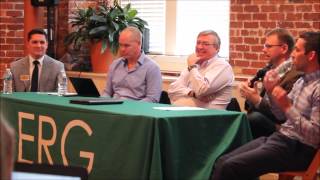
Business owners and HR leaders share how they build great workplaces. They hire slowly with multiple peer interviews, emphasize cultural fit, and focus on three things that attract talent: meaningful work, growth, and a good manager. One firm deliberately hires extra young staff to develop future middle managers.
Chapters
Section last night with, uh, Best Places was last night in Charlotte, so we actually went from being last year being the 41st best places to work out of 41 last year, so which means you're the worst best place to work, I guess. So we actually had number 3 this past year after sitting there watching, um, crawl space companies get voted higher than us. I was like gusting some raccoons and snakes in the office. Really interesting. So, um, but Matt kind of sums it up. I started the business, worked for a lot of different companies that just weren't fun, weren't the best place, so I wanted to set out and make a fun place to work. Fun fact, Matt has actually recruited him to come to work for one of those not so fun places to work years ago.
So those galvanizing experiences, you talk about raising your hand if you ever worked somewhere you didn't want to work.
Yeah, I think we both raised our hands for that one.
All right, awesome. Well, thank you guys so much. Hopefully the train of passing the mic will be smooth, more linear now. So I'm going to approach this— we talked earlier about the ways Gen Xers and Millennials think of linear thinking and nonlinear thinking. I'm a linear thinker, so in my mind I like to think about, okay, pre-hire determination. What does your organization look like? What's different? What's better? Or what's just really common that you do really well. I think that, you know, I anticipate we'll see a lot of things that these guys do that everybody does, they just do it better, right? So the first thing I want to get into is that process of hiring. So tell us a little bit about your hiring process, anything that you think might be unique to you, or just things that are maybe not unique to you that you guys just do a little bit better than others. Feel free to pass. —start here, or anybody has one to start? I'll start with some.
Not very long. I don't really think we do anything unique from a candidate acquisition, I guess, finding candidates. You know, we heavily use LinkedIn these days, so highly recommend that. It's about $10K. And the key to that is we now have ways to get passive candidates, those— and reach out to passive candidates, those people who aren't actively looking. Great job. Much like a recruiter would actually. But we definitely feel on the interview process, I mentioned we're a technology company, we do two pretty rigorous group interviews with a lot of our other tech people in the room. So if somebody says they know something on a resume, they're going to be asked if they know anything. And I find from other companies I've worked at, other companies I've talked to, people are hesitant to ask the hard questions. During interviews, but, you know, we have stories in the past of people leaving interviews crying because they couldn't answer questions on what they said they would do. So that's very important. I mean, we believe in the hire slow, fire fast philosophy and enablement of that. The key thing is peers, multiple people involved.
We're looking for culture, cultural fit.
We're looking for personalities in the interviews, but we're doing a deep dive on technical as well.
I don't know that we do anything really different from the way other CPA firms do it, but one of the things that works well for us is when we bring people in for interviews, it's a half a day. They, they talk with 5 or 6 people, and it's always a mix of owners and staff people, and we take the staff input to the hiring process very, very seriously. There have been plenty of occasions where the partners have been, "Yeah, yeah, this is a great person, let's hire him," and the staff has said, "I don't know that I really would want to work with this person," and we don't make the offer. So we involve them, but we listen to them. It's not just for show.
There's two things that we do at RiddleLink that are worth mentioning. Number one is that we recognize that why people like coming to a company are really— we identify three things. It's the opportunity to make a difference and to do something significant. It's not necessarily the perks, it's not necessarily the money, but it's the opportunity to do something they love, make a difference. It's the company that they're going to work for. What type of opportunities are there within the company to grow, for the company to grow, for themselves personally within the company? And then lastly, it's the person they're going to work for. So who's going to be their boss? Who's going to be their mentor?
Who's going to be the person they're going to learn from?
And it's really those 3 things. If you can, you can nail those things, you're going to get those passive people who aren't looking for jobs. The ones who are truly the A players who are going to make an incredible difference in your company, they're going to want to come work for you. And secondly, we have— we train our entire company on the hiring process. We train people how to interview. We train them— there's a RhythmLink way of hiring people, and we try to make that the same across the board. And I don't know if that's any different, but I do know that in my estimation— I haven't hired someone in a really long time now, so I don't know anymore— but my estimation, it seems to be working pretty well. So I think it's working. I got two co-workers here who are smiling, so I assume that means either I'm full of it or it is working. But I like the fact that there's a process now in place that I would We believe in it and I think it reflects our values.
With us, I don't think there's nothing unique either, but we kind of look at it— I don't think I've ever hired somebody and said, "Man, I hope this person's going to be successful and they're going to do a good job." I mean, you hire them because this person's going to make it work and blue skies, it's going to be great, business is going to be booming. So we make sure once we make that hire the onboarding, getting the tools and the training they need to be successful. Because if they don't have those, I mean, shame on you. I mean, you're filtered, you got into the water, I need to make you drink, you know. So, um, beyond our onboarding too, we made it really important to—
we have a higher lot of millennials.
We've got 6 people who work with us, and I'd say 55, more probably 25, 26 years old. So This is sometimes one of their first major jobs, so they don't know the difference between a great place to work and a not so great place to work. So we spend a lot of time with the onboarding and say, "Hey, we have these incentives, we have these perks, we have this." And then we follow up 30 days later and say, "Hey, do you understand everything? Do you have any questions? Does the job description match what we sold to you?" You know, so I really think it's the onboarding and the follow-up and the continual communication to make sure these people are getting what they need from us.
Us. You can keep it on there. Um, Matt, in your company, you hire as a process for your business. So they're a staffing company. So what they do is hiring for other companies, right? So they're finding the top talent. What have you implemented in your process as far as finding the people for other organizations that you think would be effective for small business owners to create their own process internally?
I guess the thing that I always look at is, you know, we just try to treat everybody the way they want to be treated. So, I mean, as a recruiter, you have a need, your client has a need, they need 10 electricians on a job in Colombia. Well, you're working on that deal, and you're making 20, 30, 50 phone calls to get these guys out there. These electricians, you hire them, vet them, put them out there, and then they're working, and then you feel like continue to feel their phone call to make sure they're happy, because if they're not happy, then, you know, it's kind of all pointless, you know.
The next question, what is the client's most used— since you said 55 or 60 people are millennials, but, uh, tell us a little bit about if you guys are thinking about or doing anything to account for the upcoming talent gap with related to the university workforce?
For us, our niche is hiring the kids out of school, teaching them exactly what they need. So I mean, I guess I'm the Generation Y guy, so hopefully they've got a bridge.
I would say that there's nothing that we're doing necessarily to address that issue right now. It is on the radar. It may be something that we need to put some type of a strategic plan in place to address. One way I think about how we address that is by making RiddleLink a great place to work. If you're going to do that, that gap becomes much easier to deal with because you're going to be in a place that more often than not people would rather work for.
That's a great question, and I don't know that we've thought a ton about that. Um, but lately I think part of our approach, and it's just a small piece of it, is we're probably hiring more young folks than we absolutely need. And we're hoping that if we hire 5 and we train them the way we train them, we'll hold on to a couple of them that will become the middle managers that we need. We'll be able to push them so that they can get to middle management despite being young. So it's, it's kind of playing the attrition, get higher, higher, more than we need, and trying to get them to where we need them to be later on. But it's not a perfect strategy, I don't think, but it's where we are.
The senior partners in my firm are in their 50s, so— Does that qualify as English? Yes. I'm a young English learner. But then there's 2 of us that are in our 40s, and then there's— we have one partner who just turned 30, early 30s. So we actually done that somewhat on purpose to stratify a little bit, and we have a little bit of a gap between the levels of partners. Partners. And, um, it's something that we definitely thought a lot about in terms of the older partners would like to retire at some point, so they need new partners coming behind them to take over. So that's been something we've done, in particular with our one young partner that we just brought on last year. We kind of fast-tracked him because he was really, really a superstar, and we wanted to make sure he held on to that., and so we were very generous with them and made sure that we gave them good benefits and kind of fast-tracked them through the process of being, you know, up through the ranks, and so that's something we have consciously thought about a little bit, but fortunately for us, you know, we've got several guys at the senior level, they'll be here for— they'll be around for another 10, 15 years probably, they're not going anywhere right away, but so we have some time to deal with it. But I think that's something we discussed a lot because we knew the older guys definitely want to retire at some point, and I'd like to retire too. You know, I have more time, but I have to think about it as well. So each generation has to kind of bring that down to the next level and say, okay, who do we have coming up behind us and who can take over the work that we have and we can build upon later as well.










