How to Sell n a Virtual World? - with Jeb Blount
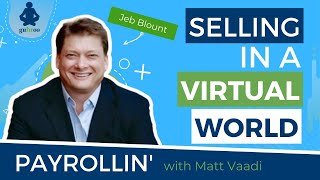
Jeb Blount breaks down the virtual sales playbook: reps need 2-4 new first-time visits daily, tracked through dials-to-closes ratios. He introduces Power Hour, 15-minute prospecting sprints, and blending, which picks the right channel (phone, video, email, social) for each buyer stage to maximize outcomes while minimizing effort.
Chapters
Welcome, Jeb. I wanted to wrap myself out here, right to start, in that I have had Fanatical Prospecting sitting in my queue on Audible for longer than I'd like to admit. And then when I knew we were going to be talking today, of course I had to read the book and make sure that I was up to snuff on everything that you're about. And I have to say that I was so impressed with how on point you are with your relationship to prospecting and just the way you call salespeople out that I was getting even more excited for this conversation. So thank you so much for joining. Joining me today. How are you today, sir?
I'm, I'm doing great. It's an absolute pleasure. And I'm truly grateful that you invited me onto the podcast.
Yeah. Great to have you. Great to have you. And I, like we talked about, let's just talk through a few things today. Mostly I'd like to get started by talking a little bit about prospecting. You've written 10 books. Now your most recent book is about virtual selling. How has prospecting changed, if at all, in this new virtual world?
Well, if you think about prospecting, prospecting really hasn't changed at all in the virtual world. I mean, look, for the people who prospected by foot, these are the salespeople who would drive around in their cars and go knock on business doors. It's probably changed a little bit, but that was never the best way of prospecting anyway. I mean, we were prospecting like that in 1970, and we were prospecting like that in the 1980s and even the 1990s, uh, but I wasn't. I, you know, I was, I was in a business-to-business sales role back in the early '90s, and I was carrying a briefcase and I was crushing it. And I did not prospect by foot. I didn't drive around. I picked up the phone and called people because all prospecting is, is asking for time. Right. And so it doesn't take that long to ask someone to give me 30 minutes. So I'd rather ask for the time on the telephone, which is more efficient, and then go there in my car and meet with them, which is more effective. Right. So if I did that, So for legions of salespeople who used driving around their car as an excuse— and oh, by the way, driving is not an accomplishment— but for the legions of people who did that, it did change because suddenly they were like, I got to call strangers on the telephone and I don't know how to do that and I don't want to do that. For other salespeople who always, you know, realize that prospecting by phone or by email or by social or by direct message or whatever you want to call it, and phone is like crazy these days because I can call you on just about any device that I have. Like, I mean, I'm on the phone, but like, if you're on Facebook, I can make a voice call for you, or I can call you on Instagram. Regardless, those salespeople didn't miss a beat, and prospecting didn't change. I mean, in the pandemic, the very first— I did a series of coronavirus talks. I did my very last one today, and the very first one I did a year ago, almost to the day, it was about prospecting. It was like, listen, you know, you're sitting around and you're wondering and worrying about whether or not you know, you should be, um, you know, you should be talking to people and on the phone or whatever the case is. Call them up, have a conversation with them, talk to them. The more people you talk with, the more you're going to sell. It's just that simple. So go call people. And if you're a business owner and you're not out there talking with people, your salespeople aren't talking to people, even the freaking secretary isn't talking to people, like, it's gonna hurt you. Prospecting is always on. That did not change. And the salespeople who have made it rain during the pandemic, and there are lots of them, They're the folks who figured that out really, really fast. Prospecting still matters. There's been a lot of other things that have changed. Prospecting has not. The only thing that may have happened to prospecting is it got easier because now we can use all of these different channels and buyers are willing to meet us there in order to connect so that we can have a conversation about something that is real in the sales process. Prospecting is asking for time. Sales is asking for commitments. They're not the same.
I love that. Well, you bring up a really good point in that now if I'm carrying a bag, I can fit that many more meetings into my week, right? Because these Zoom meetings can go for 30 minutes. I can have a quick buffer in between and go on to the next one. So, so even more time to fit into the schedule. And you mentioned something in your book, in Fanatical Prospecting— tremendous book, I highly recommend it to anybody out there who's interested in sales and wants to get better, wants to drive your top line. Is the bottom line. But you talk about sales being a mathematical formula. And for a dumb guy like me who stumbled into sales early in my career and did it, has done it for decades now, I've always loved that there is a playbook, right? Whenever I go to a company and I come in in a sales role, they hand me a book that says, hey, here's how many dials you should make, here's the type of people you should call, here's what you should do. And you talk a lot in your book about the people who don't follow the book, right? The people who don't follow the playbook, and they look at it and they go, nah, well, I, you know, I swear I made 50 calls yesterday, but it's not in the CRM, or I swear I did this, but oh geez, I really don't have any proof. Well, how can we as people— so a lot of people listening to this are not sales by trade and they're trying to grow their top line and they're trying to build out sales processes. Where do they start building out that playbook and how do I get it up and running if I'm somebody who's maybe not a sales professional but is trying to build out a sales team?
Well, from a, you know, from the playbook standpoint, if you're the business owner, so I'm a business owner and I started my company. And when I started my company, I was the chief owner. I was the CEO. I was like I got myself my own coffee, and I then I had to prospect, and then I had to do customer service, and then I had to do accounting, and then do everything, right? So wherever you are on the, on the, you know, on the spectrum, at some point, you had to go build your business. So you have a pretty good idea of what it takes in order to build the business. So, but an easy place to begin is for most B2B salespeople, and if you're calling businesses, so in this particular space, you're typically calling on businesses, You— most salespeople need 2 to 4 brand new meetings every single day. When I say brand new, you're not in my pipeline, you're not doing business with me. I'm engaging you in a conversation. That's what I need. Most B2B salespeople that have 2 a day are going to be doing just fine. So if I back into that, how many outbound prospecting calls do I need to make in order to score 2 qualified first-time visits? Right. And then all I got to do is look at it from there. So if I have, if I have 10 a week, about half of those will end up going to the next step. In the payroll space in particular, there's, you know, you've got some steps you have to jump through. So if someone wants to do business with you, you've got to collect a bunch of documents from them. You've got to pull all that bundle up, put it into a package. You got to come back and give them a, you know, a proposal for how you're going to manage their business. That's going to take some time. So there's some commitments that— and time commitments that they have to make. So in some cases, I go out and meet with you and I go, listen, the next step is I need to get all of this information on what you're currently doing in your payroll so that I can do this. And maybe that includes, your coverages, how you're managing your people, your 401. It could be a whole lot of things that you're gathering up. If they're not willing to do that, do that work and get you that information, they're probably not a good prospect for you. You need to move on. That's why you need 10. Now, in the pandemic, what's happened for exactly what you said, because in the past all of those first-time visits were I was getting in my car and driving out there, 2 was about all people could handle because you figure if I go on 10 and 5 of them end up going to the next step, that means that next week I've got those 5 plus my 10. Right. And then that 5, at least 2 of those are going to end up in the final proposal phase. So now I've got 17 meetings I've got to go on, plus my prospecting, and I get proposals. There was only so much salespeople could do because they're burning windshield time driving around. Well, it turns out that first-time visits are kind of short, and they're typically an opportunity for us to do a little discovery, a little bit of qualifying, and both the salesperson and the prospect are making a decision together whether or not it makes sense to go to the next step. Because they're short, salespeople can pack more of those meetings into virtual than they can in person. So what's happening is the smart salespeople, they're moving those, those first-time visits to virtual, and then they're investing their in-person time, their face-to-face time for discovery, for meeting the stakeholders, for, you know, really thinking about how they're going to be building out a case for how they can serve this business. So now they're stacking in 2, 4, 6, you know, first-time visits, which means they're selling a lot more. So if I'm a business owner and I've got a couple of salespeople and I'm in specifically in the payroll space, my prescription would be 2 to 4 first-time visits every single day for every salesperson. New, not, not follow-up meetings. I don't care about follow-up meetings. I care about first-time visits, which means that you're probably going to have to make somewhere between 25 and 100 outbound calls, which seems like a lot. But the truth is that you can do that in a couple of hours if you have a list and you're banging out the list. You can get lists from everywhere. So, and if you're getting some inbound leads and some referrals and some things like that, it gets a little bit easier. So every single day you've gotta have prospecting blocks in the morning that drive opportunities or first-time visits in the afternoon, which is typically the, the, the pace you're gonna be on. And then a certain number of those visits are gonna end up in discovery and what have you. And that's where we start coaching salespeople. Why first-time visits? First-time visits are my Moneyball. So if you ever saw the, the, the movie Moneyball, if you haven't seen it, go watch it again. I watched that movie the other night ago. I made my wife watch a baseball movie. She was so disgusted with me, but at the end she goes, that was a pretty good movie. Like, so if you, you know, you think about Moneyball, I love Moneyball because, you know, in Moneyball, Billy Beane figures out that on-base percentage really matters. So if I can get people on base, it doesn't make a difference if you're a total loser. If you can get on base more than someone else, if you're on base, you can score. So for me, those first-time visits, when you start looking at playbook, that's my Moneyball. So if, if they're getting first-time appointments and they're putting things into the pipe, we're very— we're much more likely, of course, to get a run, right? We're going to get— we're going to get a sale. And then as a business owner, if I got salespeople getting me into deals, I can help them the rest of the way. Like, if you're getting me in, then if you need help or you need coaching or I can work with you, we can get there. If you're not getting me into any meetings, like you're not doing any prospecting, we're all wasting our time. There's nothing I can do for you other than say, pick up the damn phone and call somebody, because that's the only coaching I can give you. But once you get that rhythm going and you start thinking, okay, if I'm, if I'm going on, say I'm, it's, it's taking me 100 dials, um, typically in the business, business to business space, somewhere between 30 and 50 dials, you're gonna get 2 appointments. So if it's gonna take you 100 dials to get 4 appointments, then you're gonna do 100 outbounds, however it looks, outbound looks, get 4 appointments. That's 16, 20 a week. If you do 20 a week, about half of those should move to the next step. And of the ones that move to the next step, about half of those are going to move into the proposal phase. And of the ones that go in the proposal phase, some percentage of those, usually about half, could be less, right, will go into a final. You've closed the deal. So just back into that number. And, and then, and then if you've got problems, like, for example, let's just say that you, you're, you've got salespeople and they're setting 20 new appointments every single week. And all 20 are moving to the next step, you got a problem, right? Because the salesperson is treating every one of those deals like the same. They're probably doing all the work. They're not doing good qualification, but that's okay. That's something you can coach. You can't coach empty pipeline. You can coach. I don't really have awareness when I got a deal. I don't have a deal, right? So if you've got them getting to you to the proposal stage or the business case stage and then they're not closing anything, that's something you can coach and work on. So, so what I would do as a business owner is I would look at those like raw numbers, look at your own data. And then finally, there's one more piece here, and it's especially for small and mid-sized businesses. In some cases, your salespeople can swamp you. So you, they can sell more clients than you can, you can onboard and still deliver a great customer experience. So in those cases, you may wanna look at maybe slow down the process or You know, ask your salespeople, you know, you have to do this carefully, do a little bit less or don't push them to do more, but have less salespeople, what have you. But you want to make sure that you're selling at a pace that your operations team can onboard and provide a customer experience, or you're going to have the problem of you need to go find more operations people so that you can onboard more customers and you can grow and scale. I like those problems as a business owner. So those are some things that you can work out, but I don't know if that answers your question, but that's a real big fast, talking really fast overview of building a playbook with numbers.
You can't be from Georgia talking that fast. No. So, so you hit on a lot of things there.
That I am, I am straight up from the piece. I grew up on a dirt road. I mean, red dirt road in the country Georgia. The problem is I traveled everywhere, so I've changed my dialect a little bit, talk a little bit faster so I can hang out with people in New Jersey. And not get kicked out of the state, but get me with a little bit of Jack Daniel's and maybe a couple of beers and you can't even understand me anymore. Like my wife and I are talking to each other, like we're speaking a different language and it's real slow and we, bad grammar. So.
I love it. I have the opposite. I had one of our sales team members tell me today that I went full Yankee on a call yesterday, which is where I grew up in New York. So you hit on a few things in there I want to touch on. And I want to make sure for those of you out there listening, that are independent owners who you are the only salesperson. Do not use any excuses of, oh, I can't hire a salesperson because it'll be too— I'll be too busy, it'll be too much. Like, get that out of your mind, right? Like, that is not a problem that you need to worry about in the short term. But it's interesting you mentioned something in there. I'll never forget my, my first year in this industry was 2009, right? So great year to go into the payroll space in a new territory. And I wound up making President's Club and I was the only one on our— on a team of people that the entire team made President's Club the year before. I broke the record for my territory. I was the only one that made club. And the main reason why was because I did exactly what you just described, and I set a whole bunch of appointments and I brought my manager on every one of them. And so I— and for me as a business owner of a payroll company, what I need to do is tell my new sales hires or my teammates that I bring in, hey, take advantage of me as you can, right? If you set these appointments, I will come to as many as I can possibly make and I will help you close these deals because it behooves both of us, right? And then they're going to learn from you as they listen. And that's how it worked out for me in the early days. So appointment setting, I love it.
Now let's jump, let's jump on that for a second. Yeah, please. But independent, let's just go back to independent. So you're an independent and you're like, I, you know, I can't hire a salesperson, I'll be too busy. So all of us who own businesses started at some point where it was just us. So I started this company, it was just me. The hardest hire you ever make is that very first salesperson. Like you've gotta make that leap. It's the only way you scale. But exactly what you said is how you do that. If I could bring someone on and they could just set appointments for me, like if they were just bringing me on and they, I was, I was mentoring along and then we went out together, I can teach them to do what I do. And if I can teach them to do what I do and they're selling it, then I can onboard it. Then I've got, I'm, I'm basically, I'm replacing myself as a salesperson. I'm still out closing deals and I'm still out supporting that, but I'm making them better. And it's one of the easiest ways to teach people. And then you can get another person, get another person, get another person on. You're never going to scale unless you get someone out there selling for you. So you have to do that. And one of the problems with independent owners is that you get into this problem where you're hanging out at the Feast or Famine amusement park riding on the desperation roller coaster, right? So, so you, your, your pipeline gets empty. You need some clients, right? So what do you do? You start banging the phones, you go out and knock on the streets, you go to Chamber of Commerce, you're hanging out at the local lunch, what do you call them? What's that club? Rotary Club. You're knocking on business doors, you're doing everything. And so suddenly, you got all of this work and then you quit prospecting. And so you start working, working, working, working, working on these things and some of them close, some of them don't close. You put a few in, you feel pretty good, you cash a few checks, you go home, You feel like a hero and then suddenly, boom, you're at the bottom of the roller coaster again, feeling like a total loser and you're having to build it all back up again. That sucks. Like that is the worst place to be as a business owner. And that is the, that is what the, like this, the life of so many independent business owners. Mm-hmm. Because, because you, everything depends on you. So part of like building the sales system and thinking about what your numbers and your playbook, as you said, is. Like start writing down what you're doing. And by the way, nobody's ever gonna do it as well as you do. Nobody, because nobody's ever gonna care like you do. But you gotta start writing it down, building it in, and then you're gonna have to make that leap at getting that person in. And here's the thing for most independent business owners that like nobody wants to hear this, but don't shoot the messenger. The first time you hire a salesperson, you're probably gonna fail. And the second time you hire a salesperson, you're probably gonna fail., and it's going to take 3 or 4 times of making some mistakes until you find the person that you totally connect with and it works. And then when you get that person in, for me it's Brooke, Brooke Holt, man, she is my anchor, my rock, my stake in the ground. But she is— we can build sales teams around her. Now she's my sales manager right now, she's, she's running my sales team. So, and she's on vacation next week, so I'm not exactly sure what I'm going to do. I'm— it's going to be awful. But you, you'll find that person, put a stake in the ground, and then they'll build around themselves. That's That's the art of like building and scaling your team. So I love what you said, like, don't let this be an excuse. Let this be an aspiration. Get that next salesperson in so you can scale your business and then you can give yourself more time.
Well, you hit on a really good point there as well. When you talk about those first couple of hires, you're going to be building the playbook alongside them. And don't, don't kid yourself thinking that you're going to hire somebody and they're going to come in and build your playbook for you. That's not going to happen. They can't carry a bag and build the plane at the same time.
It just doesn't work that way.
But You can certainly build it alongside them while you're training them, while you're coaching them up. It continues to improve, it continues to iterate. But yeah, you might as well set that first hire, that cash right on fire. And that's just gonna really— what it's gonna do is help you prioritize sales as a key element of your business and start to prioritize how you want the process to flow. And then from there, you can continue to build on it. And I think that's some great advice there. Now, you touched on something that was probably— it continues to be my biggest pet peeve with not only Sales professionals, business owners, everybody. And that's that, okay, I'm dragging people those 2 to 4 meetings a day through a process that they don't even want to be a part of, right? So I'm taking a suspect and I'm trying to turn them into a prospect, even though they've given me every clue under the sun that they're not really a prospect, but I'm so desperate to keep my pipe full that I'm just dragging them through. How do you coach reps or owners up to stop doing this?
Well, I think number one is that if you're truly setting appointments with people, then they're not going to meet with you unless there's some level of interest or there's something there. So what happens in most cases, and this is especially true in this particular space, is that we're not prospecting to set appointments. We're prospecting and trying to sell at the same time, right? So we get someone on the phone or we get— we walk into their business and then we're like, blah, blah, blah, blah, blah, blah, blah, blah. And they get rid of you. They go, okay. Like, send me some stuff, like, put some things together. And the salesperson's delusional. They think send me some stuff means I'm in the pipeline. And you get delusional when you're desperate. And you can't be delusional and successful at the same time. So you don't test engagement, you're not doing anything, they're not matching your effort, you're just doing all the work for them. That would be a big clue. So especially in the payroll space, it's really easy to set a bunch of appointments, but your deals are all still in the pipeline because there's this place at some point where the customer has got to give you information. Like, they got to go work. And it may be a lot of information, might be a little bit of information, but they got to give you something. So number 1, set appointments. Set appointments. Stop selling when you're prospecting. It's not the same thing. Ask for time. Get the appointment. If they agree to meet with you and then they show up at the meeting, that's one clue. Well, there's at least a little bit of engagement. Then you ask qualifying questions. You, you ask them— like, when I'm sitting in front of people, I say, listen, here's what the sales process is gonna look like. So after this meeting, I'm gonna do a little bit of discovery and see if you're even qualified or I'm even qualified to work with you, either way. And then from there, our next meeting is I wanna do a deep, deeper level discovery. I wanna understand more about your business, meet some of the key stakeholders. From there, this is the information that I'm gonna need from you in order to provide you with a proposal for how we would handle your payroll. That way you can make the right decision from your organization. And then once we get that proposal, we'll be looking to make a decision, you know, someplace in the, you know, in the proximity of delivering the proposal. Will that work for you? Person says yes. Okay, well, they made a commitment and people have a tendency to be consistent with the commitments. If I had the same conversation, you go, whoa, whoa, whoa, whoa, whoa. Like, how much work do I have to do? I don't feel comfortable giving you that information. I don't know. I don't this. Then it's telling you, you know, maybe they're just not that into me. I don't know. I say, well, here's the reason why I have to do this. I can't give you a quote until I have the information. And the last thing I want to do is just try to give you some, you know, quote out of a box. Like, we build the box around you. This is bespoke. This is really building a custom program for you. So that's why I need to do this. And they go, okay, well, okay, you're moving into the next step. So what you've got to be doing as a sales professional when you meet with people is you're asking them to step through a series of micro-commitments. And those commitments require them to do something. In most cases, when you're dragging people along, you're really not dragging them along, you're pushing a rope, right? So, so you're working really, really hard. You're doing all the work. They're doing nothing. And if they're not matching your effort, you got no chance of closing the deal. That's why I say there's a certain number of opportunities that are going to fall out, because as I meet with them and speak to them, I realize it's wrong timing for them. Or we're, you know, we need— we might need to wait another 3 months to get them engaged just because they're in the middle of finishing up building a building. Like, I'm, I'm adding office space next door to my business because we're expanding so rapidly. And if you came to me to ask me anything about, like, you know, that might get in the way of that, I'm going to go, look, this is just not the right time. Like, I can't make an investment because building supplies have gone up 180% and I got people that, you know, in my office that are— they're everywhere. And I got people working at home and I got no place to meet and I got to— like, I don't have time for this right now. That you would go, okay, well, maybe this is not the right time. I said, well, I'm really, really interested in talking with you. I go, great, let's find a better time. So the big thing is that you've got these checkpoints where you're testing engagement. And here are the 3 things that I want from you. Like, this is the thing I'm asking for. I want your time. I want your emotional engagement. So if I ask you questions, you lean forward and answer my questions. And I want action. So I want you to do stuff. So when I leave, you get something to do and I got something to do. And then we come back and meet together. And by the way, you never, ever, ever, ever, never, ever, ever— let me say this again— never, ever, ever leave a meeting with the prospect if you don't have a commitment for the next meeting on your calendar and on their calendar. The moment that you do that, you're back to pushing ropes.
Great stuff. It's like you were sitting in on our sales training this week, Jab, or maybe we took some of it from you, who knows. But, you know, one of the things you mentioned in there that I think is super critical and I want to underline and underscore, and that's you defined the end of the process where you're going to propose a solution and ask for their business, right? So you're asking for those micro-commitments, but you're also just saying, hey, if this makes business sense at the end of these meetings, I'm going to ask you to do business with me. Are you in a position to do so? Right. And so, and One thing that I will just phrase a little bit differently, but we emphasize that a lot, just being on, you know, people try to sell to you every day, people try to sell to me every day, people try to sell to all of us every day. And you have to be empathetic to the person on the other side of the table, other side of the phone, other side of the Zoom, whatever it is, because it's not always the right time. It could be the perfect fit, you could have the perfect solution for every problem they have, but they're building that office next door and it's just not the right time. And you have to empathize with where they're at in their, their life right now. So great stuff. Now you, you kind of brushed on this a moment in there, but I love it. It's a concept I heard you talk about when I saw you at the keynote at IPPA and I read it in your book. It's the Power Hour. Can you share with our audience a little bit about what the Power Hour is?
Yeah, I mean, all the Power Hour is, is taking prospecting and dialing it into high, high-intensity activity sprints. So, so for example, we'll go, okay, we're going to, we're going to do 50 dials in the next hour. So and we're going to all we're going to do is focus on that. There's no research. There are no cat videos. We're not getting up for coffee. We're not going to the bathroom. We're going to dial for an hour. Now, for a lot of people, an hour is a really long time. I mean, an hour goes by. So what I like to do is I break power hours into 15 minutes. So I do 15-minute high-activity sprints. We call them HIPs, high-intensity prospecting sprints. And we do 15 minutes, 15 dials, set 1 appointment. So we'll take an hour worth of prospecting, break it into 15-minute sprints. We'll typically run, say, a 5 to 10 minute break in between to update the CRM, any notes that we took, and then we go back at it again because anybody can be awesome for 15 minutes. I'll sometimes do it for 10 minutes, 10 dials, 10 minutes, 1 appointment. But we always have that goal. Now, some people will make 20 dials because they don't talk to anybody. All they get is voicemail. Some people will like the very first call, they're on the phone with a business owner and having, you know, a 30-minute conversation and it's all good. So because it turned into something good. But regardless, what we're doing is we're compressing our activity into a very small space. And we talk about this in, in the book, it's called Hortsman's Corollary to Parkinson's Law. Parkinson's Law basically describes how work has a tendency to expand into the time allotted for it. So if I said you got to do 50 outbound dials a day, it'll take you all day long to do them and you probably won't do them all. But if I say you got 15 minutes to make 15 dials, Horseman's Corollary says activity tends to contract into the time allotted as long as that time is reasonable. And that's reasonable. That's one dial a minute. And there's a goal attached to it. So, we can get a lot more done than other people. And by the way, it's a really easy way to run your whole life. Like if you break your entire day into these short activity sprints where you're concentrating your focus on only one thing without any other distractions, you'll be more productive than anyone around you. By 10, 20, even 30 times.
That's awesome. I love that. Love it. And I think you're absolutely right in that it's so much more applicable to things beyond sales.
Right.
And then, and so often these things are. Now I want to transition a little bit. One of the things I remember about your keynote is that you are a master storyteller. You told a story on stage that provided such detail that I can still in my mind picture what I think the prospect's facility looked like that you were in, which in in my opinion, is something that many of us are guilty of not doing, is adding in little details to allow people to put themselves into the story because we feel like we're speaking too much, right? And we don't want to be a blabbermouth sales rep. We don't want to dominate a conversation, which is obviously a great way to think, but also you might be leaving some things out which might not allow your prospect or your customer, whomever, to put themselves into the story. Talk to me a little bit about your philosophy at how storytelling helps sales, how you integrate it into your process, and what the value is for you.
Well, the thing about stories is stories are the way we communicate. So, I mean, some people communicate really long stories. I'm from Georgia, so you can tell that I tell really long stories and I talk fast. So, like, you know, that's what I do. And, but some people, you know, talk in short stories. But stories are the way that human beings communicate, and the reason that we tell stories to other people is So that we can be understood. So there's two things about stories. One, you want to get your prospect telling you stories so that you can learn their language, learn what's important to them, learn what's in there. But at the same time, stories activate our brain. There's a lot of science around this, a lot of data around how stories activate the brain. So I'll give you a couple of examples. So in one example, it's how I tell a story of recommendation. So when I'm giving my proposal to someone, I use the hero's journey, which is essentially Star Wars. Star Wars. If you ever watch Star Wars, right, what is Star Wars? Luke is in an untenable position on Tatooine, I think is the name of the, of the planet, and he meets old Ben Kenobi, right? So Ben Kenobi, an old Jedi, um, he mentors him and says, listen, this— you can do better than this. And Ben Kenobi shows him a better place. We could go here, a recommendation. And, and then they go, right? And then, and then Luke comes back and he's the hero, right? So what's going to happen. So I can't wait that long. I can't wait for my client to become a hero. So I need to tell them the story of how they're going to be a hero. So if I make a recommendation, I might make— it might sound like this. I might say, one of the things that we learned when we were talking with your team is that on the 1st and the 15th, it's just awful. Like, you, you have to— your whole business has to shut down while you're manually going through payroll. You're looking at these things. And in fact, you told us that you overpaid a couple of your people because somebody on your team who was reading the manual timesheets made a mistake and then you had to go back and get the money from them. And it was awful because they were so disappointed. And, and, and because it's such an administrative burden, it's really taking you away from doing the things that you love to do. So what I recommend is that instead of you doing your payroll, what we do is we not only automate some of the processes, But if we were to change the workflow to A, B, C, and D, that would relieve you and your team of that, of that burden, which would allow you to go focus on getting more clients. Now, what's going to happen is not only going to be getting more clients, but you're going to be happier. And one of the things that's going to happen for you is that instead of being tied to this office twice a month because you're a slave to payroll, you're going to be able to go to your lake house and enjoy the time there and spend time with your family. And it's going to take so much stress off your plate. Is that what you're looking for? That's the hero's journey. That was a story using their language. Now, I don't sell payroll, so I may be completely off on that story, so don't judge me on the story itself. But you can see what I did, right? I talk about their challenge, their problem, their issue, and their language. I make a recommendation for how I'm going to help them get to another place, right? Get off the planet. And then I give them a planned result. Here's where you're going to go. And so my proposal is essentially a story using the way that human beings operate on stories. Now, another way I tell stories is when, let's say I have a competitor who has either an advantage or they have a perceived advantage. One of the ways that I can take my competitor off at the knees is to tell a story that's unrelated to my competitor that helps illustrate why what my competitor is saying is just a bunch of BS. A great example, early in my career I sold rental uniform services. Not a very sexy product, but rental uniform services. So you're working in a plant, South Carolina was part of my territory. I was in Greenville, South Carolina. So I had Greenwood all the way to Asheville, North Carolina, and over to Gaffney, North Carolina. So I lived in that space. You know that space is full of plants. A lot of those plants are supporting things like the BMW plant up there. I've worked in a lot of like these small plants you find in a, you know, a nook, you know, back on some road someplace where, you know, there's 200 people working there all wearing uniforms. And the biggest issue with the uniform industry was that stuff went missing, right? So you've got, say, you know, you've got 5 changes, which meant that every day, you know, when you came in, you'd have a pair of pants and a pair of shirt. And then one day you wouldn't have that on. And the boss would go, why aren't you wearing your uniform today? And you'd go, well, the uniform people, you know, they shorted me. Biggest issue. So, so, like everybody's trying to figure it out. We would do like counts at the plant and check them all off. Most of the issue would be instead of turning in 5 pairs of pants and 5 shirts at the end of the week, you turn in 3 and 3, and so you've got 2 days where you don't have shirts and pants. Doesn't make a difference. The uniform company gets blamed. So one of my competitors came up with this really nifty thing, which was a barcode. So they were gonna put a barcode on the clothes, right? On the shirts and pants. And they had these really nice brochures, all those brochures where they would show like the perfect count. Everybody's smiling, you know, and the, the route guy's coming in and he's got the little thing and he's clicking on it. And, and then they're, they're counting 'em in the plant. They show the little eyes where the, where the clothes are in the plant. And they're like, they're showing all this stuff and like, and the people are like, they're buying this. They're like, you can eliminate this. And so I'm losing deal after deal after deal after deal. And I remember standing in front of my sales manager and saying, if we don't get barcodes, We're gonna go out of business. I was so frustrated because I was getting my butt handed to me by this uniform company who was just walking in and using this bright shiny thing. And then one day I'm at the grocery store and I'm checking out and my wife has sent me out to get some stuff and, uh, and we're, I'm, I'm there and I, I think I got a gallon of milk. And if you've ever gotten a gallon of milk, you know when milk is all sitting in there, other milk is getting on the milk. So I'm there at the checkout counter and all my stuff's there. And there's a bunch of people behind me and the, you know, the young lady who's checking me out, somebody in high school, gets the milk and puts it on the little reader, like, you know, the little square thing and it doesn't go. And then she does it again, doesn't go. And then she does it again, doesn't go. And then she does it again, doesn't go. And she goes, "Oh." And she has to get the thing, scrub the stuff off of it and then type the numbers into the cash register. All the people behind me are looking at me and they're like, they're Like, what's wrong with you? And I'm like, I'm just trying to buy some damn milk. So we get out of there and it was like, oh, that's it. So from then on, I would go in and the person would say, what about barcodes? I'll say, I'm really glad you asked that. I said, you ever been to a grocery store? And they go, yeah. And I said, you ever been to a grocery store and you've been buying things like milk or what have you and you get to the checkout counter and then they're trying to get the stuff through and it won't scan? And you can see them, they'll go, "Yeah." I said, "And then what happens?" It's like they got your stuff and then the person's going, "Boom, boom, boom," and it won't go. And you go, "Yeah." And there's people staring at you and they go, "Yeah." And they go, "Boom, boom, boom," and they go, "Yeah." And I said, and I said, and then finally they go, "Oh," and then they have to type it in. They go, "Yeah." I said, "Think about this. This is a dirty place. The reason you have people in uniform is you got grease and dust and iron and all kinds of crap around here, and you put them in uniforms to keep them safe." But think about that. It's dirty here. What color are barcodes? They go, "Well, white with black stripes." I said, "What do you think happens when you smudge dirt on the thing? Is it gonna be able to read?" They go, "Well, maybe. I mean, they got a gun." I said, "Well, they're telling you that they're gonna count the uniforms after they get clean. They're gonna have them running through the plant." And then I would have a video, and I would show them the video. I said, "This is what it looks like in a plant." And it shows clothes going ch-ch-ch-ch-ch-ch-ch-ch-ch, just like that. Right? And they go, they get a little eyeball. Now notice how these, these different pants, they're all, they're cattywonkered on these, on these little hangers. So it's just not perfect, it's going to miss it. And oh, by the way, if it's got smudges of grease on it, and you know grease doesn't come out of anything that's white, that's why you're wearing dark clothes. I said, they're never going to be able to read it. So it sounds like it's a really good thing, but you know from experience that barcodes don't always work. And they would go, I got it. And I never lost a deal to a barcode again. So that's telling a story, right? To show people something without telling them. I've got them into it. And if you think about that story, right? You're in the grocery store with me. I mean, in that moment, like you're thinking about it and you're probably thinking about the time this happened to you. Mm-hmm. Just like that. So it's simple stuff that allows you to illustrate to people different things. And so, You know, think about the time where, like, I just, you know, my own world with payroll. I'm so not the HR person and I don't care, but my wife is our CFO. So my life, right, my ability to go anywhere is tied to what day of the month it is, right? So was it this day or that day or this day? So like we did this for years and years and years and I got so frustrated with it. I'm like, we can't go anywhere. We can't do anything because I'm dealing with payroll. Why can't we do this? Like, you got a laptop and we have Wi-Fi other places. Why can't we do it like this? All of those years. And finally, you know, a payroll company came along and said, hey, I got a solution for you. And it freed her up. And but it was like, it was the process of all of the pain that we went to being a slave to how are we going to pay our people. If you can tell that story to a small business that is growing and really needs a solution, that they don't have a solution. I mean, that's a, that's a really big part of your prospect base. These, these businesses that are growing up, if you, if you can think about that, ask them questions about what's it like every single month? What do they go through? What do they like? What do they think about it? If you do that, you'll find out that payroll sucks. Like it's the worst part of their life. They don't want to do this anymore. So tell the story of another customer, another business who was in that same situation the same problem, same issue, and how when they put the solution in place, not only were they able to reduce their stress, but suddenly they were able to grow and scale faster because they had a better solution. And you have those stories to tell, but that's how you connect with people, with stories.
That's wonderful. And you use the key word so many times throughout there that I was just smiling, and that's you. I always used to write you at the top of my prospecting sheet before I would pick up the phone and make any dials because I wanted to make sure I was you phrasing and I was talking about the individual I was talking to because it's not about me. And that culminates in that hero's journey that you were talking about, right? You want to be the trusted guide, the person that helps them become the hero, which all starts with using language and vernacular and telling stories that are about them being the hero, not you being the hero, and not your, you know, your widget isn't better than everybody else's widget. And you're not, you know, you did a great job there of independently submarining your competition without necessarily going directly at them. So that was beautiful. And of course, you, right as I hoped you would, provided the level of detail that allowed all of us to put ourselves into that story and understand and empathize with it. So great stuff. I want to transition a little bit now. I know we're coming up close on time. So your most recent book, first of all, I have to ask, you cranked out Virtual Selling in 2020. It's 400 pages and you did it in what I would consider real time, right? Because you did it during the pandemic. So talk to me a little bit, first of all, as a writer myself, how— what is your writing process? How do you— you've written 10 books now. And so I'm in the process of writing my second one. So this question is a little bit selfish, but talk to me about your writing process and how you go about that.
So you're behind. I'm up to 13 books now. 13 books. Yeah.
See, I thought I saw 13 this morning and then your website or somewhere on your website said 10.
It does. We can't even keep up with it. I mean, I released 2 books last year. I got another book coming out, which is written in July. So we count that number 13.
I knew it was 13.
So I'll give you the quick story of virtual selling. So I started writing Virtual Selling a year ago today. So that's when it started. I I jumped out on the 17th of March. I jumped out of the shower, called my publisher, said, I've had this idea in the shower, virtual selling. We need to write the book, but we need to do it in 60 days. At the time, I thought the pandemic would be over by the end of June, like everybody else, right? So I was thinking, this is gonna be quick. So I need to move fast. So I said, we need to have this done by the end of June. We need to move this really, really quickly. Are you in? Now you can imagine calling a New York publisher and saying, I'm gonna publish a book in 60 days. That's not how it works. Right? It's 2 years, not 60 days. But Shannon Vargo, who's my publisher, who's my— or the vice president of all kinds of crazy stuff over at Wiley, she said, "I'm in." So, she had the courage to say, "Let's do it." So, 2 days later, I had a contract and the COVID was on Amazon. And we wrote that book in 60 days. So, we flipped that book around and wrote a 400-page book, which tells you what you're possible— what's capable of doing if you decide to do it. So, I had two things going for me. Prior to that, I was on the road all the time. So, I traveled like— I spent 6 years consecutively where I did more than 300 nights on the road. And although I was riding on airplanes, I was still choppy and it was still hard to get just, you know, pure time for like deep work. Well, I was able to because all of a sudden I got off airplanes and everything went virtual. I had a little bit of space before my life just got turned upside down because now I'm on camera all day long. But before then, we had a little bit of space. So I really did have some space to write, and it was just a matter of like, I went up to my lake house and I just, I started writing. Like, in my— the way I write is I just start writing. I don't, I don't really have anything. Like, I'll lay out some chapters and things like that, but I started writing. And what— where I originally began, you know, when I started writing the book was I was— it was all going to be video-centric. And then I got about 4 days into writing and I went, this is way bigger than this. Like, something inside me said This, this is bigger than people hopping on a video call. This is a change in the way we're going to be doing things. So that's how it ended up being a 400-page book. It is the longest book that I've ever written. And, uh, and, and it got, um, I think we, I think we were, we won, or we were, we were in the either the top 3 or something like that. I'm not sure exactly what the award is, but it was a, it was an outstanding work of literature this year. This book that I wrote in 60 days. Now, I wrote Sales EQ over the course of 2 years and almost killed myself doing it. And I— and, and, you know, it's not an outstanding work of literature, but that particular book, it just tells you you can do that. I don't have a writing process. My writing process is random. It's a grind. It's probably— if I got some coaching, I could probably do it better. But I mean, I'm in the— I mean, like, last weekend I wrote for 2 full days and rearranged like two parts of a book and channel chapters and all kinds of stuff because I didn't like them. It's the more I write and get into the book, the more I can begin to shape a book and arrange the book. But, but there's one thing that I do that I think is probably the, like, the core of it is I shape books in editing. So I write, I get stuff on, and then it's like taking a, a, a block of stone and chiseling it out until you have a Michelangelo, like, that's what I do. So the work, the real work on a book is done in editing, not in the writing.
I completely understand that. And for context, for those of you listening that have never written a book, which is probably a lot of folks, which I'd encourage you to do, it's definitely an interesting exercise for sure. In my world, it took me a year and a half to write a 200-page book. I would block 30 minutes a day in the morning, every morning from 8 to 8:30. I continue to write now that same block. I just left it there. I just started another book, but yeah, it took me a year and a half to write a 200-page book. So cranking out a 400-page book in 60 days is insane. That's amazing. Well, before we let go here, why don't you share a couple of the nuggets from Virtual Selling? I wanted to spend more time on this, but I wanna be conscious of your time as well. I know you got some great nuggets in there. What are some things that people can do to adjust? What are some of the biggest things that we need to be conscious of as we're trying to sell in this new environment?
Well, I think that the one thing that we're, we, we, we knew it then, but now the data's coming in that buyers have shifted. So buyers are much more comfortable working with you in a virtual environment. McKinsey just released a report on how B2B sales has changed, a global survey, which was a really, really tight report. I, I love it. I think a lot of these things are like statistical and you can go anywhere. This is pretty good information. It said that 71% of buyers are more comfortable having virtual interactions at the top of the sales funnel. So when they're evaluating a new vendor, they prefer virtual than being in person. That makes a lot of sense, right? Because it's easier for them and it's less friction. 77% of buyers said that when they already have a relationship with a company or a salesperson, they prefer virtual. So 76% of buyers said that if they have a choice between the phone and video, they prefer video. Now, if you ask salespeople, salespeople, um, nobody wants to be on video, but that's really all about the salesperson, not about the buyer. So what, what if we just think about that for a second? What's, what they're telling us is that people, buyers, everyone has changed forever. Even in my business. And I've been, we've been selling virtual since we started the company back in the Great Recession in 2007. We, we have basically been all virtual. I mean, we've been, we don't like get on airplanes or get in cars and go sell stuff. And we have, but we mostly sell through a virtual channel. Prior to the pandemic, that meant that about 80% of our sales calls were by phone. After the pandemic, 95% are video. So we've seen that shift. So the biggest thing for us to recognize is that what we just went through was transformational change. And that means that it's going to stick around forever. When there's transformational change, it's forever. It was like after 9/11, there was transformational change in the way that we view security in airports. Sports, for example. So we're— we— this is, this is a shift that is, that is not going to go back. So if you're wishing and hoping like a wishbone that it's going to go back, I got news for you. Not going to happen. So buyers have changed. And what, what virtual has done for us is said to everyone, like, we can be more efficient. We can, we can use different channels. We now have a blended approach to communicating with people that we just didn't have before. Not because it wasn't there, because, because all the technology that we needed to to merge into a virtual society was already there. We just didn't know that we could do it. So, we thought that like we thought that getting on an airplane and spending 311 nights in a hotel room was the only way to go about delivering training and giving keynote speeches. And it turns out I don't have to do that anymore. Yesterday morning, I gave a keynote to 2,700 people from here. Now, not this studio. I have a studio across the hall that it's a keynote studio. But think about that. I mean, before, that would have been getting on an airplane, flying in, meeting people, all the stuff that goes with that full day. Even though you're doing an hour, you're going to be there for a full day. Then the next day going 3 days in order to do that. I didn't have to do that. So that's— we just have a shift right now in, you know, in the way that we're doing things. That doesn't mean that we're not going to be in person because we are, because in person is the best way for human beings to communicate. But you and I are on video right now. I'm looking you dead slap in the eyes. I might as well just be there with you. But I like Augusta a whole lot more than I like Columbia. I'm not saying anything about Columbia. It's the hottest place in the world, right? But, you know, but I don't have to do that. Now, that doesn't mean that we couldn't meet in person. We probably should meet in person. It just means that we didn't have to stop everything in order to have this conversation. You're gonna get off this call, you're probably gonna go have yourself a nice big old steak and and have a nice big old glass of scotch or a glass of wine or something fun. Like, I don't know what you're going to have, maybe a Fanta orange drink.
We're going with IPA tonight to watch some basketball. It's March Madness for those who are listening to this 2 years later.
There you go. I want to have a good glass of wine. But the point is, we didn't have to do anything. So, that's what's changed. So, what everybody needs to get right now is a concept called blending. What blending is, and pay attention because this is the future of business and sales. Blending is choosing the communication channel that meets your buyer where they are at any given spot in the sales process and the account management process that gives you the highest probability of getting the sales outcome that you desire at the lowest cost of time, energy, and money. That's blending. This is the formula for sales acceleration and revenue acceleration for the future. Choose the channel that gives you the highest probability of getting to the outcome that you desire at the lowest cost of time, energy, and money. And the beautiful thing is we have lots of channels and we're all used to using them. So that's the future and, and what Virtual Selling does. And, and I, I recommend that you read it. It's been an international blockbuster for me personally. It's just been a, a great book. But when I wrote it, when I first started writing, I thought it was just going to be for the pandemic and and I'm so glad that I built it into 400 Pages because it's a manual for how you're going to conduct business development and into the future.
Well, I'm definitely going to read the book. I'm excited. I love your other books that I've read. I'm really grateful that you spent this time with me today. For those of you that have not engaged with Jeb's content in the past, anything you can consume, check it out. Amazing keynote speaker, one of the more memorable speeches. I went into it not knowing a lot about Jeb. Just left the room awed with everything that he brought to the table, his storytelling ability, the lessons that he taught the people there. You've heard today, I mean, nobody knows sales like Jab. He's cut from a similar cloth as me and he knows what it takes. It's not a game for the weak of heart. I loved in your book, actually, you had mentioned something about people who had, what's it called? Call fatigue, not call fatigue. What's it called when they don't want to pick up the phone?
Yeah. Well, yeah, people have call reluctance.
Call reluctance, right? And it was like, listen, you don't have call reluctance. You're just in the wrong line of work. And I love that because it's not for everybody, right? So, um, but if you are a business owner, guess what? It's a big part of what you're going to have to do. So, uh, no more excuses. Get out there and make things happen. And I do also— I always like to give a little call to action here at the end, Jeff, because you are a content creator of the highest form, right? We got 13 books, we got international bestsellers, we got keynotes, we got everything, you know, consistent podcasts, blogs, everything you can imagine. I'm always trying to encourage people to create more, to get out in front of their target audience. What encouraging words do you have for our audience today as a parting thought?
Well, I think as business owners, what you said about creating more content, getting in front of your audience, I think it's going to be super important. What I would say is, you said, "I spend 30 minutes every single day building it." That's what you got to do. You say, "I'm going to create a little bit of content every day." It's tough. It is hard to keep up with the beast that is social media, in particular, in creating content. It's difficult, but if you just think about it from a business development standpoint, when you create original content and you get it on your website, you're going to tap into Google, which means that you're going to get a higher, higher search engine optimization. And if you, if you're using a WordPress site or anything like that, that's really easy to plug in. Like I would choose Yoast. I think that's probably the easiest plugin for you. So you can take each of your blogs and you can drop them in there and you can, you can optimize those blogs and optimize that content. Whether it's— and then think about ebooks or anything that you have, because that's going to make it easier for you. Because if people are coming to you, like if they, if they reach out and call you and say, can you— can I talk to you about this? That's a phone call that you didn't have to make outbound, and it's probably 10 phone calls you didn't have to make outbound in order to get that, that call. So I think content creation, building out your blog, doing videos, getting on social media, those things matter. They matter greatly. But I don't— same thing as prospecting. Prospecting is really hard. It sucks. Nobody wants to do it. Content creation is really hard because it just takes a lot of work. It is. Somebody asked me the other day, go, you know, do you ever get burned out? And I go, yeah. And I'm almost always burned out about content creation, not anything else. The flip side of it is I love creating content. Like, I really like doing it. It's fun doing it. It's, it's cool to be able to to think about what I want to say. And, and I think that everyone should, you know, should try to do something. But if you have a website, if you're a business, you need to create original content to get people coming to you. And that matters.
Yeah, that's awesome. And you teased what's going to be our next episode, which is the blend of inbound versus outbound and how you create both momentum around both. And so this was awesome. I appreciate your time so much. We'll link out to your site and plenty of resources from there.
I appreciate you taking some time with me today, Jeff. Awesome. Such a pleasure. Thank you so much.
Have a great day.










