Want to Improve Your Leadership and Culture? Start with Self-Awareness–Heather Younger Shows Us How
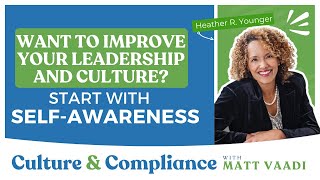
This content was created by Matt Vaadi. This content was uploaded by Matt Vaadi. This is a YouTube interview-style conversation (recorded/posted 2024-12-03) titled "Want to Improve Your Leadership and Culture? Start with Self-Awareness–Heather Younger Shows Us How." Host/interviewer Matt Vaadi speaks with guest Heather Younger (author of The Art of Caring Leadership) about leadership and organizational culture topics: self-leadership, active listening, psychological safety, selective transparency and the risk of "transferring worry," handling layoffs, building employee loyalty, values alignment and accountability, treating the whole person at work, and Heather's related books (The Art of Caring Leadership, The Art of Active Listening, The 7 Intuitive Laws of Employee Loyalty and the forthcoming The Art of Self-Leadership). The format is a conversational interview focused on practical guidance for leaders and small-business owners.
Chapters
What does it take to create a workplace where people truly feel inspired, valued, and empowered? Is it leadership? Is it culture? Or is it something even more? In today's conversation with Heather Unger, author of The Art of Caring Leadership and a beacon of wisdom in building high-performing cultures and teams, we address this and more. We uncover the powerful connection between self-leadership and organizational success. Heather and I discuss how listening, transparency, and self-awareness shape not only leaders, but entire teams. We challenge the status quo of everyday culture and give you actionable insights to make a lasting impact in your organization. There's nobody better to have this conversation with. Heather is a 5-time author and just all-around guru when it comes to culture and breeding a high-performing team. And I love this conversation. You're going to love her. Make sure to check out her latest book, The Art of Caring Leadership. Membership. We'll put a link in the description. Now let's dive right in. I'm just diving right in because you're shilling your book here, which is great, Heather, but I want you to shill it to a broader audience than just me. No, but so let's dive in. I— here's one thing I run into all the time when I'm in— this especially happens when I'm interviewing people to come work here, and they will talk to me about how miserable the culture is at an organization. And of course, being in a small town, I'm in a, I'm in a secondary market. I know not a lot of the leadership teams around town. And so inevitably, they start talking about this terrible culture of an organization they're at, the lack of training, the lack of resources, the backtalk, the backstabbing, all this stuff. And then, you know, I know the CEO who tells me it's the best place to work in the city, and they might even have some hardware that says that, but yet the team doesn't think the same way. And so, how does that disconnect occur? And because I find it to be more common than not, right, in that the CEO and/or leadership team think that they have a great place to work, the staff disagrees. So, why is there this disconnect? And what can leaders do to help bridge that gap between themselves and their team?
So, I don't know if it's always a, like, this or that, or like a pure disagreement. I think there are— it's nuanced. So like, for example, when they're able to show like we're a top workplace, often they get those numbers through surveys. So like Top Workplaces, there is a survey that goes out that then says you are in the top 50, that's a top 25, this is your score of your engagement, things like that, right? So there's some validity to what they say if they say it, if they say it's based upon data, let's say. But what you're talking about is it's like those nuanced things, those things that you hear behind the scenes where they're like, yeah, we did say this, however, but, but, but. And I think the biggest thing, and this is why I kind of decided to go deeper on that one first, is this idea of not being heard. People not having their voices in the process. So they feel like things are happening to them. They feel a little bit like victims at work. They might even feel like there's unfairness happening where there are favorites that are being chosen for certain things. And so I think the gap has to be in a couple different places. One is stop being like in an echo chamber with just like executive leaders or the people who have manager titles and start to say, who are the people that are driving the customer experience forward? Who knows our customers better, much better than we ever could because they're on the front line? And why don't we start bringing them to the table a lot more to help us decide what our next steps are? And then when we ask them to go do XYZ, it is because they already had a voice in the upfront part of the process of figuring out what the strategy might be to solve for customer needs or to drive better customer satisfaction or whatever that might be. And so I think that's the biggest one is listen to your people, bring them around the table, let them feel empowered to be the change that you want and that they want jointly. And I think that's gonna go a real, real long way. I think the other way, kind of right inside that space, is making it like a little bit safer to tell the truth. I think that part is really missing. People just don't feel safe to tell the truth. They feel, you know, I'm not talking about necessarily from the political side of things, like what's happening in our world thing. I'm talking about like what's happening in the workplace with the leader, what the leaders are doing, what their supervisors are doing, what their team members are doing. People just don't, they just want to keep their mouth closed because they were slapped before on the hand, right? Politely or not politely in person, you know, in a group or by behind the scenes that they weren't able to just speak up and tell the truth about something that was going on. And I think that we see that with Dr. Amy Edmondson, she talks about psychological safety and thinking about how we see this play out inside of conference rooms, inside of meetings where people just shush. And if they do open up, what happens? So I think those two things, making it safe, letting their voices be heard, bringing them around the table, making sure they're empowered to advance the strategies instead of you kind of doing these decisions from the top down and making people feel like they have to. And it doesn't feel very fun to be in that environment.
Yeah, it's interesting when you talk about active listening, which is the title of one of your books, The Art of Active Listening. And I like that you're the art of everything, the art of caring leadership, the art of active listening, the art of self-leadership, which we're going to talk about all the books. You've written 4 books, which as somebody who's written one and stumbled into the second one, it's super impressive because I know the level of discipline it takes to sit down and put pen to paper and make it happen every day for years is very challenging. So, kudos to you on that. But the thing that I think about with the active listening piece is obviously a critical technique and something that It's very fascinating because it's not necessarily that I need to act on everything that my team brings to me, but I just need to give them the outlet to be able to come to me and speak about it. And what are some of the techniques that you suggest when, when I find myself in that situation, right? Because I want to have that open door. I want to have people, allow them the opportunity to voice their opinions, their concerns, their comments, all those things. But it doesn't mean I'm going to act on every one of those. So how do I make sure that the team feels like they've been heard, even if I'm not necessarily going to go forward with suggestions or concerns they may have?
Yeah, I always say when it comes comes to action that we have to think about the right kind of action and the right amount of action. And you are so right that oftentimes people don't need you to do anything after the initial sit-down where they give you conversation, they give you feedback. And I say, as a leader, as the person who's sitting in the room, we need to confirm, okay, when we first had this conversation, you just said you wanted to vent. But now we're at the end and I'm hearing something a little bit different. I'm hearing actually that you might want me to take some kind of action. Here's what I'm thinking I need to do, does that sound about right? Before you actually leave them. Or if you, let's say you've had, you wanna take some time, I call it decoding. You wanna take some time to decode. So you have your interaction, you have the feedback session, they give you a complaint, they, whatever they say to you. And you say, do you mind if I take just a little bit of time to process this? I just wanna think through what might be the next steps. I might wanna go to research it, ask XYZ person, and then I'll come back. And when I come back, I might be like, you know, I've had time to think about it. And when we had the original conversation, you said you just wanted to vent, but then my gut tells me you actually want this. Now that I had some time to think about it, here is what I was thinking about doing. What do you think about that? Yep, that's exactly where I was landing at. And thank you for kind of paying attention to me so closely that you knew this is what I wanted. And now I can go act in the right way, in the right amount. I do say this oftentimes, like we would just be way too overwhelmed if we had to act on every piece of feedback that was given to us. We just cannot. So I think that People knowing that we took time to kind of oscillate in our brains, all the things they told us, just even taking the time to process and think about what they said is action and compassion in itself. And so people don't really think about that. They think, "Run, go do something." Not always. So it's the right amount of action and the right kind of action, but we need to have them, the person who's requested something or given us inclination of it, to sniff test it before we go do something about it.
Let's talk about the other way. This has been a hot topic for me for the last few years, and it's a hot topic in general. This is a transparency world, right? Everybody wants leadership that's fully transparent. And I say, well, that's all great in theory, but then there's this thing called transferring worry. And what I don't ever want to do is transfer worry to my team, right? And sometimes transparency, that's all it does is transparency for transparency's sake. And now I'm bogging people down with a bunch of concerns that really are none of their concern and can do nothing positive for them other than maybe keep them awake at night or give them something to talk about over the water cooler. What are your thoughts on transparency from the leadership level and how do we do it in a way that does not transfer worry and, you know, but keeps people in the know as far as things that are happening inside the organization that are relevant to them?
I think there's like selective transparency or selective vulnerability. And I would say this, that If the thing you're going to share helps the person or people on the other end see their role more clearly, makes them feel more confident or less worrisome, helps them move forward on their task, then I would share it. I would go with what you're saying, Matt, which is if then to the opposite, it makes them feel like less about themselves, they feel less confident in their roles, and they have less clarity about what they need to do next, I would not share it. So I think that's kind of, for me, it's always going to be like, what's that pivotal point? And I think that's where it's at. Because if it doesn't add value to their journey or the thing they need, then there would be no reason to share it. So here's kind of what I'm going to just go. This is a big one that happens a lot in corporate America, which is the layoffs. Layoffs. When you are going to be doing layoffs, And what often happens is, like for me, I'm a hyper, like emotionally aware person. So I'm like, hmm, hmm. And I say this because I've been through a layoff before and I sensed it before it was coming. I sensed it. I was like, I already know it's coming, but they're like, I'm sensing it's going to impact me. But then no one was saying anything to me. And then it made, I was like, eh, eh. And then when they told me, I'm like, yeah, that confirmed what I already knew was coming. I could feel it, but no one really said anything, but I could just kind of pick up on the little things like. Different responses that were adding up to a lot of different things. And I get in the moment, they're like, we don't want to worry all these people. But unfortunately, in the culture, everybody was guessing and everybody was— so there has to be a level of transparency where maybe you don't go into the detail, detail, but you have to kind of continue to bring it down a little bit closer to the source so that people can start to prepare themselves mentally that it could be there. Because I think there was so much guessing in this particular place, in this particular example, there was so much guessing and so much worrying and people thinking about it as me, as me, as me. But then there's all this like lack of trust started to come, lack of trust with the people, lack of trust with decisions, lack of trust with each other. And the culture was so bad that we were just all being kind of dragged down by it. And then we couldn't be productive. We couldn't think at all. So I think there's like this balance there of like, what can you give? Is there anything that you can give that can minimize worry, that can give more clarity and help people be able to move forward and be partially productive. Otherwise, everybody's just waiting for the other shoe to drop. So, it's always asking ourselves, I think, those questions. And does being a little bit more transparent help us in those other things I just mentioned?
Well, the unfortunate reality is a lot of the listeners to Culture and Compliance are small business owners and leaders. And, you know, when it comes to, if I've got 50 people and I'm gonna have to lay off 5 or 10 of them, you know, to your point, while I don't want to go out and broadcast that news, but We've been broadcasting, hey, look, times are tough. We've been working on expenses. You see a couple of our biggest clients just left. Like people start doing the math and understanding. You know, sometimes it's worth having that conversation with key leaders to make sure that they know like, hey, you're good here. And we want to make sure you feel safe in this space. And obviously I can't go to the people that are about to get laid off and be like, hey, just heads up, you're about to get laid off, right? That kind of defeats the purpose. So it is a very tricky time. And it is, you know, that selective transparency is never more real than when in that not to make light of a layoff situation, but it's a very, very delicate time. And anytime when it comes to cost-cutting measures, because they almost always involve, you know, one of the first times I ever internally coined that phrase, transfer of worry. We had a client who was about to have to close an office, but it wasn't sure yet. And they had a couple of key things that could, you know, could have saved it. And they were right there. And if these things— and they did end up saving the office and nothing happened. And so had they told all these people, hey, this office might have to close, they'd have had 30 people that were worried for months and looking for other jobs, and they'd have lost a couple key people, I'm sure, who'd have just gone and self-selected and found the next thing. But they were able to pull the deal out, save the office. Everything is— yeah, nobody knows that they were this close to hitting the rock, you know, and they all kind of steered and came back away from shore. And so it's, it's one of those things where it's hard and there's no real science to it. It does get a little more artistic in some of these situations because again, we're dealing with people and they're the most volatile products you'll ever have.
Yes. One, but one thing we have to keep in mind is that not every person, but most person is an adult at work. And, and they're, they're like, they wear the big shoes and all the things like everybody else. And so there's a level of maturity and a level of preparation that they all have to go through. And I can just think of like reorgs and things that I've gone through all of them. I've gone through all the things, all the things you can think of as craziness in work and life. And I think about it. And I, I would say that if you're, if you're like me, and I don't know what percentage of people are, but like, I'm such a hyper, like the emotionally aware, like social aware from the outside. So I, I sense, I sense, I sense, I sense. And then it like, I wouldn't say all the time, but like 85% of the time it's confirmed. Right. So if I'm already, if I'm in a sensing mode nonstop, that, that, that level is already there. So maybe it's not like you are specifically gonna be like the one laid off or the reorg is going to impact exactly pointing. I do think like the art is there. And I think that level of saying, listen, when it's for sure, not when they're guessing, when it is for sure that something is going to take place organizationally, I think some of that has to be laid down. People, and then they need to give timelines of like, and you're the first wave, like we're gonna have to know because it happened. And you're like, oh, and I know there's another wave and then another wave. And it's like the level of fear with reorgs, with any of those things that takes place inside of there does not help a soul. It helps nobody through that process of waiting and waiting and waiting, but sensing, right? You're sensing it. You know it's coming and you're sensing, sensing, sensing. And it's just, it's awful.
It's really awful. I think it's a little trickier for that first wave in that it's, you know, easy to talk about, really hard to do in the moment, right? When you've got decisions that involve people's jobs, like nobody feels good about it. Nobody wants to be, You know, transparency rules, all this go out the window. But now you hit on a perfectly black and white scenario to me when it comes to second and third waves, like, man, you better just get it all done and move on, right? Like, unless there's a business reason you can't. But yeah, at that point, and then if the first wave is the only wave, you need to be transparent and hey, look, this, we're done here, right? Like this, we've cut to the bone, we're okay for this amount of time, and everybody should feel comfortable where they're at. If those words leave your mouth, you should have a business case to prove that as well, which I think is also the The other challenge that I see is that leaders will make those promises only to find out that, oops, hey, we didn't go deep enough and now we're still in trouble. And so we've got to bounce back. And I mean, look, I come from a position much like you. I've had to make layoffs. God bless. I've never been laid off, thankfully. But, you know, I'm still young. So the— still time, baby. Put it on the bucket list. But I always joke every time. So we serve lunch once a month at a homeless shelter here in our town. And I always joke like, because every time I'm back behind the line, I start having these flashbacks. The only job I've been— the closest I've ever been to getting fired was at Taco Bell when I was 15 years old. And like, because I would just eat the food and I was so slow, I would try to make the tacos like look perfect and make sure every little piece of lettuce was in exactly the right spot. And they're like, dude, that's not how this works. Like, just get it out. Like, just get it out the door, man. Like, nothing needs to look good coming out of Taco Bell, bro. So, and yeah, so you wrote another book, The 7 Intuitive Laws of Employee Loyalty. Wonderful title, by the way. But, uh, but I love this concept in general because it is something where, you know, again, we go back to that disparity, that sort of gap between leadership and the team of, you know, where— how do we create that loyalty? How do we make sure our team actually knows that we care about them and we care about them as more— like I tell my team all the time, like, I could care less if you become a really good guru. I want you to become a really good human. And like, if I can be a part of that journey in any way, shape, or form that helps you become a great human, and then hopefully, you know, everything will work out better for all of us, whether it's here, there, or somewhere else. But what are some of those laws when you think about what are some of the most important ways that leaders can help to develop loyalty among their team?
It's interesting because that was my first book I wrote in 2017. And the first chapter of that, of that book is called Give Them Good Supportive Managers. And then my next book after that was The Art of Caring Leadership, which basically was the effort of me digging deeper into what good supportive managers looks like. So I just, with every book, it's like this organic dig, dig, dig deep, deep, go deeper on a particular topic. So giving them a good supportive manager, giving them the caring leaders, making sure you're the caring leader. So it's like, and which takes us, which leapfrogs us to the other books that I've done. But this idea that you hear the stats all the time about like, it's not, people don't leave great jobs or they leave great, you know, whatever, whatever, whatever. Bad leaders, not bad at this. That's right. It is so true. I think what it focuses on is just that human connection and that the human to human side, the relational side of work. And it's so this whole command and control and this robotic idea and that we're competing with AI and all these things. It's just, BS. The real thing is what we're competing for is heart time. And are you connecting the things that are happening? Is your employee experience and employee journey tied to the heart? The heart, because people stay because of what they feel about the place that they're in and the people that they're with. So it's really designing a workplace that inserts those heart spots. So one thing is like recognition. We hear about this all the time where people will 70— I think it was TinyPulse who put this out a couple years ago, and it's still true that 75% of employees, might even be 77%, would leave an organization for one that values them. So people want to be in a place where they feel valued. And valued could be that they're heard, that they're seen, that they're recognized, that someone's in their corner, that like you were saying earlier, that I want you to feel like you're a better person around us, not just that you're doing just like your job. But that you are doing meaningful work, good work that also makes you a better person in the process. So I would say if I had to look, if I had to pinpoint what a leader, what an organization can do, it would be to treat the whole person, to lead the whole person and to allow the whole person to surface and to bring the whole person up and to reveal the whole person at work. And if we could, the more we could peel down, peel the onion on the person, let those sides of that person come up and show themselves. The person feels like they're self-actualized inside the workplace. Who wants to leave a place like that? Who wants to leave a team like that, a leader like that? Not many. So I would say those are kind of some of the main areas I'd focus on.
All right. Let me go extreme because I had to, because I promised, I don't know if we were on air when we started talking about this, we've got to disagree at some point, right? And I don't disagree with you here, but what I want to paint is a picture and I want to hear your thoughts on what happens when that goes too far. And I've seen it go too far. And maybe there will be people listening or, or that are of the age that have seen the movie PCU with Jeremy Piven and, um, Jon Favreau back before they were famous. But it was a movie well before its time. It was Politically Correct University, and it was just this movie about how everybody, you know, everybody was in their own little pack and they were all stumping for their ideology, and it just created this really unique atmosphere on this campus. And it was a comedy, and it was stupid and funny. But like, I went to one of our clients once, a local nonprofit, and it had basically become this PCU. They had allowed everybody so much of their whole self to come to work that everybody was always stumping for their own ideology. Racism was running rampant in all directions. Name-calling, finger-pointing, all the things because they didn't disagree because they brought everything they thought and cared about to work. And the people across from them didn't care about the same things they cared about. And they had such a diverse group of people that it was creating a ton of friction and animosity among the group. And, and that's extreme, but we see it on— we see hints of that at all levels, right? We've seen companies like— I want to say it was Basecamp, but I, I might have them wrong, so I apologize to Jason and the crew at Basecamp if it was them. But, you know, kind of this rising of the, the employees where it gets a little too, you know, hey, we've got all our, our politics and our ideology and all these things that we think the company should care about and should be part of the ethos. And you don't. And so, therefore, like, we have misalignment here. And so, when do the things that are part of the whole self, like politics, religion, you know, different ideologies that make people tend to disagree, when does it become too much of the whole self at work? And how do we stop that from happening?
That's a lot of lotta right there, Matt, right? That's a lot of lotta.
Well, we've got to ask it because we're sitting here November 12th, right after the election, right? So, it's timely.
I'm not sure there's an easy response to that. I think that if the whole self, I, here's what I tell people. I want you to, if you are authentic and you're authentically a jerk, it's not okay. You need to work on yourself. And I want people need to own their jerkiness and make a commitment to not being that jerk. So I do think from the whole person side of things, we can go overboard. If we show disrespect for other people, if we are going completely counter to the purpose of why we're there, which is like we have to serve the customer. So we're in it to either make money or have some kind of mission if we're a nonprofit. So if the things we're doing no longer serve that mission, if the whole person nature doesn't serve the mission, doesn't serve the customer, then we need to reevaluate. So I also think this, that while I talk about all these things that sound, I know, very soft, very soft, I know it. Having said that, there is a counterbalance between caring for someone and making sure that we also hold people accountable, that we're clear about our expectations, that we hold all people from up and down the organization accountable. That, by the way, is ourselves. So from a senior leadership perspective, we need to hold ourselves accountable. To the things we say we are valuing in our organization. And then the people that are on the teams, they all need to do the same thing and be able to— this is that safe space thing— be able to hold the people up top also accountable. So accountability and clear expectations are critical when it comes to caring leadership. Care is the tough stuff too. Care is sitting down and going, mm-mm. What you're doing right now is not in line with what we are trying to get to as an organization. And because I value the good of the whole and the mission that we're on, and this thing that you're either doing or saying or whatever's happening is not aligning with that, we're going to have to have a conversation. Maybe this is not the right place. And so I think that the tough love concept is not like this or that. It's not mutually exclusive when you talk about care. So there you go. There's a lot of components. I remember I had— I'm going to give you an example of this. So I am a person who believes in establishing joint values in a team. Everybody's on board with like, what are the normative values? How are we going to act and behave and treat each other? And then one day I'm listening in on a call. One of my customer experience people, team leads, said, can you please listen on these, like a series of calls? She hears one call and it's a call where two of her direct reports are talking crap, let's just say, about her on a recorded line. So I listen in because I'm now the director of the department and I listen to it and I go, oh, what they were saying on this call about the person who was already like auditing other calls, was completely not in alignment with the values that we came up with as a team. So I called each of them individually into the office. Now I'm the person who talks about caring leadership. I'm the one who's talking about listening. I'm the one who's talking about all the things that might be soft to others. But I called each of them into the office and I said, here's, listen, here's what I heard. Why'd you do it? You remember that meeting when we all came up with the joint values? And the normative things that we were going to do. This is counter to that. And because of that, you will be written up. And this is what I expect going forward. And this is what we all said we expected when we went out on our way. And it just brought the other person in the office and it was the same exact, why'd you do it? Here's what it said. You can't argue or lie that you didn't do it. So I think that we have to, and again, if I were to do it, which by the way, I would hold myself at the same level of accountability. I'd go up to the team and go, I totally messed up. I was not selectively vulnerable when I came to you and I dropped this on your lap when I really shouldn't have because it did not help you understand your role, have more confidence in what you're doing, or have clarity in our mission and vision that we're going forward. So because I messed up, I just wanted to apologize. So I think all of these things I think are, what is the good for the, the good of the whole from the organization or the team perspective? And did we all agree to act in certain ways? And are we now acting counter to that?
I think you nailed it right there at the end with the landing of the values, right? So if we have values alignment, and I think that the way that we've overcome some of this, and we aren't perfect out of here either, but as we interview around the values, we talk about the values from before you get started. They're part of— we recognize, reward them every single week in our weekly team meetings. Like, they're top of mind all the time. And so That's the only way to then hold somebody accountable then and say, hey, these are the values. Like, these are our core values. Like, you're not acting and operating by them with how you're behaving. So therefore, there's a misalignment of values, right? It's very simple. And to those of you who have been down the path of, you know, my last 3 hairs stood up a little bit when you talked about the joint values we're all going to create together, right? Because in theory, that sounds lovely and democratic and beautiful. But in reality, I think about a high-performing sports team, right? Like, I don't get the luxury of coming in and telling the coach what the values of the team are going to be. I don't get the luxury of coming and playing for the New York Yankees and telling them about our mission and vision. I'm going to come in and I'm going to become a part of a well-run machine and I'm going to know what my role is. And I might be the star. I might be Aaron Judge and I might be the dude, or I might just be a role player whose job is going to, you know, it could be at risk any given moment. But there is like, so just know as a leader, hey, I don't have to have this kumbaya that we all come together and create these values together. Like you've got a well-run machine. You've an organization. That doesn't mean we have to say, you know, there's nothing worse than the my way or the highway mentality. Like, everybody knows that's lame. I always know— I always— I can tell you one way I know we're gonna have a bad client. This has proven true 100% of the time, is when they use the word my around a lot of things. If you want to work at my company, if you want to be on my team, if you're one of my people, like, hey, if you're interviewing here, I'm like, oh, your team did that last time. Like, yeah, my, you know, my this, my that, my— it's almost never worked out well. There's probably some weird psychological psychological thing that's going on there of what makes somebody say my a lot. But whatever that personality trait is, has not worked out well for me and my interactions. And mileage may vary on that. So don't take that as any hard and fast leadership advice. But let's talk about that because that all kind of comes into the topic of your upcoming book, The Art of Self-Leadership. And I want to know what this book is about. Obviously, I saw the bullets on Amazon of what it's about. I'm going to preorder the book right now. As soon as we get off, I'm going to be part of the folks who are going to make this thing a success come January. But it means a lot to me because I've learned a long time ago that, you know, I sat in this class and they asked us, what percentage of success do you own in a relationship? Is it, you know, Heather and I are going to have a relationship. Do I own 50/50? Is it 51/49? I'm more responsible because I can control my side. Is it 60/40 because I want to go above and beyond? Well, in reality, I own 100% of the success of every relationship in my life. If I look at it any other way, then I am doing a disservice to that other person and I'm blaming them or I'm coming up with excuses. I think about it all the time, right? Who's that aunt or that cousin you never talk to anymore because they don't call you? Well, they don't call you. Do you call them? Do you text them? Do you keep in touch with them? Right? Like, so who, what percentage are you owning when you put, when you empower them by not calling you? So I don't know how much you touch on these types of things in the book, but I'd love to know what you view as self-leadership and what are some of the common challenges you see for people who need to improve here?
So, self-leadership is the, it's so funny because like I said, this is an organic thing, but self-leadership is the first chapter in my book, The Art of Caring Leadership. It was the biggest. I felt like one of the things I even say in this book is I felt like I didn't go nearly as far in that book on two fronts. One is this idea that everybody can be a leader and can learn to grow in their own leadership is probably the biggest thing. And I think the other thing is helping people understand, like when I was talking about caring leadership, was really very much outwardly focused. And the idea that our inward shine spirals into that outward shine. And I think it's the foundation of that is like self-awareness, resilience, and purposeful action. So it's not a passive process. Us. And it does start with us. And so I think that like, it's the buck stops here. Here's where I got this from. It was, I had been doing all, you know, talking all these things and I've been, and I'm a speaker. So I'd see these folks in the audience and I'd ask them if there was a Q&A time, I'd say, so tell me, what are the barriers to you, let's say, empowering your team? What are the barriers to you showing up as the person who has the presence that listens to the person? What What's in your way? And most often, most of the people who maybe were leading other people, they were team leaders, they were supervisors, but not always. They would always say, my manager, the executive leadership team, the budget, the bid. Like it would be always something on the outside. And while I make excuses here and there, like I'm not some perfect specimen in this regard, but I have had an interesting journey since I was a kid all the way through. And I have learned that I had to lead me first. First if I was going to get out of the place I was in, if I was not going to replicate the mistakes of, let's say, some of the adults in my life. I knew I had to own me. I had to own everything I did. And so because every time I would hear that, like you just said about the hairs are growing back, Aaron, the hairs would stand up and I'd be like, I wanted to say, snap out of it, people, because it's not about other people. It's about you. So that's why this, this whole idea of this inward shine, this inward idea that then goes outward, and that it's founded in your own awareness, your own resilience, your ability to kind of jump over things that keep hitting you. And this idea of intentionality, purposeful action that says, I'm going to, I'm going to choose today or in an hour to be, to be different than what I was yesterday. I'm going to choose today not to blame, not to wait for green lights from other people to give me permission to be the person or to do the thing I need to do that's best for me and my team and my organization. So some of it is, some of it may be inside of it, there may be a level of privilege. And I say that because, you know, I made a choice in 2017 to go completely away from being someone else's employee. So I have my own business. And it was because I already, I could sense in me that I did not like to be a chess piece on a board of someone else's board. I didn't like it at all. I decided I wanted to be the one moving the pieces around. And I also wanted to give other people on that board the ability to say, hmm, which position on the board best suits me? How can I prove that to the person who can put me there? And how can I add more value to the team and the organization I'm in? So that's where the self-leadership really just like, it was a big thing for me. And I need it. And I feel like now more of my writing, more of my speaking, more of the things I do are going to lean more into this direction of it is our choice to be the things we say we want, to not be the things we say we don't, And there is no person to blame when we don't. Not a person. Not a thing.
Oh, friend, we are getting ready to open up. So, the— Well, and I think, again, like, I'm not going to harp on the fact that we're a couple days after the election. You're seeing a lot of people with a complete lack of self-leadership who are losing their minds over their candidate not winning. And you're saying, man, if you're letting something that external to you affect you that much, that you have a serious need to reprioritize in your life. And you mentioned the word privilege in there. You mentioned the word— to me, you didn't say it, but the word adversity. There's something to be said for people that have handled a good amount of adversity in their life. I feel like this is where my sort of gratitude, self-awareness, self-leadership, all the things that I value and tend to think I'm strong at come from coming from very little and coming from a unique— I think you use the word unique upbringing as a way I might describe mine as well. That would be a longer form. Then we'd really go Joe Rogan here. We might need the full 3 hours. But I do think there's something that comes through that level of adversity and having to overcome obstacles on your own, many of which are self-imposed during those times, right? Which is the thing that I think a lot of people, you tend to blame, oh, hey, for me, my mother died when I was very young, single mother to begin with. Bad things start to happen and you start to blame other people and then you start to spiral and you go, yeah, I learned this term, I guess. I don't know. I always just throw 10 years ago out there, but it's probably 15, 20 years ago now. E+R=O. Have you ever heard of this one? So event plus response equals outcome. So my response, that R in the middle, dictates all of my outcomes, right? So if I have anything that happens, let's just use the election again. I hate to to rail on that. But like, you know, my response is like, I'm gonna go online and cry and I'm going to, you know, tell the world that this has affected me to such a level that I'm really just trying to get attention and I'm trying to bring more eyeballs to me in a time that is really meaningless in my day-to-day life. If I turn off my phone, I would literally not know who was president, who is not. 99.9% of my life, I would have no idea whatsoever. So if my response otherwise is to say, okay, my candidate lost and I'm gonna move on and I'm going to be diplomatic go about my day and continue to do just what I did yesterday when I woke up and I went to work and I worked hard and I was kind to the people around me and I loved them and they loved me back, and then my outcome is going to be very different, right? Yep. But if I start making crazy videos on the internet and start being negative and mean to people around me, then my outcomes are going to be a byproduct of that, right? I mean, and we're talking about these things, but you could even be talking about, um, you know, impacting your ability for employment when you start to do these things publicly.
That's true.
So, so anyway, so, so I love what you hit on there. And I use, you know, part of my self-leadership as a daily affirmation. And one of the things in that is I am enjoying controlling my thoughts. Because I think too many people don't think they can control what they think because it just kind of comes into your head. And obviously, you can't control everything you think, but you can redirect, right? It's a very hard thing to do. But what are some of the other key concepts that you talk about in the book and why why we should all go out there and preorder it?
Well, I break it down. Well, okay, I'm not going to tell you this because there's a couple of very interesting stories in the beginning that are like mind-blowing. You're going to— it is, it's kind of crazy how this, how this, like the concept of inward shine, outward, outward reveal, and then these other things. But so that, that alone is worth the book purchase, just the stories in the beginning and how it, how it came about that way. But I really focus on, I kind of broke the book, the book down into 3 parts. The first is this idea of self-understanding, growing in self-understanding, things like our intrinsic worth, our limitations, the things that fear, how fear plays its way out in our lives and what that looks like both in personal and professional. And then I go into the second component of it is really about personal growth and sustainability. How do we continue to stay on that journey of looking at, for example, progress over perfection, making sure that we insert self-care, the idea of empowering ourselves and what that journey empowerment looks like and how we can do it for us and for other people, by the way. Strengths, what our strengths are. And then I look into the last component. So it's like probably the first component of it is really focused, like 60% of the book is focused on us, really truly like how are we leading ourselves? Where do we start? How do we get better? And the last part is our social interactions and influence. So how that kind of inward shine does or can translate into the outward shine By helping us like building, you know, relationship building, thinking about how flexible we are with our thinking. How do we set expectations, receive clear expectations? How do we ask for feedback? How do we give feedback? How do we use our voices in a process and make sure that we're seen at work in the places where maybe we feel unseen right now? Again, I'm saying to the person with or without a title, what are you gonna do? How are you gonna uncover you? How are you gonna go deeper into that? How are you gonna improve you? And then how does that then convert convert into how you interact with other people and the influence you have in those relationships. So that's really how I've broken it down to 3 different parts. I did it because I felt like there was this like something— I'm really, I'm a model person. So there's 12 different components in self-leadership and I needed to, in my mind, I'm like, how do I, for me, it helps me compartmentalize what's the work to be done here? What is the work to be done? Because my idea of change, of personal or even organizational change, has 3 components and This idea of I have an awareness that I have some hole, some gap I'm leaving for me, for others. I have a desire to fill it, to fill that hole, to fill the gap some way, shape, or form. And I have this commitment or the stamina to see that change, those requirements to fill the gaps for the long haul. Because this cannot be a one-and-done type of thing, but we gotta start first with us. And I'm talking about going deep. I have activities in the book that make you kind of think deeper about What is it about you and your view of your own self-worth, your intrinsic worth, uh, that's stopping you from getting to these other components of self, you know, of the social interaction influence that you want so much that you feel so helpless to right now? What is it in the front end that's getting in your way of getting to that place? And so I'm hoping by the end of it, there's a, there's a lot of digging, there's pain revealed, there's some aha moments, and I'm hoping through the stories and in some of these stories of others and mine that they can start to see themselves in a different way and then come out hopefully more empowered and inspired to lead themselves more effectively.
So will a guy like me, because one of the things that it sounds like you describe somebody there, and this is a, I'm a dumb guy, I'm not a JD, so I need to, I tend to very much simplify things. You're describing somebody with a lack of confidence. Confidence, right? So like the— and so in a lot of ways, as I hear that, I'm like, man, like sometimes that, like you talked about, that internal focus of like, we have to be kind to ourselves, we have to love ourselves, we have to make sure that we believe in ourselves. And then, then I can sort of turn things on and light bulbs will start to click. What if you're like me and you have just unending confidence and optimism for no particular reason whatsoever other than just the fact that you've somehow found that along the way? Now, I, by no means, I mean, I have so much work to do on myself. It's beyond measure. That is, you know, I don't lack self-awareness, but I do not lack confidence either. Is this a book for a guy like me?
Yeah, I don't— I think that I do differentiate, or I do break down the differences in confidence versus intrinsic worth. I do do that because oftentimes we got to land on that, like, that our sweet spots, like the reason why we're here, our actual, like, that purposeful kind of idea before we can move through the place of, okay, so, so now that I'm like, I understand my value in and of myself, not the confidence part, not like, oh, I have the ability to speak in front of this person. Oh, I can write this thing. Oh, I can do this podcast. That's confidence. That's different than going, what is my, what is my, what is my value as a human on the planet? And even if I get, let's say I get to the end and I'm like, okay, I feel I'm pretty clear. I feel pretty clear about it. I feel pretty good about that. There's still room for for improvement. And we gotta figure out how do we maintain or sustain that growth that we need in order to have maximum influence in our interactions with other people and in our workplaces at home, wherever it is, wherever it is, we're seeking to be that kind of, those kind of people. I do say this though, with a lot of my work, there are gonna be certain people who choose to buy and those who don't, those who choose to follow or listen into the work and those who don't. And I can't please all those people. I'm here for the people who are interested in just getting better, a little bit better. I'm there for the people who want to be introspective to say, yep, I have a little bit of work to do here. While I've achieved here, there's so much more I can do. And so those are the people I'm interested in working with. The ones who are either, excuse my French, gosh awful, gosh awful, like meaning like in their leadership of themselves, in their leadership of other people. They're just so, so bad. They're probably not going to be paying, like, in my circle. They're probably not going to be finding my work. It's going to be those who have a desire inclination to get a little bit better. Those are the ones who are usually drawn to the work I do.
Well, and I don't know if you're, how familiar you are with the Bible, but the parable of the sower is where I always go with this, right? It's like, you're going to want to continue to throw down the seed and it may not be the day that somebody is— it's going to take root. It may hit a stone today. It may hit some less than fertile ground tomorrow. But that one time you throw down that seed, it may hit the right spot. I think as leaders, that's the most important part for us, right? Is like we can continue to work and build ourselves. And I think that it's hard to get to a position of real authority and leadership without that level of self-introspection, without that desire to commit to get better. You know, I ask my son every night, he's 11 years old, the poor kid. I'm like, what'd you do to get better today? You know, like the— and I know that's not a common conversation. That a lot of parents are having with their 11-year-olds is, hey, how did you get better today? You know, like, I mean, I'm a little intense with this stuff, but it's also like, you know, I do think that there are— I come from an environment, we go back to that adversity where that was never a focus. Nobody in our family was ever, you know, it was how do I get that next quarter raise? It wasn't ever like, how do I elevate my life and the people around me from what I'm doing, right? It was more of a victim mentality and how can we somehow get more that we're due and that we're, you know, should be coming our way, not because of our efforts, not because of our improvements, but just because we exist.
Thank you. Thank you. That's that first, that's exactly under self-understanding. That is what you just said is exactly what I mean by self-worth. It is because I exist and it does. And I, and I mean, in the end, it probably is biblical. I mean, how I talk about it, I don't necessarily say that, but it really does boil down to the idea that I am good because I am. I mean, and it's just the way it is. And, but people have, we have to get to that place where we come back to our starting point. Point for why we exist. We have to come back to that starting point before we can say, so then how does that now flourish to get to the point where people want to follow me ever?
Right.
Yeah. And I think that's, it's just, it's so critical. So it's going to make people go do some deep work. It is going to, it will bring up, you know, some painful points. It'll bring up some stories and things that they'll be, I want to go there. It's my time to go there with the people who are, who are going to And I think it's their time to be there on that journey with me as well.
Well, and I love it. It's very timely for us. We're going through, we're doing the vision planning exercise with a lot of individuals on our team. Anybody who raises their hand and says, hey, I'm interested in going through this process, we'll do it with them. If not, we'll let it do them on their own. But it's, you know, it's all 7 areas of your life. It's your recreation. It's your public service. It's your, you know, your relationships, your finance, your career, etc. And again, it's going back to like, hey, Hey, if you'll open up to me, I'll help you as much as you'll allow, but whether you're going to be here for another 3 days, another 3 years, another 30 years, like, I, you know, I still, some of my best friends used to work here. They don't work here anymore. Right. Like, and so it's all about, you know, trying to help others live a better life. And, you know, the more people, you know, what, what did, what's his name? Zig Ziglar used to say, if I want to become a billionaire, I'd try to help a billion people. And like, you know, like that's kind of the mentality you've got to have, right? Is like our life is going to be measured in the number of people we can serve. And then I'm pretty confident that good things will happen if you focus your life on how many people you can serve outwardly with your actions and with your words. But there was one other question I had for you here. Let me toggle back.
I love that. And one of the things I do want to say, just as a little in-between space, is that when I'm talking about personal growth or I'm talking about getting a little better, I always want to— I keep wanting to ground all of us in this idea that we are good because we are. And so that getting better isn't that we're bad now.
Now, right?
Right. It isn't, it is the internal shine. Just how much more shine can we reveal? Just how much more goodness can we give? So I think the service idea that you're talking about is a big component of that, but we have to serve ourselves first.
Absolutely.
But I do think like, I just want, I want to, I have to insert that because I just feel like sometimes we get in this self-help, self-help regime. We get into this, we got to get better. We got to get better. But it's like, but we are good just like we are. Like we were put here people that we are today. So just know, for those who may be like, but I'm always feeling like I'm getting better and I'm getting exhausted by trying to get better. I get that. And there's something to be said about the value we bring to the planet when we just shine ourselves up some more.
That's all. And I wish I could bottle it up because I'm— maybe it's a midlife crisis thing or just a midlife reckoning or whatever. But like at 45 years old, I'm both as content as I've ever been in my life and as driven as I've ever been in my life. And those two things are diabolically at odds. And, and to your point, my kids asked me one time, they're like, why this focus always on getting better, always on more, always on, you know, something out in the future, the carrot, right? Like, why? And, and I was like, look, you know, this is our purpose, is to continue to serve more, to do better. It's not to be content with who we are, but that doesn't mean that we're good. And that doesn't mean that we're not enough. And that's enough for today, right? But tomorrow, I've got a bigger vision than I have for today. And so I want to make sure that I'm there and I'm able to serve it and take advantage of opportunities that come my way in that time. I have two random questions here to finish up. So first one, so Colorado, you've been there in Boulder for how many years now? Well, I'm in—
well, not in Boulder now. I'm in just metro Denver, but I've been here since '93.
Okay. So are you following the Colorado football team and are you excited?
Oh, see, I went there and I still didn't follow. I'm a little bit of a geek. I'm a little bit of a nerd. So for me, I was like always into studies. I'm not saying I didn't like go out and have fun, but sports has never been a huge thing for me. I know people are like, wait, how are you not following your alma mater, your team?
I'm like, ah. Well, I also know, I mean, it's a little different when it's grad work too. It's not like the same as undergrad. And like, and if you're not a sports person, you're not a sports person. Right. I was curious. Dion's obviously making some big waves out there, so I figured I'd ask.
Absolutely. He is.
Now, but I do want to go back to, you know, I was a particularly immature 20-something-year-old when I first started in my first corporate job. But the one astute observation I made as I looked around the building after being there for a few weeks, as I said, man, there's not a lot of people over 40 here. It's a big company and there's just not a lot of people over 40 here, you know? And for a 23-year-old, maybe a strange observation to make, But it set me on this path of like, wow, yeah, if you're like a 55-year-old dude who's aging and who's kind of like, you know, you can pretty easily be replaced with a couple of 27-year-old dudes who can do your job for half the price. And, you know, then it's just going to keep getting harder and harder to find work after that. And I had a whole other bunch of reasons why I was going to eventually become an entrepreneur. But that observation kind of put the nail in the coffin of like, yeah, we've got to figure out what the long-term play is because it's not working for somebody else. You mentioned having a similar sort of realization earlier in your career. Obviously, your motor runs hot. You're the type of person, you've written 4 books, you've started your own company, you do a ton of other things. You go to your LinkedIn profile, which we'll put in the comments so people can connect with you and follow you. But what are some of your daily self-leadership practices and processes that you do to achieve the things you have achieved?
One of the things that you said earlier was this idea of redirection. I talk a lot about in this book and in the last couple of books, by the way, about resilience a lot. And I always, I share with people strategies on like, how do you continue to build the resilience muscle? And I think that the redirection idea or what I call, um, like the focusing on the mission that's bigger than me, looking at the bullseye in the distance helps me not to let or be bogged down by the things that are around me. So do I get disheartened? Absolutely. But that bullseye approach, that focusing on the mission that's bigger than me helps me kind of just leap over things faster than most people. People. And I try to teach it as much as I can. It's sometimes it's just, it's inbred in us, those of us who have gone through an adverse background. And so I'm thankful for that adversity because I do believe it put me on the path of my now. On a daily basis, aside from that bullseye approach, it's trying to get to the gym, trying to walk like I do, you know, 5-mile walk. I go to the gym, I'll do walk, I'll do lifting, I do something. And then I drink. This sounds, this is super basic if you're not somebody who wants to go to the gym. I am like a huge water drinker. And I keep a water bottle with me. I mean, it's in the car. It's everywhere. If I leave the house without it, I feel naked. I have to have water. Water is like the lifeline for our existence. As you know, that's what we're made up of. So I do really try hard to kind of do the small things, drinking water, you know, petting my dog because the emotional— I have an animal. If you have any kind of animal, spinning, petting, you know, talking, cuddling Kit, all of those things are the things that fill me up. And so I do whatever I need to to fill me up. I'm going to be honest. I just do. And I try to stay away from the things that don't, like, you know, social media. I'm on it a lot because of my business. I am kind of that person who does a lot of stuff out in the world. And, but I try to try to try hard not to compare. That's another self-care mechanism that says, you know, how do you, I'm looking at it good for them. I have my own journey and I'm really appreciating that mission that's bigger than me and staying on that mission.
I'm going to say this very slowly and I'm going to emphasize it with this preamble and some dramatic pauses just for everybody listening to make sure that we end with this. If you made it this far, you're you're amazing and we love you and thank you. But comparison is the thief of joy. And there is no better place than you're going to be robbed of your joy than social media. So, we've—
I tell you to follow me there and then I'm like, "Don't follow me there." Yeah.
Yeah. And then you see me hopping on a flight and you're like, you know, because I'm only posting my glamor shots of when I'm doing really cool stuff and like And, we brought it up one time in our church class, a guy put it really succinctly. He's like, "Look, if you have 365 friends on Facebook and one of them buys flowers for their wife once per year, then you're going to think every one of your— somebody buys flowers for their wife every single day." And so, I mean, you're going to think you're just the biggest lummox of a husband or if you're the wife, you're going to think that your husband's the worst because he doesn't get you flowers every single day. You're not seeing the real picture. Right. But anyways, that's a whole—
Yeah, no, it's true. It is true. From a self-care perspective, I would say we need to limit that. Like I'm trying to get, I'm trying to get better at the limiting of what I see out there because it's just, it feeds your brain. It thinks it makes you again, it goes back when it goes back to self-leadership. What, what you are worthy, you are good because you are, you just are because you are and you don't need to go compare yourself. You know, while we want to polish ourselves to be the best version of what we were put on the planet to do, right now, if we were to sit on our couch, just take care of kids and that's what we do and we don't go like try to publish a book, we actually are good in and of ourselves. And I think trying to ground ourselves in that will make us much more happy, I think, and more joyful on this planet.
I agree. I agree. Well, thank you so much for your time, Heather. It was a delight to get to meet you and spend this hour with you. And I appreciate it a ton. And we will link out to all the fun ways that people can follow you and buy the book, uh, which I am going to do right now. And so I appreciate this time, and thank you so much for joining us.
Thanks, Matt. Appreciate you.










