What Are The 3 Broken Things In The Healthcare System? | Episode 5
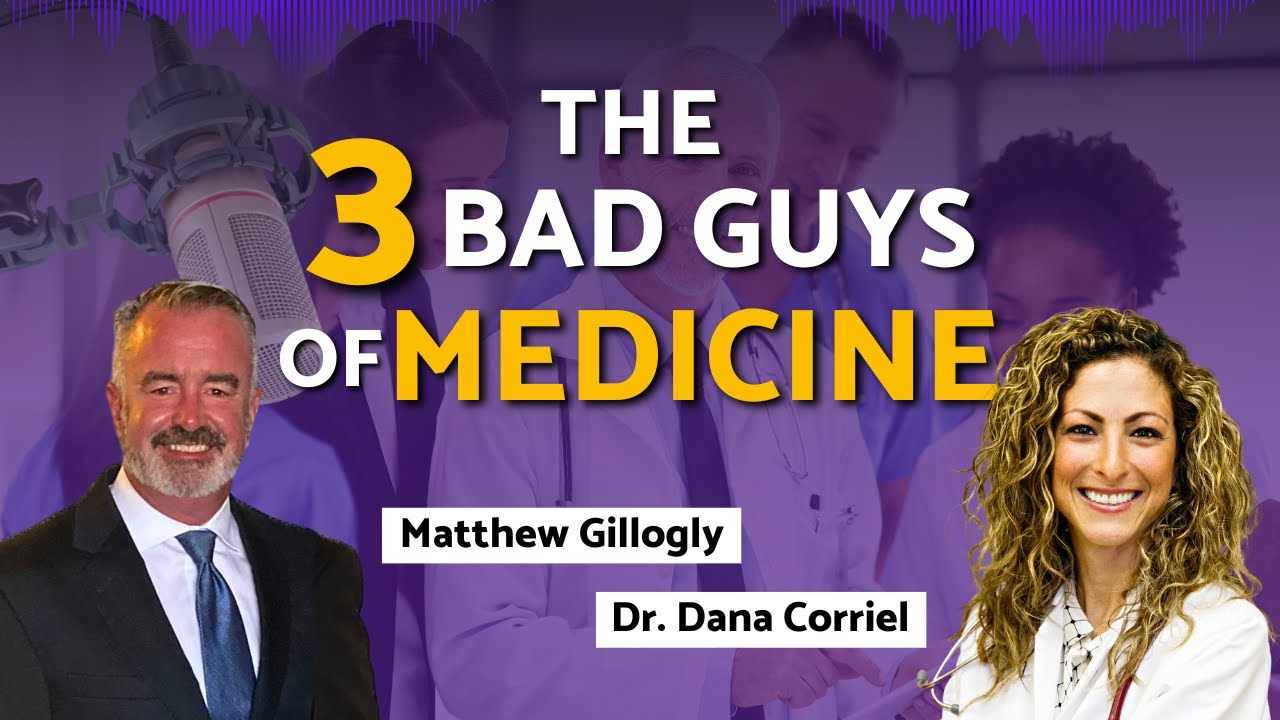
Dr. Donna Corriale, founder of SoMeDocs, identifies three broken things in healthcare: insurance companies, paperwork and legal requirements, and private-equity-driven health systems. She argues doctors need business and entrepreneurship training, and that direct-care models without insurance middlemen could restore physician autonomy and patient satisfaction.
Chapters
Woo-wee!
Man, do we have a great podcast for you today. You're gonna hear from Donna Coriel, Dr. Donna Coriel of SoMeDocs, Social Media Docs. And what's great about this interview is the wide range. We talk about the 3 bad guys of medicine, and we talk about this whole problem that doctors have about being on social media. Do they really wanna give up their anonymous lifestyle? We talk about her journey and the journey of being a creative. Doctor, people that are really kind of nonconformist. So look, get ready for a really far-ranging, fun discussion. I know you're going to enjoy it. This is Matt of the Practice Profit System. Hello everybody. This is Matt with the Practice Profit System, and I am excited today to bring you Dr. Donna Corriale, who is located in beautiful, sunny New Jersey. The Garden State. And the reason why we have her on is she is the owner of SoMe Docs, Social Media Doctors. And we're going to be talking about her journey from the traditional side of medicine into where she is today. We'll talk about some burnout that doc, you know, frustration, burnout levels, and just kind of really the challenges that we see in the system. So Donna, thank you so much for coming on today. Appreciate it.
Sure. Thanks for having me on.
Okay, so let's, let's dive right in. When did you know you were going to be a doctor? What age?
So there wasn't a specific age, and I don't even really have a story where there was like a moment I knew that I would be a doctor. My story is just that we were immigrants. I came from an immigrant family who really value hard work and success. Always loved math and science, and then also always loved humans, human interactions, and just helping people made me feel great. And so I think that that mixture, that milieu, was perfect for baking a physician, and that's what I became.
Okay. And then how did you wind up involved in social media? Because it's not normal for doctors to want to be on social media unless they're like Dr. Oz or like, you know, somebody else, right?
Right. That's interesting that you asked that. So I always shied away from social media. I mean, I first Joined Facebook, I think maybe in 2004, and then was completely turned off by it actually. But then what happened was that I took time off of practicing medicine to have my third son. And when I did that, that's when I suddenly became aware of so many different aspects of life that I never really understood because I just never had time to. And I think that that's key for doctors to hear is that there's so much out there that we don't know about or may not realize until we actually step away from medicine, which most of us don't actually do. So it was for me to have stepped away from medicine to discover the world of social media outside of what I always knew of it and always shied away from it. So in a light that was so useful for a physician and for propelling my career.
Okay, so you're taking time off from having your third child and you're internal medicine, correct? That's your specialty? Yeah, I'm an internist. Exactly. What type of environment were you working in? Hospital, practice? Where were you?
So when I took time off to be with my third child, to give birth to him, I was at Mount Sinai Hospital. I was working in the World Trade Center Monitoring and Treatment Program. So it was a hospital environment. But it wasn't an internal medicine environment. It was an occupational medicine environment dealing with the folks that had been at 9/11 and had suffered the aftermath.
Okay. And did you feel fulfilled in that kind of work? Was that scratching your medical itch, if you will, or was it more—
I mean, I enjoyed it very much. I wouldn't say it filled an itch. I think that it really was a great position for someone who was a mother of 2 young children and having her third, it definitely was eye-opening and was amazing to meet all of those people that had worked, the first responders from 9/11. So I think that was incredible. I only say that it didn't fill an itch just because I'm all about like adventure and excitement. And when it's sort of like the same thing every day, then it's less, it's sort of less fulfilling. And this is kind of why I went into internal medicine is because you walk into every door as an internist and you just don't don't know what you're going to get.
No.
And so rather than specializing in just one field, like my husband chose cardiology, I didn't really want to be pigeonholed into this niche where I would need to sort of see just heart patients every day. Instead, I can kind of just get to not only know patients and be surprised by what they came in, but also develop continuity of care, which I touched on earlier when you asked me, is I really love human relations. Relationships and relations and, and how that works.
So, okay, and you're not, you're not seeing patients today. This is what you're doing full-time. Well, being a mother, which is a full-time job unto itself, and then the other full-time job of managing your husband, which that's another topic that we won't go into, and then you have this. So what prompted you to create and start trying to communicate to doctors about social media?
Well, I recognized that social media was such an incredible tool that doctors are shying away from, much as I did. I knew from firsthand experience that tackling social media, that creating accounts on there the right way, can really impact your career positively. And I saw it as just such an amazing way to market yourself and to build up what I call thought leadership. And so to me, Having done that, I felt like it was something I wanted to share with my colleagues because I want to see medicine be in a better place. And I believe that doctors are the ones to help it get that way. And I do believe that there's a lot in healthcare that is broken and that doctors need to step up to the plate and actually play a more leading role in shaping the future of healthcare. And this is how we do it. We do it through, you know, using social media to connect, marketing ourselves, etc.
All right, so what's broken in healthcare? What do you— what would you say are the top 3 things that are broken? I know there's probably a much longer list than that. Yeah, when you think of healthcare today, what are the— what are the big 3 that kind of keep you awake at night?
The big 3 to me are the 3 middlemen, so to speak. So for me, it's the Insurance companies. It's like, I don't know if to say legal requirements, to just leave it at legal, or to say all of the burdensome paperwork. I think they're one and the same, so I'll just call it paperwork. And then the third is the giant system/private equity entry. And so those to me are the 3 really big jerks that have inserted themselves in the middle between the patient and the physician and really If they are to be there at all, should have a much smaller role than they have today.
Okay. So let's, let's talk about the insurance side. And I agree with you, by the way. I believe that healthcare in America, you know, we Americans never do anything like everybody else. We have to do it our own way, right? There's— and basically what we've done is we've created an Americanized version of national healthcare. It's winding up in the small hands of a very few insurance providers, right? And that's not good for anybody. But let's, let's talk about these insurance companies. When you say that they are the 3 middlemen or the ones, the biggest issues, what are some of the things that concern you the most about the whole insurance game? Because, you know, there's a lot of patients be like, and there's some doctors, probably more patients than doctors that are like, oh, insurance is great. Insurance should cover everything.
What's your beef with them, if you will?
Prioritize money and profits over health. And I think, again, as an entrepreneur myself, I understand the need to prioritize profits for your entrepreneurial venture. But the problem is when it comes to human health, it's a slippery slope. And that's what insurances have done is they've sort of taken advantage of their role and they've sort of really done a spectacular job from an entrepreneurial perspective of taking advantage and taking more control than what they should have and lobbying the right way, et cetera, et cetera. So what you have is just this really big behemoth in between the patient and the doctor that really shouldn't have the control that they have. And so one example that I'm sure everybody can identify with is You know, something simple like the prior authorization. When a patient comes to a physician to get treatment or to get a test or to get a medication, and the insurance then makes it super burdensome to actually get that treatment or medication, then we've got a broken system because they're there to help and they're not supposed to be there to add hurdles into treatments. And that's what they are. They're a hurdle. So yeah, if you look at the profits of the insurance companies at the time of this recording, I think Cigna just announced their 3rd quarter profits were $5.6 billion with a B dollars. And then you see that they, you know, they're cutting reimbursement rates by another 3 to 7%.
Right.
And as a business owner in the groups that I'm in, one of the things that we— everybody's been discussing is their insurance premiums for their employees is going up 86%.
Yep. Right?
I mean, it's becoming untenable. So what do you think the solution is?
What—
go ahead.
Well, well, first of all, also they tie the hands of patients, right? Because if an employer— the employer chooses the insurance company that fits them. And so the employee also has their hand tied because they're sort of told, well, this is the insurance that you can take And so the decisions of those insurance companies are just kind of taken, you know, they're just taken as is by the patients. And they're, the patients sort of have to do things the way that the insurance dictates it. So that decision is sort of made between the employer and the insurance company and not so much with the patient being able to decide, well, what can I, you know, choose? They can choose maybe plans within the insurance system, But that's not the same as saying, well, I want to be with a different insurance system. In terms of what can we do, so unfortunately this is a very sticky situation again because insurances have inserted themselves into American life, you know, almost like death and taxes, right? Like that is— we know that, we know that for certain there's insurance. So I think that One of the really exciting ways that doctors are creating is insuranceless practices. You know, people like you are helping do this. People like Dr. Daniel Paul, who writes for SomiDocs regularly, does this. People like Diana Gornitsa is doing it in rheumatology. So even specialty practices can begin to do it. But basically, a lot of doctors are starting to figure out ways of how to better connect with patients. Patients, but remove those middle— the middlemen, right? The jerks, like I named them before, but the jerks that really should not be there, or if they are there, be there in a much lesser capacity than they are today.
So do you think the answer is more government intervention? Do you think the answer is— I mean, I know that's— look, I know that's a sticky subject, right? Like, I'm not trying to paint you in a corner here, right?
No, no, no, you're not. And I think that there's no easy answer here. I don't think government like should own healthcare. Like I don't believe, I just don't believe in socialized medicine. I think socialized medicine has huge problems in it, right? I think that in ideal, in an ideal society, great. Like, you know, we could all live happily and equally and be rah-rah, great. But that's not how the world works. And I think that when you have government intervention, you have all of the added burdens that go in there that are not necessary. I mean, some of that is seen in the, Tons of paperwork that we now have to fill out and all the questions we need to ask patients that make zero sense, like to ask a patient something for, you know, 5 minutes out of a 7-minute appointment and have it be not relevant to the cough they went in, right? Sometimes it's not relevant. And I think doctors are smart enough to be able to decide what's important this second and what isn't important. So again, I don't think governmental intervention is the answer. I do think that like a mix of things is the right answer. I think that private practices that charge decent amounts, which are being seen now in DPC practices, direct care practices, they charge a monthly fee. Some are as low as $20, $30 a month. Some are $150 a month. But the point is it's a reasonable fee. It's not taking insurance, but it's also— giving patients opportunities to pay for medications and tests for much less. And so direct care is one of those solutions. I do think that there still needs to be some option for folks that, for example, can't necessarily afford that. I think that there should maybe in that case be some governmental, like, program that physicians can either opt into, or maybe some of them can, you know, you have to have like 5% of your practice be a part of— I don't know. I don't really believe in making people do things a certain way.
Right.
And that's my issue.
Yeah.
Right? I don't believe in the government dictating for me how I should be living. And so that's my problem too, that as a physician, of course, we all need to abide by HIPAA and be honest humans and treat our patients. But I don't know that there should be an entity that is telling me what to do because that's where we get into the hairy situation that we got into now.
Yeah, and it's a really bad situation. Like, it's not getting any better, and it's not going to get any better. I mean, the money that the insurance companies are making buy them an unbelievable amount of influence, right? So yes, take a look what happened a couple months ago. So the FDA decides to go through and just out of the blue get rid of a bunch of peptides that we— and again, I'm not a physician— but that my clients are like, you know, BPC-157, CJC, ipamorelin, all these really great things that are helping patients live better lives. Boom, it's out. You know, one day, done. It's over at the end of August. So it's clear to me that there is a tremendous amount of influence being peddled within Washington. That shouldn't surprise anybody, right?
No.
And then you also mentioned, okay, so the insurance companies, the bureaucracy, and what was the third one again?
The insurance companies, the system/private equity, And the paperwork/legalities.
Okay. Why is it that the doctors seem to be so willing to just kind of go with the flow and not really fight this process?
Yeah, that's a good question. I can tell you that the doctors aren't happy. I think that you can see that in the burnout rates. Well, I guess it is the right word to say willing to go along with it. And I think that the honest truth of why they're willing to go along with it is that It still brings in money. It still gives them a salary, right? And so what they've done over the years, that they've evolved to like almost just accept that this is their reality now. But the more they're accepting, the more of a downward spiral that they're in and the more burnt out they are. So it's sort of like a catch-22 that eventually will break and we will find ourselves in levels that we're finding ourselves in now where every doctor is contemplating retiring early or developing a side gig that they want to then pivot and just take on full-time. And then, you know, we're faced with having trained so many amazing physicians that then leave the field or don't want to do it anymore. And that's not where we want to be in America, right? In America today, we want to live in a capitalistic society where we work hard and we also enjoy the fruits of our labors and, you know, can pay for great care. Again, I do think that there needs to be some care that's provided for folks that can't afford it, but I don't necessarily think that the way that it's built now is providing the right care. And it's certainly not providing really any care because I think care being delivered is just so poor right now because of the 3 jerks that I've listed before, the 3 middlemen.
So if I were to give you a magic wand, And I were to put you in charge of restructuring what goes on in med school, how would you— right? Because really, this is right at the beginning, right? The whole medical industrial complex, as I like to call it, isn't it really about conformity, about not rocking the boat?
Right. Like, it's the opposite, right? And, and that's the problem to me. The problem is that medical school is set up in a very structured way, and it is the start of a factory where— and understandably, you're teaching humans how to heal, which is so hard. But in doing that, we form robot physicians that sort of only know how to heal the body, don't know how to run businesses, don't know the importance of autonomy, don't understand why marketing is important in 2023 and beyond.
Wow.
And so to me, it does start in medical school. And it's interesting that you just asked that because in SoMeDocs, we have only been open to doctors that are attendings, that are finished, that are attendings and residents. So doctors that have earned their degree. But the next stage of SoMeDocs are the students, because I do believe that the students are the ones that need to be connected to changemakers of tomorrow, to the niches that will change their viewpoints. And that will help them to change the future of healthcare in the proper ways.
All right. So what would you change in med school before they become— like, what classes would you have them add in or what training would you have them add in?
I actually wrote about this for SomiDocs, for our magazine. I think that business— and again, you're not going to get an MBA by going to medical school, but I think that you should have a course on the business of medicine. What are the codes? I mean, you know, you come out of residency and there's I don't even know how many CPT codes, and you don't know how to use the codes. And you also need to bill, and you're billing on a level, and you're like, what level? What does this mean? And what's this level? And what's that level? And it's like, you need to hire coders. And so, yeah, I think there needs to be education on how we code, what codes we use. I think on developing a practice of your own, what it means. Again, the basics of being an entrepreneur, because I think that in medical school, no one touches on being an entrepreneur. And the key to medicine, I think, and to bringing back the beauty of medicine is to make the individual doctor an entrepreneur and to make them understand that when you're an entrepreneur, you're in charge and you are making all the rules to the benefit of the patient.
Yes.
And you're getting rid of the jerk.
Yeah. If you think about what medicine really is, in my study of medicine, medicine 100 years ago was really about pushing the envelope, right?
Yeah.
Like, where can we take this? What are the new ways? How— let's think differently about this. And it seems to me like what they've done is they've created this system that breeds conformity, that if you— and especially the local state medical boards, I mean, having known practices, Yep. You know, I have to always put air quotes around practices. Yes, we abide by the corporate practice of medicine. Okay. But having the management companies that brand those things, you know, it's the archaicness of— yes, like this local medical boards. It's like, really? Like you have an issue with doing PRP? Like, it's fantastic, right? Like, it's, you know, I mean, it's—
yeah, listen, it's a double-edged sword, right? Because on—
right.
On one hand, I do agree that there needs to be some oversight. On the other hand, what's happened is that when that oversight decides to flex its muscle and kind of take more and more and more and more, this is the situation that we're in. And so something I can think of is, for example, even, you know, the CME credits that we have to do. And this has been going on for so many years that we've sort of taken it as a given, right?
Okay.
You want doctors that stay on top of the trends of medicine, and so you're going to make them do these continuing medical education, which take up time, they take up money, they take up frustration. Fine. But now they introduce them— not now, it's already been years— but the mocks, right? The maintenance of certification. What kind of bullshit are you gonna introduce? And we're not stupid, right? We know why you're introducing it. You're introducing it to make even more money because the mocks They cost money and they make us more frustrated. And so why not introduce like four other you know requirements that give you more money? And again, it's like all of these. And what was the thing I was? I'm going to write an article about this because I got so upset. Oh, I won't throw under the bus this organization, but I wrote an article recently about organizations being bullshit. Like we pay money to organizations; we get nothing in return, right? And interestingly, I named an organization and. A few doctors came in and said on my social media, they said, my malpractice insurance carrier makes me become a member of them in order to practice. Oh my God. And I was like, what? I said, you realize that the organization has nothing to do with malpractice. So to me, something's not kosher there. Something's not right. And I'm going to write an article about that, just kind of Throwing it out there because in my head I'm going, this organization clearly has some deal going on with the malpractice insurance carrier.
Absolutely.
And again, they're taking advantage of doctors. The doctor is sort of has, or most of the time they have to deal with that malpractice carrier because it's given to them through the private equity giant healthcare system. And then the malpractice carrier is then telling them that they have to be a member of that organization, so pay their fees. And so again, it's these like behind-the-scenes like relationships that do not benefit the doctor at the end of the day, because my whole challenge was, what does this organization even do for you for all the money you pay them yearly?
Right, right. What does it do to advance your skills as a doctor and provide better care to the patients?
Exactly. And that's the point of the article I wrote. I just wrote the article saying, when you give your money to an organization, like, think through what is it doing for you? Are you getting a return on your investment? And if you're not, maybe we should reconsider whether we even want to be part of these organizations and definitely reconsider whether things like malpractice insurances or other third-party, you know, third parties can make us be members. And why are they doing it?
Yeah.
So this—
You know what's interesting? Yeah. So, you know what blows my mind is, so we, we run an annual event. Well, actually we do it a couple times a year. We call it the Business of Orthobiologics. I run it with Dr. Ariana Demers. Okay. So we did our first one in September and we wanted to provide 10 CME credits. Well, we couldn't get approval because the way the model of the event was, every session was 2 hours. 1 hour was medicine of orthobiologics. The other was the science of medicine and then the science of business.
Right.
And we couldn't get a CME company to certify it because what they wanted is we had to clear the room after we did the medical side of it, had to take down any references. We couldn't have any references, any offers, no. And then everybody had to be outta the room for 20 minutes and then come back in. I'm like, so why is 20 minutes the magical time? Like, is at that point, like, right, the, the money demons have gotten outta the room? Like what? What is this, right?
Yeah. And I mean, it's such a joke.
Like, they don't want to give you a CME for business. They don't want to give you CME for freaking social media. This is bullshit.
It's not only bullshit, but the whole CME thing is just one big business. And it is, again, I'm— it's a multi-million dollar business that is really taking advantage of doctors. Honestly, it really is. And so it's so funny you said that because I also put on a conference I'm just thinking to myself if I want to even say— I won't say what the niche was, but I put on a conference and I mean, I brought CMEs into it through a company that works with CME credits that is fantastic. But I went to the organizing board of this niche and I told them, hey, I'm putting on a conference. I mean, I told them they were welcome to maybe participate, whatever it was, but I wanted them to let their members know that this conference was going on because it was actually free. So it was a free conference where I had all doctor speakers, all talking about like bona fide amazing topics. And the organization clearly did not see dollar signs in it sufficient to be involved. And so they decided not to let their members know and not to participate. And that killed me. And I am still pondering actually writing an article and calling them out. Of course, I'm not looking to make enemies here, but I just feel like I want to call out like people that hinder, right, the exchange of information. Like social media, the really amazing thing about it is that we can connect so rapidly and so easily. And there's people just like me that are creating these opportunities for much less, right? The barrier of entry to coming to a free conference like mine that's virtual is very low. And so for me, it's a no-brainer. That a niche should want information exchange, but they don't because it doesn't bring them money. And so that's something I feel like I should be calling out because now that I'm out of medicine especially, right, I don't fear anymore. And that's also to answer your question earlier on why doctors don't do certain things. That's why, because they fear repercussions. And repercussions are a real threat to doctors, whether they come from the large system private equity that employs them, or they come from their organizing board, that if you say something wrong, we'll come out and get you. But repercussions are real.
Yeah, it's like the Salem Witch Trials, right? Yeah, you don't want to— right, it's—
You want to say the wrong thing, want to make the wrong move.
They don't want to make the wrong move. They don't want to say the wrong thing because you've sacrificed The average age that I hear from my doctors that they knew they wanted to be a doctor was 12. And so by the time they turn 32, they're finally doing the thing that they wanted to do. So 20 years later and they've sacrificed so much, sacrificed all this financially, they've sacrificed buying a house, they've sacrificed starting a family, they've sacrificed getting married. They did get married during residency, good luck. That didn't really last. Those failure rates are pretty massive. Right?
You know, I got married during your busy. I'm, I'm—
well, look, you— yeah, there you go. You know, so there you go. You're— yeah, yeah, I have a couple that have survived. But you know, the reality is, is like, you— I don't know of any aside from, let's say, people that are working special forces in our military, okay, where they ask so much of their families and their friends and they sacrifice so much in their personal life for something that they love, and then to be treated in such a way, like, absolutely, how dare you? How dare you push the envelope, right? It's such bullshit, isn't it, Donna?
It's such bullshit. And I have to tell you, this is why I created So Me Docs, is because I felt controlled. And at the end of the day, I'm going, I'm bringing talent, I'm bringing ability. I'm bringing the things that make me an incredible physician, and yet I am a puppet, right? I am a puppet that—
I don't think you do well being a puppet, Donna.
No, I don't do well being a puppet at all.
You are a spitfire.
Right. I don't do well being a puppet, but I think that no physician should really be a puppet, right? I mean, we study, we sacrifice, we do all that. We do too much of all of that to be told at the end of the day, You know what medication to use, what exam to take, where to practice, how long a bit. Like everything is told to us to the point where we really are machines. It's a factory, and we are the cogs in the factory. And I am sorry, but I am not a cog. And I know that any physician that listens to this will agree with me that they too are not cogs. So that is the crux of Somedox is that I got so fed up, right? You asked me before we went on live. Whether I left because of burnout. And I said to you, no, I wasn't burnt out. I was sick of the system and I was frustrated with how much control others had and how little control I had. And by the way, at the end of the day, you're responsible for anything that goes wrong. And that's the shitty part. That's the part of this that we talked about with the legality/paperwork, right? Mm-hmm. I mean, the legalities have something to do here too, because you are legally responsible for everything that happens to the patient, even though you haven't created the hurdles along the way that have made care poorer. So your care is much poorer now because of others and not because you want it to be poor, but it's poor care because of these jerk middlemen. And you're the one that's then liable and taken to court if something goes wrong. So again, not to go off track, but this is part of why I have taken on the entrepreneurial venture that I have in Sony Docs, because I recognize so much of this complex system. And I recognize that doctors at the end of the day, for the most part, they're good people that want to heal others. We deserve to be paid for our time. We've always been high earners. And I think that everybody would agree that they should remain to be. They should remain being so, both doctors and teachers, in my opinion. But the point is, you want to pick the crème de la crème of humans to become doctors and teachers. And so compensate them and don't allow middlemen to come in between and then deprioritize healthcare and education.
Yeah, I couldn't agree more. So, all right, when did you create SoMeDocs? How long ago? Take us through this journey of this creation.
So around 2018, it started with a Facebook group. I did it because I was, you know, Facebook groups were becoming like a hot thing, but I was in a Facebook group that was a little similar to SoMeDocs, and I was very stifled. There was censorship going on there. There's censorship going on there until today, interestingly. I decided, and the doctors don't know that there's censorship going on. We could talk about that later time, but I decided to then create a Facebook group to kind of bring doctors together and discuss discussed these like amazing things that we could do on the side and in our practices, etc., etc. And that was the beginning. It has evolved tremendously because it wasn't just a Facebook group. And that's the difference between what I do with my Facebook groups and others who lead Facebook groups, is that I actually have an adjunct platform, the SomiDocs platform at doctorsonsocialmedia.com, which exists to really give doctors tools to start doing these things that are needed to promote our autonomy. So they include things, for example, like a directory where we are listed in super unique ways as physicians, right? As verified doctors so that the public can come to that directory, use it for free, and connect with the person that they need without any middleman. So an example is like a reporter. If a reporter is writing an article on, let's say, cardiomyopathy, right? A cardiac manifestation.
Yeah.
And they need a cardiologist to quote maybe a few cardiologists, they don't just go to like the same old, same old. And they don't necessarily need to use a very expensive PR agency. They can literally just go to the SomiDocs directory. They can click on cardiologist and they can find a cardiologist. But there's even more filters. There's a book, right? There's— if you want to maybe quote someone who's written a book, right? Cardiologist and then check off book. So that you can have a cardiologist that is also an author that you can then quote, or cardiologist that's also on YouTube because you're like, I really want to quote someone who is also making videos on YouTube. There's all kinds of really amazing filters on our website, on our directory that can make third parties really niche down on the resources that they need. And again, that's just one thing that we have is that directory. We have a Beyond Exam Rooms directory where doctors could be highlighted in their podcast and their books and blogs and in their speaking engagements and coaching and communities and courses. And again, we have networking hours, we have incubators, we have a magazine with articles that doctors write in that you've written an article for that we've highlighted. So again, this is more than just, hey, let's get together in a Facebook group and vent. Let's actually take action. And build.
I love that because I think it's really easy to sit around and bitch, right?
Yes.
You know, I, I— anybody can sit around and have a bitch session. I prefer to have what I call, it's fine, let's get it out, right? Fine, let's unload, and then let's figure out a way we're going to fix it, right? Because bitching without fixing ain't working, right? Like, that's just not— it doesn't work for me.
100%. That's my problem, is that I've been part of so many Facebook groups where everyone bitches, and that's fine, but I built solutions. The problem is that in those Facebook groups, I would list my solution and I'd get deleted. So it's like I built solutions and then the admin of the group, as an entrepreneur, goes and deletes the thing that I've built. And I've gotten to the point— SomiDocs has gotten to the point where we're known to the point where other doctors will sometimes write, we'll join SomiDocs or do this with SomiDocs, and then the admin goes in And deletes even the mention of SomiDocs. So that's why I've had to build my own Facebook groups and build it in a way that everyone else, you know, it's important for me that others like me don't have their stuff censored because if we are building resources, then everybody should hear about our resources and we should not be censored. So I've built a Facebook group called Doctor Side Ventures that's just for doctors, but where you don't get censored, where Yes, there's rules, but in the comments section, everyone's allowed to market their, like, businesses.
So, so when you, when you're talking, so let's say you have a new doctor, they find SoMeDocs, they go to the contact form, they fill out, they want to talk to you or have an exchange with you. What's their biggest concern with starting this? What are some of the standard questions that you get about their fears?
Well, their fears range From I don't know how to use social media to I really value anonymity to I don't have time. Those are probably the three main things that that I deal with when it comes to meeting with doctors. But then, you know, listen, I hold onboarding consultations with new members where they'll get caught up in little. things, understandably, because I've been there when I first started this digital journey. Like, you have this little thing that you can't get past, like this little glitch on, you know, LinkedIn. Let's say you're using LinkedIn to promote yourself and something doesn't work. If you can't get it to work, then you can't get it to work. So unless you have someone like a Somi Dux, like a Donna Correale, where in the incubator session I can go through and unkink it for you, Then you're stuck because you now need to hire like a digital person. And even that digital person doesn't always know and blah, blah, blah. So again, there needs to be a centralized space where the doctors that are entrepreneurial can get together, can share what they're doing, and then can sort of like throw out questions and stuff and get quicker replies.
Yeah, it's, I think that doctors are one of the most vulnerable groups when it comes to giving up their money willingly without really doing the research. Right? So like in my world, in the entrepreneurial world that I run in, the online marketing space, if you will, and the education, online education space, I'll never forget this. This was like 6 years ago. I won't mention the speaker's name, but he had a program of where he taught people how to create their own agency. And he would tell people, one of the best markets that you can go after is doctors. So they would run like Facebook ads, right? Yeah, run Facebook ads. This was 6 years ago, so it was like basic social media campaigns. And he would tell them, doctors are one of the great markets to hit because they're so stupid, they just willingly give up their money. And I just about vomited, and I almost punched him in the throat for it. I'm like, don't you ever say that again.
It bothers me, and I believe it because I actually just wrote an article called How Do I Sniff Out BS that just went out in the newsletter I just sent out literally before coming on this podcast. And that bothers me. In the article, I talked about that famous fable of the emperor's new clothes.
Mm-hmm.
Because that, that to me is what's happening, is that there's all of these services that are thrown the doctor's way where, you know, all you need is just a group of people saying, yeah, sign up for this, sign up for this, right? And the doctor will eat it up, will fork over the money, and then Will not get a return, but they've done so because of all the rah rah, right? All you need is like ten, twenty, a hundred people to say, "Hey, sign up for this." You'll sign up for it, not realizing you're not actually wearing clothes, and you'll have to just check out that article if you aren't familiar with the Emperor's New Clothes to really understand that analogy. But yeah, I don't think doctors are stupid, but I do think that doctors are overworked. We're too busy, and we honestly are just overwhelmed to know exactly what's going to help and what isn't. And for that reason, sometimes we are a vulnerable group, and that bothers me very much because I see people preying on us and charging us a shitload more than we should be charged. But again, I mean, listen, what I don't know, I don't know, but I know the digital space. And so if I know Things the SoMeDocs community will come to me very often and say, this is something I consider doing, what do you think? And I will tell them honestly, I'll say, listen, I think that that's a crock of shit, it's so expensive. But if it's worth that amount of time for you to create that, then great.
So it's not just in an advertising world, it's not—
it's—
I think you see it with selling machines, right? When I work with a client, especially when I'm working with them one-on-one, they have to give me their financials. Okay? I have to see their balance sheet and their P&L statement. And a lot of doctors go, what's a balance sheet? I'm like, you know that document that has the assets and the liabilities that you read and you can't understand what the hell it means? That's the balance sheet. Send it to me. And they are so in hock up to their eyeballs and beyond.
Totally.
Like I looked at one, they do like $1.5 million a year in insurance, right? And this couple have $750,000 in lines of credit. Okay, maxed out, and they have enough money in their bank account to last 10 days, right?
Yeah.
I'm like, your business is effectively a zombie. It is a dead man walking.
Of course.
And they've got all these machines. I'm like, what's this? What's this lease payment for? What's this lease payment for? What's this lease payment for?
Right.
I worked with a doctor one time. He had 20— did $1.2 million a year. 21 machines. 21 machines. With lease payments. And I was like, I mean, you need to get rid of 80% of these. He goes, which ones? I said, I don't care. Just get rid of them. Right?
Well, that's the problem. They've made being a doctor so, so overwhelming that we no longer have time to take care of our practices. And for those that are working for employers and private equity, to break free and actually start your own practice just becomes so overwhelming that we just decide to just live in the status quo. And that sort of answers your question from the beginning when you said to me, why don't doctors sort of break free from the abuses that we're feeling right now? And again, we're defining it as an abuse of doctors, but really it translates into poor healthcare for the patient.
Yes.
So this is why the patients should be listening up, is because this is why you're not getting good care from the doctors. It's not because doctors are bad people, and it's not because, you know, your non-medical provider is a better— you know, I always hear that non-medical doctors are so much better because she's got time to listen to me. Well, yeah, that's because she doesn't have the rules inflicted upon her because she has not yet been identified as a You know, high-income earner that is vulnerable. And so they don't put any of the burdens on the non-medical doctor providers like they do on the doctors. And so sure, they have all the time in the world. And so that's the problem with the world of medical doctors today.
At Thanksgiving, we had 18 people here, and some of my wife's family from up in Manhattan came down. And he's a lawyer, great guy. And so we were sitting around and their son, their children were there, and they were asking me about what I do. And they were like, well, is that really good for the patient? And I want to explain to them how little the doctor gets paid. So like an orthopedic surgeon gets paid $750 for an ACL reconstructive surgery and has, you know, 90 days of follow-up. OB-GYN is getting paid $500 for a vaginal delivery, right? Like from insurance. And when I tell people that, they're stunned, right? They can't— it's just— and the OB-GYN is an 18-year looker, right?
Yeah. But also they'll get a bill that says— I remember I went to take my son to the ER because he needed stitches in his head. He was playing football with his brothers. And, you know, the bill came back $17,000. I was like, hmm, like, really? And that's one of the problems with the insurance companies is that everything has to sort of be inflated. Everything has to like look like it's $17,000 because you want patients to feel like, oh wow, my insurance company is paying $17,000.
$17,000. I have the greatest insurance in the world.
And that's the point. There's so much bullshit, and there's so many lies, and there's so much that again, it's back to the emperor's. It's the emperor's new clothes, but on patients now because everyone is being taken advantage of, and the people that are sitting comfortably and laughing are those that are not even working those day-to-day jobs in healing and are sitting at the top, laughing in the C suites and. You know, making their millions and billions and then again, taking advantage of every person involved here, the doctor and the patient. So yeah, privatize that, but not private equity privatize. Privatize that in terms of get the physician to promote their own autonomy, to market themselves, and then open up a practice, right?
We hear this all the time. Oh, my patients would never pay for cash. Like, I have people that 85% of their client base in rural Northern California, right? 85% of their client base is Medicare and Medicaid, and they're doing $100 grand a month in cash, right?
Yeah.
So, all right, I want to shift gears here. Let's talk about the threat of AI in medicine. How real is this threat and what is the threat?
It's very, very real. We are seeing AI creep into like every niche of our life. It is very real. In fact, I just wrote on LinkedIn and I'm writing an article for StomyDocs about That doc in the box is what I call it. You know, the company Forward putting $100 mil— they just did a Series E raise of $100 million. My God, that amount. But, and they put it basically into this box that's an AI box where a patient steps in and gets like whatever computerized thing done to them, including blood draws. And then, you know, gets like a doctor to appear in a telemedicine visit and— then just quickly gets their visit done. And again, there's amazing implications in the future for integrating AI, but the problem is that there's a lot of drawbacks to it too. So—
What are the drawbacks? What are the drawbacks of this?
So some of the drawbacks are depersonalizing healthcare, really. It's computerizing to a point where we really are becoming not only cogs, but we're making everything into a factory. That means that humans are not going to be treated uniquely when they step into the quote box, right? Pun intended. They're going to be treated just like every other human. It doesn't matter what their experience is. It doesn't matter what the specifics are. I think that those kinds of things get lost when you incorporate AI because AI really just looks at the mean, right? The average. human and what afflictions they get. And I just feel like it's becoming cold, like our society is becoming cold.
Yeah.
And even if we implement AI that is going to speed up the way that we deliver health accurately, even if we do it in an accurate way, incorporating AI just makes things cold. And one example is, you know, using computers to treat patients. Most people listening have probably either have been on one side of the screen or the other, where we are now having to use computers nonstop for documentation. And so what happens is that the patient no longer makes eye contact with their doctor and no longer feels like they are being listened to and feels like a cog in a wheel. And notice that that word cog in a wheel has come up on both ends in that the patient feels like a cog in a wheel and the doctor feels like a cog in the wheel. And that to me is really a broken healthcare system. We want doctors to feel special. We want patients to feel special, and we want the relationship between the patient and the physician to feel special. And I think that AI can definitely be used as an augmentation tool to help the doctor. But I worry about replacing some of our interactions and making that relationship be super cold. Humans need other humans. Humans need communication, and we need to do it in a very careful way to prevent the negative effects of AI.
Yeah. So the thing that, the thing that scares me the most about AI, one, well, there's a lot that scares me about AI. Look, and I use it to help write emails, right? We use it for research. We—
right.
We use it as a baseline to write sales copy. I mean, we use it, right?
Yes, of course.
But the, but the implication of it is that from a medical standpoint, you talked about the dehumanization. And it's not just the dehumanization. It's like, to me, it's the dehumanization of the doctor's worth. If we tell them that they're, you know, you just spent $250,000, $500,000 to go to med school, right? And you come out with all this debt. And now what we're essentially telling the doctors is that you're really not worth it because I could just have a computer do all this. So I'm going to pay you $110,000 a year and I really don't care if you can cover your student loans. Like, you would never do that. Could you imagine doing that with an attorney? Would an attorney stand for that? Because an attorney, right?
Well, not only that, a long time ago I did say, you know, seeing how social media was evolving and everything, I did say that the role of the doctor through the years is going to change, and we are seeing that increasingly so. I think that more and more the role of the doctor is going to be more as a coach, as a physician coach that sort of coaches the patient through the healing process because there just is so much online and there's so much information at our fingertips at this point that you sort of question the need for a human that needs to like memorize it all. And that's my issue is that I think that that's what needs to sort of be figured out for medical school is we no longer necessarily need to spout off information from memory because we no longer live in an age where you need to go to the bookshelf and pull out that encyclopedia and then look up the symptom and then see what the possibilities are. Like, it's at our fingertips. We could literally just look up a symptom and see what the most likely diagnosis is. So again, any patient could do that, and you don't necessarily need a medical degree for it. So what is the role of the doctor that can best help our patients to recognize their illnesses, to diagnose them, And then to properly heal.
So that's where I think there's there's a lot of BS out there, right? Like I always tell my doctors they always get frustrated. There's a lot of BS online, right? About like how to solve Dr. Google, right? The patient comes in with Dr. Google. They're print out from WebMD. And what I tell doctors is leverage that, leverage that to your benefit with social media, with creating video, with like. Approach that. Hey, if you have this problem, if you have knee osteoarthritis and you Google this, you're probably going to see that it comes back with this. Well, let me tell you why that's not a good idea or why that's a bad approach. You have to leverage these things to be able to get in the position with the clients. So with the patients, I should say. All right. So then I've saved this question. We're not completely done, but I did save this question towards the end because it's probably the most important. I see that we have a mutual love and respect for fried green tomatoes. And I want to know, how do you make the absolute perfect fried green tomato? What is the key?
I mean, I'm laughing because I've— I'm laughing to myself because I've made fried green tomatoes all of one time in my life, just so that we're clear. So I think it's funny that you just asked me that.
Well, then that just kills the whole thing. Like, my daughter and I have this thing when we go to a restaurant, we have fried green tomatoes, we look at each other. It's like this unspoken language. Right? I lived 5 years in Louisiana. I mean, fried green tomatoes is an art. Okay.
Yes. Yes, it is an art. I'm not sure I've perfected it, but it brings up a great point that I do have. I am building a brand outside of SoMeDocs, and that's just Dr. Corriele. Like, I have a website called drcorriele.com, and in it I just talk about everything in my life as I'm exploring it since I've stepped away from medicine.
Yeah. So you have this, you're doing your own brand, right? You're doing your own site. And you're basically sharing the discovery. I mean, why in God's green earth are you doing this, Donna? Right?
Yeah. So I think that I'm, at the end of the day, I'm a creator. I absolutely love creativity and I love using my imagination. And so for me, living out this life now where I really do get to explore and discover amazing things outside of medicine. I feel like I'm in a perfect position to share that with the other professionals out there that maybe don't have a lot of time to do that. And coupled with the fact that I create very uniquely, like I really know how to use my phone well, Instagram, LinkedIn, you know, make videos, etc., etc. And so I am going to leverage that. And that's what DrCorielle.com is about, is about, you know, hey, I am now cooking meals for my kids, which I never thought that I would do. And they are coming out amazingly delicious. And so as I discover things, I'm also sharing them. And that's where the fried green tomatoes came up, is that my in-laws brought green tomatoes and I was like, what the hell is this? And I looked it up. I found, you know, this really cool recipe. I kind of tweaked it a little, recorded myself, made it into a reel, and then was like, you know what? I'm sharing this with my audience so that they can make it too. And that's just one example of the things that I share on my website. Because I— my son's saying hello to me— because I feel like I don't feel like—
Isn't it?
Isn't that the best?
Like, like, it's just fantastic.
The bottom line is I, I feel like sharing is what social media is all about, is about being social. But it also helps me connect with professionals on a different level as I am also trying to change healthcare and talk about more serious issues.
Yeah. I want to ask this one last question.
Sure.
Did you struggle with becoming a public figure?
Yes.
If so, like, how did you— how did you rationalize that? How did you go through that process? Because I think this is a big thing for docs.
It is a big thing for docs. I struggled very much so, and I can't even say that I am fully comfortable with it. I do keep a lot private. A lot.
Yeah.
Yeah. You learn to sort of curate presence and to put out there what you're willing to put out there. You also kind of, I guess, come to terms with the fact that everybody's the same. We're all humans at the end of the day. I do think it's a little more difficult to someone who's still practicing. I'm not practicing, and so it's easier for me sometimes to share things and feel like no one's gonna fire me. No one's gonna like call me into their office and say, you shouldn't have done that. I love the aspect of being your own boss and then determining which How you want to curate your presence, because no one else is going to tell you what you should share and what you shouldn't share. And so I think practice makes perfect, and that's sort of how I've gotten over that hump of just feeling very, very private and very scared to share.
How bad were your first ten videos? You ever go back and look at them?
I really did not want to share. Right, and and you know what? And still to this day, like my husband. Doesn't want to be in anything. My kids really don't usually want to be in anything. And so again, that's part of the curation of, well, I'm gonna figure out a way to do it where it's just me. And so that I will only share something with them if they've agreed that I can share it. And that really limits the content creating. But again, that's where imagination and creativity comes in, where you could still kind of figure out a way to share and feel good about yourself.
I think that's an important thing is that, you know, we always tell people we're big believers of content, right? You shouldn't be spending money on Facebook ads. You should be running, creating content and educating and exciting your prospect, right? It creates that whole know, like, and trust with the doctor. You know, if you think about the position you have immediately as a doctor, it's a very trustworthy position.
Totally.
And I always tell them, I go, don't worry about being bad. You're going to suck. It's going to be god-awful, right? I don't care. Just get the first 10 done. Get them posted. I don't care how bad they are. Just get them out. Right?
Yeah.
Right. Because, you know what, the first surgery or the first whatever, the first time you did whatever stitches or whatever, I'm sure it wasn't that great. And I think that's— I think that works against doctors because you're trained to be perfect and not make mistakes. And entrepreneurship is all about making mistakes and being imperfect. Yes.
Right. That's 100%.
And how was that journey for you? How was that journey?
Yeah, that's been hard. And you're so spot on. And I say this all the time in my journey is that that's what innovation's all about. That's why I'm so drawn to entrepreneurship is that you really can just try things out like with SoMeDocs, right? Like I kept trying things out that I then closed up. Like you open up, you know, 6 different things at once and you really like kind of give each of those things your all, but then maybe you throw out 4 of them and you keep 2 of them that really spoke to people and really connected. Connected with them. That's something you can really do. You can't really do that in medicine, and especially not when you're treating someone, because you're not gonna like, you know, test a medication on a patient.
Right. Here, let's try this.
Right. And that's why we can innovate so much quicker in the world of digital entrepreneurship, and we can't innovate as quickly in medicine because we really do need those double-blind placebo studies and the different research that goes into how we treat.
But look, it's all scientific. I mean, the science of how you get— how you create a successful video or a successful podcast or how you do successful social media, it's all scientific, right? There's people that have been testing this stuff. It's no different than medicine.
Yeah, yeah, it could be. Although again, I think that you can make mistakes in making videos and the repercussions are much smaller than if you were going Make mistakes in medicine.
Yeah.
And that's what makes it so hard for the doctors is that we're Type A. We feel like it needs to be perfect, you know, and we also have this like respect factor that we feel like will be crushed if we go out there and make a video. Like somehow we are now more connectable. And so that kind of kills the image of being a doctor. And that's just not true. You're the person who curates just how available you are. That's completely up to you.
So, well, before we go, how do people find out more about your work? How do they want to get active in SoMeDocs? Where do they go?
For sure. So our website platform is at doctorsonsocialmedia.com. You can email anytime somedocs@somedocs.com. It's very easy to remember. We are a website that's open to anybody, so it doesn't matter if you're a doctor or not. You can come on and you can read our magazine. You can look through our directories and use those. If you are a doctor, right now we're working with medical doctors, podiatrists, and dentists. We may extend that in the future. We're definitely opening up a student section, and you just basically become a member and join in on our communities, email us, and do whatever. And if you want to follow me, you can at drcoriel.com. You can find me at Dr. Coriel throughout social media.
Yeah, her stuff on LinkedIn is fantastic. I enjoy your stuff. Immensely.
Thank you so much.
And I enjoy all of it. Like, I love the way you are just kind of pushing the envelope in a lot of different places and hanging it out there. And I really— it's fun to see. I wish more doctors would do that. So, but maybe they will. Maybe they will. Look, what does the future— where do you want to see this go? Where do you— what's your hopes and dreams for SoMe Docs?
My hopes and dreams is that regardless if it's SoMe Docs doing it or not, although I'd love to be the one that's you know, managing this given like the talents and my passion. But I'd love to see doctors just become more autonomous. And I'd love to then— I'd love for it to translate into patients being happier with doctors. And I'd love the profession to maintain that respect. I'd love for doctors to— being a doctor to be a respectful field where the 18-year-old of today is still saying, I want to become a doctor, and they're not saying, I want to become an influencer. I want them to say, I want to become a doctor. And I think that the only way to do that is to fix healthcare, get doctors more autonomous, and make healthcare like a magical place once again.
From a guy that used to get queasy driving by a Walgreens, who is now like, all in, right? I don't care. I'll look at anything. I'm like, I don't know if we're going to be able to save healthcare, Donna, but I'm sure as hell going to try. Right. Because I can't imagine, I don't like the path that it's going on and I'm going to go down swinging. You know what I mean?
So yeah, of course. 100%. But both you and I. Yep.
Okay. So check her out. That's somedocs.com and doctorsonsocialmedia.com. Follow her on LinkedIn. Donna, thank you for taking the time. And I know you're busy and I'm not just talking about the work. The most important work is the kids, right?
Yeah, family. Thank you so much. Good luck to you.
You got it. All right. Thanks everybody. Thanks for coming to the Practice Profit System. Join us next time. We'll have another great interview and share this, like this, pass this around. Let's get as many doctors free as we possibly can. Thanks everybody.
More from Matthew








OUT OF THE SYSTEM | How 100,000 Free Doctors Could Save Healthcare $40 Trillion