$5.2M in Ad Sales in 30 Days. WTF?
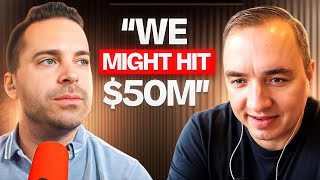
In this interview Matt Paulson, CEO and founder of MarketBeat, walks through how his financial media company generated $5.2 million in advertising sales in a single month and is on track for $50 million in annual ad revenue. He explains the massive audience reach (6.4 M email subscribers, 400 k SMS users, 390 k YouTube followers, 800 k browser‑notification users, 500 k daily site visitors) and how that inventory is sold to a mix of financial advertisers. Paulson details the two primary audience personas – older, male, retirement‑oriented investors and a newer, meme‑stock‑driven younger trader cohort – and how the product mix has shifted from a subscription‑centric model (once 70 % subscriptions) to an 85 % advertising, 15 % subscription split. He describes MarketBeat’s performance‑based ad deals (CPA, CPC, flat‑fee) and the importance of cost‑per‑acquisition metrics, testing spend, and break‑even timelines (often 30‑50 days). The conversation covers the heavy reliance on paid acquisition (spending $1‑2 M/month on ads to generate $5 M sales), the strategic role of SMS (a third of revenue, $300‑$400 k Twilio bill) versus email, and the in‑house technology stack (custom CRM, SendGrid, proprietary analytics). Paulson outlines three major inflection points: early automated earnings‑content automation, the COVID‑driven surge in retail trading, and the transition from organic to paid traffic. He also touches on compliance‑driven ad copy constraints, team size, and the philosophy that the core asset is the audience’s attention, regardless of monetization channel. Finally, he shares personal motivations, community philanthropy, and advice for aspiring creators: focus on incremental improvements over years rather than rapid, unrealistic growth.
Chapters
Last month was probably your best month ever. I think we did 5.2 million in advertising sales. If we do that again this month, we might hit 50 this year, which would be awesome.
What would your answer be? If someone said, yeah, but like, advertising is so reliant on macroeconomic stability, seasonal issues, I would say if those are
your concerns, you're probably not that good at it.
Matt, $1.2 million in ad sales in one week. That is something that you tweeted two weeks ago. So you got to break this down for me. How the heck did you make that happen?
You know, we have some pretty big reach as a starting point. I think Today we crossed 6.4 million email subscribers. We also have a big SMS component. We have about 400,000 SMS subscribers. Our YouTube's up to like 390,000 subscribers. We still have probably 800,000 people that get browser notifications, you know, probably 500,000 people a day on our website. So we've just got a lot of reach, a lot of inventory. And then we've been able to sell that to kind of a mix of different financial advertisers.
Insane. So tell us, tell, you know, folks who are watching or listening a bit more about the business. What is, what is the product that you're selling?
So MarketBeat's a financial media business. The thing that we're selling is basically sales of your product. We are an advertising business. You know, people look at MarketBeat and think, oh, there's a subscription option. Your subscription business. You want people to sign up for MarketBeat All Access. I'm like, yeah, we do. But it's like 15% of our revenue. Most of our revenue is advertising for financial publishers, public companies doing investor relations campaigns, regulation a crowdfunding campaigns, sometimes fintech companies that have some new product, companies selling gold. It's kind of a mix of all of those things. But if it's a investment type product, typically that's what we're promoting because obviously we're an investment list.
Walk me through, like, what is the Persona of the types of people that are in your audience or on your list or visiting your website? Is it like one main ICP or is it like multiple or, or how do you look at that?
So there's kind of two current ICPs. There's kind of the audience that's always been there, which has been the 50/ primarily male individual investor, like you know, at retirement, near retirement, invest in individual stocks, like has their own brokerage account, kind of a hobbyist, where it's, you know, they probably got money in mutual funds in their retirement account, but then they also have, like, their play account where they're betting on stocks and it's kind of their hobby, and they want to brag to their buddy in a golf course about, like, hey, I had the stock, and it went way up. So, like, that's kind of the historic audience. And then since COVID there's this kind of new, younger generation of traders that kind of got in on the kind of the meme stock wave of KMC GameStop. You know, they're looking at what Nancy Pelosi is trading. You know, they're looking at a very different set of things than our older audience are. And, you know, they want different tools, different information. So we, we try to cater to both.
So you posted back in July that you were on track to hit 200 million in, in lifetime, total lifetime revenue by the end of the year. So we're, we're in November now. So you've either hit that or you're really close. Curious, like, what is the split between, like, ad revenue, subscription revenue at this point? Like, has that mix changed over the years? Like, how. How do you balance that as a company?
When I started the company kind of in its current form, this would have been 20, 10, 20 or 11. Initially it was entirely subscriptions. And then for a while it was like 70% subscriptions, 30% advertising. And that has entirely flipped in the last few years of, like, we've gotten really good at advertising, and we haven't gotten really good at subscription side of things. What you find is there are a lot of, like, investment research websites that have subscription products, and they all kind of cap out at like, 5 million bucks a year in revenue because it's just such a. It's such a niche product. And, like, people aren't typically, like, researching stocks for, you know, years on end. So it's a product that, I mean, the churn is not super high, but it's still high enough where it's, you know, limits the size of these businesses that you can build. But on the advertising side, If I have 50 different things I can promote, like, never run out of things to talk about. So now today it's like 85% advertising, 15% subscriptions.
So to. What do you say people like that advertising is a means to an end. Like, yeah, you start your media business with advertising, but then I want a subscription business, or I want an events business, or I want to have something that I own. Like, you seem to be like, nah, advertising is great. Let's keep doing that. Like, like what's your perspective?
I mean ultimately our goal is to generate net income, right? You know, do you really care where it comes from? If it comes from hosting an event or somebody clicking on an ad on your website or somebody signing up for a subscription? I would say my enduring asset is like my email list, my SMS list, the YouTube channel, all the owned media assets that we have. Like that's where the value of the company is, is, is in that attention. So like you could monetize it through subscription or you could monetize it by promoting stuff to your audience. And I'm happy to do either of them.
What would your answer be if someone said yeah, but like advertising is so reliant on macroeconomic stability and other seasonal issues or changes that the advertiser pulling back. Do you feel like you're somewhat insulated from all those things?
I would say if those are your concerns, you're probably not that good at it.
I love the hot take. Let's go.
Because most people when they think of advertising, they think I've got a website and I've got Google Adsense on my website and whatever they pay me is whatever I get. Yeah, that's level one, but there's probably level two, three, four and five of MarketBeat has probably 30 to 50 direct ad deals every month and they're all performance based. So I get paid when I generate results, I don't get paid when I don't generate results. And that informs my media buying of like the advertisers. I'll post back and say these are the people that bought so I know which channels are generating like buyers that people actually buy stuff versus like say some of the Coredge platforms that send you a lot of subscribers but not a lot of customers. The mistake that a lot of people in the newsletter kind of media space these days of like I need to have a big list so I can like tell my advertisers I've got a big list and then they'll want to come come see me. But really it's, it's not like the number of subscribers and cheap CPLs what you should optimize for. It's like for my ad spend. Like what is the cost to generate one paid transaction? Like I can spend $300 to generate a transaction kind of after month one. Like I'm happy with that because I know that over time eventually like it will generate people will buy more than one thing from our advertisers.
Okay, so we got to say more about this. So correct me if I'm wrong, but do you only do performance based deals? Are you not doing any sort of flat compensated sponsorships or. Because there's a lot of creators who are just like, oh, that's terrifying me. I don't know my numbers. I don't, I don't have the conviction that if I talk about something that X amount of people are going to purchase it.
It depends on the type of advertisers, the kind of Agora market wise financial publishing and publishing financial newsletters. Those are all CPA based. So typically, you know, they have a front end checkout price of $100 and maybe they have a back end product that's $2,000 and that are all in. They probably have a $10,000 product somewhere. And so for that $100 transaction, they'll pay me $400 right now. So like I'm very happy to get paid $400 to generate $100 sale. Like I'll do that all day long. For the investor relations kind of crowdfunding campaigns. Those are more either flat fee or CPC based where they're paying me for a number of clicks. But I'm not necessarily going to take responsibility for like anything performance wise on a fundraise. Like then you're a broker and obviously you don't want to be doing that.
I was reading a bit more about kind of the evolution of the company and it seems like, correct me if I'm wrong, but you went from basically 2 million to 50 million annually in 10 years. And I can't imagine that that was very smooth. So like walk me through kind of the two to three kind of biggest inflection points for the business. Things that you change like that just seems like a stratospheric rise in not too long a time.
Yeah, before COVID we were maybe a 5 to 10 million dollars a year business. So 2019 we made 7.7 million in revenue. 2020 we doubled. 2021 we almost doubled against. We went from 7 million to 25 million in like two years. We entirely rode like the COVID investing wave and really capitalized on that because when you search for GameStop short interest, GameStop short squeeze, like we were right there. Same for AMC, same for silver. All of the stocks people were talking about, we were perfectly positioned. And I mean honestly we kind of got lucky because we just. Right place, right time, right. And 22, like the COVID money started slowing down. People went back to work. Not a great year, but then we've turned it around. In 23, 24, 25, like we'll probably hit somewhere between 47 and 50 million this year depending on how the last two months of the year shake out. Last month was probably our best month ever. I think we did 5.2 million in advertising sales. If we do that, if we do that again this month, we might hit 50 this year which would be awesome. Last year was like 41. I think the inflection points, there were probably three huge inflection points in the business. One was like 10 years ago we kind of pioneered the idea of automated financial content of like company announces their earnings. We can kind of take that data, put it into a template, publish an article about it, get it to pick up in Google Finance, Yahoo Finance, MSN Money people would come to our website, there'd be a pop up ad on the article, they'd sign up for email lists. Like our CPA on those email signs was basically zero. So like that was awesome. And then in more recent years we've had a big shift from organic to paid of like these days like 80% of our revenue comes from kind of our paid advertising spend and it's with much less based off organic these days. And that might not be the exact right percentage but the majority of like the advertising revenue we generate generate is because we spend a million two on ads a month right now to generate 5 million in advertising sales.
Hey, just a quick heads up. My in person event Sponsor Games is happening March 15th to the 18th 2026 in San Antonio, Texas. It's the only event in the world where you can practice your sponsorship pitch, do real time negotiation, role play, connect with other creators, landing four and five figure brand deals and potentially win our cash grand prize. Here's what Doc Williams had to say about where his business was at before attending Sponsor Games.
I just felt defeated. I felt defeated. I didn't know how to talk to brands confidently. I hadn't closed any long term deal and I felt disillusioned. I was like I don't think I can really make money on sponsors, but if I can win the games I can make money off of that. And then going out I was like this feels sustainable. This feels like I can actually do this with my business long term.
Any big wins that you can share after the event, I mean pretty much
all my deals afterwards I was like we done multiple 15k deals and friends of mine when I told them about like you just have to do this. My friend, he's always complaining, no one hits him up, blah blah blah blah blah he'd never made more than $500 from a sponsor. I was like, just do this method. I was like, read this. And he closed him at 35k for six events. He's a local creator in a small town and it was just because of that one thing in the bio.
So if you want to have the same transformation that Doc and his friend had, go to sponsorgames.com to grab your ticket. We're capping it at 75 creators this year. And actually I forgot to tell you the crazies part.
Every single meal is catered.
Breakfast, lunch, dinner, snacks.
We're basically blowing a huge chunk of the budget on amazing food.
So what are you even waiting for? Go to sponsorgames.com to grab your spot.
That is absolutely insane. I mean, I heard or I saw you talking about this, that you're, you're spending seven figures a month on paid traffic. I've also like heard that you have a lot of kind of customized software tooling that you've built to do analyses on cohort analyses, ensuring like, you know, that they're able to return. You get a return on those. Like that game feels, I think, very foreign to a lot of creators and media, you know, just influencers in general and things like that. To what do you attribute the, the conviction to spend that much money? Is it basically just like very simple math here, like I'm spending this much and I'm seeing, you know, 5x roas or something on it? Or did you have a fear of shifting every, you know, being largely organic to largely paid, that the quality would degrade?
Well, I mean, it happened over a period of a few years, right? So it's not something we did overnight. So when we onboard a new channel, what we do is we say, okay, I'm going to spend 20 to 50,000 to test a channel just to like know if it's going to work or. So we'll run something, probably $10,000 a month for a few months and kind of watch what happens. Like, okay, we paid $10,000. How many signups did we get? 5,000. We paid two bucks a lead. Then you know, from those people, how much money did we make back? Like how many of them signed up for MarketBeat All Access? How many of them bought something from an advertiser with a conversion postback? What's the open rate, what's the click through rate? And then it's pretty easy to tell like when you have the data, like which channels are good and which are
not good, what's your payback period? That you're targeting historically.
Like we'd be happy with like a co edge channel if we broug broke even at 90 days. In more recent years that timeline has shortened up because I don't know, the market's been hot. You know, these days we're probably break even, breaking even by day 45 or 50. Some channels for break even at 30 days. Like our AdWords last month, like we've basically already broken even on, which is great.
Say more about. I just want to go back to SMS for a second here. Like how do you view. You were replying to someone on Twitter and you mentioned that like SMS is the new email. So like how do you view email versus SMS in terms of your overall strategy?
So last month SMS was about a third of our revenue. It's kind of been that most of the year. Whoa, a third, A third. Yeah. So I had, that's crazy. I have a 3 to $400,000 Twilio bill a month, but then that makes 1.5 to 1.7 million. So like send out a ton of ton texts. You know, our SMS list, 400,000 change. There's no deliverability problems with SMS. Like you have a short code and you send a text to somebody, chances are it's going to go through and they're going to see it.
So give me an example of like, what is an example SMS that you would have sent yesterday or something that like led to. Are these like direct response or is it like hey, go read this article or oh, here's an offer from our partners.
So it's a mix. So like say on our. So we have two SMS lists. Like our new one is the early bird sms. So we send a stock of the day based off whatever and it's like here's the stock of the day. And then like if you click through there's this mobile friendly page of like here's the pros for the stock, the cons for the stock and if we have a recent article, here's the recent article. So like that's kind of the content piece of it. And then like we'll also send an ad from one of our kind of advertisers. Very direct response. You know, it'll be kind of catchy. Text message with a link, you know, maybe Trump just did what question mark and then click through and then there's a video sales letter that's probably 45 minutes long. And then if people get to the end, there will be an offer to buy something and believe it or not, people will watch the 45 minute video. And some of them will buy stuff like on a good text, like it's not uncommon for us to make 5,000 bucks.
Talk to me about your team size. So more on the ad operation side. So like how much do you lean on editorial and copy from your partners? And you're just like sending people the click basically versus like your team actually having a role or a hand and how that offer is positioned.
So in kind of the financial world there's a lot of compliance stuff. So we're not actually allowed to like create our own copy from most of our advertisers.
It's interesting.
Here's the copy. You're going to use it. So what you find is there's a lot of deliverability challenges because like chances are the email copy's been sent before, maybe from a less high quality list. So oftentimes we'll ask our advertisers like, okay, can you create some unique copy that you don't give to anyone else to give to us? And a lot of times they'll do that. Sometimes you'll maybe mix like you'll have like the ads on top, but then you maybe put an article on the bottom so it doesn't look like the same ad that's been sent out a hundred times. There's a lot of, a lot of stuff like that that we try to kind of get around that but typically it's entirely the advertiser's copy and we're not allowed to mess with it. Some of them won't even let us experiment with subject lines. Like we have to use the subject lines they give us.
Yeah, that's wild. Okay, so you had posted on Twitter that we were going to have me be having this conversation and someone asked an interesting question. So shout out to Marketing Math, he asked how and where do you find all the lead gen sponsors that you promote after sign up and what do you say to them to get you to give them money? So yeah, I'm really curious about this, this whole kind of co reg lead gen type type model.
So like when you're doing kind of PPC meta adwords, like you want to make as much of that back on day one as you can. So we have a very robust co edge funnel and if you go to MarketBeat and you sign up, you'll see it. But we use networks like we use afteroffers.com they're great. Tim and Emil from California, like I've known those guys for probably 10 years and like most of the time their unit shows up and like, they pay well and they pay the most. So like, we show them first. Investing Media Solutions has kind of the same thing. And then we also intermix some of our own ads, like from our kind of bank of advertisers that have. And if, like, if it's like we have a, what are a lot of what are called CTO offers, or click to opt in where like, you like, click the get the free report button, we'll pass your email address to the advertiser to send you the report. And then, you know, they have your email as well. Like, people will pay six bucks for, you know, that kind of opt in and like, it works really well. So I mean, a lot of it is like, we have relationships with advertisers. We've had them for a long time. We get a lot of referrals for, from our existing advertisers because all the people in the industry talk and like, they're all looking for traffic. And who do you know that's got good traffic? And you know, we do. So we get to get a lot of referrals. And then, you know, once you have a relationship, you know, people are always looking for more. Like, you know, what placements do you have that we're not running? Like, and sometimes you have to convince them. Like, so we started doing like browser notifications in 2016 before anybody really was doing them as an ad channel. And we like had to like, give people like free traffic to say, like, no, this is going to work, try it. Like, here, just give me a link and I'll send you, send you some leads. And like, once we persuaded them, like, no, this is good traffic. Like, then they came back and bought it.
When you're lying, lying in bed staring at the ceiling at night, or maybe you sleep like a baby, I don't know. But when you're staring at the ceiling, are you thinking about ad operations, like, in terms of fulfillment and execution of this, or are you thinking about like, and deliverability and so on? Are you thinking about sales? Are you thinking about like, how your sales team is performing or like, like, what, what is top of mind for you these days?
Our constraint is not, not demand. Like, we have more advertising demand than we can fulfill. Like, I could have double the number of ad clicks and probably sell all of them to somebody. So like, that's not the problem. I think the art real challenge these days is probably just on email engagement of like, you know, we have 6 million people in change that have opted in that haven't unsubscribed, you know, the 90 day active number is maybe like 3 million. So like that means there's another 3 million people on our list that you know, we can't email them anymore really because like they aren't opening emails and it'll tank your numbers if you email them very often to like 3 million people disappeared. Like are these junk email accounts? Like who are these people? And like can't email them because they're not active active and it'll tank your open rates if you do. And like how do you re engage those people? We've tried a bunch of stuff over the years with you know, a mix
of results and why not purge them from the list? What's your take on that?
We do purge people from the list. Like but it's mostly like if you haven't, say you're a new subscriber, it's been 21 days, you haven't opened anything, you haven't clicked anything, then we'll just bounce you from the list. You know, if somebody subscribed and they have engaged before, you know, we always think there's a chance to get them back. So like we don't really want to permanently bounce them.
But you the cost to keep them on the list is small enough that it's nothing, it's zero because of why
we built our own CRM. And then we email through SendGrid. So to have an entry in our database for Justin who hasn't opened an email in six months, the cost is zero. So there's no downside to keeping people on a list. Interesting because like a lot of ESPs charge you based off your list size and like right. You know, sendgrade is really based off the volume of email we send. It doesn't matter how many people are in a database.
At what point in a media publications journey does it make sense to invest in your own infrastructure like that you
think we did it day one. For me it was the right answer because I'm, you know, have a background as a software engineer and now we've got six devs. Like if you're not a technical person, like you probably shouldn't do it. If you are a technical person, like there are some values but I also have to deal with a lot more headaches that most people don't deal with. Like I had to build my own like list unsubscribe mechanism, you know, stuff like that where it's a lot more technical and like you can shortcut a lot of it just by signing up For Beehive or Kit or whatever the hot platform of the day is.
Was it ever in your mind that, like, maybe I should sell this tool that we've built? Because it's pretty sophisticated.
People have asked about that over the years. It's very personalized for us. Like, building like your own platform for you versus, like, building commercial software that you sell to other people are two very different things. And, like, one thing that I've been pretty good at over the years is, like, understanding what business I'm in and what business I'm not in and not getting distracted by the businesses that I'm not in. Like, we're building out a new YouTube studio downstairs for our YouTube channel. And our YouTube gal was like, we could make money renting out the studio. And like, yeah, we could, but we're in the financial media business. We're not in the studio rental business. So, like, that's not why we're doing this.
So why are you doing it? Why are you investing in YouTube as, like, another channel one?
We make money off of it. I mean, we're probably making 75 to 100,000amonth off of it right now. And top line and granted, just from
AdSense or also sponsorships.
No. So we take the. So what we do is we take kind of the financial publishers that are like the expert on whatever topic, and we'll have them as guests on our YouTube channel. Like, we sent Bridget down to Las Vegas a couple of weeks ago to go to the stansbury research research $5,000 event. And then she was on site and interviewed all the experts. And then on the videos had, like, links, had like a QR code to their offer, and we generated a bunch of sales doing that.
Wow, interesting.
So we're like, nobody in financial publishing has really figured out YouTube, so we're. We're trying to be the first to do it.
Do you ever just sit and think? Like, back in your early days playing the Sims, having your selling banner ads on your website? Do you ever sit and think, like, wow, I've come. I've come a long way.
Have definitely come a long way. When I entered college, I thought I was going to a math teacher. And then I realized, like, oh, that's not a good job. And then I switched my degree to math. And then they said, you should really do math and computer science. And I said, okay. And then I enjoy the computer science aspect much more. And eventually, what time to kind of mix the, like, web ad kind of mind and then like the programming mind and build a cool Business from it.
What is it all for for you? I mean, I think that we've talked a lot about the kind of technical aspects and the top line results that you've been able to generate with this business. But I know you're really involved in a lot of other things in your life in terms of philanthropy and your faith and like, I don't know what is, what is playing this game? What's it all for for you?
I don't know that I have like a grand vision for my life. I just want to have a lot more, more good days of my life and bad days and I do the things I enjoy doing and enjoy giving back and you know, making an impact in my community. And I can look out my window here and just see like startups. Who follows? Which is the startup ecosystem organization help start like a little bit down from there is the Levitt. That's like a outdoor concert venue where we sponsor 50 free concerts every summer. You look over that way there, the MarketBeat Holiday Christmas Plaza. We just like to do things that are fun and like, yeah, we like give money to social service organizations that are helping people in need as well. So it's not all just fun stuff. But MarketBeat makes a great net income every year and we love to give part of it back to our community. Love seeing the impact that it makes and making the place we live a better place. And another thing like about me that most people don't maybe recognize is like, so if you're a business leader In Sioux Falls, South Dakota, you get invited to 10 events a week that you could go to of like you should come to this banquet or you should come to the chamber annual meeting meeting or come to whatever. And it's a lot of frankly noise. But I think I have attended maybe like two after 5pm meetings the entire year because like after 5pm like I'm in dad mode and like do not give any, any care about like all of this, like all of the stuff other people want from me in universe. So weekends I play with my kids. Basically all I do, I will work on weekends before they get up. But it's mostly like kid time. Like what do you guys want to do?
Okay, that's amazing, man. If you had to give one piece of advice, advice to an aspiring creator, entrepreneur, et cetera, who looks at the business that you've built in the life that you've built and says like, man, I would, I would love to have that one day. What would you tell them?
It's very much a journey of like, you know, you're not looking to build a $50 million media business overnight. You're looking for that next 10% improvement and then just continue to look for those over a very long period of time. Like this is not a microwave business where you can go. It's not like these AI businesses that are going from 0 to 100 million ARR overnight. Like media businesses, they take time and that's okay. Like if you be committed to it for like 10 years of your life, like you can build something awesome, but it's just not going to happen in 6 to 12 months.
Dude. Well thank you so much man. People want to learn more and sign up for Market Beat. Where should they go?
Marketbeat.com I also have a personal newsletter if you just want to follow like all of the Matt stuff. Matt Paulson.com I publish quarterly update. It's like one email a month at most if you want to want to sign up for that@matt paulson.com Amazing dude.
Super appreciate it.








