Annie Capital: Investing in the Power of Women
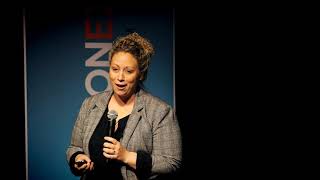
Live presentation by Cody, managing partner of Annie Capital, describing the firm’s mission to increase funding for majority women-led startups in North Dakota and South Dakota. She outlines Annie Capital’s investment criteria (majority women-owned/led; regional ND/SD focus; early-stage; high-growth potential; defensible barriers to entry), explains their revenue-based financing model (monthly repayments as a percentage of top-line revenue; non-dilutive; not tied to an exit), and shares lessons from building pipeline and founder relationships (founder engagement, simplifying navigation of resources, and redefining success). She also announces an upcoming Women’s Entrepreneurship Week and a growth summit for female founders in Fargo (discount code: Zeel).
Chapters
Thank you.
Thank you. Hello. Hello, Sioux Falls. Well, thank you so much for watching, welcoming us, and appreciate the work that Nick and Tim did to bring all of us together. As Nick mentioned, my name is Cody first and I have the privilege of serving as the managing partner of Annie Capital today. Just want to spend a little bit of time talking about who we are as a company, what we look for from an investment standpoint, the funding mechanism we use, and then some lessons we've learned as we've tried to build the pipeline over the last year. So we started Annie Capital a little over a year ago with the intent to invest in the power of women. We do that through the most obvious option, which is funding, but we also do that through education, community development, and advocacy. And we really chose to do that because the data on how funding is distributed across female led teams is pretty appalling. So thought we could try to fix that where we live, which is in western North Dakota, and focus on kind of our backyard. So our investment preferences are number one. We're looking at majority women owned lead in companies. Specifically, we're betting on women because we actually think it's a safer bet. So if you think about investment, your whole goal is to de risk your portfolio. And for us, we know that the data shows that women are typically a little bit more capital efficient. They're very realistic about their projections. I never get pitched a sales forecast that shows an immediate hockey stick. And so trying to make sure that we're focusing on that as an intentional strategy, not something we're doing because we feel sorry for women. So we look for the majority women led and owned. Secondly, we look at North Dakota and South Dakota. Our work would be a lot easier if we had a bigger region. But we purposely are betting on where we live because we feel that great ideas should be able to happen anywhere, and we believe in our backyard. So I have two partners, and the three of us all grew up in really small towns in North Dakota. We've got ranching roots. And when we think about what it means to be someone who lives in North Dakota and South Dakota and chooses this day when it's snowing in early October, we feel like it's grit and it's humility and it's connection and it's caring for your neighbor and it's being honest and it's having your handshake means something. And when we think about the people we want to invest in, those are people we want to do business with. There's a lot of data that shows, unfortunately, that A lot of investment relationships last longer than the average American marriage. So if we're going to do business with someone for that long, we want them to be someone that we feel like we can invite over to Thanksgiving and have some really good conversation with. Beyond that, we are sector agnostic, so we get asked a lot, what sectors do we invest in? Our sector is women in North Dakota and South Dakota. If we niched any harder than that, we'd have a potential pool size the size of a puddle. Right. So specifically though, we are looking at high growth potential. So that means that automatically eliminates some of the more lifestyle type businesses that maybe don't have the growth or scale that we're looking for. We also look at early stage, so we want to partner fairly early. For those of you that are entrepreneurs in the room, I would guess that every single one of you can think about a decision you made within the first three years of your business that has either had a really good impact on where you are today or has had a really negative impact on where you are today and wish you could take that one back. We also know that there's a tremendous amount of vulnerability in those first three years. And so being able to pick up the phone to call someone and say, I don't know if I'm going to make payroll or I got to fire someone, and I've never done that, or my partner is wondering why I'm spending all my time on the business. Those conversations are pretty intense. And I think being an entrepreneur just takes so much guts to decide to do it to begin with that the number one thing they need is someone who just says, I hear you and you are doing great work and let's talk through some of the ideas. And so by partnering early, we feel like we can get in to help work through some of those big problems. By no means do we have the answers. Most of the time, the entrepreneur does have the answer. They just need someone to kind of process that. And then lastly, we look at barriers to entry, which is important to every investor. We want to make sure that someone bigger, with more experience can't come in and replicate your model and do it a little bit faster. When we decided to launch any capital, none of us grew up wanting to be investors. We didn't even know what that was. Like I said, we grew up in small towns. And so when we decided to do the company, we spent a lot of time looking at the capital landscape in North Dakota specifically and seeing kind of what we felt was missing. Beyond that, we also looked at what was funding that we would have taken when we built companies and what would have been kind of the non negotiables. So luckily there is an increasing field of study called alternative forms of capital. And it's an emerging kind of community of practice that is helping all of us recognize that there's got to be more than just going to the bank or going to venture capital. So we landed on revenue based financing. What that means is that it combines some features of debt and some features of equity. But most importantly, it's a flexible payback system. So just like a loan, we get paid back on a monthly basis, but it's a percentage of top line revenue. So when you start your company, everyone's going to ask you for a pro forma and it's all made up, right? So you're doing your very best to make some assumptions, but that's just what they are. And so we felt like the flexibility was really important so that when you paid us back, you weren't getting cash strapped if you had to pay us back on a fixed situation. Secondly, it's non diluted. So that means unlike equity, we're not taking an ownership position. And what that really, really means is that our success isn't dependent on an exit. So we don't care if you're thinking about selling your company, we don't care if you're thinking about doing an ipo. What we care about is growth and profitability. And then lastly, where we felt there was some missing pieces in the landscape was being able to invest in Blue Sky. So those ideas that maybe don't have a 10,000 square foot building that they need to get off the ground or a fleet of vehicles or 40 employees. There's a lot of opportunity to get and build great companies, but there's no assets behind them and that's pretty tough for the bank to fund. So we want to make sure that the great idea is happening in our region. Don't leave the region because there are no options or just end up sitting on the shelves, which is where the Blue sky park comes in. We've been doing this work for, like I said, a little bit over a year and we've learned a lot. Some things have gone the way we thought and some things have gone totally differently. So just wanted to share some lessons on kind of what we've seen from building our pipeline and deal flow and how we approach it. Number one is founder engagement. I've been consistently surprised at how many people work in investment, but don't often go talk to entrepreneurs. And so for us, founder engagement means showing up where they're at. I think more specifically for women, it was recognizing that a lot of women aren't showing up to events unless it's really clear what the ROI is on their time. So they. It's not fun for most women entrepreneurs to show up to a founder's drinks unless they know someone that's going to be there. Those of you that are in the room, if you've ever been the only one in a meetup, it sucks and so you don't want to keep going back into that space. Secondly, what we learned is that women who have started their own companies and choose to have a family are constantly battling where they put their time. And a lot of events in startup happen right around daycare pickup or childcare drop offs. And, and so we've been more intentional about engaging with our female entrepreneurs through webinars online over lunch so that it's not one more thing to have to think about when they're dealing with the kid factor. And then lastly with founder engagement, I think one thing that we can all do better is just help connect the dots a little bit. We know that the more connected you are, the more successful you're going to be. And so how do we help make sure that maybe it's never going to benefit us, but if I know someone that might benefit from knowing Peter and his experience at techstars, can we just send the email and get things moving? From a connection standpoint, yesterday I had a call with a woman who she's working on a really cool company and she said, man, I just feel so alone. Right. That's a very real feeling. And so how do we make sure that we're creating a community for people to feel like they can say out loud, I am scared to death, but still doing it. Anyway, I read something yesterday that said be brave enough to suck at something new. And that is so true because it's hard. So making sure that there's some space for that kind of vulnerability and connection. The second big thing we've learned is how to uncode the process. So we are new to the entrepreneurial ecosystem and what we found shocking is how many acronyms are used everywhere. So if you don't know about the SBA or the SBDC or TIF grant or the tax incentives or who you should talk to at the NDSU search or the SDSU piece and do you know this person who runs innovation and like, it's very overwhelming. And when I think about what entrepreneurs are mostly focused on, they're focused on trying to figure out how to build their company. They don't have time to navigate what all of this means. So honestly, probably the biggest value that we help is if a woman calls and says, this is what I'm working on. We may never fund her, but I can at least get her an intro to where to start and say, here's a commercial banker that I trust. Have a conversation with them. Right. I think the more we think about the fact that none of us exist without entrepreneurs, how do we make this easier for them and how do we go along the path with them as they, as they build their companies? Entrepreneurship is at an all time low. It's like at a 40 year low right now, which is really frightening because that is where all of our net new job creation comes from. It's also where all of our innovation comes from. And when I think about why that maybe is, I think it's because we scared so many people out of it. So if you've been to talks about entrepreneurship, usually there's a panel and someone says it's the hardest thing you'll ever do. 98% of them fail, be ready that it won't work. That's not very inspiring. So as we think about uncoding the process, I think part of it is also helping people realize that yes, it, it is hard. Yes, you are going to sacrifice some things, but what is the upside? What happens when it goes right? And how do we talk about those successes? And that leads into kind of our last point, which is redefining success. So many people need the conversation around what does success look like? And maybe it's much longer than you plan. Maybe it's a financial goal, maybe it's the ability to hire people. Maybe it's also though, the ability to have flexibility. And everyone's version is a little bit different. What we help women understand is that success can be thinking a lot bigger than a lot of them do. And to think about how to grow from 100,000 to a million in revenue a year to ideally 10 million revenue a year and hire and hire more people. I think the other thing about redefining success is something that we've had to do internally. When we started this, I never imagined that we would sit at the center of behavior change and helping, not just women, but partners. Think about this all differently. And for anyone who's ever been in therapy or is a therapist, behavior change takes a long time. And so we've had to have our own dose of this Might take longer than we thought it was going to be. The question I get asked all the time is how many companies you have in your portfolio, how much have you distributed or deployed from a capital standpoint? And to me, I think that's such a surface level version of success, because what actually means success are the conversations that happen behind the scenes that allow a woman to be brave enough to say, I'm going to quit my side hustle and do this full time. I'm going to go hire someone. I'm going to go work for a startup even though it's risky as hell, leave my corporate job. Those pieces of success don't get to be measured, but we firmly believe that that's what's creating the power for us to continue to invest. So happy to answer questions and appreciate the time.
Nick, thank you very much. Cody.
That's unnerving. Thank you.
Cody really does deserve a huge standing ovation because she actually spoke at Rapid City Innovation Expo on Tuesday and then Wednesday morning shot up and spoke at 1,000,000 cups in rapid City. She drove over here, had dinner last night, and then this morning she's at the Zeel center again doing a talk. So thank you so much for your time. Obviously, it's incredibly valuable, so we really appreciate having that imprint. We were talking last night, you told me a little bit about a big announcement coming up in Fargo, and can you maybe tell the crowd a little more about what's going to be going on here in the near future?
Yeah. So in two weeks, we are partnering with a couple organizations to host the inaugural Women's Entrepreneurship Week in Fargo. The key signature event during that week, though, is a growth summit for female founders. We've got 25 powerhouse women coming to speak on skill development that every woman founder needs, every founder in general needs. So negotiation. Microsoft is sending their top three sales women to talk about sales. We've got founders themselves being up to tell their stories. So actually, for a thank you to zeal earlier today, we've got a code out there for anyone in Sioux Falls that if you are able to join and we have some women coming up from Sioux Falls, the code is Zeel and you'll get a discount off your ticket. So it's just growth summit for female founders. You can check it on our website or honestly, it's on eventbrite so you can probably find it that way. Awesome.
Perfect. Thank you for your time, ladies and gentlemen. Cody, first.








