In this interview, Matt Paulson discusses how his personal temperament—characterized by low alcohol consumption, abstaining from smoking, and rapid emotional recovery—has shaped his approach to business. He recounts several major setbacks, including lawsuits, a Google delisting, and a SendGrid suspension, emphasizing his ability to bounce back quickly. While the interviewer likens his steadiness to Warren Buffett, Paulson clarifies that his focus is on building great businesses from day one, paying employees well, and contributing to the Sioux Falls community. The conversation then shifts to email marketing, where Paulson critiques the bias against pop‑ups and email, describing a libertarian stance that values customer choice, higher sending frequency, and retention through delight, while accepting unsubscribes as a natural part of the funnel.
Chapters
You don't seem like you're someone who worries about that, Matt Paulson. I'm wondering, do you think— I mean, when I just kind of see your demeanor, you strike me as someone who might be less prone to temptation, let's say, than the average person. I mean, I'm wildly speculating. Maybe you're not, but do you feel like you're in better control of your emotions than most people, and that equanimity has helped you in business?
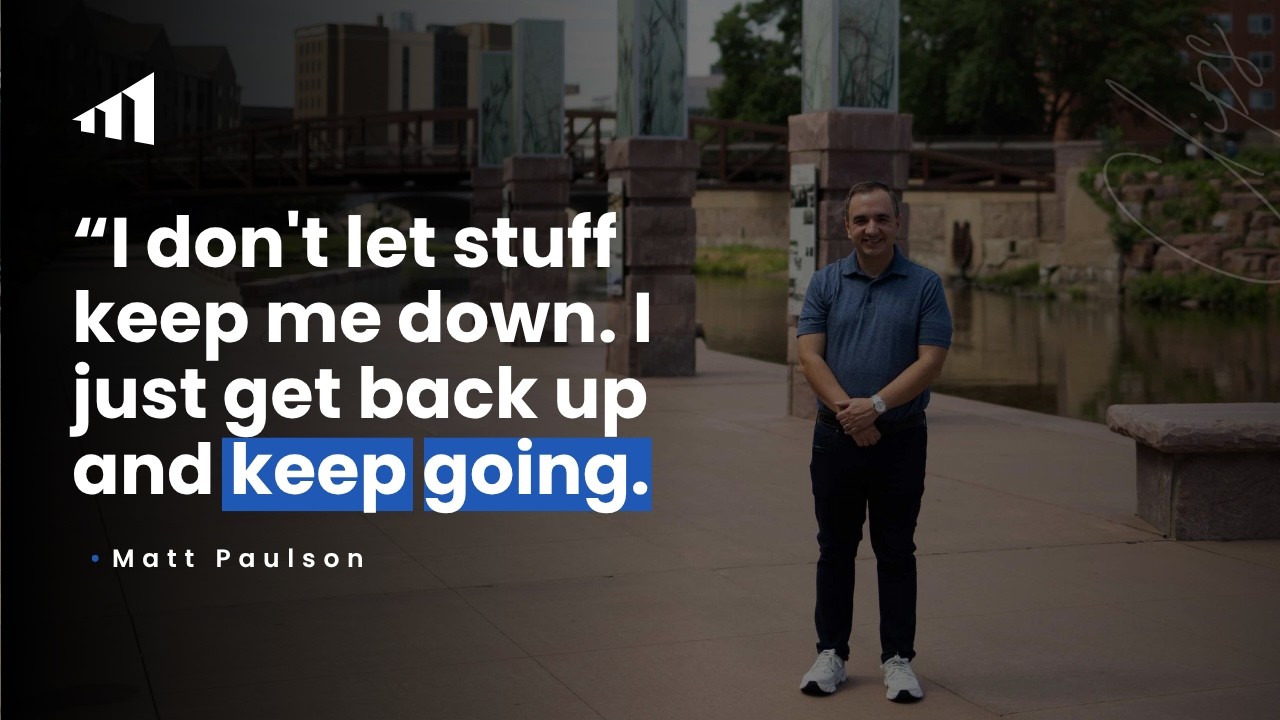
I think there is something to that. Like, I don't drink much alcohol. I've never smoked in my life. I will get mad about something, but then like by the next day, it's like I just don't let it stop me from doing stuff. I think one of the things that is unique is like I can get hit in the head with a baseball bat by something, and then the next day I'm kind of back up ready to go. Like, I've had bad stuff happen in business, like had dealt with stupid lawsuits over, let's say professional plaintiffs, stuff like that. Or I've had sites get kicked out of Google. SendGrid suspended us on Thanksgiving Day one year by accident. That was a bad day. So I don't let stuff keep me down. I guess this may be the point. You just get back up and keep going.
And maybe the corollary that I'm guessing you don't overparty perhaps when you succeed. You know, there are companies that I'm familiar with, for example, that when they've done well, great, you know, spending tons of money and they go poorly, everybody's got to tighten the belt. You know, the level-headed way is probably the better trajectory. I mean, it seems like a Warren Buffett kind of thing like that. I think he succeeds at investing partly just is largely because of his temperament. Yes, he's a super smart guy too, but he's not the kind of guy that swings wildly one way or another. And you strike me as being in a kind of a similar mold. Would you agree on that?
Um, and I don't want to compare myself to Warren Buffett because there's no comparison there, but like what Warren Buffett has done great, like, is, you know, he will buy great businesses, just hold on to them forever. But like the key with that is they have to be a great business on day one. You know, my philosophy is I want to go build a great business that makes lots of money so that I can do— pay my people really well and do a lot of cool stuff in the Sioux Falls community where I live.
Let me shift gears and read you a quote. This is from one Matt Paulson in Email Marketing Dismissed. Demystified is every now and then I'll hear someone that runs a website say something like, I hate pop-ups and I hate marketing email. I would never use them in my business. What they're really saying is I hate making money because email marketing is an incredibly effective marketing strategy. They just can't get past their personal biases against advertising to recognize the opportunity that's before them. So there's going to be a bias in how I ask this question. And I mentioned earlier, like, I'm from the traditional space, right? In fact, kind of downstream in the funnel. I ran a newsletter for 10 years at Motley Fool. I built the research department, but running the newsletter was kind of like where I spent most of my time. And that's all about retention. That's all about making the customers that have gone through all the steps in the funnel, like, super delighted so they pay again the next year and the next year, right? So I guess, I guess you kind of touched on it earlier that while you'd like your unsubscribes to be a little bit better, a little bit lower, better equals lower in that metric. It's a free world. I think you would say that people can unsubscribe if they want to. If they're not happy, they'll leave. And meanwhile, if someone's engaging with your emails, as I found out, like you guys increase the frequency of the sending. And so it's kind of like choose your own adventure, right? And so it's a libertarian sort of approach. Is that a way to fairly describe it?
Yeah, I think the difference is that like Motley Fool is a financial publishing business. Like we are not that. We are a financial media business. Like we're a publisher's clearinghouse. We have all of the offers and we want to send them to all of the people. Publisher's clearinghouse is not worrying about their unsubscribe rates and neither am I. Like, My goal is to send as many customers to Motley Fool, MarketWise, Agora, and everybody, company like them. That is how MarketBeat makes money. And the more that I can do that, that's what I want to do.