Creating a Regional I-29 Startup Ecosystem
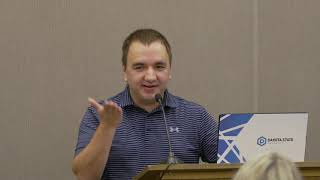
Matt Paulson outlines a plan to build a startup ecosystem along the I-29 corridor from Fargo to Omaha. The region lacks late-stage capital and has sparse population, but has existing assets like the Paulson Cyber Incubator and Falls Angel Funds. He proposes expanding pre-seed funding, strengthening venture capital, building mentorship networks, and creating a digital regional entrepreneur community.
Questions this video answers
Matt Paulson
2021-09-04
I-29 corridor between Fargo (north) and Omaha (south)
Approximately $25,000 (first check money in)
About $1 million
Chapters
I apologize for the long bio. I will try to do less stuff in the future. Great to have all of you here with us today. Really cool to see this program and this building get utilized in this way. You know, when I was a student there was a small program called the center for Techno Entrepreneurship that lasted a year. But really that was the first time somebody else believed in me. And that kind of set up a chain of events that led to market being the business it is today and just the opportunity for me to give back in this way. I love that the Paulson Cyber Incubator is opening. I love the programs that it's offering to students. As those of you that know me, I'm always thinking about what's next. So today I want to talk about what's next. And really what I've been thinking about in the last few months is how do we take these points of light? Startup, Sioux Falls, the Paulson Center, Emerging Prairie, all of our disparate efforts to foster entrepreneurship in a region and then turn that into a regional startup ecosystem. When I was thinking about this, I started off with a question. How do you build a startup ecosystem with a population that is spread out and just frankly there's not very many of us. You think about how many people are starting a fundable tech startup in South Dakota in any given year. That may be two or three companies across the entire state. In a company that could take capital, utilize it wisely and build a growing business. You really can't build a non profit around that because you'd have staff members that are sitting around not doing much most of the time. So we kind of need to think more broadly about either the geographic area that we serve with this type of stuff or the types of people that we serve with this entrepreneurial resources. Do you expand it to a broader geographical focus or do you also try to serve small businesses and maybe non research based startups? And those are good questions to ask. When I think about this, to me that means we can't really have maybe a Madison startup ecosystem or even a Sioux Falls startup ecosystem or an Aberdeen startup ecosystem. We really need to think about what the startup ecosystem looks like across the I29 corridor. You know, the boundaries that I think about are Fargo in the north, Omaha in the south. Omaha has some great resources, their big Omaha community. Fargo has Emerging Prairie, we have startups. Who follows in Sioux Falls, DSU has the Paulson Center. And how can we take all these efforts and coordinate them to create a broader set of resources to entrepreneurs? We certainly have Some challenges in terms of population, geography, state support, but there's a lot of opportunity we have as well in terms of we just have a real can do attitude. We try to make things happen and get things done. And I think we, over the next five years, all of us in this room and everyone else in the state and the region that supports startups have the opportunity to create just a broader network of resources for founders and the people in their communities. So this is startup capital, it's startup community, it's mentorship, it's education, and it's other resources that founders need to kind of get to the level of success that they're hoping to achieve. So kind of the rest, what I want to do in the rest of my 10, 15 minutes is talk about kind of four ways we can move in that direction. I wouldn't say that I've got a grand vision today, but I do feel like this is a direction we should all think about and maybe head towards. The first thing I want to talk about is capital in the state. I kind of think of about four different stages of capital. There's kind of the first check money in. Who's going to write that first $25,000 check to the young 2008 Matt Paulson, who's starting his business and needs some money just to try to figure out if it's going to work or not. There's kind of that Falls angel fund pre seed seed stage, depending on what you're going to call it, that's writing first hundred thousand dollars check to $250,000 check. There's kind of that next stage, that million dollar check and then there's the $10 million check after that. So in South Dakota, in California these would have entirely different definitions. But in South Dakota, what I would call a pre seed stage is that first $25,000 check in. So my idea that I had with this was to take any company that graduated from Falls fintech in Sioux Falls, or the Co Starters program in Sioux Falls, or any incubator program that we might form at DSU and offer them a fixed amount of capital, whether it's 10 grand, 25 grand, kind of at fixed deal terms to keep kind of the process and administrative overhead, head on the low side. But it'd be a standard amount of money that you could give to any startup that aims to be high growth and leverage technology and hopefully get acquired someday. I looked into this, I thought really hard about doing this. I took a bunch of meetings, got a bunch of advice about it, and I Realized it's not viable to do that as somebody trying to make money off the opportunity. You think about it, you get a $500,000 fund, you do 25 grand at a time into startups, you take a 2% management fee off that, you have $10,000 in management fees a year to run a fund off of. You can't do that, you need somebody to manage it and you can't do that off that amount of money. So when I think about kind of a pre seed fund that's going to write the first checks, maybe it could be private capital that funds it, but it would really need to be run by either the state or university, cooperative or non profit that is primarily concerned with economic development. And profitability is kind of a second goal. I think you'd need about a million dollars to really give this a solid try. And it's a tough do. It's going to be tough to do. Somebody have to be willing to administer it. But it's an idea that is worth thinking about. One natural way to do this would be to take the state's proof of concept funding program and expand it. You know, right now it's primarily focused on research and technology transfer. And what if we could expand that to be focused on a broader set of businesses that leverage technology, want to go that venture capital track and eventually get acquired? I think there'd be an opportunity to do that with the right political support. And I think that that might be the best way to do that. The next stage, kind of that seed stage. And this is kind of where we have, we have some real strengths in South Dakota that we don't always appreciate because we think, you know, we always think we're the last place in everything. Turns out that's not the case at the, you know, $250,000 check stage. Thanks to Tim Wheelburg and the Enterprise Institute, there have been 14 community based angel funds in the state over the last 15 or 20 years. So you know, there's been funds in Sioux Falls and Rapid and Aberdeen and Wild Watertown, Brookings and Yankton. This includes falls angel funds 1, 2 and now we'll be launching falls angel fund 3 in the fall. And together they've put between 15 and 20 million dollars into high growth companies across the state. So typically These funds invest 50k to 200k at a time. Just kind of depends. Our most recent deal was fomento some gallons out of USD. We invested $150,000 out of them. So it's just really true risk capital that's Hard to come by and it's an asset for our state. Our neighboring states don't have this as a resource and our friends up in North Dakota regularly send us their founders because they don't have venture capital resources like this in our state. So we're able to steal that deal flow and that's good for us. So we should all send thank you notes to Al Kurtenbach, Duane Sanders, the electronics guys who got the Enterprise Institute going. It's real asset for the community and we should be happy to have that. Next great opportunity for the state is what I call kind of the Series A stage. And for South Dakota that probably means a 1 to 3 million dollars check in the West Coast. That would probably be a 30 million dollar check in today's crazy world. But we have the capacity to create a 10 to 15 million dollars fund that I'll invest in high growth technology companies in South Dakota and nearby states. And this is, it's something we're working on. I can't really announce anything today. I got a partner in the opportunity, but I think later in the fall you're going to see an announcement of a new venture capital fund that will do this. And it's an opportunity that's coming finally in the Series B, C and D rounds. The later money, we don't have that capital here and we're probably not going to get it for a long time. There's nobody around that's just ready to write a 10 to 25 million dollars check for the right company that would maybe describe four or five people in a state and they're not necessarily looking to do this. So what we need to do is develop regional connections to larger venture capital firms that are willing to write big checks to this region when the right opportunity arises. That's something I've been working on and hope to something we should all continue to work on. So in addition to kind of the next kind of steps for vc, what I think we can do regionally is do something with mentorship. So historically there's been. We've had an organization called score. It used to be called the Service Corps of Retired Executives. It's a nationwide thing with local chapters. There's a South Dakota chapter and that organization has had some challenges in the last few years. I believe they're down to two or three mentors statewide and there's just very little activity in that organization. And it's really time for us as a group to start thinking about what an I29 or a statewide mentor network would look like. That Kind of operates as a standalone thing. We've kind of taken our first stab at this through Startup Sioux Falls, thanks to the efforts of Sarah Lum and Brianne Maynor over there. But we already have 40 entrepreneurial mentors that are available with expertise in marketing, fundraising, technology, legal, venture capital, and just a host of other topics. We've made about 50 mentor connections over that time, which I'm thrilled with. And we're still looking for more experts. So people that know about manufacturing, agriculture, and things that maybe we have an expert on yet. We would love to have more volunteers. So if that's you, please let me know. There is also an opportunity kind of at the university level to say, okay, what is a more advanced or mature version of a mentor network? In Rapid City, they have an EIR network through the School of Mines. And there's been a group of university tech transfer people at DSU and SDSU and USD and other places been talking about what this could look like. I think it's a great idea. I hope we continue to work on it. An EIR program, there's probably some more formality to it, and with intellectual property, you have to protect that. So there's more documents and legal protections. But I think there's a great opportunity for all of the universities together to take the region's experts, recruit them to be volunteer mentors, and then kind of create a pool of those mentors that are available to tech founders who need help and advice. And thank you to Ashley and Kathryn and Joni and everyone else working on that, and hope to see great things come out of it. Third, there's four opportunities. I probably got five minutes left. Don't worry, I'm about done. I think we could create an i29 startup community that kind of spans that corridor from Farquhar to Omaha. So one of the more hidden causes of entrepreneurial loneliness or entrepreneurial failure is loneliness. You don't think about it. But when you're in business for yourself and you're just getting started, not a lot of people believe in you, not a lot of people relate to you. So you could have your friends, your family members say, yeah, maybe you shouldn't do that. You should go get a steady job. You can have your parents wondering, are you really making any money doing this? Is this a thing? Or is it just something that only exists in your mind and you've got problems and challenges that other people don't have and they can't relate to you? Because if I'm wondering, how the heck am I going to make payroll next week. Not many people can relate to that challenge. So in my mind, it's important for there to be a thriving community of entrepreneurs in the state to serve really as a support network for founders. But then again, how do you do that in communities like Madison and Brookings and Aberdeen and Yankton or Mitchell, where you only have a few of these businesses? So I think we kind of take the lessons we've learned from the pandemic and really create kind of a primarily digital community of i29 startup founders that meet primarily online via Zoom or Discord or Slack or Facebook group and find a way to have regular points of contact for those people with other entrepreneurs. I think we could also think about What a regional 1,000,000 cups event would look like that operates entirely online. For anyone not familiar, One Million Cups is a weekly networking event that we have in Sioux Falls. They've had it over the years in Brookings and Aberdeen and Yankton, they've had it up in Fargo, and it's kind of come and gone in some of those communities. But why could we not create a regional version of that where it's on Zoom and then the different communities take turns hosting it? So this week is a Madison business that gets featured. Next week is an Aberdeen business that gets featured. A week after that is a Mitchell business or whatever. I think that would be an opportunity at some point. Obviously, with anything like this, I'm in a mastermind group. We meet twice a year in person, but then we meet monthly online. I think a community like this should be mentored or cemented by in person events that happen a few times a year. You probably rotate those events between communities, really to make it so that no one community is in charge. That way you have a regional group of people that can all be part of this community and relate and work together toward their common success. Fourth thing, I think we have a lot of opportunity to foster collaboration among the region's universities. We have a lot of great entrepreneurially minded students, have some of them in this room, and university faculty and staff that really want to support small businesses and startups in the region also have many of them in this room. And we've got several schools that graduate tech students, business students, biotech students already. And collaboration has historically been a challenge. You know, we all want to make sure that our school is the best school, and of course, DSU is the best school out of all of them, as we all know. And sometimes there's kind of a divergence of alignment and interest because we all Want our school to be the best school and you know, sometimes that is not in conflict, but doesn't always align with what's best for the entire region. So I'm really hoping over the next couple years that our universities can maybe set aside some of those historical differences, work together and kind of create some kind of cooperative organization that's focused on tech transfer and encouraging students to found tech startups and collaborate with one another. Thankfully, our state's tech transfer people have already been meeting regularly to think about collaboration. They're working on the East River EIR network and just finding other ways to do that. So I'm really encouraged to hear that. Something that I see over and over again. We saw it at Fall Angel Fund this year. But you have a company that has some interesting new technology. In our case it was a biomedical startup out of USD. They've got a really good idea for a business they could create. But the person that did the research, they don't want to run the business, they just want to do the research and hand it off to somebody else to create that business. And that's a challenge because you have something that moves the needle on biomedical technology and there's nobody kind of there to take that from idea to what that business is actually going to become. So we were ready to write a check for a startup, $150,000 and they just never. So they came and they pitched us, but then they never asked for the money or gave us the deal paperwork or did any of that work to actually accept the money and turn it into a business. So that's obviously a challenge. So what if we could connect our research base of people at Biomedical at USD Cybersecurity here at dsu, AG Tech at SDSU and connect them with our business students and business leaders across the university system. So in the non university world, there's a website called Co Founder Lab where you can you go online, you put in information about your startup, you need a tech co founder, they'll help you find a co founder for your business that kind of has the skills that you're missing. So my thought would be what if we had some kind of clearinghouse for university research and ideas that could connect the people doing the research with business people that could kind of take the idea and help get it from here to there. You know, I really think our universities have a great opportunity to lead technology commercialization, to build out a mentor network or an EIA network and create kind of a whole i29 startup ecosystem organization. It will require kind of A new level of collaboration. And it's probably going to take a few more people than universities have now working on tech transfer and entrepreneurship. But it is going to be the best way to build out a regional startup ecosystem that spans the i29 corridor. You do have to coordinate with entrepreneurial minded people. If you just have government people or entrepreneurs or university people working alone on this topic, it doesn't work. I've seen that when I as a founder tried to do something, it went awesome for like a year. And then I realized, oh, I need some support behind this. When the economic development people in Sioux Falls tried to do entrepreneurship support, it works to an extent, but they really need entrepreneurs to be successful. So we all kind of need to collaborate to make this a winning idea over the long term. So that's kind of what the idea I want to talk about today is. What does a regional i29 startup ecosystem look like that has points of light in Sioux Falls and Madison and Aberdeen and Fargo and Omaha, and how can we take these individual organizations that we all have in our community communities, bring them together to create a broader set of resources that are available to entrepreneurs in terms of capital and community and education and collaboration. So that's the opportunity. And if I think about today, like who is best set to lead this conversation, I really do think it's our universities. And the reason that I say this is because DSU and SDSU and USD and NDSU and UNL and all the schools have institutional track records. They've been around a long time. They have a base of tech transfer efforts. They have the students graduating every year in technology and business. They have the ability to attract state funding, donor funding, and it's going to require some out of the box thinking to really develop what a regional startup ecosystem looks like. But I think it's doable and I think we should try to overcome our kind of regional challenges and it'll be for the betterment of all of us. So that's what I have. Thank you everyone.










