Email Marketing Demystified, with Matt Paulson
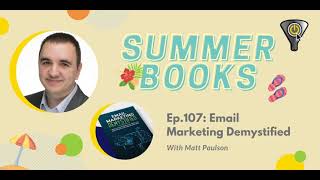
Podcast interview (Funnel Reboot) with Matt Paulson, author of Email Marketing Demystified, covering practical email marketing: choosing a niche, building lists with lead magnets and diverse acquisition channels, using an ESP and domain authentication, keeping strong deliverability via list hygiene and engagement signals, writing personal/text-first emails for smaller lists, republishing email content on websites, monetization options (ads, affiliates, premium subscriptions), syndication platforms (Substack/Medium), and tactical automations (autoresponders vs triggered campaigns). Includes case studies: MarketBeat (newsletter growth and monetization) and GoGoPhoto (fundraising/photo-contest product).
Questions this video answers
3 million email subscribers.
About 1 million monthly outbound clicks.
Employs 13 people and grosses more than $25 million in top annual revenue.
Originally published in 2016.
Projected for the fall (around September–November) of the release year mentioned.
Chapters
Welcome to Funnel Reboot, the podcast that shares ideas on how to upgrade your lead generation. Here is your host, Glenn Schmelzli.
Hey Glenn. Here. Welcome to Funnel Reboot. Today we're diving into using email effectively in your marketing.
I think we all know that email.
Is a powerful medium. Well, at a very minimum, it's the very basis for how we send communication, how vendors provide transactional information to customers. But there are some companies that take this even further and they put it at the center of their business. To appreciate the emails power, I want you to listen to one person's story. Our guest spent much of his primary school years playing online games like SimCity via dial up connection on his family's PC. Keen to share what he'd learned with other young fans of the game, he made a website. And he watched as visitors started coming. First by the ones, then by the tens, then by the hundreds. Learning that you could make money by putting banner ads on your site, he signed his little website up and small checks started rolling in. But for the time being, it just served him as a way to make pocket money. Then when he went into university, he found himself in the middle of his studies, needing money to cover tuition costs. He got a part time job writing for the college newspaper. And between that and taking freelance gigs on the then very popular site Problogger, he managed to get by. After college, he fused his writing skills, a little bit of knowledge that he had on personal finance from some of those writing gigs, and his knowledge of selling banner ads like he'd done before, and he put that together to launch a finance blog that generated about the same income as you'd make on a computer science graduate's salary. He made many websites then along this same theme, and he was monetizing them very successfully. But they were all dependent on Google's algorithm for traffic. So while they had some high highs, they also had some low lows. And in the aftermath of one ranking smackdown, he resolved to never give a tech platform the power to his business and income like this again. The solution was to take control over how content was distributed. And that meant putting his brand on a variety of portals, not just Google. But it also meant networking directly with their audience, getting them used to seeing the site's brand in places like their email inbox. So an email newsletter was launched. That newsletter, called MarketBeat, now has 3 million email subscribers. Financial product companies pay top dollar to advertise in the MarketBeat newsletter to get a piece of the 1 million monthly outbound clicks that come along with it, along with premium subscription products, this business that he runs now employs 13 people and grosses more than 25 million in top annual revenue. So now you know the story of a young guy who grew his business by putting email at its core. And he decided to share what he's learned by authoring today's book, Email Marketing Demystified. And while he's proud of all of these things, he's equally passionate about living in Sioux Falls, South Dakota, with his wife and three young kids. Let's go hear from Matt Paulson. I'm so glad. You're welcome.
Matt Paulson, welcome to Funnel Reboot, Matt.
Yeah, thanks for having me on the show, Glenn. Looking forward to talking about email with you.
Yeah. And this is centered around a book that you wrote. The book originally came out in 2016. Could you tell us the title?
Yeah. So the book is called Email Marketing Demystified. And then the subtitle is Build a Massive Mailing List, Write Copy that Converts and Generate More sales.
Yep, that covers it. And so we can take those probably on one at a time. Let's talk first about, you know, what we're expecting that an individual or a company should have if they're getting into this. I guess it goes without saying that they should have a different angle, that they expect an audience to start to gather around. Right. So this could be their product or maybe a general, a field of study or of expertise that they want to share something about. But you have to have something to talk about, right?
Yeah, you have to have some kind of niche where it's, you know, people are going to sign up for your list to learn about some kind of topic, whether it's what your business is about or, you know, for me, back in the day, it was personal finance was kind of the category, and then it was investing, and now it's stock investing. So people sign up for my list because they are interested in investing in the stock market and want to hear about stocks. So you have to have something where it's kind of a category, an interest category that people are signing up for. You don't even have to have a business with it yet, but you really do need to have, you know, kind of the broad category of why some dudes sign up and what they want are going to learn about. Sure.
And a lot of people are familiar with, and especially if they're employed for a company that is already in existence, they're familiar with having a website. They're familiar with, you know, the domain being registered. There are a few more Steps if they have not yet waded into setting up the ability to send mass emails, they may not even be aware that there are an entire slew of providers out there that you need to get involved with. Can you take us into that?
Yeah. So if you're going to build like a big mailing list, you can't just use your Gmail account to send an email to 5,000 people. They won't let you do that. I think Gmail is limited to like 500 outbound messages a day. Right. So you need to use what's called an email service provider, which is kind of an online platform that allows you to collect email signups. It'll send email for you. It'll handle like the list management in terms of the subscribes and unsubscribes, and it'll tell you how many people are opening your messages, how many people are clicking through, kind of provide all of the analytics data that you're looking for with your messages as well.
And for people. Then once you've got that set up and you take us into the ways to authenticate your domain name and tie it to that, and I'll just let people know there's an Alphabet soup, at least three different methods that you outline for how to go about doing that. But once they've got that, they have to start thinking of how they're going to add people to the list. So let's talk for a moment about maybe the actual mechanics of whether they're going to simply let somebody type in an email on a box and hit submit and voila, you're on the list. Or if we want to do a double step there and then we'll talk about maybe how to get people to even do that. So take us through there however you'd like.
Yeah. So if you're going to get people to sign up for your email list, you kind of have to give them a reason to. If you say, please, can I have your email address? Usually that's not very exciting to people. So typically what you do is you come up with what's called a lead magnet. And that is something that your audience might want. So, say, in investing land, maybe we have a list of 10 stocks that we think are going to go up next month. So we could, say, have a form on our website that says, if you want our best stocks For May of 2022, enter your email address in this form and we'll send you that. And that's kind of the incentive for people to sign up for the mailing List. The website is certainly one way that you can get opt ins, but there's tons of other ways too where we can certainly dive into those as well.
Sure, yeah, take us through those. Let's just maybe go with the proviso that someone at this point probably should have a good number of subscribers already on their list. Because in the world of email marketing, while it is possible to pay for things in a number of ways, there's a soft currency that we're using and it is our own audience. So can you maybe tell us about. About how you might do swaps or how promotions on things like thank you pages can be done?
Yeah. There's a lot of different ways to get emails other than putting a form on your website and getting opt ins. And it really depends on how your business interacts with people. So if you are selling fruit at a farmer's market, people might not be coming to your website very often, but they are going to come by your food stand. So maybe you have a paper sign up form when they check out to get their email address. If you are interacting with people on social media, you're probably, you're going to need an entirely different strategy. You're going to want to promote your lead magnets on social media. So you're sending people from your social media pages to your kind of opt in landing pages and get people to sign up that way.
Just want to clear one thing up on lead magnets. I suppose this is something that we got a little spooked by with different legislation. So you mentioned the Can Spam act in the US In Canada it's Casel, kind of casually known as Casel. But these gave marketers a pause around what they're supposed to do at the time of subscribing or of giving. Giving a lead magnet, the way you phrased it. I'm just interested in hearing if you kind of still hold this view, is that a person acknowledges that they are getting on your list in return for receiving a lead magnet download. Have we. Is that the convention that seems to have gelled?
Yeah. So typically what you'll say in your copy is like, enter your email address below and we'll send you our free report and you'll also receive our weekly newsletter. So you really want to kind of set up what the expectations are in terms of what the recipient is going to receive for email. That way they're not surprised later when they get your newsletter and that kind of stuff. There's a whole bunch of stuff that you're supposed to include in Every email to be compliant with can spam and Castle and the new CCPA in California. And most of the time your email service provider will actually do a lot of this stuff for you. Like you have to have your physical mailing address at the bottom of the email and an unsubscribe link and they want you to have a from name that's accurate. And if you sign up for Mailchimp or ConvertKit or any kind of big email service providers, they do all the stuff for you already. So it sounds like this big scary thing that you have to deal with. But in reality, you know, they very rarely ever come up.
Yeah. So they'll add it in a footer you can't even touch, and out it goes. I suppose what you helped me appreciate was there's nothing magical. I remember there was this time period where people were adding a checkbox and then the question was, do I default the checkbox to on? Do I make it off? Do I even do something sneaky like default it to one and gray it out? But it sounds to me like the spirit of the law is that we don't want to trap people onto a list they don't want to be on.
Yeah, that's fair. You know, each of the kind of different national laws have a little bit different things to say. But if you are sending people email that they want and expect to receive, you're not going to have any problems. In reality, with can spam, it's been very rarely enforced and when it has been tried to enforce, it hasn't always gone very well for the government. So it's really, you don't have to worry about like getting sued or can spam. That just doesn't really happen all that often.
Yeah. However, the. So we get to all those middle players, Right. Both our service provider and the owners of the inboxes and platforms. Maybe we don't have to worry so much about legal stuff, but we do have to worry about deliverability.
Yeah. Yeah. So if your messages get really bad open rates or really high spam report rates, if you're sending mail that people aren't expecting and your spam rate gets too high, an email service provider can kick you off because they're concerned about their kind of deliverability as well. And if they have somebody who is a customer of theirs that isn't playing nicely, you're going to get kicked off your ESP long before you're ever going to get sued. And you know, your spam rate only gets really high when you're say if people sign up for my list, expects they're expecting information about vesting, and then I start sending them information about Viagra, I'm going to get a really high kind of spam report rate. Right. My ESP is going to say, hey Matt, 50% of the people on your list mark this message is spam. What the heck are you doing? And if I don't have a good explanation for that, they might suspend my account and tell me to go somewhere else.
And there's even stuff that we can do if we're not leaving it to. Well, the person can certainly mark things as spam, they can certainly unsubscribe themselves. But you in fact say to go beyond this, you say that we can sanitize our lists and that we should, and presuming that they were put on the list by themselves or let's say because they made a transaction with us, so we have justifiable reason to say that they should be in touch with us. If they don't open them for six months, you say just pull them off your list yourself.
Yeah. So there's a whole bunch of ways to kind of maintain what I call good list hygiene. And that is really, you want to keep the active people on your list and people that aren't active and are never going to open your messages again, you want to get them off your list. And typically the way that you would do this historically is if somebody hasn't opened your last hundred messages and whatever frequency that is. So if you send out one email a week, it's maybe you kick people that haven't opened an email off in a year or two. But if you email every day, then you're probably kicking people off at about the 90 day mark after not opening messages. And you think that's going to hurt you because you're sending out less email. But in reality those people weren't going to open your message anyway and they're hurting your deliverability on your other emails because you're going to have engagement metrics that don't look as good. Really what you want is a high percentage of people opening your messages, clicking on your messages, replying to your messages. And there's all sorts of ways to game the system. So like you can send out an email to your list saying, hey, did you see the Cubs game last night? Just curious what you thought about it. And get a whole bunch of people to reply to your messages, then that will send positive metrics to Gmail or Hotmail and Yahoo that say, hey, people really want these messages because people are replying to them. So what a lot of people will do is in their welcome message saying, hey, this is Matt from MarketBeat. I just want to check and make sure you've got this message. Can you reply and just let me know that you got us? And that will send that kind of signal to the ESPs.
Yeah. And we should think of this as being maybe like a report card system. So, sure. There's an F on the report card. I guess that would be if we as a sender have done so badly that we're blacklisted. And you in the book tell how we can go on and see if we're blacklisted and potentially see if we can get off of a blacklist. But that's the F on the report card. I suppose what you're trying to say, and this is beautifully said in your three golden rules of email marketing, which you pretty much just ran us through there, that we should, you know, aim for an A grade. Right. We should try and get people to engage as much as they can without veering into that sketchy, you know, I'm just making stuff up or I'm being sensational. And you're telling us that the payoff there, if we're kind of getting more A's and B's in how we do this, is that we're going to not only get into their inbox, but we'll probably, on something like Gmail, be put into the primary tab and not relegated to one of the ones that we never look at.
Yeah, there's a lot of different ways to game the system. Like asking for replies is one of them. Like if you don't want people to click the spam report button, you can put an unsubscribe, unsubscribe link at the top of your email. Or you could even make your own spam report link button and click. Have people click on that and just have that unsubscribe them. There's lots of ways to encourage the metrics to go in the right direction and whenever you want to.
Yeah, that's a perfect UX that marketers know about. We do that on landing pages all the time. But if you do not want somebody to hit the spam button, but you're happy if you give them an off ramp to unsubscribe, you put the unsubscribe just as prominently as the spam button. Because let's face it, we're all busy, all have a ton of emails, and if I'm not shown an easy way to get out. I know that spam button will do the, you know, that hammer down and, and do the trick, but at your end it has possibly a devastating effect. What's your opinion of, you know, taking the emails that you have and writing them in a personal way? You say that even though many of us write personal emails, that doesn't mean that we have the skills or have quite mastered the process for writing to multiple people. What's the main difference in your opinion?
Yeah, so you know, when you get an email from, I don't know, J. Crew or any kind of big retail brand, it's all pictures and stuff to buy, right? But when you sign up for an individual's mailing list, they tend to be more text based personal letters saying, hey Glenn, this is Matt. I just wanted to let you know about this new blog post I wrote. Come check it out here. Oh, by the way, you're coming to this conference next month. If you are, I'd love to see you there. Sincerely, Matt and you kind of wonder like, are these individual marketers, do they know what they're doing? Or do the big brands know what they're doing, who's right, who's wrong? And it turns out they're actually both kind of right, but the individual, like when you or I will send an email to our personal lists, you know, those people are expecting a message from Matt. But when you're receiving an email from a big brand that's a clothing brand, they recognize, like there's 5 million people on our email list. Not everybody is going to connect with the same thing. So let's just send them pictures of some different stuff and some section of our audience will connect with it. So that's kind of what I figured out over the years is like if you're a big brand, your emails don't have to be that good because no matter what you send, part of your list is going to love it and part of your list is not going to care. So if you just send out a bunch of different emails with a bunch of different stuff, it like somebody's going to care at some point and buy something. But for smaller individual marketers like you and me, when we send an email, we know everybody's on our list for that one specific reason. So we end up writing more personal stuff that's text based.
I guess it's an individual call. I know that it's hard to put you on the spot and ask you what's right or wrong here, but let's take the situation of a smallish company, 25 person, maybe the founder is still in the business, but they have a marketing staffer, and that person is going to be the actual one who hits the send button. So you're saying it should, if it is in that situation, come from an individual. I can think of owners being nervous that if they let the marketer use their individual title, what happens when they leave? Any advice for people on even psychologically getting over the fact that you need to put someone's name there, but it may not be permanent.
Yeah. So for smaller businesses, people are going to be more likely to open a message from an individual's name than a brand. And if it's coming from a woman, it'll be opened at a higher rate than it's from a man, statistically. So what we do at MarketBeat, we do send a lot of emails from individuals. So there are are messages that come from me. There's messages that come from our VP of Business development. His name's Will Bushy. There's a gal named Rebecca McKeever who is at some of ours. We have a few different names.
None of these are made up names. Oh, there are real people.
Rebecca is literally sitting right there.
And we do this. I think there is a way to have our cake and eat it too. And that would be just modifying our header in the from to say, Glenn from Funnel reboot.
Yeah, absolutely. And I think maybe the key is just to use four or five different people. So if one of them leaves, that's totally cool. And then, you know, the new person, their name can start showing up in emails too.
It works for newscasts and other types of things. Yeah, a little ensemble. Right.
So you want people to like the brand and then like the individuals at the brand. So, like, we just hired a gal named Lacey a couple months ago, and now there's a couple emails from her that have gone out. And, you know, people get used to hearing that name and just kind of part of the mix after a while.
Yeah. When it comes to writing it, one of the things you stress over and over and you use many examples of this is that you're writing about. Well, you're writing from the vantage point of what they're interested in. And what they're interested in isn't you. No offense. And the way that the subject that the email is talking about should be approached is, of course, how it's interesting to them. Maybe an example or two of how you build that into your email copy.
Yeah. I mean, it's never about, you know, it's always about you in terms of like, you know, it's never about you, the author, it's about them, you know, the recipient and what they're trying to accomplish with their life. Right. So if, you know, we know we have a lot of people that are in their 60s and 70s on Mark Tweat's email list. So we, you know, talk about, you know, all they're concerned about is having money in retirement and having a steady income stream. So we talk to, we write as if we're writing to a 65 year old male because that's kind of who our demographic is in a message is. So we'll use a lot of view language like say dear whoever. We know that you're probably concerned about retirement and having a steady income to provide for you and your spouse during your retirement years. Wouldn't it be great if you had $5,000 coming in every month? Here are some dividend stocks that maybe can provide you just a reliable income stream. Check them out here. So it's trying to get in the head of your subscribers, understand what their wants and needs are and then writing to them and saying, yes, this is about you. I understand your wants and needs and here's how to solve the problem that you have.
Right. Working backwards from there. Leaving aside situations where someone has a monetized newsletter, you recommend posting content that you've put in an email onto a website. And I'm interested in hearing, you know, would like to know your take on, you know, is this something that you recommend people do at the same time that the email goes out so that it can be crawled? Are we, are we losing anything if we do that or is the sense of urgency that we could have created inside of read the email, is it there or do we keep it exclusively within the email? Give me some of the considerations around that.
So the reason you would do that is it provides a page for Google or find an index over time that hopefully will bring somebody to your website. That's how you do it. I don't think it really takes away anything from your email list to also put it on your website because the reality is most people probably aren't coming back to our websites every single day. Maybe they come once a week, once a month and they're probably not going to see it on your website before they see it in their email.
Probably not.
So I don't worry too much about it. You do want to be a little bit picky about which emails you stick on your website. If it's something that's Saying, hey, there's this event tomorrow, you should come to it. It's on Zoom. Here's the link. You don't want to put that on your website, but if you write a long, thoughtful opinion piece to your email list, you're kind of like letting it go to waste if you don't use it somewhere else. So I think that type of stuff where you're sharing your thoughts on a topic, you should stick those types of emails on your website for long term storage and hopefully they become content marketing.
Pieces over time and they can be put on your site. I've noticed just with using some of the lower tiers of the general packages that you can, you may even find if you Google it that your newsletter is already being replaced by the email service provider on, you know, like a feed page. So you want to go into your settings and deliberately acknowledge if you do or don't want to do that.
Yeah, so like I use ConvertKit for my personal email list and they have an option where like you can store put your email on a public page that they manage and then like say if you want to share that email on social media, you can do that. That can be a really easy way to do it. With a little bit more work and setting up some custom DNS stuff, they can stick it on your website or on your domain name. I didn't bother to do that. But you can do that if you want to.
Right? Right. Makes perfect sense. The when people don't have such a large email list and maybe they are instead of thinking of the list as being a thing that they will advertise through, but rather they just want an email list that's going to keep their audience engaged. You go through an example of where you did that and in a B2B context, this is where email can be of strategic benefit to the company. You know, if I'm justifying really comes down to how much revenue comes through the door. The one I'm thinking of is the Go Go photo. And I know it's not a B2B example because it's more of a charity, but can you maybe just take us through how that email is used and maybe how we should start to broaden our thinking between it just being us, the organization and our customers. Sometimes there's multiple players here.
Yeah, so there's. So with gogo photo contest, the whole business is a fundraising software that animal shelters can use to host like photo contests for their kind of followers to raise money. So let's say I'm Sioux Falls area Humane Society. I run a contest. The people that give to the Humane Society can post pictures of their pets and they can buy votes and see. Try to get all the friends to buy votes for a picture of your dog. And whoever's dog gets the most votes wins the contest. We knew that when we launched cocophoto Contest as a business, doing traditional content marketing wasn't going to work because it's too narrow of a niche. We couldn't wait for them to come to us. We really had to go find them and proactively reach out to them and say, hey, we've had some really good success running these photo contests with these humane societies. We'd love to work with you guys to do one of these contests for your Humane Society as well. Let us know if you're interested. And no, we didn't get an opt in. We found some different directories of animal shelters and just emailed their directors. So we did real outbound kind of messaging and it worked really well. We started that business. It would have been nine years ago now to the month and we've raised. I got out of the business at the end of last year because I focused on MarketBeat and my two partners in it still run it. But we're up to $26 million for animal shelters raised over the last nine years. So, you know, it's hundreds of different animal shelters we've worked with. They all do a contest every year and it's worked out really well, but it was all just reaching out to people saying, hey, we can help you. Do you want us to help you do this?
Yeah, this is, I think it's great and you know, kudos to you because animals in our community, this is something that we want to make sure that, you know, we help people out, make, you know, get homes found. It's really basic stuff, but we can use that same line of thinking for our businesses. Maybe playing with this gamified element or this notion of we're a media property. And just like every media property looks out and it has readers and it has, maybe we could call them stakeholders or supporters or sponsors and advertisers. The dynamics are still there. I've seen other examples of a company that wants to elevate its authority talking, using the same kind of go go photo contest idea. But it's around here are the conferences that we really get value out of. Right? So they're speaking to their audience, but they're giving them something. And you better believe the event organizers are on board. I've even seen it with community groups that people want to help out or even something dorky, like what playlists we like to listen to while we're working. There's just so many, you know, dimensions that you can go with. And I guess that's one thing about the email marketing that maybe we should remember is we can bring some levity to it. We can bring even. You encourage us to maybe try a bit of humor. Just be real.
Yeah. If you could kind of become a trusted friend or somebody that you just love getting email from for your subscribers, that goes a long way. There's a newsletter in the crypto space that I've really think is doing a good job called the Milk Road. So if you go check it out, but it's this kind of crypto NFT newsletter. It just has a ton of personality baked into it. They have like, just for fun, they put a picture of the founder, the guy who created Ethereum, at the bottom of every email and there are always these like funny photoshopped images, the guy named Vitalik. And it's just really entertaining to like see the picture every day. So, like, you go check the newsletter every day just so you can see what funny scenario they put Vitalik in for that day. And that's how you get people hooked on your content, people with dry content, you hook them with your personality and your unique take on things.
Exactly. It brings to the fore the context in which your email is going to be seen. We have to remember that our email is going to sit, you know, in between maybe something from their aunt, maybe something from their boss, maybe something from, you know, a bunch of friends who were in a fantasy league with them. We, we have to be aware that they are always having to make a choice about what they're going to spend their time looking at. And as you say, if we kind of do something consistent, maybe funny, but at least consistent, that it's going to build a little bit of anticipation when our email shows up in their inbox.
Absolutely. If people expect to receive it at like 11am on a Tuesday every week, and the message doesn't come like you're going to get emails about that and that's fantastic.
Or hopefully you keep your schedule each week and, you know, you see it in terms of opens, not in terms of, you know, hey, where is it? I want to maybe look at making the case for why a company would want to email their, or do any of the list building things that you talk about when they've already poured their energy into an email list that they are using. Just solely for their own product. Let's say that they are, you know, they guard their brand carefully. You do mention that you can certainly grow your list, you can maybe even monetize your list. But you know, help explain to a company who has not yet thought of that why they might want to be open to working with other email lists and trying to, you know, co register or do some other things.
Yeah, I mean it's, it's a matter of scale. Right. You can, you can, you can be your own little client by yourself and have people in there and that's kind of your universe. Or like you can recognize that, you know, people tend to buy from more than one company at any given time. Like in our finance space. Like I know that people are going to subscribe to Market Beat. They're going to also subscribe to the Wall Street Journal. That doesn't mean they're not going to subscribe to Market Beat. They're going to sign up for any number of fintech tools like Mint.com you probably have a Vanguard brokerage account or a TD Ameritrade brokerage account and somebody signs up for TD Ameritrade or whatever. It doesn't hurt me in any way. So it's really an understanding that most things in the world are not zero sum. Yeah, I guess if you're a carpet cleaner, you're not gonna. People aren't gonna hire two carpet cleaners. But that's the Internet world we live in. That's kind of more of a rare thing these days, especially for people that have email lists. It's how many you really want to do. Some of the coedge and list swaps and things where you're exposing your audience to other people's lists and other people are exposing their audience to your list because it just helps you reach a wider universe of people. And typically it's done in a way where it doesn't really hurt you at all either.
Right. It doesn't seem to. As you say, people have choice and people, because they're considerations. Time, depending on the product can be very long. They may want to have several different vendors in the same space that they'll stay on their lists. And I guess the way to rationalize it, you certainly want to be on that short list as opposed to not. And if you, you know, can be found by being on someone else's list first, then maybe you should do it. Lots of ways to look at that. So the, the book came out in 2016 and you, I understand, have a new edition coming out of it. Let's just talk for a moment about what's changed in email. You can certainly, you know, jump out with any of the things that you have noticed. But one of the ones I wanted to ask about is syndicated messaging. So we've seen many platforms, all the major social media platforms now have a newsletter option. And then there are even ones like Substack and Medium where they're bringing everyone to where they are and you know, in some cases having a tip jar or an actual paywall before someone can see the content. Does that look like email marketing to you? How do you encourage people to think about those?
Yeah, some of the kind of self publishing newsletter platforms, it's really been interesting because it's allowed people that are kind of journalists or thought leaders to really kind of build their own subscription products without really having to be part of a bigger ecosystem. You don't have to work for the New York Times anymore. If you're a great journalist. You can probably make more money by doing your own thing and building your own audience. I mean, it's absolutely email marketing. It's just maybe a little bit different form of monetization than most of us are used to. Instead of selling courses or products or whatever, it's maybe here's one email a week that you get for free and if you want the rest of them, you got to pay good for those people that are doing it. I think it's just yet another kind of way to think about email marketing and another way to monetize it. Certainly a ton of other kind of problems as well.
It takes a certain number of the steps out by centralizing it. But would you say that there's probably also the same issues that you would have if you were on your own list, such as attrition and the need to replenish and get new people on?
Yeah, I mean, every, every subscription business in the world has to do with churn. And that's going to be the same for anybody that's selling, you know, premium newsletter subscriptions as well. So you're going to have some issues, you have to deal with them and that's fine. It's part of being in the business, just how it goes.
But I like how you said you can perhaps split it and you have some of the information that is, let's say in an email and say for the rest, go over to this website or go to this syndicated service and then if that person is interested enough and there's a small payment that it takes to access the rest of it. But you have to begin with the free part of the freemium model, correct?
Yeah. There's a great article that Elon Musk shared a couple days ago, and it had the whole intro. It was about how attorneys have kind of impacted California in the last few years. And then if you wanted to read past the intro, you had to sign up for a child subscription to this guy's newsletter. It's like, oh, you got me. I really want to read this article. And I'm paying eight bucks a month for this guy's newsletter because I just really wanted to read that article. And I thought that was a brilliant strategy to get people to sign up for sure.
So in that case, the content really has become the product. But I gather just as strong a proponent as you were in 2016 that it doesn't have to be that way. The email can all be free, but that it is what cements someone's value for your real product.
Yeah. The email is really just a way of capturing somebody's attention. So you get them to sign up for your list, and then you can kind of come back to them later. And there's a ton of different ways to monetize that. Right. It's. You can be an affiliate and promote other people's products. You know, if you have something you want to sell, you can sell that. You can do premium subscriptions. There's just a ton of different options.
Fantastic.
Any last things you want to leave with us? Anything that you would love our listeners to, no matter where they are on this journey, to at least try and something that they can do that is going to help their email marketing.
Yeah. So there's a trick that I kind of learned this year that's worked really well for MarketBeat, and that is what's called triggered campaigns. So if you have a marketing automation platform and somebody clicks on one of your emails, so they open a message, they click on it, you go ahead and send them another email right then and there, and it gets crazy. Open rates, Crazy click through rates, and you just make a boatload of money. So what we do is somebody will click on any of our advertisements. We'll send them an affiliate ad via email same day, same time, and they'll be right at the top of their inbox, right when they're in their inbox. And we have just made, you know, it's like 100 grand a month we've made from those. So works really well.
Yeah. And so again, if they have a marketing automation software, normally, I've heard this called, like, behavior trigger. Right.
Yeah.
You say that somebody doesn't have to, you know, make that investment right away. They can just start with the simple broadcast. Right. We all think of that as the monthly newsletter. But then there's an autoresponder. You want to just maybe take a quick second and explain how an autoresponder is different from what you just described?
Yeah, so. So broadcast email is a message to your entire list. An autoresponder is a kind of message that's determined based on how long you've been on the list. So day one, you get this email. Day three, you get this email. Day five, you get this email. What I call a triggered campaign is when somebody takes a specific step. And usually that step is like opening another email or clicking on another email. That's when you send out that specific triggered campaign. And just the engagement metrics on those are. Or you're never going to see anything like it anywhere else because you know somebody's in their inbox. You know, they just clicked on your email. Send them another email and they're probably going to open it and click on that too.
Or, or by the same token, if we play defense here, this could be someone has bought from you, so you exclude them from the regular emails and they'll thank you for it. Or at least they won't know any different. But they won't complain that. That you're berating them to keep buying from you when they've already done that. So we can use these tools in weird and woolly ways. The point is to pop them open and look and see what's in there.
Yeah, you definitely don't want to send an email trying to sell somebody a product they've already bought. It's a great way to make people unhappy, especially if you're like, offering a discount that they did not get when they bought. That's a great way to create problems.
Yeah.
And you can do a ton of things with your email platform and just going in there and trying it out.
Yeah.
And start popping segmentation tags and, you know, things like that. There's a ton in there. And the book does a great job of taking people through it. Matt, if people want to find out about the upcoming third edition of the book and. Or what you do, where can they go?
Yeah. So I'd encourage people to check out my personal website. The domain is mathpulsen.com m a t t p a u l s o n.com and the third edition of the book will be out probably September, October, November. Not exactly sure when kind of got about a third of it updated for the third edition, and that's got to go through the whole book process. But it'll be sometime this fall. And encourage people to check out the second edition of the book. In the meantime, it's on Amazon if you want to. It's very relevant to what people are doing today.
Awesome. That's great. Thanks so much for coming on the show, Matt.
Yeah, thanks for having me on.
Sure thing. And I hope that people got a value out of this. This, no matter how fundamental, is stuff that we always need to remember and make sure that we apply. There's not only regulatory reasons to, but email is a tool that, you know, predates most of the Internet and will be with us no matter how the Internet changes. And if you use it, you. You're going to reap the benefits of it. So I hope that Matt's helped, given you something that can make your funnel even better.
Thanks for listening. Follow the show on Twitter Unnel Reboot. If you like what you have heard today, please consider leaving a review wherever you get your podcast.








