Expert Tips to Grow Your Email List w/Matt Paulson
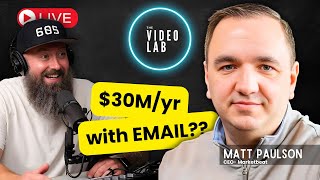
This content was created by Matt Paulson. This content was uploaded by Matt Paulson. This is a YouTube live-stream titled "Expert Tips to Grow Your Email List w/Matt Paulson" (created 2024-02-13) — an interactive interview-style episode of the Video Lab Live show hosted by Caleb Hoover with guest Matt Paulson (founder & CEO of MarketBeat). The conversation covers email marketing strategy and list-building tactics (organic opt‑ins, paid acquisition, co‑registration/Sparkloop), revenue models (ads vs. subscriptions), using video to support email, automation, affiliate rules, and practical advice for startups and student clubs. The episode includes live chat Q&A, sponsor mentions (Breaks Coffee), audience-building anecdotes, and MarketBeat metrics (millions of subscribers, ~$30M/year) to illustrate points.
Chapters
Welcome to the VideoLab Live show, your interactive live stream about video specific marketing and online video content. This live show is interactive, all right. It's interactive. So that means at any point you can jump into the comments or the chat and bring your questions or your input to the show. And you know what, let's start warming that chat up just a little bit. Let's, let's warm it up to two things. Say hi and then let me know where you're watching from. That's it. Say hi and let me know where you're watching from. So jump into the chat. If you are just joining us, say hi, let me know where you're watching from. Okay, so did you know that according to marketing research done by HubSpot that 87% of brands say that email marketing is very critical to their business success and 77% of marketers have seen an increase in email engagement over the last 12 months? So today I've got Matt Paulson in the studio bringing his expert tips to grow your email list. And yes, video does play a part in that. This is the Video Lab live show. We'll be talking about that in a little bit. But Matt and his team have built MarketBeat to, to the tune of over 4 million email subscribers, bringing in over $30 million per year. That's absolutely staggering numbers. There's a reason why content creators, businesses, thought leaders, et cetera, are prioritizing their email list, which we'll get into here shortly. I see some people coming into the chat. It's good to have everybody. Matt, thanks for being in the studio. You'll be here on screen here soon. Tommy Momo, Jason lane, Blake Bruggs, 101. Thanks for jumping into the chat. And if you're just joining us, get into that chat, warm those fingers up just a little bit, say hi and let me know where you're watching from. All right, so here we go. We've got Matt in the studio and Matt is the founder and CEO of MarketBeat here in South Dakota. And Market Marketbeats newsletter based products help investors make trading decisions with financial data in real time as well as providing stock research tools and analysis. So it's all about the stock market over there at Market Beat. And you can find more, more info about MarketBeat and Matt through the links that I have in the description. The thing that sticks out to me though with Market Beat and I love this, this is one of their core values. So this is built into the culture of MarketBeat. It's automate everything. It's automate everything. I love that. So please, Matt, tell us more about automation. All right, if you don't know me, my name is Caleb and I'm a video educator and video creator and founder of the Video Lab Sioux Falls, which is fully video education. Kind of like this show that we're doing right now. This is part of the Video Education as well as some other workshops that I'll talk about here in just a sec. And, and the Video Lab is also fully video production for social media and website videos and also a video studio for content creators that need to make simple, quick turnaround video content. And we're in the Video Lab studio right now, so make sure you follow and subscribe to the Video Lab. The links are down in the description and I see some other people jump into the chat. So good to have you guys here in the chat. And I will pop some of those up. Remember, say hi, let me know where you're watching from. Get those fingers warmed up in the chat now. I've been doing freelance video production since 2012 in and around Sioux Falls. I also have a personal YouTube channel other than the Video Lab. And if you search Caleb Hoover on YouTube, my channel will probably pop up. I started uploading content during the pandemic and I've grown to over 22,000 subscribers, adding close to 600 new subscribers every month. And on that channel, I work with filmmaking brands, kind of like the cameras that we're we're using right now for this show. I work with filmmaking brands from around the world making review videos and tutorials which has led to traveling with brands to places like Japan and California and hopefully more places here in 2024. That channel has actually helped me grow my email list to around 17, 000 email subscribers. And email, let me repeat, email is a priority for me in 2024. A priority for me in 2024. And this might actually be a good place to toss this in here before we get a little too far. I'm just going to toss this up on the screen. On Tuesday, February 20th at noon Central, I'll be hosting a free online YouTube workshop which will go over some of the basic things that I've learned along the way making YouTube content. And it's things like, you know, setting up your channel in a proper way, an intro to the algorithm, as well as plenty other YouTube related things. If you're interested in how to prioritize YouTube in 2024 for your business, I've got the free workshop link in the description, so make sure you go and sign up for that free online YouTube workshop February 20th at noon. So I started this live stream, the Video Lab live show, as a mostly weekly interactive live show streaming on Facebook, YouTube and LinkedIn to help you harness the power of online video with video specific marketing tips, tricks and trends. And I really hope this show brings some value to you and provides things that you can incorporate into your video workflow, like right away, like this afternoon. And if you're just joining us, I've got Matt Paulson in the studio today, founder of MarketBeat. And remember, this is an interactive live stream. So get into that chat, make sure you say hi, let me know where you're watching from. And I want to add this. Let's add this real quick. What's your top marketing priority in 2024? Add that to the chat. What is your top marketing priority in 2024? All right. I love seeing this chat blowing up right now with some questions, people, where people are watching from. Thanks so much for jumping in. And please get those fingers warmed up and jump into the chat and I'm going to pop some of those up here real quick. Now, I do have just a little disclaimer before we get into the conversation. These episodes are just to show some possibilities that you have with video, but doesn't necessarily mean everything will work like magic for you. It does require a ton of hard work, consistency, strategy, and possibly even even partnering with professionals like Matt or myself to get the results that you hope for. And with that being said, you know, we're drinking coffee right now. How about you toss some coffee cups into the chat? Let's welcome in Matt in. This guest intro is sponsored by the breaks Coffee.
Hey, Matt, how's it going? Good.
So good to have you.
I will appear on any podcast that serves good coffee.
Oh, yeah, that's right. We brewed it right here in the studio and it smells good and it tastes good.
So the Breaks definitely knows what they're doing when it comes to roasting.
Absolutely. I'm just going to toss this QR code up here while we chat just a little bit. So I take it you watched Taylor Swift in the super bowl over the weekend?
Me and 103 million people.
Was that it? Just 103 million?
I don't know. Something I saw on Twitter.
Well, it's good to have you here, Matt. Thanks for being in the studio. Thanks for being on the show.
No, absolutely.
Yeah.
It's right across the river from the office, so it's really easy to get over here.
And, and I will say, like, I, I Went and visited that office almost basically right after the new year. That's a nice spot you have up there. How's that transition been to the new place?
You know, it's. It's like Bone House. So building house sucks. But then when it's done, it's like, oh, this is awesome. I love this place.
Yeah, you have a. You have a nice view of the river over there. Yeah. Be really nice once it warms up a little bit.
We've got most of the issues worked out. Like, our sink only has two minutes of hot water for some reason, and they're working on fixing that.
Okay.
You know, it's how all these things go. It's great. Yeah.
Yeah. Excellent. So tell us a little bit about the evolution of Market Beat.
A little bit.
Because I don't think Market Beat didn't really start as like an email specific or based company, did it?
No, absolutely not. You know, like, like every business, like that's successful, it ends up being the third pivot of the first thing that you try that is what you know is successful. Like Twitter started off as a podcasting platform, right?
Yeah. Right.
Twitch started off as had a different name before that. Yeah. And MarketBeat was the same way. Like, I started out in College, this was 2006, 2007, trying to make some money because I lived in Madison, South Dakota, and the job opportunities were one, work at McDonald's, or two, be a pencil pusher at the university, or a three, like work at the grocery store. And you know, neither of those jobs really sounded all that entertaining to me. So I thought, okay, I'm going to try to make some money on the Internet. And the way it started was through freelance writing, I could get paid some decent money to write like personal finance content from on different websites. And I listened to enough Dave Ramsey where I felt like I kind of knew what I was talking about. Nice. I did that and then I turned into a personal finance blog. And then in 2009, it turned into an investing blog kind of during the recession. And everybody was wondering, is Citibank going to go bankrupt today or is bank of America go bankrupt today? So I would just write about those stocks every day. Our articles would get picked up in Google Finance and Yahoo Finance and Ms. And Money, get a boatload of people back to our website. And at that point it was really just an SEO traffic to the website and get people to click on ads.
Business.
Okay, you know, that, that was just fine. But I knew, like, you know, when you're weird times like that, those Weird times don't last forever.
Yeah, right.
And at the same time, I was listening to a podcast that's. That's long gone, but maybe remembered by some people that have been around for a while called Internet Business Mastery.
Okay.
And guys named, you know, they use, like, swayed him. So they were like Sterling and Jay were their. Their names. And, you know, the thing that they rang into my head over and over and over again was that you need to have an audience and you need something to sell it to that audience. You can't just rely on people coming to your website and buying stuff. So I thought, okay, how do I build an audience? And it turns out, you know, you build an email list. So started a newsletter. And we started the newsletter at the end of 2010, early 2011, and we have some subscribers that signed up for Markabeed, had a different name back then that signed up in 2011 that are still subscribed to our newsletter in 2024. So you think about what other marketing platforms can you get a sign up and then still have that person 13 years later?
Yeah, just. That's crazy.
I mean, you have a Facebook group from 13 years ago that's still active or, I mean, you know, social media platforms, they just change so often. Like, the audience doesn't stick around.
Right.
But with email, they. Some of them will stick around for a very long time, even. Even decades, which is just really very interesting.
I like what you said in there. Like, you. You kind of took notice of, like, what people were asking, right. And then he started kind of making, like, this whole Citibank thing. Like, you know, is Citibank going to be closing down or like, what. Wherever that looks like. And you started making content around those things that people were already asking. Yes, I like that. And then that kind of evolved into that newsletter where some. Maybe like some trending topics and things like that. That's fantastic. All right, well, you like coffee, Matt?
I love coffee.
Yeah. So we're drinking the Breaks coffee. Thank you, Breaks, for being a sponsor. And you know what? I have this QR code up here while we've been having this conversation. Absolute blend, which we're drinking in the studio today. I highly recommend it. It's fantastic. It's nutty. Click on that link or go tothe breaks coffee roasting.com and you can purchase a bag of the Breaks Coffee right there. It makes a perfect Valentine's Day gift. This week is Valentine's Day is this week, right?
Yeah, it's Wednesday. Yeah.
Okay, well, coffee will make a perfect gift. For Valentine's Day, I think, if you're into coffee. All right, well, let's, I'm going to pop that off here. And you know what, we've had some chat going already that I want to jump into and I'm going to punch these cameras in. Matt. Okay, let's see. Did you see any pop in here that, that you wanted to get to? I like this one right here. Dustin Hansen. Matt, can you tell me how to delete my spam folder emails?
Right. Don't listen to Dustin. He and I have a standing lunch date every Thursday at noon and like he skips it most of the time. So I don't want to give him the time of day on this podcast.
No, that was good.
That was good.
I like that. Great question, Dustin. All right, here we go. How about this? Thank you for jumping into the chat. Are there specific business models which work better for email marketing than others? If so, what do they have in common?
Absolutely. You know, I think there's, you know, there's, there's kind of two schools. You know, marketing there is kind of the build the audience school where it's anybody who's interested in a topic, you know, come sign up and learn about it. But then there's also kind of the outbound cold email of like, I'm trying to reach this like really niche target group of people. And if that's the case, like, email is great, but in very, very different ways. So if it's like an interest based thing where like I'm really interested in the stock market or I'm really interested in knitting or gardening or like some kind of hobby, like those are great for kind of those list building businesses. But I had a business called GogoPhoto Contest that helped animal shelters raise money. Still does today. I've been out of it for a couple years now. But the only people we wanted to talk to was the executive director of an animal shelter. And there are maybe 3,4000 of those in the country. So like trying to get those people like on an inbound method where you're just trying to get them to come to your website and fill in an opt in form, like probably not going to work.
Right.
But if you can find a directory of animal shelter somewhere and reach out to them, you know, a few of them every day on email, like that's going to work fantastic. And yeah, that's, that's what we did. They've raised over 40 million bucks for animal shelters by now through their fundraising platform. And that really worked well for us. To get that business going.
That's incredible. Can you, let's define email marketing just a little bit, if we can. Like, what is, what is email marketing?
Yeah, so it's just building an audience, using email as your platform for the purpose of, of generating, you know, revenue for your business.
Yeah. Okay. It's, it's just, it's like another platform. But. Okay, so here's the thing. Like, I've seen a lot of people, like Roberto Blake is a expert, like a Guru on YouTube and he has like his priority platforms that he wants to like prioritize. And you know what, YouTube is second on his list. Like he's a YouTube expert, but YouTube is second on his list. Email building. His email list is first. So why would somebody like a YouTube expert put email as first on their list of prioritizing that strategy in like this year?
Yeah, so a guy named Austin Reif, who founded Morning Brew just did the same thing and his list was email, YouTube, everything else.
Yeah.
You know, the power with email is that it doesn't change and everybody has it. So there's probably 5 to 6 billion people in the world that have an email address. If you sign up for Facebook, you need an email address. Same for Instagram, YouTube, LinkedIn, everything. Right. It's kind of the fundamental dial tone of the Internet is email. And since like it's a, it's a technology, it's not a company. Like, it's very difficult for anyone to change it without going through a long process of, you know, you know, working with like the Internet Engineering Tax Task Force. And like every now and then like maybe a new header will get added. Like the list unsubscribe header got added a few years ago. That makes it easier for people to unsubscribe. But then like all the individual ESPs had to adopt it for it to become part of email. So it's not like, you know, if you're, if you're a meta and you're trying to use your quarterly numbers, you can do something to turn the dials on your advertising revenue. That screws over the, you know, people trying to build an audience on your platform. Yeah, but that can't really happen with email because no one company owns it. And I think that's been part of the longevity of email. I mean, the first email was sent over 50 years ago. Think about that. And we're still doing it today. And my, you know, my 11 year old son has an email address, my 7 year old daughter has an email address. And when they get jobs 10, 15 years from now, like they're probably going to be doing using email.
It'll probably be the same email address too. Excellent. All right, David says, how was your start with how many subscribers free and paying, could you live from MarketBeat? Yeah, good question, Dave. Thanks.
So my initial model was entirely like a premium subscription based thing. I didn't understand advertising in email initially. So I was selling 150 year subscriptions and I think I got like a thousand of them in the first year. So I think we grew the list to about a hundred thousand people and about a thousand of those, 100,000 signed up for the premium subscription. That was 150 bucks a year. I was making my 150,000 bucks. And yeah, it was 2012. I quit my day job to kind of go full time with this stuff and you know, it was enough to make the leap and obviously it's grown quite a bit since then.
So. I like that you kind of built it while you were working another job. Yeah, I like that.
Yeah, it's a good.
Probably a good way to have a side hustle, huh?
Yeah. But it wasn't until I had the email list that I felt like I could quit the job because, yeah, you know, when you just have SEO traffic like that stuff can disappear overnight. And it did a couple of times. And I thought, well, I'm not going to rely on this as my income to provide for my wife and, you know, my future kids. And like, if Google can just take it away from me.
Right, yeah.
And with email they can't really do that. So I had kind of the steady income from the email thing. And that's kind of what made me feel like, okay, I think I can do this now because this income is more stable.
Yeah, I love that. All right, Garrett, marketing priority for 2024 is to get my club's name out there to the students of Dakota State University. So again, if you are just joining us, jump into the chat. And I did ask earlier, what is your top marketing priority for 2024? Garrett gives his here. And you can kind of go back and look at some of these in the chat here.
Hot Cheeto girl.
With so many stock brokers out there, what made you the one of choice to get advice from? That's a, that's a really good question. Like, why do you have authority?
One, we're not a stock broker. We don't. You can't go to MarketBeat and buy a stock or sell a stock. Like, that's not what we're out there for. We're a research tool that allows people to research stocks. So you hear about a company that maybe is kind of hot on Reddit or on Twitter, wherever, and like, you want to, like, actually learn about it and not just, like, what people are, like, saying about it online. You come to MarketBeat, you type it in tons of information. You can read SEC filings, you can read earnings call transcripts, you can read news stories. You can see what the Wall street analysts are saying about a stock. Like anything you'd want to know is there. So it's kind of a great launching plan for your own research. It's not a place where we say, okay, here are the three hottest stocks to buy in 2024. Like, well, that's not us. We're a research know organization that publishes information about companies. And, you know, we want you to do your own research if you want to. If you want somebody to, like, tell you what to do, go hire a financial advisor. Like, that's. Yeah, that's not who our customer is.
Gotcha. Tommy jumped into the chat. What's good, Caleb? Hey, it's good to see you, Tommy in the chat. Samson House is chiming in today. Excellent.
Hey, Tommy.
Yeah. Good to see you here. Niobe.
Hi. Hey, hey, hey. What's up?
Welcome, welcome, Niobe.
Lots of chats today.
Yeah. Andy's here.
Hi, Andy.
Andy.
Andy Trop. He was, he was my book coach back in the day, so I wrote a book called Email Marketing Demystified.
Yeah.
And he, he helped me get that going.
Excellent, Andy. It's good to have you here. So I did bring, I did bring Tommy up here because he has a question. Revenue is usually the most important metric to track. How does email boost revenue, directly or indirectly? Thanks, Tommy, for that question.
Yeah, it definitely does. So when we send out an email for a product and people buy that product, we know that they came from that email and it generated revenue. But there's definitely value in kind of the indirect kind of more brand content emails as well. Because then people, you know, if you're, you know, you're out of mind, people forget about you and they're not going to buy from you. But even if you're just sending, like, here are my best tips to be a better YouTube, YouTube person in 2024. Like, you know, that still keeps you top of mind. So that when I'm like, hey, I'm ready to get serious about YouTube. I want to be awesome at this now, you know, Caleb's been sending me stuff about YouTube. I'm gonna hit him up.
So come to my online YouTube workshop.
Yes, it's definitely, definitely branding. But then like, you know, you can send out emails just to sell your stuff. Like, you know, like Maddie Pashong, a local gal who killing it, she's crushing it. And like she sends out, she has a great email list. Yeah, you know, it's, it's not something like crazy like market beat where it's tends to be always in revenue, but, you know, maybe it's a million in revenue. And you know, she sells like photography filters online and she sells her coaching and she sells workshops and like, she just does a fantastic job of, of, you know, using email to generate sales and. Yeah, you know, go sign up for a list and check it out.
Now I have a very specific question. Thanks, Tommy, for that question. Now, as far as like, when it comes to like affiliate links in email, and this is, this is kind of selfish on my end, but, like, can you just place your affiliate links right in the email or do you have to have like, you obviously have to have like a disclaimer or something like that, but can you just put that affiliate right into the email or is there like some other form that you have to go through to have those affiliates in your email?
No, it can be that simple. The only thing you want to be careful of is, you know, different affiliate programs have different rules and some of them may not want to have your links in an email. Like Amazon was always like that. But it's always kind of a gray area where you don't really enforce it. So you just want to check with like, if you have an affiliate manager say, hey, this is what I'm thinking about doing. Is that going to create any problems for me? And you know, usually the answer is no, because obviously they want the sales. Yeah, right. But they maybe, you know, if it's a high compliance thing, like, you know, we have credit card offers that we promote or savings account offers. Like if we send out an email that goes to like Quinn street or their, My Bank Tracker website, like, we have to get that email approved before we send it to our list.
Interesting.
Because they, you know, they have high compliance rules with like American Express and the banks they work with. So they, they don't want us to do anything that's going to get them in trouble. So they always have to approve our emails before they go out.
Gotcha. Interesting. All right, here's one from LinkedIn user. Sorry, we don't have your name, but it says, hi, Matt. A question we get a lot from businesses is that they want to send an email update, slash newsletter, et cetera, on a regular basis, but they don't know who they might send to. How do businesses get started with building their email audience, especially for small startup, is the rest of that.
Yeah, I mean, you know, really the question is, like. Is not as much as, like, how do you build an email list? It's how do you get known to begin with?
Right. Yeah, yeah.
And I think that's where a lot of people struggle with email is they're just getting started. You know, nobody knows about you, and you're just trying to become known. Like this podcast. New podcast. Yeah, this is very new. You're trying to become known. So it's, you know, how do I build my email list is really how do I be. Become known? Yeah. And, you know, there's. You'd love for there to be a magic kind of thing that would do that, right?
Y.
Like, okay, I want a hundred thousand Twitter followers. How do I do that? Like, today? Probably don't, but yeah, I mean, you identify who the people that, like, are in your target demographic and psychographic are. Like, what types of people would be interested in my stuff? And then I go find where they are on the Internet. Maybe they're on Reddit, maybe they're on Twitter. Yeah. Maybe they're on Facebook or LinkedIn. And you participate in those communities and you add value. And, you know, you can do advertising to promote, kind of promote yourself and, you know, show up on people's podcasts and YouTube channels and, like, there's lots of stuff that you can do, but most people just don't want to do it because it's hard and work. It's. It's a grind, and you have to do it for a long time. Yeah. You don't develop a personal brand overnight. Like, Joe Rogan did not become Joe Rogan with one. With one podcast.
Yeah. Right.
It was a TV career and, you know, doing stuff before that. And, like, you know, he's like 20 years into it now.
Now I kind of like where you're going with that, too. Like, as you know, being familiar with the YouTube platform a little bit, it's like very niche. Niche communities, you know. Is it kind of the same, like, what you were saying with email is like, just contributing to a niche community. Does it kind of come down to that a little bit?
With email it can, but, you know, email is kind of a unique animal. And, like, there are shortcuts. Yeah. Usually involve. That usually involve you paying money.
Right.
Like, a lot of people have built email lists this year by using the Sparkloop advertising network. So like, you know, you go to market Beat, you sign up, you see ads for other newsletters. That's called a co registration advertising platform. And like there's one called Spark Loop that's really kind of taken the kind of the new hot trendy newsletter, you know, ecosystem by storm. And yeah, you can pay 2, 3, 4 bucks for an email sign up and, and really get your list off the ground. You do have to be careful with it though because you can set like criteria of like, this is what I'm going to pay, this is what somebody has to do. So you can get a lot of low quality email signups if you're not careful with it. But if you require people to like click on your confirmation email, you can filter out, you know, people that aren't really engaged. So as long as you have some rules there, like, that can be a very effective way to build an email list.
Yeah, interesting. Okay, from LinkedIn again, Garrett. Hi, Matt. What recommendations would you provide to a student club that relies on cold emails to reach out to on campus students for engagement?
I would just keep using your DSU email until somebody else at you. You know, if you're, if you're going to DSU and you're in a club and you want to reach out to other DSU students and you email from a DSU address to another one, like 100 of those emails are going to get through and just keep doing it until somebody yells at you. And then if you get yada, you just say, well, Matt Paulson told me to do it.
So your name carries some weight over at dsu, right?
A little bit, yeah.
All right, Kevin. Kevin Hansen from Facebook. How much weight do you put on email marketing as a metric for advertisers? In other words, to sell ad space in your outbound emails?
I mean that's, that's, that's like the only way we basically make money is like sending out emails with ads in them. That's over 30 million in revenue. That's like 26, 30 or 25, 26 million of it. So it's, it's, most of our businesses, we send out newsletters, there's ads in them. And then if you click on stuff in the newsletters, you get more ads and people buy stuff, like a lot of stuff. There was a niche financial newsletter publisher called the Freeport Society that just opened up first of the year and we thought, okay, we really like what they're doing. They, we think they've Got a great sales pitch. We drove like 3,000 new SUBSC, like paid subscribers to them in a month. We just have that level of reach. And, you know, they're giving us 150 bucks, $200 CPA on that. So. Yeah. Wow, that was a great check to receive in the mail.
This kind of goes along with that. But David asks, how is your revenue split, subscriptions versus ad? And how has this evolved over time?
Yeah, so we started out to try to be a subscription business. And there are a lot of great one to $5 million kind of financial information subscription business is out there. Like Quiver Quant is one out of Chicago. They're doing a lot of cool stuff. Some of our friends over at M25 Ventures invested in them, really like their brand, what they're doing. Great site, but when you're only reliant on subscriptions, you limit yourself a lot. And we've been able to build out a very large business by being a media company. And like, okay, we're going to tell us something, but like, we know that people don't want to hear about, like markbeat All Access, like all day, every day. They want to hear about other stuff too. So what if we promote All Access one day a week and something else six days a week? And that's been very effective for us. Yeah.
Excellent. All right, Matt, I'm just going to pop this up onto the screen real quick. This is the Video Lab Video Playbook. And what this is is a free digital guide to help you get started with with online video content. It's a little booklet that I put together and as you can see, like this right here is eight common video challenges that you might run into as you kind of put together your video content strategy. If you are looking to do any type of video content right now in 2024, I encourage you to go download. The link is in the description. Go download this video playbook. It's an opportunity just to kind of get. Give an overview of how to get started making online video content. The Video Lab Video Playbook is free and you can go use it however you want. Link is in the description. And I need to find where my mouse is here so I can close this screen. But I wanted to bring that up because I wanted to kind of tie this back to video just a little bit before we get into some of these other questions. Now, when it comes to actually the email and video for Market Beat, how does all of that kind of tie in together?
Yeah. So we launched our YouTube channel. I think 13 months ago, January of 23.
Nice.
So we have a yellow named Lacey Clune that kind of takes the lead on it. She does a great job. And we just hit 50,000 subscribers.
Yeah, sweet.
And we did that kind of in two ways. One, we did Google Ads for our YouTube ads for a channel. Those were great. And, and then we promote our videos in our newsletter. So if you sign up for Market B Daily ratings, that's kind of our core newsletter, you'll see a video embedded in there every day. And then we also use our other channels to promote, you know, videos. So like sometimes we'll send out a text out with a new video. Like we have push notifications, we'll send out a push for a new video. So like you get a notification on the app from your phone, it goes straight to the video.
Yeah.
You know, people think like when you start on a new platform or a new channel, like you, you're starting from scratch. But really you don't need to. Right. You, you want to cross pollinate your channel. So like you've got an email list, you want to get those people onto your YouTube. So you email about your YouTube or you've got an established YouTube channel, you want to promote your email list on your YouTube channel. So you put stuff in your description saying, hey, sign up and get 10% off, or this free guide or whatever. Like you want your people subscribed in as many places as feasible because then they're gonna, you know, more touch points, you know, more sales and more money.
Yeah, I love that now. So you have like an in house studio basically that you're doing those videos from.
Yep.
Is like, how do I, how do I put this? How does your video content differ from like what's in your email?
You know, it's a lot of the same content in a different format. So Lacy will interview our writers on our website and they'll talk about like maybe they wrote about a certain stock, but then Lacy will interview them about the stock stock. And you know, it's really just because YouTube has a different audience of investors than Earth. Their email list does. Like different, like younger investors are more on YouTube. You know, they follow the Graham Stevens and Andre geeks of the world. Like we want to hit up those people in addition to kind of our core audience, which is more older people are in their kind of 40s, 50s, 60s, 70s. Yeah, that maybe are less on YouTube, but they're definitely on websites and on email. So we're just trying to hit a different demo with YouTube and similar types of content, but it's working out pretty well for us.
Yeah. And I love the success that you've seen there. That's awesome. All right, Blake, what are your three primary sources for new email subscriber acquisition? Thanks, Blake for that question.
Absolutely. So number one is organic. That is just people that go to our website and fill out an opt in form. So if you go read an article on MarketBeat, there's probably like four places in an article to opt in for our email newsletter or to get a free report like those. That's kind of always been our bread and butter. And what's made us different than a lot of places is that we get a lot of organic email opt ins. Second thing is, you know, we buy ads on Google and Facebook, we send traffic to landing pages and we get opt ins. We probably spend a couple hundred grand a month doing that. Google, Facebook, Bing, stack, adapt, you name it, we're probably there. And then number three is kind of the co registration network. So there's Sparkloop that I've talked about, but there are also some finance specific ones like after offers and investing media solutions. So like our advertising budget to grow our email list is about a million dollars a month right now. And that money gets spread across 22 different places. And right now I'm managing it, but we're trying to hire somebody to take that over.
Oh man. Managing a million dollar advertising budget. Yes. All right, David from Facebook, I've been doing and this, a lot of these are kind of like some like beginner, like how do, how do we get started with this type of thing? He's been, been doing a side hustle. But his question is how would you start and grow something like this? Like a side hustle. Growing it to the point, you know, to scale it, providing an ongoing subscription to the target audience. And we've touched on this a little bit.
Yeah.
But any other points? Because there's a lot of those questions coming in. So I think like kind of spending some time on that. Like those beginning stages.
Yeah, I mean, I mean the main thing is you want to build the audience before you build your product. So you know, it's, this is not easy. Like that's why there are so many people at the beginning stages. Because if it was easy, like more people would be successful. Like it's, it's one of those simple but not easy things. Like it's simple to do, but it's not easy because you have to do the same things over and over and over again for probably two years before you're going to have an audience and you'll make, like, no money during that time. So that's why most people never really get off the ground. It's a lot of grunt work, you know, trying to get on podcasts, participating in online communities, tweeting, you know, posting on LinkedIn. Like, all these things are like, you know, you do the work and you don't see that immediate return, and then you give up. One of the things that I think is highly underrated is working on the same problem for a long period of time because, like, most people just give up after a year or two. I've been doing this crap for 17 years.
Like, nobody does, right.
Sticks around that long. And that's kind of. We've. The reason that we've reached the level of success we've had is we just didn't give up. And a lot of people just give up way too early. You know, you're trying to do something hard, so, like, don't be surprised when you're doing it for three months and you only have 100 people on your email list. Like, this is just not easy to do. And, like, that's okay. Like, stick with it. Yeah. But, like, you got to stick with it, with it for years.
Yeah.
Right.
Well, and that's like, when people ask about, you know, making video content and things like that, too. It's like, well, plan on like 50 to 100 plus videos before, like, it. People might stay, start taking notice or the algorithm starts sending people to your videos. Like, be consistent. But also, it's going to take a lot of video content to get it up there. I mean, there's those outliers, right? There's those outliers that might, you know, blow up every once in a while, but for a lot of it, for a lot of us, it's like a consistent thing.
Even the stuff that blows up, like, it blows up, like, at episode 159. Episode one.
Totally.
You know, I don't know what the stat is, but, like, half of podcasts don't make it past 10 episodes or something like that.
Right.
You know, most people give up. We, like my podcast got to 26 episodes before I give up, so. Yeah. Oh, man. No, I mean, if I got to 250 episodes, maybe there would have been something. Yeah. You know, it just didn't stick with it because I quit. Like most people do.
All right, Elmer brings up. You send a lot of promos right off the bat. When someone opts into your list, how do you warm up new IP addresses to be able to send five plus dedicated promos per day without landing in spam or the promo tab. This is a pretty technical question.
Finally, an advanced question. You know, I think working with a, like a legit, legit, legit esp, like is really helpful to that because like when we warm up a new IP address. So like when you send out emails from esp, it will send out from an email, like any, like an IP address, like an address. And based off that IP address, you're going to build a reputation for your email sending. So it's kind of based off the ip, like the server IP that sends the email, but also your domain name. And like when you're first getting started, you'll be on a shared IP address with a bunch of different email like email senders. But then like once you get big enough, your email service provider will say, you know, you're sending out a lot of mail. Let's put you on dedicated ip. And at which point you say, great, let's do it. And then the way that they do it is they do this kind of slow ramp up process where like the first day, like you may only send five emails and then it's 10 and then it's 20 and then it's 40. It's like you really have to ramp up very kind of organically. But now we're at the point where we can send 10 million emails a day from an IP address and they actually get delivered to the inbox. Wow. And you know, I keep asking our Sungrid person, like, should we be adding more ips and like, well, it's working now, so let's, let's not, not break things. Yeah. Wow.
10 million a day. All right, Tommy jumps back in. What do you typically recommend for email marketing platform? Is mailchimp enough or do you see something like Campaign Monitor more effective in the long run? That's a great question, Tommy. Thanks.
Yeah, I mean, it really depends on what you're trying to accomplish. Right? Like if you're a creator, you know, ConvertKit has kind of cornered that disclaimer. I may ConvertKit shareholder, so be aware of that. But like, they've done a great job. Like, the people that are sending, you know, new newsletters are all using Beehive and they're very happy with that. You know, some more advanced people are using ActiveCampaign and Campaign Monitor. If you're a small nonprofit and you don't have any money, like, yeah, go use mailchimp. It's just like, what is the right tool for the right job. And it really kind of depends on what type of content you're sending and you know who you are. Like you're an E Commerce, you know, business. Like you're probably on Klaviyo, right? It just, the answer is it depends.
Yeah, I know. I just moved my email list over to ConvertKit and I absolutely love it. And this kind of brings up one of the things I love about ConvertKit that I talked about in my intro is automation. Right. So setting up those, those automations to send people to different tags or whatever or follow up emails on if they don't purchase right away. Tell us a little bit about the automation process that you have with MarketBeat because it's in your core values so it's, it's obviously very important. Tell us a little bit about the automation process.
Yeah, so this has kind of been the plan since day one because like our newsletter, like the, our main market newsletter, like nobody writes it, it's all automated. We do have writers on our website now but like the newsletter is like generated with, with code and data. It gets sent out and that's kind of that. Yeah, it's always been that way and it's because you know, for a long time I didn't like people, don't like people and just thought like why would I hire for this? I can just write code that does this and like that's kind of always been part of the ethos is like well we could have somebody do it or we could just spend a few hours to automate this task and you know, if we can't automate something, we do and that's allowed us to build a 30ish million dollar a year business with we're at 15 people right now.
How, how big is automation in anything really? Like as you see kind of businesses grow and things like that. Like on, on a scale of 1 to 10 for businesses right now, like that automation piece, where do they need to be?
Yeah, I mean it really depends on the business. Right. But I, I think if you have any tech skills at all and you can automate stuff, you should because that just allows you to be more capital efficient business. You need fewer people, you need less money. And like you know software breaks sometimes. Like yeah, but it breaks a lot less often than people. Like the software doesn't get sick, it doesn't, doesn't have kids that are at home sick or need to go to the doctor. Like the software is grandma can't die. Like it just, it works. Like we have like functions that like Run once a day. And I've run once a day for 10 years and like everyone for 10 years without breaking or needing feedback or, you know, it just, it's so much easier to do it that way, you know, if you can.
I really like this question that German Laura brought up. Thanks, German. With Laura from YouTube, how are you deciding how many emails to send? We currently usually send just one email a day to new prospects worried about hurting our brand with too many. Can you send too many?
You can, but the number is much higher than you think. It is interesting, an email a day. Like, fine, go for it. Yeah. We have like eight different email lists. So there are people that get eight emails a day from all of our different brands and they don't unsubscribe. So and they click on links and they buy stuff. So it's like, oh, maybe they're happy with eight emails a day. But, you know, I, you know, for most, you know, I think one email a day is probably about the limit for a lot of people and, you know, a couple emails a week is fine. But one of my mottos is you send more email, you make more money. Most people just don't send enough email. So like, like my personal list, like, I would email once a quarter and like, clearly that wasn't enough. And like, finally Lacy yelled at me and said, you should really send some more email. I'm just going to do it for you. And I said, okay. So now when something like this comes up, she'll email it out in advance and try to, you know, promote it. And that's been great.
Love it. Tommy jumps back in. How do you test copywriting for emails? Subject lines, good writing copy can make or break the success. You need to know the audience. But is there any special sauce quotes when it comes to email copy? Special sauce, kind of like a Big Mac.
Yeah. So, you know, this comes back to automation too. So one thing we'll do is this is a tip we learned from our friend Perry Belcher many years ago. The first 20% of your list, like you pick out three or four different subject lines. Maybe 5% get subject line number one, 5% gets subject line number two, and same three and four. And then like you wait an hour and say, okay, well, subject line number three got the highest open rate, so we're just going to send that one to the remaining 80% of the list. And, you know, that's worked out fantastic.
Some a B testing stuff.
Yeah. And I think like, for, you know, for, for like advertising emails or you're trying to like sell something. Like the simpler you can keep the message, the better. Like some of the highest generating emails we have, like maybe have 20 words in them at most. Oh wow. You know, hey Caleb, I saw you checked out Markbeat all access but didn't check out. If you want to check out right now, here's a link to do it for for 99 for the first year instead of 400. Do you want it? Yes or no? And like really simple stuff because like people are checking on their phones.
Yeah.
You know, you're scanning through 100 emails. Like a simple message the better. I generally tell people kind of one, one idea per email. Unless it's like a newsletter where it's like people might actually be reading the whole thing. But yeah, one simple message per email, shorter the better tends to work.
And that follow up email is probably automated.
Yes, absolutely.
All right, Stephen from YouTube, how many times do you ask someone to sign up before you realize they will never do it?
You know, it's a good question. I'm a never say never guy. Like, yeah, you know, if somebody's been on my list for 10 years and they just open emails and read them and don't buy anything, like that's fine. Like I'm gonna keep sending email because maybe, maybe someday they will buy. Like the cost of sending email is so low that like it's not worth it to like scrub your list other than for like deliverability reasons where like you know, normally we kind of only email people that have opened in the last 30 to 90 days. Because ESPs will love you if you keep your open rate high and engagement strong. And then you show up in the inbox and not in the promo tab or the spam folder or not delivered at all.
Yeah. All right, well we only have time for a couple more questions here. This hour has gone fast so far. Yeah, Matt, talking email, let's see here. Here's a kind of a technical one. You like these technical questions in terms of PPC based acquisitions, are they mostly display based on financial sites or keyword search based?
You know, I'm, I'm not the Google AdWords guy we got named Brian Felazon that does that. He does a great job and is great team that does that. Shout out to Palazon marketing. But my friend Charles Flagel, who is also a really smart guy in the financial publishing industry, he's had great success targeting specific keywords in the just investing space lately, both on a Google display network and a Google search because you know, with third party Cookie stuff going away. Like we're going to be moving back more towards contextual stuff based on. So instead of ads being based off like what Google knows about Caleb, it'll be based off what content is on a page. So I think we all probably need to get better at like keyword targeting. Again.
Nick brings up, can you break down that honeypot link for bot filtering and email metrics you were tweeting about the other day? So if you don't know, if you're not following Matt on Twitter, I've got a link down in the description. You can follow him there.
Yeah, so a big problem newsletters have these days is that there's a lot of bots that sign up for email list inadvertently. Especially like if you're buying ads from places like Sparkloop or wherever. Like, you know, a lot of those are promoted by what are called like one click opt ins where like, you know, there'll be like link link that says click here to sign up for Matt's newsletter and then your email will get passed in there. But if you're running a security software that scans every link and every email, like they're going to think you clicked on that link when you didn't. So that's kind of where bots come into play with email. So what we do is like there's a hidden link in the footer of your email and if you click on that, we know like, well, that IP address is probably a bot because nobody should be clicking on that period. That's like in the middle of like this disclaimer email. So we kind of spot those people that way. So we'd say, okay, this IP address clicked on like the period eight times in the last week. So ah, they're probably a bot. So then we just kind of ignore like we'll still redirect them wherever they're supposed to be redirected when they click on a link, but we don't really track them in our metrics. And then if it's like a clicked opt in thing, we don't redirect it.
Interesting. There's a lot that I need to.
Learn about email is what I'm finding out.
Matt. All right, German with Laura one more time. How do you think about segmenting your list? When does that start making sense? So they have around 50k subscribers now?
Yeah, I mean it's probably about there. Once you're kind of hitting that 50 to 100,000 number, you've got enough different interest areas on your list based off what people do and I probably wouldn't like necessarily do a bunch of surveys, but I, I think like you kind of come up with your, what your interest segments are and then when people engage with the email you're already sending, like, you know, if you're like doing a language kind of learning thing, like maybe there's interest for German, one for Spanish, one for French. And then like when people click on the French email, you kind of tag them with that. And then over time you kind of build these different segments and can send like emails to those segments and it'll be more effective.
Interesting. All right, Matt, I think we're done with the chat right now, but if we take all of this stuff that we talked about right now and if somebody, they don't get anything else from this whole episode, what's one thing that you want somebody to take away from this episode that might have been watching or is going to watch this replay? What's one thing that you would bring to, to tell somebody?
Yeah, I'm not going to surprise you, but it's. Don't sleep on email like it is. It is the biggest social media platform. If you have an email list and you've like abandoned it or you're ignoring it, like start sending a weekly email, this can be the most profitable platform long term. And, but it may like, it also like has the longest ramp up period. So yeah, you just gotta, gotta stick with it and keep sticking with it. And when a year goes by and you've only made a little bit of progress, like, it's like, all right, Matt's been doing it 17 years. I'm in for a year. I got 16 more to go. Let's do this.
Yeah, I love that because, you know, I'm doing stuff on YouTube, but the YouTube platform could just go down tomorrow and it would be no longer. Facebook could go down, Instagram could go down. Like you don't necessarily own any of those subscribers, but when it comes to email, that really is a client, like a customer list. Yeah. And that's why I personally am wanting to prioritize email in 2024. And so Matt, this has been great. This has gone so fast. I can't believe how fast this quick.
Hour back to work.
Yeah, no kidding. Have a few things to do this afternoon or recover from the Super Bowl. Maybe that's what you're gonna do.
Oh, got meetings, meetings and more meetings.
Excellent. Well, this has been so great. Thank you for everyone who jumped into the chat and brought some questions. I know we didn't get to everything and that's just how sometimes that chat goes. I'm going to take you off the screen here, Matt. So good having you. Thanks again for being on the show. Now again, I've got some free resources for you down in the description, the Video Playbook. If you're looking to get started with online video content, make sure you download that video playbook. Also on February 20th, I've got that free online YouTube workshop where we're going to go through some basics of starting up on YouTube and really to get your first thousand subscribers. So so if you are interested in YouTube in 2024 and learning a little bit more about that platform, go sign up for that free online YouTube workshop. All right, so there is no episode next Monday with the holiday. No episode next Monday, but the following Monday after that, February 26th. I've got Justin Point on from Cannonball Digital, and they are specialists and experts in running digital ads. And let me tell you something we're going to talking about, we're going to be talking about vertical video, specifically vertical video and why vertical video right now is your marketing superpower. All right, Vertical video, like even some of these platforms like Facebook and Instagram, they are prioritizing vertical video on those platforms for running ads. So you're going to want to tune in February 26th, that Monday, Justin Point from Cannonball Digital, we're going to be talking specifically about why video, vertical video is your marketing superpower. Again, Matt, thank you so much for being on this episode. Thank you for everyone who jumped into the chat and got this conversation going. This is really how these live streams, this is how I want them to go. And hopefully that brought some value to you. And I will see you either at the online workshop, YouTube workshop or on February 26th for the video Lab live show. Make sure you follow and subscribe. The links are in the description and I.








