How HabitAware is Bringing Awareness to Body Focused Repetitive Behaviors
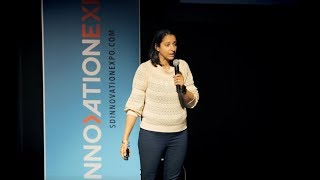
Anila Adnani created Keen, a smart bracelet that vibrates to interrupt hair-pulling and other body-focused repetitive behaviors. The device detects hand-to-head motions and alerts users so they can switch to healthier coping strategies. HabitAware has secured research grants and is working toward clinical validation.
Chapters
Thank you.
As an entrepreneur, my purpose stems from my pain. I have a mental health condition wherein I compulsively pull out my hair as a coping mechanism for stress and anxiety. A couple of years ago, my husband caught me looking like this and we set out on a journey to solve my own problem. My name is Anila Adnani and my company Habitaware is for the 21 million Americans just like me dealing with body focused repetitive behaviors. These mental health conditions include but are not limited to hair pulling disorder, compulsive skin picking and excessive nail biting. These are the most common disorders you've never heard of because people like me feel ashamed for doing these behaviors. In fact, I hid for 20 years because I was so scared of what people would say. Ew. You do what? Why can't you just stop? But we can't stop because we don't realize it's happening. These are very trance like behaviors. This lack of awareness is where habit aware comes in. We've developed a smart bracelet that we call Keen that helps people become aware. Using custom gesture detection technology, we are bringing keen awareness to our Keen family. The way it works is you connect to our mobile app and you actually train the device for your specific scanning motion, recording that gesture onto the bracelet. When Keen senses a match to that movement calculation, it sends a gentle vibration shifting it from the subconscious to the conscious mind so that now it's a choice interrupting that pattern of behavior and allowing you to to replace it with healthier coping mechanisms so that over time you're retraining your brain. Since 2017, we've been selling directly on our website and delivering on our mission to help people. And we're achieving real results in helping them learn how to cope with these behaviors and achieve real positive change. Not a day goes by that we don't hear from someone in our Keen family saying the impact that we're making on their lives. This is a Keen mom who sent in this message and it hits really home to me as I think of my 12 year old self as she shares that her 10 year old son who used to run home and isolate himself, embarrassed of the damage he was doing to himself, now comes home and wants to talk about his Keen stats. We are shifting the conversation from shame and blame to understanding, to compassion, to love. And we have champions in the mental health profession as treatment professionals are recommending our product because we are getting to that all important step of awareness so that now their patients can actually use the strategies they're learning in therapy. And with the success that we're having. It just inspires us to keep building, keep improving. As you heard, we have two research grants that are helping us do this. Not just to enhance our product, enhance our algorithms, but also to prove feasibility and ultimately validate clinically. But there's another awareness that our team is tackling, and that's social awareness of these disorders. Because of the shame associated with it, we are not seeking help because we are so scared of the response we're going to get. Insurance companies don't know that they need to cover treatment for this because they don't know that it exists.
Doctors don't know how to answer.
Doctor, how can I stop picking at my skin? Because they don't know it exists.
This is our goal.
Through mental health advocacy and through storytelling, we are shattering that shame and that.
Stigma.
In hopes that people in our community will find the courage to seek help through self love, through community strength, and through keen awareness. I would love to take the rest of this time to learn more about what you're doing and how we might.
Be able to help each other. Thank you. Thank you.
You're too kind.
All right, does anyone have any. Oops, sorry, Allison. Any questions at all for Anila? So I have one kind of similar to what I asked Peter Chamberlain earlier, but kind of that elevator pitch. So what was that process like for you to find a way to explain to people what this was and how it helped?
Yeah, we have a huge challenge because no one knows what BFRB stands for.
In the same way that if I.
Said C COPD you all kind of get it has something to do with breathing and lungs, or if I say diabetes, you all kind of get it has something to do with sugar and blood sugar levels. So for us, it's not 20 seconds, but it is still telling that story and showing the gravity of the problem that you're trying to solve and explaining to people why you need to exist in the world.
Sure. Also, in kind of looking into this, a little more information about utilizing things like SBIR grants, nsf, things like that. It's not something that people generally think about. And that was kind of part of why I wanted to mention Mr. Gary Archambeau back there, because he helps out with that a lot. You know, those grants can be big help as far as, you know, getting phase one money to figure out, get a prototype going. Can you maybe tell us a little more about the timeline that you used and kind of planning all that out and how those funds helped?
Yeah. So really, our impetus was first, this hypothesis of does knowing where your hands are actually help you change the behavior. So the way we got started was after Samir caught me, he then went online and did research to better understand why I was hiding it, the shame around it. And then one day, we're just sitting on the couch and I'm pulling while we're watching tv, and he just gently grabbed my hand, and I turned to him and said, I wish I had something that notified me that wasn't you. So that was kind of that aha moment. And then from there, we said, okay, we're not technologists. We're technophiles. So let's go to Michaels and let's build something physical first and test it out.
So I was working in advertising at.
The time, and I was wearing a.
Hello Kitty slap bracelet with paperclip to.
It with jingle Bells. And then I had another big, heavy bracelet, my wrist. And whenever my hand went up, the two would clash, and I would know, oh, my hands are here again. So it was kind of like, yeah, this is kind of working. But at the same time, everyone else in my office was like, what is going on? And I'm like, don't worry. Just, you know, testing a prototype here. But it was working. So then our next step was a local hackathon in Minneapolis, where we're based. And we didn't again, we didn't have the team.
But I looked on Twitter.
We were looking at a different technology that we thought we could apply. And I saw someone tweet about it, and lo and behold, he was in Hopkins, Minnesota. Samir had coffee with him, and he joined us for the hackathon. And now that's Kirk, our cto, who does the software and the firmware, and John, our lead hardware engineer. Look, when the universe wants something in the world, it's going to help you achieve it. We met John at the hackathon. He just happened to be there interviewing at the company hosting the event, and he just walked by and said, hey, do you guys need help? And then he took a job with that company, but still worked with us nights and weekends. And then six months later quit that company. And I'm pretty sure that company doesn't host hackathons anymore because they keep losing their staff to entrepreneurs.
So that's how we got our team together.
And then we just started prototyping. We used off the shelf prototype chips first. We used light blue Bluetooth technology. Can this. Can we detect the hand going up? Yes, but that's not enough. That's still too many false alarms. Can we detect these Micro Motions. Yes.
Now after that we went to hacs.
Which is a hardware accelerator program based in Shenzhen, China. Samir, my husband, our CEO, we took.
Our three year old child, we found.
An English speaking daycare and we hacked and we made and we learned to market, we met with manufacturers and we got our prototype to industrial strength, if you will, manufacturing ready. And then we came back and we did a pre order campaign. And most people use a pre order campaign to fund that manufacturing run. We said, no, we just want your credit card number. We are going to charge you when we ship because that's our promise to you. We're not taking your money now, we're taking your money when we actually send you the product. Because we've seen so many Kickstarter failures and you know, people were kind of just over it at that point. But our community were so hopeful for something because they had never seen anyone even like consider a solution for them. So it was a phenomenal response and.
I'm going way off on your question.
That's perfectly fine. It's your stage.
Yeah.
Any other questions?
Yeah, Peter has a question back here.
Yeah, thanks Anila. It's always great to hear from you. What can this one million cup style, what can this audience do like tangibly to help? Do you need introductions to doctors, potential test users? What do you need right now?
Yeah, we're in market, we do our own outreach to medical professionals. What we need from you is that compassion. What we need from you is when you're at the hair salon or the nail salon and you know, to bring this stuff up in conversation with people that are that first line of defense. Your doctors, your pediatricians, your psychologist, because not all the psychologists know what this stuff is or how to treat it. So that's what we need. We need your help in raising awareness of these disorders to shatter that shame. And of course, mentioning us would be helpful too.
All right, any other questions for Anila? So I have one. Can you kind of tell us maybe what the next four to five years looks like for Habit Aware? Is there a set plan right now? Is that still fluid or what's that look like?
Oh, yeah, no, we have a. So we're working through our research grants right now. Our goal is to build out the product. We're actually working on a second version of the product to enhance the technology, the algorithm, basically taking customer input, learning from the mistakes we made, if you will, to build a better product. We're working with a major, well renowned researcher at the University of Marquette on one of our Research grants to build.
In.
Basically beef up our mobile app to help people learn to replace the behaviors a little bit more. And then we do see applications for other mental health conditions for which lack of awareness is paramount. And so how can we adapt our technology or you know, it's not about what can we do with this bracelet, it's more about what problem do you have and how can we figure out how to use technology to solve it.
So another thing in kind of looking into the company and kind of really kind of being enamored by it is seeing kind of the support you've been able to get in the Minneapolis area, whether it's through, you know, the Carlton School of Business with Minnesota cup, other kind of grant opportunities. Can you maybe just tell the crowd who maybe hasn't looked at all the news articles about you, like I have recently getting ready for this about maybe some of those successes and kind of what that's meant and kind of what that ecosystem's like in Minneapolis?
Oh yeah, it's a vibrant ecosystem. There's tons of meetups. Like if you're just starting, you know, thinking about what you want to be doing, there's tons of meetups for whatever technology you stack, you're looking at or UX design, whatever it is, there's people that are readily available to help you. We've been blessed with, you know, support from the Minnesota cup, non dilutive funding around $100,000 that led us to the MITA challenge. With MITA is the Metropolitan Economic Development Agency or association should probably learn that acronym, based in north Minneapolis. They fund minority founders, mostly small business, but now moving into the startup space. So they are investors in US. That actually led to someone recommending me for TEDx Fargo, which was just this past July, which led me to here. So honestly, the Minneapolis startup ecosystem just gave a talk on this three days ago about how amazing it is because it's so supportive and very community based. People want to see, and I think here too people want to see the Midwest rise up and they will do anything they can to help you as one of those sort of shining lights.
So it's always, it's always great. Obviously when someone starts a company, it talks about often, you know, fixing a problem or finding that major opportunity. And so your story is amazing just in the fact that it's something that affects so many people, but also kind of started with yourself. So thank you so much for your time today. We really appreciate it. Neil. Ladies and gentlemen, Anila Nandi.










