How Matt Paulson Built $200M+ in Wealth from His Small Town & What He'd Do Differently Now
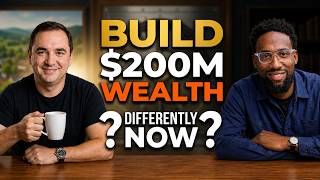
In a candid interview with host Jason, Matt Paulson—founder and 100% owner of MarketBeat—walks through the evolution of his media business from a side‑hustle graphic‑design gig to a $50‑$65 million annual revenue company based in Sioux Falls, South Dakota. He explains how early reliance on keyword‑based SEO gave way to a strategic focus on under‑served Google tabs (Finance, News, Images, Video) and later to a paid‑acquisition engine that now drives roughly 80 % of new leads. Paulson details the organic mix (steady SEO traffic, a growing YouTube studio, daily email newsletters) and the paid mix (Google, Bing, TikTok, Meta, Taboola, Facebook, and experimental CPC campaigns). He shares the granular email engagement system—daily sends, segmented re‑activation flows, channel‑level performance tracking, and a philosophy of buying high‑quality leads over cheap volume. The conversation moves to operational structure: 19 full‑time staff, 12 freelance writers, a handful of media‑buyer contractors, and a philosophy of staying lean while scaling paid spend. Paulson discusses the role of generative AI in content creation (template‑based automation, AI‑summarized earnings calls, personal workflow bots) and the development of internal tools like the MarketBeat Data Exchange for advertisers. He outlines his venture‑capital arm, Homegrown Capital, with $40 million AUM, a focus on media, fintech, ag‑tech, and SaaS, and a regional bias toward the Midwest. Philanthropy is a major personal driver: a yearly giving budget, a philanthropy committee, and targeted support for small nonprofits, churches, and community events. Paulson reflects on his small‑town upbringing, the importance of external conferences for perspective, and the mental model shift required for founders outside major tech hubs. He offers advice for aspiring media founders—prioritize data on subscriber quality, be willing to spend on high‑quality paid channels, and understand that not every niche can sustain a $50 million media empire. He also touches on personal branding, the use of a personal X handle (@MediaKing), and future ambitions (scaling to $100 million, expanding YouTube, testing new paid channels). The interview concludes with his definition of success as “more days in a row that I enjoy,” his commitment to running MarketBeat for life, and practical resources for listeners.
Chapters
MarketBeat is a company that does $50 million in revenue. It's on track to get to $60 million in the next 12 months. Matt Paulson, the person who is behind this business, started it as a side hustle while he was doing graphic design, and now it's one of the most influential media companies in the world of finance. He did this all from a small town. He did this with a small team. And has built an empire that allows him to have a suite at the Vikings games, his own private jet. But more important to him and probably for the world is all of the work that he does in the local community through donations, through charity, through philanthropy, through culture investments, and more. This is a conversation with somebody who has played the long game and has come out of it very successful. I'd like to welcome you. To my conversation with Matt Paulson. Let's dive in. Matt, thanks so much for making the time. Really excited to have you on. One of the things that I want to start this with is about distribution. I'm passionate about distribution. I talk about it all the time, and you've also talked about distribution. When did your mindset shift around the importance that distribution is a real moat in business?
You know, I think it really goes back to the Web 2.0 kind of blogging days of like, it was kind of a gold rush. Like there were 200 blogs on every topic, right? And everybody was trying to claim their stake. And what I realized was that, you know, the content mattered, but like there were plenty of great blogs that like didn't get read. And then there were plenty of average ones that did get read. And then I realized like, oh, it really matters more about how many people read your content versus like how good the content is. Right. And I think it was reinforced in probably 2011, '12, '13 when kind of that first batch of Google updates were happening, Penguin, Panda, because people were, including me, were getting steady search traffic and then all of a sudden Google Panda update hits, half my traffic is gone overnight and it's like, oh, I can't rely on that. I need to figure out another way to keep and reach my audience that's not just depending on Google traffic. Been plenty of opportunities over the years to learn that lesson.
What was the biggest distribution channel that you focused on after some of those algorithm shifts on Google? Like where did you go all in?
So what I figured out, like in this would've been 2013 or so, was that like the main kind of main tab on Google where everybody was competing for like keywords back then, like everything was keyword-based, like that is total red ocean. 1,000 people competing for every keyword and like you're 'Cause it's a game that's pretty hard to play. So I thought, okay, what are the games that people are not playing? And across the top of Google, there's all the other tabs. There's Images, News, Video, Finance. And I really figured out how to play that Finance tab. Where at one point in 2013, '14, we were about 30% of the news search results in Google Finance across 20 different websites that I had. It was awesome. We would track it. Every story and every keyword and like, okay, how many of them are mine? And we got it up to about 30% and Google would send maybe 200,000 page views a day to my website. And then from there it was like, okay, I know this is not going to last forever. They're not going to like let this slide forever. Cause like they weren't great websites. I mean, they were automated news content. So I thought, okay, I'm just going to capture as many of these people as I can, you know, through an email opt-in. So we would do like a lightbox popup where it said, Hey, you're reading a story about Tesla stock. If you want more news about Tesla delivered to your email inbox, give us your email address and you can get our newsletter. And that worked out awesome. The only problem back then is like, I didn't know how to get direct advertisers. So the only product that I had to sell was like the premium version of our newsletter. It's called MarketBeat Daily Premium.
Right. Fast forward to today. How does distribution show up for MarketBeat today? Like, how are you thinking about it? How's the team thinking about it? Thinking about it and what's the current play?
Yeah, I mean, it's kind of a, there's kind of two sides to the attention gathering aspect of marketing. There's like the organic content, which is SEO and YouTube, and then the paid side, which is Google, Bing, TikTok, Taboola, Facebook, you name it. Any paid network will try it. And over the years, like the organic piece has stayed probably about the same size. It's grown a little bit with YouTube, but really where a lot of the growth has been in the last 5 years is on the paid side. Right. To the point now where like 80% of our new leads that come in come through paid sources.
Right. So talk to me about some of the organic distribution strategies that you are currently tapped into. Is search still a predominant focus, or has it shifted to social, or what's going on in the organic side?
Yeah, we've never really gotten social to work out awesome for kind of financial content. What I feel like kind of happens on Twitter and Instagram is people are more interested in following, like, people than they are brands, right? Like, you would rather follow somebody, you know, that you feel like has good takes on the stock market than CNBC.
Yeah.
So, like, we've, we've never really cracked that outside of YouTube. Like, we had a podcast for a while. It didn't stick. We've tried Twitter a couple of times. Yeah, didn't stick. Really kind of our video content that we're doing on YouTube is working really well. We're building out a new studio. We're going to hire a production coordinator and really kind of double down on that this year. So excited about that opportunity. And SEO has been pretty consistent for us. We get 50,000 hits a day from Google and have for probably about the last 5 years. And it's not growing, but it's also not shrinking overnight either.
Right. What are you doing with this distribution for your own brand? I noticed from the personal side, you're ramping up, you're doing more content, you're creating lots of posts on X, your personal brand. Where does that fit in? Fit into the mix of your goals? Like, why are you doing the founder stuff so heavily?
There is a strategy to it.
Okay.
And a lot of it has to do with getting— I don't want to say preferential, but like you get better deals, you get better treatment from like your vendors.
Right.
So like, you know, we spend hundreds of thousands of dollars a year for SMS and for email and and different services. And when you're kind of a name, you can sometimes get them to do things that otherwise you might not be able to. We've had companies add APIs for us that didn't exist and stuff like that where it's just really useful. Maybe some algorithm flags your account and you get suspended. And if everybody knows you there, you just call somebody and they'll look at it and take care of it. So it's just really helpful to be a name for a lot of reasons. Yeah, that's— And it doesn't really drive direct signups to MarketBeat, nor do I expect it to, but it's really helpful just to have access to people at all of the companies that we rely on for infrastructure. There's a lot of strategy to that. We depend on Twilio for SMS, for email we rely on SendGrid and Beehive and Kit to a lesser extent. If something goes wrong, like, I want to be able to call somebody at Beehive and be like, guys, what's going on here? Please fix this.
Yeah, yeah. And you do angel investing as well. Is that a part of the mix? Is like you want to kind of increase the flow of that or you want less of that? Like, what's kind of— is that a part of the strategy too?
Um, yeah. So I run a venture capital fund, um, kind of a boutique fund. We have $40 million under management between two funds. And one of the categories we want to invest in is media companies. So when I go and speak at like New Media Summit, there's a strategy to it in terms of like, yes, I'm trying to build my personal brand, but also my ears are open for like, are there any great opportunities here to invest in? And like sometimes you find something, sometimes you don't. One of the companies in our second fund was a media company that I met at a conference. And you know, just when it makes sense, like take the opportunity. Right. I love it.
That makes sense. MarketBeat. So numbers are suggesting over $50 mil roughly in rev. How many people? Are behind the doors.
Yeah, so we did 50 last year. We'll probably do 60, 65 this year depending on how the rest of the year goes. But the team size is a little bit of a complicated question. We currently have 19 employees. We're going to hire number 20 in the next week. Um, we have another probably 10 to 15 people that write for the website. They're all freelancers, right? We've tried to give some of these people jobs before, and turns out freelance writers don't really want jobs. Like, they want full-time money, but they also like don't want to be an employee. Like, they want to write for 3 different places, and yeah, because that gives them job security. Like, okay, that's fine, we can live with that. So yeah, 19 plus 12, and then we've got a variety of people that are not quite full-time contractors but pretty close, like our media buyers. We have 4 of them, and just different people we work with on different things. And like, yeah, you know, all in, it probably adds up to 40 people.
Right. Are you staying lean on purpose?
Yeah. I mean, honestly, we don't need more people. Like, it's just a very leveraged, scalable thing. Like, cool to go from a million subscribers to two. Like, you don't actually— like, you're not producing more content as long as the tech is set up well. Like, you just don't need more people, right?
How far do you think you can go with this size of a team? Like, how far do you think you can go until you need to really add 25% more?
You know, I think we could get to $100 million with 30 people pretty easily. Like, I mean, we got to $50 with 19.
Right, right.
Yeah. You know, I think honestly for us to like go to that next level of scale, it's really a matter of scaling up our paid efforts.
Okay.
Because we've been at about $1 million a month in paid spend, and we've been trying to push that the last 2 months. Now we're at like $1.4 million. And I think if I get it to 2, 2.5 a month, like that would push us where we need to be over time.
What's the constraint that stops you from being able to get there with this spend? Like you guys are doing it from a revenue lens. So what's slowing down the ability?
There's two things. One, like there's this kind of a lag time of like when you put, when you invest new dollars into a paid channel, like it'll take 3 months to break even. So like there's a little bit of a ramp up there. Two, like every ad channel has a natural ceiling. Of like what you can spend profitably, and you don't really know what the number is until you hit it. So you kind of ramp stuff up, you pick a number and then you ramp it maybe 10-20% a month until you feel like you've hit the cap, right? And then the performance drops and then you kind of go back down a little bit. And right, like if I knew how much like that ceiling was on every channel, like I could probably do it, like bump it today, but right, right, uh, you just don't know. So like you kind of want to look at that curve of like How did January leads do? How did December leads do? How did November, October, and kind of look back in time and see like what that performance curve looks like, right? Because like as these cohorts get older, they should be making more money. People should stay engaged on the list. And, you know, over time we can see that. But you can't always see that. Like you make a change, like you might not know what it did for 3 or 4 months. Right.
Can you talk me through this, that comment right there? So you want to keep them engaged on the list. Because everybody on X is always talking about their subscriber growth. That's the only screenshot they share. But you guys talk about engagement often, which I love. How do you guys keep people engaged intentionally? Like, is there something you're doing behind the scenes to focus on engagement? How are you guys thinking about it?
Do you—
you must have clearly figured this out early, but in terms of benchmarks, you're above the market in terms of engagement rates with your email stuff. So like, what are you doing that nobody else— is it in that book? Like, I know I didn't read it yet. Email Demystified from like way back. When did you press publish on that?
Well, the, the third edition was published in '22, so it's a little bit out of date, but not that out of date.
I love it. OG. Um, so like, what is the, what's the thing that allows for the engagement to be so high still?
Um, I think there's probably 2 or 3 things. One of them is that we have a really good understanding of engagement by channel. So like maybe you try out, I'll be honest, like one thing that didn't work for us was we tried to do a co-reg campaign on SparkLoop. And like got lots of leads, got lots of signups, we got lots of opens, we got lots of clicks, but we didn't get a lot of purchases out of it 'cause the buyer intent just wasn't there. So like we'd get, like if you didn't know what the backend data was, you would think like, this is great. Getting opens, clicks, people are engaged, but we also knew nobody was buying anything. So we turned that channel off. So to have really good channel data of which channels are sending good people that want your content, that open and click and stay engaged and make purchases, that's a key piece of it, to know which channels are effective. I mean, another one would be frequency. We mail every day. And then typically we mail 30-day openers daily, and if you fall off that segment, you get weekly emails for a while. And we also have this kind of reactivation strategy where like if you haven't opened for 30 days but you have opened in the last 270 days or so, like we'll send you a couple emails a month to try to reactivate you. So, right. And then there's some like more fancy stuff you can do with reactivation. You can— there are like these third-party services like AudienceBridge has one that will tell you when like your inactive subscribers are opening and clicking. Other emails. So like that would be a sign that you should try to like email them and reactivate them.
Yeah.
You can get really fancy with that stuff if you want to.
Right. Are you guys using any of the new generative AI tools and as a part of your workflows yet, or are you still using some of the older stuff, or how is that impacting things?
Yeah, I mean, we do both. There's kind of 3 categories of content on MarketBeat. Like there is like normal human written content that our writers write and our editors edit, and there's no AI with any of that stuff. There is kind of our more traditional automated content that uses templates to say, like, this company announced their earnings. It was this number compared to the estimate of this number. This was the revenue number compared to this estimated revenue number.
Right.
And then we, then we do have truly generative, generative AI stuff where it's like if there's a company has their earnings and like there's a transcript of the earnings call, like we will summarize that and turn that into an article using purely AI.
Cool, cool. One of the things that a lot of the listeners are wondering, because they're not in the media world, they're specifically running SaaS companies, they're running their own new startup, they're building, um, they might be in a publicly traded cloud company, and they're trying to understand how they should think about media for their business to drive attention and awareness. Is there any lessons that you think they should be thinking about when they apply it to, let's say, a publicly traded cloud company and how they should be thinking about their media and their newsletter engine? Like, what should they be thinking about that you folks have learned to scale your media entity that they could apply inside? Yeah, um, I think a lot of them are going to be triggered as soon as you said email every day. Like, they're already triggered. They're like, not a chance.
I mean, hey, I like to make money, but not everybody does. So, um, I, I think it's really hard for non-media companies to go start media brands because it's just such a different type of business. Like there's not really a product and really you're focusing on subscribers and engagement, not on purchases. So it is, it's just kind of a different thing. I think HubSpot's been reasonably successful acquiring, uh, like Starter Story now. Originally The Hustle. And like, I think what works for them is like when they acquire Starter Story, like they're not gonna try to take it over and ruin it and mess it up. They're just gonna let Starter Story run on its own. I think that's what you have to do is either go acquire the media company or develop a strategic alliance with one that already exists. And be that key sponsor. That way you don't have to go learn a whole new business model.
[Speaker:JASON] That makes sense. Some folks are listening and they're entrepreneurs and they wanna be Matt when they grow up. What's the guidance to them? Like, they're not growing up in the same search world that you did when you first got started. Is there a path that you would advise they take in today's climate that might be like, if you were getting started now, where would you go? Would it be the same play or different?
No, I think it would be different. Obviously 2026 is much different than 2006.
Yeah.
In terms of the opportunities. You know, I think the key is to like, Understand where the discoverability is today. Like in 2006 it was on search, today it's on YouTube and Instagram. So like I'd start there in terms of like where I'm going to create my content. And then like obviously from there, like those are kind of rented platforms where like you don't control it, you don't own it. But then maybe from Instagram, YouTube, you try to send people to an email list on Beehive or Kit that you do own. Yeah. And, you know, start where the discoverability is and send people to into a platform that you own over time.
Yeah, I love it. When you think of those early days, like, did you always know that it would end up here? Like, did you always have the aspiration that you wanted this thing to turn into a $50 million plus business? Or was it a side hustle at first? Like, what was the vision early on?
Yeah, it definitely wasn't this. Okay. It was a side hustle that made $50 to $75,000 grand a year for a few years. And I just thought, I didn't know how I would grow it to be a full-time business. And so I had a day job doing web design and this was my side gig and I thought I was hot stuff making like $150 grand a year. In a way I was because I was like 22, but compared to my classmates who just got jobs and I had my job money and then my business money, I thought, this is great. I bought a house and paid it off in a year. A year and like had no student debt and I just thought I was ahead of the game in a way I was. But what I didn't realize is like, oh, there's levels to this stuff. And like, just because like I was doing better than the people I saw immediately around me and like my classmates and graduates, like, like it, like that didn't mean like, like there are many more levels. I didn't really know they were there.
Right.
Like even like 10, 11 years ago, like I'd go to TNC and I thought I was hot stuff because I'd made like a million or two a year in revenue and like, right. Like, that was cool, and that was good money, but like, there's levels to this. And now I look up and like, oh, there are media companies that do a billion dollars a year, and I'm a small fish in a big pond.
Right, right. Not a lot of the listeners know, even when I— even if they've listened for a long time, I live in this small little place called Nova Scotia, east coast of Canada, population less than a million. You're running a $50 million business, you're not in Silicon Valley, You're not in New York. Tell folks a little bit about where you're from and what you've been able to build. They've heard what you've been able to build, but give us a bit of a background. How did you do it where you're at?
Yeah, so I am in Sioux Falls, South Dakota. The metro is about a quarter million people. Love it. The whole state population is 1 million people. So very—
Oh, small town. I love it. Yeah.
I mean, like small town, but like, yeah, we've got all the modern amenities. Like we have Chick-fil-A.
Same with Halifax. Everybody thinks we're smaller than we are.
I like to think we're Big, but yeah, I mean, we have all the, all of the restaurants and stores you would want, so it's fine. We don't have a Louis Vuitton, so that's kind of annoying. But other than that, we're pretty good. Well, what I've learned about here is like, there's just not, there's not a lot of peers. So like you don't have a lot of people to talk to about your business.
Yeah.
So that's why I try to go to 3 or 4 conferences a year to get those kind of conversations. But there's also fewer distractions. I try to think like what my life would've been like as a 22-year-old that went to Silicon Valley and like lived there, I think I would be very tempted to jump from thing to thing to thing to thing as like that next hot thing showed up. And because I was here, like the distractions weren't here.
Yeah.
And that allowed me to stay focused on MarketBeats and, you know, build my team slowly. Like I didn't get, I didn't get like wooed over by a venture capital person trying to give me money for my company because frankly, there weren't any of those people here.
Yeah.
And if there were, I didn't know them. So nobody offered me money to invest in MarketBeat.
Yeah.
So that allowed me to bootstrap it. And now I've got a big company that I own 100% of.
Love it. Do you feel like there's anything around being somewhere that's smaller that gave you— like, did you have any— like you mentioned the exposure, like you didn't know that there was another level to this thing. How would you advise folks break the mental model to be able to see and get exposure to those levels? Early so they can get it? Like, I know you invest a lot into professional development, personal development, etc. You, you buy the book, you'll pay for the subscription, you'll pay for the, the lab, you'll get on a plane and go to the conference. What guidance do you give to folks who don't want to leave their town, their hometown? They want to create something meaningful, but they live somewhere smaller. Like, what would be your advice for how they can break some mental barriers they might hold on to.
Yeah, I mean, honestly, like, people starting today have just so much more content available than they did 15, 20 years ago. Like, I had Internet Business Mastery, the podcast, and that's really about it. And like, now you guys can go listen to Alex Hormozy or Sam Parr or any of the great, like, podcasters that are doing business content and like be inspired. Like, the content is out there, you just have to I get it. Like, there's plenty of people creating great content on YouTube. You know, some people will say like listening to business podcasts and videos and like, like that's a distraction and then it's like not actually real work, right? Like, I, I don't buy that at all. Like, um, you know, it's not gonna like move your business. Like, it's not like an action like to do something in your business, but like, right, to be inspired and to know how to do stuff and to understand business strategy, like I listen to probably 30 podcasts a week and I continue to do so. I love podcasts. Listen in the car, listen at home doing chores. Whenever I got time, I'm listening to something because you never quite know what thing will hit with you and inspire you and push you to do that next thing.
Is there anyone who has held the spectrum of time for you as someone who you listened to early and you still can listen to now? I know there's a lot of new faces in the Hormozis of the world just that's like popped up in the last 5 or so years, but like, is there any of the OG internet folks that you kind of listened to back then that you still get a lot of value out of now?
Yeah, there's 3 that come to mind. Okay, first would be Ryan Deiss from Digital Marketer. He's still out there with Scalable, um, doing his content thing. Like, his content is just as good as it's ever been. I think he's kind of evolved a little bit and like less concerned about being the guy on stage and like having big events, But like, I think his content has gotten better over time. Ryan and I are good friends now and love his stuff and I can't recommend it enough. The other two would be Dan Andrews with the Tropical MBA and he has a group called the Dynamite Circle. I was in that probably 15 years ago or something like that, but he's still out there making content every week on a podcast uninterrupted since 2009. Wow. Like I just give a lot of props to that. Yeah. Then the last one would be, uh, Rob Walling with Startups for the Rest of Us. He and I have—
Rob is awesome.
Yeah, like I know him, know his wife, have met them off and on over the years.
Very cool.
Still email back and forth every now and then. They live in Minneapolis, so I should go see them more. But like, you know, Rob's been doing this for longer than anybody. Yes. And he's still creating a weekly podcast and doing events and tons of micro conferences next month. And like, they just keep going.
I love it. That's awesome. Very cool. When you look at how far you've gotten and how much growth you've had along the way. There's had to have been some hiccups. Like, was there any moment that stood out as a point where you were like almost there, where you were like, I'm walking away from this, I'm not doing MarketBeat? Was there ever a moment, or has it always been, this is the path, this is the vision, I'm going to pursue it and I'm going?
Yeah, the closest I ever got to quitting was in 2016. Okay, so our first kid was born in 2012. He was a super preemie, 10 weeks early. Second kid was 6 weeks early, and wife had some prepartum, postpartum issues, and just like life kind of sucked back then. And at that point I thought like, this is not going awesome, like maybe I should sell this and move on with life. And I even listed it with a broker to sell it, and right, I basically told him like, okay, get me this number and I'll sell it, and and I'll go do the next thing. And yeah, but the offer never came, so I kept running it. And that was when MarketBeat was at $2 million a year in revenue.
Wow, I love it.
And I told them, if you can get me $8 million, like, I'll take it. And they didn't. So it's like, okay, let's keep running it, you know, keep pushing through.
It's worked out. I want to dive into this a little bit. So on your blog, you publish the, like, quarterly reviews, the analysis of, like, how things are going. And you've been doing it for quite some time. As somebody again who is in a smaller town, I love the idea of having impact in the local community and having an impact. You've done that in your hometown significantly. You've been involved with politics, lots of work in the community, donations. You've got the Kirby Science Museum involvement, like all of those things. How do you— I've got a lot of questions on all of this stuff, but I'll start with like, what's your guiding principles around your life approach to do all of these things? Like, you're investing, you've got MarketBeat, you're— it seems like you're heavily involved as a dad, you're doing the Vikings. Go Birds! I'm not gonna go there with you, but all of these things, like, what's your— what's your path? What are you trying to do?
Um, I mean, a couple things. I'm a person of faith, so that certainly guides me in a lot of ways of like how I do business and like how I give and why I give to the community and give different things. I would say like I've been inspired and kind of shown the way by a few senior business leaders in Sioux Falls that have kind of been there, done that, got the t-shirt, lived a very meaningful life, have given back in a variety of ways. And you know, a lot of those guys are in their 60s and 70s now and are kind of getting ready to retire and on their way out. You know, I want to be— there's a guy named Craig Laurie in our city who is a real estate developer. He passed away last year, but, you know, never in elected office, just a business leader, kind of trying to continually do good things in our community. And like, you know, he's an inspiration to me. And right, there's another guy named Jeff Surschuk who's doing the same thing, like, like the office building we're in, like, he developed. But he's also just done a ton of great things in the community. And, you know, like These guys are like the Chamber Board President and they've always set aside competitive differences to do cool stuff to make the city a better place. Now I've got the ability to do some of those things and want to be the next guy doing that. I love it.
Do you set goals around this stuff? Are you looking at it on a— Do you view life in the same way as a business in the sense of goals? Do you say, I want to have this amount of impact through my philanthropy, I want to do this from a goal lens in the culture and arts. And how are you thinking about all of those different things? Or are you just showing up, getting these emails, hey, can you donate to this? And you're doing it. Like, how are you planning your life?
I used to set like annual giving goals and like lifetime goals. And lately I haven't done as much of that. And I mean, I just don't feel like it's kind of helpful anymore. You know, we have a— I have a giving budget every year. Okay. Kind of my wife and I set it at the beginning of the year, like, cool, here are the things we're going to give to.
Yeah.
And then, you know, some of the budget is unallocated where it's like we know people are going to approach us throughout the year for a variety of things and we want to have money available to give to cool things. Right. Some of our giving budget is determined by MarketBeat staff members. We have a philanthropy committee, so nonprofits in our city can apply for a grant up to $25,000. They get a budget of a couple hundred thousand a year to give away. So that way it's honestly like giving the money away is the easy part. Like managing relationships with all the nonprofits is the hard part. So like to give some of that work to my team members has made my life a lot easier. I bet people like don't know how to, like we want to give of course, but people also don't know how to ask correctly. So like I might get like a Facebook message on a Friday night saying, hey, can you give to XYZ? It's like, thanks for the message. I'm giving my kid a bath right now. Right. So we've had to kind of point people in the right direction of like, here's how to ask appropriately. And then that's kind of put it into a process and made it much more manageable.
Would you say that you're guided heavily by your faith to do the give back and the philanthropy? Is that one of the core reasons why this is such a part of like what you do?
Yeah, it's one of them. I wouldn't say it's the only one. We give to different things for different reasons. Like there are some small non-social service nonprofits in town that, like, there's one that gives away clothes and other stuff to like foster families, and right, there's one that gives away medical, durable medical equipment to anybody who needs it. And right, these tend to be smaller nonprofits, sub-$1 million a year budgets. And a lot of the more established corporate givers in town have maybe not engaged with these organizations as much as they could or should. So we've kind of found a niche in adopting these small nonprofits and giving them money to go do stuff. There's one called the Furniture Mission that gives furniture to people who were homeless and are now not homeless, and we gave them money to help them with their new facility. Stuff like that. So there's like that bucket, but then there's also this kind of, there's a religious bucket of like my church and a couple of Christian nonprofits that I give to. And then there's kind of a fun bucket of like we sponsor 50 free concerts every summer through the Levitt. We have the Mark B. Open tennis tournaments. So stuff like that that's more like kind of corporate branding plus also a lot of fun just to do it kind of thing.
The growth of MarketBeat and the path of that, do you view it as a great lever to essentially achieve some of the goals that you have around philanthropy? And that's kind of like what inspires you to maybe one day want to go after that $100 million and keep pushing is how much more you can do in that sense?
Yeah, I mean, from a lifestyle perspective, like there's nothing really else I want to buy. I got a nice house, right? Have a private jet.
I was going to ask, you own that jet? Is Is that your—
Yeah, I own it. I owe about $1 million in debt on it. I could pay it off pretty easily when I want to. Maybe someday I'll get a bigger one, but it's not like a huge priority. But there's just not a lot of personal needs left. Right.
You have a suite with the Vikings, or you just go to the games?
Oh, so we have a suite.
You have a suite.
Cool. Yeah. So we go to every home game.
Yeah.
And so we'll leave at 9:00 AM, go to the airport, fly to Minneapolis, take a Sprinter van to the stadium.
Yeah.
And then after the game, the stadium will take us back to the airport, fly home.
That's cool.
So like for, it's a 12 o'clock game, we leave at 9 and then we're home by like 5 or 6 PM.
That's great.
That's unreal.
Yeah. Why did you pick the Vikings? What? I know this is completely aside. We're going down the football path.
Honestly, like I have a buddy who's got a suite there and then he took me once. I was like, I gotta figure this out.
That's cool.
Like, I mean, the Vikings are like our family team. Like my parents are the Vikings and Yeah, I mean, I get it, they're not awesome. They do have a great— they do have a great—
colors though. They got good colors.
Yeah, they've got a— they've got a great stadium too. Like, it's indoors and like you're never too hot or too cold. And like, they got great food. And yeah, you know, part of it's the team, but part of it's like the other stuff, right? And like, we'll bring our employees or we'll bring our friends and we always have a great time and we just love that.
I love it. How do you define success now? Like, what— what are you view as, or have you hit where you want to be and wanted to be, and now it's just like icing on the cake? Do you still have bigger ambitions? How are you thinking about success in the next decade for you?
You know, I think success for me today is really about like how many days like in a row do I really enjoy.
Cool.
Because like there's stuff that's a lot of fun that I get to do, and then there's some stuff that's not as fun. The more time I can spend doing fun stuff, like, right, the more I enjoy my life.
Fair. Yeah.
And to me, that's success.
Yeah. What's the least fun stuff that you have to do that you wish you no longer had to deal with?
You know, you run a company, you have to deal with personnel issues, you have to deal with accounting stuff, legal stuff. Like, if it were me, like, I would go do lots of fun things in the community and outside the community, go to conferences, go to go on trips. And then when I'm at the office, I would sit at my desk and write code all day because that makes me happy.
Right.
But as the CEO, like, as long as I'm the CEO, there's stuff that only I can do and I just have to do it and be okay doing it.
Yeah. Can you share a little bit about any of the workflows that you've been able to build? Like you mentioned, you would code all day. Everybody's seen the news about Open Claw, ClaudeBot, all that stuff. I think I saw you had built maybe a script to help write tweets and they were for your own posts. Like what are some of the use cases that you found recently that you think folks should be thinking about?
Yeah, so I have an OpenClaw install going. His name is Multi, back from the Multibot days.
Yeah.
Not all 4 or 5 of them, but he does a lot of cool stuff for me. He'll like go interface with my Delphi AI clone and then like use that to write tweets or. He'll go check YouTube for podcast interviews like this one. And then based off what I say in a podcast interview, he'll write tweets up based off that. So every morning he'll write 6 tweets and then I'll pick 3 or 4 of them and he schedules them throughout the day.
That's cool.
And it tends to be a little bit repetitive, but what you find with big personal brand accounts, like they say a lot of the same things over and over again in different ways. Like, like Cody Sanchez is the master of this. Like AI is dumb, plumbers are great. And she says it like 100 times, 100 times. Ways and like, yeah, it always gets engagement. Like she's, she's like a media, she's awesome.
Yeah.
So like stuff like that. Um, I've got it doing some calendar stuff where like if I have to drive somewhere for a meeting, like it'll put a buffer in there so that somebody can't schedule a meeting back to back when I don't have time to drive from one thing to the other. Like it does that. I recently had it start putting gym time on my calendar cause I'd always forget to put it on my calendar. So now Multitasker makes me go to the gym. He reads like MarketBeat internal reports and then like if something's like, cuz we have this big backend interface built in ASP.NET that's been there for 15 years.
Yeah.
Like he'll log into the, the admin and read the reports and tell me if, if he sees any trends that scare him that we, I should look at. So that's cool. A lot of cool stuff like that.
Is there a project that you're itching to build with Claude that you haven't had time yet? No.
I mean, whenever I wanna do something, I just go do it. Right. At work, we use Cloud Code for everything, do a ton of custom development with it. Like one thing that we're, we just built is called the MarketBeat Data Exchange and it's for advertisers. Okay. So that they can see like how they're doing relative to other advertisers.
Right.
We launched that like 2 weeks ago and it's gotten pretty good feedback, but it kind of encourages the advertisers to fight with each other, like to get more inventory. It's kind of great. We built that, we're building it, we're vibe coding a new app like that. Does workflow for our writers and editors. Um, and that will like— because like they have a standard like checklist of things that they search for, and currently it's kind of a manual process, but like AI can easily show like where the stuff is we need to correct and then make it easy to correct it, right? So we're working on that.
That's awesome. Is there any other tools that you've incorporated in your stack that might be a little bit lesser known?
That's a good question. I've been playing with Manus more. Um, I feel like the That's kind of a hosted version of ClaudeBot because you can do recurring tasks.
Right.
I've been happy with that. I've been using Alex Hormozi's business AI. It's called ACQ AI or something like that. ACQ. I don't know. Yeah, maybe ACQ AI Assistant. But it's actually pretty good in terms of giving business advice because it's trained on all of his books and frameworks. And you give it your financials or whatever, and it'll tell you what it thinks you should do, and I found it very useful so far.
That's cool. You've had some investments in the startup world that have been very successful, have worked out well. Is there anything that you see in not the successes but those actual failures? Like, think about some of the ones that might not have gone as nicely as the rest. Is there founder behaviors that looking back you would say, yeah, there's a trend I noticed that X, Y, and Z leads to more failure versus—
Every idea stage business I've invested in where it's like an idea, no customers, every one of them has failed. Like, that never works.
Oh, interesting.
So don't do that. Over time I've learned like, okay, I should— if somebody asks me for money and like they haven't— don't have a business yet, like probably shouldn't invest. So like that's probably the main thing.
Don't invest when it's just an idea. Like, wait.
Yeah, like wait until they've got like a quarter million in recurring annual revenue We get $20,000, $25,000 a month and monthly recurring, like then we can talk. But before then, like, good luck.
Good luck.
Tell me when you, tell me when you've done something.
Right.
So there's that. Um, I stopped investing in anything that like medical, biomedical, FDA approval required. Like those things require so much money and take so long and most of them get nowhere. Like I just stopped investing in that stuff more recently. Cause like Homegrown only invests in later stage stuff. We kind of look for, We look for a good growth rate, we look for good retention, we look at what their monthly cash burn is. The companies that tank are the ones that just are burning too much money on a monthly basis, because they just run out of cash before they can ramp up. So we try to get our founders to have a monthly burn of under $150K a month. But when companies get up to $500K a month in burn, it is really hard to to not run out of money doing that.
That's fair. Is there verticals that stand out right now that you're trying to go down the path of like leaning more into that stand out from the investment lens?
Yeah, certainly digital media companies, but we also invest in fintech, we invest in agtech, we'll invest in SaaS companies still. So anything broadly tech-based that's got a recurring revenue element that we look at. Cool. Because we're more geographically focused than we are industry focused. Like, we're kind of Midwest Great Plains investors. Like, companies from Des Moines, Iowa, like, yeah, we want to talk to them, right?
Is there a reason for that? Like, are you— do you feel like it's underlooked, underestimated? Like, why are you regionally focusing?
Yeah, uh, certainly undercapitalized.
Okay.
You know, we try to invest in companies, you know, I'd say the most— like, highest valuation we pay is probably about $25 million.
Right.
So for us to get a 10x, the company only needs to sell for $250 million. They don't need to sell for billions for us to get a nice return.
Yeah, that's fair. What does the structure look like for Homegrown? Is it just yourself? Do you have a team?
Yeah, we have a small team. So there's me and my partner Tim, we're the GPs. And then we recently hired a gal named Megan who's our associate. So there's 3 of us, pretty small team, but you know, the funds are not large either. So it works for us to manage them. I'm on the board of 3 companies, I think.
Okay.
Or 2 director spots and 1 observer spot.
Right.
And Tim's on most of them, and then we're gonna onboard Megan to a couple of them pretty soon.
You've got a lot on the go, and you also do real estate investing development as well. Like, do you have an assistant? How are you managing your life with all these different things?
I do have an assistant. She doesn't get too in the weeds with financial stuff. We have a vice president of finance at MarketBeat named Erin. She's great. And she helps with a lot of, you know, once you get really wealthy, your finances get complicated because you have to do estate planning and like do irrevocable trust and all that stuff. And Erin's been super helpful with that kind of stuff. So like, I don't have a family, like I'm about the size, like about the net worth where like, yeah, it probably makes sense to have a family office person.
Right.
But right now it's worked pretty well. Like I've got Aaron kind of managing stuff. I've got Tim on the VC side. So when I want to do a personal VC investment, he does the paperwork and checks it out and stuff. On the real estate side, I've got my other business partner, Kevin, Kevin Toopee with Creston. I'm a GP over there. Like, he manages all the real estate stuff. And then I've got just a financial advisor, RIA guy who manage all my public equity. So I kind of have 3 people managing 3 different buckets of money. And then Aaron kind of runs the show in terms in terms of just basic stuff. It works. It works well. I think it'll work.
Are you using AI to connect much of this yet? Or like, are you— is AI included? Are you bouncing? Are you comfortable taking all that info and data, uploading it into an AI, maybe running it local and being like, hey, what's— what aren't I seeing? Would you do that or no?
I have done that. There's an AI finance tool called Sylvia that's out there that like is supposed to be this, right?
Right.
I haven't used that yet. I have taken all my stuff and thrown into Claude and be like, tell me what I should do, right? And like, just see what it says.
And, you know, how did you find the advice? Was it good, or did you take any of it, or no?
It had some ideas on taxes that were pretty useful. Yeah, but nothing, nothing too major.
That's fair. Very cool. When it comes to development and professional development, etc., like, where do you see the biggest ROI right now? Is it in events and showing up and meeting people in person? Is Is it just constantly having the headphones in, listening to podcasts? Is it buying books? Where do you get the most ROI? Is it— what is it? What gives you the multiplier on skills and gaps?
Yeah, I think it comes from— it's not a podcast, it's not a conference. It's really more from studying specific people. Okay. And there are other media brands that are doing pretty well. 1440 is one of them.
Yeah.
You know, they're not quite at the revenue we are, but they're probably $25 million in revenue, something like that. And whenever they, like, whenever their CEO or their head of growth like does a podcast, I will go listen to it right away because like they have the same challenge as I do and maybe they will learn something that I need to know before I figure it out myself. So like, I like to find the people that are looking, operating at like a similar level to me or slightly higher. And then whenever they go do an interview, Like, I would just set up Google Alerts for these people.
That's cool.
And then whenever something pops up, I listen to it.
You listen to it and dive in. Is that something that you did even early on? Like, that was the path? It was like, let me obsess over people who are in a similar spot, get their lessons, and then apply those lessons, and then you just continue to trickle that up all the way to $50 mil?
No, I think this is a newer thing for me.
Okay, how did you grow early on?
Like, what was your development plan back You kind of wish there was some grand strategy to it, but there wasn't. You know, it's just trying to do a little bit better every day and figure out some new stuff, find new ways to make money, find new ways to get some leads, try different stuff. A lot of trial and error, a lot of throwing spaghetti at the wall, and eventually something sticks. And like every couple of years you find a pretty big unlock. Like about a year ago now, we really doubled down hard on SMS, so to speak. It was a big growth unlock for us last year. Right.
Is there any experiments right now that you think have the potential to be a huge win?
Nothing comes to mind.
Is that because you think your competitors might listen and hear?
No, no, I'm just joking. If something's like really a good idea, like I'm going to work on it today. Like I'm not waiting.
Right.
So when a good idea comes to mind, it doesn't sit on a list for a while. It's like, okay, let's go. I think we We should do an email list on Behave. Okay, I'm gonna go make it right now. Right.
Tell me about the YouTube thing. So you guys are going all in on YouTube. That would be— that's a bigger newish channel for you in terms of distribution. What's the driver that makes you say video is important now?
Yeah, so we've gone from 0 to 620,000 subscribers in about 3 years. But a year and a half ago, we brought on a new host gal from the local news that we stole and then had her interview kind of financial experts to create kind of our videos. And like, that has worked out reasonably well. And like, like, okay, how do we take this to the next level? It's like, well, video is a people-intensive thing, so we probably need to hire another person. We have a very small, like, 10 by 10 studio, and like, it's not enough. So we're— there are some space available in the building next to us, so we took a couple thousand square feet, rented it, And we're building out a studio where we'll have proper sets and 3-camera shoots and lighting and all that stuff. And yeah, I mean, it's like—
Can you see yourself going down a path with your own personal brand to leverage that studio for Matt's brand or not really?
I've thought about it. I would say I don't have any concrete plans yet. What I've learned about me as like a content creator, like me in front of a camera, like I tried that a few years ago and just like it didn't feel natural. So like I kind of need to figure out figure out who that second person is to chat about ideas with. And then maybe, but I also think strategically of like, I can do podcasts and some other, like speak at conferences and it's not a heavy, heavy lift. If I were gonna run a YouTube channel or something like that, that would be a heavier lift. But then if I did it and I was successful, like, I mean, you gotta— then what's the back end to it?
Yeah. People wanna see the plane. I wanna like get those tours. Like I see all of the YouTube channels today. Like that's a, like even on X arguably like that is that some of the most engaged content is usually like the stuff about the plane. Is that something you do intentionally to drive engagement and buzz or was it kind of a fluke one day? What's your, do you have a strategy behind that or just? Well, when you, when you're—
once something like hits, I just end up doing way too much of it. Right. So like. The jet gets a bunch of views. It's like, okay, it's jet week on Twitter. I'm only posting about the jet. And so like people get sick of it, right?
I love it. That's awesome. Very cool. When you, um, fast forward and you're looking at Homegrown, you're looking at Creston, you're looking at MarketBeat, etc., which of these do you spend the vast majority of the time? Is it MarketBeat? Like MarketBeat gets the vast majority of Matt's time?
Yeah, uh, MarketBeat's most of it. Homegrown Capital is the second bucket. Real estate stuff takes very little time. Community stuff doesn't take much time either.
Yeah, that's cool. Do you think the diversification of focus limits any of them? Like, limits MarketBeat at all? Or do you think it's moving exactly as it would even without those side quests?
Yeah, at some point the side quests cost me money. No doubt. If I were only focused on MarketBeat, I think I would make more money.
Fair, fair. Are you okay with that? You clearly are. You're okay.
Yeah, I mean, I got, I got plenty of money.
Like, right, you want to have the fun. Yeah, that's fair.
Yeah, well, it's hard to know because like doing the VC stuff like makes me a smarter person because I get to evaluate a bunch of different companies and kind of see how other people have their stuff set up.
And yeah, that's fair.
It's hard to know.
Yeah. With, um, Markabee Today, you've got the diversification with YouTube, you look ahead, what do you think it would take outside of like— or is it exclusively increasing paid for you guys to get to the next chapter of $75 mil, $100 mil? Is it really going deep on just like spending more and finding new channels to invest in?
Yeah, I think so. Um, I don't think it's gonna happen through organic. It's just too hard to force that because like there's only so many clicks to go around in Google. YouTube's kind of hard to grow, right? Like if we do grow, it'll probably from paid.
Right, and then once they, and the growth in paid is really driving those transactions, so it's like let's segment it, get the right people on the list, and then drive engagement in the sense of getting them to purchase.
So one of my goals this year is to try 10 new paid channels. Okay. And I've got like 5 of them going. Like we're, like we just launched a newsletter CPC campaign on Beehiiv, for example. Like, we weren't doing that, now we're gonna try that, see if it works.
Right.
We'll spend $25 grand to test it. If it works, we'll scale up from there.
Right. That's cool. Does your team bring you these ideas or you bring all of the ideas to the team?
You know, it's a mix. Sometimes our media buyers will bring ideas. We have 4 of them and they'll say, hey, you know, we're doing pretty well on Meta. Like, maybe you should let us try TikTok for you. And it's like, okay, we'll give it a shot.
Have you guys tried TikTok? Did it work?
We are running on TikTok.
Cool.
It is profitable. It's not as profitable as Meta, but right, not losing money on it.
So, right, that's cool. That's awesome.
Yeah, I mean, it's pretty cool to think like, you know, our audience is 50, 60, 70-year-old men primarily, and therefore advertising profitably on TikTok, right? Like, that's, that shows you like you've got a pretty good funnel there, right?
Yeah, 100%. Do you see MarketBeat trying to go further into the younger demographic? And is that a part of a lot of this? Strategy thinking long term? Like, these folks are gonna be 90 someday. We need the next wave. And you're trying to— like, are you intentionally trying to do that or no?
I'd say with YouTube we are. YouTube audience is a little bit younger than our email audience. And, you know, there's always kind of been a fear in financial publishing that the whole audience of baby boomers is gonna age out. But I mean, the reality is, like, right, 20 years from now, Gen X will be the people in their 60s and 70s, and we'll have a new base customer So, right. Plus this business only needs to last until I'm 65.
So is that a play? Like, are you— is there a goal where it's like at 65 you're done with running the business and you want to run it?
I just— I'm never going to sell MarketBeat. Like, this is my baby. No, I want to run it until I'm dead.
That's awesome.
Or like at some point maybe I would shut it down, but like, like the big acquisition is not a goal for me.
Interesting.
Don't care.
Right.
And like somebody else would fuck up MarketBeat. Every acquisition in the financial media space has failed. Like, they just don't go very well.
Right. So for you, it's really like, let's continue to drive the cash flow, drive the revenue, and then—
Plus, like, media companies have great cash flow and they tend to not sell for very much money. So I just want to keep the cash flow train going as long as I can.
I love it. That makes sense. When you look at founders who are looking at this final words of advice to folks who want to eventually kind of create a media empire, even outside of finance. Like, I would be curious to know, what advice would you give to folks who want to go into media, who want to create a media entity that can someday make $50 mil? What's the playbook that they need to start with to kind of hit the ground running, to have this potential trajectory? And how important is the niche? Like, Can you even do it in other niches? Do you have to be in finance? Like, what's your take on it?
Yeah, I think one of the keys that most people like don't think about as they build these companies is just how important your backend data is of which subscribers are good subscribers, which channels are good channels, where is the engagement coming from, which channels send people that actually stick around. So many people underestimate that. They just think like, I just need to get the cheapest leads possible and like that's what I need to do. And just like, that's totally wrong. Like, you don't want cheap leads. You want, you want good leads that will stick around. And if they cost more, so be it. So like, the data part is really important. Do I think you could build a giant media company in every, every category? No, but lots of categories, people have done it. I mean, I mean, there's sports companies that are much larger than us that are sports media. Like, you know, if there's something to buy or be sold in a category, like, you can build a media company around it.
It.
But if it's just something that's like not very profitable, like arts and crafts, like pretty hard to build a big media company in that space.
Yeah, that's fair. Awesome. I like it. Matt, if people want to learn more about you, learn more from you, where should they go?
Yeah, two things. One, follow me on X. My new Twitter handle is @MediaKing. That came from the X handle marketplace. So that's my new handle is MediaKing. And then if you want to get my quarterly update, it's mattpaulson.com, M-A-T-T-P-A-U-L-S-O-N.com, and a pop-up will show up and you can sign up.
I'll throw in all the links in the show notes so folks can check it out. Matt, thank you so much for sharing. Really appreciate it, and I'll see you on the internet.
Absolutely. Good to see you.
Thanks, Matt.








