Innovation Expo Finance Panel
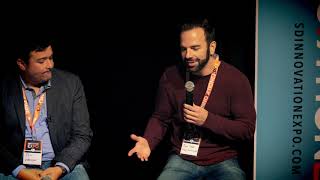
Matt Paulson moderates Ryan, Eric, Cody, and Anila on what attracts investors. Angels want traction and metrics; avoid claiming numbers are conservative or ignoring unit economics. Pre-sales and customer interviews beat assumptions.
Chapters
A few different perspectives up here. All kind of Great Plains, Midwest people. And the thing that I seem to run into all the time is that companies really just don't know what it takes to be funded and, and like what milestones you have to achieve to kind of really attract the interest of an angel fund or a venture capitalist. So I don't know whoever wants to answer this, but could you tell me like, you know, what does a company really need to do? Like what level of traction or success do they need to achieve before a venture capitalist or an angel investor is going to take them seriously and want to have a conversation? Ryan, how about you start. Hi everyone.
Just to clarify, I'm from, I live in St. Cloud, I grew up in the Twin Cities, but I bootstrapped a company. The tiny seed talk was I think I created 100 products before we scaled eventually to 70 million in revenue and exited that company. But I was head of product at that company. But I think there's, I think it depends what you're trying to, you know, what you're trying to do. There's, I've heard reverse pitches from, from like the 40 top Silicon Valley investors and everyone's criteria is different, you know, but you have, you know, I think there are Midwest VCs now. There's quite a few. There's so many funds. I was just meeting with one of the top funds in Chicago, in Minneapolis yesterday and they, they've invested 600 grand off a PowerPoint presentation. That's not common, but you can get funded. A lot of it has to do with the, the quality of your entrepreneurship. If you're a disciplined entrepreneur and you can, you have strong evidence of your, that supports your idea, you can get funded off a PowerPoint presentation. But that's pretty rare and a lot of investors want to see traction, you know, before they invest.
So Eric, you're, you're in the fall angel fund. What are, what are, you know, what, what kind of stage are we as a fun looking for? What do you want to see?
Yeah, that's a good question. What I can tell you is the more, the closer for Falls angel now, the closer you are to Sioux Falls, the more success you're going to have. We've invested in companies in multiple states far away that maybe has a Sioux Falls connection and that's, that's how they got in the door. But our group is hungry for a Sioux Falls based entrepreneur with a, you know, specifically a venture scalable company. But that, that's not even really necessary if you're A Sioux Falls or a South Dakota company. If you've got a good idea and it's something that will work, we're going to listen. And if it seems reasonable, we're probably going to invest as well. Excellent.
Cody, what are your thoughts?
Well, I think I mentioned this in my talk, but we invest solely in North Dakota and South Dakota. So we have to be pretty realistic about what is success look like on that scale.
Scale.
We're not looking for the hundred time upside. That's why we, we use the model we do. But the one thing we do look at more than anything is your growth mindset and the potential market. So, you know, we're, there's nothing against the types of businesses that are only going to have one location or, you know, our brick and mortar and are only servicing a small area. But for us, you know, to their points earlier, investing is, everyone has a different spiel and it's very personal. And so what matters, what matters to us is that you're going to have customers in multiple locations and your market is bigger than your neighborhood and your family and friends.
Okay, I'm going to turn this around a little bit. Anila, what do you wish that venture capitalists knew about kind of the founder struggle and journey that there just seems to be kind of a disconnect with?
Well, I was going to actually answer your first question on the flip side, which is what should a founder look for in an investor? And basically just to say that you should also have your own set of criteria in terms of what you're looking for in an investor. And you know, to Rob's point earlier about they bring the network as well, you know, the expertise, the mentors, like, what else are you getting when you're giving up equity? So. And the mindset too. So for us, all of our investors.
Have.
Pretty much believed in us as founders. The idea is almost secondary. And our first and our like very first angel, true angels, after the, after the friends and family, they basically said that we had met with them on a different business idea and when we came to them with this, they were like, we already know you. Like, this is, this makes sense. We're in. And so you want investors that believe in you, not just trying to make money off of you because you're the one doing the hard work to build that business.
Yeah.
So I guess my next question is kind of for the investors up here, what is a company that you passed on that you wish you hadn't passed on and why did you pass on them?
I'm happy to answer that. So we've gotten a lot of interest from the Minneapolis market, and there are phenomenal female founders in the Minneapolis market that I wish every day we could cut checks to. One specifically spoke here last year, Melissa Colsing, who's doing a company called Recovery that is going to be an incredible success. But we have to pass because it's really important to us as a location. And so there's been some great opportunities that have been presented or pitched to us, but they're just not in our initial region for right now. So it's been tough.
I passed on Sports Engine as the angel investor at a $4 million valuation. If you've heard their story in the Twin Cities, you knew that was a pretty big miss. But we were friendly. These guys started in the small market, Eau Claire. Not everyone starts in the Twin Cities. We've seen a lot of great tech, tech startups come from small markets. We passed on Sports Engine because we had one dog in our portfolio at the time and it was a web publishing tool that was not vertically focused. Said, oh, we don't want a web. It was growing actually slow, more slowly than other businesses that we invested in. We invested, we introduced them to a few Central Minnesota angel investors and they're very pleased. Multi hundreds of millions of dollar exit for them with earnout.
Awesome.
Eric, do you have a miss?
My reasons for investing are a little bit different. I've got a great business that I enjoy running and it provides for my family. My reason for angel investing is for entertainment purposes along with to be profitable. So most of my mistakes are invested in a great company. I know they're growing, I'll probably make a return, but they don't tell me what's going on. And that really bugs me as an angel investor. So I've invested in an amazing company called Cabify. They just raised money at $1.4 billion. It's Uber of Latin America, essentially. And I hear from them once every 18 months and it's. Everything's redacted. And part of that's because they've grown to a scale where they're not going to be sharing a lot of that information. But that's really my biggest. That's where I get the most upset, is when I invest in that and they're not giving me any information.
I'm going to ask one more question and then Tim's got a microphone. So if you have a question, grab Tim and you'll be able to ask your question in a minute. The next question I want to Ask is, what is something that you guys see founders do in your pitches often that just kind of makes you cringe and say, I wish you hadn't done that. For me, it's everyone says their estimates are conservative no matter what. Across the board, every single pitch, they will say, these are our numbers. And by the way, these are conservative numbers. And to me, what that tells me is that they made up some numbers and then like took 20% off the top. I don't know how many followers angel fund pitches we've heard that phrase saying, but it drives me nuts. So what are some things that founders do in their pitches that you just say, I wish nobody would ever do that again?
I can't answer that. I think founders oftentimes, if you have the metrics, you should lead with the metrics. If you got a good handle on your business, that's something you got to get to. And so often people want to talk about their technology. I think more than half the pitches I probably hear, it's all. And that's not really what an investor is interested in.
Falls angel fund perspective. The advice I would give anybody is over. Prepare for those. You have one shot and half the time, just like in this audience, there's like 20% of you on your cell phone right now. No big deal like that happens when you're pitching to a fund like Falls Danger Fund too, is people might not be interested. So if you have somebody's attention, make sure it's good.
I would just say knowing on the front end. Like, I think most investment companies are pretty transparent about what we care about, and you can find that online. So I always get frustrated when I get pitched formally for something that isn't high growth, isn't scale, doesn't talk about that. So I think just knowing what your investors are interested in speaking to, that is pretty critical.
Excellent. Do we have any questions in the audience for our panel up here?
As founders, what type of rate of return are you hoping for on the money that's been provided?
As a founder, as founders, yes.
And then I'll turn it around the other way too. What type of return is investors expecting?
Yeah, so I just don't think like that. Honestly, I just don't think like that. Like, to me, it's not about how much wealth am I creating for my business. To me, it's how many lives am I changing. And I know that that's going to translate into wealth. So I don't really think in that way. And that probably is part of the reason that some investors Just don't understand us because that's just not how I personally think now. That's why Samir was our CEO. He thinks like that. And that's how, why our team of four make a good team, because we all bring that balance. So for me, you know, I'm a founder. Rob talked about why he started a business. A lot of the reasons that he talked about, like I was nodding my head through his entire presentation because it's exactly where I'm at. It's about making an impact and it's about the life that I want to lead and the what I want to show my children. So for me, the rate of return doesn't matter so much right now because I'm still building, if that makes sense. Like we have a roadmap ahead of us that we want to achieve. And for us, we don't need to focus on a number, we're focusing on a mission. So I don't have an answer other than that.
So the same goes for me. I don't think like that either. Other than if I'm looking at investment, if it's an angel investment, I'm not looking to make 8%. If I wanted to make 8%, I would buy some REIT. But it's going to start with over the next couple of years, can I double my money? And with an upside of is 10x possible? But does it have to be 100? For me it doesn't have to be 100x. It's got to be something that is a reasonable business that presumably I know something about and interest me for entertainment purposes and, or for education purposes for my own business. But I'm not typically looking for it must be 100x or it must be 1000x or anything like that.
We're definitely a for profit fund and we have target returns. But I think, you know, as an entrepreneur, when I, when I think about it, you know, since 2000 to 2017, 52% of the companies that were on the Fortune 500 are no longer listed. Its number one attribution is because of digital disruption. The best way we can solve humanity's greatest grand challenges is by leveraging new emerging technologies. There are so, there are so many opportunities right now in tech that I feel like I, I think you can go after smaller opportunities and you can make a lifestyle business. And there's nothing wrong with that. That was my business that I just kept reinvesting and eventually got to scale. But there's also opportunities right now and with there's 10 or 20 technologies that are going to cause disruption on the order of magnitude as the Internet and mobile. And a lot of these technologies are starting to become digitized. And so these industries, as they get digitized, you can be a part of that transformation. And the technologies are often becoming, their cost comes way down, as you know, they'd be. For example, the best AI algorithms are available in the cloud and you can deploy them in every industry. So why are we going after, why would we want to limit ourselves by going after something small? And so I like big visions, but start small, find a beachhead and find profitability quickly. I'm all about not, not, you know, kind of being, not being a master to anyone. And we don't take a board seat as a seed investor. We invest in companies in the upper Midwest. We love capital efficiency. And by the way, we're, we're two point. It takes 2.2 times less cap, more capital, sorry in Silicon valley to preserve a 10 equity stake in the over the early rounds, according to Forbes. So we are way more capital efficient already. But if you, you know, I think that one challenge is if you're going after a really big vision and it has strong defensibility, you're going to face competition. And I have friends that went after big ideas that they didn't raise capital and they, their business got other people took advantage of it and were two times the magnitude bigger and they had the idea a year or two earlier. You have to scale some of these businesses quickly. We're competing on a global stage. And so I think if that's kind of business you want to run, you have to be willing to raise capital.
Sometime, I would say, I mean, to his point, we're definitely a for profit as well. And so we've got, you know, internal benchmarks that we're looking at. All of that really depends on the type of opportunity though. And that's a conversation that we have as partners around, you know, are we comfortable making a little bit less because we believe in what the product's going to do or what the, who the founder eventually will be. But I think, you know, for us, and there's a growing community around this, there's, there's a conversation around, you know, let's invest in zebras instead of unicorns, because zebras are real. So, you know, we kind of fall into that philosophy. And to his point, there's definitely value in the big, big stuff, but we're chasing the profitability capital efficient working kind of growth companies.
What's really interesting is that we kind of Have a couple of different types of investors up here. You know, Eric and I, we're founders that are part time investors that might be putting 10 to 15% of our portfolio in this stuff. So, you know, we're writing checks and buying lottery tickets and hope one of those lottery tickets pays off someday. But with Cody and Ryan, like this is their full time job. So if they don't provide a return for their investors, they're not going to be able to raise another round and they're going to have to go find a job. So it's just very interesting to see that dynamic in difference of types of investors that are having it. There are a lot of different motivations that investors have. There are people that just want to see the next company succeed and there are people that are, this is an economic development thing for Sioux Falls and invest in Sioux Falls companies or Brookings companies or Watertown companies or whatever to grow the local economy. And then there are also, you know, true financial investors that are running professional venture capital firms that are really in it for strictly the financial return. So next question.
Excuse me, quick question for the VCs.
That are up there.
Do you guys see, is it more of a challenge for you in finding funds, raising funds to deploy into companies like are you seeing a lot of these opportunities that you'd like to invest in or is it more of a challenge in finding the companies that, that are out there to deploy your funds into? And has that changed over the years?
I personally, I think the Midwest is on fire right now. I think there's an incredible number of opportunities and I think we're seeing a lot of talent come back to the Midwest. We have advisors in our fund like the first data scientists at Pinterest, the first UX hire at Google that live in Minnesota. And so I think that I think money always follows returns, but I think the Midwest is going to have great returns. I think it is under service right now. I do think though that many entrepreneurs lack the discipline to do a startup. And there's different ways you can go about it. You can kind of stumble your way around. But you do see repeat three, I know founders are on their fifth, you know, fourth exit, you know, VC backed startups in the Twin Cities. And it can be done. It doesn't have, there's certainly some element of luck, but you can't say after four consecutive exits, you know, some of these funders, it's more than luck. So I think raising, I think capital, you know, in the Twin Cities, I think 10 years ago there were very few regional funds. There are quite a few funds now and there's more getting started and that it's evidence, I think by the returns that people are starting to see in the region, it's really become a hot market.
I would say for us it's more about deal flow because of how restrictive we are. So that's a purposeful strategy because that's what matters to us. And so as a result, that means we're never going to have a portfolio of 100 plus companies. It's just the math doesn't add to that. And so for this first kind of go round, it's much more about building our pipeline and deal flow than it is about capital.
I know in Sioux Falls we've had a challenge finding dealflow in Sioux Falls. We thought this is a city of a metro area of a quarter million people. There's going to be startups all the time, we won't have any problem. But what we found is that in Sioux Falls there are a lot of people that are starting small businesses and retail stores and services companies. But the types of companies that are truly scalable and can take venture capital, those don't come around as often as you might think. So we've done investing in Fargo in Minneapolis and Omaha and really kind of stretching our direction a little bit to spend our fund in a reasonable amount of time. Next question. Sergey.
Yeah.
So as a VC investor, what are.
Some things that scare you when you.
Start looking into a company to potentially invest into?
Well, the number one thing that scares me is when they pitch something and then you look at the unit economics and they don't make any sense. And so, you know, I never know if that's because they've either they're either lying or because they don't understand it. Both are, which are really frightening. So inconsistency between the pitch and actually starting to look at how the business makes money is a pretty significant red flag for me.
I think what scares me is.
If.
You'Re not aware of competition, then it's either an idea probably not worth pursuing, or you don't know your market very well. I think it's probably one thing that really concerns me.
The thing that I always do first when I see I'm the founder and here's my team and I start just doing basic Google searches on that team. And if that team is not, I mean, those are your people, and if those people are not solid and they have a shady past, something that can be found on my phone on Google that quickly, I Just tune out right away. So be very careful who you put up on the PowerPoint when you're presenting to somebody.
And Neil, what's your answer to that on the investor side when you're looking at investors?
Well, for me it's, you know, you, when you come to the table to pitch your company, you know, your industry, you should know, to Ryan's point, you should know your industry, your competition, your customer better than they do. And if they ask certain questions, it's just very telling of that lack of education. So for me, the biggest like, oh, they're not a right fit for us is when they ask questions that just don't match our problem, our solution, our market. It just, it shows me that they don't get it, that they don't get what we're doing. And that's, that's super helpful because then I know they're probably not the right partner for me because they're not going to know what I don't know if you understand what right you want investors that know what you don't know that can help you fill gaps and if they're asking the wrong questions, they're showing you that they can't fill those gaps.
Awesome. Any question down here?
Yeah. So basically, as like investors and stuff, what are you more comfortable with, like somebody coming up to you with a new innovative idea that you know, has a bit more risk, or would you rather have them come up to you with an idea that is like promise.
More growth in the long run? Matt?
Sure, I follow your question. Say it again.
So like, would you rather have somebody with a new innovative idea, you know, it's not exactly popular, it has a bit more risk to it, or would you rather have somebody with a kind of more standard idea that has like a, you know, more scalable, long run.
Growth added to it?
So more of a blue sky idea that could change the world or an idea that's kind of a known path that could be a successful business is maybe more likely to be a successful business, but maybe not a shoot the moon company.
Yeah.
Like, which would you be more comfortable investing in?
I think it's both. Personally, I think there's a, you know, look for an order of magnitude improved efficiency, you know, is, is what excites me. I think the thing is right now, if you follow trends, like an example, look in Wikipedia at all the unicorn companies and then think about what other markets, those startups or that business model could apply to and if it's something you're passionate about, I really believe in A founder's got to be mission driven. But if you're following the trends you have, I think it's a way of coming up with an innovation. And it may not be, you know, the best way of starting or hearing a story, but I see so many times it's like there's all these high level concepts that are repeated and as you look at, I've been, you know, in 18 months, we had a thousand solicitations for funds. You start to see patterns and, and I don't see anything wrong with that. I think everyone, you know, every, no one likes to say, oh, I'm another, you know, labor marketplace. Well, there's, there's a reason there's so many labor marketplaces.
Right.
Solve a problem. That's what excites me. Solve a big problem.
I think at the end of the day, if you've got some new innovative idea, it's about you and you've got to be awesome. But if you've got a standard idea, it's still about you and you've got to be awesome. Like it starts with that founder. If you're just average, it doesn't matter what the idea is. Old, new, innovative, not innovative. It's going to be tough to get funding.
I would 100% echo that. It's way more about the founder than it is about whatever the idea is. Personally.
Yeah, ideas tend to change. So we, you know, I tend to bet on the people versus the idea because I know if it's the right person, they'll figure it out. If the first idea might not work, the second idea might not work. But the third idea, you know, if it's the right person, they will figure it out eventually and figure out the idea that will work even if the first idea doesn't. Question.
Cool.
Hey guys.
Awesome to have you here and sharing your experiences on the stage. I have a maybe fun one. Have you ever had someone come across your plate that it isn't proven, it isn't validated, but you've kind of like just been intrigued or you want to follow them? Have you ever directed somebody to crowdsourcing or a Kickstarter or Indiegogo and kind of seen it actually get proven or validated just by getting 100 people that believe in it will say that will purchase it, do pre purchases. Have you ever kind of had anyone or have any experiences you could share with somebody in that pre validation but then seen them validate?
I saw one here locally not too long ago. Game Chest. It's a local gaming store or like board game store rental place, slash place to go play video or board games. And they wanted to do some upgrades to their space, but they didn't have the money just offhand to do it. So they actually had their audience, their customer base. They got together and crowdfunded those improvements in their store. And that was really interesting.
That's basically what we did. So those two angels that I mentioned earlier, they believed in us. We pitched them, we went through our PowerPoint presentation and then we went back and we had gone to bfrb.org, which is the major nonprofit. We went to their annual conference and we pre sold units of our device. Like people's eyes were lighting up when they were trying this really shitty prototype, you know, like they were just so excited, truthfully, like it was nothing that we would ever sell them, but it was enough to get credit cards. And we took that back to these two angels and they were like, where do we sign? Right, like so, yeah, you have to prove your market doesn't have to be a lot, but it has to be. You have to show you can make it, you have to show you can sell it. And then hopefully one of these three will be able to say yes. And hopefully when I sell my company, I'll be able to say yes.
I think that a lot of founders, without studying some of the, there's like the lean startups, for example, there's ways of quickly validating idea. I teach lean startups quite frequently in workshops, but a lot of founders, it kind of comes instinctively, you're going to try to find your first customer or you talked about a pre sale, you know, that's an example of validating the demand. And so a lot of founders, even without, you know, thinking about it as a discipline, they just naturally are, have very, you know, it's a kind of doing the practice of lean startups, because they're trying to pitch their idea, they're going out and talking to it. I think one of the, I think the best founders are not the ones that, you know, try to just sit and overanalyze, but they're out there sharing their idea. They have this great idea and it's a risk, yes, but you have to go talk to people about it, you have to go share it. And that's a way of validating idea. That's what discipline is all about. There's some ways you can get better at doing qualitative research and quantitative research, but in the end that's the same thing.
And just to piggyback off of that we went and tried to validate not so that we could get investment, but so that we would know if this was worth our time to quit our day job to invest in, in the idea that was the commitment that we, once we saw those eyes light up and those doctors say we've been waiting for this, that was it. We were like all in. So it's gotta be about you too.
Sure.
We've, we've encouraged a couple different women that have come to us too early to check things out for that. But primarily it's, it's all, that's the market validation. But the bigger part is that people are willing to put a check behind it. It's really easy to say I've got 100 people who are liking me on social media and totally into what I'm doing, but does that actually translate into dollars into the product? So that's. We've used it that way.
Awesome. So about a month and a half.
Ago there was a big article in the Argus Leader talking about the brain drain problem in South Dakota. And I think a lot of that it has to do with a perceived rather than actual lack of opportunities. What can we on both sides of the table do to change that and keep these people here?
Good question.
I could comment on this. So I think, I think a lot of. So in the Twin Cities I've worked with greater MSP a little bit and St Cloud where I live, gsdc, it's a econ development groups and a lot of these groups are privately backed. At least both of those ones are primarily privately backed. But it's the mid to large companies who are funding them. But startups as we're going through an accelerating, you know, the world's changing at accelerating pace due to changes in technology. Our mid to large companies, you know, in order to succeed they have to embrace, they have to have an innovation practice. So startups isn't about just small, you know, new organizations, it's also within big companies. But the number one reason why people in the Twin Cities when they surveyed would skilled people were attracted to the community. They look at the vibrancy of the startup ecosystem and so when. But startups oftentimes aren't the largest, largest advocates in terms of talking about the new, new organizations doing startups because they're in the shadows. And so in a lot of these communities the people are working on startups but the econ development people aren't shining a spotlight on it. They don't think it's there. So they're not good at sharing the story, but I know you've got great ecosystem leaders here that are putting it in the spotlight. And I think the more you share that story, the more people are in a lot of these communities, the people are working on startups, but the econ development people aren't shining a spotlight on it. They don't think it's there, so they're not good at sharing the story. But I know you've got great ecosystem leaders here that are putting it in the spotlight, and I think the more you share that story, the more people are.








