Startup Q&A #22: Self-Publishing- Why and How
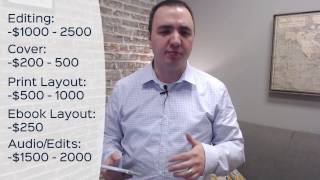
Matthew Paulson explains why entrepreneurs should self-publish nonfiction books instead of going traditional. He walks through the writing workflow, which professionals to hire (editor, cover designer, formatter, audiobook narrator), and rough costs around $5,000. The real goal: use the book as a marketing funnel, not as income.
Chapters
Hey everybody, Matthew Paulson here. Today we are going to start a two part series on self publishing. We are going to talk about who should write a book, whether or not you should try to get a publisher, how to actually write your book, and whether or not or who you need to hire to put your book together. Let's do this. This is officially episode 22 of Startup Q and A, the online video show that help startup founders, small business owners and entrepreneurs grow their businesses faster and achieve their dreams of financial freedom. So whether you're just getting started or if you have a dozen employees, this is the show that will give you actionable ideas and advice that you can implement in your own business. Now, for the last several episodes I have been kind of deep diving into what we're really about here at Startup Q and A. And really what we believe is that you should build an income generating business that creates cash flow and then you should take that cash flow and invest into income generating investments. So you have a business that makes money. You take the money that your business makes, you put it into income generating investments like real estate, closed end municipal bond funds and dividend stocks, master limited partnerships, royalty trusts, things that throw off cash flow. So eventually, as your business makes money and you put more money into your investments, eventually you'll have enough money inside those investments that it's generating enough revenue to cover your monthly living expenses. And at that point you're pretty much good to go financially, which frees you up to work on the things that you actually care about. I'm not suggesting you should retire when you have reached a critical mass of your personal finances and have enough money to live on for the rest of your life. But I am saying that you should take that newfound freedom and use it to work on things that you don't care or that you really do care about. Whether that's a charitable thing, a religious thing, or a business that you are creating just to help other people. The goal is to separate your income from your work so that you can focus your work on the things that you just care about the most. That is really what we're all about on this show. We are going to take a little bit of a tangent from answering your questions to talk about self publishing. Now that I have several books on the market, actually eight of them, I've been getting a lot of questions about how to publish a book. You know, a ton of people that have wanted to write books have come to me and say, Matt, how did you do it? How do you do this? So these Next two episodes are going to be an attempt to answer that question. So today we're going to talk about why you would want to publish a book, how to put your book together, and then kind of next week we're going to talk about how to promote your book and then, you know, how to leverage your book for bigger and better things. We are primarily talking about nonfiction books for this series, but if you are interested in writing a fiction book, you can still learn a lot from these two episodes. Also, these questions haven't been asked by any one person. They are kind of a summation of the questions that people have been asking me about self publishing over the last couple of years. Before we kind of dive into the questions, I want to move into the tip of the week where I the tip of the week where I share kind of a resource, a tip, a trick, an idea that will help you grow your business faster or achieve your dream of financial freedom. So this week's tip is to read the book Self Publishing Masterclass by Rick Smith. This is a book that teaches you how to publish books through Amazon's Kindle Direct Publishing program and through Amazon CreateSpace. This book does a really good job of getting into the weeds on Amazon, picking out categories, getting reviews, setting good pricing, just making sure your Amazon sales page and your listings are just really set up well and will set you up on a course for success in selling books on Amazon. Now this book is like $5.50 as an ebook, so it's not a big investment, but it's definitely worth your time to read if you are really wanting to write a book and publish it on Amazon, which you should because Amazon literally sells half the books, period. Half the books in the United States are sold by Amazon, so that's really where you want your book to be. So that is the tip of the week. Let's move into the questions. Every week we take four or five questions that are either submitted through Facebook or just made up by me. So if you have a question you want to have answered on a future episode of the show, go to the domain Startup Q and A Co. There is a menu there where you can submit a question and we'll try to answer it on a future episode of the show. Alright, so the first question this week is who should write a book? I think there are really three kind of general criteria that you should meet before you really put the effort in to write a book. First you have to have something to say. You need to have a message if you're going to regurgitate what's been said out there a hundred times. Don't bother writing a book. Your book's already been written by somebody else. You really need to have a unique message that isn't just the same old thing. If you're going to write the next personal finance book, that's a copy of Dave Ramsey's Total Money Makeover or a Larry Burkett thing before that, you know, there's enough personal finance books. Unless you're going to have something really unique to say, like in my personal finance book, it's not like, here's how to get out of debt and build wealth. It's no, here is how to be totally financially free a decade from now. That is a different message than here's how to get out of debt. You really need to have something unique like that if your book is going to be successful. Second, you have to be a half decent writer. Some people just aren't good writers. And that's okay. That's not your skill set. So if you're not a good writer, you probably shouldn't write a book. You are going to have to put out 500 to 1,000 words a day in a word document or whatever you use when you're writing a book. And you're going to have to do this for probably a few months. This is a grind. Most business books, nonfiction books are probably about at least a minimum of 50,000 words in length. So unless you are willing to write 25, 2,000 word term papers or 50,000 thousand or 51,000 word blog posts, that is the amount of work that it is to write a book. And you have to be prepared to that. Excuse me, be prepared to do that and really put in that work. And you know, it comes easier to some people than others. So if you're. You really should be an okay writer if you're going to write a book. Finally, you're going to want to find a way to leverage your book as a marketing tool for your other business adventures or business ventures. Books by themselves, they generally don't make a lot of money for the Author unless you're J.K. rowling or somebody like that, or Stephen King. And chances are you're probably not going to be one of them. So you really should have a way to make money from your book outside of just selling your book. Royalties. Yeah, so I've probably sold 30,000 books. Amazon through CreateSpace and Kindle and Audible, and I might make two or three dollars for each book sale. And so out of the three years that I've been publishing books, I may have made somewhere between 50 and $100,000. And that is before expenses. Each book probably cost five grand to make when all is said and done. So I've maybe broken even on my books, maybe at a slight profit. Definitely not the type of money that you could even live on at the poverty level. So it's not a great way to generate cash flow. So you really need to use your book as a marketing channel to flow into something else, like a services business or a higher priced product like a video course, something like that. So that you are making more than $2 to $3 off each of your customers. So you really need to think of your book as a marketing funnel for that bigger thing. So, so those are kind of the three criteria. Have something to say, be a half decent writer and then think about how your book is going to funnel into something else. Next question is, should I get a publisher for my book? Now I generally think that finding a publisher just really isn't worth the effort anymore. What a publisher will do, they'll give you an editor, they'll give you a book cover, some layout work. They might get your book into a physical bookstore. They won't promote your book or do any kind of marketing for you. Don't expect them to do that. They won't do that. And they are going to take the majority of your royalties for offering you these services. So it usually just ends up being a better deal. If you are going to sell a few thousand copies of your book just to hire out an editor, a layout person, an audiobook person, and kind of build your own team, it is just cheaper to do that and it tends to be a better deal. So it is a question of do I want to hire people to do this for me or do I want to beg a publisher to provide me these same services. And it just, it doesn't typically end out being a good deal. I actually had a publishing deal offered to me by kind of a boutique business book publishing firm and I declined it. The services that they were going to offer to me were worth about four grand. And for that they wanted 50% of all the royalties my books generated. And for me that just, that wasn't worth it. So I turned down the publishing deal and I just continued to self publish my books. I think that you can hire really competent professionals to do all the things that a book publisher would do for you and it just ends up being a decent deal, a better deal to do it that way than hiring a publisher, really a publisher. The only Thing that they can do for you that you can't do yourself is maybe get you into a Barnes and Noble. But who cares about that? They're probably going to go bankrupt in a couple years anyway. You can do everything yourself. You can hire good people and you can make a great book and you never even have to knock on the door of a publisher and beg them to publish your book. That is an old business model that is dying and is soon going to disappear. Next question is where can I learn about self publishing? So assuming you decide you want to self publish, I really think the first step that you should take is go to the Authority Pub Academy. That is a website put together by a guy named Steve Scott, a friend of mine. He has a really great online video course about how to write and publish your book online. The process of getting your book put together, coming up with topics, writing book descriptions, Amazon listing is doing marketing. It's really a comprehensive end to end course on digital publishing for books. This is where I learned what I need to know to get my books on Amazon. I think it was like $500 when I paid for it. I don't know what they're charging now, but it was definitely well worth the money. So Steve, if you don't know who him, he is kind of the godfather of the self publishing movement on Amazon. He reportedly makes like 30 grand a month in just book royalties alone. He's got like 60 books out. He clearly knows what he's doing, making money doing it. So he is the guy that I like to point to to learn about self publishing. That's don't take me out for coffee and have me tell you about self publishing. Go to the source that I learned it from and learn from the same guy I learned it from. Definitely check out the Authority Pub Academy. The other resource that I really like is there's a podcast called the Sell More Books Show. It's hosted by two guys named Jim Kukrel and Brian Cohen. They do a great job of talking about publishing news and just trends in self publishing and I really make sure I listen to that every week. It's a great show. I'm one of their patrons on Patreon. Definitely well worth supporting their effort. Really good content for people that are thinking about writing a book. So I'd point out to those two resources and of course there are a ton of other resources on how to publish a book. But your goal is to create content, not just consume a bunch of content. So I wanted to point you to the two best resources that I'm aware of and not point you to 100, because if you spend all of your time learning about how to write a book, you're probably never going to write a book. So my goal is for you to actually write a book if that's what you want to do. And the way to do that is to create content, not consume content. Next question is, how do I go about actually writing my book? So I assume that you're writing a nonfiction book for the question. So if you're writing a fiction book, I literally have no idea how to help you. I don't know how to do that. So go listen to another podcast if you want to write a fiction book or learn how to write a fiction book. Probably help you market a fiction book. But I definitely cannot help you write a fiction book. So for me, the way that I write books is I start with a giant outline. So if I'm going to write a 50,000 word book, there's probably a 5,000 word outline underneath it. I start out by doing kind of all the main chapter titles for the book, all the main points under each of those chapter titles, and all the sub points under that. If I have a book about say, personal finance, you might have a chapter about getting an extra job, about investing, about real estate, about insurance, whatever else that comes along with that. And then under say, real estate, it might be, here's a point about buying your first house, here's a point about getting a mortgage, here's a point about things to look for in a house that will be a good deal later on. And then say under like mortgages you might be like, how to get the best rate, how to make sure you qualify. And just having to really kind of comprehensive outline of everything that you want to say in a book ahead of time makes it really easy when it comes time to write the book. Because then you never have a writer's block because you always know what you're going to write next because it's already in the outline. It makes the writing process so much simpler and just really allows you to pump up the amount of content you produce when it actually comes time to writing. So spend a few weeks on that 5,000 word outline, make sure you have all the content you want in there, you know exactly where everything is going to go. And then it just makes writing kind of a more smooth process. Finally, make sure to wait to write the introduction. Write that last, because sometimes you don't really know what a book is going to be about or what the main points are really going to be until you've written a book. So I always start at chapter one, go down the list, write the conclusion, then I go back and write the introduction. Last, who do I need to hire to help put my book together? First, you're going to need an editor to fix all of your grammar and spelling mistakes. I've got a great editor. Her name is Alyssa Doucet. But you can't really edit your own books because you become blind to the mistakes that you make. So you just kind of read over them and you miss them. So have somebody else edit your book. You'll probably end up paying $1,000 to $2,500 for somebody to do a really good job editing your book. You're going to need a book cover designer, somebody to make a great cover for your book. Yes, you can use services like Canva, but the COVID is really your only way to market the book visually. So you really want to have a good cover. And I think it's worth paying a cover designer some money. Probably between 200 and $500 for a cover, depending on how you get it done. I certainly gear toward the higher end of that because I want a good one and I want something that will be visually appealing and be unique. And paying some money to somebody that can design decent covers is a good way to do that. Need a layout person. You need somebody that is going to take your edited text and put it into a PDF format of the book, which will then get shipped off to the printer. There is an art within itself. Don't try to do this yourself. So you need somebody that can format everything right, make it look good and make it sort of print properly, which is harder to do than it sounds. Then you will also need somebody to do your ebook layout. You can do this yourself. This is something that you could probably figure out. I did this for my first book, and then I decided I don't want to do that anymore. But you can do that yourself. That's not all that hard to do for layout in a print book. It'll be between 500 to $1,000 Kindle and your ebook may be $250, a lot cheaper to do that. If you want to do an audiobook, you're going to need a narrator. I don't recommend you do the narration yourself because one, you probably have better things to do, and two, somebody else could do a better job than you can. I pay my audiobook guy about $500 to narrate each book, and then somebody else edits it and that gets submitted up to Amazon. I guess ACX is what it's called for the audiobooks. So altogether you should probably plan about spending five grand on a book to put it out. I have a friend named Amanda who is working on her book right now. She actually did a crowdfunding campaign to pay for her upfront book costs. I think she raised about six grand. So then she had all of that covered up from all of the cost up front covered to write her book for that crowdfunding from that crowdfunding campaign. So she was able to cover all that through an indiegogo thing for her book, which was really creative. I hadn't thought about that. I think that's it for this show. So those are the questions. If you would like to subscribe to Startup Q and A and get next Monday show delivered to you automatically, go to the domainstartupqa.co and you can subscribe via Facebook, RSS, iTunes, YouTube and Stitcher. You can also follow me personally on Facebook@facebook.com MatthewPaulsonpage and on Twitter. My user ID is MatthewDP. If you want to find me in ICQ, my number is 4370199 and I have a MySpace page somewhere too if you really want to find me on there. So if you enjoyed the show, please take a few minutes to leave a review on itunes. The way for me to keep doing this show. I'm only going to keep doing this if you guys are actually watching it. So so leave a review and hopefully more people will find it. That's it for this show. Thanks for watching.










