Startup Q&A #26: Outsourcing, Delegation, Customer Retention, and Email Marketing Technology
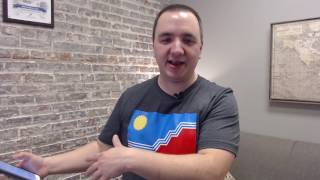
Matt Paulson answers startup questions on outsourcing, delegation, and customer retention. He covers email platforms like SendGrid and Drip, using ManyChat chatbots to build lists, and why recurring revenue matters for keeping customers. Reducing founder burnout through delegation gets real attention.
Questions this video answers
June 5, 2017
ManyChat (manychat.com)
SendGrid (about 25 million emails per month)
Drip (recommended for automation) and Mailchimp (recommended for simple lists)
$15.97 per month
Chapters
Hey everybody, Matthew Paulson here. Today we are going to discuss outsourcing, marketing tasks, email service providers, burnout, customer retention, and using the media to promote your business. Let's do this. This is officially episode 26 of Startup Q and A, the online video show that helps small business owners, startup founders and entrepreneurs grow their businesses faster and achieve their dreams of financial freedom. So whether you're just getting started or if you have 100 employees, this is the show that will give you actionable ideas and advice to grow your business. This episode is actually going to be the season one finale of Startup Q and A. I'm not really quite sure when season two of Startup Q and A is going to start, or if it starts, or when it starts, or if it starts what format that's going to take, but we are going to take a break for now. It's getting to be summertime. I'm looking forward to not working 50 hours a week for a while and this is going to be one of the things that I take a break from to enable that to happen. This show also hasn't really gotten quite the amount of traction I've been hoping to. Whether it's the format or if it's me or I'm just not promoting it quite well as I should be, that's probably part of the case. It's just not really working the way I had hoped. It's not gotten as big as I'd hoped. Maybe a few hundred people watch each episode, which is great, but I really wanted this thing to be something where 5, 10,000 people watch it at a time. Frankly, we're just not there and that's my fault. I'm going to take a break from Start Q and A. Maybe we'll relaunch the show and make it better, do it differently, maybe have a co host, something. I don't know what that's going to look like yet, but hopefully this won't be the last podcast ever. Record Very still much interested in helping entrepreneurs in whatever format that takes. So whether that's more books, more podcasts, more video, more audio, don't really know right now. But we are going to take a break from the show after this episode. So stay tuned. You can still get email updates from me. Go to mattpolson.com fill out the one of the sign up forms and you'll get updates from me so that when you when I do a second season or I do something similar or a new podcast, then you'll know how to subscribe. You already know how to get it then, because I'll email you about it if you're on email list. Alright, let's move on to today's show. Before we dive into the questions, let's move into a segment that I refer to as the tip of the week, where I provide you a tip trick or an idea to grow your business faster or help you achieve your dream of financial freedom. This week's tip is to build an audience list using Facebook Messenger. Now, on this show we've talked about push notifications, email marketing, and really the value of building a customer list so that you can email them or contact them at some point in the future. So when you've got something new to sell, you've got a ready audience willing to listen to you. Now, I'm generally not as big on social media as a way to communicate with your audience because as we've all learned with Facebook and Twitter, and they can change the rules of the game after the fact and make it harder for you to reach the audience that you've built on your platform. But that's part of the game with social media. So I like to do platforms where nobody owns it, like email and push notifications. But there is kind of an opportunity with Facebook, at least for the next couple of years until maybe they change the game again. But that is to set up a customer list with Facebook Messenger. It's a real opportunity right now. And the way you do this is you put a chatbot on your website and then whenever anybody chats you, they've effectively subscribed or you have the ability to send them a message again in the future as a Facebook chat message. And this is really powerful because the open rates on chat messages on Facebook messenger are close to 100%. So if you have a whole bunch of people that have started chats with your live chatbot, you have something to share with your audience, you can use the chatbot to send them all a message at the same time through Facebook messenger at some point in the future. So that could be a very valuable thing, especially with the super high open rates that they get. I think this is a real opportunity, at least for the next couple of years. So the way to do this, there's a service called manychat m a n y chat.com and I think this is going to work until everybody figures it out and starts using it. And then it gets really annoying for people when they've got 20 different Facebook messenger bots all messaging them every day about something that somebody wants to promote. But right now, nobody's using it. So it'll probably be a while before they clamp down on it. So I wouldn't be too worried about that for at least a year, maybe 18 months. But for now, it's a great opportunity. So chatbots are all the rage. You can use manychat.com to build a chatbot. You put the widget on your website, somebody chats your chatbot, they get some information, and then they've kind of opted into your mailing list, your Facebook messenger mailing list through your chatbot, and then you can use ManyChat or services like it to send a message to all of your chat subscribers at once. And it becomes a very valuable communication tool, just like your email list is and just like your push notification list is. This is something I'm very bullish about, especially if your audience is, you know, they're on Facebook, which most people are. My audience happens to be one group of people that aren't on Facebook because they're all older men. So it's not a great fit for MarketBeat, but I think it's a great fit for a lot of different businesses. The open rates on Facebook messenger chats are like 90%. I would kill to have 90% open rates on my email. So this is a technology I'm following. I'm definitely bullish about. I'd love to see a lot of you guys experiment with it and tell me how it goes. That is the tip of the week. Let's dive into the questions. Every week we take four or five questions that are submitted through Facebook or through our website and we answer them on the show. Obviously, this is a finale, so I'm not going to tell you how to submit more questions, but if you do have questions, feel free to email me and I will try to email you back. My personal email is mattattpulfson.com so the first question comes to my friend Halawi. Halawi, I can never pronounce your last name right. I'm going to say Semenigas. He asks, how do you do, or do you do your own marketing tasks like landing pages, opt ins, email copy, sales copy, et cetera, for your business, or have you hired some of that stuff out? And he goes on to say, I know you already hired out your Facebook ads, which I have, because I don't know how to make Facebook ads well, so I have somebody else do it. So this is a good question. I really think you should work in the area of your strengths. There are some things that I'm really good at. And there are some things that I don't know how to do. So I always do the things that I'm really good at myself, like email marketing, push notifications. I know how to do those things, so I do them myself. And there are things that I'm not great at, like Facebook advertising, Google AdWords. I'm not great at those things. So I hire them out. Yes, I could take the time to learn them, but I'm probably never going to do as good of a job as my friends that do Google AdWords all day, every day. So I might as well just pay him some money to do it for me. And then I know that it's going to be done a heck of a lot better and paid attention to a lot more than if I were trying to do it myself. I definitely think there is a good role to having other people help you. You should definitely own the strategy and be responsible for the results of it, monitor it closely, but you don't necessarily need to be the person, you know, setting it all up and putting all the pieces together. You can just kind of monitor that as a manager would, over somebody that works for them. So yeah, there are definitely some things I outsource, some landing pages I don't make anymore. I have an agency make that for me. Facebook ads, Google AdWords, some of my co reg stuff. Other people do that for me because I think they can do a better job than I can. And it's just not. It costs me less time and money to have somebody else do it than it would be for me to learn it myself and then go try to do it myself. So it's just where I'm at in life. That is just a much better way to do things. If it were me probably 10 years ago, there might be a different answer. Back then I didn't have any money. My business made $1,500 a month in 2007. Now it makes a quarter million dollars a month. So it's obviously a different end of the spectrum. Back then I had a lot of free time. Now I don't have a lot of free time. Then I didn't have a lot of money. Now I have a lot of money. So back then I literally learned how to do everything myself. Today I would not do that. So college Matt would probably spend a lot more time trying to figure stuff out and make stuff work. 31 year old Matt, with two children and multiple businesses doesn't have a lot of free time. So that Matt is willing to hire more things out than I would have been, say 10 years ago. That's kind of how I think about things. If you're good at something, go ahead and do it yourself because then it's a real competitive advantage for you and your business because you know how to do that thing and better than everybody else does. But if it's something you don't know how to do and you have more money than time, then go ahead and hire that out. Because I am never going to be as much of a Facebook marketing expert as my friend who happens to do Facebook marketing all day long. So it's just I'm going to get better results by paying him than I am going to be by doing it myself. Next question comes from my friend Amos Kitofsson and he asks what technology do you use to design the HTML for your email? What ESP do you use to send your emails? And how do you automate unsubscribes? So it's a series of questions. I'm going to try to answer them all. 1. We don't use any special templates for HTML. I just wrote some basic HTML for a newsletter and then we use C to generate the actual contents of the newsletter. That spits out HTML and then it gets sent out through our email service provider. So if you are wanting to make an email template that's going to work across different web browsers, don't try to build one of those from scratch. How HTML renders an email is kind of weird and not very consistent, especially if you're dealing with some of the older Outlook email clients. They render email really weird. There are plenty of good templates that will work that are already online that are kind of, you know, like a bootstrap is a framework for the web. There are people that have made templates specifically for email so that they're going to render right for the most part and pretty much every major email client. So if you want like an email design starter template, go look on GitHub. There is a few boilerplate email templates that are out there that you can get that are a good place to start and then you can build your design off one of those templates. And if you start off one of those templates, there's a pretty good chance it'll render right in pretty much every major web browser. Email browser there is. Next question you can answer is email Delivery. We use SendGrid for all of our email delivery. We're up to about 25 million emails a month that will go through SendGrid. They have really enterprise class infrastructure very Happy with it. They do a great job for our needs. SendGrid isn't a great fit for a lot of companies. We really just need the API. So for the API, their API is great. We love it and we pay them a lot of money to use it and we're very happy with it. But if you really want like a full service email provider that manages your mailing list, handles the unsubscribes, does marketing automation, SendGrid probably isn't the company to use. I think there are companies that just do a better job for it. SendGrid does a great job with the deliverability and technology and the infrastructure. But in terms of the list management, the user interface, marketing automation, I really like the company Drip and that if you're doing something simple, obviously mailchimp is an okay choice too. You're gonna have a thousand people on your mailing list, nothing really big. Mailchimp is perfectly fine to use. We use it for like a million cups. Our local networking event, we use mailchimp for that. Works just fine. I have no problems with it at all. It's great for most mailing lists. If you want to get really fancy with marketing automation. I like Drip. It's Drip Co. It's a great service and they really have a great visual builder to build campaigns. I think it's probably one of the best out there. So I like that as well. So for unsubscribes, how do you process unsubscribes automatically? Pretty much every major email service provider will do this for you. They'll append an unsubscribe link to their email. Somebody clicks on that, it automates the whole unsubscribe process. You never have to think about it. That's true for pretty much every email service provider. So that is not anything special that Mailchimp or SendGrid offers that anybody else doesn't offer. Next question comes from Jason Cannon and he says, I have an information technology training company that provides a great income, but it is heavily dependent on me. I am feeling burned out. I have doubts about my ability to sustain this for the long term. How do I turn this into a sustainable business and avoid burnout? The short answer is, you start hiring people. I was in a situation in 2013. MarketBeat was making hundreds of thousands of dollars a year, but I had no employees. I had to make sure that everything was working every day and answer 25 to 50 customer service messages that came in every single day. I was getting burned out doing this. So I hired my first employee, and that was my friend Stevie Shea. And she answers all of our customer service email. And now she has for about four years. She does a fantastic job at it. And now that's one thing that I don't have to do. Yes, it did cost me some money up front, but it was well worth it because when she's focusing on customer service, email, something they don't really want to do, one, it gets done better than if I had been doing it because she actually likes dealing with people and sending email and helping people over the Internet. Not something I want to spend a whole lot of time doing. So one, it gets done better than I would and two, I don't have to focus on it. And because I don't have to focus on it, I get to focus on other things. So instead of focusing on the low value kind of customer service task, I can then focus on a higher value task like monetization, ad placement, traffic generation, stuff that actually makes the company money instead of just being a cost center. So I try to not spend a whole lot of time in the cost centers of my business, have somebody else work in them. And I like to focus on the areas that one, I know best and two, can actually create growth in our company. Yeah, I mean, if you are burned out, you are a business that is heavily reliant on you. The answer is to hire somebody. You know, maybe you'll make less money in the short term. There's always going to be that front cost. But over the long term you'll probably grow because one, you'll be working less and you won't have to spend so much time in your business. That'll give you time to recharge and re energize. Some of that burnout will go away. It'll help. And so you'll make a little bit less money in the short term, but it'll be a much more sustainable business in the long term because it'll be less reliant on you. You might be in a situation where you're thinking like, man, nobody can do what I do. I'm the only one who knows how to do this thing. This is a very unique business. Nobody knows how to do this but me. I was in that situation as well. That's frankly not a very good answer. No, there's probably Nobody that knows 100% of your system. That's true of market B theory. Still some stuff that only really I know about and how it works. And that's okay. But that doesn't mean that I can Offload some of the work to somebody else. So like Rebecca does a really great job at the front end development stuff. She's fantastic at that. She does a good job with that. I don't need. She can take that piece away from me. Stevie can take away the customer service. My newest employee, Don, manages all of her writers. I don't have to think about that anymore. My accountant, Donna, she takes care of the accounting, the payroll stuff. That's one less thing I have to worry about. So if you can get more employees to kind of take over the different aspects of your business, that kind of leaves that core of the business that really only you can do. But usually that core isn't very big and then the rest of it can be done by somebody else. And that will give you a really sustainable work schedule. I think I could run MarketBeat really well in about 20 hours a week right now if I really wanted to. And that is just because I built out such a great team. I love every one of my team members. They all do a great job and they all kind of bring something unique to the table in MarketBeat really kind of reduce the reliance on me. Like I can actually take a vacation now. It's shocking. I can take a vacation and not like send out a whole bunch. Have to check my email every hour because if somebody wants to place an ad, Stevie will get that email and place it. I don't have to worry about it. So it is definitely nice to have a team that will help with the burnout. It will make your business more sustainable over time. You know what your next step is. Alright, next question comes from Robert Maling and he says what are best practices for customer retention? Getting them to rebuy, revisit your website or anything like that. So Robert asks a very important question here. There really are only three ways to grow your business. One, get more customers. Two, sell more to your existing customers. Or three, raise your prices. Lots of people will focus on pricing and getting customers, but we often let people slip out the back door, people that were already customers and then we lose them and don't really pay attention that we lost them. That is a great way to lose money over time. If you can get your customers to keep coming back for more, your existing customers to come back for more, that is much cheaper than trying to go out and find a brand new customer. The question of how you keep your customers coming back for more is going to vary a little bit from business to business. How MarketBeat gets people coming back is going to be different from Say a grocery store, which is going to be different from say, you know, an auto body shop, you know, they do a great job with little oil change. Keychains they put on your keychain and the sticker they put on your window, they know what they're doing that works. Obviously none of that would work for MarketBeat. I can't put a sticker on somebody's window and tell them to subscribe next month. It's going to be very different depending on what type of business you run. But there are kind of two principles I like to think about when it comes to getting people to rebuy. The first is to maintain an open line of communication with your customers. So lots of people do this through email, through direct mail, through social media, push notifications, stuff like that. Any outbound communication method you have with your existing customers is great. You really need to have that in place regardless of what kind of business you have. So if somebody buys something from you, get their email address, get their mailing address and send them stuff. You could send them tips half the time, and the other time you could say, hey, come buy something from me that you haven't bought yet. So like with MarketBeat, somebody buys MarketBeat Daily Premium, all of a sudden they start getting emails to upgrade to MarketBeat All Access. It's the next logical step in the chain of their life cycle as customers. Okay, you bought our main product, why don't you upgrade to the premium product? Or you bought the premium product, why don't you upgrade to the top end high all access pass product, which is more money? We have customers with us, we email them, we tell them to buy from us, and they actually buy. That's kind of how it works. So regardless of what kind of business you have, get that email list, get that mailing list, get social media followers, get something from your existing customers, make it a system. So every time somebody buys something from you, ask for their email address, put them on your email list, and then send them stuff every week. A lot of it should be just helpful content, but every now and then you can say, hey, we have a sale, Come buy something from me. And that works. So one, open a line of communication. Two, use that line of communication. And then the other way I like to think is recurring annual or recurring revenue. So a recurring revenue model is where somebody hands you their credit card and then you charge their credit card every month or every year in exchange for some kind of service. So this is the model with MarketBeat Daily Premium, we charge $15.97 a month. And then people get our premium daily newsletter every morning. So it's $16 a month. And people get access to our service for that price. We charge their credit card every month until they tell us to cancel. And it's a nice way to make money. It's like a gym membership where you're paying whether you're going or not and that you're going to keep getting charged until you tell them to stop charging them. So you. So what I really like about recurring revenue businesses is that people are buying automatically from you whether or not they are making an active decision or not, too. So somebody says, hey, I want a MarketBeat subscription. I want to get MarketBeat. Until they actively tell me that, hey, I don't want MarketBeat anymore. So it's just a really nice way to get steady revenue. Over time, you get consistent revenue, you know, to expect it. And that can provide kind of a nice sustainable base for your business. So there's lots of ways to do recurring revenue. Obviously, if you're doing any kind of Internet thing, you can do an online subscription. But maybe like my friend Adam has like a car detailing service or maybe people pay, you know, they get automatically charged and once a quarter, Adam comes out and cleans your car as long until you cancel that subscription. There's lots of ways to do this. Get the book the Automatic Customer. It's a John Warlow book. Same guy that wrote the book, Built to Sell. Also a great book. That is a. I think the subtitle of the book is how to Build, like Recurring Revenue in Any Industry or something like that. But if you're thinking about building a recurring revenue business, go out and grab the Automatic Customer by John Warelow. That is a great book. The last question is actually from Jeff Anderson. He asks what is the best way to use media to reach potential clients and what type of media has the best results. So if I'm reading this correctly, Jeff wants to know how to use the media, whether that be tv, radio, billboards, newspaper, magazines, social media, or the web. Then how to leverage that to promote your business. Now, it'd be great if I could just say, go use Facebook ads. They're great. But that's not how it works. You really need to reframe the question and ask, what is the best type of media for my industry? That's a different question because then you have to start asking yourself, what kind of media does my ideal client consume? So if you're running an ad for a monster truck show, you're probably not going to advertise on the Home and Garden channel because a bunch of women watch that channel and women don't go to monster truck shows for the most part. Probably not going to advertise a monster truck show on a Lifetime channel, Home and Garden, anything like that. Because that's not where your audience is to say that TV is the best. And they're like, well, that doesn't really mean anything. It's like, okay, what TV channel you really have to focus on? Okay, who are my people? What type of media are they consuming? So at MarketBeat, I know my audience trolls around other investing websites and portals, so I advertise on those. My audience is talking on StockTwits about stocks, so I advertise on StockTwits. They're on Twitter talking about stocks. So we put content on Twitter. They're reading the Latest news on MSN Money, MarketWatch and Bloomberg about their companies. So we try to get content into those places. They might be watching espn, but probably not. They might not be reading a magazine. They're probably not hanging out on Facebook because they're 50, 60 year old men. And how many 5060 year old men you know hang out on Facebook all day? Not that many. So Facebook ads has never been something that has been great for us. We've tried it three or four times now. We can just never really turn it into something that works for our business. Just not a great fit. And that's entirely okay. However, I've got friends that run Facebook ads that have done fantastic with it and make a lot of money on Facebook ads. Good for them. It's just not a great fit for our business. So you really need to get inside the head of your customers and kind of figure out what media they consume and then use that specific media to get in touch with them. The easiest way to figure this out is actually to go and talk to some of your existing customers and ask them, what kind of media do you consume? Or how did you find out about us? So you can say, what magazines do you read? What websites do you go to? Stuff like that. And maybe you'll get some of the same answers over and over again. And then you can say, okay, 10 people told me they all read Time magazine every week, so maybe I should advertise in Time magazine. I don't know. But that's definitely the way that you should be thinking it's okay. How would people that are my Target demographics say 50 year old men that have some wealth and our business executives, how do they find out about stuff and then go to those places and do an ad, buy, do whatever to get in front of them using that media. So that is the answer to that question. There is no one size fits all media targeting opportunity. It's a matter of who your people are, what do they consume and then using those media outlets to reach your audience. That is the final question of the show. There won't be a next Monday show, so I won't tell you to go to startupq and a.co and listen to it automatically, but there have been 26 episodes of Startup Q and A so far. If you haven't watched them all, they're pretty good I think. So go back and listen to episodes one through 26. Watch them. If you'd like to follow me personally on Facebook, go to facebook.com MatthewPulsen that's my personal page or my business page. It's facebook.com MatthewPaulsonpage I'm posting content to Twitter pretty regularly. My user ID is MatthewDP MatthewDP and if you really want to stay in touch with me and kind of what I'm up to, go to mattpulsen.com and then fill out one of the opt in forms and you'll get an email from me once a month or so with what I'm up to. So if there's a new podcast or a second iteration of this podcast, that's where you'll find out about it is just my website, mattpulsen.com, get on my email list and then you'll know what I'm up to in the future. If you enjoyed the show, go to itunes. Leave us a Review subscribe search for Startup Q and A on itunes. Leave us a review and that will help more people find the back episodes of Startup Q and A. I think that's it. Thank you for watching episode 26 and I'll see you in season two of startup Q and A in whatever shape that happens to take. Thanks everybody.










