Startup Sioux Falls And Special Guest Matt Paulson, MarketBeat
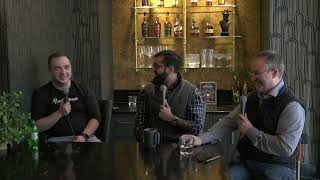
Podcast interview (recorded in Sioux Falls) with Matt Paulson, founder of MarketBeat. Conversation covers growth of the Sioux Falls startup ecosystem (accelerators, founder-led leadership, gaps in later-stage capital), MarketBeat’s email-first financial media business (started ~2007), its revenue mix (~20% subscriptions, ~80% performance/affiliate advertising), metrics (4M+ email subscribers, large daily site visits), goal-setting culture, transparency/build-in-public practices, and hiring/operational challenges.
Chapters
Foreign. Hey guys, welcome back to Results Junkies podcast. We are live from Sioux Falls, South Dakota, my 40 night state.
Paul, one more to go in a balmy 20 degrees.
Yeah.
Middle of the day.
Yeah. I still question saying yes to you when you said let's go to Sioux Falls in, in February. But before we get too deep, I also want to introduce our guests this week. Matt Paulson from MarketBeat. Matt, thank you for having us in Sioux Falls.
Know you guys could have been here a month and a half ago when it was negative 20 degrees out and enjoyed that too.
I appreciate you giving us positive 20 degrees. That's very nice of you.
Thank you.
Yes. You know, we roll at the red carpet for our guest here in Sioux Falls.
We're going to. Later in the episode we'll talk about this where we're recording. But this is your office. Well, part of the office, but we found a little Speak Easy in the back.
We did.
The door mechanism on this speakeasy is probably worth more than most startups at the seed stage right now.
Yeah. It's a giant painting. You open it and then here you are in a speakeasy.
There may or may not. I may or may not have a video that I'll be, that I'll be posting later.
Yeah. I mean, this is what happens when you build a new office and the boss says, I want a speakeasy in the office. And nobody has the guts to say no.
Yeah.
So we did, we did life lessons.
We did.
When we were doing this tour, I was talking to Will and he was like. And then like the office just kept going. And I said to Will, I said, so I imagine when you were talking to the designer and the architect and they asked you questions, all you said was yes. Like, there was just probably no pushback at all. Just like, yes, yes.
You know, I think having toured the office, I could, I could definitely see that. And I could say to the, to the cold factor, I, you know, Paul knows I have a travel podcast and we have a Slack community. And when Paul told me we were coming to Sioux Falls, there's a group in the Slack community that's very dedicated to travelware. And I immediately started a thread that said, I need a new winter jacket. Thankfully, the weather didn't get there for this and now I'm waiting for the sales to come. But when you talk about SEO, like if the moment I said that anywhere near my phone, Instagram and Facebook served me up ads for three weeks straight of every possible winter coat I could buy to come to Sioux Falls.
Well, I think if you start talking about stocks, I'm sure he'll. He'll hit you up.
I think that the real play is to start, like, writing about rare whiskeys and then see if Facebook will try to sell you one you can't otherwise get.
Yeah, yeah. Well, you know, just to tease it a little bit here. I mean, we've. We been. I've been here, like, probably five or six times. I feel like this is your first time here, and it's just been fascinating. Obviously, we'll talk about it as we go through here, but it has been fascinating to not only watch it kind of change every time I come back, but also to just kind of watch how. How much market beats been growing as well. I didn't know you before. I drove up in an rv, like, five years ago or six years ago or something like that. Yeah. First time I ever rolled in here with my rv, Will Bushy, who's on your team now, Will was like, yeah, yeah, just park it in front of this hotel. And I was like, behind the wiener Mobile, like the Oscar. And he was like, yeah, yeah, just put it right there. And so, sure enough, I've got a photo somewhere of me, an Airstream, my wife, my dog, and the Wienermobile.
And you sent that to me because you were trying to remind me of being here for the tour stop back then, and somehow I missed that tour stop, so. So it's my first time here. What I saw when we got here was. And I guess I shouldn't be surprised anymore, but it re emphasized this belief that you can start a company anywhere, especially with where technology is today. And so the very first thing we did, we got off the plane, Will picked us up. We drove straight to startup Sioux Falls. Well, sorry. We did drop your stuff off at an incredible crash pad that you were saying at. But that's a story for a different story.
Yeah.
And then we jumped right into, hey, how are you doing? You guys sit over there, and we've got pitches for you. And you've seen the growth of that ecosystem since you've been here a number of times. And it was, what, probably 2017 when you hear the Touristop. I'd love to hear you talk about what you see in terms of the growth of the ecosystem from the outside. And then we can talk to Matt a little bit more about what he's seen being here through that time period.
Well, I mean, look, I think. Okay, so in some ways, Sioux Falls is no different than anywhere else. You know, I think, like, you Know, it's got people with ambition, people that want to, you know, be their own boss, people that want to, you know, be entrepreneurs and stuff like that. On the flip side, one of the challenges is, some of the challenges are the same too, is that, you know, some of the people might, that might be guiding them aren't necessarily giving them that sense of urgency to go do something. Like they're, they're sort of rewarding conversation and questions more than, you know, actual, actual tests and experiments. So that being said, though, look, I think I was. When I, when we first came in, I was talking to Will about this and I said, like, you know, it's interesting to watch how much the city's changed. And I was saying to Will, I said, like, you know, if you live here, it's probably, you know, a gradual change every few months and another building pops up. But I probably come every 18 months or something like that. And it's interesting just to me, it just looks like big steps forward. There's more infrastructure now. Like, you know, there's more resources. Like, the first time I came, I don't think there was a startup Sioux Falls. I think it was over at Zeal.
Yep.
You know, and that felt like a 20 minute drive away. And then, you know, now startup Sioux Falls exists and it's like in the downtown, essentially the downtown corridor. Corridor. It's got a co working space and it's, you know, and you've got, and you guys have grown a lot. So, I don't know, I mean, I think I would say, I would bet money that the economic footprint of startups in Sioux Falls have increased on the whole.
Yeah.
But, you know, some of the challenges still remain. Like, I'm going to talk about Matt. Like, he's not here. Like, you know, you were in a lot of those office hours we were in and you know, I would run out of fingers if I counted the number of times people said, I want to be like Matt, you know, when I grow up and I have enough revenue to like give to the things I want to give or whatever. And I'd have to say, like, you're looking at Matt now. Yeah. Not when he started, you know, and so like, you know, you gotta like put that aside. But there, I don't know, it's like that sort of startup culture that somehow like glorified this overnight success. And I think, Matt, I think you would say that like Marketbeats overnight success was like a 20 year overnight or a 10 year overnight.
Yeah. I started the business in 2007 ish. So it's, you know, 17 years into it. Like. Yeah, now it looks very fabulous and great and given money to all sorts of things and have a great office and a great team. But, like, this is like the end of the rainbow after the. The long slog of building a business.
Yeah, well, yeah, and I think when you talk about that. That effect, it's a little bit of. Of that. Call it that Waterloo effect of when we were up there and, and you had, you know, rim and. And BlackBerry was a part of that culture, and you had. You had founders that wanted to support the ecosystem that stayed in that area. And I think, you know, know, Matt, I think that's, you know, coming here for the first time. For me, what I see walking in is you talking about how you work with the city to, To. To put the building in place. And then we saw, Gosh, I think we. I think we had seven companies that pitched last night. But if I remember correctly, you told me that the cohort was much bigger than seven.
Yeah, I think they had over 20 applicants. And honestly, like, at first I said, you know, I don't know if this is a great idea because I don't know if the companies exist that, like, would even participate. And thankfully, Don did it anyway and they got 20 applicants.
Well, and I don't want to put words in your mouth, but I would say having seen the seven companies that I saw last night, I think that the thing that was unique to. Maybe not completely unique to Sioux Falls, but Paul, you know, from many of the tour stops that we went to, all seven that we saw were businesses that could survive anywhere in the US where some of the cities that we've gone to, that wasn't always the case. They were building a business that was going to be the best whatever in St. Louis. But I think the thing that. That I saw, you know, is the ecosystem that you guys have helped create, these folks are trying to build businesses that could address Sioux Falls, Maine, Las Vegas, whatever.
Yeah, yeah.
And that's a big credit to Don and Scott, who have been there, done that, and got the T shirt and really know what mistakes, you know, to avoid. And I think a lot of the, like, normal issues that you would see at a pitch, competition of people choosing too small of a market or, you know, building a solution in search of a problem. Like, they. They've weeded those out before they got to us.
Yeah.
I think I will say that I was saying this to Don over dinner last night is that, you know, accelerators are tough because if you look at them through the lens of a venture capital, venture capitalist or whatever, they all are horrible, you know, because then you're like, oh, there's nothing, you know, whatever. Like you just grumble, grumble, grumble, because nothing's good enough ever. But actually, if you look at accelerators as sort of the modern day business school, particularly for businesses that don't necessarily have to be capital intensive, I think they're sort of a necessary part of any community. In other words, when you go to school and you take a business class, they still, for better or for worse, are teaching case studies from large companies. And I'm sure that's useful for certain jobs and stuff like that. But, you know, like, the reality is that for an early stage company, your business plan, you, I mean, I, I don't think you probably started out with a business plan.
No, I still don't have one.
Yeah, you should probably get one of those.
Yeah, I think so. Huh.
Should we talk about what MarketBeat is? How do you want to tie it together?
Yeah. So right before that. Well, first off, too, just as a quick segue, if you're trying to track us down, he is at Paul Singh on all the social media places. Matt is a great Twitter follow and I still have like 15 messages I need to catch up on. He's, he's got a much quicker trigger figure than me, but at Matt Paulson SD for South Dakota, and I am at Pizza in Motion on all those social media places. Yeah, right, right. Before we talk about MarketBeat, I want to, I want to tie back on and whether you use the word accelerator or studio or whatever it is, I think, you know, having not been here, you know, before myself, you know, what do you see, like, with all the progress that that's been made and with the companies that we saw last night and this morning and they were great office hours, they ask good questions, they challenge themselves. What do you think's next for the ecosystem in Sioux Falls? What do you, what do you think it needs? Or what do you think is next?
You know, I think there are some missing pieces in the capital stack and it's certainly gotten better. I think all the way from like the first 25k test out your idea, check to the, you know, we, you know, we're good up through kind of a series A of like I can raise 5 million bucks for somebody that's a great startup. Beyond that, we got, we got nothing. So that's a problem. Yeah, but maybe it's not a problem because like we're building regional connections to Series B firms. And later and trying to figure that out. Our friend Tom over at the Enterprise Institute is doing what's called the Dakota Seed Fund. That will be that first 25k check. And like our state does some kind of programs for early stage businesses, but, but not many because we don't have a state income tax and just don't really have the money to do that. So he got a grant to kind of get that going. It'll be, I think you'll be able to get up 75k, 25k3, you know, three times if you keep your milestone. So I'm really excited to see that come together. I would love to see Don and Scott keep doing their tech accelerator startups. Who Follows has really shifted more towards being, okay, we're going to serve the businesses that are here and not necessarily create something for businesses that don't exist. So the problem with the ZO center back in the day is it only served tech businesses, but there weren't enough tech businesses in town that were startups at any given time to support a building of that size. So it just didn't really work. And then about 2017ish, the founders kind of took over the startup ecosystem from the economic development people. And big thanks to our mayor, Paul Haken for kind of starting that by loading up the ZO board with entrepreneurs.
Yeah.
And then, you know, took it over and I went rogue and started startups. Who follows? And, and we hired Brian and then we merged them together and then we've like persuaded all the economic development people we should move downtown and got the city to give us free building, raised a bunch of money to remodel the building, got rid of the old building, gave it to the tech school and like this whole thing but like it only happened because the founders kind of took over.
Right.
And we haven't given up control.
Amazing what entrepreneurs can do when they put their minds to it.
Well, but it also starts with leadership too, because Paul Tenhaken, I've only met him once on one of the visits I had here, but he used to be an entrepreneur in the community.
He.
Right, he started and sold a business here.
Yeah, no, it was a successful digital marketing agency called Click Rain. Yeah, I know. They grew to 10 million for, for an agency. That's fantastic.
Yeah, yeah, yeah, yeah, yeah.
So to Paul's earlier comment about Market Beat, I think the thing that, the thing that we consistently see when we go to, you know, various towns across the country is there's sometimes a Little bit of a disbelief that you can build a big business somewhere else. And I think, you know, what you've been able to build with MarketBeat here is a great example, I think a blueprint for how folks can do that in their community, that you don't always have to find your way to the big city and you don't always have to find the big check. So I'd love for you to talk a little bit about that journey. And then I know we have some questions for you as well.
I mean, nowadays it's easier than ever. Cause, I mean, you can connect to AWS from anywhere. It's not like the Internet connection only works in San Francisco. So, you know what? Yeah, well, when I started, it was really hard because, like, there was no community here. If there were resources, I didn't know how to access them.
Yeah, definitely.
Nobody was offering me a check. And I just happened to come along a podcast called Internet Business Mastery that kind of had a template of this is the type of business you can start online and make money. It's like, okay, I'm going to do that. And, like, by the grace of God, I found that. But nowadays, like, there's startups who follow sitting here. There's all sorts of capital. You know, there's communities online, you know, hundreds of them that you can join that will kind of teach you what to do. But really, the hard thing is still, like, having the fortitude to stick with it for a long time and doing the work, and, like, keep doing the work when it's really hard and keep doing the work when there's no traction. And I, you know, that's what's. That's what we are today.
I want to. I want you to have a second to talk about what MarketBeat is. But I do have a question real fast. A couple of weeks ago, you tweeted something. I remember this because it popped up on my feed on, like, a Sunday night. And I don't know if you remember this, but you said something on a Sunday night. I'd say within the last month, you said something like, it's gonna be a tough week ahead of me. I got a lot to do, and I do my best with my back up against the wall.
Yes.
What? You know, obviously I'm putting you on the spot, but, like, what was that? About as much as you can share. I mean, you know, I put you on the spot.
Now we had an employee that left for another job, and, you know, it's part of running a business. I had to deal with that had some deals and we were negotiating just lots of different things like that all in a week. And it's like, okay, I'm getting my butt kicked, let's go. And like that really is when I do my best work.
Yeah. And it's interesting because when you start to talk about your business here in a minute, I think it's going to become really apparent to people because like this just, you know, I don't know everything you were feeling in that moment. But one of the benefits of having a small team is certainly the efficiency and the revenue per head kind of super high. But one of the disadvantages is probably like any departure can hurt.
Yeah, absolutely.
So it's. Anyway, we'll talk about that.
Yeah, let's talk a little bit. Love to help our audience understand what Market Beat does. To Paul's point, let's talk about Headcount and, and what you guys are working to accomplish on a daily basis.
Absolutely. So MarketBeat is a financial media business. We publish news and information about the stock market through our website, but primarily through email. So we have a bunch of different newsletters about different stock market strategies and stuff like that. And then we generate money through premium subscriptions, which is probably 20ish percent of the revenue, and then advertising, which is the remaining 80%. And never set out to build an advertising business, but that's where we landed. And one thing that's unique about MarketBeat versus kind of all of the other kind of newsletter businesses that have popped up in the last few years is we are almost entirely based on performance advertising versus brand advertising. And you know, that's just a very unique thing. And I think it's really good for us because we know like for a fact when we're creating value for an advertiser because when somebody buys, you know, there will be a post back from their ad server to our ad server saying, yep, you sold this thing, here's your $150 and you know exactly how many of them you sold. And like whether or not you're providing value, which really tells us like, gives us really good intel or like what type of ads we should run. And you know, who our best advertisers are going to be. And you know, on the other side, there are all these new newsletters that are doing brand advertising out there and you don't always know if the advertising works or not or if you're actually providing value. And I think that is, it's a little bit dangerous of a game because like, as long as like the advertising Money is flowing, you know, it's fantastic. But, like, you know, if there's a recession and the tide goes out, like, if you can't prove you're providing value, you're like, you're going to be the first person that gets cut.
Right.
Yeah. Awareness budgets go. Go pretty quickly when the economy turns down.
Right. And I think, you know, in, you know, full disclosure, neither of us has any business interests and you were fully bootstrapped.
Isn't that a shame?
You know, it is a sh. You know, but. But I think one of the interesting things that. You know, I think one of the interesting things is that Matt is very open about, you know, a lot of stuff on his Twitter account. Everything from, like, you know, revenue to. To performance. I mean, like, all his ideas he talks about publicly, which I think is refreshing because a lot of. There's a lot of, like, pundits out there that just sort of, you know.
Pontificate.
Pontificate. Yeah. And so I think, like, one of the things that he just said there, for example, just in the last few minutes that I think is non OB. He said something like 80% of their revenue is. Is not the SaaS part of the business. There's a. You guys have a free version. You have a 39amonth version, but you. But he said that was 20% of the revenue. And that right there is where it gets really interesting. Is that like, he's. What he's alluding to when he says no brand advertising. He's effectively talking about affiliate marketing, which I think if you just pick a random subset of Twitter and you start asking about affiliate marketing, you either get a bunch of jokers or you get a bunch of people that say, oh, that's the worst thing in the world. But, like, he seems like a normal dude, you know, and like, he's. He's making money, he's creating job. I don't know. Like. Anyway, the point that. The thing I find really fascinating, though is, is that, like, he thinks about email publicly and openly in a. In a different way. And I think that there's probably things that he takes for granted that I wish more founders in random places around the country would just embrace. Like, when you walk into this office, there's a ticker on the front door that shows the number of emails on the list. And he didn't make a sign. An NDA. He openly talks about it. His employees see it when they walk in.
Yep.
And like, they're. You were talking about the dashboard. These are like such simple ideas that he probably takes for granted. But like I think they're, they're ideas that more entrepreneurs should embrace. Like not a single pitch in any city we've ever been to has ever said this is the top metric for me to watch. Yeah.
And it's a big downside for founders who don't have that sort of laser focus. And you know, you mentioned that this build in public philosophy is not practiced by a lot of entrepreneurs. And you, you know, you mentioned the, the ticker as we walked in and there was a second ticker to the left too. And they told us what it was.
But I think it was website visits today.
Yeah, website visits. Yeah, website visits today. It's, I don't remember the number but it was like 180,000 or something. But you know, so there's substantial traffic there. And then after we did finished our office tour, we sat down for lunch and Paul was sitting across from me and as I looked up over his shoulder there was a call it a 65 inch flat screen that was rotating messages. But what hit me was the first message that I saw was a page and I'd love for you to talk a little bit about it. And it was, I think it was four columns and at the top it said Market beat Q1 goals.
So one thing that I really like about building in public is and just being very public about our goals and our numbers is that and our strategy frankly is that if everyone else knows all my secrets and does them like, that will raise the bar and make me work harder to figure out that next level of secret marketer ninja stuff. So it makes the game harder for me in a good way. But the other thing is that people challenge me on my idea sometimes in like ways that I haven't thought about. And when you're, you know me running one of the largest financial newsletters online and you know, you're supposedly the expert and you're like at an event and you know people are finding fawning over you and wanting to talk about your business and you know, you don't always get the get feedback or like people challenging your ideas. And you definitely get that on Twitter slash X like you post stuff. Like all of the people that like are in that new newsletter space follow me and will either DM me like, hey, I've thought about this or like no brand advertising is great for this reason. It's a real thing. Like you should go try it. And I love it when people kind of challenge like in a nice way. But like say, well maybe you're wrong for this. And then, you know, I think about it, like, well, maybe I'm right, but maybe I'm wrong. And then it gives me more things to think about because they're just like, there's no magazine I can go read that's like, here's how to grow your financial News business from 4 million subscribers to 8. Like, that doesn't exist.
Right.
So, like, the more I can have my ideas out there, the more that they can kind of get battle tested and make my business better.
But what do you say to somebody that says, but, Matt, what if I miss my goals? What do you say? Like, if I said to you, like, oh, man, like, that's cool. I love it. Like, I love the idea of, like, forcing the bar higher for me.
I love it.
But, God, what if I say that I want to make, I don't know, a hundred grand this year and I don't? What, like, what do you say to me?
We're gonna miss, like, half of our Q1 goals. That's. Cause some of them have changed, and, like, some of them we just haven't made enough progress on. So, like, you know, missing goals is part of the game. And.
Yeah, I just. You. You tweeted something the other day that I thought you retweeted your old tweet. So there was this old tweet, I forget the date of it, but you said, oh, I woke up and we crossed 75,000 emails.
Cool.
And then you retweeted it and you're like, huh, we crossed 4 million user emails today. How cool.
Yeah.
And then we walked in the office and it was like, almost 4.5 million. And I'm like, oh, God, that was, like, 30 days ago.
We tweeted that I'm almost tempted to stop sharing our subscriber count because it is growing so fast that, like, it's going to get hard to believe at some point that it is growing that fast. But we also spent a million two on advertising last month with the sole purpose of growing our email list.
Yeah.
So when you talk about missing goals, I think this is a. This is an unspoken part of. Of building a great company. And where I think about it is, is that. So I've always been a big fan of. Of culture. And. And what I mean by that is that if you establish the right culture and you hire the right people and you build the model when they miss goals. Like, you're talking about when you're missing your Q1 goals, they can sit there and they can analyze why they miss those goals and figure out how to repurpose themselves. Because to your point, if you could achieve every goal you laid out every quarter, you're probably not pushing your company hard enough. And so I think it's establishing that culture inside your company that it's okay to fail. We have to understand the reason.
Yeah. I mean, for us, a couple of things have been really helpful, especially on our dev team is, you know, there's always code that you can make better and improve and, you know, fix whatever edge case bug there is or make some UI a little bit better. So if they kind of have some North Star goals that, like, hey, I don't really care what you do, but you do have to get these things done, that's really helpful for us. And then, yeah, I mean, that's the main thing. And, you know, I think we also have to remember goals are kind of a snapshot of, like, this is what we think our future direction is on the date that we set the goals. And, like, you know, that future direction can change. Like, we started a consulting agreement with a new SEO agency in January or November, December, I don't know when, and it's gone really well. So it's like, okay, let's keep, you know, forget some of this other stuff. Let's keep doubling down on this because, like, the advice we're getting is really good. We're seeing results. Like, let's just keep pushing on that pedal at the expense of some other things that were, like, on the goals list. But, like, if we don't do it, it's okay.
Yeah. What do you. So, like, you know, I'm not pretending to be inside your head, but I imagine that, you know, with email being a primary part of your business and with 80% of your revenue not being the SaaS revenue that everybody thinks it is, do you find yourself looking at.










