The Executive Series: Matt Paulson of MarketBeat
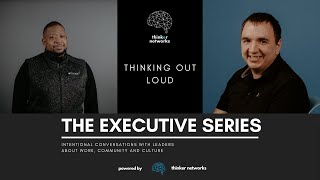
Interview with Matt Paulson discussing the origin and evolution of MarketBeat (founded from 2006 blogging, pivoted after Google algorithm changes into investing-focused content and email newsletters), key business metrics and scale (domain acquired 2015, 2.17M email subscribers, ~20M monthly website visitors, ~9 employees at time of interview), and his civic/philanthropic work in Sioux Falls (leadership development, bridging-the-gap fund, focus on board diversity and social/media currency). The tone is conversational and candid about entrepreneurship, growth, and community giving.
Chapters
Foreign.
What's going on, brother? Appreciate you coming by.
It's right across the street. I feel like I should have been here, like, a year ago.
Well, you should have. And I should have invited you a year ago, but we had to get our stuff ready before we got to.
No, it's a great studio.
Appreciate it. Speaking of spaces, you just talked about your office. Your office is one of the better offices in the city.
One of the better ones or the best one?
Well, I'm not gonna argue with you there. I'm not in a position to say it's not the best, but it's up there just for the other people that I'm probably offended by saying it's the best. No, it's definitely up there. I love it. I love the mural. I love. For those who haven't seen it, I'm not necessarily inviting you to go to the Market Beat offices.
You can always look through the window. We don't care.
Yeah, so look through the window. What building is that in?
It's in a crane building on eighth. So right next to Queen City Bakery. You park in our back lot. You can see our neon sign kind of through the window. And that's the office.
Yes. And we are in 8th railroad across the street. Part of this whole downtown thing that's happening, which is. I'm super excited about. I got some Queen City right here. Make sure you guys go represent Queen City. Mitch over there. So, Matt, I'm so excited to have you, man, because there's a lot of things that I want to talk to you about. One is the generous gift that you gave us to help us promote and develop leaders. But we'll save that for a little bit. I want to start with you, first of all. What's a Market Beat?
What is Market Beat? Yeah, so MarketBeat is a financial new or financial media and marketing company is what we're calling it now, but it's basically a website and a newsletter that has information about the stock market. And pretty much everybody that invests in individual stocks knows about it now. So we've done a great job of getting it well known in our industry. And it's. I mean, it's not a household name in Sioux Falls, but I think if you were to talk to people that are in their 50s and 60s and 70s, have some money, invest in stocks like MarketBeat is a known quantity to those people.
Well, you make an interesting point there, and I. Let's just touch on. That is when you have businesses that don't necessarily have to be known where you live.
Yeah.
You know that your business is known where it needs to be known and tell us about that whole piece of it. Because sometimes that could be weird when you walk into a place and no one necessarily knows what the business is, but it's going where it's supposed to go.
Yeah, it's weird because I mean, if you look at like any of the traffic numbers or website numbers or email list numbers, like, we are bigger than Kello by a few times over in terms of website traffic. But a lot of people in Sioux Falls don't know about MarketBeat. And that's okay. Like, everybody knows Matt, because I'm everywhere. Right. But people are like, what's MarketBeat? What does Market be do? Like, I get that question multiple times a day, every day. And like, oh, I've heard of MarketBeat. Is that a marketing company? Is that, you know.
Yeah.
And like, whatever, that's fine. But they don't need to know what MarketBeat is because they're not in like MarketBeats Target kind of market.
Yeah.
And that's okay.
That's a big thing sometimes. For instance, we have people call us every so often interested in 3D printing.
We don't actually be a good affiliate relationship to set up.
I was just talking to somebody that that was referring. Was going to refer us to a 3D printing person in rapid. I was like, I would love to send somebody. Business.
Yeah.
Because we're collecting a lot of it. But. But how do you get to market, though? Tell us on that journey, because that seems like an interesting thing to get into.
Yeah, it was a journey. I mean, it's 15 years of pivots and iterations and learning. I really started the business kind of down this path. December 26th of 2006. I was, I think, a junior in college, maybe sophomore. I would have been junior, you know, looking to make some money on the Internet. Had a crap job at McDonald's in Madison, South Dakota, and, you know, just wanted something more. Felt like I had the skill to do it. So the first kind of thing was doing freelance writing for different websites online. Knew how to write, had that skill, was getting paid like 15 bucks an article. Just would pound through four or five a day. Then I realized, like, oh, these people are just putting these articles I'm writing on random blogs and they must be making money doing that. So I thought, okay, well maybe I can make my own blog and kind of cut them out of that process. So made a little personal finance blog on blogspot called Getting Green and wrote personal Finance articles, because I was doing a Dave Ramsey thing, getting out of debt and trying to graduate college debt free, which I did, and it was great. And then I thought, oh, this one personal finance blog is doing okay. What if I had five of them? And I found some freelance writers and started four more of them that were practically copies of the first one, and that kind of grew to be about 100 grand a year business. And that worked really well until about 2011. Google made some algorithm changes. They thought, hey, there are a bunch of crappy personal finance websites out there. And let's be honest, those sites that I had weren't that fantastic. And we got penalized a whole bunch of other sites. So that kind of gave me the opportunity to reconsider. Like, okay, what's the next iteration of this? And I thought, okay, what? Out of all this stuff that's kind of around in my Internet business portfolio, what's working? And the stuff that was doing really well was tied to investing. So we had a website called American Banking and Market News. It's still up on the Internet. But when we write about a publicly traded company and kind of use their stock ticker in your article like that, those articles would just get a ton of traffic. And the reason they would was because Google has a tab called Finance. You can type in any company in there, and our articles would kind of show up, and that was those company pages. So you search for Wells Fargo on Google Finance. Back in the day, they had this big Wells Fargo page, and there our articles were in the sidebar, and they'd send us people. It's like, oh, this works pretty well. Let's write a whole bunch of articles about publicly traded companies. And the business doubled kind of in the year after doing that, and we got it to about a quarter million a year. And I thought, you know, this is cool, but, like, I've been down this road. I don't want to be reliant on Google just sending me people and getting ad clicks. Like, I know where that's going to end. So I thought, okay, we need to capture some of these people. That led to the email list, led to a newsletter that eventually led to us making kind of premium research tools for investors. The business had a different name early on. First, like, the investing stuff was called American Banking and Market News. And then it had a terrible name, which was Analyst Ratings Network. And the only reason it had that name was most of our coverage was about stock analyst ratings. And in 2015, I got the MarketBeat name Steel on a domain name $9,500.
Oh, wow.
I mean, it'd be a million dollar domain today. So I just got super lucky on that. Had the MarketBeat domain since 2015. And we've really just been kind of scaling it over the last five years. Business model hasn't changed. We're up to nine employees. We're gonna hire a few more in the next 30 days. And you know, it's really scale. We have 2.17 million people on email list, 20 million people on a website every month. And you know, we're just trying to be the best place to look up information about stocks there is. And we keep trying to get a little bit better at it every day.
I love it. First of all, that cut that, that's a masterclass with somebody. Right. If they just listen to that. There's so much in that. One thing that really stuck out to me while you were talking. There was, you said opportunity. When you first got slapped by Google and they first basically killed your websites, most people would have been done. They would have said, look what Google did to me. And you saw that as an opportunity.
Yeah.
Why? And what. What about you made that an opportunity versus the death knell of. Yeah, your business?
I mean, it was a bad day, don't get me wrong. But like, I knew there were still people doing what I wanted to do that were making money on the Internet. There were just fewer of them.
Yeah.
Just like my first thought is, okay, the cheese has moved. Where is the cheese now? You know, what are the people that have kind of gotten through this? What are they doing that I'm not? And what are those opportunities that, like, not everybody is looking for? Because, you know, most people that do SEO, like, I need to rank number one for my keyword in the main search thing, but they don't realize, like, there's all these other tabs at the top. There's images, there's video, there's news, there's books, there's finance. And like, we kind of dominated the finance section for years. Like, we were as many as 30% of the news results on those company pages just because we had it just dialed in so well on how to rank for those. So, like, we were basically a third of a tab of Google. Google for a long time, man.
Well, first of all, that's a T shirt. Where's the cheese? Like, the cheese moves. Where's the cheese? I think sometimes that's just the thing where, like, stuff moves. The idea that people think about business or anything that they're pursuing as, like, you know, shooting fish in a barrel. Yeah, it's just like an absurd notion to me. It's just. You just thought like this thing was just gonna stay that way for you forever. And I think a lot of times some people have the idea of winning by default. They want to win because they're the only people doing the thing.
Yeah.
It's just not reality. Tell us about that piece where you twist and you turn. You figure things out. You don't get bogged down in the fact that, you know, life didn't do you right.
Yeah, I think there's, there's something to pull out of there and maybe not really. The last, like the winning by default thing I feel like is out tends to be a loser's proposition. Because if your idea was really good and no like somebody would be doing it.
Like, right.
There's no new ideas under the sun. Like if you are the only like saltwater aquarium person in town, it's probably because not that many people want saltwater aquariums. We want a saltwater aquarium, we're getting one. But there's probably just not that demand there. But if there are a thousand wheelers in town, which I think they're pretty close to a thousand, maybe 700, some of those people are doing pretty well. So that tells you if a lot of people are doing it. There's a market there. We have a ton of competitors. Yahoo Finance, Google Finance, MarketWatch, Wall Street Journal, CNBC. Huge list of people. And like we have people that copy stuff on our website all the time that are competitors and that's okay. But you know, there's 60, 70 million Americans that own individual stocks. So like we need, if you want to get, build a big business, you need a big market. And then like, you just have to do better than your competitors.
That's so big because I don't think people realize that like you're banging with cnbc. You know what I mean? Bloomberg. Like, it's not like you're banging against mom and pops. Like, sure, you're in there with, you're in shark infested waters. You're in there with, with the big boys and girls.
Yeah, I know, it's, it's a thing like if, yeah, like Yahoo Finance is probably seven times bigger than we are, but it just gives us something to shoot for. Like we know we haven't hit a ceiling. Like we can keep growing, keep improving and yeah, like they're going to do what they're going to do and we're going to do what we're going to do and we're going to just try our worker butts off to kind of do something, something that they don't do.
That's awesome. Well, obviously you were successful in that you've grown, you've done all of these things. You were able to amass some wealth. And that brings us to like the next chapter, which is your place in the community with the philanthropy and the different things that you do. And I really wanted to talk to you about this because in the world of Matt Paulson is a lot of different reads on you. And for some people, they just see money and in the story that they think is just like, I don't know, you just fell out of the sky with money. I don't think people really understand that. You were at McDonald's and you had this job and you were in school and you built this and you put this together and you amass this money. And so when you get money like that, after you've done all of that work, after you figured it out, it's really easy to go na na, na na na. But you spend a lot of time and energy in the community, giving to the community, not just financially, but in your expertise and your knowledge and all of those type of things.
Sure.
Let's just talk first about just the perception of who people think Matt is in terms of how you interact with the community. Where do you, what is your perception of others? Perception?
You know, I think I. I think it depends on who you ask. There are people that love everything I do. There are people that think I'm a phony and kind of everything in between, like, and, you know, I feel like if you are kind of a well known name in a community, there are going to people that kind of take some of their own feelings and maybe insecurities and kind of use that to project them, you know, their feelings onto you and like it's not anything you did. But if I'm not feeling successful and I don't want other people to be successful, like, you know, try to pull them down one way or the other. And that, that's the thing. Even in Sioux Fall was like, I've experienced that. There are people I've had to block on Facebook because it's just talking crap about you all the time. And it's like, well, that's, you know, I don't need to expose myself to that.
Yeah, but that's a mature mindset. Like there's a lot of people out there who don't get in the game, who don't Expose themselves because of that. And one of the things that I'm personally feel called to challenge is anonymous giving. Right. In our culture, you know, it's like, we give, like, don't tell anybody I gave it. Right. And I understand that sentiment that you want it to be about the gift and you want it to be about the people versus you. But there's also a side of it where a lot of people don't give it because it exposes them to a lot of things. And once you become a money bag, then you do that and. Or people just attack you or come at you. And I want to challenge that because I think it's so important to know who's giving and to understand the type of people that give to so many things and why they give to so many things. So it's important to know that people are giving.
Yeah.
Tell me about that piece of it.
That's something I struggle with for a long time. You know, I'm a Christian, and one of the things that the Bible says about giving is like, to not let your left hand know what your right hand is doing. And to me, that meant, like, all giving should be anonymous initially. But then some opportunities, like, really kind of came up where, like, you know, if I put my name and my brand behind it, it will actually help the cause even more. And that's kind of. That's kind of the tension I deal with. Like, you know, a lot of my gifts are still anonymous. Some of them are not. And, you know, I'm willing to lend my name out when I feel like it will genuinely help the cause. Or like some people, I say, you know, you don't need to advertise the fact that I wrote a check, but if you're talking to. Talking to a bank and they say, who else gave you money? You know, feel free to say, matt gave me money, because that will. That will help them get money from other. Other people.
That's such a big thing. That's such a big thing. And I guess that's my point. A lot of times, people only or people believe that money is the only currency, but it's not this for me. I'm a person who deals heavily in social currency. Yeah, social currency is a powerful thing. Media currency is a powerful thing. Marketing currency is a powerful thing. And so when you are able to lend those different things, you take a $5,000 gift, and it's really a $30,000 gift, because they couldn't pay for that marketing. They wouldn't be able to get the media. They Wouldn't be able to get that social engagement. And no one really is super excited about being the first giver.
No, there aren't very many giving venture capitalists that want to be the person that writes the first check.
Right.
Because, I mean, there's a lot of nonprofits in Sioux Falls, and, you know, I don't know how many people think we need that many new ones.
Right.
You know, there's really a vibe to, like for collaboration and, you know, really some not duplication services among nonprofits. So, like, if you're a new nonprofit that is doing something different, like, it can be hard to get that early support because there's a lot of nonprofits already asking for money. People already support other nonprofits.
Yeah.
You know, add something new to the list, like, that's. That can be, you know, a tough ask for.
Don't I know it?
Oh, absolutely. Yeah.
Yeah. So, I mean, for us.
Because you're. You're raising a fund, right?
Yeah. So. And really the fun came because if we don't necessarily think of it so much as a fund in. In the. In. In the endowment sense.
Yeah.
It was more that when we develop Leaders of Tomorrow, which is our leader leadership development program that we wanted to have for the community, partly because we're for profit business, and we feel like what we have to offer in terms of leadership development and culture is top tier, we really believe that we work hard for that to be the case. We work with major organizations in this community, but we did not want what we were giving to people that we thought were so important just to people who could, quote, unquote, afford it or just those people who are at a higher level. And one of the things that we always felt I'm a. I'm a habitual board member. So I'm on seven boards. I've been on three for 20 years at least. And so I've seen the way a lot of nonprofits run.
Yeah. You get a lot of board members from the same places and.
Right. And there's so much opportunity for them to be better. But what. But. But what was the most frustrating for me about all of it was is that a lot of people who give money, number one, they give money for the result, not necessarily the process. So I saw there was a huge issue because we weren't necessarily taking care of the people who were taking care of the people. There wasn't necessarily money being given for people to retreat or for people to get training or people to be developed. And you need that to have a properly running Organization that could really take advantage of things. The other thing that was really a challenge for me was, is when. When people give to these organizations because we want to be such good stewards of the money, a lot of the times we give the least of us. The least of us. And so somebody gets the quote unquote cheapest training. But these people who don't have other resources need the best training.
Yeah.
Because when you don't have a bunch of money, you need to have a bunch of skills.
Yep.
And so how do we get for profit quality to nonprofit businesses? Well, that means we have to be okay with taking a little bit less. And then in some cases we gotta be okay with people giving a little bit more for us. We just said for proof of concept to show it, we'll raise the money too. Yep. But that's a heavy, that's a heavy burden when you run a business. And so our friends at the Sioux Falls Area Community foundation, they said, hey, why don't we find a place for you to be able to raise money all year round and bigger gifts? Because for a for profit business, we couldn't really be handling it.
Yeah.
We were dealing with fiscal sponsors and it was just really messy and it was just. The burden was, to be perfectly honest, the burden was unfair to us.
Sure.
And so they helped us out to be able to do this. And, and so we were able to ask folks who we knew believed in leadership, who knew who we knew believed in culture, to. To invest in this, you as a person in. In MarketBeat was good enough to give a gift of $25,000, which is so big, because to put a fine point on it for people, for somebody to go through this 12 week program, which for some people have changed their lives. We had them. After this cohort, we will have had 130 people through this program with the goal of reaching 500 by 2025. Each of those people is a thousand dollars essentially to go through this program. It really is probably more than that, but. So your gift accounts for 25 humans. We don't even think about it as dollars anymore. We never really have. 25 human beings are going to get access to this leadership so that they can go build their business or they can go be in a nonprofit or give back to their organization. And that's such a big deal. So what drives you to do those type of things?
Well, so I look at what our demographics in our school districts are now. You know, 40% of the kids are non white. And when I look at nonprofit boards, I Look at the business community. I don't see 40% non white. And that's. That's kind of disappointing to me. I feel like we've got a lot of quality. You know, people are in our community of every shape, size, color, and whatever. And I do feel like it is kind of the haves and the have nots in a way. You know, the mayor talks about, you know, Sioux Paul's being a tale of two cities where some people have it going great and other people just really need a hand up. And, you know, I. I don't want to be the guy that's doing nothing about it, like sitting living on the south side of town, hanging out with my friends at looks or wherever and, you know, not really exposing myself to. You know, there is. There are a lot of people in Sioux Falls that, like, I might not normally interact with. But, you know, if there are young, hungry leaders that want training and, you know, want to volunteer and want to give back, we need to give them the opportunities to. And, you know, like, I'm in leadership Sioux Falls, and there are a lot of people that, you know, come from institutions. You would expect age ranges, you would expect ethnicities. You would expect. Like, I. I would love to see more diversity there, but it's just. It's not there right now.
Yeah.
So when you came along and, you know, did this thing, it's like, that's. That's something I want to be a part of because it's important to train everybody, not just the people that you would expect to get some leadership training.
That's so big. That's so big. Because right from our side of it, we're saying, when you want to fill a board position or you want to grab a leader, I don't want you just walking out to the street and be like, hey, person of color, come here and sit on this thing. We want to have people who have, you know, skills and training and are able to be successful. They're being set up to actually win. The other thing that we're really proud about with the bridging, the GAP fund, which is kind of what this all flows through, is all seven of the members of the steering committee that determine what happened to the funds. People that may not realize this, but when we go to do a leadership program, we apply.
Yeah.
To the fund we raised the money for, because all seven of the people who run the steering committee who determine what happened with the dollars are graduates of the program.
Cool.
And the point is, for them, it's theirs, and they need to Protect the program. They need to be good stewards of it and they need to really take care of it. Even if they're protecting it from us, even if they think we're not serving the mission anymore, we're not doing anything anymore. They get to get to decide that. They get to decide that.
Good.
And for me, I think that's important, that it's really, really theirs and to give them an opportunity to lead. So we really appreciate you for that. And just bringing it back to the overall perception. I think it's important to people to understand what a community would look like without MET pulses because I think sometimes people get caught up in the thing where right now it's a tough time to be a leader. And when you're a leader, particularly when you have a leader that has some money, it's easy to take shots at people as if you're not a human or don't have feelings or don't have days or families or whatever. And he's just a person. You're a personality. People can just shoot at it all day. I just really desperately want people to understand, like, though you should hold people accountable, though you should challenge people, though you should do all of those type of things. You don't want a community without Matt Polson's in it.
I would hope not.
You just really don't. Well, I think most people appreciate that, but for the few that don't, I want to drive that boy home.
No, I mean, there, I definitely have had shots taken at me for what people think I represent. Like, they. They think I represent like an elite business class of power that's kind of trying to keep power for themselves and not raise anybody else up. And like, but people, people don't realize, like, I grew up in a 1200 square foot home in Mitchell, South Dakota. Like, we weren't like, poor poor, but like, we weren't wealthy.
Right.
I had to work my way through college.
Yeah.
I. You work your butt off for 20 years and you can be successful.
Yeah. Like you said, you did the Dave Ramsey thing.
Yeah.
There's not a whole lot of juniors now that are trying to do Dave Ramsey.
Sure.
You know what I mean? Like that. That's an atypical thing. And so you got an atypical result. And I think sometimes that's what we want to share with people and especially for, you know, for our leaders, is to be able to say, yeah, if you want something a little different, you got to do something a little different. That's just the nature of the beast. Where do you want all of this to go, though? What is the vision that Matt is casting?
You know, I think one of the challenges that I'm trying to solve is when I look at the boards that I serve on and the boards that I get asked to serve on, I just don't think it's reflective of our community. And, you know, I want that to be reflective of our community. And I think part of the problem is not that, you know, people want to only have specific types of people on the board. It's just. It's hard to think of, like, people like who. Who the obvious choices are. Like, I'm sure you. You're on like eight boards because people think of you all the time. Tamian. Probably the same thing, but, like, we need like 50 more Ronnie's and 50 more Tamians, like, in our community that are actively leading, you know, nonprofit organizations and, you know, have really earned the respect and trust of the entire business community. Like, we need way more people like you out there.
Yeah. And that, that's, that's the thought process for us. It's like, how do we build those folks? And for me, one thing I love about you is you are solution oriented. It's like, well, how do we do the thing? Yeah, you don't get caught up in the emotions of the thing a whole lot.
Sure.
It's just like, how do we do the thing? Yeah, that's my. How do we do the thing? And I want to speak to this because this is one thing that I'm really excited about is I think our time is kind of right now, and I think the culture that we're having with some of the young leaders is different. I think it's really different. I think about our networks. I think there's a lot of awesome people out there. Specifically right now, I'm thinking about a lot of folks from, like, the Jesu Falls situation, our entrepreneurial community that are getting there. I think about Mitchell over there at Queen City, I think about, you know, John Meyer, and I think about all of those type of folks. And I just feel like we're just in such a good place, and I feel like there's a good environment right now for people trying to figure things out. Talk about that.
I feel like something's changed.
Yeah.
You know, I feel like the way to kind of climb through the maybe economic, business, social ladder in Sioux Falls, it used to be get a job at a big kind of company, like any of the big name companies in town, bank, healthcare, whatever, and really just kind of work your way up into a management position and hopefully that they train you along the way. I think that's changing. I think kind of the training and the mentoring and that kind of growth is happening more and more outside of the big institutions. And that gives an opportunity for the John Myers and the Adi Graham Kramers and the Vonnies and the Mats of the world to really do something that we might not have had the opportunity to do 20, 30 years ago.
Yeah. And it feels better. It just feels better to me. Like, I don't feel like I'm in a rat race.
Yeah.
You know, I don't feel like I'm competing against everybody around. I think about our kind of marketing folks, you know, your Natalie Eisenbergs, your Mike Harts and all those type of folks, and how well they connect. I think about our banking industry, your Tony Norris and your Jason Erbos and your Derrick Omis, those people that get along and connect and work together, and it just doesn't feel heavy anymore. It doesn't feel like we're working against each other.
Yeah, it doesn't. It feels like, you know, those group of names specifically, like, everybody's trying to make the community better.
Yeah.
And they're going like, nobody has to own anything. Right. It's who's got the best idea. Let's see how we can make that best idea happen.
And it's so. This is so much better.
Oh, yeah.
That's just so much better. To just go back and forth and be like, nah, I need to.








