The Future of Remote Work - YPN Crossroads Summit 2019
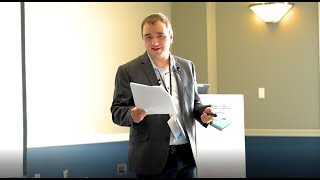
Matt Paulson (presenter) gives a 2019 talk titled "The Future of Remote Work," describing his long personal experience as a remote worker and founder of MarketBeat (a fully-remote company). He presents five trends shaping remote work: (1) Gen Z digital natives entering the workforce, (2) slowing rural flight as remote jobs allow people to live outside metros, (3) erosion of the traditional 9-to-5/40-hour norm, (4) growth of gig/part-time work and portfolio careers, and (5) new businesses and services that cater to remote workers (coffee shops, co-working alternatives, certifications, tailored ISPs). He also explains MarketBeat's remote policies (flexible hours, trust in self-starters, ~40h expectation, customer service time windows) and hiring practices (hire slow, prefer self-managed/freelance background).
Questions this video answers
Seven employees.
$10 million.
About two out of three companies.
About 4 million people.
36% of the workforce by 2020.
Chapters
Marcus did a great job introducing me, so I won't repeat all this stuff, but I can tell you, well, there's my picture of my wife, Corrine, my daughter Addie, my son Micah. That's our family picture from two years ago because her kids just hate taking pictures, especially with the flash. But I've been a remote employee pretty much my entire working career. I haven't really stepped foot inside of an office since 2008. And really that's been my entire working life. I worked for a company out of Pier doing web design for several years until about 2012 when I went to work full time for MarketBeat. MarketBeat now has seven employees. We don't have an office. Pretty much everyone works out of their home or wherever they choose. I also run a business called Gogophoto Contest that helps animal shelters raise money. I have two partners in that business. We've raised $10 million for animal shelters. Again, no office falls Angel Fund doesn't really have a paid staff. It's really a loose network of investors that work together. So everything that I've kind of have done or am doing, it really happens outside of a traditional work environment. I feel like that gives me a little bit of credibility on this topic of kind of remote work. I wrote some books, and if you want to see some of my other stuff, I do a blog post every week or a video or something kind of every Tuesday. So you can check those out@mattpolfson.com what we're doing today. I have some numbers about remote work I'm going to share. That won't take long. I have five trends that are happening as kind of a result of the remote work phenomenon. I'm going to talk about how we do remote work at MarketBeat. And then if there's time, I've got a big list of tools that you may find useful in a company that has remote employees. So the five statistics I want to share. These are kind of boring, but these really do kind of set the stage for just kind of the number of people working remotely in the United States and people that work kind of partially remote. And it's really kind of a spectrum. First thing is about two out of three companies in the United States have employees that work outside of the office for the majority of time. So it really is kind of the new normal. Or, excuse me, they have employees that work outside of the office some of the time. And then there are about 4 million people that work outside the office kind of the majority of the time. So I consider These people kind of full time remote employees. There are about 4 million of those out of a workforce of probably about 200 million in the United States. On a global basis, this is a different study. So the numbers might not line up perfectly, but about 52% of employees in the US globally work from home at least once a week. About 40% of US employers, 40% more employers offer some kind of flexible work arrangement than they did five years ago. So it's really a growing trend, but it is still kind of a relatively small portion of companies in the United States that offer kind of have remote work programs and do kind of remote work as a default. That was just 7%. And then of course, you know, not every job can be done remotely. You can't flip burgers remotely. You can't clean a hotel room remotely. A lot of the more blue collar jobs are harder to do remotely. But for white collar stuff, in terms of accounting, bookkeeping, legal work design, programming, those type of jobs, you really don't need to be at any given place at any given time to do a lot of that stuff. The statistic, according to this global workplace analytics study, is that about half of jobs in the United States could be done at least remotely part of the time. This is kind of the main section of my talk, or one of two main sections, but it's kind of. I kind of have five different trends that are kind of happening as a result of kind of the remote work phenomena and kind of how it's going to change our country and change kind of the workplace because of people working at home or at coffee shops or coworking spaces or wherever they choose to work. So. So this is a picture of my son Micah. He didn't want me to take his picture. He said, daddy, you can't take my picture. I'm busy playing Jailbreak, which is a Roblox game that means nothing to you. You're probably over the age of 21. They said, I need to arrest the robber. They're getting away. But Micah's part of Generation Z, or maybe the generation after Generation Z. Who knows what they're going to end up calling that generation. But by 2020, which is next year, Generation Z is going to make up 36% of the workforce. So these are people born since the mid-90s. And this is kind of really the first generation that grew up with technology natively. Like, I didn't have an iPhone until 2010, but Micah has had an iPad since he was like two. So we're going to have a whole Generation of children that are growing up, they have laptops and iPads and everything throughout school. Micah's got a little VR system he plays with. So the kids today really have technology in their hands from such a young age. They really are digital natives. Even the kids that grew up in the 90s, they probably had laptops in school and they've always had cell phones. And it really is the first digitally native generation that's coming into the workforce today. So by the time they enter the workforce, they already know how to use Microsoft Office and Google Docs and Dropbox and Slack and a lot of other remote work type tools because they probably use them in their classroom environment in high school and college. So that really gives them a leg up over people that may have learned technology later in life, or it just doesn't come naturally, or you didn't learn it in school and then you kind of have to pick it up for your job. So the people coming into the workforce today as remote employees, they can learn how to do their job from day one because they don't have to take the time to learn the tools that other potential employees might have to take the time to learn. So I think kind of the younger generation that have these kind of more strong technology backgrounds, it really does give them an advantage in remote positions. The second of five trends that I think are going to happen as a result of the remote work phenomenon is the slowing of rural flight. So I grew up in Mitchell, South Dakota, so I took some pictures I had or found online of Mitchell. And I think the remote work is really going to help out small towns in a big way. Because if you have the right skill set, you're a good self manager, you can drive a lot of value for a company, and, and there's really no reason you can't get a job with a business that's based in San Francisco or New York or Austin or any other kind of technology hotbed place while you're working from Sioux Falls or maybe even the small town that you grew up in. If I were to go be a software developer in Mitchell, South Dakota, I think I could probably make between 50 and 75 grand a year. But if I want to be a software developer for a company in San Francisco, that job will pay somewhere between 100 and 200 grand a year. So if I can live in Mitchell, South Dakota, working for a San Francisco company making 200 grand a year, I'm living a pretty good life in Mitchell, South Dakota. I do think one of the reasons that a lot of people End up leaving their hometown is job opportunities. There are jobs in Sioux Falls that don't exist in Mitchell. There are jobs in Minneapolis that don't exist in Sioux Falls. And people just have to move sometimes to the job that you want. And with the remote work trend, that is going to be less and less the case over time. I do think that's why we are starting to see some of the smaller towns in South Dakota. For decades, their populations have been slowly declining. But since 2010, some of them have actually started to level off in a good way. And certainly there have been other revitalization efforts. But just imagine if you live in a town like Emory, South Dakota, where my wife came from, population of 300 people. If 10% of the people in that community got a job for companies in bigger cities, that would make really a major impact on the local economy. You know, I mean, just because all that money will flow into the community, it goes to local gas station, grocery store people will build houses, pay property tax, and that money will flow in. You know, I really think, you know, in a smaller community, having a base of remote employees really could make the difference between, like a grocery store staying, opening and closing. Really, you know, a handful of people that are well paid in a small community like that can make a big difference. When I was in college, I went to Dakota State, Madison, South Dakota, population of about 7,000 people. Not a lot of great jobs there for people like me that were freshmen in college, no skills, worked at Burger King and a gas station in high school. They want to hire the local kids. So I was a college student, didn't qualify for work study. So my options were pretty limited. And what I ended up doing was I did freelance writing for different websites online. So there was a site called problogger, I think it still exists. But they. They have a job board for freelance writers. So I was making between $1,500 and $2,000 a month as a freelance writer in college, working for all these different websites. And all that money flowed back into the Madison economy. I ate a lot of McDonald's in college, ate at the local gas station. That made subs, a lot paid tuition, which went to pay teacher salaries. And all that money came in from these California companies into the Madison economy because I was a remote. Well, not employee, but pretty close. There are actually. Even the state of Vermont is actually paying remote employees to move to their state. So in 20, I think it was last year, 2018, they passed a bill where if you can prove that you have a job in Another state and you move to Vermont, they'll actually pay you five grand a year for two years just to move there because they recognize the importance of having people who have jobs that are out of state because all that money flows back into the economy. So that's, that's really interesting. The third out of five phenomenon is kind of the death of the nine to five. We probably as mostly white collar people working in South Dakota, working for banks, working for Avera or Sanford, whoever, we kind of think the 40 hour work week is really a normalized thing. And it's always been that way as long as we remember. But historically speaking, it's actually a relatively new phenomena. It wasn't until the late 1860s when the, the 40 hour work week was really something that the labor unions pushed for. And then it was 1869 when it was kind of finally a settled matter and President Grant issued the national eight hour law Proclamation because of that demand from labor unions. So this is really kind of 150 year old thing in the history of the world. But the 40 hour work week is starting to crack at the edges. Employers used to be able to say, hey you, Johnny, just out of college, why don't you come work for me? You follow the rules, you play by my rules, I'll pay you the salary I want to. You work for 20 years and maybe someday you'll get my job. It doesn't really work like that anymore. Employers really have to say, what do I need to do as an employer to make my job attractive enough where somebody wants to come work for me versus John or anybody else? That's kind of what the playing field looks like today. If you ask any large employer, their biggest challenge is it's finding and retaining good employees. Our unemployment rate hovers between 2 and 3%. And this is really causing employers to start questioning some of the traditional norms of the 9 to 5. So some employers, including MarketBeat, they'll let their employees set some of their own hours, they'll let employees be partially remote, or they'll just kind of collaborate with their employee to find a schedule that works for them. Workers are really demanding flexibility in ways that they never have before. People have more hobbies, they have more stuff that they want to do, and they kind of take that into consideration when they look for a job in ways that didn't happen before. So kind of to be more competitive for employees, I think we're going to start to see employers offer especially highly competitive industries. They'll do things like offer more paid time off. They'll kind of have some healthy work life balance things. Whoa. Like there's a company, I can't remember who it is, but they actually turn off work email after 5pm or when you go on vacation, they'll disable your work email so people can't bug you when you're on vacation. That'd be kind of fun to have. Yeah. All right. Trend four is that more people are working out of or opting out of their full time jobs or opting out of having full time jobs. They're young people that are instead of taking kind of a single full time job, they're generating incomes by working in a gig economy, doing things like working for Lyft, Uber or Postmates. Maybe they have a seasonal job or like a part time business and then they just kind of fill the rest of their time with things that they want to do. It's certainly not that these people couldn't get full time jobs. A lot of them are perfectly employable. They don't want full time jobs because they want more control over their time and just more flexibility and they just don't want to be in an office all day or they don't want to be at a production site all day. They have other things they want to do with their life. So they piece together an income from maybe two or three part time jobs or just other sources of income. Of course this does come at the expense of having. It comes at the expense of having benefits and maybe make a little bit less money, but they're okay with that because of the work life balance things that make their lives better. So this picture of my friend Andy Jorgensen, he is a good example of one of these people. Perfectly employable young man, great skills, hard worker. But instead of working full time, he's decided to run a summer fireworks business and do whatever other odd jobs he can to kind of make an income. And this lets him do things like mentor young men, volunteer at his church and do plenty of other good things that don't necessarily generate an income but are also just a very good use of his time. Many of you know Clint Brown, he's another good example. He does makes money by doing some part time marketing work and then some consulting for Dakota Resources. And then in his free time he does lots of community development and other work to encourage entrepreneurs. So people like Clint and Andy are kind of, I think they're trendsetters and I think we're going to see a lot more people like them come up over time. On the employer side, I think people like me are also realizing that not every job fits neatly into a 40 hour a week position. Companies are increasingly willing to find employees and contractors to do one or two things really well, then just pay them to do those one or two things. You have the understanding that they're probably doing that same thing for three or four kind of key clients at a given time. And employers are totally okay with that. Like at MarketBeat, you know, we need some graphic design work done. We don't necessarily need a full time graphic designer today, but we work with Christy Weiher back there and she works with us. She works with a few other companies and we have her one or two days a week and that works really well for us. Flexible work arrangements. They can work in a lot of different ways. But really the Megatrend coming over the next 20 years is that there are just going to be fewer full time jobs. Some people are going to point to that and be like, oh no, people can't get full time jobs anymore. They're having to work for Uber and Lyft and that's all they can do. But the reality is there are people that really want to do this. They just don't want the full time job. So it's not that the economy is going to hell in hand basket. It really is that there are people, especially young people, that just don't want a full time job anymore. The fifth trend is that there are more businesses that will cater to remote workers and it's going to look in a lot of different ways. So there are as there are more people that work for companies like MarketBeat that just don't have an office, don't want an office, or just remote teams. There's just going to be a lot of businesses that cater to the employees and the companies that have remote employees. I think in years to come we're going to see a lot more coffee shops and co working spaces, faster WI fi that will really cater to remote workers. You really already see it in Sioux Falls. Come to Josiah's or Queen City on a Monday or Tuesday or Wednesday morning. You see a lot of people working on their laptops. Yesterday morning I was at Queen City. Brittany Thuan Lindbergh was sitting next to me doing her job. And then there were at least three or four other people with laptops at the bar, at tables doing work. And I really think there'll be more extended stay coffee shops and coworking spaces. I think the idea of a traditional co working space is maybe kind of come and gone because really the benefits were A quiet place to work, fast WI fi, a printer and fast WI fi is everywhere. Nobody prints anymore. So you can do the same stuff at a coffee shop that you could do at a co working space. So I really think that will probably be more the trend than traditional co working spaces, kind of. On another front, I think you're going to see that are like people that are consultants that help people set up like their remote work environment. So say I go get a job at Citibank, but I'm not like a home based employee. Maybe Citibank sends somebody to my house and helps me set up my remote workspace. They make sure I've got a good ergonomic chair and desk and they set up my laptop for me. And maybe they give me some tips or like an hour course on here's how to be productive when working at home. I think that will be a job that exists. There are also certifications that exist now for people that want to become remote employees. Like a certified remote employee. You really see this trend from kind of the certification companies that see kind of the trend of remote work and just see it as an opportunity to sell certificates and that kind of stuff to employers that have remote employees and then also remote employees themselves. The reality is right now there are probably more people that want to be kind of full time remote employees than full time remote jobs that exist. So if you can find a way to prove that you're a better remote employee than the next guy, maybe one of these certificates could be something as a way to show that you already know how to use Slack or whatever tools that the remote employer requires. Maybe, maybe not. But I do think some people will at least try to make those certificates and sell them to people. Whether or not that works, who knows? I also think we'll see Internet providers try to sell tailored Internet packages that includes faster Internet, a dedicated IP address, maybe a specific service guarantee. Like if my Internet goes down, they guarantee that a tech will show up in an hour. I already get direct mail from my friends over at Midco at my house saying I should get a business Internet package at my house. So that's kind of maybe a trend that's already here. But there are a lot of different business models that will kind of cater to remote workers. What they all look like, we probably don't know yet. But those are just some examples of things that we'll probably see. And there will probably be some other kind of trends that I haven't thought of either. The next big part of my presentation is kind of how we've been doing remote work at MarketBeat. Two of our core values as a company are to embrace flexibility and to pursue your personal passions. As much as I like my job, MarketBeat is not curing cancer, we're not curing diabetes. We're not like changing the world. We are publishing an investment newsletter that is Primarily read by 60, 70 and 80 year old men living on the east coast that invest in stocks. Nobody's going to get super excited about that and that's totally okay. It's a great business, but we're not changing the world and that's just the reality of it. So I try to encourage my employees to find their purpose and their passion and their personal mission outside of work. And then we give them time and space to really fulfill that personal mission, whatever that happens to be. So we kind of recognize that a lot of the things that people want to do outside of work, it doesn't necessarily fit neat between after 5pm and on weekends. Like Ryan, my employee in the back, he really likes to play tennis. So he plays tennis at like 10am on a Tuesday or Thursday morning and then he works some other time to make up for it. Totally okay with that. So our employees are allowed to set their own schedules and kind of shift their days off to kind of meet their needs and their family's needs. Most of us have kids and spouses and, you know, we know that our kids have activities and my kids have therapy and just there's stuff that happens during the day that, you know, I'm not always going to be in my office from 8 to 5 and that's okay. And I have the same expectation for my employees. Most of us do work some variation of an 8 hour workday. Some people work 8 to 4, some people work 7 to 3. I frequently work from like 8 to 2 and then maybe I'll work for an hour or two after my kids go to bed. Sometimes I work on a Saturday morning because I can get a lot done when nobody's emailing me. It just really kind of depends on what schedule works for people. My expectation is that my employees work about 40 hours a week. But it just doesn't really matter so much when that work happens because if we're kind of doing a logo or something, it doesn't really matter too much if it happens at 6am or 6pm or if somebody's writing code. It doesn't matter if that happens at 6am or 6pm really the only part of MarketBeat's work that has to be done At a specific time is customer service. And that's because we tell people we'll respond to all their emails within 24 hours. So that does need to happen probably in the morning and afternoon of every day. But beyond that, most of it, it doesn't really matter when it happens. We also embrace flexibility in terms of where our employees work. I've asked my employees several times, hey, wouldn't it be cool if we all got an office and just kind of hung out there and had a MarketBeat headquarters? And the answer's always been no. I've asked like three or four times. Nobody wants to get an office. They're redoing the East Bank Depot right next to my personal office. I thought, hey, it'd be cool to have like a MarketBeat office and a sign. And every single one of them said, no, I don't want to do that. So most of my employees like working at home. Will likes to work out at Zeel. I have an office downtown in the Crane Building on 8th, and I have it there because I've got little kids at home that aren't quite in school yet. And I know if I was at home during the day, I wouldn't get anything done. So I've had that office for four years now, and that works pretty well for us. So I don't really care where people work. I just care that they're productive and get things done. On the bottom right, there's my employee Don, who's in Florida watching a baseball game, working on his laptop, totally fine. So when I hire MarketBeat as a remote company, it really does kind of limit who I can hire. I'm not around my employees all day, everywhere, so I can't micromanage them even if I wanted to. So I really can only hire self starters. So I try to look for people that were freelancers in the past, maybe had their own business before, have had some side projects where they can kind of show that they can manage themselves. And this has meant we've hired slower. It's meant we've hired fewer people. But we have kind of. We have a pretty good track record of the, I guess, six other employees and myself that I've hired. I've known everyone I've hired for at least a year, and that.








