What Everyone Gets Wrong About Newsletter Growth
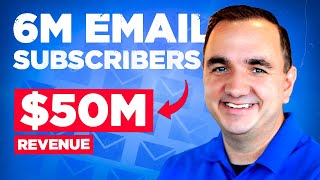
Matt Paulson, CEO of MarketBeat, runs 6 million subscribers and expects $50M revenue this year, 80% from ads. He spends $1M monthly on paid acquisition and breaks even on PPC within 30 days, co-registration in 90. His growth tactics: SMS opt-ins alongside email, triggered offers sent right after opens (60-70% open rates), and heavy automation with LLMs for summaries, not financial reporting.
Questions this video answers
About 6 million total subscribers (people who have subscribed and never unsubscribed).
2024 revenue: $41 million; projected this year: about $49–50 million.
About $1 million per month in paid spend.
Approximately 80% of revenue comes from paid channels.
YouTube: ~425,000 subscribers; SMS: ~400,000 subscribers (numbers cited roughly).
Chapters
The common thing that people do wrong is they focus on their cost per subscriber. Some of our most profitable channels, we pay $10 to $15 a sign up, but over the course of a year, we're making three times our money back. And, like, happy to do that. There are other channels where I only pay a dollar, and it's because the lead quality is just very low. We need to shift our thinking on metrics from, like, what does it cost per subscriber to get that number down to what is my ROI on a given channel on a given month? How did December do? How did November do? How did October do? Kind of look back in time and see, like, okay, breaking even at three months. I'm very happy with that. I'm going to increase spend.
All right, what's up, everybody? Welcome back to another episode of Letterland. Today we have another guest, a great guest. The most recent addition to the newsletter Symposium down in Austin in February. We have Matt Paulson with us today of MarketBeat, the CEO and founder. Thanks for being with us today, Matt.
Happy to be here. I think it's the New Media Summit. Is the event okay?
Yeah. I wasn't sure. I know McGarry changed the name on us, so I was like, I don't know exactly what it's called.
Yeah, New Media Summit. That should be good.
Yes. Yes. We're excited to see you down there.
Yeah, no, it's going to be fun hearing a lot of people go, and a lot of people told me they want to go because I'm going. So it'll be fun just to meet a lot of people in person that we haven't met before.
Yeah, I guess. Maybe just a quick bit of background here. When me and Tyler started the podcast, we made like, a short list of guests that we would find really exciting to get on the podcast one day. And Matt was up there as one of the very top of the list. I think when you have someone who has done so much in the industry and has been very successful, but also shares a lot of that online. For context, I think Markabee's at 6 million newsletter subscribers, about 50 million in annual revenue. Something like that.
Yeah, about 6 million total subscribers. That is people that have subscribed, never unsubscribed. The active number is maybe like half of that. We'll do 49 to 50 million this year. It's unclear exactly where we're going to land. Last year, in 24, we did 41 million, so have grown nicely since then. So you hate to say like, we're a $50 million business until you achieve that number. But, like, fingers crossed, I think we're going to get there this year. 425,000 on YouTube, another 400,000 SMS, maybe 7, 800,000 people that get browser notifications from us. 10 to 15 million page views a month on a website. So a lot of different channels, and we just try to make the best use out of all of them that we can.
Yeah. And so one of the things, I think when we put you on that list, I was like, okay, we really want to get Matt on, but you can't have Matt back every week. I don't want to talk to him about the same stuff that we hear from him on other podcasts, like, can you tell us the story of MarketBeat? And blah, blah, blah, blah, blah, blah. The same thing over and over again. And so I think we were kind of waiting for that sort of, like, perfect moment of when do we have something where, like, really it has to be Matt that talks to us about this. And I think what was great is that we were always kind of nervous and didn't quite get to that moment. And then Matt Tyler, I don't know if you know this, he reached out, like, a couple of weeks ago and was like, hey, basically, I think a bunch of people. I know that you said everybody, but, like, most people are doing newsletter acquisition wrong. We should talk about the right way to do it. And I was like, well, that's perfect. You've done my job for me. Please, yes, please come and talk to us about that. So I guess that's what we're here to talk about mainly, right?
Yeah, no, absolutely.
I imagine Matt's first thing is to stop using Sparkloop. Is that it?
We'll see.
Well, no. So when it comes to acquisition, it really depends on what type of business you're going to build. We all think we're in this media space or maybe in the newsletter business, but there's actually a lot of different types of businesses that kind of fall under that umbrella. And it really comes down to what is your end goal that you want people to do. Like, for us, we would call ourselves a diversified media company. Like, I don't need you to buy anything today or even in the first month. Like, I just want you to buy something eventually so we can buy a lot cheaper leads from a lot more places. Because I have just lots of different ways to monetize people. So I'm just happy to get people who are kind of in our TAM on the List because I know that eventually we'll make money off of them. But if you're like an E commerce business, physical products business, or if you're a membership business and you would only have one or two things to sell, that really changes how you do acquisition.
And Matt, I know we said we weren't going to talk about the market beat business model, but can you just walk us through like, just quickly what the, you know, kind of top of funnel, like you get people into a newsletter, you capture their, their phone number and then like what is the ultimate goal to upsell them to?
Yeah, so typically our Funnel is Google AdWords meta anywhere to a landing page for a free report, best stocks to buy in December or something like that. We collect email and phone. You know, phone's optional. So we'll get you on the email list, we'll hopefully get you on our SMS list. We'll send you kind of through what we call, you know, basically a co reg funnel of like here's an after office co registration unit. Next page might be Investing Media Solutions. After that might be some of our own stuff. You know, we can typically make $2 back on people kind of going through that initial funnel. And then at the end of the funnel is the sales page for MarketBeat All Access. So some of them might Sign up for MarketBeat All Access Right away. Otherwise you're just on the email list, you might be on the SMS list. We send out ads for our advertisers. We send out content every day with ads interspersed. Then eventually our goal is to get you to click on an ad from our advertiser and buy something or Sign up for MarketBeat All Access.
Nice. I think two things when I think of MarketBeat and what people tell me about MarketBeat. I don't know how much of this is true, so it'd be interesting to dig into it. But the two things that come to mind is like an example of a company or a newsletter business that pays for a lot of its growth. Like, I don't know, I get the impression that it's like a huge, a huge percentage of it comes from paid, I guess. Is that fair?
Yeah, right now, at least in terms of like where the revenue comes from. 80% of it is from paid channels now and it used to be entirely organic, but we've transitioned more to paid. We're at about a million a month in spend right now just because that's where the scale is. And if you want to become a big company, you just have to be where the scale is.
Yeah, And I guess something that I want to dig into is you said you don't have to monetize subscribers on day one necessarily. You're looking for people who you're going to be able to monetize over the slightly longer term. As a media company, do you think that's just a function of the scale of the business and the existing revenue that you already have, or is that something that sort of holds true even for someone starting off like a new media company? Like, does that, how, how much does that change?
There's kind of two components to it. One is like, if you are operating at scale and have a lot of existing revenue, you can wait longer to break even, which means you can advertise in more places. Right? Because if I don't care if I break even till, like, you know, three months after a cohort is finished, like say December, it's leads. If I don't care if I've broken even on them till April, like, that really opens the funnel of where I can advertise at. So, like, that's one piece of it is like your cash conversion cycle of like, if I put a thousand dollars into advertising in December, when do I need to break even on that to, like, not run out of money? So that's part of it. The other part of it is how many different things do I have to sell? If you only have one or two things to sell, like, you have to have a very tight targeted window of like, okay, my product is, I have a here's how to start a newsletter course. And like, I better only be targeting people who want to, like, start a newsletter this month, otherwise I'm not going to make any money off them. But if your target is like, anybody who might ever be interested in newsletters because you got a million things to sell them and you can do a much broader, broader targeting window.
I'm curious on, on some of the growth stuff, just kind of getting into it. Right. So I think, I think you said that there were, you know, a handful of things that you, you think everybody kind of, you know, gets wrong about growth. Or maybe, maybe we could all be doing, you know, a little better. I'm curious, you know, if you, if you have some, some wisdom to share there.
Yeah, the, the common thing that people do wrong is they focused on like their cost per sign up or their cost per subscriber. You know, our, some of our most profitable channels, we pay 10 to $15 to sign up. Like on Meta, we're paying 9 to $10 for emo signup in the finance investing category. But, like, hey, over the course of a year, we're making three times our money back and, like, happy to do that. There are other channels where I only pay a dollar and it's because the lead quality is just very low. It's like, you can't pay very much per lead. But we need to shift our thinking on metrics from like, what does it cost per subscriber to get that number down to what is my ROI on a given channel on a given month and start thinking about, like, monthly cohorts of like, okay, of all the people that I signed up from Meta during the month of December, I paid X dollars for them and I made Y dollars back. And then for a given channel, you can say, okay, how did December do? How did November do? How did October do? How did September do? And kind of look back in time and say, like, okay, we're breaking even at three months. I'm very happy with that. I'm going to increase spend.
So you're, you're obviously a finance guy or, you know, interested in finance. And so, you know, I imagine numbers are kind of your thing. What, what data or analytics are you guys looking at on the know, on subscribers? I guess on like, maybe an individual basis, a cohort basis. Like, overall, like, what, what metrics, like, are your North Star?
There's a few things we do track, like revenue, like, down to individual subscribers. So for a given channel, we know like, how much we spent in a given channel in a given month and how many people we got and then like, how much money we made from them. So I kind of think the revenue versus cost number really incorporates all the other metrics of like, you know, it really subsumes your, like, click through rate, open rate, your engagement rate. Like, like that. The revenue number, like, really contains all of that. So that is really the only number that you need to look at. There is kind of, I don't know, a little bit of a wrinkle to that in that, like, sometimes we know like from conversion postbacks exactly how much somebody made us. And sometimes it's an estimate based off clicks. So we also, like, look at how many like, hard conversions did we track for a given cohort. So we really know, like, okay, we spent. Our cost per confirmed sale is X in a given month. And that is a metric we track as well. Just to really be looking at hard data.
It's interesting. One of the things that comes to my mind, I'm thinking about people who try and do what you're saying not to do, which is to spend as little as possible on subscribers or as little as possible on people who are opening and clicking and stuff like that. I think part of that challenge comes back to having a bunch of stuff to sell people or a bunch of different ways to monetize. If you can do that and you have all those different ways that people could be monetized in the first 30, 90, 120 days, whatever, you have a lot of opportunities to figure out if a subscriber is going to be valuable or if there's going to be a good ROI or not. I imagine there's a lot of people out there who I'm thinking of who have maybe slightly smaller budgets or spend less per subscriber. They don't necessarily even have those opportunities to figure out if someone is going to be a valuable subscriber or not.
Yeah, I mean if that's the case, you're getting started like really, I think where you want to get started now would just be on meta because you can really target the people you're looking for and kind of know you're getting them even if you don't have that back end conversion data initially.
What would you be targeting on for that? Or how would you be assessing whether you're spending on the right people? Because I know a bunch of people who've spent at least six figures on meta subscribers and they've been basically worthless. They were probably going to be good subscribers for somebody, but there was absolutely no connect between the ad and what that person ended up trying to sell them.
Yeah, I'd say two things. One, you really want to get the geography right of make sure you're only hitting people in the United States and not targeting Europe and I don't know, weird places in the world. You want to make sure demographics are right. And like I think I should be selling to 60 year old men, like am I actually hitting 60 year old men? And then just from their interest targeting and then make sure that whatever like your actual ad is for your lead magnet or whatever kind of lines up with what you're selling. Like if your lead magnet is like here's how to plant a garden but you're selling financial newsletter is like obviously there's a disconnect there. So you just want to make sure that those are in alignment and you can do like in your ad copy like attention stock market investors and like really call out who you're trying to target. And that way people that like read that say like, oh, I'm not a Stock market investor. I'm not going to click that. Or you read that, it's like, oh, I am a stock market investor. I am going to click that.
Yeah. I mean, when you put it that way, and I've had similar things before, like, it sounds really simple and really easy, right? Like, you should go and spend more to acquire new subscribers, but you should only acquire once, like, in a way. Like, you should spend more to acquire subscribers who are going to be more valuable to you and you should monetize them like very heavily to make that spend back within the first couple of months. Why do so many people not do this or not do this effectively? Is it just like the actual implementation is super hard, or do people not necessarily realize they should be doing this or what's missing?
I think it's really a focus on vanity metrics of, you know, you hear, oh, Markipy has 6 million subscribers. I want to get big like them. And it's like, you do and you don't. Like, it is really hard to email 6 million people and get all of those messages delivered. Like, that is not an easy thing to do at all. You really want what people kind of miss. Like, yes, you focus on vanity metrics and that's the wrong thing to focus on. But when you're getting a lot of not, well, not leads that don't engage well with your stuff and you get a lot of them, like, that really hurts your deliverability and then your stuff's not getting delivered and then you have a whole new set of problems. Like, you really don't want these high volume, low engagement channels because it just makes it really hard to get your stuff in the inbox over time. It's better just to not run them than to have a bunch of unengaged subscribers.
I can imagine, like, retention is, is pretty top of mind for you, right? When you're. Because you mentioned. Right. There's pretty long period, right? It might be a couple months before you're able to monetize this person. So you guys thinking about, you know, retention, how important is that for you? How are you making sure that people are staying on your list? Like, is it just great content? Is it giving them free freebies and like bribing them to stay on the list with like, more reports? Like, what are the tactics that have, you know, kind of worked for you guys?
I mean, retention is important. It's probably not the most important metric that we track. And we send out kind of new, new original content every day. So it's articles written by our Writers edited by our editors that like, have never seen light of day before. So for deliverability, like, we're always sending our original content. We think that's good. Our subscribers like reading your articles, so, like, that's a reason for them to stick. But when I go back to like, did I make money on these leads? Like, it's really more like, did I make money on them? Versus, like retention numbers. Like, the revenue number really incorporates everything, including retention. What you do find is with a co reg channel like Sparkloop versus AdWords or Meta. With AdWords and Meta, you get more of a payback day one because you're getting them through your Coredge funnel, but tends to be less over time. And Coredge, you make less in the first month and more over time because the leads are cheaper. There's more of them, they tend to stay longer, but you don't get them in your coedge funnel. So I kind of have two different benchmarks for like AdWords and Metal. Like I really do want to break even. Month one and then everything after that's gravy. Co reg I'm going to be more patient and wait till like month three or four because I know over time I'll be making money off these people.
And is there a certain like, date in your, like in your mind? You guys have some sort of sort of metric that's like, okay, this person. Our average, you know, subscribers monetize at two months or something like that, or two and a half months. Yeah.
For organic, it's immediately because they're free for kind of the PPC NETWORKS. Meta, Bing, AdWords, we want to break even month 1, 30 days. In CoreEdge, we want to break even about 90 days.
The organic is a bunch of that for you. Is that the YouTube channel?
The YouTube channel is some of it. But the bigger component is people coming to our website from Google and Yahoo and places like that. Tons of organic traffic like Markbee content is syndicated to like Yahoo Finance and MSN and Google News and all those places. And you get quite a bit of free traffic from those if you can get them set up nice.
How have you ever looked at whether there's like what the, I guess what the difference in revenue per subscriber or like on a cohort basis is of people who consume your either audio or video content and people who don't.
I do know the YouTube kind of cohort is pretty high per user. When we had our mobile app, it was also very high when people would like sign up through the mobile app, like on an iPhone. But we killed that because it was more headache than it was worth, really.
It was like a technical headache, like it wasn't working properly or, I mean.
We had, you know, we built it like three times over the years, had an agency do it. We had like 6,000 active users on it. And like, we were just kind of tired of messing with it because it was a pretty small channel for us and thought, okay, this is just not worth it anymore, we're going to stop it.
But, but do you get, do you get concerned about that at all? Like, not obviously. You have 6 million email addresses, but not having your, your audience kind of captured.
Right.
Do you, do you think about that now more with AI and kind of killing SEO? Like, is that, is that like, oh shit, we need a, we need an app again?
No, I mean, we get as much search traffic as we did two or three years ago, and if not even more, we get great referrals from ChatGPT. You know, helps being an established brand with your content in a lot of places because then the LLMs think that you are kind of an important brand and you get cited often, which is very happy for that. So I honestly think apps are getting less important over time because mobile websites are better than they used to be. You know, people are not going on the app store looking for apps on a daily basis anymore. Like, I think that data has largely come and gone and like, yes, if you need to be an app, you should probably be an app, but like, if you're a newsletter, like, or a media company, you don't need to be an app.
Interesting. That's interesting. I, I, you're the first person I've spoken to who's, who's said that. I've heard from a bunch of people I think maybe more focused on like the Gen Z audience who are kind of going a little bit the other way and that they, you know, it's not very common for them to be consuming content via email and they're like, why won't this play? You know, why do I have to go into my inbox where work happens? Why is there no video that just plays in the app? Like, why is it, you know, why can't I comment and reply here like I can on other places? And then they, you know, they look at the cost of like doing SMS or something and go, okay, well this would be too expensive for us to do every day. But we can have an app and 20 year olds love apps and do it that way.
Yeah, I mean, our audience is all older People. So, like, I have no comment about how to market to young people other than my own kids. And, you know, they're on Snapchat and Instagram every day.
So can you walk us through then a little bit more like, I guess if you were maybe slightly earlier stage and looking at. On the paid growth side of things, would you still also then like, I guess firstly, would you start with paid growth or would you start with something organic and then what would you do on the paid growth side?
I don't think you do paid growth on month one because you don't really know if you have anything anybody wants yet.
Okay.
You probably want to do organic for a few months of like just client and scratching your first thousand subscribers from somewhere, even if it's just like hitting people up individually and saying, hey, can I add you to my newsletter like you really want to see? Does anybody actually want my content before you try to start selling it? Right.
Okay, you think? Is it important to discover whether people want it, like organically or. Because my concern is always like, I can get. If I sell a product. I always think about this. Something I thought about with Sparkloop was like, it's really easy to go out to a bunch of people, you know, and people who want you to do really well. And as soon as you get past college, it's pretty easy to get anyone who knows you and likes you to give you $100 or $1,000 or whatever to support you on your way to building that product. But even the ones who give you $1,000, it's really hard to then get them to actually use the stupid thing once you've built it. Right. That's kind of what I always think. One of the challenges with email is if you don't have a product that people can buy or use every day, it's like, are my opens real? Are my clicks real? If I go and ask a random hundred people get 1,000 people from Reddit, are they actually reading and opening and clicking or not? In some ways, I almost feel like maybe it would be. Maybe there's something on the paid side or at least strangers that you don't know. Can I even get anyone to bother to sign up for this in the first place kind of thing?
Yeah, really? It kind of depends where you're starting from. When I started my Internet business on December 26th of 2006, I had no money at all, started a blogger.com blog and like, you know, Claude scratched and kicked my way into getting like, you know, this is before people were Doing email list. So it was like a blogger blog and like trying to get people to subscribe to my blog through their RSS reader. And like, you know, if you got, if you, if you're starting with some money, like, yeah, it's way easier to start with money, but like, a lot of people don't have any, so you gotta do what you can for free.
What year did you collect your first email address?
2010.
Okay. So very, very early.
Yeah, I got kicked around by kind of the Google updates and thought like, this is dumb. I need to capture these people. And it was like the Internet Business Mastery podcast back in the day telling me how to start an Internet business of like, you should collect email signups and have a product for people to buy. And these are just very novel concepts to me at the time because like, nobody was doing it back then.
One of the. I guess the question that I have for you is like, when I talk to a bunch of people who've built very successful newsletter businesses, like, you know, millions of subscribers, date figures in revenue kind of thing, a lot of them have like times at which like, for some of them it's just a function of having been around for a long time and just continued to sort of do it and been consistently good over a long time. But there's a bunch of other people who like, they got a lucky break somewhere. Either like they managed to profit off like some connection or they were in the right place at the right time, or they got in on Facebook ads for a period of time where it was stupidly cheap and no one else was doing it or something like that. Is there anything like that in the market beat history where you're like, oh yeah, we really rode this wave or we were able to jump in on this one thing. Or is that not really part of the. The mocky weeds?
Yeah, I mean, there were really two waves that really propelled us. One was in like 2013 or something like that. We figured out how to do automated kind of financial content before anybody else did. Of like, you know, take data from some kind of financial source of like, here's an earnings announcement. Take all of that, put it into a template, make an article out of it, do it 500 times a quarter for every company in the S and P. Get the story in Google News, Google Finance people, back to our website. Email opt ins. Lots of email opt ins. Google AdSense. Revenue for free, basically. So that was the first wave. And we still do it still works. Great strategy. Don't copy it though, please. But it works. Great second wave that really benefited us was like the Gamestop AMC stuff of 2021, the COVID investing wave. We were kind of a 5ish million dollar a year business before that, which is still impressive. But like to get where we are today, we went from like 5 million a year to 25 million a year in like three years. And it was all the COVID investing wave. Everybody was staying at home doing nothing, had free money from the government and Robinhood was taking off. And like that wave really helped us as well.
Is that a function of like just faster audience growth since then or like better monetization of existing subscribers or a mix of both?
I'd say it's both. I mean, it's both. The, the number of people that like were not invested in the stock market, that suddenly invested in the stock market. Like that market doubled overnight and it was wild. Like that time will never happen again. But we were glad to be there for it.
Yeah.
Yep. I, I would say is the only reason that, you know, I sold the water coolest, right. Is because I always think Covid. Right. It was, it was the same thing right there. All of a sudden, overnight, everyone wanted to become a stock investor. And if you had some sort of product out there, you know, as a similar thing. And I know, I know the guys over at Benzinga, right, and they're obviously, you know, kind of a similar thing. But I'm curious on. You talked about the automation. That's, that's crazy that you were doing that in 2013. What. I'm curious what that looked like and I'm curious what it looks like now. I imagine it's a lot of AI that you're using. But like what did it look like in 2013 when you were automating these things?
You can still see it if you Google MarketBeat incident alerts, like they come up. There's no AI in at all. This is all pre AI technology. So it's not like we're using an LLM to summarize stuff.
And how were you guys doing it on the back end though? Were you like copy and pasting stuff? Like did you have some sort of.
Initially there was like copy and pasting stuff into a form and then they would like generate an article and then I'd use like XML RPC to publish it to WordPress. And then over time it got more automated of like, oh, I don't need to hand enter these analyst recommendations. I can go scrape them from this website and then put them in a database and then generate the Article and publish into WordPress. And now it's all very automated.
Yeah. And so how are you guys using AI on that? And then everything. Obviously there's been, I would say, especially in the financial space, everyone's trying to kind of beat the market, for lack of a better word here to get the news live right. And there's been been quite a few people who've gotten called out for kind of AI slop and stuff. But how are you guys using, you know, AI to, I guess, across your business on content and other things?
So we tried to do like take SEC filings and make AI articles out of them. Like the. Is it 10? I forgot what the form number is. But like, if you have like unscheduled news that you need to publish as a press release, there's some special SEC filing for that. So we're going to take all of them, make articles about it. And what we found was that this is about a year and a half ago when we did this. The LLMs would really just make stuff up to fill in the gaps. And when you're talking about public companies that people are trading stocks on, you definitely don't want to do that. So we shit Canada as soon as, oh, this company named John Smith to be their CEO. I'm pretty sure that didn't happen. We better not do this. It's too dangerous. So killed that. Now we're using LLMs a lot more for kind of like summarization of. With any big company, there's 200 news stories a day. And how do you kind of summarize what actually happened that impacted this stock today? So we have a giant database of new stories from. Because we take every RSS feed on the Internet we can find, index them, take them by stocks, and we just feed all of them to an LLM and say, like, okay, you care about this stock. Here's what really like mattered today for it. And then we put that on kind of the new section of our website for any given company. Do a lot of summarization stuff like that. Anything where it's like, you know, you could listen, read the hour earnings transcript or you could read the AI summary. That takes two minutes. Do it, do a lot of stuff like that. We use it on the marketing side. We use it to generate subject lines and then we'll test them dynamically. A lot of stuff like that. Our writing editing team uses AI to edit stuff. We're not trying to do AI from the ground up and be kind of the AI stock research tool. A lot of People are of course trying that and maybe one of them will succeed. But it's just more like how do we use AI to make our existing business processes better? We have a customer support system. We built it in house and now whenever a ticket comes in, there'll be a dynamically generated like AI response pre filled in for the support person. If they like it, they can just send that response. Or if they want to edit it, they can edit it. Or if they want to submit their own prompt, make a better response, they can do that. It's more like how to use AI to do what you're already doing better.
So not going to lean into hey, here's AI stock picking, stock advice sort of stuff. That's not the route you want to go.
Um, I mean we do have something that does that and like the results are kind of mixed on it. But what I've seen happen over the last say 10 ish years is like there are a lot of companies that have set out to be like, we're going to be the Bloomberg terminal for retail investors. And none of those companies have really made it because they don't understand that like you can build the best tools in the world, but nobody's going to give a crap about it if they don't know about you. Like the moat is distribution. Like how do you get a million people on your list to care about your thing? Because the stock research tools business, unless you're Bloomberg, not a great business, it's a great way to make 2 to 5 million bucks a year. And that's basically it. There's a ton of companies in our space that aren't willing to play the advertising game, that only want to do the product side of the business. And that's great. You're going to make 2 million top line a year in good luck to you, but you're not going to grow past that.
So you think it's obviously there was, there was the gamestop, you know, 20, 21 stuff that you mentioned, but you really think, you know, the differentiator between, you know, where you guys were $5 million business and a 49 million soon to be $50 million business is really the distribution.
Yes, definitely. So much of it is that we just have a giant list across a lot of channels, a lot of eyeballs and then we have a lot of advertisers and we connect the two.
So I have one more follow up there all these questions. I'm not going to copy paste your business, I promise, but I'll say good luck.
Many People have tried.
Let me jump in real quick, because that was going to be. My question is, like, do you think it's possible to build an email list of this size in a niche like this starting today? Or is this something where you just had to be there like five, 10, 15 years ago?
You could absolutely do it. You'd probably need about 10 million bucks worth of ad spend. You could totally do it today. You just have to have the money to do it.
I mean, I can say, right, I've dabbled in this business. I've launched multiple kind of paid products, like in the markets, in finance space. And yeah, it's true. It's like I can always convert a couple percentage of my list. But the biggest barrier is I don't have a big enough list to convert enough people to make a real business. Right. So I've shut it down both times. And I think there's an appetite for this stuff. But I totally agree with you. If you don't have the distribution and you don't have the capital for that distribution, it's a very difficult business to crack. And obviously you have to have a great product, which you guys do.
Yeah, there is kind of a chicken and egg thing to this too, because if you don't have a big enough list, all of the big financial newsletter publishers that are your advertisers, they don't really care until you have a couple hundred thousand subscribers. Like, they don't want to work with you directly because you're just too small. You won't generate any sales for them. So you have to, like, crawl your way to a certain size, see if you can persuade them to, like, do a deal with you. Otherwise, you have to go to an agency that's going to take a 30 to 50% cut on your deal. And it's something you kind of got to climb your way into.
Yeah. Before Louis rudely cut me off, I was going to ask you about what's. What's the split, I'm just curious, on revenue between what you guys are selling for your own products and what you're doing for, you know, ad revenue.
Mark Beat All Access is like a $3 million year business. It is not large. Most of our money is advertising across a variety of different ways.
And is that mostly. You say a variety. Is that mostly financial products or is that a big. The biggest chunk of it?
I would say it's almost. Well, it's all financial stuff, but there's different categories within it. Like there are public companies doing investor relations campaigns that will advertise to our list. There's kind of the boutique financial newsletter publishers, Agora. Market wise, they're a big part of it. We do lead generation for other people like us trying to do the same thing. I don't know, there's kind of companies that are selling gold that want to advertise. It's just a lot of different stuff like that. You have companies that will teach you how to trade crypto. But whenever we've tried like health offers or anything like outside of finance or even like credit cards, like, they just don't work. It's not the right audience for it. So we've just kind of given up on like, you know, if you want me to sell Lifelock or like that's great, it's not going to work. Maybe I'll try it. But I know it's not going to work because it just never works.
Yeah, selling, selling athletic greens. That's super interesting. So I'm just curious, like, generally why do you, why do you keep running Market all access? Right. It seems like a very small part. Is it super high margin or is it just diversification? You know what, what's the rationale there? When it's, you know, a small chunk of your business, it would be pretty.
Hard to get rid of it. For one, like it would be significant re engineering of our website to like make it go away. So there's that. It does make us money if we were ever going to sell market beat. Like you will get X multiple on your advertising and a much better multiple on your subscriptions. So I think about that. Obviously the margin's great because really the only cost to run it is kind of my dev team. I don't know. Sometimes you find when the market for your advertiser stuff is weaker, there's more demand for your stuff and there's kind of these waves of interest. So sometimes if there's a weak month and kind of the affiliate stuff, then maybe marketplace access would do a little bit better.
One of the things that I wanted to get onto is something that I just find super hard to visualize. And I think a lot of people struggle with, especially when they're starting or even when they're further along is like when you get to this kind of scale or really any kind of scale approaching marketbeat, where is your time spent or where is the team's focus spent on growth? How much of this is you thinking about, like tinkering with the numbers for existing channels and how much of it is spent testing new stuff and looking for potentially the next wave or a wave that maybe even you can create or something like that. How much is experimenting? How much is optimizing?
I guess so we've tried to build an in house marketing team a few times and have failed every time. We end up working with a lot of different agencies. We have two meta agencies that compete with each other or we've got an AdWords agency, we've got an organic SEO agency, we've got a link building agency, we've got an agency that buys newsletter ads for us and all these people get 10% of our spend and we're happy to do that. And what we do is we give them, say we work with a company called Net Effect that does our newsletter ads. We give them a dashboard with the same information we have so they can optimize towards the metrics that like we care about. And that works really well for us. Like there's now, you know, our team's all kind of in house, in the office at least some of the time. So like there just isn't a lot of like paid media expertise here in Sioux Falls, South Dakota and I don't really want to have remote employees. So like the agency thing works really well for us. And then I don't like, I don't think about our AdWords account very much. I don't think about our meta ads accounts very much. I don't think about the newsletter stuff very much. I'm more looking at a macro trend of like how did all of meta do last month and the month before and the month before that? And if there are problems then I said, then I'll go to the agency guys and be like, okay, we got an issue here. Tell me what you think's going on and what you're going to do about it. And that works well for us.
Nice. Is there then within the existing channels, obviously you have experts that are doing the testing and everything, but do you play around with other channels as well or like how, I guess, how much sort of looking for new stuff are you doing?
I'd say proactively, not a ton. We're not looking to grow or ad budget currently we're very happy with kind of the million to a million two a month per where we're at. Kind of what happens is people in our space talk all the time and then if I hear something that's working well for somebody, then maybe I'll go try it. And we also have a lot of people approach us like, there's a company, there's a guy named Haral who runs this company called Stock Earnings. And like he said, hey, we're launching a co Edge offering. Do you want to try it? It's like, sure, why not? I'll give you a test budget, like what do you want to do? And then do it for two or three months. If it keeps, you know, works well, we just keep doing it as long as it keeps working. If it stops working, then we just stop doing it and call it a day. So it is a lot of inbound stuff at this point.
Is there any. I think Louis might have tried to get at this before, but is there any kind of secret thing that's working right now that you can share with us before you drop it at the newsletter conference? Secret thing on the gross side, anything that's working super well for you guys right now that you can share, that's not part of the secret sauce.
Honestly, everybody should just add an SMS often form to their lead magnets. We're making a million and a half a month with SMS right now. Like so historically, like you wouldn't put an SMS opt in next to your email opt in because it would take your, your open rates or your conversion rates. Not for. At least for us. That's not true anymore. And I think it's because like all the autocompletes now will like fill out both your email and your phone when you click. So if you can collect a phone number at the same without any additional cost, when you're collecting an email sign up, you should do that all day, every day, take the sign up and you will make so much money out of sms.
But how do you guys think about sms, right? Because I think it's still pretty cost prohibitive for me. I send a free daily newsletter. The economics are very different from what you guys are doing. And I would love to send an SMS like you, you know, you hear it's 90% open rate and like, you know, all this, it's super engaging. You know what, what would you recommend to somebody who has a free newsletter? Is it something where you kind of could tap somebody for, you know, a reminder like, hey, this newsletter exists, maybe send them ads, you know, is there a way that you would use it for. From a free perspective?
It is expensive. Our SMS bill last month in November, I kid you not, was $425,000, which that was kind of my fault because like the number went way up and turned like two SMS tips. Like one, make sure you're only texting like people who have clicked in the last 30 days and two, limit your countries to like the U.S. canada, UK and Australia. Because what you find is like it might be half a cent to text somebody in the United States and It might be 25 cents in some very expensive countries. So you definitely want to like geo limit it to the cheap countries. You can keep the bill pretty small if you try. But typically like when we're texting people, it's because we're going to make money off that text.
So the text is then not a call to action to consume content necessarily. It's not like a, hey, we, we published our blog and go click over here. It's more of an opportunity and offer something like that.
Well, it can be content. Like we have like our early bird stock of the day SMS list. You can, you know, we send out a text every day to 60, 70,000 people. Cost US$500 to send. But they're going, they're on their phone. So it's a mobile website. And then we've got ads from Ezoic in there and we make way more than 500 bucks just off the banner ads on the website. So like, yeah, I'll make that trade every day.
Do you find people are making purchases from their phone? Something we run into a lot is that especially in like the higher ticket stuff, people really. Well, like people who are buying ad slots really don't like to buy phone traffic.
I feel like that used to be true. We used to believe that. Lately we find like people will watch a 45 minute video sales letter and buy on their phone. Like it's, it's, it's not like it used to be.
I'm shocked by that with your audience too. Being a little bit older, I feel like that's, it's kind of like the cutoff being right. It's like millennials and up. Right. Like we want to make big purchases on, you know, on laptops. But it's interesting to see that that's changing.
Well, I mean what you find with older people is like they want to consume whatever they're seeing on their device. They've already like got open. Like they don't want to try to like switch to their laptop. Like, you know, a lot of our more senior subscribers, like they have an iPad, their kids set it up for them. They like to get their email on their iPad and they watch the videos on their iPad. If they're going to buy something, they're going to buy it on their iPad.
Damn, that's great for retention. They don't know how to get off the website.
Yeah, I don't know. No comment.
I guess something that I want to talk a little bit about is MarketBeat's one of those ones. Feels quite unique to me in that I know a bunch of newsletter operators who run what I call habit forming newsletters, like a daily newsletter or something where you really want the subscriber to be reading and consuming the content every single day like a habit. And I know a bunch of people who run reasonably successful newsletters that send maybe once, twice a week, sometimes even less than that, but they have like a product or a service that they're selling and really they don't care if someone opens all the time or even all that much, as long as they end up buying the product or the service at some point whenever they're going to make that purchase. And MarketBeat, it feels to me like sits a little bit in between that where you, you send a really high volume of email, but also you're monetizing in so many different ways other than just ads in the newsletter that like, how much do you care about whether someone is reading every day or very often?
We just want you to read some of the time. You know, if somebody doesn't open for 30 days, like we basically stop emailing you because we want to keep our engagement metrics really good. Like we know like, you know, our average open rate with MPP is like 40% and like we're super happy with that. Like, we don't expect you to read every email because like the email might be about a stock that you don't care about and like we don't want expect you to read it if you're reading, you know, we send out a story about Walmart and you only invest in tech stocks. Like no, we don't expect you to read it. So like it's, it's fine.
I guess one more thing for me is I'm just conscious of time as well. What are some of the questions that you're sitting here and you're like, hey, I run this huge media business with a huge newsletter. We do a crazy amount of revenue. I'm taking up an hour of my time for these guys to come and share some newsletter stuff. What are the questions we should be asking you?
You should ask about how we do what are called triggered campaigns.
Okay. Something I've always wanted to know about is how does MarketBeat do trigger campaigns?
So when we define a triggered campaign, if you open an email from us, you get another email and it is shocking how well that works. The way our system works is that we'll send out a content email to any given list. You open that email or you click on a link, seconds later you'll get an advertisement from us in your inbox. And Those emails get 60, 70% open rates because we know when we send it, you're in your inbox and it just works.
It's amazing. Are they contextualized to the content of the link or related to what the subscriber was just doing? Or is it just.
It's typically like you would think yes, but the answer is no. Initially we tried to segment it, like, oh, we're going to send you an email about tech stocks and then we're going to send you an ad about tech stocks. Turns out segmentation in the investing space doesn't really work because your interests change over time. Typically, like, everybody's interest is whatever the hot thing is right now. Like, you know, six months ago it was Nvidia. Everybody wanted to know about Nvidia all the time because, like that was the hot thing. And like six months from now it'll be something else. So if we just send an ad kind of related to whatever the hot thing is, it's going to work way better than any segmentation that we do.
Nice. And do you do that just for email or do you do that for SMS as well?
No, we do it for SMS and we do it cross channel too. So like if you click on a link in your email, you will get an SMS moments later.
And do you don't find that? I guess you maybe don't have the data on that. Whether does that disrupt anything? It's sort of in the funnel after they've clicked on that original link.
Typically no, because you're not looking at more than one device at a time. Like if somebody clicks on an SMS link, we're not going to send them another SMS right away, but we might send them one 30 minutes later.
Got it. Okay. Part of why you think this is so effective, right. Is because the person is already in the inbox. Like they're already in that sort of like I'm open and interested in sort of consuming your content, opening emails from you. Right now I'm in the bathroom or wherever I am. Do you then optimize like the send time for your normal sense based on when people tend to open or.
No, I mean, if, if you're emailing five emails a day, like you're probably gonna hit them when they're around. Right? Um, so we've never thought that was especially important for us.
Do you think Other newsletters should email more often, like, cause you're very aggressive. I love like taking people, something I like to do. If I'm ever talking to a bunch of newsletter operators, I just go and sign up for MarketBeat and just like show them like, here's what's coming in and it's a bunch of stuff. Especially if you put the, the phone number in as well. And like, I use that as like a, an eye opening. Like, hey, here is what other people are doing. You could, you know, you can send that second welcome email if someone doesn't open the first one or something like that. What do you think?
So I invested in a company called Points Path, which is like media company in the travel space. And like the guy was sending one email a week and I was like, how about you just send like three or four and see what happens? And then, you know, revenue almost doubled overnight by doing that. So I would say most people, like, we are, we are frankly, we're too aggressive. We need to be less aggressive. And we, we know that and like we need to tone it down a little bit and, but most people are on the other side of the spectrum where they are not sending enough. Like almost everybody can do one email a day and be just fine doing that, but most people aren't even doing that.
All right, but this is the, this kind of the, the final question, the hot seat. What's your hottest take about the newsletter space right now? I love, I love your takes on. I know you said at the beginning, but when we were talking that you don't consider yourself a personality, but I actually think that you are very much a LinkedIn personality and you have some of the best takes, you know, on, on LinkedIn. So what is your favorite hot take right now about the newsletter space?
I would say that, you know, there's a lot of messaging out there saying like, you need to niche down, be a very unique voice. I don't know. I don't think that's true. I think if you want to build a big business, you need to go find a big market that hits a lot of people. And that's like the opposite of niching down. Like you need a big market with a lot of people in it and then you just need to go reach everybody.
Makes a lot of sense. So who's your ICP investors? Is that the way you look at it?
I would say it's anybody that has, that owns an individual stock in the stock market. It's not people who just have like a 401k through work and have mutual funds. Like, that's not our demographic. But like, if you have Robinhood or Schwab and you've bought like shares of Berkshire or Tesla or any, any one stock like urine or Tam.
And how many people is that in.
The U.S. 50, 60, 70 million. The Tam of like, who would consume like financial newsletters is probably more like 15 million if you ask Agora. I don't know exactly what it is. I got like 15 million unique emos in my database. That's probably close to the entire TAM has been subscribed at one point or another. But it's probably not a lot bigger than that.
Yeah, that would make the niche down crowd make their heads explode. So that's a good one. I appreciate that.
Well, I mean, think about what. Alex Hermosi is like the hot guy in our space now, right? You know, initially he was doing education in the gym space and like, we realized like, this is a small pond, I need to be in a bigger pond. And now he's doing business education for every business owner. It's like he went and chose the broader bigger market because like, that's where the scale is so interesting.
So many people end up. I always see that with YouTubers and all different kinds of content creators, where they end up in like the how to make money space. Sort of almost accidentally. Like, they'll be. They'll get as big as they can with fitness videos and then they'll start talking about how they started making money with their fitness videos. And it's like, I guess it must be an easier one to monetize as well. But it's just interesting how many people end up there once they've sort of like tapped out on the sort of initial niche that they started with. Tyler, you got anything else burning?
No. I think we can let Matt off the hot seat, but we certainly appreciate you joining us in Letterland and we look forward to seeing you in Austin in, in just a couple months.
Yeah, that'll be a good time. Make sure to follow me on Twitter. It's Matt Paulson, SD, SD for South Dakota. Love to see you there.
It's one of my favorite followers. Not really for the newsletter content that the newsletter related stuff is amazing, but I just love the. The wrist shots of the different watches.
That's my people. People should know I'm not a serious person on Twitter. A lot of my posts are like, you know, just trying to see what generates engagement and not like actually serious stuff. Like if I post some stupid picture of private jet and, like, comment about it. Like, it's not because I'm trying to be an asshole. I'm trying to see, like, can I get 200,000 impressions on that post?
I think that's what Twitter is, right? It's just a game to see what impressions that you can get.
Yeah. I mean, if you think people, like, actually believe everything they post on Twitter, then that's probably not the right place for you.
Awesome, man. Well, we appreciate your time, and best of luck in the future. Not that you need it, but we will chat with you soon.
Sounds good. Thanks, guys.
Thank you so much.










