7 Signs Someone Will Be Broke In 5 Years
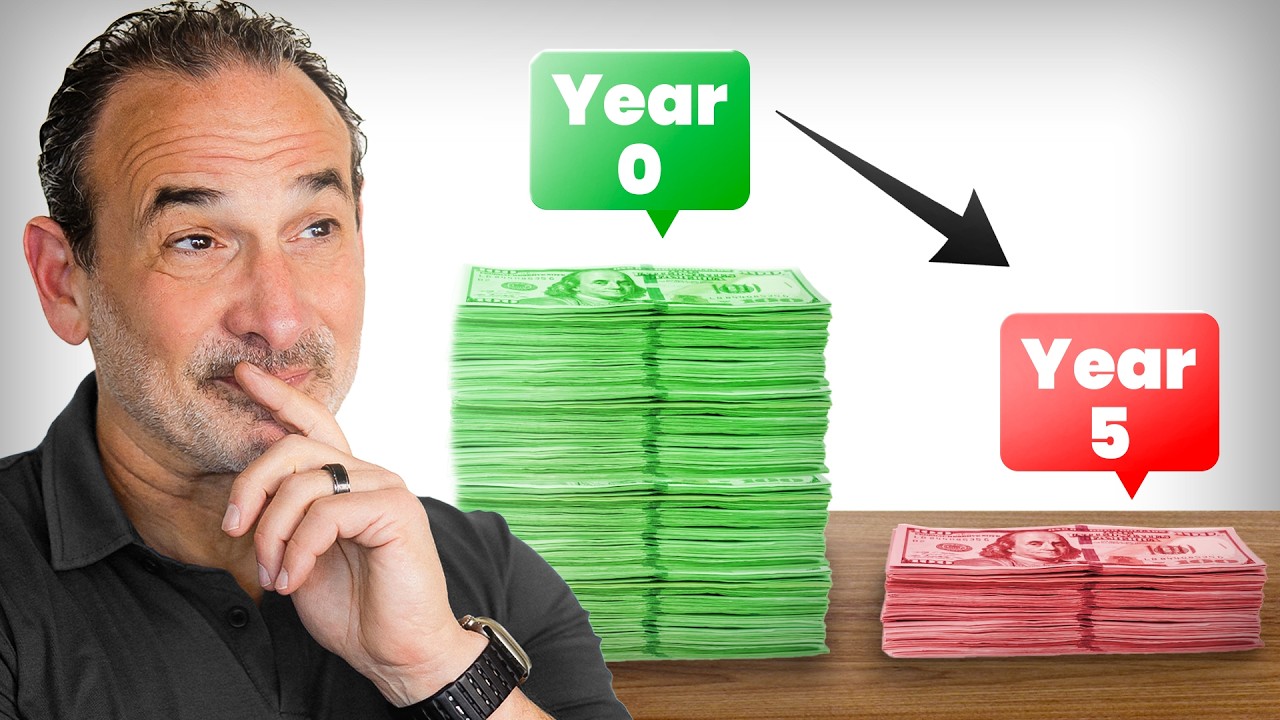
Mel Abraham identifies seven patterns that lead to financial ruin within five years: delaying investing, spending every raise, hustling without building assets, ignoring your market value, keeping money in low-yield savings, trusting a paycheck alone, and chasing numbers without defining the life you want. He offers a calculator to find your actual financial target.
Chapters
You're working hard, you're earning decent money, checking the boxes that you were supposed to. Yet there's this quiet, persistent thought in the back of your mind that it's still not building the way it should be. See, that thought isn't paranoia. It might be the most important financial signal that you've been ignoring. 7 specific signs that someone is on a trajectory toward broke in the next 5 years. These aren't theoretical. These are patterns that I've watched play out with real clients over 30+ years in the trenches. Most people are watching. They'll sit there and they'll recognize at least 1, 2, maybe even 3 of them or more. And I'll tell you this, right now, sign number 7 has nothing to do with your bank account. And it might be the most dangerous one of this whole entire list. This is Building Your Money Machine, where we help you master your money, eliminate financial stress so you can live a life By Choice, and I'm your host, Mel Abraham. Let's do this. 7 signs, each one a clear diagnostic of where a financial trajectory is actually heading. Okay? And most of them hide in plain sight because they feel like you're doing exactly the right thing. So sign number 1, I'll start investing when. This is, this is something that I hear repeatedly and you know this one. You might even be living it right now. I'll start investing when I make more. I'll start investing when things calm down. I'll start when the kids are older. I'll start when I pay off the debt. Every single version of that sentence is the same sentence. I'll start— never. Because when things calm down, it's doing a lot of heavy lifting in that sentence because the moment has never once happened in your entire history of adulthood. Not for anyone, not ever. Things don't calm down. Life just keeps going. All right? And the when makes it feel responsible. It feels like wisdom. You're waiting until the timing is right, until you can do it properly and you're actually ready. But what you're doing really is treating your financial future like a project you'll get to after the urgent stuff is handled. The urgent stuff never ends. And actually, your financial future is the urgent stuff. And the brutal truth about investing is this, The one resource that determines how much wealth is possible for you isn't income, it's time. And time, unlike income, can't be earned back. We can't get it back. And the person who waits 10 years to start doesn't just lose the money, they lose what they didn't invest, but they lose the compounding on that money and the compounding on the compounding for every year that follows. That gap never closes. It's permanent. It's a permanent reduction in what's possible. See, when is not a plan. It is a postponed regret. The best time to start is yesterday. The second best time is today. There is no third option. Sign 1 keeps people from starting, and Sign 2 is what keeps people stuck even when they finally do start. Sign 2 is lifestyle inflation. Every raise, every promotion, every windfall becomes a lifestyle upgrade. See, this one feels like a reward, and I get it. You, you work hard, you earn the raise, you hit the milestone, and of course something better is next. And I want people to celebrate. In fact, I tell them, let's carve a piece to celebrate. And I'm not here to tell you that you don't deserve good things, but what I'm saying is that there is a version of this kind of thinking that when income goes up, lifestyle goes up, and wealth stays flat for years. And then for decades. I literally had a client who tried investing early on and it didn't go well. They got burned. And they made the decision that, that it felt reasonable at that time, maybe, but they'd wait until their income was higher before trying again. More income meant more room to work with, more they could sustain an error. The problem was that every time the income grew, their lifestyle grew right along with it. So their raise literally got absorbed into the house, into the car. The bonus went into the vacations. And they were always living right at the very edge of their paycheck. Not because they were reckless or irresponsible, but because they had never built a system that moved the money to their future before the lifestyle could reach it first. See, when I asked this client what their actual plan was for building something that would let them stop trading time for money, this is what they said. I'm just gonna hustle as hard as I can until I can't. Anymore. That was it. That was, that was their entire strategy. And I've heard this a lot over the years. That one doesn't make the highlight reel. It really doesn't. That is a prayer with a spreadsheet. It isn't a plan. So the shift here is specific and it's not complicated. Wealthy people don't invest what's left after life. They invest first and then they live on what's left. Income in, future first, lifestyle second. And when the sequence gets hardwired into your system, every raise builds wealth automatically instead of disappearing into the lifestyle floor that you now have to maintain forever. So pay your future self before your present self gets its hands on the money. That's the game you're gonna play. Sign 2, keeps people on the treadmill. Sign 3 is what keeps them from getting off. Sign 3 is the 3-move playbook. All right. This one's an interesting one. When the only strategy is hustle more, earn more, borrow more. That isn't a strategy. When someone hits a financial wall, the options are actually clear. Earn more, spend less, invest smarter, build assets that generate income before you have to give more direct effort. But the problem is that most of them will look at it and say, I'm just gonna earn more, I'm gonna borrow more, I'm gonna find another way. And that person is heading towards broke in 5 years. Exactly 3 moves, really. Hustling harder, earning more, borrowing more. That's their whole toolkit. And if that's the toolkit, it is a broken toolkit. And they're not bad tools in general. Hard work built income and built the income they have. I get it. Smart borrowing borrowing made the house possible. I get it. Those moves got them this far. The problem is when those are the only moves in your portfolio. And so when every financial challenge gets answered with the same 3 responses, it tells me something important, that there is no machine being built. There are no assets working independently. There is just more effort. There's just more income. There's just more leverage, and there's just more pressure, more of the same strategy that already has them stretched as far as they can go. Think about what that actually looks like at age 60. If the only financial engine you ever built was your effort, your hours, your hustle, then there's no retirement. There's just running until you can't and then figuring it out from there. I've never met a person who built their way to financial freedom by working harder. I've met plenty who've built their way by working differently. The difference is a machine that works when they don't. If hustle, earn, and borrow are the entire playbook, the clock is running and it doesn't run in your favor. So sign 3 is really a strategy problem. But now sign 4, it looks like responsibility, but it carries exactly the same risk. Sign 4 is the wrong side of the equation. Is what I call it. Hyper-focused on things that cost and what the costs are, but blind to what your worth is. This is interesting. I want you to, to hear me out on this because this is something that I talk about a lot. When people say, how do I earn more? I go, well, wait, before you earn more, let me ask you the question: did you own your own value? Because ask most people what they spent on groceries last month and they could tell you what their subscriptions are running. They know what utilities averaged last quarter. They got it, they got it dialed in. But ask them what their own personal worth is in the marketplace, and it's silence. There are people who can tell you their average monthly coffee spend to the cent, but they've never once negotiated their salary, which is a very disciplined way to stay exactly where you are. See, we've been trained by corporate structure, by the way services get priced, by the whole system of how most people get paid to think about money in terms of what things cost. We manage the expense side obsessively. We track it, we budget it, we cut it, and we almost never look at the income side with anywhere near the same energy. See, there's two sides of the equation. The expense side has a floor. You can't cut your way to wealth. But the income side has no ceiling. It really doesn't. See, there is a hard limit to how much cutting you can do until you get to the bone. But your value in the marketplace, it's never fixed. Not even close. Most people are functioning as a commodity. We got into it this way. We sell ours, a fixed dollar amount for a fixed unit of time. We get a salary. It's still ours. And in that model, the only way to make more is to work more. Which is hard over time because there is a hard biological limit. It's called burnout. And the shift that changes the math is moving from selling hours to solving problems. When you understand the specific value you create and you own it, that's the big deal. Whether you're an employee negotiating compensation or a consultant setting fees or an entrepreneur positioning an offer, you stop being a commodity and start being a solution. Solutions command entirely different pricing than commodities, and solutions don't sell by the hour. Managing the expense side keeps you from falling behind, but owning the income side is what actually gets you ahead. Listen, I get it. This is the game that you're playing. Now, before we get to signs 5, 6, and 7, I want you to stay with me for sign 7 because it has nothing to do with a bank account. However, the most important thing is to really start to understand what are you building here and why are you building it? What is the number you're trying to get to to give you the financial freedom you want? And to do that, I have a tool that is free. It's called your Financial Freedom Number Calculator. I'm gonna hook it up for you here. Go to melabraham.com/number to grab it. But at least now you can start to get the trajectory for where you want to go. And as you avoid these signs, you can build towards the life you want. Now, sign number 5. This is what I call the savings trap. When savings feels responsible, but the engine is actually missing is what's happening here. This sign is for the disciplined ones, the responsible ones, the person who says, I'm putting money aside every month. And you have a cushion built and it feels genuinely good to have. And I get it. It's actually a really good financial habit. Don't get me wrong, because I'm not here to tell you that It's wrong. Savings actually matters. A peace of mind fund, the money covers 9 to 18 months of living expenses so that no single event is gonna cause a financial collapse. It's foundational. It's beyond the emergency fund. But that's part of the base of everything else that gets built on. It is to preserve and protect what you're building. But you can't save your way to wealth. Anything beyond that is lazy money. Anything beyond that is problematic because it's simply not mathematically possible. To save your way to wealth. Here's why. Think about this. Two people both commit to putting aside $5,000 a year starting at age 25. Okay, $5,000 a year. They do it every single year without fail all the way to age 65. Same discipline, same consistency, same decision, same $200,000 over their lifetime. But Person A puts that money in a high-yield savings account averaging 2%. Person B invests it and say they average 8% annually. Person A at age 65 has only $302,000. That's barely 50% above what they put in, their original $200,000. But Person B at age 65, because they invested it, they have close to $1.3 million. Okay, same behavior, same dollars out of pocket. The difference of nearly $1 million. That's not a rounding error. That is the difference between supplementing retirement and actually retiring. See, savings preserves, investing builds, and you actually need both, but they're not the same thing and they're not interchangeable. The proud disciplined saver feels responsible. I get it. And they are partly, but they're on track that quietly, invisibly doesn't lead them where they think it does because they're just putting it in a savings account. It's not growing and working for them. Inflation literally is eroding the purchasing power of the money as it sits still. And time does not work for the saver the way it works for the investor. So this sign is almost impossible to catch from the inside because the behavior looks right. The account is growing, the discipline is there, and and everything, but it's missing is the engine. Sign number 5 though, it's invisible because the behavior also looks responsible. Now though, sign 6, it's invisible for a completely different reason, and it may be the most counterintuitive one on this whole entire list. Sign number 6 is what I call high-income confidence. Okay? High-income confidence is, is this. This is the most dangerous sign, I think, on the entire list. Not because it's the most extreme, but because it's the most invisible. This is the person who's doing well. They have good income and it's growing. Their bills are handled. They're not lying awake at night. They feel confident and they feel secure, like, like they've genuinely figured something out. And they have. They figured out how to earn that earnings machine, as I talk about in my book. But what they haven't figured out is this: the difference between income and wealth. And that's a big difference. Think about it this way. Income is the tap. It flows when you're there to turn it on. But wealth— wealth is the reservoir. It holds the value whether you show up or not. And the high earner who's built nothing outside their income has a tap with no reservoir. And the moment that tap gets turned off— a layoff, a health event, a divorce, a business that gets hit hard, a market shift, an injury. There is nothing holding the water and it drains immediately. And everything they built their life around, it goes down the drain too. See, I have worked with people who have earned $300,000, $400,000, more, millions, who have had almost nothing in assets outside the business that they were generating the income or the job that they had. And if that business or that job had one bad year and they had 6 months from a crisis or they lose the job for whatever reason, it's a problem. Not because they were careless, but because they had built everything on a single structural beam and no one had ever sat across from them and said, "Wait a second, this beam can crack." And the reason is that this is so dangerous, I think, isn't a financial exposure. It is a confidence exposure. The income creates this feeling of security. And that feeling of security is exactly what keeps the folks, the people, from treating it as urgent. See, they don't feel at risk because they have the income, so they don't act. And every year they don't act, the lifestyle that income supports gets bigger. It gets more expensive, and it gets more expensive to maintain. Income is not wealth. Earning is not building. And feeling fine is not the same. Is being secure. If your entire life, financial life, depends on next month's income, you're one event away from completely a different life. Sign 6 is the financial trap, but Sign 7 is deeper than that, and it is the reason two people can have identical numbers in their accounts and live completely different lives. And I think this one is actually the most important of all of them. And that is building walls and not freedom. Here's the thing. The last sign when we look at this is different from every other sign on the list. The other 6 were about money. How do you save it? How you spend it? How you earn it? How do you protect it? This one is something underneath all of it. And there was a point in my life when I had a big number in my head. I knew what I was chasing. I was accumulating. I was achieving. I was acquiring. I was doing the things. I was moving fast. What I didn't know was why. See, there was no finish line for me. There was no definition of what the number was actually for. I was just running, and all I knew was to keep running, keep running, keep running. Someone literally asked me the question I wasn't prepared to answer: how much is enough? See, I didn't have the answer, not because I hadn't thought about the number. I had constantly. It was in my head all the time, but I had never connected the number to a life. I never slowed down long enough to define what it was I was building towards and why. That is a sign. Because the person who chases every opportunity, who moves towards every shiny light, who's always grinding, always adding without the destination in mind that they've specifically, intentionally chosen, isn't building freedom. They're literally building walls. The financial demands accumulate. The expectations from themselves, from their others, from others, their peers, their degree, it accumulates. The debt that they use to maintain this image, it accumulates. The hustle becomes this constant thing that never slows down long enough to feel the weight of what they're trying to build up around them. See, they're confined and they're constrained and they're calling it success. See, you can be cash rich but completely trapped. It took me longer than I'd like to admit to learn this. Life first. Than the number. Not the number than life. Not the number that social media suggests. Not the one that feels big enough. Not the one built on expectations that were never yours to begin with. The number that is specifically calculated to fund the life that you have intentionally chosen. See, when you start there, when the vision comes first and the number is simply the tool, the paintbrush to make it possible, Everything changes. Every financial decision now has a filter. Every sacrifice, it has a purpose. Every dollar you invest is building something real instead of something abstract. The most dangerous thing a person can do financially is spend decades of hard work building toward a destination they never actually chose. That may not be broke, but that is a broken life, and a broken life costs more than a broke bank account ever could. And if you don't yet know what your life is supposed to look like, that is not a financial problem. That is the first thing to solve. All right, here's what I want you to take from this. None of these 7 signs is a life sentence. Every single one of them is fixable, but only if you can see them. And most people can't see them because they're inside the frame. They're looking at the picture that they've stared at so long that it's normalized. It feels completely normal. The deferral feels reasonable. The lifestyle upgrade feels deserved. The savings account feels responsible. The high income gives you security. And that is exactly the problem. The goal today was never to scare you. It was to help you see, because the people who build real wealth, the real freedom, the lives that they actually chose, they're not smarter. They're not more disciplined. They just learned to recognize the signs early and they acted while time was still still working for them. You're here listening or watching this. That already means something. Build the machine, but build your life so you can live your life, because earning more doesn't make it free. The money machine does, but we need to define it, and we need to avoid the signs. If we see those signs, we just need to fix them. All right, if this helped, do me a favor, hit that like button, subscribe so you don't miss what's coming next, because I got some new stuff coming your way. And if you know someone who needs to hear this today, share it with them. All right. I hope that this was meaningful. I'd love to hear from you. Drop me a comment, drop me a DM. Let's have a conversation. All right. Until I get a chance to see you in the next episode or on your path to financial freedom, as I always say, always, always strive to live a life that honors you. See you in the next one. Cheers for now.









