8 Signs Someone Is Lying To You About An Investment
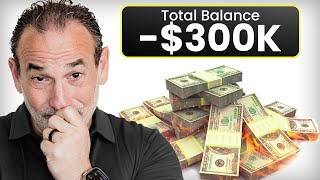
CPA Mel Abraham lost a third of his net worth to a Ponzi scheme and now shares eight warning signs of investment fraud. Watch for fantasy returns, shifting stories, manufactured urgency, and pitches that skip risk discussion or use self-generated documents. Demand independent verification and sleep on any decision before committing money.
Chapters
I lost one-third of everything I own in a Ponzi scheme. One-third. Okay, here's the part that still gets me. I'm a CPA, 30-plus years in the financial trenches, and I'm supposed to know better, but I didn't catch it. And if it can happen to me, it can happen to you. And the question though is why? Because the signs were there, every single one of them, and I just didn't know what I was looking for, what I was looking at. And today I'm going to give you 8 of them, you know, from the most obvious to the most subtle. I'm going to tell you right now that the subtle ones are the ones that get the smart people. All right, this is Building Your Money Machine, where we help you master your money, eliminate financial stress, so you can live a life by choice. Because earning more doesn't make you free, a money machine does. And I'm your host, Mel Abraham, and after 30+ years as a CPA, an entrepreneur, a money mentor, and someone who's walked this financial freedom journey from nothing to something, broke it and had to rebuild it again. I figured out what works and it's not bigger numbers. It's bigger and better choices and less expensive lessons. So we're going to make it happen for you. So let's do this. All right. We're going to go through 8 signs today that someone's lying to you about your investments. I'm going to take you from the most obvious ones, the ones that should be staring you right in the face. All the way down to the, the ones that are more subtle, the ones that maybe sneak right past your radar because they were designed to. So stay with me all the way through, because honestly, the most dangerous signs are the ones at the end. All right. Let's start with the obvious. If someone's pitching you an investment and the returns sound like something you would see on a late-night infomercial, trust that feeling, okay? I didn't, because it's exactly what it is. Every legitimate investment carries risk. Every single one. Every single one. And if you're sitting across from someone who's telling you there's no risk, guaranteed returns, it always works, that is not a financial strategy. That's a fairy tale with a wire transfer at the end, and it's coming away from you. Listen, I'm a CPA and I've spent 30+ years looking at numbers, and I will tell you, the only place I've ever seen guaranteed returns is on bag of chips. And even then, the guarantee is just that you'll want another one, not that it's good for you. All right. Think about this. Back in 2005, I got introduced to a guy by the name of Peter. Okay. I call him Peter the Parasite. All right. Through a friend. And my friend had been investing with this guy for 6 to 9 months, getting his money back, then putting money in and everything. And he was telling me that it was working perfect. And Peter then came to me. I got introduced to him, and he says he was presenting me 21% returns every 6 to 8 weeks. Not annually, 6 to 8 weeks. It was amazing. But my friend was getting it, other people were getting it. Here's the thing, I'm a numbers guy. I know the math. And somewhere in the back of my head, a little voice was saying, Mel, this is not right. This isn't how it works. But my friend was happy. And Peter was charming and I wanted to believe it. So I ignored the voice. And between me and two friends, we lost over $4.5 million. I personally lost one-third of everything I owned. Now, the most obvious sign was right there in front of me from day one. The returns were a fantasy and I chose the fantasy over the math. Here's what I need you to understand. The reason outrageous returns work as a lie is because they tap into something other than greed. It's, it's re— it's not greed. It's something deeper. It's this aspiration. It's this hope, the desire to get where you want to be faster. And we'll come back to that at the end because I think it's the most important thing I'll say. But for right now, think about this. If the return sounds too good to be true, It's not a deal. It's a trap. And no amount of social proof or polished pitch is going to change the math. So think about it. And if that voice inside your head is saying something, don't ignore it. So sign 1, fantasy returns. Now let's talk about what happens after you already bought in. Hahaha. This one is important. The story, sign number 2, is the story keeps changing. Because it's, it's the sign that I lived with for months and months before I let myself see it clearly. See, when you're legitimate investment, the story is consistent, the timeline is consistent, the updates are consistent. Maybe things go slower than expected, maybe the market shifts, but the fundamental story doesn't change. And when someone is lying to you about an investment, their story drifts. Suddenly at first, then faster and more, more pronounced later. See, excuses start to show up. Delays get explained away. The reason you can't get your money back today shifts from last week's reason, and each story sounds reasonable enough on its own until you start connecting the dots. Okay, with Peter, That shifting started small. A delay here, a timing issue there. There was a wire issue here. And it was always a reason, always a logical sounding explanation for why the payout was being pushed. And because I had already bought in, I had already trusted him. I already had social proof from my friend. I gave him the benefit of the doubt again and again. And again. Well, in April of 2007, he was indicted on multiple counts, put away for 9 years. Testified at the grand jury. He went to prison for 9 years. We never saw a dime. We actually think that the money ended up in Hungary somewhere because he'd left there before. Beautiful country, great goulash, but that is not where I wanted my retirement to end up. Okay. Here's what to watch for on this sign. Inconsistency. It's the crack in the wall. One excuse is human. Two excuses is inconvenient. Three excuses? That's a pattern. When you ask a simple question about an investment and the answer is different from the last time you asked, that is not bad luck. That is a lie being adjusted. Write things down. Keep a record of it, whatever you were told and when, because the inconsistency only becomes visible when you can actually see the timeline. All right, that's sign number 2, the shifting story. Now let's talk about the one that almost everyone falls for— time pressure. Sign number 3 is they start to create urgency, time pressure that really doesn't belong there. You've heard it, I'm sure you've heard it. I only have 5 spots left. The window closes Friday. I'm doing you a favor by even telling you about this. Okay, those lines are manipulative lines, and marketers use them, other people use them. But legitimate investments do not have expiration dates designed to stop you from thinking. Real urgency exists in investing. Rates change, markets move, tax deadlines are real. But that kind of urgency comes with documentation and logic. What scammers do is they create artificial urgency, urgency that is designed to do one thing. To get you to act before your rational brain catches up with your emotional brain, to force you to do things before you've done the due diligence that you would normally do because you don't have that time to do it. And listen, I always tell people, if an investment is so good that it disappears if you take 48 hours to think about it, let it disappear. A great deal doesn't have to evaporate because it was slept on. Only the bad ones do. Peter used this on me too. He told me that he didn't normally let people in and that the only reason he was considering me at all was because of my friend. That list, that exclusivity, that list was small and that he could probably fit me in for a small amount. Scarcity, urgency, all the three at once. He did it all. And here's what that combination does to a smart person. Bypasses logic. It makes you feel special for being included and it makes you afraid of being left out. See, when emotions go up, financial intellect goes down every single time. Now, my rule now is this: I delay every major financial decision. I walk away, I sleep on it, I talk to someone outside of it. I try to get an understanding and I take my time. And if the investment won't wait, so it won't wait. If the person presenting the investment gets irritated by that, the answer then is already no. Because a person who's genuinely trying to help me build my wealth doesn't need you to panic your way to a decision. So that's sign 3, manufactured urgency. Now we're gonna cross the line from the obvious into the middle ground. This one catches smart people, uh, a lot. Sign number 4, they can't explain how it actually makes money. This is where we move from the obvious into the dangerous because this sign is easy to miss when the pitch is so polished and the presenter is so confident that you don't realize it. Every legitimate investment has a simple answer to this question. What is the economic logic? Who pays? Why do they pay? And what creates the return? Real estate, tenants pay rent. Stocks, companies generate profit and get— and that gets reflected in the share price or the dividends. Bonds, you're lending money and you get interest. Simple, explainable, clear. But if you ask how an investment makes money and the answer involves Words like proprietary algorithm, secret strategy, or exclusive access— that is not sophistication, that's camouflage. Bernie Madoff ran the longest-running Ponzi scheme in history. Billions of dollars. Brilliant people lost everything. You know what he said when the people asked how he generated such consistent returns? He said it was proprietary. Couldn't explain it. And people nodded and handed him more money. See, proprietary is a word that means trust me. That's it. And trust me is not an investment strategy. That's not one of the criteria. Okay? I had a client bring me an investment opportunity while we were working on their financial plan. She sent over a handful of documents, not a lot. I went through every single page. Now, there was nothing in those documents that explained how the investment me money. Nothing about the business model, nothing about who the customers were, nothing about what they were paying for, why the returns were what they were. It was summary language, projected numbers. It was no substance underneath it. And I asked her, did they explain any of this to you directly? She said no. She'd asked and the answers were vague, she said. So she couldn't get through to the right person, evidently, either. And there was a but there was no real relationship there. So I literally said, walk away, walk away. She didn't though, because they hooked her and she lost everything she put in. The question to ask is simple. How does this investment actually make money? Walk me through it like I'm a, like I'm a smart person who's never seen it before. A good investment will, will be able to stand up to that question. A fraud collapses under it because complexity is where the lie hides. If they can't explain it plainly, they either don't understand it themselves or they don't want you to. Either way, that's your answer. All right, sign number 4: no clear economic logic. But this next one is one I see constantly at work as a CPA, and most people don't even notice it happening. Sign number 5. Sign number 5: They're selling you the tax benefit, not the return. Okay, I'm going to put my CPA hat on for a moment here because this one lives in my world and I see it all the time. In fact, I just had a conversation with someone about tax benefits from investments are real. So let me say that they exist. They are legitimate strategies that have meaningful tax advantages. I'm not telling you to ignore the tax side. But what I am telling you is this: a tax benefit is the icing on the cake. It's never the cake. If someone's pitching you an investment and the primary selling point is how much you're going to save in taxes, run a simple test. Ask yourself, if there were zero tax benefit with this investment, would you still want it? And if the answer is no, you're not looking at an investment. You're looking at a tax strategy with an investment stapled to the front of it. We don't make investments for taxes. We make investments for returns. I have seen people put money into things that made no sense, charge— got charged outrageous fees and had zero liquidity and delivered negative returns because someone was told that it was a tax write-off. You cannot save your way to wealth by losing money efficiently. That's not a strategy. That is just losing money with extra steps. That's it. I'm actually in that situation now, looking at the pitch deck, looking at the, the how polished is, and I— nowhere is it explaining where the returns are. Nowhere is it explaining where the obligations are. Nowhere is it explaining where the risks are. That's a red flag because the pitch is built around a tax story, not an investment story. And those two are very different things. So you do not go into an investment for taxes. You go into it for the return. And if the tax benefit is there, then great, that's a bonus, but it can't be the reason. Okay, ask this: set the tax benefit aside. What does this investment actually return and why? If the answer is vague or if the presenter kind of gets uncomfortable when you remove the tax lens, you have your answer. All right. Sign 5: selling the icing, not the cake. The taxes and not the returns. Now let's talk about the risk conversation, or more specifically, one that never happens. Sign number 6: They won't talk about the risks. This one is one of the most reliable signs I know. It works because most investors don't push back when the, the person skips the conversation. We don't want to hear about the risk. We don't want to dampen the excitement. But here's the truth: every investment has risk. Everyone, every single one. Even a savings account carries inflation risk. A legitimate investment professional, they're going to tell you the risks before you ask. A liar though, they're going to minimize them. They're going to redirect you. They're going to deflect it. They're going to pretend that they don't exist. Watch for phrases like virtually no risk, guaranteed returns, or my favorite is like Helmus Works. The only thing that always works in investing is time, and even that requires you to actually stay in the game. See, one of the questions that I know that I now ask before putting any money into anywhere is, what are the downsides? Walk me through what happens if this goes wrong. What's the worst case? And a good advisor, they don't flinch at that. They lean into it. They tell you exactly what, what could go sideways and how they've kind of structured things to try and protect against it. They want you to understand the risk because they want you to be a long-term client, not some one-time transaction. A person with something to hide though gets defensive. They pivot to the upside. They tell you not to worry about it. They say you're overthinking it. If don't worry about the downside is part of the pitch, Worry about the downside because it's the only thing that matters at that point. So, the risk conversation is not a negative. It's a trust signal. And the person who walks you through what could go wrong is the one that actually knows what they're doing. And more importantly, they're the ones that who respect you enough to tell you. So, sign 6, no risk conversation. All right. We're in the subtle territory now. These last two are the ones that get even experienced investors. So pay close attention. Here it is. Sign 7: The documents come from them, not a third party. This one sounds technical, but stay with me because it's one of the most important signs on the entire list. And almost nobody talks about it. When you're in a legitimate investment, the documentation doesn't come from the person selling it to you. It comes from the independent third third party, the custodian, an auditor, registered brokerage house— Fidelity, Schwab— verified fund administrator, things like that. It's not, it's not created like Bernie Madoff was creating the statements he was sending to his clients. See, the person that's selling you the investment should not also be the one creating the account statements or custodian the assets. Those are different jobs and held by two different entities. One of the things that helped Bernie really do this was that account statement that he was holding everything and doing it that way. He could adjust the numbers, tweak the numbers, do what happened. And that's exactly what Peter did. He was giving me spreadsheets, he was giving me worksheets, he was giving me statements, all crafted by him. That was like letting the chef grade his own health inspection. Unsurprisingly, gave himself 5 stars. Every single time. That's the problem. See, we got to think about this and look at it from a very different perspective. Is there an independent audit firm? Is there documentation that is originating from outside of them? Is it coming from the same place that the pitch came from? That's, that's a problem if, if there isn't any independence. That's where fraud lives if there isn't any independence. So here's the test. Ask the questions: Who holds my assets? Who sends me statements? Is there an independent auditor? Can I get those documents sent to me directly without going through you first? A legit— legitimate investment setup has clean answers to every single one of those. And if the answers are unclear, incomplete or maybe deflected, make you feel like you're asking for too much, then you're not asking for too much. You're asking exactly the right amount. Independent verification is not paranoia. It's the minimum standard for protecting your wealth. And that leads me to sign number 8, the last one. This one is the most subtle. This one is the one that I think cuts the deepest because it's about a question you probably never thought to ask. Sign 8: They never asked what you want. Here's the question I want you to sit with for a second. When this investment was presented to you, did the person first ask about your financial goals, your timeline, your risk tolerance, what you're actually trying to build, what you're actually trying to accomplish? Or did they just walk in already knowing what they were going to sell you? See, a real financial professional builds the recommendation around you. A liar builds the pitch before they ever even meet you. It's like going to a doctor who walks in with his— and hands you literally a prescription, says, "Take 2 of these. I'll get to your diagnosis later." That's not medicine. That— and just the same as it's not financial advice. That's not the way this works. There is a question I love to ask when someone pitches me an opportunity. I said, I didn't go looking for you. Write this down because this matters. Why is this opportunity available to me? And why are you approaching me with this? A legitimate person has a really clear and simple answer to it. You're a good fit for this based on your situations, which they would've asked questions about that they would know about. Say, this is the right thing for you. They might say, we're specifically looking for investors with your profile. Clear, logical, makes sense. Great. But they need to know about you first. They have to ask about you first. A liar flatters you. Because you're one of the few people I trust. Because you came from a friend. Because I know you're sophisticated enough to appreciate this. Because honestly, I wanted to give you this opportunity before it goes to anywhere else. Flattery is not a financial strategy. And if the reason you're being offered something special is because you're special, because someone you know put you there, ask yourself, why is this person treating me special? I don't even know this person. Great investments don't need to seduce you. They just need to make sense. The 8 signs aren't 8 separate things to watch for though. They're one thing seen from 8 different angles. They're all symptoms of the same disease. Someone who needs you to not think clearly. Fantasy returns stop you from running the math. Shifting the story stops you from keeping on track. Manufactured urgency stops you from sleeping on it. Complexity stops you from asking the real question. Tax framing stops you from evaluating the actual return. No-risk conversation stops you from planning for what could go wrong. Missing third-party documentation stops you from verifying what's real. And flattery stops you from asking why this is really being offered. Every single one is designed to do the same thing: get between you and your ability to think. That's the game. Okay, I want to come— I want to come back to something I said at the beginning. When I got into the Ponzi scheme, people assume it was greed, and I've had people say that to me over the years. You got greedy, Mel. And you should have known better. And I used to get defensive about it, but then I realized the real answer. And it's more uncomfortable than greed, actually. It wasn't greed that drove me. It was hope. It was aspiration. It was desire to get to where I wanted faster, to give my family more and sooner, to get ahead of the clock. Peter didn't sell me greed. He sold me a picture of a life that I already wanted. And I wanted enough to look past the math. That's the real vulnerability, not greed. Hope with the deadline. And that's what every single one of these 8 signs is designed to, designed to exploit. Not the worst version of you, but the best version of you. The one who wants more for your family. The one who's tired of working this hard for this long and wants to see the finish line sooner. See, wealth creation though, I've learned it's a patient game. I know that that's not what you want to hear, but it's the truth. The money machine isn't built by shortcuts. It's built on consistency, on smart decisions made with clear eyes, clear head, on having the discipline to walk away from anything that needs you to stop thinking. The most powerful financial move you are ever going to make is the one you walk away from. Don't let someone sell you a fairy tale. Build the machine, build it right, build it to last. I hope that this helps, and I hope that this keeps you out of trouble. Listen, do me a favor. There is so much going on out there with scams and cons and all that stuff. Pass this around, share it with people. Let's not allow them to get taken like I got taken. All right. If this hit home for you today, do me a favor, hit the like button. Make sure you're on this journey with me. Subscribe. It, it makes the algorithm happy and it certainly warms my heart. Plus it allows us to expand the reach. All right. I can't wait to see you in the next one and, and get you on that path to financial freedom, because you know what? Earning more doesn't make you free. The Money Machine does. All right. Until I get a chance to see you on your path to financial freedom. Or on the next one, or while I'm out there speaking. As I always say, always, always strive to live a life that outlives you. See you in the next one. Cheers for now.









