https://www.youtube.com/watch?v=yG3CoFaYV2Y
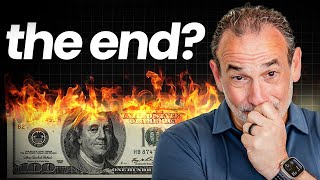
Mel Abraham explains how inflation erodes savings and why investing is essential to build wealth. He covers practical steps to protect your money and create what he calls a money machine for financial freedom.
If the dollar keeps losing value, is saving money even worth it anymore? I mean, think about if inflation creeps in so we can't buy as much, does it make sense to just put the money away? This is a great question and it kind of feels a little bit like trying to fill up a leaky bucket. And the only way to do it is hope that there's rain to have enough water to go in to overpower the leaks, doesn't it? So, so here's the thing. If you've been second guessing yourself about whether you should be parking cash in a bar, a bank, whether it's smart or savings will make sense, you know, for your tomorrow, you're not alone. I get this question a lot on my lives. I get this question sent to me. And so in this episode, I'm going to pull back the curtain on what's really happening with the dollar, why savings alone won't build wealth, and what you actually need to do to stay financially solid. This is building your money machine, where we teach you how to master your money, eliminate financial stress so you can live a life of choice. Think of it as a dose of financial truths with a side of sarcasm and a whole lot of heart. And I'm Mel ABRAHAM, and after 30 plus years as a CPA, an advisor, a money mentor, and someone who's seen markets go sideways more times than I can count, I can tell you this, this moment matters. But don't panic. Panic never built a money machine. A plan did. So today I'm going to show you how to protect your savings, how to grow your wealth and thrive, even if the dollar keeps shrinking like your favorite T shirt in a hot dryer. Let's do this. Are you worried that your savings won't be enough? Is the the dollar collapsing? Should you even bother savings anymore? So let's break this down for you because I think this is an important question that's on people's minds because we get a chance to have this conversation over and over again and we hear it in the media and the social media and people saying, well, cash is trash and why would you put it even in a high yield savings account, you're only getting 4%. Well, let's start by going back and understanding what is actually happening with the dollar. What is inflation, what you can do to protect it? Because inflation is part of the journey. It is part of our journey. It is not something that is ever going to be just at zero. So we want to understand that. Here's what inflation is. It's basically saying that tomorrow things will cost more. I mean, that's, that's really it. If you look at it, since 1950, the dollar has lost 90% of its value. Think about this. In 1970, a dollar bought a gallon of gas. Now it takes $4 or more to buy a gallon of gas.
Okay?
Huge. Inflation is this quiet erosion of our purchasing power every single year.
Okay?
When you start to understand what, what that is, here's a kind of a fun exercise. Go to a calculator, just Google it and see how much a dollar in your birth year would be worth today. It'll give you a clear picture. It'll start to get you to look at it. I did it for me. So I was born in 1961. Loaf of bread in 1961, 25 cents today, $3.50.
Okay.
Gas, 31 cents a gallon, dollar. Four dozen eggs, 57 cents. $2.50 is actually more than that now. Pound of bacon from 49 cents to $7.
Okay.
It's crazy. What's going on. Movie tickets were 69 cents back when, when, when I was born. This is the kind of thing that we're dealing, dealing with in, in that construct. My parents bought their home in 1958 for 20, 27, $28,000. And now the average home, median home price is 430,000. So that's what happens. Now. The mistake that people make is they talk about, this is inflation, inflation, inflation. And we'll talk about the savings part of it. But what we don't discuss is during that same time, wages have gone up. Now in some locales, the wages and the compensation and the income hasn't gone up as fast. So it hasn't kept up in other places. It's, it has. So we can't ignore that side of the equation. We'll deal with that in another episode. I literally want to talk about this idea of savings because if all I did was put money in a bank account and, and got my 0.1%, less than 1% interest, and inflation is 3 or 4%. I'm losing every, I'm losing money every day, every single day. Because the ability to, to purchase, the ability to purchase now it feels safe because you're saying, well, I'm just saving it. It's insured, it's liquid, and I know I'm guaranteed that interest rate, but the value is literally melting underneath you. Savings alone will keep you poor. Investing builds the wealth. Here's, here's the reality is that if you start to understand how this plays out, you'll look at things in a very, very different light because one of the things is that we tend to think of our cash and our savings the same as investing. And they're two different things. Cash was never meant to be an investment. It is a medium of exchange. It is not a store of value. Investments were meant to be stores of value. So the key is that we know that we have inflation. Whether it's 2%, 4%, 9%, we have inflation. And the only way that we can keep ahead of that erosion is to make sure that we take a portion of that cash and invest it in a way that beats it. That means savings isn't the place to do it. Now, does that mean that savings isn't good? No, no, no, no. Savings still has a role. Savings still has a place. When we look at the Wealth Priority Ladder, we talk about the Comfort Fund and we talk about the, the Peace of Mind fund, the emergency fund, the foundation. Those two first phases of the Wealth Priority ladder is the foundation of an unshakable foundation of building wealth. Here's what we need to do, is that the having the cash for the current expenses is meant to keep us from going into a chasm. If life happens or when life happens or something unexpected happens, it's to deal with emergencies so we don't have to go into debt. And so it has a purpose. But its purpose isn't to build wealth. Its purpose is to protect the wealth you're building. So beyond your short term needs, beyond your emergency fund, beyond that Peace of Mind fund, those first two phases of the Wealth Priority Ladder, now we have to look at how we deploy that cash differently because the savings is meant for that emergency fund. It's meant for, for the Peace of Mind fund and short term goals. Maybe I'm going to buy a house and I need the down payment in the next two years. Short term goals, I'm going to say, is three to five years okay or less because the savings becomes the oxygen. Okay, you need just enough to breathe, but too much will keep you stuck in, in the tank. You just can't do it. All right, so here's the thing to do in, in this context, I want you to spend the time to look at your monthly expenses. Let's figure out what it is so you can get the right amount in your Peace of mind fund. You can get the right amount in your emergency fund to make it happen. Now people will say, you know, three to six months. I say nine to 18 months. But let's start with three to six months. Let's get there and we'll slowly build it. Then we don't have to over save. It's there to make sure that you are going to be safe. Okay, so if that's the case, then where do you put your money? What do you do? Well, we have to invest in things that are a hedge against inflation. That means that we need to invest in assets that historically have returns well beyond inflation. What kind of assets are those, you ask? I got it. Here's the deal. Stocks, equities, buying pieces of companies will do it. Historically, the returns on The S&P 500 is from 9 to 11%. If our inflation's 2 or 3%, we're still ahead of the game. We're outpacing it. Real estate is another asset that can happen. Okay, is that real estate? We have the ability to leverage it, we have the ability to cash flow it, we have the ability to get a tax deduction and we get equity buildup and appreciation on the real estate. And in most cases it surpasses inflation. So remember, the idea is that the cash is a medium of exchange. These are stores of value. These are the things that will increase in value. Index funds and ETFs, they're simple, they're diversified, they're liquid. And you put together a proper portfolio of 2, 3, 4 funds, keeping it simple and you can well outpace inflation. Some people will say, well, what about precious metals? Precious metals are a hedgehog and they are a store of value and they are counter to inflation. Things like gold and silver. The problem is their utility, isn't there? There isn't cash flow from it, there isn't anything. And the only way they go up is getting someone to buy it for more. And you got to store the doggone thing, you know, bars of gold buried in the yard isn't the way to go. Now can you get exposure to precious metals? You certainly can through ETFs and things like that. So you have the ability to do that. But what I'm getting at is there is a group of assets that you can use that will outpace inflation. But if inflation has got you uncertain, if inflation's getting you to panic, inflation has got you worried about, hey, savings. Doesn't make sense. Well, you're using the savings for the wrong reason. The only reason we have the savings is to protect the wealth we're creating. And that's by following the wealth priority ladder and making sure that we have it in place. So here's the deal. Your action steps here is if you don't have a brokerage account, then it's time to open one. Whether it's Fidelity, Schwab, Vanguard, I don't care. It's now starting to look at and say, how do I get automatic investing in place if I am in a situation where I have a, an employer with a 401k that they match get their free money. Follow the wealth priority ladder. In chapter 12 of my book, it tells you exactly what to do with every single dollar and make sure that you're doing what you can. We want as part of the wealth priority ladder, I want you to start putting 20 to 25% of your income away. At some point, we need to get there if we truly want to have the financial freedom that we want. We have to build the money machine. And the reason we're building the money machine is to make sure that we can separate our earnings from the efforts to earn it. That's what gives us freedom. Otherwise, we're, we're on the, the earnings treadmill. And the only way to make more money is to run faster, harder, longer. That only leads to breakdown. That only leads to burnout. It leads to disaster. So we got to get our money to work harder for us than we did for it. And the way you do it is you put in investments now it's not without risk, so we got to do it smart. We have to follow a process. We have to follow a system to make it happen. Okay, so get a brokerage account open, start making the contributions. Make sure that you're trying to increase it quarterly, yearly, something so we can get to that 20 to 25% to make it happen. All right, here's the thing. How do you future plan proof your plan. Then if that's the case. Well, here's the plan. The plan is the balance safety with growth.
Okay?
Liquidity is safety. Liquidity is your emergency fund. It's in a high yield savings account growth, that's investing in a diversified portfolio. Inflation beating assets. Like I said, Stocks, ETFs, index funds, real estate protection is diversified across those different categories. It's to have a diversified income stream is to have diversified asset types. Now, it doesn't have to be extreme, but if I buy into an s and P500 fund or a total stock market fund, I'm literally buying 500 to thousands of companies. Start to look at your finances in three buckets here. What's the short term bucket? That's your liquidity. That's your cash. That's your savings. That's your emergency fund. That's your sinking fund for first soon expenses, like maybe a wedding down payment, things like that. Then you have a bucket for your mid tier, you know, midterm. This is going to be five, five years to maybe 10 years. Then you have long term, 10 years or more. And those we're going to start to put into growth assets and in income assets. As, as we grow, we're going to build that portfolio. And you get a chance to look at things and say, do I have the liquidity that I need? Do I have investments that are growing to build that money machine? And do I have the ability to draw income from some of those investments? Because if it's illiquid or there's no cash flow from it, you can't live on it unless you sell it. And it's the ability to build, to draw that income that gives you the protection. So we want to start to create a more balanced approach, okay? Even though you cannot avoid risk, but you can choose where you're going to take the risks. Okay? So here's the thing. Is the dollar weaker than before? Yes. Will the dollar be weaker tomorrow than it is today? Yes. That's. That's inflation. But your financial future doesn't depend on the dollar. It depends on your decisions. Wealth isn't built by saving money. It's built by owning assets. It's built by creating the money machine. It's built by doing that. This was the lesson that I got when my son drew that picture of me at 6 years old. The realization that I needed a machine that generated cash flow so I could live the life that I wanted and a life of choice so I could buy back my time. So it's time to own assets.
Okay?
And the fact is this, you don't have to predict the economy to build wealth. You just need to follow timeless principles. You need to stay consistent, you need to be disciplined. And most of all, you need to be in the game. You can't be on the sidelines, you can't be in the stands. You can't win the wealth game as a spectator. You have to be a participant.
Okay?
So here's your action step here. I want you to commit to one financial action, whether it's from this video or one of my other videos. 1. What is it? Is it opening an account? Is it increasing my contributions? Is it making my first investment? What is that one thing? And do it in the next 48 hours. Do it in the next 40 hours. In fact, if you can post it, let me know what that one thing is. Let me know what you're gonna do. Let me cheer you on. Let me help you do it, all right? In the meantime, do me a favor. Subscribe to the channel. Let me know what you got out of this. Because here's the thing. Yeah. The economy goes up and down. The dollar, it gets eroded by inflation. You know, the dollar can be eroded by printing money. All the things that we don't control. But what we do control is our choices, our decisions and our behaviors. And when we follow the choices, decisions, and behaviors of those that build wealth, then you will follow that path. Because wealth is a math equation that will always get solved.
All right?
And it can be simple. It doesn't mean that it's easy. But just because it's difficult doesn't make it impossible. And you don't have to do it alone. You don't have to do it isolated. That's why I have this channel. That's why I have this show. That's why I do what I do.
All right?
So stay with me, subscribe, comment, share this, and let's make it happen together. Let's go build that money machine. Let's give you a freedom based life, the one you deserve, the one you design.
All right?
Until I get a chance to see you on your road to your financial freedom, always, always strive to live a life that outlives you. I'll see you in the next one. Cheers. For now.









