If You Don't Own Bonds, You'll Never Be Wealthy
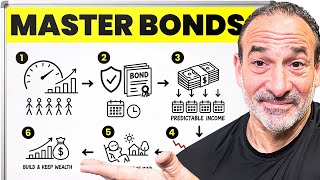
Mel Abraham argues bonds aren't boring extras but essential to building wealth. Bonds provided stability during the dot-com crash, 2008, and COVID, and their role shifts by life stage: mostly stocks in your 20s and 30s, more bonds as you approach 50. Think of bonds as a car's suspension system, smoothing the ride.
Chapters
You've always been told that bonds are boring. They're safe, they're conservative, something for people who have already made their money. They just wanna coast. Maybe it's just for grandmas and grandpas.
Yeah, that's exactly backwards.
See, bonds aren't the finish line. They're the thing that makes sure that you actually get to stay in the game, in the race, at the finish line once you cross it. All right, here's what nobody tells you, and you can absolutely get rich without bonds, so I'm not saying that. But staying rich, living that rich life as I describe it in this episode, is huge. And building a portfolio that funds a real life, your rich life, one that doesn't crumble the moment the market has a bad year, that's completely different.
And that's where bonds and fixed income come into place, all right? That's what I'm talking about in this episode of the Building Your Money Machine show.
This is where we help you master your money, eliminate financial stress so you can live a life by choice. Because earning more doesn't make you free.
A money machine does.
And I'm your host, Mel Abraham. And after 30-plus years as a CPA, an entrepreneur, a money mentor, and someone who's walked this financial freedom journey himself from nothing to something, then broke it and had to rebuild it again, I've seen what works.
And it's not about bigger numbers, it's about bigger and better choices. Let's do this.
If you don't own bonds you'll never be wealthy. Now, I'm going to stand behind that claim, but first I need to flip something on its head before we go a step further. Because when most people hear, hmm, be wealthy, they assume that that's the goal. And I'd put back—
push back and say, do you actually want wealthy, or do you want something better?
Now stay with me here because this distinction is going to change everything and how you hear everything in this episode and beyond. Because here's something I've believed for a long time, and I've not backed down from it. I've written about it too.
Rich is how you experience life.
Wealthy, that's just a statistic in a bank account. And that's not a small distinction. That's everything. And I've sat across people that have 8-figure bank accounts. Portfolio statements that would make your eyes water. And they were some of the most miserable human beings I've ever met.
Financially wealthy, but personally bankrupt.
And I've also sat across from people that had far less, far more modest numbers who were living with so much joy, so much purpose, so much freedom that in every sense of the word, that I would've traded portfolios with them in a heartbeat. See, you don't want to be the richest person in the graveyard. Nobody's putting that on your tombstone. Here lies Dave, net worth $7 million, had zero fun, left early. I mean, that's the thing. Here's my thing. If all I do is help you build a bigger bank account, then frankly, I failed you. What I want for you is this whole Money Machine philosophy, what it's built around, is to live an affluent life. That life that's meaningful, that life that's impactful, that life that's fruitful, that life that's peaceful. The bank account, it's just the tool. Money's not the point. Life is the point. So when I say you'll never be wealthy without bonds, I'm not just talking about the balance sheet number. I'm talking about your ability to actually live the life that you're working on, that you're working towards consistently without the whole thing unraveling every time the market sneezes.
So you can get rich without bonds.
Plenty of people do. But if you want to build a machine that funds a real life, and a rich life, one you can actually live inside without financial fear, without white-knuckling a market cycle, without one bad year threatening everything, you're gonna need some fixed income. You're gonna need something like bonds in your portfolio. Because when we start to understand what bonds do, then it changes things. So let me reframe bonds completely, and I know what You're picturing something dusty, something your grandparents held, something a financial advisor slides across the table at age 65 while they hand you a brochure for a golf community.
Yeah.
See, and your grandparents who held bonds aren't stress eating right now. They're not stress eating every time they open up their brokerage app and see that the market has dropped. See, bonds aren't there to make you rich. They're there to make you resilient. And in any strong portfolio, stocks are the engine, the growth, the horsepower. They're the thing that builds the wealth, the number over the years, over time. The bonds are nothing more than the suspension system. You never brag about the suspension in your car. You brag about the engine and the horsepower. And nobody's walking into a dinner party saying, "Oh my gosh, have you seen the shock absorbers in my portfolio?" No.
That's the thing.
But when the road gets rough, when the markets drop 30% and everyone around you is panic selling, and your bonds, your suspension system is different than theirs, and it's the difference between staying on the road and running off the road. The technical word is ballast. Balance.
The yin, the yang of the portfolio.
And what bonds deliver specifically is this predictable cash flow stream that doesn't move with every movement of the stock market. Now yields change and all of that stuff, and I've done some other work on the bond market. But while your stocks are reacting to earnings reports and geopolitical chaos, whatever the financial media decides it's going to lose their mind over this week, your bonds are doing one thing— paying you.
On schedule, without drama, without asking for your attention. That, by the way, is exactly what a money machine is supposed to do. Fund your life while you live it. And the data actually shows this.
In every major stock market crash and crisis since 2000, bonds held up. Now, we had some issues with bonds recently, but during the dot-com crash of 2000 to 2002, the bond index stayed positive while stocks were getting crushed. During During the 2008 crisis, global bonds returned around 12%.
The market lost nearly 40%.
During COVID in early 2020, the bonds held their value and acted like a safe haven. Now you start to look at it from that perspective. We're not looking at it to build growth and for equity growth. That's a different game. But every single time the market panicked, bonds did their job.
They absorbed the shock.
So the rest of the portfolio didn't have to. A 60/40 portfolio, 60% stocks, 40% bonds, literally has delivered an average return of around 8.6% since 1928. Not as high as pure stocks over the long run, but dramatically less volatility. And as we start to get into later years, we don't want the volatility. That's not a boring footnote. That's the difference between making it and running out. So that's the thing that I want us to realize is what's the position? Where, where do you deploy this weapon? Where do you deploy this and how that, that plays out? Not saying that, that you start right away. I didn't have very much in bonds. I have some right now because I'm going to be 65. The role bonds play in a portfolio isn't fixed forever. It changes as your life changes, as your goals change. And when you're in the accumulation Phase, your whole job is growth because you have time on your side and you can ride out the bad years. You can ride out the crashes and the crisis. And a bad year is a bad year, not a permanent disaster.
But at some point, something flips.
You stop building the machine and you start living off of it. And that transition from building to running, from accumulating to distributing, is where most people are completely unprepared. I think about my dad when he retired. Literally the year after he retired, the market crashed. He wasn't ready for it. He wasn't positioned for it, and he didn't have the right portfolio for it, and his whole retirement dropped with it. Okay, so when you're building, you needed the growth, but when you're starting to live off the portfolio, you need the dependability. You don't need a 12% return every year anymore, especially if your money machine is built correctly. You need the consistent, predictable income that doesn't evaporate when the market melts down. You stop asking, how much can I make? And you start asking, how much can I count on?
See, bonds answer that second question.
And so I want to be really clear here. I'm not your financial advisor. What's right for you depends on your age, stage, and circumstances, your income, your risk tolerance, when you need to start living off the money. And 100 other factors that should be specifically factored in. That's why doing a master plan, a financial plan for you is really important. It's why we do the Money Machine Master Plans for, for our clients and everything, so they can see what happens when portfolios change, when markets change, and, and driving everything. But here's what I can give you: a framework for thinking about it. Think of your portfolio like a dimmer switch, not an on-off button. You don't flip from all stocks to all bonds on your 60th birthday. This is a gradual, intentional shift across your financial life, just like your portfolio. The question to ask at every stage is to sit back and say, huh, what do I need more of right now, growth or dependability? And when the answer's growth, stocks are doing most of the heavy lifting. That's okay. And when the answer shifts to dependability, bonds start to play a bigger role. And so when you start to think about the life stage framework, and this is only the starting point, it's not advice, you start to think about how they play into the game. For instance, in your 20s and 30s, this is the horsepower phase. Your portfolio is primarily about growth. Bonds don't represent much of anything here. In fact, in most cases, it's— you're 100% in equities, ETFs, index funds, and things like that, because you have the years ahead of you, you have the runway ahead of you to recover. And so we are not as concerned about it because you're in your earning years, you're making money, and you'll sustain yourself. And as long as you're following the wealth priority ladder and you have that unshakable financial foundation like we teach you to build, you're doing okay. And as you start to transition into your 40s, this is where complexity comes into play. These are your peak earning years. Retirement starts to look at and go, hmm, maybe it's coming. And at that point, you might start transitioning some of it to bonds, but still not the lion's share because you may still have 2 decades of earnings left. And so you still have time to build it because you've spent 20 years right now building the sandcastle and you got another 20 years to build it, but you don't want to just park it right next to the high tide that's coming in. But as you transition now into your 50s, now we start to think more from a preservation conversation. Because now all of a sudden you start to look at, maybe I need to have a little more bonds, maybe 10, 20% of fixed income types of instruments that start to give dependability to the portfolio, to the money machine. Growth still matters, so you're still going to have the lion's share in growth, but safety under— underneath it, the safety underneath it starts to matter more. And it is this time frame on into retirement where dependability comes into play. The question becomes, what does this portfolio need to pay me every single day so I can actually live my life? I literally had, had a meeting with my own wealth team. Yes, I have a wealth team. And we had a conversation literally about this, about the cash flow. What do we need? When we want, if we want to stop. I don't see me stopping because I love what I do. I love serving you and doing the things that I do, but If I were to stop, what does the machine generate? And how do we make sure that that is dependable? And I'm in a situation where I've got a younger wife, she's 12 years younger than me. So I got to think in terms of, of lasting for her and the generational elements of transferring the money machine to my son and his wife and the grandkids. So we're thinking much longer and how do we create that dependable income stream over time? See, when you start to look at it and start to understand the risks associated with not having your portfolio structured correctly, especially at retirement, man, it's a game changer. Because Morningstar found that a 15% portfolio drop in year 1 of retirement, combined with your withdrawals that you're taking at the same time, makes you 6 times more likely to run out of money. 6 times. The bond allocation is what gives you something to pull from that, that isn't part of that growth engine that's going to decline if they—
if we have a drop in the market.
Okay, that's the game that I need you to start to think about playing, because what I've seen in portfolios is crazy. And I've had 30-plus years as a CPA. I've worked alongside some serious wealth, a ringside seat to a lot of portfolios. I mean, legacy wealth. And here's the pattern: people who got rich, many had no bonds, all in on growth, heavy on equity, high risk, riding the wave, worked for a season, it was great.
People who stayed wealthy though, they had bonds.
They had a mix where they had fixed income that was dependable, always. Not the whole portfolio, just a portion of it. But it was always there and it was there to carry the day if there was a decline or volatility. So they don't get squeezed and, and they're not sitting back trying to figure out how do I squeeze another percentage point? How do I squeeze another $1,000, $10,000 so I don't have to cut that vacation out? How do I make sure that I never have to sell the growth assets at the wrong time? See, think about this as the bonds being a backup generator. Your whole house doesn't run off of it, but when the lights go out at 2 in the morning in a storm, you're, you're deeply grateful that someone put it in. I have actually a Powerwall here in the house. We're the only one in our whole community that has a Powerwall. And when everyone loses power, ours still goes.
That's what bonds do for you, okay?
Real wealth, the kind that funds a rich life, isn't just a number that goes up when the market goes up. Real wealth is dependable, it's stable, it's not subject to what the Fed announced yesterday or what the analyst might say on TV in the morning or what you see on social media. Those, those things create volatile swings. But if we want a rich life, if we want to, to know that we have dependable income streams to take care of the people like we love, the things that we care about, and that we have time and peace of mind, you got to start thinking about how bonds or fixed income instruments play a role in your financial journey. And if you're early in it, it probably doesn't play much of a role. But as you get into it, the whole idea is to make sure that you can fund the rich life, not a wealthy bank account. Listen, when I was going through cancer, there was a moment there where I had to look at everything, everything I built, and I had to ask one really honest question: Does this thing work without me? Not when I'm at my best, not when the market is at its high, but when things are hard. When I can't show up, when life drops the kind of news on you that stops everything, like I got, like cancer.
That's the real test of a money machine.
And that predictable cash flow, the fixed income, the boring stuff that nobody talks about at dinner parties, that's what kept the machine running when I couldn't run it. Because I shut everything down, but the machine supported us without draining the machine, without dismantling the machine, without the market having to be in market because it was during COVID Sometimes life drops 15% in a year, 20% a year. Sometimes it drops a lot more.
But if the machine's done right, it keeps paying you through it, not draining you through it. See, real wealth isn't a big number when things are great only. It's a working system when things are hard. So yeah, you can absolutely get rich without bonds.
But if you want to stay rich, if you want to live that rich life, if you want a real money machine, if you want a financial life that funds something meaningful, one that doesn't depend on what the market does tomorrow, then it's never about the bank account.
It's about building a system that has dependable cash flow. And bonds have a place, fixed income has a place, and you should be thinking about it because it was never about the bank account in the first place. It was always about life. And earning more doesn't make you free. The money machine built right Does. That's why I say if you don't understand bonds, then you'll never be wealthy and you may not live the rich life forever. I want you to live the rich life forever.
All right. I hope that this resonates. I hope you start to look at it and I get it. Some people hate bonds and they may come at me and they may give me comments, but I will stand behind this claim because I know what it's done for me. I know what it's done for clients. At the right time, you need to start thinking differently.
All right. And I hope that this makes sense.
I'd love to hear from you. Send me a DM, send me a comment. Let's have a conversation. In the meantime, do me a favor.
If you haven't done so already, hit the thumbs up and the subscribe button.
You know what? It makes the, the algorithm happy, YouTube happy.
It also warms my heart.
All right. Until I get a chance to see you in another one or on your path, soaring to financial freedom.
Your way, living that rich life. As I always say, always, always strive to live a life that outlives you. See you in the next one. Cheers for now.









