Why wealth EXPLODES after owning 1 rental property... But Only If You Do This!
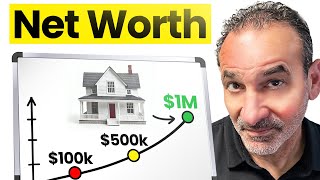
Mel Abraham shows how one rental property can generate 31% returns through leverage, cash flow, appreciation, and tax benefits. The catch: you need 20% down, a 12-month emergency fund, and conservative assumptions. Over-leverage and unexpected expenses destroyed many investors in 2008.
Chapters
I want to break down why wealth explodes after owning one rental property, but only if you do this. Okay. Because the same math that accelerates wealth can also magnify risk, and most people only see half the equation. Here's what you're going to walk away with. You know, you're going to understand exactly, and actually what the numbers are behind a rental property. Rental property wealth, and why leverage completely changes everything, but also why so many people in 2008 didn't lose real estate because the prices fell. They lost it because the math stopped working. Okay? Real estate isn't magic. It's math. It's debt. It's time. Stacked correctly or stacked recklessly. It depends. Okay? This is building your money machine, where we help you master your money, eliminate financial stress so you can live a life of choice. Because earning more doesn't make you free. A money machine does. And I'm your host, Mel Abraham, and I've spent over 30 plus years as a CPA, an entrepreneur, a money mentor, and someone who's walked the financial freedom journey himself. And helping people build wealth that actually holds up when markets and life get messy. So if you're ready, let's do this. All right, I want to. I want to talk about something. I actually think this is really important. Why wealth actually explodes after owning your first rental property. But there's times that it doesn't. So what? You know, if you want to explode, there are some critical things that you need to have in place. And it's not about, oh, if I can buy any property that it's going to explode, or is it cash flow? But it is about building it and structuring it and buying it the right way. Okay? Because here's the honest truth. Rental property has one of the most powerful wealth engines in investing. And when it's on the right foundation, it's amazing. When it's not, look out below, okay? See, because it becomes the thing that quietly buries people financially if it's not on the right foundation, not because the asset is bad, but because the math wasn't in their favor. Okay? So here's the thing. I'm going to walk through an example, and we're going to break it down for you. And the example I want to walk through is. Is going to. I'm going to take you through this whole episode with it. All right? So imagine this for a moment. You find a rental property. It's listed for $500,000. You're going to put 20% down. You put $100,000 down on it. And you get a loan for $400,000. Okay, so we're going to follow this property across every example, okay? Cash flow, appreciation, loan, pay down, leverage, the math. We're going to understand the downside risk. That way all the pieces will fit together and you'll get an idea of where things are. Now, don't worry, I want to do the math for you myself. So we're not going to switch numbers halfway through. We're going to just follow through. You cool? All right, so here's the thing. Why do people chase real estate in the first place? See, most people get really excited about investment rental property because of the key two words. Cash flow. How much does it make me a month? When can I quit my job? How many doors do I need to retire? How many? Now, look, these are normal human questions, but here's the first big truth. Cash flow doesn't make you wealthy. See, cash flow keeps you alive. Cash flow buys you time. Cash flow gives you margin. But wealth, wealth is built on the balance sheet, not in your checking account. Okay, so let's look at the four engines of real estate wealth. So you understand how they all interplay and how you build true wealth with real estate. Because starting with one that. Like this one, that everyone obsesses over, cash flow. So engine number one is cash flow. So, using our example, imagine for a moment that you buy this rental property for half a million, and it gets you rent of $3,000 a month. If, okay, now we have expenses on it of $2,500 a month. So your net cash flow is $500 a month. That means that you're going to generate $6,000 a year. That's great. That's literal. That's real money. But this episode is not titled how to collect $500 a month. It's about why wealth explodes after the first rental. So we're going to go deeper than this. See, because cash flow is huge. It is important. But it is only the steep. It's what keeps you stable while the other engines do some heavy lifting. So, engine number one, cash flow. Engine number two, appreciation. See, real estate isn't just about the rent coming in. And let's assume a conservative, not crazy, not flipped by Gordon Gekko kind of growth. It's also about what happens to the value of the property over time. So let's use a 4% growth rate. Okay, so we buy the property for half a million dollars. We have it cash flowing, and it's going to grow in value at 4% on average. Now, it's going to go up and down each year. But let's just use an average rate. So that means the half a million that we bought in the Property grows by 4%. That means that the value after one year goes up $20,000 by doing that. And so now all of a sudden what we bought for half a million dollars is now worth $520,000. Okay, you didn't earn that with your time, you didn't save that, you didn't pray for it. It showed up and then the next year it does another 4%. But that 4% is not on the $500,000 that you originally purchased. It's on the new number of 520. All of a sudden, compound interest and compounding is working for you on the half million dollar real estate purchase. You did see, compound interest in this growth is quiet until one day when you hit the acceleration zone, as I call it, it starts to scream. Now, real estate is one of the only investments that hits all, all four of these engines. Most of them will hit two or three of them, but this one hits four of them. We started with cash flow. We now look at appreciation. Then the third one is loan pay down, or what I would call equity build up. Okay, here's the part that feels like cheating. Every time your tenant or your guest pays you rent, they're literally making your mortgage payment for, for you, okay? They're making that payment for the principal to go down. Now granted, when you do a traditional mortgage, the first years, the first decade or more is mostly interest, so they're covering the interest for you. But slowly we're paying the principal down over time. But let's assume engine number three. The loan pay down is about $5,000 in a year, which may be a little high, but let's use it for the example. So we've got the cash flow, we've got the appreciation, but now the loan goes down by $5,000. Who paid it? The renter? The tenant paid it. Who owns it, though you do, this becomes a forced savings because someone else is paying down your debt. That's the massive piece of a long term wealth engine. Even if one of the engines didn't work, even if the appreciation didn't work and the loan got paid down, you're still increasing value, increasing wealth. And these are the things that, that a lot of times we're not thinking through and why real estate can be such a great leveraged way to build wealth. But there are some cautions. But before we get to the cautions, let's go to engine number four. Okay? That's what I call tax shield. We get into real estate, sometimes we get tax shield, it's called depreciation. And we get write offs for the interest and those kinds of things. So we get tax deductions for owning the real estate. And these are the things that most people will hear about on tax podcasts at 1:17am when they can't sleep. But let me be clear. The tax shield is an element of this investment, but it is not the element that should make this a bad or good deal. So it is just the icing on top of the. But it is a benefit nonetheless. Okay. It can help you keep more of the cash flow that's coming in because you're not having to pay as much tax. But if we don't buy the property. Right, Your tax deduction will never fix a structural math problem. We respect the tax shield, we desire the tax shield, but we don't worship it. Okay, so that's the game. Those are the four engines. Cash flow, okay? Appreciation, loan, pay down, and tax shield. But here's why this really flies, okay? And it's called leverage. Okay? This is where it starts to get interesting. Because real estate, unlike most of that investments, lets you use other people's money legally to get in. So let's go back to our example. You make a down payment of $100,000. That's your money. You buy an asset worth $500,000. That's the value. You get a loan for $400,000. That's other people's money. And now we look at all four engines together, our appreciation goes up by $20,000 in year one. In this example, the loan pay down goes down $5,000 and the cash flow is $6,000. When you add those up without considering the tax shield element of the engines, that's $31,000 of wealth creation in year one. If you had to buy this at $500,000, 31,000 divided by $500,000 is less than 10%. But how much did you put into this? You put $100,000 into it. Okay, $100,000 was your investment, but your return on the investment based on appreciation, loan pay down, and the cash flow is $31,000. So 31,000 divided by your $100,000 investment is 31% return on your money. This is why people get so excited. This is why wealth can explode. But here's the thing that most people skip that leverage. That same thing that does this is a chainsaw in the right hands. It builds in the wrong hands, it destroys. Okay, so let's talk about this, because now you see the value and how that happens with leverage and how you're building wealth. But let's look at the other side of it, the real world side of it. So we do this and we do this right, if we're going to do it at all. So I'm going to talk about why leverage itself can also sink people, especially when times get tough. Okay? Because real estate is not priced on emotions. Debt servicing, though, can be. In 2008, real estate prices dropped. Sure, okay, that happened, okay. But the majority of the losses didn't come from the price declines alone. They came from debt servicing failures. In other words, we couldn't make the payments. Here's what happened. Many buyers in the mid 2000s were over leveraged. They kept taking money out from each property and buying another property and buying another property and buying another property. And they kept refinancing, refinancing as values went up. So they were always at the edges of the value of the property. And they kept the renters in and everything, everything in place. But they also had debt on it that had adjustable rates. That was the banking system that started off with teaser rates, lower rates to allow you to get in, to allow you to qualify, to make it more palatable. But over time, those rates adjusted up and then they couldn't sustain it. The cash flow was no longer there, the tenants weren't paying. Vacancies spiked in, in some situations, and all of a sudden the numbers that look good on paper couldn't cover the mortgage. And in markets when prices fell 25 to 40%, you couldn't refinance the property to get out of it. So hundreds of thousands of, of families lost their homes not just because the prices dropped, but because they couldn't pay the cash flow shortfalls once the leverage, leverage did its thing. Okay, that's the problem with it. And too often we see the upside, but we never think about the downside. And as someone who's gonna be investor, as someone who's gonna be building wealth, one of the things you wanna do is understand the upside and the downside and mitigate the risk. You're never gonna eliminate the risk, but to do it smart. So we reduce the risk. Let's tie this back to our example. Imagine that you have $300 a month in cash flow and all of a sudden a roof repair comes in for $12,000. All of a sudden a vacancy for three months, no rent coming in. Now, the math doesn't just stall, it completely collapses. See, that's the thing that we don't think about when we look at an investment. I want you to look at an investment a couple of different ways. Best case, worst case, most probable case, and if it makes sense in all three cases, then let's talk about how to do that. The other thing that I always tell my clients and my students is that I want you to understand your exit from the investment before you ever make the entrance. The time to try to figure out how you're going to get out isn't when all hell's breaking loose and it's in chaos. So we know that going in, okay? So that when you look at this example of all of a sudden the cash flow is no longer 500amonth, it's 300amonth. And now you got this huge repair that you didn't plan for, and now the tenant leaves and you're not getting rent. Well, the mortgage is still due. The insurance is still due. The property taxes are still due. That's leverage going negative. That is a fragile deal, okay? And that's exactly what broke people in 2008. See, the asset itself didn't fail them. The structure did. Okay? And this is exactly why, when I talk about it in my wealth priority ladder, in the money machine, I tend to push real estate to a later time once you have critical mass in your portfolio. Because I need you to have an unshakable foundation and to have the liquidity to sustain yourself if there is a challenge. If you have a repair, if you have a vacation, if you have a deadbeat tenant that's in there that's not paying rent. Now you have to go through an eviction process that could take two years, okay? That's the reason some people will accuse me saying, oh, you don't love real estate. No, I don't love it at the beginning. I love real estate, but I don't love it at the beginning because it takes too much capital to get in. And you don't have diversification. And if you don't have the liquidity to carry a bad deal, it destroys. It destroys you, okay? And that's the thing that I think we need to consider about. But here's the thing. Your first rental should not be able to ruin your life. And if that one deal breaks you, that's not investing, that's betting. And so I want you to do this. And so let's go back to this and say only if you do this was in the title. Let's talk about the rule wealth explodes after your first rental. Only if you have already have an emergency reserve in place. Your peace of mind funding your emergency fund. Only if you have a diversification in your investments, a portfolio, a critical mass of liquidity investments that can keep you going. And only if you have stable, a stable income base that gives you margin for mistakes because we're all going to make mistakes. This makes leverage work for you instead of against you. All right, so I look at it, I say 12 months in reserve, have a diversified portfolio, conservative on the cash flow assumptions. Have make sure that you have strong debt coverage so you're not over leveraging 95% debt. Debt to equity. I put 20% down, okay? That's the structure that lets us become a snowball instead of a landmine, okay? That's when it's done right. Over a few years that property becomes appreciates. Over a few years the loan balance starts to go down. Tenants paying the rent, your equity rises. I have one rental property that I've had the same tenant in there since 1996. Now I don't charge him completely market rents, but part of it is because he takes care of the property. And what's he doing? The property is now paid off and, and it's appreciated. There's no loan on it and now we have straight cash flow. See, when you look at it from that perspective, all of a sudden you'll be looking at equity, which is the value minus the loan that is growing over a period of time. And if you refinance it to get an get. Get another property in the smart strategic way, not over leveraging that money you take out isn't taxed, used wisely. Then you start parlaying this and now all of a sudden you have exponential growth. Not it is still risky, but it's not reckless, okay? Stacked, measured, intentional. That's when your wealth stops being linear and starts going parabolic. Okay? See, the rental doesn't replace your money machine. It's plugged in into it. That's the game I want you to play. So one last thing before we wrap up because I think hopefully you go back through this and understand I think it's a powerful investment, but it has to be done right to be sustainable. Can you do it at the beginning without all these things in place? Absolutely you can. And if you get away with it, good on you. But if you don't, it can be destroyed. It can destroy you. So every investment has risked all of them. Real estate has risk, stocks have risk, businesses have risk. Your mattress has risk. Just ask any. Any pillow, fork. Okay? That's the thing, okay? What matters is this. The margin, the systems, the structure, the diversification and having options. Real estate is not necessarily step one, but it is a force multiplier. Done right, it compresses decades into years. Done wrong, it steals years of your life. So don't chase doors, don't chase cash flow. Don't chase hype. Build the money machine and let real estate accelerate it and fit within it. That's the game. Follow an overall structure and overall plan to do it the right way. I hope this helps. I hope this, this starts to put a perspective on how real estate plays a big part and can play a big part in your wealth creation, but how to make sure that you're doing it right and doing it in a way that becomes much more sustainable and much more probable for your success. All right, all right. If you have questions, if you have comments, do me a favor, let me know. I'd love hearing from you. I love having the conversations with y'. All. And in the meantime, if you haven't done so already, subscribe and give me a thumbs up. Okay? It warms my heart and it makes YouTube happy, too. All right. Until I get a chance to see you on another episode, another video, or out there on the road as I'm speaking, always, always strive to live a life that outlives you. See you in the next one. Cheers. For now.









