How to Disagree without Damaging Your Marriage | 4 Biblical Shifts for Oneness
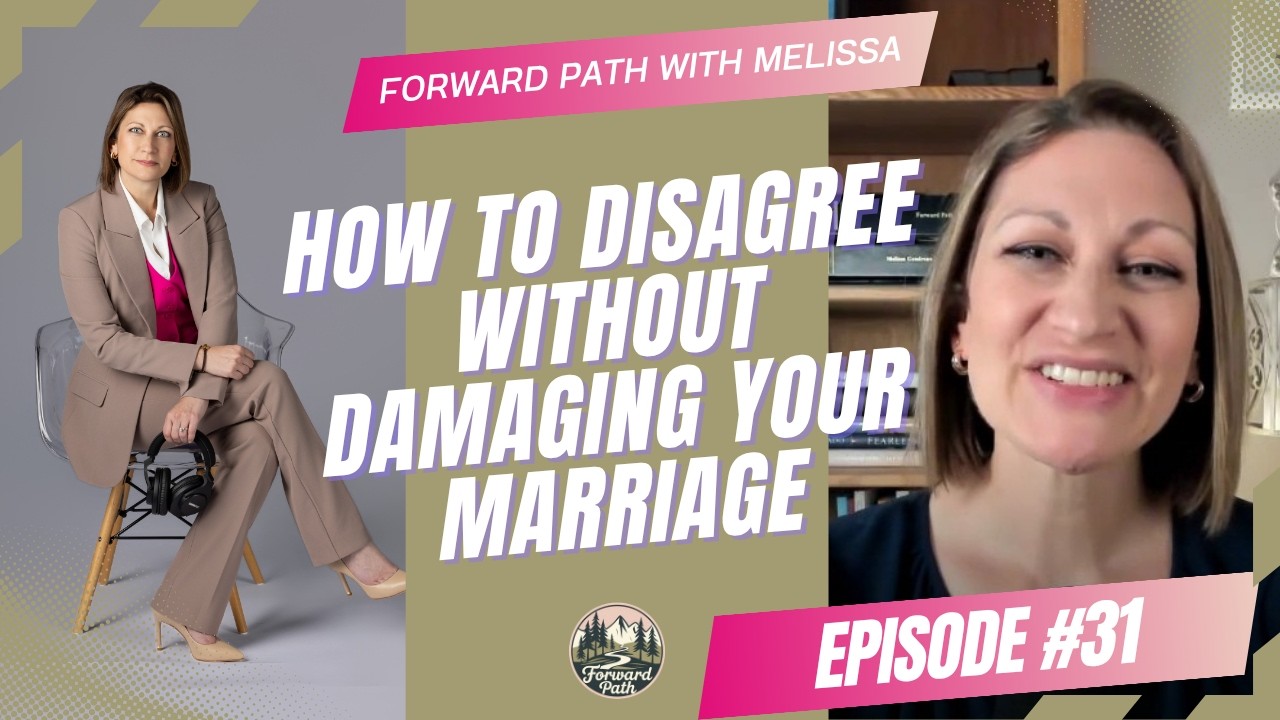
Melissa Gendreau, a therapist and Christian marriage coach, teaches four shifts to handle disagreement without harming your marriage: see conflict as a chance for oneness, pursue understanding over winning, regulate emotions before responding, and approach disagreements with humility. The real danger is disconnection, not conflict.
Chapters
Disagreement doesn't have to damage your marriage. It can actually deepen your connection when handled God's way. In this episode, we'll explore 4 key shifts that protect oneness: seeing conflict as an opportunity instead of a threat, fighting for understanding rather than victory, regulating yourself before you respond, and approaching every disagreement with humility. These biblical and practical tools will help you stay on the same team, even when you see things differently. Hey friend, welcome to Forward Path with Melissa: Life and Marriage God's Way. I'm Melissa, small-town Iowa girl, wife to my best friend since 2007, mom of 2, mental health therapist since 2009, and founder of Forward Path. I'm forever grateful that God took a shy, insecure kid and showed her who she really is in Him, giving her just enough humble confidence to stand for what's true, because that changed everything. Forward Path and this podcast is the stirring God wouldn't let go of in my heart, because the world can feel heavy and dark, and we're called to be different. To shine his light, especially in our marriages and homes. So every week we're gonna open scripture, pull from real-life counseling experience, coaching knowledge, and talk honestly about the messy and the beautiful. How to disagree well, love deeply, heal, parent with purpose, and keep walking forward with Jesus. Because your growth isn't just about you. It's about glorifying the one who designed it all. So grab your coffee, let's walk forward together. This is episode 31, How to Disagree Without Damaging Your Marriage. So before we talk about communication techniques or emotional regulation, we have to start with a foundation. How do we view conflict itself? Because the way we approach disagreement determines the direction the conversation will go. Conflict is not the enemy. Disconnection is. You're on the same team. And I wanna start by saying something that might surprise you. A healthy marriage is not one where 2 people never disagree. A healthy marriage is one where 2 people learn how to stay connected, even when they see things differently. In a God-centered marriage, we're called to oneness, not scorekeeping or parallel lives. Disagreement is inevitable between 2 imperfect people that are building a life together. But the real danger isn't the conflict itself. It's that disconnection that happens when we stop seeing each other as teammates, as partners. When we treat our spouse as the opponent instead of the person we're on the same side with, we slowly erode the unity God designed marriage to reflect. This is why I often say the 100% marriage model matters. Both spouses are fully devoted and committed to the relationship rather than protecting their own side. I've sat with couples who could argue for, it seemed like, hours about whose turn it was to do the dishes or how to discipline the kids, but the real issue wasn't usually the dishes or the discipline. It was that they had started keeping score. One spouse felt like they were always the reasonable one, and the other felt constantly criticized. Over time, they stopped turning towards each other and started turning against each other. The arguments weren't fixing anything. They were creating emotional distance. Nothing ever got solved. And scripture never promises marriage will be conflict-free, but it does call us to pursue Oneness. Genesis 2:24 and Ephesians 5:31-32. In past episodes, we've talked about the enemy loves to take normal differences, unresolved hurts, and moments of misunderstanding and turn them into division, slowly moving a couple from, we're on the same team, into, you're the problem. When we remember we're on the same team, Conflict becomes an opportunity to grow closer instead of a threat that pushes us apart. This is the same heart behind the teaching that we stop taking our spouse's words personally and instead choose to believe the best. This week, before any disagreement escalates, pause and say out loud or to yourself, we're on the same team. Then ask, how can we solve this together? Instead of, How can I prove I'm right and win? Practice catches the moment you start keeping score and gently redirects your heart back to oneness. Once we remember we're on the same team, the next question becomes, how do we actually handle the disagreement in front of us? Being on the same team doesn't mean we will automatically see things the same way. The goal is understanding, Not winning. So when the goal shifts from, I need to win this argument, to, I wanna understand my spouse, everything changes. An argument usually leaves the other person feeling defeated, which damages emotional safety and intimacy. Understanding, on the other hand, builds connection, even when you still disagree. This doesn't mean that you never have strong opinions. I have lots of strong opinions. It means your primary desire is to see your spouse's heart, not prove your point. One couple I worked with had the same fight for years about money, the actual same fight. She wanted more security and he wanted more freedom to enjoy their life currently. Every conversation ended with both feeling unheard and more entrenched in their positions. When they finally shifted the goal to understanding, she realized his desire for freedom came from growing up in a very restrictive home. He realized her push for security came from watching her parents lose everything financially. The facts didn't change, but their posture did, and the conversations became much more productive. I'm not saying easy, but at least they were able to discuss the topic and understand why they were both having their points of view. This idea flows directly from the teaching we've done on Empathy God's Way and stopping the habit of taking our spouse's words personally. Because when we're more focused on being right than on understanding, we often miss the deeper needs and wounds underneath our spouse's words. We just wanna prove our point. Proverbs 18:2 reminds us that A fool takes no pleasure in understanding, but only in expressing his opinion. Ouch, right? God calls us to something higher: humble curiosity that protects the relationship. So next time you disagree, try this simple practice. Before you share your perspective, summarize what you heard your spouse say. You don't actually even have to do this out loud. Sometimes that can actually feel patronizing. It's just summarize it in your head. What did I just hear them say? And then you can ask for clarification, but again, it slows you down. Only then, once you've taken the time to review what the other person said out loud or in your head, then share your view. This small habit slows you down and communicates, your perspective matters to me more than winning. Again, even if you didn't summarize it out loud, You taking time to pause will show them your love and respect. But sometimes even when we genuinely want to understand our spouse, our emotions get there first. We can respond before wisdom has a chance to catch up. This is why learning to regulate ourselves is such an important part of loving our spouse well. Some of the most damaging words in marriage are spoken in the heat of the moment when our emotions are running the show. Learning to regulate yourself first is one of the most loving things you can do for your marriage. It's not about stuffing your feelings. It's about creating space to respond from a place of love and truth rather than gut reaction. This is where renewing your mind becomes practical in real-time conflict. There was a wife I counseled who used to react immediately whenever her spouse brought up something she felt criticized about. She would defend, explain, or shut down, all before she even understood what he was actually saying. Over time, she practiced a simple pause, taking a breath, silently praying, Lord, help me hear him. And then responding. The same conversation that used to escalate now often ended in connection because she gave herself and him room to be human. She was also able to recognize that his words rarely were intended to hurt her. Sometimes it was more just having conversation or asking questions. This directly connects to the renewing your mind teaching we've walked through in other episodes. Our feelings are real, but they're not always justified or trustworthy guides in the moment. Scripture calls us to be slow to anger and quick to listen . When we pause to regulate, we're choosing to partner with the Holy Spirit and let him— instead of letting our flesh lead. This is the same principle behind catching negative thoughts before they take root and replacing them with truth. So create a simple pause practice that works for you. So for you, it might be taking 3 deep breaths, stepping into another room for 60 seconds, or silently praying a short pause like, we're on the same team, Lord, help me. Practice it even in small disagreements so it becomes automatic when bigger ones arise, because over time, this builds emotional safety in your marriage. But emotional regulation alone isn't enough. We can take a breath, calm down, and still approach the conversation from a place of pride or self-protection. So this is where humility becomes essential. Humility doesn't mean you have no opinion or that you always give in. It means you are secure enough in your identity in Christ that you don't have to defend yourself at every When we operate from humble confidence, we can admit when we're wrong, ask good questions, and value our spouse's perspective without feeling threatened. Pride turns disagreements into battles for self-protection. Humility turns them into opportunities for growth and oneness. A husband shared that he used to get defensive, uh, the second his wife brought up anything he could interpret as criticism. And so his posture was, I have to prove that I'm right and a good husband, and, and, and. When he began anchoring his worth in Christ instead of his performance in work, marriage, as a dad, he could actually hear her without immediately defending. He started responding with, help me understand what that felt like for you. Instead of explaining why she was wrong. Their conversations became shorter because they didn't have to continue to keep explaining, and honestly, then much more connecting. And this flows from the identity in Christ teaching we return to again and again. When our worth is settled in who God says we are, Psalm 139, we don't have to fight so hard to be right. Humility also mirrors Christ, who humbled himself even when he was right. Philippians 2. In marriage, this kind of humility creates safety, the very safety that allows both spouses to be honest without fear of attack or withdrawal. So before entering a disagreement, remind yourself, my identity is secure in Christ. I don't have to win to be okay. Then practice asking more questions than making statements. Questions like, what's most important to you about this? Or, how did that land for you? Communicate humility and invite connection instead of defense. Notice that none of these shifts are about changing your spouse. They're about allowing God to work in you first. So to wrap this up, remember, Disagreement is not the enemy of your marriage. Disconnection is. When you remember you're on the same team, you're partners, you fight for understanding instead of victory, regulate yourself before speaking, and approach every conversation with humility. Conflict can actually become a tool God uses to draw you closer rather than drive you apart. This is the kind of marriage that reflects the Gospel. 2 imperfect people choosing grace, truth, and oneness over and over again. So this week, I challenge you to pick just one of these 4 shifts, whether it's pausing before you respond, asking one good question instead of trying to make your point, saying, we're on the same team, or reminding yourself your identity is secure in Christ, and practice it intentionally. At the end of the week, talk with your spouse about what changed in your conversations. You don't have to be perfect, just willing to grow together. Let me pray for you. Father, thank you that you designed marriage to be a safe place where 2 people can disagree and still remain deeply connected. Forgive us for the times we've made conflict about winning Instead of understanding. Give us humble confidence that comes from knowing who we are in You. Help us regulate our hearts, choose our words wisely, and fight for oneness even when it's hard. Protect our marriages from the slow drift of disconnection. May every disagreement become an opportunity to reflect Your grace and truth more clearly. In Jesus' name, Amen. That's all for today, friend. Thank you for walking this stretch of the path with me. If today's episode encouraged you, here's how you can keep growing with me. Would you do 2 quick things? Hit subscribe or follow so you never miss an episode, and then share it with one friend who needs this message. If you want to go deeper this week, subscribe to my free weekly email for a quick breakdown of this episode, Key scriptures, and then simple action steps you can take in your marriage and faith. It's like having a personal coach in your inbox. You can go to melissagendreau.com/forward-path-weekly. Until next week, keep shining, keep growing, and keep moving forward God's way. See you soon, and God bless.
More from Melissa


Consistency Over Intensity: Why Small Faithful Habits Last | Christian Podcast







Busy vs Intentional: The Difference That Changes Everything | Forward Path Ep 39