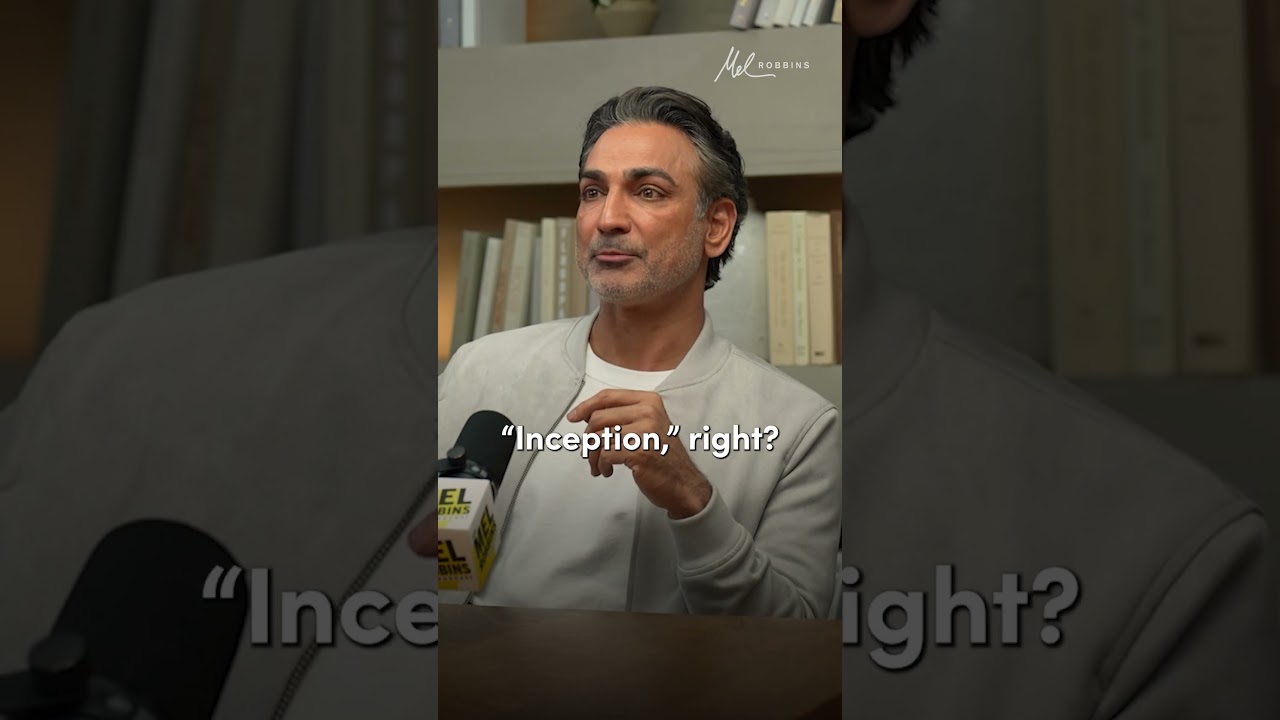
Mel Robbins shares how to remember your dreams: stay in bed 5-10 minutes after waking without moving, repeat "I will dream and I will remember my dreams" before sleep, and focus on a topic during the last few minutes before falling asleep. These free habits train your brain to capture dreams like the film Inception.
Chapters
Can you train yourself to remember your dreams?
Dream recall can be improved by some basic steps. One is slowing down the sudden waking up. Okay, so that takes a lot of luxury. It takes not setting alarm, takes not having your, your, your dog or your kid jump on your bed. But what you're trying to do is not abruptly have the executive network come back online.
Okay.
So if you have a slower 5 to 10 minute arousal, if you try to lay flat and, and think as you're waking up rather than physically move.
What are the specific habits that you recommend we do for sleep entry to help build this skill of dream recall?
One is The power of suggestion, where you say to yourself, "I will dream, and I will remember my dreams." It's almost like a mantra. Number 2 is to sort of influence the content of your dream by what you're looking at the last 5, 10 minutes. It was later used in "Inception," right? When they fall backwards in the chair. All those concepts come from this sleep entry window.
It's a very compelling invitation to take 5 minutes every night while you're sitting in bed and say, I want to dream about this relationship. I want to dream about my next chapter.
And I want my dreaming brain to weigh in on these things that are— I've been tackling during the day. And maybe if there's a flare and I can remember it, it'll give me an insight to the problem. So it's that leveling up that's free and available to all of us. That's why I think it's beautiful.
So what do I do as I'm waking up? What do we do in the sleep exit?
So the way you're trying to turn the dial from dreaming to awake, rather than be startled, you're starting to wake up, but you don't reach for anything. You physically don't move. You try to hold on to your thoughts. You try to think about the emotions and the images. And then after having a few minutes, 5, 7 minutes of that, then you reach over. This is my ritual. Then I reach over. And I grab for the phone and then I just jot down some, some thoughts. My thinking is different in that hybrid state in the morning, and I— that, that time when I'm both partially asleep and dreaming and partially awake, I'm using that window and to think differently about everything, about anything, old problems, new problems. New ideas. The thinking that's happening around that time is, is a, is a unique perspective on the same problems, just through different lenses, different brain modes.