If You Struggle With Anxiety, You Need To Hear This | The Mel Robbins Podcast
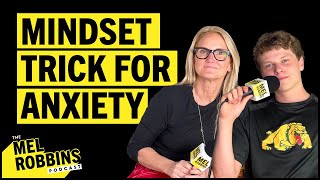
Mel Robbins talks with her 17-year-old son Oakley about his anxiety, which started in freshman year and once included suicidal thoughts. He credits therapy, medication, and family support with helping him manage it. Both stress that scary thoughts are normal and that young people should speak up.
Chapters
Welcome to the My Robins Podcast. That is Oakley Robins.
Hey guys.
I wanted to talk to you because you came into the kitchen tonight and you were like, oh my God, I just had the best therapy session. And I thought, how many 17-year-old guys walk into the kitchen and announce to their family that?
I don't know. I do not know.
Would you be willing to unpack it with me?
Yeah, this is probably going to terrify you. I don't know if you've heard this story.
I don't know. Hey, it's your friend Mel, and welcome to the Mel Robbins Podcast. That is Oakley Robbins.
Hey guys.
Oh my God. Oh, I'm so excited you're here.
Me too. It's been a long time.
It has. And we get a lot of questions, comments, requests for you. I am so happy that you wanted to sit down, Oak. For those of you who are new to the Mel Robbins Podcast, welcome. My name is Mel Robbins. I'm a New York Times bestselling author and one of the world's most respected experts on motivation and change. And this is my son. This is our son.
I am not a New York Times bestseller, but I don't know yet. I'm the son of a New York Times bestseller.
So our son Oakley has been on the podcast twice. 3 times.
3 times.
You introduced me on the opening show. Oh, yeah, I introduced you.
I was in our solo one, and then on the family one.
Right. Awesome. You're amazing.
Awesome.
And I wanted to talk to you because you came into the kitchen tonight, and you were like, "Oh my God, I just had the best therapy session." And I thought, how many 17-year-old guys walk into the kitchen and announce to their family that?
I don't know. I do not know.
Do you care?
No, not really.
Talk to me about therapy. Do you like therapy?
I would like to talk to your audience about therapy.
Okay, do it.
Guys, therapy is like, it's awesome. I love my therapist. I love therapy. When I was younger, I had a horrible experience with therapy. It was with this like old woman who like tried to convince me how to use an elevator because that's what I was afraid of. I was afraid of elevators. She was like, you need to ride the the elevator, and I was like, I don't want to. And so I hated therapy. I hated it. And then I got a new therapist last year, and it like changed my life.
How?
Because I just love having— it's almost like therapy is almost like having a notebook, but you don't have to write, and you don't— and you actually get an answer back. So you don't have to like take the time and your hand hurts and all that stuff to like write down your thoughts. You just say it and then they say something back to you and it doesn't have to help, but it's just nice to hear someone say something that isn't part of your friend group or a family member. They're just someone that's there to listen and maybe that's all they need to do. Um, and I love therapy and I would fully recommend therapy to anyone because no, it's not like some bad thing. And if you have a therapist, you're super messed up in the head and like everything in your life is going to shit. Like, no, therapy rocks. You can have it when you're perfectly fine and happy. I, I think everyone should have a therapist because it's just the best.
I agree with you. And the thing that I realize now is had I gone and worked with a therapist, Oak, when things were going okay, They probably wouldn't have gone back.
Yeah, yeah, yeah, yeah. Because I hate to burst your bubble, but you are not going to be able to solve all your problems and your friends with the similar age as you and the similar mindset will not be able to solve the same problems that you have.
Oh my God. Well, I want— I'm so happy and appreciative that you were like, yeah, I'll sit down on the mics with your mom and tell you why this therapy session with Keith was so awesome. So thank you.
Of course.
Why did you want to do it?
Because I felt like I was in a good mood and I was like, you know what? Like, I haven't done it in a while. Like, might as well just jump in there and be nice.
Why do you think I wanted you to sit down with me and let everybody hear you tell me in real time what you talked to your therapist about tonight?
Because what you would probably say to me if I said no was, it would benefit a lot of people, including you.
Yeah, it will, because I hear every single day from parents around the world about how their kids, and their sons in particular, don't talk to them. And so it's a real, I think, gift to have you be willing to just sit down and have these conversations, because it gives parents and people with teenagers and college students and young adults in their lives, they actually forward these episodes, Oak, as a way to open up dialogue. And it's working. That's why people are asking so often and so frequently that we have you come back and back and back. So thank you.
Glad I can help.
All right, well, let's see if this helps or not.
Let's do it.
Okay. You walked downstairs.
That I did.
And we were cooking dinner and we had your sister on the FaceTime. She was playing a song for us she just wrote. And you walked into the kitchen.
Yes, I did walk into the kitchen.
And you said—
I love my therapist, Keith.
And it was so funny. You just like strolled around. You're like, I love my therapist, Keith.
Yeah, I do. Shout out to Keith.
So what did you talk about in this session?
A lot of things. Things.
Would you be willing to unpack it with me?
Yeah.
I mean, can you just tell everybody why you wanted to share this? Like what? Because, because I think it's pretty cool that you're willing to—
the honest answer. Do you want the podcast answer?
Either.
The honest answer is that I came downstairs in a good mood and I said, I love Keith. And you said, will you record this with me? And I was in a good enough mood to say sure.
Oh, I like an honest answer. What's the podcast answer?
This is game-changing stuff right here. Life-changing. Is it? Depends on how they look at it.
Well, is it for you?
It's a viewpoint that I didn't consider.
About life? Yeah. So it was a life-changing therapy session you just had with your therapist, Keith.
Low-key. Yeah. It's like, yeah, a little, little life change right there. A little like tweak in the direction that my life is going in.
Hey, I, I can't wait to hear it. Um, so why did you start working with Keith in the first place? And then we'll hear about this life-changing session. How long have you been talking to Keith?
Started when? Last year, April, was it? Or was it May? It was April. So yeah, April last year. So almost a year, kind of close to a year, a few months away. Sophomore year. And it was weird because freshman year and sophomore year, there was a moment in time in my school life, or in my life, in the same point in time. It was— I remember the exact time. It was like March. It was like a March, March time. It was like becoming spring but still kind of chilly. That's like the, the memory that I have from these points in time where it wasn't, it wasn't depression, and it wasn't like I think it was anxiety.
Okay.
It was overwhelming anxiety in my freshman and sophomore year, and it went away. Like freshman year happened in March. It was about 3 weeks gone. Forgot about it.
Hold on a second. I don't remember you having anxiety.
'Cause I never told you about it. Why? Because I didn't want to make it a huge thing and I didn't want to go to therapy and I didn't want to like get into that. I didn't want to get into that. I was like, I can do this. I can solve this. I can get over this. Like we're good. And we were good freshman year.
Wait, hold on a second, though. Stop the— stop the train.
Stop the phone.
Stop the train. I want to get off.
Don't you dare do that to me.
John Mayer.
We'll include that later. We'll include that later.
I had no idea that you were struggling with anxiety for 3 weeks in freshman year of high school. You hid. Why did you hide this from me?
I struggled with anxiety my whole life. The— when I talk about that specific time period, it's when my anxiety was at this, like, weird peak. Where I just like couldn't really do anything and I was terrified.
Of what?
No idea. Like, I couldn't tell you freshman year and I'll get into what it was later because I know now. But there was— this is probably going to terrify you. I don't know if you've heard this story.
I don't know.
I wrote a memoir about it in sophomore year. So there was this one day in freshman year that I remember that's like basically the only thing that I remember from when I was anxious like that. And it was— I was— this was actually the first day that I came. I wrote this memoir called The Blue Ceiling because artsy and like there was this like moment where like later in the day I'll get into it. But anyways, I, I woke up and it was like one of those— it was one of those March days where it was like there was no snow, but it was like kind of like foggy.
Yeah.
And misty.
Yeah.
And where we live, like, when you look out the windows, like, you can't see anything. So, like, you feel like you're in, like, a snow globe. And so I woke up and it was like one of those days where I was in a snow globe and I was like, you know, like, I'm just going to, like, stay in bed and watch some TV. Like, that sounds nice.
Okay.
And so I was doing that and all of a sudden, like, boom, like, semi-truck hits me. Like, I'm lightheaded, I'm confused. I'm like, what's going on? Like, nothing feels normal. Like, I don't feel safe right now. Like, I'm really scared. I don't know what to do. Like, I need to get out of my room. Like, I need to go, I need to go, I need to go. And so I, like, open the door, I go downstairs, and I see Dad sitting in front of the fire, and he's like, hey dude, what's up? And I was like, I didn't, I didn't tell him that I was freaking out, but I, like, looked at him and I was like, I'm okay, like, it's whatever. And then I, like, walked outside, I, like, looked around, I, like, took a deep breath. I was like, whatever this is, like, you've been anxious before, like, you can get over this, like, it's fine. Then I go back inside.
Yeah.
I wanted to hug Dad. I wanted to like, I don't know, I wanted to do something. I wanted to reach out. I wanted to get help. I wanted something and I couldn't do it. Like, I just couldn't. I didn't want to.
Why?
Because I didn't want to get into it. I didn't want to become a process. I didn't want to have to do stuff because I felt like I knew what I was doing. And then what happened is I went back up to my room. I kept watching TV. And I remember going back downstairs to find Dad, and he wasn't there. And then I look towards the kitchen, and I like— like, Rick, like, thinking about this moment is so like weird and scary, and like, I would never do this ever, and it's super out of character. But I looked in the kitchen, and like, I— you're gonna be very nervous when you hear this. And I looked— also, maybe trigger warning for the viewers. I mean, listeners. Sorry, guys. Maybe trigger warning for the listeners. But I looked at the kitchen and I looked at like the, the knife holder.
Uh-huh.
And like, I like, like almost like a movie. Like I could fully imagine myself like stabbing myself in the stomach with a knife. And like part of me was like, I should. And I was like, holy fucking shit. Like, this is not happening right now. Like, I am not suicidal. Like, I don't want to kill myself. Like, I want to live. So like, I go back outside. I like, I'm like hyperventilating. I'm like, I'm like hyperventilating right now. And I like look around. I'm like, I'm like breathing in and out. I'm like, like, I'm going to be okay. Like, it's okay. It's okay. It's okay. It's okay. And like, there was this feeling of lightheadedness and I just couldn't think clearly and I felt like nothing. I I would do in that moment would ever matter. And so why do anything? And so that's why I had that thought is like, I should just like stab myself because like, if I don't— if I do something and it doesn't matter, like, why do it? Like, why do anything? So like, why? Why would I keep living my life if nothing I do will ever matter? Like, why not just end it now? Then that night, the reason the memoir was called The Blue Ceiling is because later that night I had this like ceiling projector. It was like it projected like this blue night sky into my ceiling. It was super cool. Still have it. And I just like, remember, this is going to be like such a main character moment, but it was like— and it is, I will fully admit to that. But I like, I reached my hand up and I like looked at my outline of my hand and I was just like crying for no reason in like the dark. The darkness of my room is like my ceiling was blue and like that was the only light. And I was just like looking at my hand outline and crying and just being terrified. And then it basically just like went away. It was gone. I never thought about it again freshman year. Like, it was gone. Didn't think about it.
Can I ask a question?
Go for it.
Are you nervous about what I might ask?
No, not really.
Well, first I just want to say thank you for telling me.
I feel like I told you that before, right?
Not that part.
No, I could give you the memoir and you could read it on your own time if you wanted to.
I would love to.
I would be happy to give it to you.
I think it's really odd that you never told me that.
I forgot.
Because we have a really good open relationship.
Oh my God, we have a great relationship, as stated in the family podcast episode.
Will you stop? Okay.
Wonderful. I'm plugging, Mom.
I know. No, but I— so number one, I'm surprised that you never shared that with me.
I know why I didn't share it with you.
Why?
I didn't share with you because— two reasons.
Okay.
The first one was I didn't want to get into it. I didn't want to get a therapist. I didn't want to go on meds. I had horrible experiences with meds and therapists in my past, and I didn't want to go back into it because I was just like, no, no thanks. And two was because since I've had— I've had anxiety my whole life. Like, I have— I wouldn't say every day, but like every week I've probably had like a small anxious panic. If you will, like, oh my goodness, I'm anxious right now. Like, I'm anxious, I'm nervous, whatever, whatever. And like, I can handle it. I can do it. And so I felt like I could handle it. And like, the reason I didn't tell you is because I was like, I did, I thought I handled it. Like, I was like, it's over. Like, it didn't come back.
That's interesting.
It did not come back.
Yeah. I want to say one other thing. I want to address the fact that you may be listening to us talking about a very serious topic. And we're giggling and we're light about it.
People laugh when they're uncomfortable.
Oh, true.
Except I wouldn't say I'm uncomfortable. I don't know if I'm uncomfortable right now, but I'm just like, I don't know. I feel like this is easier to talk about when I can like throw in a joke.
Got it.
Have some fun with it.
That makes sense. You know, Oak, I wanna specifically address what you said about that thought that you had about the knife. Because those kinds of thoughts that are really big, scary, overwhelming thoughts, they can seem uncontrollable because they can come out of nowhere and they can start to get more and more frequent and overwhelming. They are very normal. In fact, according to therapists, almost everyone has experienced a situation like the one you described. But I wanna talk further about this topic because it's helpful to talk about it. So hold onto that thought 'cause I know there's more that we're gonna talk about because I gotta pause real quick for a word from our sponsors and we're gonna be right back. By the way, you're actually watching an episode of the Mel Robbins Podcast behind the scenes. Yeah. So make sure you subscribe on YouTube and also Follow the show wherever you listen to podcasts. You wanna know why? 'Cause the more this show grows, the more we can continue to bring this to you at zero cost. And that's a really big deal for us. So thank you for supporting us by subscribing to YouTube and by also following Mel Robbins Podcast on a podcast platform. Yeah. All right, back to the show.
Cool.
Welcome back. I'm Mel Robbins and I'm so excited you're here because I'm talking to my— our 17-year-old son Oakley, and he's just in real time unpacking a killer therapy session that he had tonight with Keith.
30 minutes ago, I got off the phone. I feel like you're supposed to wait a day, but no, we just jumped right in.
We just jumped right in. We are a deep end kind of family. Let's go, right?
Mm-hmm.
Okay. Here's the other thing I wanted to say. We have 2 years from this. Meaning we've had 2 years distance from this topic.
From the freshman topic.
Yes, you're in an amazing place mentally, spiritually.
Fantastically.
Yeah, and so there is no danger.
No.
And so I'm not triggered by that. And the other thing I wanted to say is, would it surprise you to hear that having thoughts or a fleeting thought about ending your life or dying some death like that is normal.
Yeah, because I feel like, like suicidal thoughts are— I feel like it's been talked about to the point where it's like you're at the worst of the worst if there's suicidal thoughts. Like this is where like shit is going down. Like it's bad. Like this is bad. Like this is the worst of the worst, like this is horrible.
Like, I get it, like you're at the end of the line.
So like, truth is, so when you hear, like, so when you hear that somebody has suicide, like when you just said, would you think it's normal that most people do, like I'd say no because it's like, no, most people do. I wouldn't expect everybody to be at the worst of the worst, even though I see what you're saying.
What you're saying is this, because this has been talked about so much, particularly to your age group, Yeah. It makes you think that when you have a thought like that.
It's more just that like, I feel like it's talked about where it's like, it's only like the people with the worst condition are gonna have that.
Got it.
So it's not, so like when you say like, oh, everybody has it, like I'm like, really? Like, I feel like it's only the worst of the worst that have.
Because of, no, it's normal to have those kinds of thoughts. So I just wanted to address what might sound like a weird tone or an insensitive tone to say, we're 2 years away from it. Oakley's in an insanely amazing place. Oakley is in an incredible place in his life, in his mental health, his spiritual health. He's just happy. And— Period.
Period.
It's somewhat normal to have those kind of thoughts. It's very clear that in, and one of the things that I think is very important, I've said it over and over and over again, is this. There's a big difference between wanting to end the pain or the anguish that you're feeling right now and actually wanting to end your life.
Hmm.
Hmm. You can figure out how to lessen the pain or the sadness or the weirdness or the anxiety that you're feeling. And you can do that and you don't have to end your life. In fact, you make your life better by talking about these things that are overwhelming you and asking for help because you can't just keep them inside. No, because what happens when you keep them inside?
Like, it's like it's kind of like a Coke can. Like when you shake it up and then it explodes.
Yeah, exactly. Exactly. That's why I'm proud of you for talking about this, Oak, because it can be torture if you've got that trapped in your own head.
Oh my God, it's horrible.
And I think most people, including the people that we've lost that we love to death by suicide, I still would say most people, if somebody had assured them If I can take away all the pain that you're feeling and you could still have your life, would you want to be here?
Hell yeah.
Right?
Hell yeah.
Exactly. Now I want to talk to you listening and just check in with you. And what I specifically want to make sure that you hear me say is that it is normal to have these big, scary, and overwhelming thoughts. And when they come out of nowhere or they seem to get louder and louder, it can be terrifying. I know it was terrifying when this all started happening with Oakley. And I'm telling you that this is normal because so many people suffer because they believe that the thoughts will never go away.
That's what I believed. I thought it would never end. And I didn't want to live the rest of my life with those thoughts.
Now, if you knew the thoughts were going to end, would it have made you feel better? Yeah. If you knew having those thoughts pop in your mind was perfectly normal? Would that make you have felt better in that moment?
Kinda, yeah.
I'm glad that you said that, Oak, because I think so many people, when they start to suffer because of these really scary thoughts, they don't tell anybody.
I didn't want to tell anyone.
I know, and I wish you would've told me. I wish you hadn't suffered alone. I wish you would've told somebody, because the second that you start to talk about it, it immediately relieves you. Of the burden of carrying this on your own.
Right.
You can figure out how to lessen the pain or the sadness or these awful, like, kind of thoughts that keep popping into your head. You can do that. And you can do that and you don't have to end your life. In fact, when you do that, you make your life better. Mm-hmm.
How?
And that's why I'm saying this to you as you're listening to me and Oakley. Tell someone if you're having big and scary and overwhelming thoughts.
Tell anyone. Just tell anyone.
I also wanna tell you, if you're having big and scary and overwhelming thoughts, you're not fucked up.
No.
Those thoughts are temporary. They will pass. And they're gonna pass so much quicker when you get them out of your head and you tell someone. You know, my friend Amy, Who You Know Oak. She said when you have big scary thoughts like that, she heard a therapist say it's like being trapped in a paper bag. You can't see anything. You can't think of anything else to do. It sort of clouds your mind. But the second you find the courage to say it out loud to somebody, it's like that paper bag, it just shreds. And you'll realize and you'll see that you're not alone anymore. There are people there that can help you and will help you. And what you're experiencing is normal. And you can get through this. And so I had a question because, you know, you just said to everybody, Oak, that you didn't tell me about what was happening freshman year.
No.
And what would you advise somebody who is listening to this right now who relates to what you're talking about? And maybe they haven't told anyone. The reason why I'm asking this is I know So many parents and aunts and uncles and teachers and therapists are going to forward this episode to young adults and college students in their life and just people they're worried about. So knowing that you just explained that you were worried I would make something of it, you didn't want to get into it, you thought you could handle it. Knowing what you know now, what would you say to that person who hasn't told somebody?
Well, if you are close in age to me, I don't know, teenager, mid-20s, mid— I don't know, college, high school, middle school, whatever, it does not matter what is going on in your head. If it is overwhelming, if it is scary, if it is stopping you from doing things that you can normally do, you should always, always, always, always, always tell someone. And you may be worried that it'll make things weird or it'll change things in your life, and it most likely will, but it is going to change your life for the better. In the beginning, for me at least, I thought to myself that, hey, I can keep this in. Like, I've done it before. I've done it 10,000 times before. Like, I can do it again. And yeah, you can do it in the beginning, but instead of waiting till you collapse, just get it over with right in the beginning and tell someone. That's all you have to do.
It'll make it better.
It will make it better.
Do you wish you had told me earlier when it was happening in 9th grade?
Yeah.
I do too.
'Cause I doubt it would've come back in sophomore year.
Ooh, good point. Speaking of sophomore year, let's go there.
Let's do it.
So what happened sophomore year? Because you said, you know, this anxiety hit you for a week period in March freshman year.
Gone, forgotten about.
But the shit hit the fan sophomore year.
Oh my God.
So terrifying.
Flashback. Beginning of sophomore year. Summer is awesome. I loved my sophomore year. Great friends, great experiences, great classes, super fun. It was great. It was same time, March, or was it April? Might have been April.
I think we have to track this this year.
We will have to try this. Hey, it's coming to that time.
It is.
Not yet. Anyways, April comes around and I— everything's good, you know. Yeah, everything's good. And then in my English class, like I just talked about, my teacher had us write a memoir about anything we wanted. And so in sophomore year, I wrote about my experience that I had freshman year. Okay, around the same time. And so by writing that, I, I basically like mentally dove back into that mindset— not mindset, but like into that time. And I remembered how I felt, and I remembered what it was like, and I remember the hopelessness and the anxiety. Anyways, so I had brought myself back to those emotions. I remembered them. I kind of brought myself back to a time where I was super vulnerable, and I had to go back and be vulnerable in that moment.
And then I can see your eyes tearing up just thinking about it.
Not really. Not in this moment.
A little bit.
Okay. And so those, those, those thoughts are fresh in my mind. And I— and since I was a sophomore and it was a year later, I wanted to try and like unpack it and think about what it actually meant, why I felt that way. And while I was doing that, like a week rolled around and the next week in that class, my English teacher again showed us a movie. And this movie was about climate change. And it was about how in like 5 years it's irreversible and we're fucked. And it was like possible solutions and all this stuff, and then it told us what would happen if these solutions didn't happen. And so I come out of the movie and I'm like, what could we do? Like, realistically, like, as a world, like, what can we do? Okay, so I started thinking about my town and then my state and then my country and then the world. And then I was like, what if we can't do anything? What, like, can somebody else help us? And I was like, is there somebody else? And I was thinking about the universe, and then I was thinking about like in like expanding, expanding, expanding, expanding. We become a pebble, we become a grain of sand, we become literally like nothing. Like we become nothing in my mind. And all of a sudden it's like a light switch in my mind where I'm like, holy shit, like nothing matters. Absolutely nothing matters to me. Nothing I do—
Do not get yourself back in that state. Okay, well, I was just like, like, I don't know.
So nothing matters. Nothing I do will have an effect. Nothing anybody does will change anything. So why do anything? Why? And so I thought about that and I kept thinking about that, being like, there has to be an answer, there has to be an answer. Like a week passes and there's no answer. And then all of a sudden I start to get these nervous anxiety attacks where I'm lightheaded and I can't think and everything is rushing out of my head and I'm scared and I'm confused. And it's all because in those moments I keep telling myself that nothing I do is going to matter. No one I talk to, nothing I do, nothing will ever change anything. It doesn't matter what I do. It doesn't matter what anybody does. The world's going to end because the world— not, not the world's going to end, but just like in the grand scheme of things, It doesn't matter. We do not matter.
That's it. Climate change and the inability—
no, climate change wasn't my thought. Okay, it wasn't about the world ending. The movie about climate change sparked like a thing about like me thinking about, do I even matter? The bigger picture. And then I realized that I was like, I don't matter. Nobody matters. The world doesn't matter.
Well, let me pick up the story now.
Well, it's not done yet.
Well, because In this instance, you let us know what was going on.
That is what was going on. And it was moments of— there was one moment we were eating dinner together.
Yeah.
And I just had to like get up and go to the bathroom and like look in the mirror and be like, you're okay, you're okay, you're okay, like it's gonna be okay, like you'll get through this. And I was like, I, I was like, I can't, like I can't get through this, like I can't do this. And in that bathroom I was like, I If this stays, if this keeps up, like, I am going to kill myself. Like, I will. 'Cause like, that's how scared I was. Like, I couldn't live with this fact, and I couldn't accept the fact that I felt like nothing mattered.
Yeah, it was a terrifying thing to go through with you.
It was so—
Because you had a complete breakdown, and you started explaining that these thoughts had been cascading and cascading, and you didn't wanna think this, but you didn't know how to stop it. And I'll never forget that 'cause I was holding you and you were crying and you were scared and I was crying and scared. And it had just come out of nowhere that you had gone from just thinking and thinking and thinking and not telling us to a complete breakdown. And I asked you, I was like, "Are you in danger right now? Are you gonna hurt yourself?" And do you remember what you said?
[Speaker] I said, "No." I was like, I'm too scared to do that. Like, I don't want to.
Yeah. And you also said, no, but I can't live like this, Mom. I can't keep thinking these thoughts. And I kept going, what thoughts? And you kept saying, I don't matter, nothing matters.
It— I feel like even to this day, like, I still can't truly explain the thoughts that I was having because it was just like, I can't like wrap my head around them. And so like, I was like I was dying to explain it to you, and every time I told you something, you'd be like, oh, so is it this? And I was like, that's not it. That's not it. And I just couldn't figure out what to say.
You did a really good job of explaining it. When I would have very acute moments of anxiety when I was younger, I would have this thing happen that was equally scary, Oak, where I didn't have the thoughts go first. Nothing matters. Nothing matters. I would all of a sudden feel this weird thing happen in my body. Like you call it like a switch that flipped. And all of a sudden I would have this experience where everything felt fake, almost like The Truman Show. Or that your whole life is a set that's fake. And I would repeatedly have this feeling that if the wind blew, all of these walls in this room would just flop down.
Like a TV set.
Like a TV set. And I would find myself in the middle of the desert with no one in sight. And the only person, and is Earth even real? And is this room even real? Like, that's how it was terrifying. Absolutely terrifying. So I understand what that's like. And for those of you wondering what we did, I went into first responder mode. Do you remember?
You wouldn't let me sleep alone.
I know, I slept in your bed with you.
You wouldn't let me be alone. You— oh my god, you took me out of school.
Yep.
For a week.
For mental health.
We went back to Massachusetts.
Yep, to see doctors.
Trying to think about what else you did.
I wouldn't let you be alone. I wouldn't let you sleep alone. I made you eat. Dad meditated with you. Yeah, uh, we got you into therapy as fast as possible. Yeah, uh, you got on medication, tried some medication that really helped. It's the best, help you climb out of that hole, man. Like, sometimes you need a ladder.
Yeah, you do.
Um, sometimes you also need a surfboard, and so they can work both ways. And they work. So that is what led you to therapy. To therapy.
What a segue. This is like—
oh wait, also, it's a 25-minute segue.
I want to say another thing. Can I talk about the John Mayer song?
Sure.
In terms of it. Okay. Like jumping back before we go to therapy, the— at the time there was this song that I still love today, but I think it also contributed to my anxiety. It's, um, there's this like underground artist. His name's John Mayer. I don't know if any of you know who he is, but he's super— I think he's a pretty good artist. And there's one of his songs, it's called Stop This Train. And basically like train symbolizes time and how like time keeps moving and like John I don't know if I should call him John. We're not friends, but like John Mayer wants the train or time to stop. And it's like, it's just like him being like, stop, stop time. Like, let me stay where I am. Like, I'm like, I just want to, I want to get off. Like, I just want to be with what I am right now. And then it ends with him like talking to his dad and his dad's like, don't stop like time. Like, just like, you just want to hold on and just like keep going for as long as you can and just like appreciate it and be in it. And like, I think, oh my goodness.
That's making you emotional.
Oh my God, it always does.
Why does that make you emotional?
'Cause like time is just like, oh my God, that's too much. Like, that's too scary. Not scary, but like, that's just so much to think about. Like how like time is just gonna keep going.
Yeah. You know, I always have that feeling when I'm in a museum and, you know, I'll be looking at a painting and I lean forward and it's like something has been painted in the 1800s. Jeez, have you had that experience?
I'm way too bored in a museum to ever pay attention to dates. I would love to be like a museum guy, but I can't.
Why?
Because it's just like fun and like mysterious and it makes you like more interesting. I've actually gotten into museums more than I used to be, but I don't know, my memories of museums were always just like, this is the most boring thing ever, like staring at a wall for 15 minutes.
Meanwhile, your mother is having a small existential crisis as she's looking at paintings because as I lean forward and I'm like, this was painted In the 1800s? That means there is a person standing in front of this canvas 200 and whatever years ago. I can't even do the math on this. And they're not here anymore. And it makes me feel so small in the timeline of humanity. And it's the same kind of thing that you're talking about.
Yeah. And so like that song just sparked something in me where I was like, time is going to keep going and like it won't like slow down. It won't slow down. And like, that's scary. And like that added to everything. And yeah, that's the whole John Mayer story. Anyways, John Mayer, if you're listening, please contact me immediately because I love you.
I remember that day when I— because you texted— like, call you and I was like, yeah, sobbing again. You love to cry. You're a good crier. Because you were so grateful for your life and you were grateful to be up here in Southern Vermont and for our family. And that song played and you were calling me from the high school parking lot crying about how much you love your life. And who knew that just 3 weeks later—
It would like, boom.
It would completely collapse and you would be in, probably the worst mental breakdown I've ever seen you.
Yeah.
Really scary as a parent. And I'm proud of you though. I'm proud of you for asking for help, for telling us the truth, for seeing a therapist, for taking medication, for turning toward it to figure it out.
Yeah.
I'm really proud of you.
Thank you. So now we segue.
So tell me, Keith, present day Keith.
Present day. My therapist, the GOAT Keith, he's awesome. He's in California, so we Zoom, and he's just this like super chill spiritual guy, used to be a surfer. Like, he's just like the coolest dude ever, and I love him because he's like such a smiley guy, and he's just like fun, and he's taught me all this stuff. And so I guess this segue— and he basically like helped me actually We— our beginning lessons were, yeah, our beginning lessons were a lot on purpose and like what I am gonna do about this thought process. And we came to the conclusion that, or I guess I came to the conclusion with his help that life does not matter. But us as individuals can make it matter by using purpose and finding our purpose. And so what I discovered with him is that like these thoughts about life not mattering are going to be here, but that doesn't mean they're going to stay. Because over time, when I live my life, I'm going to discover what, what the reason is, or the reason why I want to be here.
Yeah, and why you matter.
And it doesn't have to change anything, and it doesn't have to do anything, but I'm just like looking for my purpose and like my reason to be like, well, that's why I'm here, and that's why I want to live, and that's why like stuff like that.
So I just want to see if you can go a little deeper in explaining something, because when you first started working with your therapist Keith, you were in the middle of these catastrophic, kind of overwhelming, scary thoughts. And it's interesting that where you guys started was with the topic of purpose. And I understand that this was happening in parallel with a medical doctor giving you an antidepressant to kind of act like a ladder to help you stabilize?
Still on them.
Still on them.
Still great. Still taking them. Guys, they're great.
But what was it about the topic of purpose that really helped you see your way through these scary and overwhelming thoughts? Because the other thing that I've read about the research of this is that this is very common, whether you're triggered by thinking about things like climate change, or if you're thinking about racism or systematic discrimination, or you are experiencing extreme poverty, or you lose somebody that you love, it can lead you to deeply contemplate the meaning of life. And people that are more empathetic or introverted tend to do this more, but it can happen to anybody. And so I found it really interesting that, that it was a conversation about purpose that helped you start to gain more control about the way that you were thinking. So can you explain how that helped you?
Yeah, I feel like what purpose— like, what our conversation about purpose did for me was that even though at this point in time, um, I felt like life had no meaning and there was nothing to really, like, be alive for. The conversation about purpose kind of strengthened a thought in my mind about how that at one point in my life I'll do something, or I'll meet someone, or I'll go somewhere that will just like give me this feeling of belonging and a reason to live and a reason to be here. And that will be like my reason to be on this earth. And like, one day I'll be like, hey, this thing that I've discovered about myself that I really like is like my reason to be here. And this is why I'm on this earth.
Can I go a little deeper?
Yeah.
Because at the time that this was happening, how would you describe your relationship with your family?
Good?
Yeah.
I mean, I feel like my relationship has always been good, so.
Yeah, and did you have friends?
Plenty. I even had a girlfriend.
And did you enjoy school?
Loved it. Still do.
So the only thing about your life that wasn't working were these thoughts.
Yeah, these thoughts, it's not even that it fully clouded my judgment. I still loved my friends and you guys and everybody in my life, but I just didn't see why that mattered.
Because you have all this stuff handled and now your mind is starting to take you to these dark places.
Mm-hmm.
Got it. And I think that's important because it just goes to show you, no matter what's happening, on the outside in somebody's life, they seem like they're enjoying school, they have a great girlfriend, they've got good friends, they have a family that they're connected to, that their thoughts might actually still be a very scary place.
Yeah.
And I wanted to point that out because you just can't assume that you know what somebody's reality really is. I mean, I didn't even know.
Nobody did.
Not in 9th grade.
No.
Well, yeah, I mean, I knew very well in sophomore year.
Yeah.
But I also find it very interesting because when you believe that you are here for a reason and that your life is leading you somewhere, that there is something unique for you to discover that's on the road ahead, might be tomorrow, might be a year from now, might be 10 years from now, might be longer from now. But kind of approaching life like it's almost like a gift that you unwrap to discover what's inside. That thought was like a seed that he planted that has taken root. Yeah, because I hear you talking a lot, pretty frequently, about purpose.
It's like my personality now. All of my friends and like everybody I talk to, at some point we always come into this conversation where I'm like, you know, I'm actually like, I don't see a reason to living and I'm actually looking for purpose. And they're like, what?
You're a really intellectual guy because I would label this an existential crisis, which is basically questioning existence. Yeah, that's what happened to you. And that happens to a lot of people. It's a very normal thing. And so are big and scary Thoughts. Thank you for telling me that.
Thank you for listening.
Anything else on that topic that you want to share?
No, I don't know. Anything else you want to know?
Are you okay right now?
Yeah.
Like, is that an honest answer?
Yes, it is.
When's the last time you had a big and scary thought?
To be honest, I The thoughts are still there. They're there like every day, but they're more like an in the back of my head kind of thing where it's like, oh yeah, this is true. And I'm just like, well, yeah, it is true, but you know, who cares?
You know what happens to me a lot?
What?
Every time I get on a plane, a big, scary, overwhelming thought enters my mind. And the thought is, what if this is it? And then I think about how much I love you guys. And I think about how grateful I am to have had an extraordinary life. And I say, it's whatever's going to happen is going to happen. And that is a way that I deal with a big and scary and overwhelming thought. It's normal. I don't resist it or go, oh no, there it is again. I just go, oh, there's that thought.
You can acknowledge it.
Where's acknowledge it? Oh, there I go. Life is like, I'm having that thought that this is all meaningless. I'm sitting in a classroom in high school learning biology. I don't really care. Where is this leading? Oh, I know where this is leading.
Biology is actually super interesting.
Okay, well, see, there's meaning there. There's meaning there. I know where this is leading. It's leading me to something that only I am meant to discover on this journey called life. So, so do you have a sense of what your purpose is?
Absolutely not. But that doesn't— like, that's not daunting to me. Like, I'm 17. Like, I'm not expecting to have it all figured out. Like, I know that it's gonna take a while. Like, I 10, 15, 20, 25. Like, it could take as long as it needs to, and I'm okay with that because I just know that, like, at some point in my life, like, I will find something where I'm like, this is it. Like, this is why I'm here and this is what I want to do.
I think I have something for you to chew on if you want to hear it.
I don't, because it's like, for me, like, this is my— like, you can tell me your purpose and you can tell me what you think mine is, but I need to find mine. Like, it has to come from me, and I have to believe that. And that's only going to be genuine if it's from me. So I guess, like, basically, if any of you are worried about me out there, appreciate it.
But should they be?
No. This then segues into tonight. They just told me something that I really— that really resonated with me.
Oh, I want to hear it.
So this was the thing that made you walk into the kitchen I mean, I always walk into the kitchen after Keith and I'm like, I love Keith because Keith is awesome.
Okay, so this was a little life-changing thing.
Yeah.
Set the table. Let me hear it.
So he was basically like, when you were born, when your, your mom and your dad— I'm going to quote my biology teacher— when your mom and your dad did the special hug, you—
that is what your high school—
Yeah, my high school. It's so funny. My high school in class and like whenever We're talking about, like, DNA and, like, natural selection and stuff like that. Whenever my high school teacher, like, talks about how, like, there's offspring created, he's like, when the mom and the dad do the special hug, it's like, it's like, okay, so when you and Dad did the special hug last night, whatever. My— when, when you and Dad did the special hug and conceived me, my universe was created.
Yes.
The universe that I live in was technically created for me.
Yeah.
And he basically told me where it was like— this is gonna sound super self-centered at first, but I have had the belief for my whole life where it's like I am the most important person to me.
Yes, you should be.
Which should be true for everybody.
Yes.
And It's not true for everybody because humans were like evolved from a form where we had to be social and like put others in front of us to basically survive. So it feels normal and it feels right to do it now, but in reality, the most important person to yourself is you. And he was basically just like, when you do anything, you should ask yourself, do you want to live in your universe where this happens? So it's like, paint a hypothetical situation. Let's say you are about to go behind your friend's back.
Yeah.
And do something wrong that would hurt them. Do you want to be in a universe where you've done that? Do you want to remember that? And he was like, you can keep asking yourself this question because if you think about it your life is your own and you pick and choose what happens in your life. And so before anything happens, you should ask yourself, do I want this to remain in my life?
Mm-hmm. Yeah, because it stays there. You're right.
It will always stay there.
And I have this vision, almost like an illustration of somebody, and they're in like a dark room and there's like this particle thing all around them. And that's the universe. And so interesting.
It's just how this is your life. Like, even if— what I took away from it is that even if life, yeah, and our existence on Earth does not matter, yep, even if that's true, you are still experiencing a life. You still feel the emotions from that life. You still experience things. You still live it.
Mm-hmm.
And so just because life does not matter, you are still living a life, and you should be living a life in a universe— in a universe that is your own, that you Enjoy. Yes, because that's all you can do. Yeah, that's all you need to do.
That's all you should do.
It's all you have to do.
We're so busy chasing shit outside our own universe.
All that matters is what is right in front of you.
How did that flip a switch for you?
Because I felt like I was on the hunt for the big answer, the big purpose, the big question. It was gonna like come to me and I was gonna be like, whoa, enlightened, floating meditation Buddha over here. But it was more just like, my purpose will come to me, but in the meantime, I'm going to be present to what I feel. And what I do. And so why not feel and do what I want to? Hmm.
I love that. Thank you for sharing that. I got a lot out of that visual of the universe and that that's the universe that gets created at conception.
Mm-hmm.
And that at least when you become an adult, You really do get to choose what's a part of it and what's not.
Yeah, and you can choose what's left and what isn't. And anything you do will remain. So you should always be asking yourself, in my universe, do I want there to be a part of me that has done this?
Yeah.
Your extraordinary ordinary life.
Your extraordinary ordinary life. Say something more about that. It's from the movie About Time, our family's favorite movie.
It's the best movie ever.
Why is it the best movie ever?
Because it, because it has like a— its message is more about like spending your time wisely and like being with the ones you love.
Hmm. Yeah, it ultimately— that's what life's about, in my opinion, love. Yeah, letting it in, giving it to other people, being present to it. Say that quote again that you love.
So there's actually two quotes that I really like. The first one is, we're all traveling through time together every day of our lives. All we can do is do our best to relish this remarkable ride. The second one is, I just try to live every day as if I've deliberately come back to this one day. To enjoy it as if it was the full final day of my extraordinary ordinary life.
That's beautiful. Yeah, thanks.
Of course.
Well, I love you.
Love myself. And I love you too.
You're the best, dude.
Thank you, Mom.
Best.
Thank you.
Oh my God. All right, well, in case nobody else tells you today, I wanted to tell you that I love you.
So do I.
And I believe in you.
I do as well. And make this universe your own.
Make your universe your own. You get to choose what is staying in that universe and what you're not taking in there. And I love what you said. Might as well just enjoy it.
That's all you got to do.
All right, everybody, we love you.
Love you too.
Talk in a few days. Bye. Oh, one more thing. It's the legal language. This podcast is presented solely for educational and entertainment purposes. It is not intended as a substitute for the advice of a physician, professional coach, psychotherapist, or other qualified professional. Hey, it's Mel. Thank you so much for being here. If you enjoyed that video, by God, please subscribe because I don't want you to miss a thing. Thank you so much for being here. We've got so much amazing stuff coming. Thank you so much for sending this stuff to your friends and your family. I love you. We create these videos for you, so make sure you subscribe.
More from India




Oprah Winfrey: How to Find Your Unique Purpose, Authentic Power, and Calling in Life

