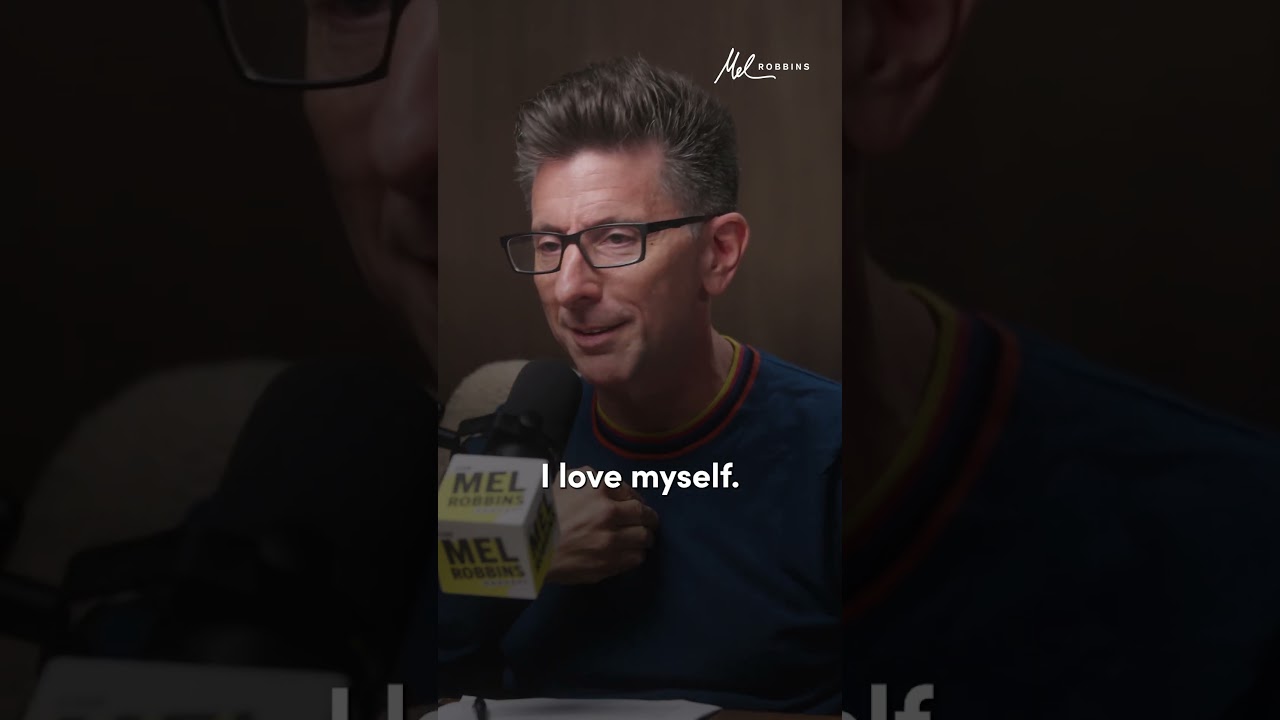
Dr. Brackett traces negative self-talk to childhood bullying, not internal habit. His adopted niece Esme was bullied in kindergarten for her skin color, which triggered self-criticism. Her family reframed the experience and told her no one has the right to define her reality, building resilience through early intervention.
Where does negative self-talk come from, Dr. Brackett?
Well, I don't think we want to use it.
Right.
I think we are gaslighted to use it. I'll give you a really concrete one of an example. So I have a niece who is the love of my life. Her name is Esme. She was adopted from Guatemala, and I speak Spanish, and I went to bring her home back 21 years ago. She just graduated college. I'm very proud of you, Esme. She is dark-skinned. She's Latina. She was in a very white area of New York State, and in kindergarten, some kid said to her, "You're a different color than your mother. That's disgusting." Now, of course, her mother called me and said, "You better get up here, 'cause I'm gonna get in my car, I'm gonna run over that kid, I'm gonna run over the mother." I'm like, "Take a deep breath. Uncle Mark, road trip." Now, when I got to their home, this is the love of my life, this 5-year-old girl, to think— and I know what it's like, because I was terribly bullied as a kid. I knew that I had to be her emotion ally. I knew that I had to help intervene because she was already saying, "I don't want to go to school. I hate school. I don't want to go to school." She was already questioning her skin color. "Why am I this?" and "Why are you my mother?" And in that moment, which was a difficult moment for our family, I had to figure out a way to connect with this young woman in her 5-year-old language Tell her that no one has the right to define your reality. Now, if she were Uncle Mark, in his 40s at the time, he would have the courage to say, "Wait a minute, like, who do you think you are talking to me that way? I love myself. You don't have that power." She's 5.
Yeah.
Do you see why I'm saying how important it is? Of course.
Yes.
We have to build the skill early. And so this young girl, with her uncle and her parents and other people, were really trying to help her reframe build more positive self-talk, recognize that our family has different skin colors and tones and it's okay, and that we love her and that she's gonna be okay, and et cetera. But imagine no intervention there.
Hmm.
Imagine no one noticing. No one noticed my own— I was at her age, I was being abused. No one noticed it. No one checked in with me. We were intentional about providing her that support so she could reframe and have more positive self-talk. So our negative self-talk starts early, and it doesn't come from within, it comes from without. It's our parents saying, "Why are you wearing those pants?" and "Why are you doing that?" and all that negativity about your skin color, about your height, about your weight, about the way you walk, the way you talk, the way you do your homework, everything. And from what I gather, other than the work I do and some others do, there's nobody intervening and helping parents and children notice and say, "Wait a minute, we need to not be self-saboteurs. We need to be self-compassionate."