The #1 Relationship Researchers in the World: 50 Years of Marriage & Love Advice in One Conversation
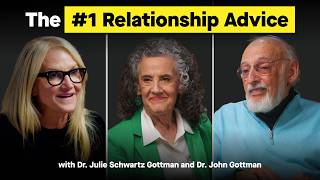
In this concluding segment of the interview, Mel Robbins, Dr. John Gottman, and Dr. Julie Gottman dive deeper into practical tools for managing conflict and fostering connection. They stress the importance of naming physiological flooding (“I’m flooded”) and taking a timed break, warning that abruptly ending a discussion (“let’s not talk about this”) erodes trust. The conversation introduces the micro‑behavior framework of turning toward, turning away, and turning against, backed by lab data showing that couples who turn toward their partner’s bids 86% of the time stay married, while those who do so only 33% tend to divorce. Turning toward builds an emotional bank, enabling humor and resilience during disputes. A sea‑anemone metaphor illustrates how repeated flooding leads to withdrawal. The Gottmans present concrete, research‑backed repair strategies: verbalizing flooding, scheduling a short break, and using a notebook and pen to pause, listen, and take notes before responding. They frame conflict as a collaborative quest for mutual understanding rather than persuasion. The episode ends with a heartfelt call‑to‑action, encouraging listeners to apply these tools immediately—starting with a simple notebook—to create lasting, loving relationships.
Chapters
Today, you and I are here with Dr. Julie and Dr. John Gottman. They're the world's leading experts on love and what it takes to make a relationship work.
We had couples talk about a conflict issue for 15 minutes. We could predict with almost 90% accuracy whether they would divorce or stay together. And if they stayed together, how happily married or unhappily married they would be.
Wow. And they're teaching you and me everything we need to know about the 4 things that'll blow up your relationships and what you can do to break these patterns of conflict.
So the first one is criticism. Criticism means blaming a problem on a personality flaw of your partner. Secondly is contempt, and contempt is the worst one we have. You're coming from a place of superiority, looking down your nose at your partner. The third horseman is defensiveness. And then there's—
How do you tell someone that it's not that you're worried about them, it's that you're losing interest in them?
No. I love you so, so, so much. That's nice to hear. But—
Oh, there's a but.
I'm sorry, I'm laughing, but I— you two are adorable. And we have all been in a relationship like that. Within 3 minutes flat, you can predict whether a couple is gonna break up or still be together in 6 years. What are you looking for?
If I was gonna boil it down to one thing—
Hey, it's Mel. I am so excited about this episode. I know what's coming. It is extraordinary. You're gonna love this. But one thing that my team just showed me that I don't love so much, 51% of you who watch here on YouTube, you're not subscribers. So here's my request. Our goal as a team is to get that number to 40%. If the subscribe button is lit up, would you please just hit subscribe? It's free. It's the best way to say, "Hey, thanks everybody. Thanks for putting out free content here on YouTube for me. Thanks for all the world knowledge." world-renowned experts that are helping me improve my life. I appreciate you doing that. And that way you also won't miss a thing. Thank you for doing that for us. We love you and you're gonna love this episode. So let's jump into it. Please help me welcome the extraordinary Dr. John and Dr. Julie Gottman to the Mel Robbins Podcast.
Oh, we're so happy to be here, Mel. Thank you.
Oh, honor's mine. Honor is mine. You know, I would love to have you start By just thinking about the thousands of couples that you have researched and this extraordinary body of work that spans 50 years, and speak to the person who is listening right now and share what might change about their relationships if they really take to heart all of this research and wisdom and they apply it as soon as they're done listening.
Mm-hmm.
Beautiful. You know, I think two things I would say that really change. One is that hopefully conflict, which is absolutely normal in every relationship, becomes more calm, more gentle, and more constructive. Also more compassionate because the real theme of conflict is to understand your partner better. It's not to tear your partner down. It's to really get inside their world and understand where they're coming from. So hopefully that might take place after listening to your beautiful show. And I would say, secondly, maybe they do more to express gratitude. Mm-hmm. Maybe they ask more questions of their partner to really understand where their partner is at here and now internally. They may have known them when they were first dating, knew that world, but people evolve and change. So who are they now? Asking questions draws that out.
Mm-hmm. Yeah, I would, I would say that In all the 54 years of studying couples, and my friend Bob Levinson and I started this research way back then, and neither of us had a clue about what makes relationships work. We went from one disaster to another. And if I was gonna boil it down to one thing, I have this invention that I keep in my back pocket, and it's a little notebook. And I keep it there all the time. And if Julie utters the 4 terrifying words, We need to talk. I get out my notebook very slowly so I can delay my reaction. I get out my pen very slowly and I open the book up very slowly. And then I say, okay, baby. Talk to me. What's on your mind? What's on your heart? And I write down what she's saying. And the more defensive I feel, the more I take notes and slow her down. Because I think the one thing we've discovered is that the masters of relationships, the ones who are happy and stay together, really seem to have a motto that when your partner's upset about anything, the world stops and you listen. And this is my way of listening, taking notes and doing it very slowly so I can calm down and not react quickly by saying something I'll regret later on.
I wanna just pause.
It's okay. Okay, honey.
You know what's adorable about you two? And if you're listening, I'm just gonna describe it. If you're watching this episode, you will have already seen it. Is that you both keep turning toward one another and smiling, and you have this very warm, loving gaze at one another as the other is talking.
How can you not love this? This is beautiful.
And you also are, like, holding hands, and there's a physical touch connection, which is extremely noticeable because you don't see it all that often in couples. And I wanted to just unpack the genius of your response, Dr. Gottman, to those 4 terrifying words, "We need to talk." Right. Which I'm also realizing sometimes I don't give Chris the grace of preparing him for the fact that I'm about to blast at him like a volcano. But what I loved, because I do think there is something very intentional about what you just described, that as you're imagining Dr. Gottman, and he leaned forward and he reached into his back pocket and he pulled out a notebook that's like the size of a 3x5 card.
Right.
And, or you opened it up slowly, and then you said you started to write And that is your way of listening. But it's so important to also point out as you're hearing this, that you are also managing your reaction.
Exactly.
In the middle of what could become an argument or conflict.
Yeah, delay is the way of engaging the frontal lobes instead of reacting direct from your amygdala, you know, which is terror, right? And defensiveness comes out. So when you engage the brain, the thinking brain, then you can be a little less defensive.
Yeah, let me add.
Yeah.
You can be less physiologically aroused.
Right. Mm-hmm.
You know, one of the things that we found in our research is that oftentimes people can be sitting as calmly as John and I are right now, having a conflict, but one of their heart rates will be over 100 beats a minute. And they've gone into fight or flight, which means blood has left this prefrontal cortex, moved back into the motor cortex. They cannot think clearly, listen clearly, problem solve, and be creative. It's impossible because this is offline. Mm. So by Jon pulling out that notebook very slowly, there's a couple of ways it's wonderful. For one, it keeps you calm.
Right.
It keeps you more focused on kind of the cognitive elements—
Yeah.
—of what I'm saying, as opposed to, "Ooh! Did he? Did she really say that?" Or, or for me, what it tells me is that, gosh, he's gonna take me seriously. Mm-hmm. Right? He's not gonna be thinking about, "Okay, when do I get the oil changed in the car?" I can tell. That he's listening because he is taking notes. And that's meaningful for me. It helps me to feel his presence. And it's a wonderful thing for all of you to do as well.
I love that. And I could imagine Dr. Gottman reaching— "Hold on, let me get my notebook out of my pocket here." You study love in a lab. What does that mean? For the person that's not familiar with your groundbreaking work, foundational research on relationships. What do you do?
Yeah, so Julie and I, after we first met, you know, we designed this apartment where 130 newlywed couples, just a couple of months after the wedding, would spend 24 hours, cameras rolling, no instructions. You know, they have an opportunity to, eat together, clean up together, you know, read the newspaper, watch TV, whatever they want to do. And the cameras are just rolling. And while they're walking around, we're measuring their heart rate, they're measuring all kinds of physiological measures. Every time they urinate, we take a blood— We take a sample and measure stress hormones. And then we take blood from them the next day and look at the immune system. Stress hormones in the immune system. So we're just kind of watching couples, and it turns out that we can predict the future of the relationship 6 years later from the way they interacted in that apartment lab. So the prediction is really 94% accurate.
Right.
At predicting the future.
So you could predict with 94% accuracy who was gonna make it and who wasn't? That's right. Right. That's right. This is like the original reality TV. It sounds like you guys invented the format. That's right.
Let me add also that this brilliant man over here created a fantastic system for codifying emotions. That means looking at the face, looking at the movements of the body, looking at the words, the tone of voice, the eye gaze, and— Assessing from that, what emotion is that individual feeling when they speak? Then what's the other individual gonna respond with? What kind of feeling is that? So we call that SPAFC, specific affect, which means emotion, specific affect coding. And that in itself tells us a huge amount about the dynamic.
Mm-hmm.
Who's being belligerent? Who's being domineering? Who is being subordinate? Who's being kind? Who's trying to make a repair if they said the wrong thing so that the other person doesn't get their feelings hurt?
Or using humor as a way to wind things down. Humor turns out to be very important.
Right. Why is how we handle conflict so important in a relationship?
Because we fight all the time. [LAUGHTER] We are human beings. You know, one of the things, Mel, that I have really tried to understand since I was a kid is, "How come people are mean to each other? Why is that? What's evil? What does that even mean?" What I've really understood from lots of archaeological reading and so on is that people have aggression. They've also got altruism. They can be very, very kind. But all of us have those aggressive instincts inside of us. So what happens with it Typically, it goes to the person that's closest to us because that person, we assume, is not gonna abandon us, is not gonna run away. They're gonna be there to listen to us.
Uh-huh.
And so, we have personality differences from our partner, lifestyle preference differences from our partner. Everybody has those. And 69% of the issues couple struggle with are perpetual conflicts. They never, ever go away.
That was a big surprise to us.
Yeah. So they just keep coming up, right? Over and over and over again in some different format through the side door. So what do you do with that? Well, people can avoid those, sweep them under the rug, but, you know, they don't have conflict, but they grow more distant typically over time. Or they can learn to really talk in a way that's calm, little bit of emotion, maybe a little more intellectual, you know, trying to solve the problem very fast. We call those validators. And then there's me. I'm a volatile, like maybe you are, and we love to explode. We love to be passionate about expressing our emotions.
And I'm a conflict avoider. It's a great combo.
So, a turtle figured it out over time.
We're gonna get into these different types.
Mm-hmm.
But before we do, I wanna just talk a little bit about the research because it's so fascinating. Sure. You've already mentioned that by observing a couple in this apartment love lab, you could predict with 94% accuracy Right. Whether or not they were gonna be together in 6 years.
That's correct.
That's correct. And we're gonna get into what you were looking at that really was the signal that they're not gonna make it. But there's also interesting research that you have around how the first 3 minutes of a fight predict everything.
Right.
Let's hear about that.
You know, Bob and I found that, that if we, we had couples talk about a conflict issue for 15 minutes, we could predict with almost 90% accuracy whether they would divorce or stay together, and if they stayed together, how happily married or unhappily married they would be. But then somebody in my lab, Sybil Carreir, said, "What if we lop off the data from the last 3 minutes and we only have 12 minutes? What's the prediction like with only 12 minutes of data?" Mm-hmm. And it was just fine. And she said, well, let's lop off another 3 minutes. And it was just fine. She got down to the first 3 minutes and we were still predicting the future of the relationship very accurately by just looking at that first 3 minutes. Because couples who really are gonna wind up divorced or together unhappily start off the conversation really differently from couples who are, we call the masters of relationship. That beginning is so important.
Now I'm like, okay, well, what's the beginning that predicts divorce and breakup?
Right.
Versus the beginning that doesn't.
I have an idea. Let's role play it.
Let's do it.
Let's role play it.
Sure.
All right. So this is predictive of going down.
Yeah. Well, so I wanna talk to you about this. I really think that you're, You're really ruining this marriage. And it's your responsibility because you're being so obsessive compulsive.
Wait a minute. Wait a minute.
Let me finish.
I'm not going to let you finish. You're such a slob that, you know, I can't even walk through the living room.
I am charmingly sloppy. But you are really a nut. I mean, you're— you need therapy. You really do. I mean, everything has to be perfect for you. Everything's gotta be perfect.
Well, that's right.
And I need therapy just to live with you. I don't even wanna talk about this anymore.
All right. I feel like I now know what it's like to be a marriage therapist watching the two of you.
You ain't seen nothing. That could be worse. I once had somebody who was so upset, so flooded, and she was all of about 4'10". And her husband was 6'5" and had cheated on her, et cetera. So, I tried to calm her down. She finally sat down on the couch. And my couch was a beautiful red leather, gorgeous couch. When she left, there were scratch marks on the couch. Wow.
That— that to me— I bet her heart rate was up.
I bet it was. That's why you stayed.
So, unpack what was happening. In that? Because I think that we've all experienced those kinds of fights, whether it's about the relationship or now you're arguing about, "Well, you're giving the kid too much money and that, that, that, and you're overparenting," and like, you know, aiming it— Like, what was happening in that fight you just had?
So, I was describing the problem in terms of her personality being deficient, that there was something wrong with her. It was all her fault.
So, "You, you, you, you." That's all he was saying. And of course, I got defensive and I counterattacked. That's a classic form of defensiveness. You counterattack.
Right.
So then I moved in to, "You, you, you, you." And it was all about character flaws.
Mm-hmm.
He's a slob. That's right.
Yes. And all I'm doing is trying to give her feedback about what's wrong with her so she can improve. 'Cause I'm pretty much perfect. As far as I can tell.
See this? It's a halo. It's a halo.
It's not a yarmulke, it's a halo that God gave me. So I'm always innocent and it's always her fault. That's the way the disasters are, too.
And notice, did you see any listening there?
No.
Zero listening.
Zero.
That's right. So people were talking over each other and immediately coming up with their rebuke before even hearing the last words of their sentence.
And the partner— And right away, persuasion enters. I'm trying to persuade her that I'm right and she's wrong, you know? And I haven't even listened to what her concerns are, right?
The other thing that happened is the volume—
Right.
—started getting higher and higher and higher.
Right.
Right. Because neither one of you were listening, and you're both blaming, and now you're trying to talk over one another. One another, and then you both went like, huh.
And if I'm physiologically flooded, I think all I need to do is repeat myself louder in order to be more persuasive. That's the way I reason when I'm flooded.
63 times later, have I listened? No.
What does a positive argument look like.
Okay, let's role model that. We can use the same top. Okay, yeah. Okay, so what's going on, honey?
Well, I'm kind of thinking that I can't do anything right. You know, I may have tried, I've tried, you know, being neater, more tidy, cleaning things up, and you know, it's never good enough for you. It feels like that. And like, I can't satisfy you. It's just like, I kind of give up. You know, what am I supposed to do to make you happy?
Oh, God. That sounds actually like a pretty terrible feeling.
Yeah.
So you're really frustrated because there's nothing you can do that you feel is good enough. Is that right?
Yeah.
Am I making you feel that way?
Yeah.
Oh, dear. What am I doing that leads to you feeling that way? Because I don't want you to feel that way. I don't want to treat you that way.
Well, you know, like, for example, you asked me to clean up the kitchen. You know, if— so I clean it up, you know, and it doesn't meet your standards. So I don't even know what your standards are. I mean—
Do you want me to tell you what they are? Probably not.
Well, no, that would help.
Would it?
I really would like to know. Yeah.
Oh, gosh.
Because I think I've done it just fine.
Okay.
And then you're disappointed. I just don't get it.
Mm. I see. Well, I tell you what. What would make a huge difference for me is after washing— Let me write this down. Okay, that's a great idea. Get out your notebook.
Yeah. Hang on a minute.
Okay.
Let me just breathe a little bit.
Okay, so—
I promise I won't hurt your feelings. Oh, it's okay. After washing the dishes, it would be wonderful if you would wipe down the counters. You know, just get all those crumbs into the sink. And then rinse them down the sink. That's really all I need, just to have counters that are clean. That would make a huge difference for me.
Okay.
It would feel great.
You know, I really can't tell when a counter is clean or not, 'cause it's got, you know, you got this pattern of, you know— Color.
Yeah. This is true. This is why I chose a counter with brown in it. It would disguise all of the—
I just wipe it down really well.
Just wipe it. Yeah, just wipe it. That's all you have to do.
All right, all right. I can do that.
Would you mind doing that?
Yeah, yeah. No, I'll do that. Yay!
Oh, my God. I love you two. Thank you.
That makes sense.
I— You are adorable.
We're okay.
Can you explain what just happened? In that conflict?
Yeah, yeah. Easy. So, it started— it started in a perfect way, which was John bringing up that he's feeling bad about an interaction of ours. But notice he's not saying, "You're a schmuck, and that's why I feel bad." He's saying, "I feel like—" I can't do anything right. So is you in there? No. He is having that feeling, which pulls on my heart, Mel.
Mm-hmm.
He's being vulnerable with me and telling me what his feeling is like. And that feeling I'm translating into, oh, God, he's feeling hopeless. He's feeling despair. I don't want him to feel that way. But here's the kicker. I want to understand what's making him feel that way. So instead of just responding with, you know, just a comment, I ask a question to try to understand. Mm-hmm. "Tell me more. Tell me more." Because, you know, it's sort of like if something pretty smelly is bubbling up from the earth, I wanna know what's under the earth, you know, what's going on down there that is creating something that feels bad for him. So I ask him a question, and that gives me information about, oh, that's what's happening inside. That's something that we can change. It leads to a solution.
I love this example, and I'm gonna tell you why. I personally know that Chris and I, for years, would have this recurring fight. And when I'm volcanoing and he's turtling, when he pokes his head out of the shell to say something, it would literally be, "Nothing's ever good enough for you." Yeah.
Mm.
And I think that's a very common, like, way that people then bark at each other. And it's very different to say, "Well, nothing's good enough for you. I don't even know what to do because it's never enough for you," versus what you just taught us, which is instead of accusing, "It's you," Mm-hmm. "I feel that no matter what I do, it's never enough." And you're right. As soon as Chris started saying that to me, I immediately feel like a monster. And then I wanna know, okay, well what exactly? I'm sorry. Yeah. And I can see why this works. Sure. Right. You know if couples fight the first way yelling at each other it's never enough for you— rah-rah-rah! Fines, door slams go into your corners. Is there hope?
Sure of course. You know the thing is this when in our lab we saw couples who were going down the road of distress. Remember, they weren't getting any intervention.
Mm.
They weren't reading anything. They weren't listening to fabulous podcasts like yours. They weren't trying to learn a different manner of relating to one another. So without intervention, they're falling back on old habits, on what they learned at the feet of their parents or caretakers, which didn't work. So, you know, nobody takes Relationships 101 in high school. You got to learn different ways of talking to one another.
The Mel Robbins Podcast is proudly sponsored by Amica Insurance, our exclusive auto, home, and life insurance partner. Insurance is one of those things you hope you never need, but when you do, the experience matters. And that's where Amica really stands apart. When it comes to taking care of people, they go the extra mile. From answering your questions to customizing your policy to checking in after a claim, Amica leads with empathy. They listen, they follow up, and they make sure you feel supported at every turn. And here's something else that really stands out. Amica's a mutual insurer. That means they're built for their customers not shareholders. You're the priority. Your needs, your protection, your peace of mind. Empathetic, thoughtful, and focused on you. It's the way insurance should be. Protection that always puts you first. Visit amica.com and get a quote today. When somebody says to you, "Oh, we never fight." Mm-hmm. What do you think?
Uh, I think they're probably conflict avoiders, and I think, "Oh, dear." [LAUGHTER] We've gotta help this couple surface, unearth the differences, the things that are irritating, annoying, because if you hold them inside and you don't bring them up, after a while, they accumulate, and then you may end up with an eruption. Right? Mm-hmm. Which doesn't help anybody.
One thing that can happen, we saw in this study that the Sloan Center at UCLA did on dual-career couples with young children, and they spent less than 10% of an evening in the same room. They talked to each other an average of 35 minutes a week, and mostly what they talked about was errands. Who's going to do what when? So they wound up really living these parallel lives where they ignored the relationship. They ignored friendship, intimacy, fun, adventure. They were just— their lives had devolved into this infinite to-do list that they did together. But that was the only contact they had. So they lived life in parallel. Mm-hmm. You know, he goes to work, she goes to work, they come home, they're with the kids, but they're not really talking to each other. They're not saying, God, you know, we used to have so much fun and we don't have any anymore. We're just kind of becoming drudges. They don't say that to one another.
They stay roommates.
They stay roommates. They avoid conflict. They avoid saying how lonely they are, how unhappy they are, how much they miss the way they used to. Really pay attention to the relationship.
If the person listening is thinking, well, that's me.
Yeah.
Because I can think of periods of Chris and my marriage where we have 3 kids who are now all in their, you know, 20s. But when they were little, that was us.
That was you.
We were 2 ships passing in the morning and the night and arguing about who didn't go to the grocery store and that no matter what I do, it's never enough.
Yeah, you have to build in rituals of connection. In the relationship, build in times that you can count on having your partner's ears. And, you know, we have an annual honeymoon that we do. And for 27 years, we've gone to the same bed and breakfast and took, took our kayak. And we spend 2 weeks asking each other 3 questions. What sucked about last year? What did you hate about last year? What did you love about last year? And what do you want next year to be like? So we have that ritual where we know we can connect, and it's romantic, and it's fun, and we kayak, and, you know, we hike, and, you know, it's always magic.
Let me point out, though, what John is talking about, especially for really busy two-career couples, are those rituals of connection. But they don't have to be great, big, you know, broadcasts. They can be something so simple like, how do you say good morning first thing when you wake up? How do you say good night?
Mm-hmm.
And you look forward to that. What do you do on the weekends when you get to sleep in? How about a date night? You know, I mean, lots of people talk about that. About that, but do they actually do it? So there's so many ways we can connect with one another that sustains the sense that, ah, they're right beside me. They're right there, even though they're in a different office.
I love that recommendation because I do think when you're in that moment, as the research suggests, which I think most couples are both probably working because of the reality of, of how expensive life is.
That's right.
And coming and going, and that only 35 minutes a week in the— I mean, that's just sad. Can you imagine? And I appreciate the small thing. Like, could you create something first thing in the morning? Could you create something that's part of the wind down at night? One of the things that I remember that made a big difference, and I'll just share it in case it's helpful for the person listening, is since logistics was the reality, and it was also the source of all of our conflict, that we, the one connection ritual that really changed things was we had a Sunday night calendar meeting. Now that doesn't exactly sound like a date night.
Yeah.
But it became a consistent thing we could do every week that helped us be aligned and helped us coordinate the logistics at one point.
Beautiful. You were a team.
Yes. And to this day, we do it.
That's great.
And it's just the smallest of things. And the other thing that I have to give a huge shout-out to Chris that he does that makes a big difference for me is he puts little notes, just kind of like the notebook you have. He'll rip out a page and just put, "I love you," and I'll open up my eyeglass case in the middle of the day.
Aw.
And there it is.
Beautiful.
Or I'll open up my wallet and— There it is. And I had no idea that he had done that. And so it's kind of this little signal that I'm still here with you, even though I may not be standing next to you.
Yeah, I, you know, a consistent research finding is that you cannot just focus on conflict as a therapist. You have to work on friendship and intimacy, romance, passion, play, and fun. You have to work on all of that together. It's not enough to just make conflict better. You really have to bring the two souls together in a way that is— it brings joy into the relationship.
Let me just mention something about your meeting, which is fabulous, doing that as a ritual of connection. One thing that we also talk about is a weekly meeting, which often takes place on Sundays. We call it the State of the Union. Right? And so, um, what we suggest is that first you begin with gratitude. You think of something your partner has done that maybe you haven't yet thanked them for, and you express your gratitude and your appreciation to your partner for having done that. You know, so often we take our partners for granted. Right? Especially after years of being together. So all of us, however, still need to be seen. We need to be appreciated.
Right.
And so starting with that is lovely. And then in the middle piece, maybe there is a complaint that you have, you haven't talked about, or maybe you had a little regrettable incident that you need to process, clear the air about that, try and understand what went wrong during that and what to do right. Next time. And then you end the meeting with another appreciation, another expression of gratitude. I mean, there's nothing better than hearing gratitude as a sign that, look, you're visible, you're important to me, I see who you are, I love what you do, And I want you to know I recognize you, and it's— you're beautiful.
And a great question to end the meeting with is, what can I do next week to make you feel loved?
Is that the best question in the world?
The best.
I know.
I would love to have us just really highlight the warning signs around conflict. And there are 4. Horsemen of the Apocalypse in your relationship. What are they?
Okay, so the first one is criticism. Criticism means blaming a problem on a personality flaw of your partner. Like, you're so selfish, you're so lazy, you're so inconsiderate, thoughtless, whatever. So a characteristic that's bad that you're seeing in your partner. That's criticism, okay? Secondly is contempt. And contempt is the worst one we have. Contempt is like criticism, but you're coming from a place of superiority, looking down your nose at your partner, and you're sneering a little bit. You've got a look of disgust maybe on your face. There's scorn, there's mockery, sometimes sarcasm. Mm-hmm. Is contempt. And contempt is not only the best predictor of relationship demise, but as John was saying, and I'll fine-tune it a little bit, the number of times a listener hears contempt in a conflict for 15 minutes predicts how many infectious illnesses they're gonna have in the next for years.
Right.
Because it is sulfuric acid for the immune system.
Oh.
Yeah, it's a big deal. The third horseman is defensiveness. We all love defensiveness. Everybody's defensive unless they have an ego of a rock. I haven't met a rock lately. So defensiveness gets manifested as either counterattack, as we described, or whining. He is a victim. "Oh, I did too clean the kitchen. What do you mean?" Okay. I love whining. It's great. And then there's stonewalling. And stonewalling is completely shutting down, but it's not shutting down for just a few seconds, you know, to come up with the right phrase. It's shutting down completely. Quietly for minutes, minutes, minutes, long minutes, maybe hours at a time. And what brilliant John here and his colleague Bob Levinson discovered with physiology is that when a person was flooded, they were in fight or flight. Their heart rates were often over 100 beats a minute as they sat there.
And they started stonewalling.
And they started stonewalling in order to go inside and try and soothe themselves because being in fight or flight while you're sitting there feels awful, makes you sick.
So that turtle thing that Chris does, right?
Yes.
You know, and he's just trying to calm himself down, but to the person speaking to him, it looks like he doesn't care.
Correct.
You know, and he's tuned out.
And then I'm yelling. I'm yelling 'cause he's like, Not responding.
That's right. And it makes it worse.
Yes. I can see that.
Well, the other thing is that Bob and I also, as we kept following couples, we found there was a group of couples who didn't do the Four Horsemen, but when they talked about the events of the day, there was no connection. And they even went out of their way to show that they were bored with their partner talking about their day. So it's not that they had all this negative stuff, they didn't have very much positivity, not very much interest in one another, not very much shared humor, affection. And those couples divorce an average of 16 years after the wedding.
Wow.
They last longer, but, you know, it's still disaster.
I would love to go deeper into all 4 of the Horsemen of the Apocalypse of a relationship. Could you describe for the person who's listening listening right now, what do you mean by flooding? So if somebody's never heard this term, um, and they're not quite— and, you know, I think there's a— it's kind of obvious if you're like the Stonewalling, or rather you shut down and you're like the Turtle, or you're a Volcano like me. But can you describe what does it mean to have this emotional flooding? And what are the— what are the kind of personality types of flooding, if you will, so the person can see themselves as we unpack the four different horsemen, if that makes sense.
Sure, sure. So first of all, there is no correlation between personality type and flooding. Anybody can get flooded. Anybody, first of all.
And what does that mean when you use that term flooded?
Okay, so what it means is that you are so overwhelmed by what feels like facing a saber-toothed tiger.
Hmm.
So what's happening is you're hearing what feels like an attack. It may not be one, but it feels like one. And because it feels like an attack, right, and it's a dangerous attack, it's threatening, it sets off this fight-or-flight response. And so, Men who experience this and get flooded are going to look like this. They give themselves permission— To look away. To look away. But a female doesn't typically. And here's why. Because, you know, as women, from, you know, this high, we are trained to relate to others, to nurture others, to take care of others. Right? To be sensitive to others' feelings. So we don't give ourselves permission to break contact and look away. So what flooding for a woman looks like is very different. It looks like this.
And you're just kind of staring—
Nobody's home.
No one's home.
Nobody's home.
Blank face.
That's right. You may be meeting the other person's eyes, but nobody's home. You've taken yourself out.
I just realized my daughter does that.
Ah.
When I get like scary, that she—
A deer in the headlights.
Yes, doesn't know what to do.
That's right.
Yeah. Okay.
That was very helpful. 'Cause you're right. If, and I know that this is all based on your research, that for a lot of men it's the crossed arms, it's the looking away. It's the walking out of the room.
Yeah.
Or going to make a drink as you're walking, like following them, yelling at them.
Mm.
Yes.
Yeah. Yeah.
And it feels kind of awful in your body. You know, it's almost like having a panic attack. You know, the breathing is more shallow and more rapid. And, you know, it really feels like there's no way to win here. You know, I mean, you just have to escape.
Yes, I can see that. And you're escaping your body or the room.
That's right.
That was super helpful. Let's dig into each of the Four Horsemen and start with criticism.
Okay.
How is criticism defined in the research? And I'd love to have you roleplay—
Sure.
—an example and— Teach us how we can shift out of it.
Okay.
When we're in the middle of it.
Let me just mention that the shifting that you are pointing out, which is very astute, is what we call repair.
Okay.
So making a repair during a conversation is a great way to step aside from those Four Horsemen and make the conversation flow better. Okay. Okay. So again, I think the definition of it would be blaming a problem on a personality flaw of your partner. That's what it is.
So let me start.
Okay, go ahead.
I've been meaning to talk to you because I think that I have something to teach you. What do you mean? Well, you know, I noticed that, you know, you kind of get upset when the house is in some kind of disarray. And I don't have that problem. You know, I can concentrate really well, you know, whatever's going on around me. So I can kind of teach you to focus your mind more because I think your mind is kind of weak. You know, I think your mind is not strong.
You think my mind is weak?
Yeah, I think you have a weak mind and I can help you strengthen your mind. Honey, I got better grades in college than you did.
What? I don't have a weak mind. What are you talking about?
I'm just trying to be helpful to you. You know, I'm trying to help you strengthen your mind so it's more like my mind.
I tell you what, go help the dog. Okay? Not me. Okay, so that's criticism. All right, got it.
Let's show the repair. Let's do the anecdote for each.
Yeah, so how do I do that?
We're gonna— so I'll make a repair.
Okay.
Okay. OK, so why don't you pick up?
Yeah. You know, like I was saying, you know, I really can help you focus your mind better and be more— much more like me.
Honey?
Yeah?
I need to tell you, I'm really feeling defensive right now.
You are?
I don't want to be defensive, but I feel that way. The way that you're describing me feels to me like a put-down.
Oh.
Can you say what you want to say in different words?
Um, well, okay, um, I think it'd be great if even when there are a lot of books around and papers around that you were okay with that, you didn't get upset.
Phew. Tall order. Well, I tell you what, I hear you and I know that I probably come across as a nag sometimes. I'm sure I do.
I would say that, yeah.
Yeah, I bet you would. But I think I can spend some of the time feeling comfortable with everything scattered around. However, I think you probably know me well enough to understand that when my environment feels chaotic, just to me, it may not be to you, but it is to me.
Right, right, right. Yeah.
Then I get all discombobulated inside. I feel really disorganized. And so, All the papers and so on contribute, unfortunately, to my having that feeling. I wish I wasn't like that, but I am.
'Cause I think that a house ought to be a little bit messy to be comfortable.
Yeah, I know you do.
My mom used to clean the place to within an inch of its life, you know?
I love your mom.
And she put plastic on all the furniture.
She was crazy.
That's true. I remember.
Yeah.
Yeah. Okay, well, you don't have to sit on plastic, okay? It's okay.
Yeah.
All right.
Beautiful. And I saw you repaired by using "I." That's right.
"I feel." That's right.
"I feel defensive." So when you're getting criticized, saying, "I feel defensive right now." Instead of going defensive.
Right.
Right?
Instead of counterattacking.
Yes. Or, "Stop criticizing me." Yeah, exactly. I feel defensive. That's the repair for criticism.
Yep.
Got it. Beautiful. Let's move on to contempt.
Okay. You want to define that one, hon?
Yeah. Contempt has this air of superiority. You know, I'm better than you.
Can you show us what contempt looks and sounds like and how it is different than criticism?
Mm-hmm.
Mm-hmm. You can't do anything right, can you?
What are you talking about? God.
I mean, you know, even when you go shopping, you spend too much money. You know, you spend too much money on clothes. So what?
You know, I—
you know— So what? Well, we're trying to save for a down payment on a house, and you're ruining the whole thing.
You're just a spender. I'm ruining the whole thing? Right. Right. How dare you? You just went out and bought a Porsche, for God's sakes. And I'm—
I need that for my work. Ha ha ha. I wouldn't spend it if I didn't need it for my work.
To take it back. I need to take it back. Okay, so that's one example.
So it's judgment.
But from a place of superiority.
What about the eye rolling? Oh, that's a nicer example. Like that.
So you get to give another one with eye rolling and the cheek.
Well, I was thinking of an example that one of our therapists talked about. He seen this couple and she was being contemptuous and he said, "Do you think you're better than me?" And she said, "Better than I?" Ugh.
Boom. Wow. Isn't that a killer? Correct their grammar. That's a great way to be contemptuous. Ouch.
I have a couple in my life that's uncomfortable to be around because as one person's talking, the other one is like rolling their eyes. That's right. As they leave the room, they complain about them. And why is contempt the most harmful? And let's start there.
Why is it? It's really a murder attempt at the person's sense of self. And the Jewish Talmud talks about it as murder. You know, you're destroying the other person's sense of self and you're saying, you are worthless. And that's the worst attack. You know, it's not just something you do that I don't like, but I don't like you.
Right. I call it character assassination. That's what it is.
And do people that are contemptuous actually, are they able to recognize it?
Not always. Usually the listener is the one who recognizes it, you know? The other person usually has a pretty heavy sense of entitlement, that they deserve to say that. But let me also add something about why it's so destructive that, you know, a lot of people don't really think about and acknowledge, but none of us got parented perfectly, right? None of us got taught with absolute appreciation in school. Mm-hmm. So, all of us have, at base, at least a part of ourselves that's insecure, that needs to be loved, that needs to be cared about. And some people like to say that that's immature, or, you know, "You're just not a grown-up." And I would like to say to them, "No, that's wrong." Mm-hmm. We all have that inside ourselves. We don't lose that core of insecurity and the need to be looked at with care, with love, with understanding, to be spoken to with respect, even admiration.
Right.
None of us lose that. We just add layers on top. Top of it as we grow older. But it's still inside there, and it can still get hit if somebody expresses contempt.
That makes a lot of sense. Mm-hmm. So, if you're the one that's getting stepped on and demeaned and interrupted and corrected by your partner, how do you repair this?
Okay. So, Here's how I would repair it. Let's say he's just been contemptuous.
Mm-hmm.
So, you know, John, there's no way that I can hear what you're saying right now because I feel so insulted by what you're saying. I don't know if that's your intention or not, but I feel like shrinking away. I want to just disappear. I don't want that. Because it really— I feel really hurt by what you're saying. So I wish you would flip what you just said on its head and tell me what you do want.
Yeah.
Or you do like, rather than this wave of negativity I'm getting.
I feel like I'm judging you.
Big time.
Yeah.
Yeah.
Okay.
That's what it looks like.
And when you get somebody that says, "I am judging you," now you're like realizing, "Okay." Okay, well, that's okay.
So let's say I am, you know—
I'm just trying to give you feedback.
Honey, the effect of the feedback and the way that you're giving it to me pushes me away. It makes me wanna run away from you because it hurts so much. Feedback I can hear if you're telling me what you do want, not what you don't. Okay. Or what you don't like.
Good point.
Amazingly helpful. I love the, "I feel insulted, I feel hurt." 'Cause what ends up happening when it's you that is getting stepped on is you tend to flood.
Absolutely. And you don't know what to do. That's right.
Yes.
That's right.
Wow. Yeah, respect is as important as affection.
Respect is as important as affection.
Yeah. Especially for women. I think, you know, today women need to feel that their partner values and respects them, and as much as they respect anybody, you know? So one of my New Year's resolutions was Let me try to treat Julie with the kind of respect that I treated my father with. And I had to work on that and become self-aware of ways in which I was not communicating respect. For example, it takes her longer to get ready than it does me. So, you know— Mm-hmm. I would get in the car and wait for her. And while I was in the car, I was saying, what the heck? Why does it take her so long? You know, by the time she came out to the car, I had worked myself into a frenzy, you know, of anger about this thing. And, you know, instead I sat in the car and said, you know, she, there's a lot of really important stuff that she sees that I don't see at all. And she needs to get those things done. Mm-hmm. Before she feels ready to leave the house. So, I think I'll just read my novel, and whenever she comes out, you know.
This was an issue in our marriage too.
Yeah?
Chris would be sitting in the pickup in the driveway, running, and I'm still putting my makeup on, and then I'm running around the house looking for my keys, 'cause I forgot that he's driving. And when I would then get in the car, he would be, really frustrated.
Yeah. Aw.
And I'd get an earful about it. And now, I try a little harder, and he's usually listening to an audiobook when I get in the pickup truck that's been running for 11 minutes. I've shaved like 4 minutes off. He is the best ever. I love Marshalls. I mean, come on. Don't you love Marshalls? Of course you do. I am so excited that Marshalls is now a sponsor of the Mel Robbins Podcast because at Marshalls you get the good stuff, brand names and styles that you love for way less. And isn't it so fun to walk into Marshalls and you're like, okay, I wonder what's in here. And I bet there's some really good deals. It instantly puts you in a good mood. How do they do it? Well, The buyers at Marshalls, they are hustling behind the scenes 24/7 to bring you really cool things and all the great deals. That means you only have to worry about having fun, shopping everything from dresses to denim to shoes. Another reason why I love shopping at Marshalls, I can shop for the whole family, and I'm so impressed by the designers and all the styles they stock. Marshalls, they get the deals, you get the good stuff. Shop now at marshalls.com or find a store near you. The third horseman of the apocalypse of your relationship is defensiveness. What is defensiveness and why is it so automatic? You know, like it's just like you, you just kind of feel like you should defend yourself. What should you do instead?
Hmm. You know, that lawyer that I talked about?
Yeah.
He was amazing. At not getting defensive when his wife was criticizing him. And he really was saying, she's got an important point. I just don't know what it is. I have to help her. I have to help her get to it, you know? But I'm sure she's got something she really wants to tell me that's important. And he had that attitude, very respectful, you know? And I think that's the attitude you gotta take instead of saying, I'm innocent, you know, I have no responsibility in this. I'm pretty much perfect. If there's anybody defective, it's you. That's a really bad attitude, 'cause you're not gonna listen if you have that attitude.
I would love to hear you guys role play, and if you could do an example where one of you wishes the other one would either lose weight or take a little better care of themselves, you know, get a trainer or actually pick up the weights that we bought last year and use them. You know what I'm saying? And then, you know, and then the other ones, 'cause I think this is something that is—
Ooh, boy.
Yes.
That's a hot issue.
Yeah, it's a hot issue.
Yeah. Okay.
So let's say you criticize me, you know, for, you know, having a tummy in, but you're really worried about my health.
Excuse me, tummy in?
Right, yeah.
Uh, let's see. John, I need to talk to you about something.
Uh?
You know, I know that you love sitting and reading your books.
Right.
Especially your mathematics books.
Yes. Right.
Which I cannot understand one page of.
Yeah.
But honey, I'm— You know, you really, really, really should go to the gym more often. You really should. You're only going to the gym, like, once a month. That's not gonna do anything for your body. That's— I mean, you know, your body's starting to get a little kind of flabby or something. I mean, just that belly is going out further and further.
Well— I think I'm fine.
You think you're fine?
Yeah.
Honey, the thing that I'm worried about, and this is true for both of us, is that we're both getting older, right? And you know, you've read all the newspaper articles about being fit really adds years to your life. Being healthy, exercising is one of the best things you can do.
I just read this article about a guy who's a long-distance runner, He had a heart attack while he was running, and he was 40 years old. So I don't think exercise is such a great thing.
But, honey, but—
And a lot of these athletes are pretty stupid.
Oh, sweetie. What they found is that there was a heart defect there. It wasn't the running that caused it. It was the heart defect. But—
You don't think he overdid it?
No, I don't think so. But if— you don't exercise, I'm really afraid that you may suffer a heart attack, right?
Yeah.
I mean, I don't wanna lose you. I do not wanna lose you. And so I'm wondering, how can I support you going to the gym more often? Or does that feel too controlling?
No, I think, what if we went together?
Love it. Would you be willing to make the time? Yeah, if I can swim.
Sure. I like to swim.
Swimming is great. Yeah.
Swimming is wonderful. I haven't been in a long time.
You haven't? No. You want to do it again? Yeah. Well, yay. All right. That would be terrific.
OK. All right. I'll work on it.
OK. Yeah.
How do you tell someone that it's not that you're worried about them, it's that you're losing interest in them?
Oh, okay. That's a good one.
'Cause I think the exercise thing is a big one. Yeah, I know. And, you know, like really taking care of yourself. And yes, there's the, I'm afraid something that's gonna happen, but it's also like, I actually am pulling away from you because I'm not, I'm not proud to be with you, or I am losing my attraction to you.
Okay. I have something I wanna talk to you about that is super sensitive.
Uh-oh.
I know.
Let me get my notebook.
You better get your notebook.
Uh-huh.
And let me preface it. Let me preface it by saying I adore you. I love you so, so, so much. It's nice to hear it. Yeah.
Yeah.
But—
Oh, there's a but.
Yep. Here comes the sensitive part. I don't know exactly what's happening, but as you've been gaining weight, becoming more of a sphere instead of a triangle— I don't know, my libido is going down. My sexual interest is declining.
Oh, that sucks.
Well, it does because I love you and I really, really want to express that physically to you. But at the same time, I really, really loved it when you were working out and I could feel the muscles in your back, in your shoulders, shoulders, your arms. It felt really wonderful.
So I wrote down, lose weight and get more sex.
That's a possibility.
All right, okay.
What do you think?
Yeah.
Would you like that? Would you like to get more sex? Because if about 20 pounds melted away, I bet you my sexual interest would go up.
She go, "Fuck that 7 pounds." Great idea.
Yeah.
Okay.
Ta-da!
Ta-da!
I'm sorry I'm laughing, but I— you two are adorable, and— and we have all been in a relationship like that. The fourth horseman that's gonna destroy your relationship, potentially, is stonewalling.
Right.
We've talked a little bit about it, but just so we're clear about what it is. Okay.
Well, you know, we actually didn't understand it when we first saw it. And we brought men back in and said, "What was going through your mind right there?" And so we got this sort of internal monologue that guys were going through. And they really were saying, "This is hopeless. I just gotta, I gotta endure this. I gotta get through this. And, you know, don't say anything, 'cause whatever you say, you're gonna make it worse. And, you know, I'm just gonna go get a beer and watch the game, you know, and not think about this. Let me out of here. That's what they were thinking, you know. And it was sad, you know. It was really like— Yeah. I'm overwhelmed. You know, I'm in a war zone, you know, and there aren't any shelters.
Yeah. Can you give us an example of what this sort of sounds like in a relationship?
Uh, yeah.
When, you know, the man, or typically the guy, but often it can be the woman.
Can be. Yeah. 15% of the time. It was a woman stonewalling.
Right. Well, let's do you stonewalling.
Okay.
Okay? So, I don't understand why you haven't paid the bills. I mean, the bills have gotta be paid. Why aren't you paying the bills, man? They're sitting there on the table.
This is not a big deal. I, you know, just—
It is!
I don't wanna talk about this.
John, it's a huge deal. You're gonna ruin our credit if you don't. Pay the bills. Would you please pay the bills? So what are you doing now? You're pretending I don't exist? You're just blocking me out? Honey, pay the friggin' bills. What's the big deal?
God. There.
That's perfect. That's what it looked like.
'Cause we've all seen it and experienced it. And if you were listening and not watching this episode, as Julie was, you know, basically telling him what to do and criticizing him, and then the huff at the end is contempt. That "Huh!" Yes. Right?
Right.
That exclamation point of "Huh!" You, John, crossed your arms and looked down and looked away, and it is— this act of like, there's nothing to do, I just need to endure this until she shuts up.
Right.
And that's the only option here.
Yeah. And also, if I say anything, it'll get worse.
Yeah.
It's bad now, but if I say anything, I'll make it worse.
How the heck do you repair something like that if you are the stonewaller and you've got somebody who's critical of you? Okay. Like, can the stonewaller— Like, can you teach a stonewaller to repair? 'Cause a stonewaller does not trust that it's gonna get better if I say anything.
Okay. Don't forget that what goes along with stonewalling is a heart rate over 100 beats a minute. Oh, 'cause it's true.
It looks like you're calm.
Yes, it does. But because John and Bob had their couples hooked up to physiology that measured heart rates, we saw those heart rates, like, through the ceiling, 140, 150, and so on.
10 seconds before they started stonewalling.
I never, ever, ever looked at stonewalling as somebody who's panicked and overwhelmed.
Right.
I've always seen this as a power play.
Yes. Yes.
That you're— denying me attention, and you are trying to just block me out as a way to control me.
Right. Exactly. And that is wrong.
Stonewalling is an attempt to self-soothe.
Right. Going inside. "Okay, she can't touch me when I watch the game. So, the game starts in 10 minutes.
I'm gonna go watch the game." "I'll have a beer." I'll calm down.
Yeah. So let me tell you—
I'm angry now.
Yeah. Let me tell you what the antidote is. It's not saying something exactly. The only antidote is to do something to calm your physiology down. Okay, so we've seen the antidote. It is you tell your partner you need to take a break. That you're flooded, you need to take a break, and you tell your partner when you will come back to continue the conversation. And typically the minimum a break takes is 20 to 30 minutes. The most would be 24 hours.
Okay.
What do you do during the break? You do not Think about the fight. Because if you keep thinking about the fight and, "Oh, I should say this when I go back," you'll stay flooded.
Mm-hmm.
Because you're still hooked into the fight that is elevating your heart rate. You need to do something else, like reading a book, reading a magazine, watching TV, playing with the puppy, even going for a run. A meditation is fine. Taking a walk, doing your email, something that takes your mind off the fight so that those stress hormones can metabolize out of your body, you see?
So when you feel you're—
It's especially hard for guys.
I would imagine.
Because, you know, Bob Levinson did a study of startle. You know, you have a gun, a blank gun go off behind somebody. Women feel fear. Men feel a desire to get even.
Get angry.
Get angry, get even with the experimenter. They feel, you know, anger, rage about having been startled. And so that maintains the physiological arousal. And it was probably adaptive in our ancestors' time to stay physiologically aroused when you were hunting or protecting the tribe. But during a conversation with your lover, it's not helpful to stay physiologically aroused. It's counterproductive. Can't listen, right? So you— so it's a challenge for men during the break to really distract themselves. Yeah. And do something entirely different.
But the big breakthrough is to utter the words, "I am emotionally shut down," or, "I'm emotionally flooded." I'm flooded.
"I'm flooded right now." "I'm flooded.
I'm flooded." "I'm flooded. I need to take a break." And, you know, the good thing about saying, "I'll be back in 30 minutes," is that— A lot of people, when you say, "I'm gonna go take a break," and they go, the other person feels rejected, thinks, "Oh, great. We're never gonna get back to this topic. We're never gonna solve this. We're never gonna talk about it." Right. So saying, "Let's come back in half an hour when I'm calmer, and let's try again," makes a huge difference.
It makes a lot of sense. Why is— Can we just move on? Why is that one of the biggest mistakes that you can make after a blowup?
Flooding, you mean?
Oh, can we just move on?
Just saying that. Can we just move on? Oh.
Let's not talk about this anymore.
Let's not talk about this.
Oh, God, that's so terrible. Well, the problem in the relationship, when you say, "Let's just not talk about this anymore," It's another way of saying, whatever you're thinking isn't important, so let's just drop it. You're not important. What a message, right? It's a terrible message. So that's why you don't do it.
Yes. That is— you're absolutely right.
And then there's a loss of trust.
Right.
Which is really damaging to the relationship.
Right.
I can't trust you to really keep your promises.
Or be there for me.
Or be there for me.
Yeah.
Yeah.
Let's talk about turning toward each other.
Oh, so important. So important.
So that's something that one of my graduate students, Janice Driver, really noticed in the apartment lab. There'd be these small moments when one person would try to get their partner's attention or interest or have a conversation or show them something they were reading. And the cameras turned to the other person and we recorded the response. And they either responded, you know, or, you know, turned toward, we called it, or they didn't respond at all, turning away, or they responded irritably, turning against. And— And what Janie discovered was that when you look back at the couples who divorced 6 years earlier, their average percent of turning toward their partner's bids for connection was 33%. And the couples who were still married, look 6 years earlier, their average is 86%.
Wow.
Rather than 33%. So these small moments are really important. Plus, she also discovered the secret to having a sense of humor during conflict was having a lot of history of turning toward.
Oh.
Building an emotional bank account of connecting.
Right.
Then people had a sense of humor about themselves during conflict.
I wanna make sure that as you were listening to John say that, that you got the very helpful distinction of the 3 things that people do in those micro-moments. And obviously what we want to learn to do is turn toward one another.
Right.
But the thing that a lot of people do is you either turn away or you turn against.
Right.
Right. And I think it's a very useful tool to ask yourself, am I turning against them when they're trying to hold my hand or engage in a conversation or tell about their day? Am I turning away from them?
So, what turning away means, a lot of people misinterpret that. They think it means, "Oh, you turn your body away." No, it doesn't at all. It means you completely ignore what they've said.
Oh.
You ignore it. So, let's say I'm reading a book, and John calls to me from the kitchen, "Julie!" I ignore it. I keep reading the book. He says again, "Honey, do you know where the big fork is?" I ignore him as if he never said anything. That's turning away. Turning against would be, "Would you stop interrupting me? I'm trying to read." Mm. That's the hostility, you see, that comes in turning against. Wow.
They're really small moments, but the probability that a person will rebid after their partner's turned away is 22%.
Wow.
So only 22% of the time do they say, "Honey, where's the fork?" Or, you know, "Listen to this." They kind of crumple a little bit. When their partner turns away.
Well, of course.
Yeah.
You know what it reminds me of? You know what a sea anemone looks like? You know, it's this little circle of a being in the water, in the ocean, that has little tiny fingers. And when it's relaxed, all those fingers are spread out towards the center of this little circle.
Yeah. Like if you saw the movie Finding Nemo, All the babies are in one.
Yes. Yeah, exactly. Okay. So if you poke that sea anemone gently, all those fingers pull back.
Hmm.
And then very slowly, it'll start stretching, stretching, stretching, stretching again. Let's say you poke again. That sea anemone is not gonna stretch out. Its fingers. It's gonna hide. That's what happens.
Good image.
That makes a ton of sense. And I would just love to have you speak directly to the person who's been with us this whole time, because there's a lot that you have shared. There are so many tools and frameworks, things that you can put to use right now, and also things that you can really reflect on in yourself, because you can't change them.
Mm-hmm.
You can use these tools to connect more deeply and to strengthen your relationship, but ultimately, you can't change 'em.
Mm-hmm.
But a lot of what has happened for me with your work is it's made me understand the things that I'm doing that I need to change that can strengthen the relationship.
Mm-hmm.
And the things that I can proactively do differently that build better connection. And so I'd love to have you just speak to the person directly. And if they take everything to heart, but they wanna do one thing right after they finish listening, what's the most important action to take today?
Well, I would say that when you realize conflict has a goal, which is mutual understanding. And what you need to do is postpone persuasion and problem solving until you can really hear what your partner is saying, what your partner feels, what your partner needs, what your partner's hopes are, and get that notebook out.
Mm-hmm.
Slowly open it up. Slowly get your pen out. And take notes and listen. Because when you do that, you realize your partner's not your adversary. Your partner's your ally at solving a problem together. You can be a team that together is more powerful than either person individually, and you solve that problem together. So buy a little notebook and a pen and take notes. [LAUGHTER] Slowly get out your pen so you can wait at least 2 beats before you respond.
Well, I cannot wait to listen to this again with my husband, Chris. Maybe it's what we'll do on our— to celebrate our 30th wedding anniversary. And I now know what I'm going to get him. I'm going to get him a little notebook. Right?
Right.
That's a great idea. And, you know, one of the other—
And a pen.
And a pen. And a pen. And one of the other things that I really— loved about being with you two is that you reminded me of one of my favorite pieces of advice and truths about relationships that really go the distance and are satisfying for both people. And I first heard this from Jane Sexton, but it's just this idea that you're my favorite person.
Mm-hmm.
And being in the presence of the two of you and experiencing in person Your warmth towards each other, your fondness towards each other, your kindness towards one another, the fun that you have as you are sitting together. It is the little things that are available and right in front of us. And I am so excited to get home to Chris tonight in Southern Vermont.
Yeah.
Because I feel rejuvenated in terms of seeing of just that energy between you two, the warmth.
You know, Helen Fisher taught us that being in love has no shelf life. You can be in love for 35 years, 40 years, 50 years.
Forever.
And we are, you know, and I feel enormous joy in the morning when Julie's in my arms. Mwah. Every morning.
Aw, you're gonna make me cry. The Gottmans, everybody. Thank you. Thank you. Thank you, Mel. Thank you.
Thank you.
I just love you two.
Aw, thank you. Thank you.
And thank you. You know, I told you at the beginning of this episode, you would fall in love with the Gottmans. And didn't you? I mean, how could you not? I am so excited for everything that's gonna happen in your relationships and in your life. Based on what you just learned, because the truth is you deserve love, you deserve connection, you deserve respect and kindness. And now you have research-backed tools from the world-renowned Gottmans to use and to share for the rest of your life. How cool is that? And in case no one else tells you today, as your friend, I wanted to be sure to tell you that I love you and I believe in you, and I believe in your ability to create a better life.
Thank you.
And the thing that's gonna make your life better is stronger and more loving relationships. And now you have everything you need to know, do, and say to create them. So go do it. Alrighty, I'll see you in the very next episode. I'll welcome you in the moment you hit play. Alrighty, thank you for watching all the way to the end here on YouTube. The next video that you wanna check out, you're gonna love this one too, is this one.
More from India




Oprah Winfrey: How to Find Your Unique Purpose, Authentic Power, and Calling in Life

