This Simple Mindset Shift Will Change the Way You See Your Life
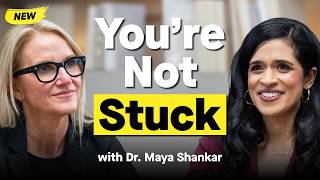
This content was created by India Cutler. This content was uploaded by India Cutler. This is a YouTube podcast-style interview titled "This Simple Mindset Shift Will Change the Way You See Your Life" (published 2026-03-26). Host Mel Robbins interviews Dr. Maya Shankar (cognitive neuroscientist, former White House advisor and author) about coping with disruptive life changes and reinventing identity. The episode blends personal stories (Shankar’s career-ending violin injury and fertility losses) with research-backed strategies and practical tools — e.g., self-affirmation, cognitive reappraisal, mental time travel, visual self-distancing, distraction, reading fiction as an “identity laboratory,” identity foreclosure, possible selves, and neuroplasticity — to help listeners navigate grief, uncertainty, and intentional change. The recording is a conversational interview with sponsor breaks (typical podcast/YouTube format).
Chapters
Everyone listening right now who is afraid of a change they're currently navigating or they're going to have to navigate in the future, and they think, I can't possibly get through this. The right question is not, how am I going to get through this? It's, how will that new version of me navigate this change?
Maya Shankar earned her PhD in cognitive neuroscience from Oxford. She served as a senior advisor in the White House under President Obama, Now she's the author of the New York Times bestseller The Other Side of Change. When you go through a divorce or you get fired from a job, that change really makes you question, who am I?
We don't know sometimes how much something has come to define who we are until we lose it.
I want to go back to the beginning.
Okay, little Maya, age 6. That's when I started playing the violin. Fell in love with it immediately. I would practice for for hours. I was studying at Juilliard. I was soloing with orchestras, winning concerto competitions. And then I overstretched my pinky finger, and doctors would later tell me it was a career-ending injury, that my dreams were over.
What do you say to a person who's dealing with that kind of destabilizing change?
For the person who's in the throes of it, who cannot see beyond their pain, this is the technique that has completely transformed my life. It's called—
Maya Shankar, welcome to the Mel Robbins Podcast.
Thank you so much for having me, Mel.
I am so excited. You came in here like a tornado. I can tell that you are ready to inspire and teach and motivate, and you have been waiting to talk about this topic. And the way I wanna start is, how could my life be different? If I take everything you're about to teach me today about change, managing it, creating it, surviving it, if I really take it to heart and I apply it to my life, how, how's my life gonna change?
I think we've all heard this mantra that while we can't control what happens to us, we can control our reaction to what happens. And if you're anything like me, you're like, okay, yeah, that sounds good, but how the heck do I actually do that? Right? It's not like there's some sort of switch switch in my brain that I can flip on that's suddenly gonna make me feel more peaceful or more enlightened or more curious, right? If there's one thing that I've learned over the years, it's that we can change our relationship with change. We can come to see the hardest moments in our lives not just as something to survive, but as an opportunity to reimagine who we are, to unlock our full potential, to discover extraordinary things about ourselves. And what we're capable of. And all of that surfaces in the throes of a big disruption.
But when you're facing it, you don't want to be in it.
Exactly.
And you're saying that you're gonna teach us how to change the way we relate to those moments as we're going through them?
I'm coming at all of this as someone who hates change. I feel so uncomfortable by change, and I feel like it brings out the worst of my anxieties. And so the reason why I've been so heartened to realize this from the research and all the interviews I've done is because I needed to change my relationship with change. And so I'm here to tell everyone listening, if I could do it, I promise you, you can do it too.
You host a podcast about change. Now you're the author of a book about how to reinvent yourself when life takes a turn. But this all started because of a need for you to reinvent yourself, your identity, your future, all of it. So I wanna go back to the beginning.
Okay.
So let's talk about what happened.
We're gonna have to take the time machine back to little Maya, age 6. That's when I started playing the violin. And Mel, I fell in love with it immediately.
From the moment you picked it up?
Absolutely. So my grandmother in India had played the violin as a hobby growing up. And I remember one day my mom went up to her attic and brought down her dusty violin that she had brought with her when she immigrated from India to the US. And she opened the case, and it was like magic. I remember very quickly asking my mom, okay, can you get me like a pint-sized violin? A little version of this? And my parents had to ask me to do a lot of things, but they never, for whatever reason, had to ask me to practice. So I would just run home from the bus stop after school. I would practice for hours. And I remember when I was around 9 years old, we were in New York City. I had my violin with me, and we walked by the Juilliard School of Music. Now, this was my dream school, okay? I mean, I would, I would lay in bed at night and just imagine that one day I might be able to study there. And so my mom looks at me and she goes, why don't we just walk in?
To Juilliard?
To Juilliard.
And you're 9?
I was 9. Okay. And I was like, what are you talking about? We are not invited. And she goes, I mean, Maya, what's the worst thing that could happen? And I, I said to her, security guards. That's the worst thing that could happen. But she was just fearless and she's like, we're going in. 30 minutes later, I'm auditioning for a Juilliard teacher on the spot.
Really?
Yes. He tells my mom afterwards, I'm willing to take Maya on as a student this summer and to basically put her through a boot camp to try to get her ready for the Juilliard audition in the fall. And I went to the summer camp. I was heads down. I really skilled up technically. I got so much better in that time period. And guess what? I got into Juilliard in the fall. I was studying at Juilliard. I was soloing with orchestras, winning concerto competitions. The renowned violinist Itzhak Perlman invited me to be his private student. And then I was studying at Perlman's music program one summer. I was 15 years old and I overstretched my finger on a single note. I overstretched my pinky finger playing this very challenging technical piece, and I heard a popping sound. And it turned out that I had damaged tendons in my hand. And doctors would later tell me that it, it was a career-ending injury, that my dreams were over.
What is that like to hear at the age of 15?
I was in denial. I think like most people listening would be, right? I was also, I was in a rebellious mode, so I also didn't wanna listen to them, right? I kept playing and practicing through pain. I was taking excessive anti-inflammatories. I was doing every physical therapy exercise in the book, every possible treatment. I ended up getting surgery, that didn't work. Finally, I had to face the facts. But it was very, very hard. And I think— I think grief is actually the best way to describe what my emotional state was like because there was something so curious about my grief when I think back to it. I wasn't just grieving the loss of the instrument. I was grieving the loss of myself at this much more fundamental level. We don't know sometimes how much something has come to define who we are, until we lose it and we feel so unmoored and so disoriented and like there's nothing that makes us special anymore.
And what's relatable about that story is that you don't have to be a violinist to understand that when you go through a divorce or you get fired from a job or you get booted from the team that you used to be on or you even move from the neighborhood to a new town. Yeah, that, that change really makes you question, who am I? What do I want? Like, even if you think you know what you want, you, you pick a certain major or you go into a certain profession and you start doing it, you're like, do I really want to be a lawyer? Do I really want to be a nurse? Like, this is— this is really— is this really— and, and you start to question yourself.
Because that's the thing about self-identities. They project us into the future. So every future I had imagined for myself had now disappeared from view. But what we can do is we can expand our self-identity so that it is more robust in the face of change. Now, what do I mean by that? My advice is to define yourself not just by what you do, but by why you do it. Okay, so let me ask that question for the violin. If I stripped away all the superficial features of playing music, what was the essence of my passion? What drove me towards the instrument? It was a love of human connection. I loved connecting with people through my music. I love seeing them smile. I love seeing them feel things as a result of what I was producing. Guess what? There were other outlets through which I could express that love of human connection. I'm expressing it right now in this conversation with you and your listeners.
What do you say to a person who's dealing with that kind of destabilizing change, whether you're going through a divorce, you have a life-altering diagnosis, you just lost somebody that you love, and they're having trouble seeing beyond just the pain of this moment.
Yeah. First of all, I feel you. It is a deeply painful and disorienting process. There is so much research showing why change is so scary. I mean, for one, it is filled with so much uncertainty, and our brains are not wired to like uncertainty. I think another reason why change is, is so hard is that at the end of the day, and I know you and I share this in common, we like having a firm grip of the steering wheel. We like believing that we are dictating how our lives turn out. And most of us humans fall prey to what's called the illusion of control. Where we wildly overestimate the degree to which we're actually in the driver's seat. And so for the person who's in the throes of it right now, who cannot see beyond their pain, I wanna share a personal story. The last 6 or 7 years have been really tough for my husband and me. So we have been trying to start a family We've been unsuccessful. We've had to navigate so many disappointments and obstacles and heartbreaks. And dealing with pregnancy losses has left me reeling because for someone who loves control, for someone who loves outworking every challenge she faces, guess what? No such thing as outworking fertility stuff. So we had found out, um, that we lost identical twin girls with our surrogate. And I was beside myself. I was in our bedroom, covers over my head, and sobbing. And my husband comes in, husband Jimmy, and he says, "Let's just do a quick gratitude exercise." And I was like, "Hell no, okay? How dare you? You take your Instagram BS, go into the corner with your toxic positivity, and I'm gonna stay under the covers and sulk because that is my reality right now. P.S., I still love you. Okay, but I was so pissed. So anyway, finally he kind of wears me down. I'm like, you know what? I'm gonna do this damn thing just to get him off my case, all right? So I start to rattle off a couple things. I'm like, well, I guess I'm really grateful that I get to be an aunt to my 6 nieces and nephews. I love that I've gotten to work with the same people for like over a decade and we still, love working together. It's the greatest source of pride that the people I worked with in the White House still work with me today. So I start to do this, and the list just pours out of me. And I swear to God, something magical happened in that moment. I had been so single-mindedly focused on becoming a mom that I had developed tunnel vision, and I had completely forgotten about how otherwise rich and multidimensional my life was.
Hmm.
And in engaging in this practice, by the way, it's called a self-affirmation exercise. My husband, who's a software engineer, didn't know that that was what he was doing, but it basically just involves taking a few minutes to write down everything that gives your life meaning, every identity that makes you feel valuable, that has not been threatened by the change. And so I just want to remind everyone who is listening, the pain is real. It will persist. There are no instant fixes. But these small shifts in perspective can radically change your orientation as you look at yourself and as you look at the world around you.
I just want to say to you, if you're listening or watching on YouTube and you had this, like, bristle for a moment like I did and like Maya did when her husband, with the best of intentions, Tried this. There are gonna be those moments in life where you're not only gonna be under the sheets for a day, you might be there for a week or a month. You might need to process things for a year or a couple, and that's okay. What I want you to know is wherever you are, the moment that you're ready to pull the sheets down, you're ready to start moving forward through this change that you do not want, that is not fair, that is just horrible to have to process and accept, that the tools are there as frameworks to help guide you as you move forward.
Yeah.
One of the things I wanted to add to this is that if you're processing a loss and you're going through the experience of grief, that it takes a lot of time to come to terms with the loss that you have. And we had this extraordinary expert on grief, David Kessler, on the podcast, and he shared this statistic that I found to be so empowering, that the average time period when somebody seeks support after losing a loved one is between 5 and 10 years. And so if you've been living with grief for a while, what David Kessler says is the moment that you're ready to seek help is the perfect time. You know, in your research, Dr. Shankar, you say that people are not great at predicting how change is actually gonna impact them. Can you explain?
Yeah, so we are notoriously bad affective forecasters. All that means is that we are so bad at predicting how we are gonna feel about events in the future.
Okay.
This is really important for us to know.
It is?
We overestimate how bad the bad things are gonna be. And we also overestimate how good the good things are gonna be. I lost my job, for example.
Yes.
It's going to completely ruin me, and I will never regain the current happiness level I have. Got it. And then I also think, if I get this promotion, I'm gonna be happy forever. But actually, we just revert right back down to what's called our happiness set point.
Okay, so whether it's a loss or it's a gain, after you experience the emotion of the loss or the gain, you tend to settle back to where you used to be.
Yeah, or at a minimum, it's never as bad or as good as we thought it was gonna be.
Now, why is it important to know that?
The reason it's important to know that is because at the outset of a change, when we're feeling so daunted by our ability to get through it, we want to have that reassurance that it's actually never gonna be as bad as we think. But one of the biggest reasons why we get it wrong is that we forget that we too will change as a result of the experience. We are a work in progress, and we forget that as the world is changing around us and as a change is happening to us, it is also creating lasting change within us.
I just saw what you were talking about. That you, with the person you are in this moment, you think you can predict how you're going to feel and who you're going to be in a future moment. But the truth is, the person that you are right now will not be present for the future moment.
Exactly.
Because you are going to have changed based on what's happening to you next.
100%. We somehow think that the version that we are today is like is the final version, the fully enlightened version of Maya. But here's the thing, we become different people on the other side of change. And so when you are feeling so scared and daunted, everyone listening right now who is afraid of a change that is, they're currently navigating or they're going to have to navigate in the future and they think, I can't possibly get through this, the right question is not, how am I going to get through this? How will I, with new abilities and perspectives and values and capabilities, how will that new version of me navigate this change? There is something so reassuring in that message because time and time again, everyone I talk to says, you know, I wouldn't have willed this negative change to happen, but damn, am I grateful for the person I became as a result of it. I am so different than I was before.
What is identity foreclosure?
So identity foreclosure is something I actually experienced as a little kid. I didn't have a name for it, of course. But it's when we anchor our identity to something prematurely without having explored all other available options. So when it came to the violin, I just kind of attached myself to that moving train, and I jumped on it, and I was just like, off to the races. Okay.
I'm going to be a concert violinist. That's my identity. Yeah. Okay.
And what that— what identity foreclosure does is that it prevents us from more consciously building these multifaceted identities. We inherit labels and identities from our families, from our teachers, from our friends, from our communities, but we aren't always interrogating what they are or making proactive choices that help expand them.
I have a friend who always wanted to get married.
Yeah.
And hasn't found the person.
Yep.
Not yet. And yet, it's this thing that they wrestle with.
Mm-hmm.
And how do you handle that experience when you— it's something you've thought about for so long, you know?
Yeah.
And it hasn't happened yet.
One of the topics that I explore in the book is called possible selves. Ooh, I like that. And here's the basic premise. Okay. So all the time we are generating possible selves as we go about our lives. So when your friend is thinking about one day wanting to be married, she's generating a possible self.
Yes.
When Mel decided, hey, you know what, I think I should do a podcast, she was imagining a possible self. When I, as a teenager, learned that she could no longer play the violin and had to figure out how to find some way to reinvent herself, She too was generating a possible self.
Yes.
And so possible selves come into 3 buckets. There's hoped-for selves. Uh-huh. Those reflect our dreams of what we hope will happen in the future. Feared selves reflect our anxieties and our worries about what might happen in the future. And then expected selves reflect what is just most likely to happen, good or bad. So yes, I could tell you right now, Mel, I'd really love to become the next Taylor Swift. Too bad. Don't know how to sing, don't know how to write songs, and probably in 5 years I'm still gonna be a cognitive scientist, right? So that's my expected self. Okay. So what can happen when a big change comes our way is that all of these doors close that we were hoping would stay open.
—Or that you expected.
—That we expected. —Or that you feared. Now a bunch of doors also open that we fear. I'd never thought that my life could maybe turn out this— like, I didn't— I don't want that door to open. That door is so scary. I don't like what that future looks like. And what I've learned from my research is that when it comes to imagining possible selves. We can sometimes have an overly constrained imagination for what is possible for us based on stereotypes, experiences, social norms, you name it. How many times have we been thrust into a new environment? All of a sudden I'm a caregiver. All of a sudden I'm a chronically ill person. All of a sudden I'm jobless. And we've been so afraid about who we might become. And one thing that I am so eager to spread is, well, in those moments of inflection, how can we conjure up more promising, positive possible selves than we previously imagined?
Don't you think your home should be a reflection of who you are? Of course it should.
That's why you need to know about our sponsor, Ashley.
Ashley has styles that balance timeless appeal with modern trends that will help you bring your personal look home. In fact, I was looking at the Ashley website because I know you're going to go, well, Mel, what do you like? The Crystalline collection. It's a modern farmhouse look that feels warm and inviting, but it's so clean and elevated. I love clean and elevated, with beautiful light brown wood tones, black hardware accents. And the dining room table is super cool. It expands from 80 to 98 inches. It has this removable leaf. It seats up to 10 people. And if you look at the table, you can picture holiday dinners, family gatherings, friends making all kinds of memories. And every Ashley piece is thoughtfully designed, built to last, so your home doesn't just look good, it works like it should. Plus, Ashley provides fast, reliable, white glove delivery right to your room of choice, making the entire process simple from start to finish. Visit your local Ashley store or head to ashley.com to find your style.
I want to hover for just a second on this identity foreclosure thing, and I'd like to focus on the experience of when you have something when you're young that then you can no longer do. And I'm just curious, is there any research or any specific advice that you have to somebody who was like the star athlete, and all of a sudden they don't have sports, or who was the star math student. Yes. And now they're in the corporate world and they're just lost. Like, it's sort of that— can you talk a little bit about this? Because— Yes.
Just because they've lost the ability to do that thing, just because they're not the star athlete anymore, just because they're not the top math student, doesn't mean that all of the all the soft and hard skills that they built, all the experiences they had, all the wisdom and knowledge they accrued as a result of doing those things can't serve them meaningfully in what comes next. So we feel like we lost everything, but actually it turns out when it comes to the violin, guess what I'm still holding onto? All that grit. Guess what else I'm using? That fearlessness. Going on stage as a little kid, performing in front of thousands of people. That's helping me today in my roles that I have, right, as a writer, podcaster, cognitive scientist. And so the relevant question to ask themselves when they're no longer that math student or that star soccer player is, who else can this person be?
You apply the worth to the label. Exactly. And when the label is gone, an identity foreclosure happens. We make the mistake of thinking, that all of the value that was underneath the surface is gone too. That's exactly right. I wanna read to you from chapter 3 of your book. Most of us know what it's like to get caught in a negative mental spiral. Any number of things can trigger these unrelenting, suffocating loops, but the catalyst is typically a change in our lives. Our new anxieties, regrets, and uncertainties can take on a life of their own and become a bigger challenge to deal with than the change itself. These thoughts become like mind worms, nestling in our psyches, hijacking our attention and stoking our biggest fears. What's wrong with me? How could I not have seen this coming? How could they do that to me? What's going to happen? Let's talk about what to do when you are stuck in a mental spiral.
So we talked about how our brains aren't wired to like uncertainty. We want what's called cognitive closure.
Cognitive closure? Yes.
What is that? What that means is we want black and white answers. We want clear, definitive answers.
Yeah, I want the possible self that I'm hoping for and the possible self that I expected. I don't want any of this stuff in between.
Exactly. Okay. But guess what? When a big change happens and we climb out from the rubble, there's no black and white. It's all gray. And that makes us feel so much anxiety. Certainly makes me feel anxiety. I don't like being out of control. And when you're in the throes of change, all you feel is out of control. So what does our mind do?
I don't know. Well, it starts spiraling, but why does it do that? It's so not helpful. Exactly.
It starts spiraling because it's trying to regain control in the way that it knows how, which is we think, maybe I can outthink this problem, but it's fool's gold. You think, if I could just figure out let's say you're navigating a breakup. If I could just figure out why he stopped loving me, then I can finally move on and enter another relationship. If I can just figure out all the ways that I can keep my family safe, then I can actually move on peacefully. If I can analyze every mistake I've made in the past and every regret I possibly have, then I'll never make those regrets in the future. So we have this false sense that we're actually making progress on the problems and challenges we're facing. But we're actually just looping over the same negative thoughts over and over again. Because a lot of questions in life don't actually have answers. But our brains, they don't, they haven't caught up to that wisdom yet. So you've got all these tools.
God, do we need this. Let's start with the first one, cognitive reappraisal.
What is that? Cognitive reappraisal is again, one of those fancy pants terms that doesn't need to be fancy, which simply means that we interpret a situation differently in order to alter the emotional impact it has on us.
Okay, so let me try to put that in a way that I would understand. You are going to gaslight yourself, or you're gonna put nicer icing on the cake in order to get you to direct yourself at the expected or the hoped and not the fear?
Is that what you're doing? What are you doing? You're going to change the way you think about a situation. You have a gut reaction to your being a certain way or a situation unfolding in a certain way. Yes. You're going to deliberately change your interpretation.
Would this be an example of one? 'Cause I talked to somebody who, on this podcast, who is an expert in grief, and he said something that I will never, ever, ever forget, which is if you are in a spiral around what-ifs, what if, what if, what if, what if this, what if that, and I actually used this on the phone with my mom this morning. Because they had a friend who died over the weekend very, very suddenly. And I shared this little reframe with her. So David Kessler, Mom, just did an episode with us, and he suggests that you say, "Even if." Even if. Even if. And I find— I found it to be so powerful. Yeah. Because— If the person is gone, there is nothing that brings them back. And all of the worrying that we're doing, which is trying to make sense of it, which is super, super, super normal, doesn't actually do anything but make you feel this false sense like there could have been something. And so the even if I thought was really powerful, and I could see how you could use even if in a breakup. Even if I did this, even if I did that, even if I did the other thing. Is that an example of what you're talking about?
You're reframing a situation and it's altering the way you feel about it.
100%. That's reappraisal. Yeah. It doesn't mean that it wasn't fair. It doesn't mean that—
Absolutely. All the facts are still true.
All the facts are still— it doesn't mean you're not going to grieve or anything. But that sort of bouncing from what I wanted and what I hoped and what I expected, "Oh my God, my fear. Now I can't handle this," and the need to kind of land the plane and feel okay and in control, like, to me, okay, great. I thought that's what that was. Yes. You have another one that you reference, which is mental time travel.
Yes. So our brains have a remarkable ability to go into the past and into the future. And this can be an asset to us when we are navigating a really frustrating mental spiral.
You've actually taught us a lot about that, 'cause you've taught us that we can look back at the past and go, "Well, I'm not that person anymore." Like, I look at the college version of myself, I'm like, "That was peak dysfunction, Mel. I'm not that person anymore, thank God." And you've also said that this possible— the possible selves are a way that you project into the future. Yeah. So you've proven that to us.
Yes. So, and it's, if there's a specific topic to your rumination, what you can do is you can travel into the future and say, so Maya, 3 in the morning, wakes up ruminating, right? What I need to do in that moment is I'm replaying this extremely frustrating encounter. Yeah. Let's say with a coworker. Okay. Right? Or let's say with a receptionist or whatever it is.
Okay.
I ask myself, How am I gonna feel about this 5 hours from now, 5 days from now, and 5 years from now? And what that quick mental exercise does, it's just 5 seconds of thinking, is it reminds you that your current situation is transient and the problem, your current preoccupation, is probably going to feel less significant to you moving forward. And what I've done in those moments where I feel like I am still gonna be worried in whatever, 5 years, is to mine my past and surface moments in which I was similarly convinced that I was gonna be stuck in this mental spiral indefinitely, but I turned out to be wrong. Or moments where I showed resilience in the face of adversity that I did not think I had. And so we can leverage, we can go into the past. We can also go into the past, by the way, when we're scared of what's happening globally. And we can say, look, it's not the first time humanity has faced these sorts of challenges that we're going through right now, but a combination of self-sacrifice and collective action led us to a better spot. So this is a— mental time travel is a wonderfully flexible, helpful tool. And, and here's the other thing, Mel, not everyone has the ability to just like get on a jet and be like, okay, I'm gonna reinvent myself by like moving to another country and I'm gonna quit my job. And it's like, no, most of us have to keep our jobs. Okay. And most of us have to live in the homes or apartments that we're currently in. Mm-hmm. And so my goal was to figure out, well, how can we have that reinvention happen in here?
And in here, by the way, if you're listening, she's pointing to her brain. Yeah, to my brain. This is a really important note that reinvention, we think about it and we think about the thing that you put on your vision board. We think about the future that you're gonna cast forward that you can visualize and all the physical stuff and what it's gonna look like. You are saying that true reinvention when it comes to yourself and moments of change happens internally in your own mind.
That's exactly right, because we cannot control, in fact, what happens to us. That is the nature of let them.
The Mel Robbins Podcast is proudly sponsored by Amica Insurance, our exclusive insurance partner.
You know what they say? If you want to go fast, go alone. If you want to go far, go together. So go with Amica and get coverage from a mutual insurer that's built for their customers, one that looks after what's important to you. Together, auto, home, life, and more. Amica can help you protect what matters most. Visit amica.com and get a quote today. Visual self-distancing.
What is that? Yeah. So what we're trying to do with this tool is just create as much psychological distance as we can between us and the problem we're trying to solve. Okay. Because oftentimes when we're immersed in it, we have all of these heated emotions and we're feeling pissed off or feeling frustrated or we're feeling a lot of regret.
Let's use an example. A lot of people are losing their jobs right now. Yes. And so let's use this tool of visual self-distancing to help somebody who's in a situation where they have just lost their job. Yep. And now they feel like a loser. Yep. And now they feel flat-footed because of all of the change and the ways that people are working. How do I use this to get out of that negative self-talk?
So visual self-distancing means taking a bird's-eye view on your problems. Okay. Because here's the thing, if you're a first-person narrator of your own situation, here's what you're saying afterwards. What does that sound like? I'm a loser. Yep. I have no future. I'm pathetic. No one's going to respect me anymore. I don't love myself. How could anyone ever love me? I'm too old.
I can't figure this out. I've screwed up my career.
Yeah. Also, I'm so intimidated by having to learn this new set of skills. Yes. What am I going to do? That's what the self-talk version looks like and why it turns negative so quickly. Because at the end of the day, most people have the least amount of compassion for themselves. True. That's certainly me. I have so much compassion for other people. I reserve, Mel, roughly 0.2% for myself. Okay? So I am incredibly harsh on myself. I'm super self-critical, and I'm gonna be the first person to be like, I screwed up. Now it makes for a really nice marriage cuz my husband and I are both like this. So typically we end up being like, I messed up. No, I messed up. But there's other scenarios where being like that is not healthy. It's not great for your positive, talk, okay? And so when you take a bird's eye view, when you essentially coach yourself like you would a friend, you're bringing self-compassion to the table. You wouldn't go to your friend and be like, hey, guess what, Maya? You're a loser. You're pathetic. Okay? No. How? You have no future ahead of you. No. You would never say that to me. Ever. You would be productive. You would try to correct some, some of my misunderstandings about myself. You would poke holes in my narratives because you would see things more objectively without that cloud of emotions. So rather than saying, I need to get my stuff together, you say, Maya, you need to get your stuff together. Ooh. Okay. That small little, it sounds like a little gimmick, but it is so effective and across domains and intensity of emotions, it is one of the most powerful tools. You've changed the focus from feeling like you're the problem to reminding yourself that this is a universal problem that the collective you all shares.
Well, you know what's interesting is when you said, Maya, you gotta pull it together. Yeah. Or, Mel, stop complaining about this and sign up for the tutorial online and lean into this. Mel, start picking up the phone and just calling friends and telling them that you got laid off. Yeah. And, you know, you would really appreciate a chance to just talk about what they think you should do next. Like, "Mel, pull your big girl panties on." That's what my mom always used to say. "And work on that resume. Like, get back out there." 'Cause that's what you would tell a friend. Correct. But what's interesting is when you use your own name— I had this experience when you said, "Maya." What did you say to yourself? Maya?
I tried to use a PC term. It was, "Get your stuff together." Maya, come on.
You gotta pull yourself together. I could almost feel like there was a little coach standing behind you going, "Come on now, come on now." You were outside of yourself. Exactly. Now, you say distraction can be a tool to get out of the past and this negative self-talk. And I need to hear more about this because distraction is a very negative thing in the world right now.
Yes, I think there is a really harmful popular narrative that if we don't persistently and directly confront our negative emotions after some negative change happens in our lives, those emotions are going to rear their ugly head with greater vengeance down the line. The research actually shows that the story is much more complex. Distraction is a very helpful, productive tool for a lot of people. If you find that watching Netflix, having a conversation with a friend, going on a run, is bringing you joy on any given day, and you don't feel like those negative emotions are trying to like force their way through and you're actively suppressing them, chances are it's a really good tool for you to be using. And so what I, what I hate about that narrative, Mel, is that I don't want people to feel both the burden of their grief or the challenge they're going through, and then an additional burden that the techniques they're using aren't the right way to get through. Their trauma or whatever negative situation they're going through. There is actually no right way. Individual differences play a massive role. So if distraction's working for you, you do you. Another thing that's fairly easy to do is to read fiction. Hmm. So researchers call fiction an identity laboratory because what you're able to do when you're reading fiction is to freely explore and try on for fit, if you will, new identities. You can anticipate how you would respond at different junctures. You can take risks that you would never take in normal life, right? You can, um, you can experiment with yourself. It's kind of like a playground, and it's a totally psychologically safe space. And so we as readers, we tend to blend our identities with the characters that we're reading. So that's one way to explore who else we can become. Another way is actually this was just advice my dad gave me when I was at that juncture with the violin. So I just lost the ability to play. I was feeling down in the dumps, right? Identity foreclosure, baby.
My possible dreams, my who I expected, gone.
Gone. It's the summer before college. I thought I was gonna major in music performance. Now I have no idea what my major is gonna be, right? And my dad looked at me and he was like, You've been wearing blinders for 10 years. Your job this summer, in addition to doing your job that you're just working this summer, is to expose yourself to as many ideas and worldviews as you possibly can. So by that, I mean, watch documentaries, read books, watch TV, talk to people about their experiences, talk to their parents about their experiences. But importantly, and this was the key part, Mel, You need to go on this quest with no end goal in mind. Because if you're trying desperately to figure out what's my major gonna be, you're not gonna be as exploratory as you should, right? You're gonna preemptively close doors 'cause you don't see them as possible.
What about when you choose to make the change? Yes. Okay. So, you know, 'cause oftentimes, You think it's gonna be good. Yes. But is there value in creating change in your own life? Even, you know, though it's gonna feel uncomfortable and you're gonna be uncertain?
I mean, discomfort is the key to unlocking our brain's potential. That's what the neuroscience shows. So we have this remarkable ability for neuroplasticity, which basically just means our brain can rewire itself in response to our experiences and the challenges we put in front of us. And so every time we put ourselves into an uncomfortable situation, we are boosting our brain. Here's the great thing though, when we are in these positions where we're learning something new, when we're having to challenge ourselves because we're introducing change into our lives, we fail a lot. Failure is uncomfortable, but what failure does is it releases this powerful cocktail of neurochemicals that signal to the brain, hey, something's not working. The current setup is not serving me. I have to rewire things in order to get them right next time. And so that is how we tap into this amazing neuroplasticity and keep ourselves sharp as long as we possibly can.
So what do you say to the person listening who, who may be holding themselves back? They're in a pattern. They are looking at the doors. They see who they hope to become. They know who they kind of expect to become, especially if they don't make this change. Yes, because if you're thinking about looking for a job but you're not doing anything, you can expect to stay at that job. If you're thinking about running the marathon but you never actually buy the sneakers, you can expect to never run the marathon. Correct. They're staring at the fear door thinking, oh, but what if this, what if that? So they are in that moment where you are actively waiting. You're waiting for change while you're raising a family, you're caring for your parents, you're finishing school, you're in between jobs. There's a thing you want to do, but you just are waiting for the right time.
Yep. What would you say? No action is too small. You can start right now. You do not need to wait until the kids leave the nest. You do not need to wait until you are no longer a caregiver. Because here's the thing. Let's say that your goal is to start a blog. Or like, yeah, you know what? Today I woke up. I really want to write a Substack because Uh, let's say you really care about building community. All you have to do is write for 1 minute a day. And the reason is that the difference between 0 minutes and 1 minute is seismic, because when it's 0 minutes, nothing. When it's 1 minute, you're a writer. You've embodied this identity and you're gonna build towards it and it's gonna be self-reinforcing and it's gonna lead to this virtuous cycle where over time you start to believe it too. So I would tell people to start now. It can be the smallest little action, okay? Maybe it's, it's just one little step you take in the direction of that possible future self. The other thing I want to share is that there are really good techniques from science that can help drive motivation when we need it most. Okay, so the first is to break really big daunting goals into bite-sized bits that feel much more manageable and where we can feel a sense of accomplishment in the short term. And the other reason why it's so important to break the big goal into the small goals is that we want to avoid what's called the middle problem. What's the middle problem? So the middle problem refers to the idea that we don't have stable amounts of motivation over the course of pursuing a goal. We get a huge boost in the beginning, So this is like New Year's Day, right? We're like, oh my God, I'm ready to go. Where is my gym shoes? I'm off. You know, I'm gonna go on the elliptical or the treadmill or whatever it is. Okay. And then we get a huge burst of motivation at the end. Yeah. Because now we're really close to achieving the goal. So we're like, oh, it's like, think of a marathon. You're in the final stretch. You actually speed up a little bit cuz you're so excited to almost be there. But we actually get a lull in motivation in the middle. Hmm. So what breaking a big goal into smaller goals does is that it reduces the continuous length of that middle stretch. If you have a year-long goal, that middle is 3 months where you have that drop in motivation and you're likely to just fall off the wagon altogether. If you have a week-long goal, now your middle is just over, you know, it's like 2 and a half days or something, right? So now you have a much smaller timeframe in which you get that, oh, I don't wanna do this, but okay, you know what? I'm right back into it as I'm getting towards the end of the week. Okay, so that's the first thing, right? Break the big goals into the small, into smaller units. The second, and this is the technique that has completely transformed my life, it's called temptation bundling. Okay. Is developed by my friend Katie Milkman. You just have to do the hard thing that is required for you to achieve your possible self with an immediately rewarding activity. So something that is immediately delightful is a great reward, but importantly, you have to deny yourself access to that little fun treat. In all other realms of life. So here's how I've applied it to my life. Okay. I only allow myself to listen to Taylor Swift's new albums when I'm working out. I love Temptation Bundling.
Yes. I love it. Okay.
Changed my life. Okay. Third one. We have a funny quirk in the way that our brains form memories and how we look back at an experience. Okay. This is my favorite insight about the brain. When I learned this in college, I thought, I need to be a cognitive scientist. Okay. It's called the peak-end rule. When we look back at an experience, we don't give every moment of that experience equal weight in our memories. We overvalue the peak of the experience, positive or negative, just the most emotionally potent moment that we went through. And then we assign a lot of weight to the end of the experience, hence the peak-end rule. Now, what does this mean in practice? I don't know. It means we can't really control the peak. That's out of our control, right? If I'm like in a diff— like I've been in these difficult writing sessions, I definitely can't control how negative or positive and also when it happens and if it's negative or positive. But what I can control is the end. So here's what you do. You hack the system. You tack on something joyful to the end of a working session, or you make the end of a workout slightly less painful than it otherwise might have been. In order to remember the experience more favorably so that you're more likely to return to it. So after I do my 30 minutes of writing, guess what? I have my favorite candy. It's just like I have a little bowl sitting on my desk. I just eat a little Coffee Chew and I'm like, okay. It sounds so silly, but I swear to God, Mel, it works because I, I think back, I'm like, oh, it wasn't so bad. And you can do this, like when you work out, And you, if let's say you don't like working out, you don't like how hard it is, end with a fun cool-down stretch thing that's more relaxing. Your brain will remember it more favorably. So the peak-end rule is something to keep in mind. If you have something that you feel like, oh, I'm trudging through this and it's so hard, you can shape its end opportunistically to make it something you look back on more fondly.
I love that. So Dr. Shankar, what do you want the person who's listening to know about what's possible for them? If they change their relationship to their future, to what's happening right now, and to the identity of who they think they are. Yeah. But who they could become.
Yeah. I think you will astound yourself by the person that you can become on the other side of change. I'm excited for you to go on this journey. I think your friend along the way is going to be curiosity. I think we have to be so curious about ourselves to even witness the progress we've made or to witness our own evolution. We have to study ourselves and to ask and interrogate, what are my beliefs? How do I see myself? How do I see the world? Maybe these things aren't sacred, immutable truths. Maybe I can revisit them. Maybe maybe there's a new version of me that can exist who's better. And if you just know the right questions to ask and the right tools, I'm so confident that you will get to the other side of change so proud of who you've become.
One of my favorite things that, that you said that I am never gonna forget is that I don't have to worry about the future because I can stand in this moment and trust that the future version of me will figure this all out. That somehow it's going to make sense. And that I, because I'm in this moment, I gotta give myself a little bit more credit for how whatever it is that I'm gonna go through is gonna change me. Yeah. Bet on your future self. You gotta bet on your future self. What a beautiful message. So, thank you. Thank you so much. You're welcome. And I wanna thank you. Thank you for taking the time to listen to this. There's so much change going on right now. I loved the phrase frameworks. The frameworks were so helpful. I am so excited for you. I'm excited for the future you. And in case no one else tells you, I wanted to be sure to tell you that I love you and I believe in you, and I believe in your ability to create a better life. And everything that you learned today about how you navigate this moment and how you believe in that future version of yourself and who you're going to become on the other side of what you're facing right now that will help you create a better life, period. Alrighty, I'll see you in the very next episode. I'll welcome you in the moment you hit play. And thank you for watching all the way to the end. I really appreciate you being here. I also love that you're sharing this with people in your life that may be going through a tough time or trying to navigate change. These tools are going to help them do that. So thank you for sharing. Thanks for hitting subscribe. I really appreciate you supporting us that way. And I know you're like, all right, Mel, I'm all excited, what do I watch next? I think you're gonna love this, and I'll be there to welcome you in the moment you hit play.
More from India




Oprah Winfrey: How to Find Your Unique Purpose, Authentic Power, and Calling in Life

