4th Edition CRO CEO CMO Revenue MasterMind Roundtable The Blueprint for CRO Success 2025 01 31
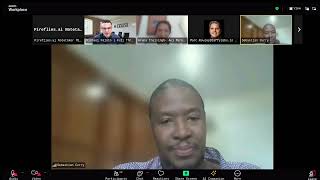
The video is a live roundtable hosted by Michael Falato that brings together founders, CROs, CMOs, and revenue leaders to share quick 60‑second updates on recent wins, losses, and tactical lessons. Participants introduce themselves, discuss recent contract wins or setbacks, and exchange practical advice on go‑to‑market strategy, lead generation, sales operations, channel programs, AI tooling, and personal branding. Falato moderates the session, emphasizing concise sharing, the importance of clear contact information, professional Zoom presence, LinkedIn profile optimization, and using automation responsibly. Throughout the discussion, speakers reveal their revenue‑growth tactics, challenges with acronyms, the value of hyper‑personalization, lead scoring, and the balance between automation and human touch. The roundtable ends with a call for networking, referrals, and future sessions.
Chapters
We're going to start here about a minute. But yeah, make sure you put— like, Aruna, put, put your phone, like, your phone number and email, not just your LinkedIn, if you can, or at least your email, because you don't want to—
um, if you all want, I just pasted a sample of what you could use. My name is Mark. It has my number, has my information. Kind of what we do. I always save that in my, like, Slack so I can always copy and paste it. But just a little, like, you know, so that way, like Michael says, I don't tell you my life story on the call.
We can't hear you, Mark. You might— you have to adjust your mic on yours.
It's probably the fact that I'm doing a bad job of talking on my microphone.
Is that better?
All right. Apologies. I'm supposed to say is back it away for a second.
Easy.
I'm sorry. And this is what I was just saying.
I was on TV. Well, come on, Mark.
Hey, you know, you're right. I apologize. Yes, but I was gonna say is I put the information in there, so it's a way of saying like, hey, you can contact us what you want. My phone number's in there. Call me anytime. Don't know if it's gonna help you, but anytime. Clearly I'll work on my microphone skills.
Yeah, this thing on—
let's see, I think we—
I think I got almost everybody in here that's real. All right, everyone, hello. Just letting folks in here. Um, Mark, do you want to keep an eye out on who's coming in maybe while I'm working here so you can let people in too? Can I make you a co-host, Mark?
Yeah, dude, Norris.
Okay. I think I trust you after—
been enough time. All right, I'll do that.
All right, so I'm Michael Filato, and I basically hold these roundtable masterminds, masterclass, TEDx talks, whatever you want to call it. The whole idea is for me not to sit here and say, oh, look what I do, and sell you something, then get everybody else to talk about themselves. No, what we're going to do today, and we do every time I do these, uh, is a roundtable cohort, which just means what do you know, what are you trying to figure out, and what's two things that you, uh, figured out in the last 6 months that you want to say, I learned from doing this right, I learned I really screwed this up, and I don't want you guys to fall in that same trap. The whole idea is because, um, it's not interesting to hear sales pitches for the next 25-30 minutes. Right, so this is what I want you to do. 60 seconds. Please do not go on for 3 minutes because I have to cut you off. So it's like, hey, Michael Filato, I live in, uh, Orlando area. I do lead gen automation, roundtable, um, and email and LinkedIn automation. I help people get top of funnel. Um, the thing that I learned the most out of the last 6 months is that losing and learning is a big part of what, what Legion's a part of. You kind of learn by doing things like wrong or right, and then you learn from what not to do. Uh, same thing with my black belt jiu-jitsu. Like, I get tapped, I lose, I learn. That's how I got my black belt. So it's a whole type of personality to not take losing as something that defines you, but it's actually something that makes you better. The other thing would be is fish where people fish. There's an event coming up, say for me it's sales and marketing people. I should be scraping the speakers, maybe getting a virtual pass or real pass. Even if there's not email addresses, scrape that list. There's Chrome scrapers from— for the scrape that and basically get everybody's name and then find out what their name is and say, hey, I'm going to be at Business 2.0 in Vegas. Want to have coffee, have a game plan about who's going to be somewhere and, and basically use that LinkedIn Live, LinkedIn event, real trade show, real conference exhibitors speaker list, and say, hey, whether you're going or not, let's get together. Because you can basically use that as a, as a place where you already know there's intent data, interest data, and they're already going. So that's my tip for, for for you guys. I'm going to turn this over to Mark and get Mark concisely— can I go over what you do?
Sure, uh, real quick. My name is Mark Riley.
Why you joined the Roundtable? Each person, what got you?
No problem. My name is Mark Riley. I live in Lake Oswego, Oregon. 4 times founder, and, um, I have 3 companies that we work with. We do a lot of really cool things from neuroscience to creating media. And the one message I'll leave you with is Every company today is a media company. So if you're not working on your media and sales strategy, you're missing it. And my info is in the chat if you want to know.
What's, what's something that you lost or won at in the last 60 days you're going to implement for 2025?
I had a $6 million contract that was going on paper and the CEO that we were working with stepped down. So the entire contract got suspended. And that's, as you all know from a SaaS revenue point, that's $60 million evaluation that went away. And we're not sure what's going to happen. So it's good relations.
Did you go more than one or two deep? Like, like always, you should be three to four deep on those things.
Yeah, we, we are deep, but there was a problem with the board that was beyond our control. And so it's a scenario that I had to tell my board, hey, be aware this might happen. We knew there was a possibility, so no one got upset. It is deflating to the team, but the biggest thing for me was keeping their optimism high that, hey, It's gonna be okay because we know we have a product market fit. We just didn't, we had a customer change. So let's, we've got a fit. Let's just make a little tweak adjustment. So it's just keeping everyone on the team positive. Um, and also at the same point in time, I had to show my emotion of, man, that really does suck, but we'll be okay. So it's, um, it's making sure it leads, but it also allows us to go after two other clients that we were thinking about. So I, from my perspective, one closed, two open. Maybe that one opens back up again in a little bit, but their company has an issue that's not related to us.
Awesome. Uh, just for everybody to know, put your information in the chat. Make sure you're linked in your phone. Don't just put like Steve and then this company. Um, if you look at my title in my video, little pictures, it's Michael Filato slash Full Throttle. A lot of people just have their name. Click on the, you know, right top right-hand corner, the three dots, and put like, or like Sebastian Curry dash I'm this, or this is the company. Because people are looking at your picture the whole time. This is like Rick Becker's Channel Sales Pro. That's the way it should look when you ever do a roundtable, or anytime I get on these, uh, Zoom calls. You want to market yourself as much as possible. And so you don't— like, I have no idea what Sebastian does until I call him. So that's what I would do. Thanks for the heads up. No worries, but I, I see it 90% of the time. And since I called on you, I might as well let you go. So go ahead, Sebastian.
Okay.
Hi everyone, uh, my name is Sebastian Curry, CEO and founder of The Group. We are based in the Bahamas and the U.S. Uh, Sebastian Alliance Group.
Okay, let's say— well, go ahead.
Right. So we, we are a fintech consulting firm. We specialize in payment systems and e-commerce. We recently partnered with Scotiabank to process their payments. So anywhere Scotiabank is around the world globally, we therefore process those payments.
Okay. Yes, pretty much. Thank you. Have you here?
Welcome.
Okay. I want to call on Amy Cook because I'm in RevOps a lot and I see Fulcast everywhere. I don't think I've even met Amy yet, but you are everywhere and you guys are doing great. Oh, you have your camera.
Thank you so much. I really appreciate it.
Yeah.
Yeah. So I'm Amy Cook. Darn it, I'm sorry, apologize. I'm Amy Cook, it's super nice to meet everyone. Michael's a great marketer. I never come to these things and I love, I love what I see so far. We're a sales marketing and customer success revenue operations platform. We have some really cool use cases, territory management, commission planning, Um, you know, all the things from plan to pay. So, uh, it's nice to connect with—
do we lose you? You there, Amy?
Yeah, I think we lost her.
We lost her.
Well, there— yeah, these, uh, Fullcast is everywhere right now, so, um, check them out. I don't— I know they have a platform that kind of helps with the whole operational side of sales and marketing and Um, but they, they're, they're, they're at least spending a lot of money on getting their name out there, and it's been pretty, uh, widely known at a lot of the conferences I'm going to. Um, let's go with, uh, Robert Brill.
Hey, Michael, I'm Robert Brill. Thanks for having me. I'm the owner and CEO of Brill Media. We're a media marketing and advertising firm, and over the last year we saw a challenge and we solved the challenge. The challenge was that small businesses and medium-sized businesses don't often have the marketing messages that really resonate in the marketplace. So we've developed a sprint test process that guarantees 15% conversion rate on landing pages, cold traffic. And the focal point is problems. What do we all face? No matter where you live and the language you speak, you have problems. And so all of our businesses are here to solve someone's problems, and we isolate the verbatim language that people use to express the problems that your customers face. Then those problems deliver solutions and transformation. How to achieve benefit without pain in a period of time.
We've done this part.
And what's something that you've learned that's gonna change your, your first quarter this year?
The language that resonates for us. So I'm looking for a partner who can target, who can, um, reach— oh shoot, I don't know the language now. But what we've learned, um, give me just a moment and I'll tell you. Oh shucks. The language. I need a partner who can handle big campaigns so we can target larger clients confidently. We pound that message home on ads and marketing messages, and we've lowered our lead cost 76%, and that's killer for us, from $114 down to under $27.
Cool.
All right. How about, um, if, if your camera's not on, I, I, I probably won't call on you. So, um, this is, this is a really interactive cohort. This is not for me to talk about me the whole time. So as you can see, everybody's chatting away. So if you want to be part of it, be part of the solution. So, Amy, are you back? Amy, let's see if she has better connection.
Yes, I'm so sorry. My phone overheated and shut down. That was the issue.
Yeah. Yeah. So you were talking about your platform, your solutions, like—
Yeah, I'm so sorry. What a bad first impression. But it's super nice to meet everyone.
Where are you based?
I live in Southern California.
Okay. Tell me what's something you've learned from a success or from a failure in the last 3 months.
Oh, okay. One of the things that I've really tried to lean in on this year since just co-founding just this year, the technology had existed for a while, but it's taken me several months to really understand all the use cases. And I'm way, way better at marketing when I really understand the product itself. And so I didn't— I wasn't able to get access for several months because of security things. And I would say that is a huge— it was a huge mistake at our company to not provide that early access and get the marketers going on the product day one.
Yeah, the bigger you get, sometimes the Harder it is to turn that big ship.
Yeah, that's right. So we have about 80 people right now, so we're fairly small, but we have a lot of enterprise accounts. And so the security, like, there's always a balance between the IT security and then, you know, us marketing cowboys that want to expand the platform to be all the things that we could use it for, right?
And what's, what's, um, what, what kind of grabbed your attention to join the roundtable today?
Um, well, I really appreciated the, um, personal outreach on LinkedIn, Michael. I looked you up and I was like, this actually looks like a group that I could learn from. And so that's why I'm happy. That's why I'm here.
Awesome.
Well, I'd love to get to know you more because I guess I see you at all these conferences and owning the space.
Likewise.
Yeah.
Yeah.
Thank you so much. I appreciate it.
Thanks.
Rick Beckers.
Let's unmute Rick Beckers. Hey, how you doing, Michael?
Hi.
I am the CEO of 3 companies. The one that I come to these roundtables with or about is Channel Sales Pro. I've been in the technology industry for 4 decades now. And to simplify what it is that I do, in a typical channel of the tech industry, you've got your vendors, your distributors, your trusted advisors, which are the feet on the street selling products and services to the B2B corporate customers. That's, that's the supply chain simplistically. I build channel programs. For those technology companies that are coming into the marketplace, startups or legacies that are, that have been direct sales forces. I build their indirect sales forces and their channel programs so that they can scale. So from a visual, you know, there's a lot. I think there's 4,500 new tech companies coming out every month. So there's a lot of people in need. And we all know the hockey stick, those founder-led sales efforts, you know, they're down in the blade, they're below $10 mil in terms of ARR. And I get them ready for the elbow of the hockey stick, build out a channel program for them so that they can scale through wash, rinse, repeat practices and onboarding, etc. And then my network is, you know, very, very large. So if you need to know the guy in the phrase, I know a guy, I'm the guy. Okay.
Is he— is his name Nunzio or Big Joey or Little Joey?
Depends on— depends on what part of the country I'm in. But yeah, if I'm in New York, absolutely.
Thanks, Rick. How about Blair? Yeah.
Yeah.
Hey, y'all. I'm Blair Gatchell.
If you didn't tell me— You must be from New York, right? Y'all?
I am from South Philly.
South Philly? You got y'all down there?
South Philly.
Yeah. Yeah.
I lived in Philly for a while. People would look at me like, you're not from around here, are you?
Yeah.
Deep South Philly down to Atlanta Street, probably. And you might find me down there.
So what, what grabbed your attention to join today? Tell us, tell us a little bit about, uh, something that worked really well over the last 6 months.
Yeah, so, uh, um, I, uh, I work in fintech. I, I lead sales and growth for a, a startup fintech called Breva. Um, we connect small businesses and capital and provide them an AI CFO to help them with their finances to manage their business. And, uh, uh, sales changing fast, right? It's always been about personalization, but now it's got to be hyper-personalized at scale. And in particular with, uh, um, with prospecting, I'm always trying to learn new things, keep up with the latest, and we're an AI company. So you got to eat our own dog food.
What are you doing on What tools do you like for your top of funnel?
You know, we're, so literally we're, we're probably 8 people at this point and going for our, our seed round. So we are just now starting to build out our tech stack and the tool sets that we're, we're going to use. You know, that I've been around for a long time in the industry and not my, not my first rodeo. So the early adapters tend to be friendlies and we're literally just building out the tech stack to start spreading the gospel far and wide.
Awesome.
Well, make sure you put your information, your LinkedIn, all that stuff in there, and hopefully some of us can give you some ideas. I definitely think I would love to talk with you. James Watson. Right.
I just had to unmute myself. How's it going, Rick? Again, my name is James Watson. My company is Sales Catapult and I am a fractional VP of sales and companies that work with me, small to mid-sized businesses, scale their sales and profits. And what's unique about what I bring to the table is that, yeah, I, I spend time doing assessments, building up a mutually agreed upon statement of work, deliverables, and then work with the founder or, or founders to set up sales infrastructure, doing hands-on sales management, building a sales playbook and onboarding processes. As far as what I've learned in the last 6 months, I have another business also where I do active and passive real estate investing. Investing, and I kind of consumed a lot of my time last year, and then I got away from doing a lot of— in multiple groups, networking groups, and I kind of got away from that. And so I really re-engaged in that, and then, you know, success story kind of coming out of that and that focus. It's not a success story yet, but through a networking group and doing what we're doing here and making good connections, I was engaged by a CMO, and we're now getting close to getting a joint engagement for for an opportunity. And I'm located in, uh, Redondo Beach, uh, Southern California.
That's it.
I'm on, I'm on mute. I did a, I did a Mark Rowley this morning. Just kidding, Mark. Um, Aruna.
Hi, Aruna and all saying Any marketing service. I specialize in on-demand go-to-market services. So, you know, it's, it's been fun to get to know the businesses that I work with. My, my learning in the past 6 months has been one, people don't really think about needing the strategy for growth that's, that comes from marketing. So 2, in response to that, I'm yearning to identify the terms that people use that essentially mean marketing to them. But rather than using marketing terms, speaking to them in the language that they understand. And 3, shockingly, how few people actually know what their objectives are with marketing programs. So understanding what their goals are, what their timelines are, what their budgets are, So that, that way I can give them what they want when they want it.
Yeah. I, I noticed that sometimes you get stuck in your own world saying, you know, do you have any SDRs? And I think everybody knows what a sales development rep is, but not everybody does. So that's what I say I help with or replace with. And like, what is an SDR?
Yeah, Michael, that's like really true. And the other thing, like go-to-market. So somebody thought go-to-market meant email blasts. A chief product officer thought it meant email blasts, could not understand why you might need training collateral, you know, why you might need market readiness, why you might need to know target audiences and market size, like did not even occur to the person, right? So that the education part is important after you get through the hump of showing how you provide value. And the reason I'm here today is because I joined your last session, and I really appreciated the community that you brought together and the transparency that the community provides. And from our last meeting, I had a follow-up with you, with Andrew, and a couple of other folks who are really just good people doing the right thing. And those are the kinds of folks you want in your network.
Yeah, I always try to pay it forward if you can. I just helped, uh, my— I'm, I'm a black belt in jiu-jitsu, and there's another— there's a chief of police here, Windermere, in Orlando, and he's gonna retire. He's, he wants to basically take his training of leadership out to the, to everybody else there that are police chiefs. So I'm helping him, but I'm not charging because I know he's just getting started on this. But it's like A guy that gives back and saves people's life, I'll sit there and at least spend 2 to 3 hours on them. But I can't do that for everything. But, you know, I would say if you guys can do anything, these— there's a lot of cops, police, um, law enforcement people, military like myself that are taking on their second careers. Um, help them out, you know, maybe give them a couple hours of your time. I always say too I just started doing my own company 4 years ago, and I'm up to $1 million in revenue. I never would have done that working for someone else. So if you got an idea, you want to do something, there's a way to get it done if you have that drive. You're willing to wake up at 7 AM, 6 AM for a company, why wouldn't you wake, wake up at 5 AM for yourself? So I, I just, uh, want to give that words of wisdom There's ways to make, to make it as long as you don't have to buy 15 million servers to sell one or something like that. Could be a little capital crazy. Mark, you got something to say?
Yeah, it's pretty simple. When people start using a lot of acronyms like SBR, SDR, XY, I just tell them, I'm sorry, you've lost me. I tune out. Um, thank you, but you're not asking me customer questions. So that's, I found out whenever someone says like, what's your SDR? Whatever that is, I just say like, just tell me what it is you're talking about because my acronym language is different than yours. You don't know. So if I'm talking to a doctor, they might have a different language and it's using an acronym for me in a sales conversation is almost the kiss of death because it— I— you don't know my language, you don't know where I come from. And so for perspective, in my previous job, I spent $30 million a year in hiring different marketing firms to get my message out the door. And if you gave me an acronym, I would tell you, thank you very much. I don't understand it. Please try it again. And the next time you gave it to me, I'd be like, I'm sorry, I need you just to go slower because you might say RBI. And in my mind, I'm thinking baseball. So it's just, I really advise people that that's something I've learned that's a really key integral part. Don't assume your audience speaks the same language. And even though you speak English, there's a lot of different sublanguages and different things that can come out. So a great lesson that I teach all my teams. And really helps me a lot.
Thanks, Mark. All right, Andrew.
Yeah.
Hey guys, great to see you again. Mike, my name is Andrew. I live in downtown San Francisco. I'm from this tiny little town in Canada and moved down about 13 years ago doing startups.
So I've done it.
I've been a founder a couple of times. I'm not technical, so I'm always the first guy selling or raising money or whatever it is. About 8 years ago, I didn't have an idea, so I just started doing fractional revenue work. and that is what Darwinian Ventures, which is what I now run and own. It's about 20 people. We set up the first sales team for new companies, and then for larger companies, we come in and help transform and just make it smoother and easier and faster to use. We put in, you know, AI tools and all that stuff. Through Darwinian, I've been the sort of staffed into the CRO role at a company that's about $110 million in annual revenue. So about a year, year and a half into that. That was a full rebuild to the studs. We changed out a bunch of the team, we changed out a bunch of their tools, we rebuilt their Salesforce, and we're open for business. So we're looking for other engagements. We love working with great founders, great companies. If they're looking to go on that growth trajectory, we would love to be a part of the conversation.
Any particular, like, wow, that was a great idea, that idea, and I basically saved myself from going down the rabbit hole. Ripple.
Yeah.
You mean with our, like, our clients' companies?
No, just, just life lesson, you know? Well, that has to do with work, not, hey, my kid ate too much Cheerios and I had a, you know, that's nice.
But the one thing I will say is, so for the last, was it 14, 15 months, I did the CRO thing, which was insanely consuming. And I thought maybe I could run and grow my little firm as well. And that was tough. So trying to do too many things at once doesn't really work. The firm's still chugging along. It's not really growing. It's like doing okay, but like I wasn't able to focus on it. And so it was really tough to do both well. Like I was doing what you were talking about, getting up at 5 AM every morning, you know, trying to keep things going because half the team was on the East Coast. I'm on the West Coast. So I worked crazy hours. Like the last 18 months have been a mess because I tried to do all of it at once. So that would be my biggest learning, um, there.
Okay. Yeah, awesome. Thank you. Nice to see you again.
Yeah, thanks for having me.
Um, Alex Todd, you want to come off camera and introduce yourself? All right, let's go to John Djergovich.
Me. So I am the, uh, CEO of 1440. I have a firm belief that you have 1,440 minutes every single single day. There is nothing more valuable than the current one you are living in. Uh, I help mortgage bankers, mortgage brokers. I like to say I help you get your poop in a group. I've got 27 years of experience inside of that space. I have spent time, I say, everywhere from the cheap seats to the C-suite, um, primarily consulting inside of the mortgage space here in Southeastern Michigan. I have no idea how I got on this call. Was here a couple days ago was here for 45 minutes, last missed the last 15, and I was like a little bit pissed that like it was really good, blew my mind. Like this was way better than I expected. I like to do these things just to get the names and the lists and like maybe a couple of people. I had looked at you, Michael, you had a lot of followers on LinkedIn. I'm like, well, he can't suck, so let me check it out. Well, I was pleasantly surprised. I like the group of people that are here and I have just a really firm belief I am a sales guy at heart. I was on the executive team inside of what is now Rocket Mortgage, have, you know, just done a lot inside of that space. And I do a lot of just personal coaching. Sales is a lost art. COVID killed it even more. The automation revolution killed it even more. And we've got to get back to just the basics—humans dealing with humans. And that's kind of it. And probably my biggest takeaway over the last you know, 6 to 12 months is that at any given time you can probably focus on 1 or 2 things well. And a lot of us like to get way too many. We get too wide and we don't ultimately accomplish anything. That's back to my getting your poop in a group, right? Like get it there, figure it out, and then tackle the 1 or 2 key constraints inside of your business. Clear that key constraint and get back after it again. So that's it. That was fast.
Is that a different way of saying get your shit together?
That is a different way of saying get your shit together. And it's kind of funny, but like you've done, you, you know, you've done the fractional chief revenue officer thing. Yeah. And go into these new companies, they literally have like, it's shocking that they're able to sell anything. Yeah. You know, you couple of levers and there's, you unlock. And I work with not only mortgage companies, but I work with other companies. I went into this company that sells like firearms and stuff. We pulled a couple of levers and unlocked like $15 million in sales. Over like a 30-day window. They were just blinded to it because they got too much poop and not in a group. So interesting world we live in. Uh, exciting if you're like somebody that can get in there, talk to people, and sales is a lost art. So I feel good. AI will not replace the salesman if you're good.
No, AI should, should automate your top of funnel, go-to-market, some of those things, open the door. It's your art to figure out why, who cares, so what, Why are you— how are you going to help me? Are you trying to sell me something? You're trying to help me. That's the hard part, right?
When I got in the business in mortgages 20 years ago, they said that the internet was going to do away with mortgages. First they said nobody would do a mortgage on the internet. Then they said it was going to do away with mortgages and real estate agents. And right, we just keep living the same fear. I don't remember what my fear was 5 years ago. I'm sure I had one and I'm sure it was probably only between my ears.
Yeah, John, I work in AI and I couldn't agree more with you. You're spot on. We'll make AI make us more efficient, make us more effective. But, you know, at the end of the day, it's decision support and creative problem solving that's going to get the deal done.
But AI to me, you know, pretty much anything that we live is an 80/20 rule. AI takes it the 80% of the way and then you close it with the 20.
Yeah, there you go. Dana.
Hey, Michael. Good to see you. Yeah, good to see you again. I'm in Orlando, Florida, along with Michael. We met on a webinar a couple of days ago and we connected yesterday and had a really great conversation. I am a fractional sales consultant and coach, and I work with small businesses, and I also work with early stage salespeople and really just to help reduce the onboarding time and increase productivity by a huge degree. And then also increase real opportunities by about 200%. What I like to do that's a little bit different is I actually like to be in the weeds with the reps. A lot of managers don't want to do that, so I can jump in and help them with deals. I can do everything related to the entire process of selling for, for our sales, sales rep. So nothing won or lost. But after being in the corporate SaaS enterprise sales world for literally decades, I'm learning to grow my business. So I appreciate you all having me today. Thank you.
Thanks, Dana. Okay, Robert Bedell.
What am I in trouble? Yeah. Michael, first, I want to thank you for sharing your story, because it's really encouraging to always hear that you put the work in, you get to where you want to go. That's really what it is. My name is Rob Bedell. I'm a fractional sales guy. I mean, fractional CRO. I used to say VP of Sales. I'm just a sales dude. I help companies find money that they're leaving on the table. And the first thing I start out with them all the time is, if I don't find money that you're leaving on the table that pays for my services, don't hire me. Then I'll be able to help you put in your sales process to grow your business from there. So I'll find the money to pay for me, then I'll help you grow your business to the levels that you want it to be. And the one thing that I do, which all the marketing and salespeople on here, which you're currently not doing it Set up lead scoring that establishes communication between sales and marketing, which sales are converting, which ones are not. So therefore you can actually make it to where sales and marketing talk together and actually get along. I had a client that I was working with that after 3 months said, my sales and marketing people are liking each other. Like, well, they're supposed to, because no, they hated each other and point fingers all the time before. Now they're going to lunch together, they're going to happy hour. They're good because they set up lead scoring. Simple thing. That and making sure that your customers are speaking in their customer's voice as opposed to theirs, when their value proposition needs to be in their customer's voice, not theirs. Those are the two simple things I start with. Again, uh, one of the things I've learned over the last few months, uh, which anyone that's been doing this for a long time will probably appreciate, uh, who not to work with. I had a lot of people that I went through lengths— if I had to sell them for my services, they usually didn't work. If they didn't get it from the get-go of why they needed help, then they're probably not the person that's going to stay with you. They're just the ones that are going to cause you the most problems. So, Rob Biddell, Sales Dude.
Yeah, I would, I would add on, and I love entrepreneurs like myself, but even if we're making $1 million a year or $800,000 a year and we want $5,000 a month, that's what a retainer is. It's a big ask for someone to come out of their pocket and say, here's $4,000 or $5,000, $6,000 a month. And I'm not saying don't help them. I'm saying I want to be helped. But when it's personal money, I come out of your pocket and it takes a couple months to get the pipe going. You got to be concerned sometimes that they're counting on you for a little too much fast, and they might not be the crazy people in your life, but they might turn into that person.
Well, and the funny thing about it, Michael, is once I do that, once they sit there and say, if I don't find the money to pay for me, don't hire me, It makes a big difference. And I can tell you, all the salespeople that are on here right now, the sales-related people, I can guarantee you, if you go into a business and look at their, their revenue streams and everything, you will find money that they're leaving on the table, and it will probably pay for your services. And then they're a lot more like, this isn't costing me anything and this person's helping me.
Yeah, you got— I'm just saying, if they're very, um, non-believers, you have to convince them that it's, it's probably You gotta learn to turn away not business that you want, because they're gonna take up 80% of your time for very little money that you might be getting from them, and they might cancel early because they can't afford you, or because this is way too personal, uh, coming out of their, their, their pocket. You're better off just helping them a little bit, showing them how to fish, and then once they get— make some more money, then they'll ask, how do I make this fishing experience better? So Absolutely. My whole thing is fish for people. Fish— don't— like, when I was at Monster in 1996, I would go to all the job boards, newspapers. I go, these people are already advertising jobs. They have— they, they paying an agency to do this. Why wouldn't I go where people are— advertisers advertise? I don't want to convince someone to advertise. I want to convince advertisers to advertise with me. If I have to convince them on the methodology then my platform, that's 2 sales. So just think about that whenever you're doing something. It might be common sense for most of you, but I, I just look at magnets, uh, people raising their hand. Like, you can look on Sales Navigator and go, people that posted in the last 30 days, people that just switched jobs— those are life changes. And for jobs, they just posted, or their second connections of Rob. The first connection is a rep, second connection is of mine. I could go through his whole list and not even ask him. Not, not to pick on you, but I can ask you.
I didn't understand you work— I work for Career Builder.
We probably competed against each other at the same time. Yeah. So yeah, um, has anybody not gone that has their camera on that wants to go forever now or hold your peace? We're about 20 minutes left, and I'm going to open up to everybody that has, you know, some more, more, more background or stories they want to share, or give you 20 minutes back for anybody that has not gone, um, that wants to go. Okay, I'm gonna give you a little more tips now, guys. Um, I'm a production guy just like Mark. Um, we worked in TV. Look at my lighting in my face. Light here, light here. Background not freaking out like Rob's here. Like Rick's. Like Rick's. Like, it's way too bad. Don't let— first impressions are going to be a big thing in this space, you know. Like, some people are wearing hoodies, like, and looking like they just woke up. Not anybody today, but it's amazing. I had a professor, a guy with a PhD, doing this the whole time on a Zoom call with me. Stop, stop. I can't pay attention. So just remember, it's like now that we're sitting at home and you have a dead cow on your, on your thing that John's trying to freak me out now about. Should start her.
Yeah, I'm not that interesting, so I gotta have a cow on my wall for people to talk about.
These backgrounds are $10 on Fiverr. You can get your logo, tell them make it edgy so it looks like a 3D. And I've produced all those. My, my office is nice, but I'd rather have a little more branding there. Um, have— be well lit. Don't put yourself in front of a window, I would say. But lighting is a big deal, guys. It's just like, why would you— like, John, you are lit perfectly, you know. I don't know if you have two lights or one light, but First impressions is make sure your, your video looks good, the background looks good. I mean, data doesn't have a professional background, but her background is great for what she's doing. But you know, once you get your company, especially if it's your company, this— I'd rather have my logo back there. But it's a plus and minus. You can have your logo here, give a little back there. Does it make you look too salesy? I'm not saying what I say is God's will. But you know, I— sometimes you might come off too salesy, sometimes it might come off that you're not selling yourself enough. But anytime you write a message, who cares, so what, why you tell me this, who are you, who have you done this for, why you bugging me— that's what you have to say when you're writing these messages. And you need to write that into ChatGPT. Write me a message to Dana saying how I can help her grow her business But in this methodology of who cares, so what, why you tell me this, and why should she care, write in an emotional tone and mention that she's in Orlando. That's how you have to explain it to ChatGPT for it to write back a message. Then make sure you fix it from there. The first thing ChatGPT will say is like, I hope this email finds you well. Well, that's— anybody uses ChatGPT is going to know that's a bunch bullshit messaging because it's coming off from a, from a, from an AI. So don't use it verbatim, right? But add them, add the ask, right? Emotional tone. Like, I, for CIOs, I said make it a little bit of a Star Trek, Star Wars, uh, theme as well. And I want an A, B, and C test those things, right? It's real easy. Join 100 groups on LinkedIn. If you're on LinkedIn groups, you could send a free message to people and not pay for in-mails. Get Sales Navigator for LinkedIn, you know. Huh? Nice tip. Yeah, you can't, you can't search LinkedIn the right way without Sales Navigator. It's about $1,000 a year, right? If you can't afford $1,000 a year, get it monthly. But you got to invest in tools and yourself. And you got to say, you know what, am I best pressing buttons all day trying to get leads, or do I want to automate it, or do I want to hire someone out of the, uh, another country and do it for me? That's still better than you doing it all day long. I don't want to mow my grass. I can't— some people enjoy that, but I'll make thousands of dollars a day versus sweating my butt off doing, cutting my grass outside. And I don't even have that much grass, but I don't enjoy it. So why do it? You know, there's, there's ways to do it. If, if you've been through this whole thing in life and you're going, you know what, I've been a marketing director for 10 years, why don't I start my own, um, fractional marketing approach? You can do it. If you're successful for someone else, just send enough messages out and basically do it yourself. Mark has his Henry, but Mark did this, started his own company. I did I'm not saying you start your own company for everybody. I'm just saying, like, believe in yourself as much as you believe in your job for some— that you work for someone else. Mark?
Yeah, I think I'll, um, I'm gonna counter you just a touch, Michael, that part of these calls for me is this is not my traditional background. This is my messy take a look at everything because I want to be a little more personable. I have a problem where people will look up my resume and see who I am and check it out just for full disclosure. I've done 4 startups, got multiple exits. I have 5 Emmy Awards. It looks like I'm a— got a lot of stuff. I'm in the NFL Hall of Fame for inventing the pylon camera. I do all these things. So I find that for me, I need to be a little more relaxed with people because I was getting on calls and it was very weird and very stressy because they would say, we looked you up, and my answer was, well, that was old, this is new, I'm doing these things. So I found for me, it's a more fun type, relaxed approach tends to hit with my clients unless I know the people I'm working with has a bit more struggle. So for example, there's a product we, we do where we make people's websites.
We worked with a client. Are you pitching right now, Mark?
Nope, not at all. I'll give him to where he makes websites. And he asked me like, how do I explain what you do? And I said, well, we solve problems. So the way you explain it is help me find different problems. And that led him to sign a deal. He then locked the deal in with eBay, and he's making quite a bit more money on his eBay stuff. And now if you go look, you can see Darren Ravelle on eBay doing collections and those kind of pieces, because he took what I was saying and said, hey, that works for my business. I didn't realize that was helping him, but then he ended up signing us for more business, which was surprising for me because I wasn't intending to be. But I asked him, I said, what did I do differently? He said, you were more personable. You weren't so structured. You weren't so You just started talking to me. And I think that's the feedback that I've heard the most is sometimes for me, I come across a little too pushy, a little too vocal, or a little too direct. And by being a little more personable, I was able to do things that inadvertently gave my clients some advice.
I gotta tell you, I've known you for 20 years and you've never been, you've never been that way. You've never done a show with me because usually when I'm in, it's full-throttle in your face and I'm running because I'm a TV production, radio production, whatever. I come from that background. It's so high stress. So, but if that's not sales, that's not—
yeah. And the key, I'll leave you guys with this, my last thought here is the key to stress is your anxiety never transfers over to the person you're talking to. If you can absorb their anxiety, they want you more. And that's when you go from a salesperson to a loyalty person and to a friendship. And for me, like Michael, that's how you and I related is we find the friends. But I've always had that personal struggle. I'm a neurodiverse individual. I'm a little, on the autistic spectrum, so I have some of those challenges. It's just understanding what those are, and I share with people that, hey, it's okay to have them. Um, it's just everyone's a little different. So today I don't have the award shown, but in some meetings I twist the monitor, I go for things, the background comes up and it looks all fancy. So just sometimes it's knowing the audience.
Just a thought. Thanks, John.
Mark, are you open to— are you an open-minded guy to a little, just a quick suggestion? Fire away. So looking at your profile, and I've looked over the last couple of years, I've launched a lot of individual brokers, so I've helped them start businesses. And one of the first things that we often do when I look at your LinkedIn profile, it seems very intimidating because the first thing I see is 4 times founder, 5-time Emmy winner. And like, to me, you wouldn't be approachable, right? I'm not Brad Pitt. So like, just that maybe just again, it's a suggestion. You don't have to. And I don't know where your business comes from outside of like I love the studio. I like that. Like, that's a dude I could hang out with. But 4-time founder, 5-time Emmy guy, like, that's not me. So just maybe tweaking that headline. And for everybody on here, your headline—
it changes every, every couple of days. I change it based on who I'm talking to. So this week, just for full disclosure, I'm talking to 3 major broadcast networks. And because I'm talking to them, I modified it this week. So if they look at me, then normally it just says father, dad. Who works on building things with fun teams. But I have to change it almost every time when I'm going in because I talk to— I can't say the names, but there are some leagues where there's a big event in a couple of weeks that there's a whole bunch of millions of people are going to watch. So a lot of those things I have to change it for it. So it's just different ways to do it. Like it's just modification, you know? But I appreciate the feedback.
If you look at— Awesome.
And just go ahead, Mark or Michael. But my one just feedback Whenever you're on LinkedIn and this like was something that changed a lot for me, I changed from being like, you know, CEO and all that boring stuff to what I did. And then every time you comment or post, what somebody sees in the thread is that first little sentence. It's like the first 4 things. Mine says I help loan officers and brokers suck less. That shows up wherever and it gets the next click. So I want them to drive them into my profile. They don't care if I'm a CEO or founder. There's literally 74,000 of those on LinkedIn.
There's very few people. So, John, I don't post right now. When I made that change to the Emmys, I, I won't post with that because I'm cognizant of that. But because of the meetings I've had this week, I made that change. So it's, it's you— that's the thing you don't realize is your business card on LinkedIn is dynamic and you can modify it each time. But John's right. Whatever you respond to or post, that's what people see. So if that's the message, that should be the most personal message you have. It just so happens this week I have a lot of big calls.
Got— we got it, guys.
Today, and you haven't been in there, Mark.
So what I want to show you guys here, not to blow my own horn, but you— we're kind of building on what we're just talking about. So my first thing for me is GTM expert. Maybe that's not— maybe that's too acronym-ish, right? But that's who I'm going after. So that's what most people would know. But I didn't talk about lead recruiting, lead generation, and then I give a little bit of color of my background as a military guy and, and, and black belt jiu-jitsu. Just, it's almost like a TED Talk. Grab their attention, who you are, and kind of relate to you somehow in that, in that tagline. That tagline is very important, just like the tagline in my name here that John and Michael and Rick have. You want to have your company name next to it, at least. Um, you also can have book a meeting um, on these profile sections, you could add things like recommendation. You can see I have that in my, in my approach. Make sure you have your school and your name up here. Some people have company names, they have no logo, and it's like that blank buildings. So you want to make sure you kind of have those posted. Recommendations are important. I don't see a lot of people that have their recommendations on their, on their LinkedIn. I have 140 Everybody that likes you somewhat, ask them for a recommendation, right? All you have to— what I do is I take someone's profile, put it in ChatGPT, and say, write an awesome recommendation on John, how they've helped people their whole life, and, and me, and why, in an emotional tone, so I can use it on LinkedIn with under 3,000 characters. You should see this stuff it comes up with. It's amazing. You know, post your deck up there, have that type of stuff. When you have your, your posting of what company you do, don't put 100% at Quota. This is not a front-facing resume when you're in, when you're having, when you have a job or you have your own company. When you're looking for a job, make it about that. But otherwise, I would add that I add things like what memberships do I have, like Pavilion and RevOps and OTC. That's going to show up so people can look up me and say, oh, he's involved. I don't work for them. But now if you get too cute and say I'm going to use automation AI and pick from their profile, it's going to say I see that you work at the OTC. Now I know you're not even looking at my profile. So don't get too cute with AI and take stuff from a profile and say, oh, that's— I'm very— I'm doing really personality-based traits. You got to know what's too cute and what's too good and what's not cute enough, right? So we do that type of stuff. Um, I'd say that's the biggest thing is, is being able to— that— and you look here, 143. It's good to have references, you know. And this is one I just gave to, um, to Kelly. Look at this message. I know it sits here, 1996. I wrote this part. This is all AI right here. This next one, I'm truly honored to write this recommendation. Extraordinary leader. She had breast cancer. I mean, I, I gotta admit, if I really wrote this, I mean it, but I can't write like this, you know. Spend the time. Like, I can write something even though if I met Dana like last week and say I loved her, great conversation. If I do this and she does this for me, what is that gonna hurt? Right? As long as she's not an evil person and I wrote something bad. But help each other out, you know. I mean, recommendations do carry weight. They do give you— there's a social index score on LinkedIn. So I'll leave it at that. But there's, there's a lot of tips and tricks on LinkedIn, and you really got to be careful with not automating it the wrong way with the wrong person because you could get your LinkedIn, um, suspended or on pause. So you got to know how to do it, what to write. Can't just send a bunch of third string invites because they're going to get rejected. It— beyond below a certain percentage point, it's going to get your LinkedIn in jeopardy. So you got to know how— why the pitchiness of your LinkedIn— there's— they have AI just like we do to determine whether you're a bot or you're, or you're spamming people. So be careful out there. Um, I'm gonna let you guys get 5 minutes back, uh, but if anybody has any questions on what I just said, I can take them before we go. But otherwise, I have another roundtable on Wednesday, which is more of a just a generic— not generic, but more of an entry-level, medium to senior people in marketing sales. This one was really today supposed to be more CMOs, CROs, VPs of sales, entrepreneurs, which is, I think pretty much on here. But next Wednesday, the 1st of each month, is more of a marketing sales. Anybody can come.
So building off of what Michael said, you don't want to go in LinkedIn jail because it sucks and there's no way— there's no one to contact to get out of it. Yeah, it's— you do not want to get there. I got there and the first time it's an hour, then it's a day, then it's a week, then it's like a month. So you don't want to get there.
And, and get verified. There's a button that says get verified. Get verified. Verified means you have ID.me, or you have, uh, there's another persona.com. They ask you to show your face. You go like this, you go like that, um, you, you upload your ID. That's going to get you safer. But there's so many like fake profiles out there that it doesn't work. I actually use real profiles, but they don't work for me too. So I don't use fake profiles, but I use my wife's friends, my sister, my daughter's friend who works at Disney, who's never going to use her LinkedIn profile. She's like, I'm a cook, I want to do this, I'm happy doing this, you know. I use her face, say she's a sales development rep for Full Throttle, and guess what I get? I get thousands of dollars a year because I used her as an SDR. I don't need to hire a $60 grand a year person. I need to find 10 people that'll let me borrow their profile to make my company even bigger. So there's a— that's a really good tip.
So, hey, Michael, just really quickly, I know you jump on your next call, but I was just going to share this. In another group that I'm in, we, uh, worked on what's called our, uh, CPoP, which is a Customer Point of Possibilities. And the exercise was to come— was to be able to, in your headline, define what you do that's, you know, that, that is, uh, beneficial, really what you bring to the table. In 10 words or less. And it was very difficult, for everyone to do, but everyone, you know, came up with, you know, good hard-hitting headlines, in their LinkedIn profile. Yeah, you got these workshops.
If everybody ever wants to get in a workshop, book a time right there, grab a virtual cup of coffee. I'll help you dial in your LinkedIn, no charge. Um, you know, also just help each other out. You guys can refer business to each other. I pay 10% of the, uh, the gross revenue at the same day. I, I would think that that's the fair number for anybody here on the gross, unless they have to pay a lot of money, um, for the tools, and it's— then you figure out some percentage off the, off the, um, the net. But if you just do out of kindness in your heart, that's okay too. Um, if you do want to invite people to this roundtable, the more the better. I, I, we don't want to do the same people every week. Every, you know, at one point you're like, okay, I heard what Mark and Michael and Andrew and Robert do every— I know, but let's, let's get some new blood in here. Okay? And if you want me to automate your LinkedIn and, and, and basically say, let's take your first connections and do a separate roundtable for you, it's worth my time because you have 5,000 people I want to talk to too, I'll, I'll do a separate fractional VP of Sales roundtable with me and James if it made sense. So feel free to reach out to me for that too. I don't do them with everybody. That's more of a, hey, if I'm not getting paid, let's figure it out. But, um, I want to help as many people as I can. So it helps me to do these because I get conversations one-on-one as well. I'm not just doing out of the kindness of my heart. I'm doing it because I also want to get, um, people to talk with me one-on-one. So love y'all, God bless, have a great weekend, take care.
Thank you, have a good weekend. Thanks everyone.
More from Michael

Full Throttle Leaders Podcast- Laura Fu is a (GTM) leader, author, and revenue systems operator




Full Throttle Leaders Podcast- with Gwen Lafage, VP Marketing at Sinch, on GTM

Full Throttle Leaders Podcast- with Spencer Ricks, Head of Marketing at BoxHouse




