8/26/2025 CRO CEO Founder's Roundtable Mastermind on every 2nd and 4th Tuesday of each month
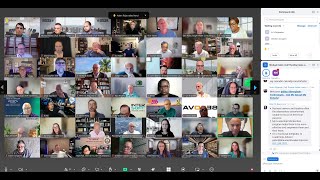
Founders and CROs share what's worked in sales and go-to-market over the past few months. LinkedIn comments outperform DMs for engagement. Tools like WeConnect and Evy AI help, but staying under LinkedIn's activity limits matters. The group emphasizes pacing automation, keeping the human touch, and treating networking like business dating.
Chapters
Good morning, everybody.
This meeting is being recorded.
Can everybody hear us?
Hey, buddy. Good.
How are you? How are you? We'll get started here in a couple minutes. We got a couple special guests that helped me build this roundtable today as well, and I'm gonna introduce them because without them, um, we wouldn't have this many people showing up. So let's see here. We're just gonna let— we're gonna get started probably 5 minutes through in. So we're just letting everybody in real quick. Let's see here. Lots of note takers we gotta not let in here. I think sometimes people sign up for the roundtable and they're not able to show up. So no, yeah, there are no takers here, you know, which is fine, which is great. Sometimes when I can't make it, I'll see a— I'll see some— I'll see my note-taker recorded it. I just don't want a bunch of seats taken up by non-people. For sure. See, we'll get started here in about 4 or 5 minutes, guys. Just got a lot of, uh, um, kind of get this going here real quick. Guys, while we're waiting, if you don't mind putting your info in the chat for anyone to connect with you after the call, or you want to connect on LinkedIn, please feel free.
Notetaker, do you want us to remove it?
Yes, please. Yeah. This is kind of the format. I'm gonna put it in chat. Um, because we're not doing like, hey, don't, you know, pitch slapping. We don't want to do any of that type of stuff. Just like say who you are, what you do. But, and then the whole idea is to talk about what works, what didn't work. Basically a tip or tool, a tactic or strategy. Like, what did you do? What, what was your tip? How did it help? What results did it do? Or you could say, I'm in need of help. You know, I'm trying to figure out how to get through this problem or solution. We got, I don't know, like 40, 50 people today. This is huge. Um, just over 60 now. 60? Yeah. So this is, this is gonna be a great— it's probably the biggest one I've held so far, so it'd be good. Um, so if we obviously, if we do intros and pitches, it's going to be a boring approach to, hey, I, I don't really care what everybody does. I really want to solve a problem here today. So I'm going to introduce a couple of people that helped build this because without them, it wouldn't have grown from 30 to 60 today. But I'm going to introduce myself. I'm Michael Pilato. I am the founder and CEO of Full Throttle Pilato Leads. And the reason why I build these roundtables is because this is what I use to help my clients to help get top of funnel. But it's a way to kind of spread tips and tactics and strategies around what works and what doesn't. I'm going to touch on this as well, that HVAC system. Northern California, you, uh, put them on mute there. Um, do you have that, uh, Victor, do you have that little thing that, that we had where what we want to talk about today? I'm trying to copy this thing from, uh, I do not. I'm trying to open this thing. Well, anyways, we want to just talk about tips and taxes and strategies, what's working, what's not. If you need help trying to figure something out, ask the question. We have— we're going to talk about AI, go-to-market strategies, something that you learned in the last 3 to 4 months that maybe helped or hurt your business that we can learn from. Um, put your information in chat. I usually put my, uh, my signature file, so I'll show you kind of what I use when I go on these roundtables. But I want to kind of throw things out to a couple of people today. Steve Furman, he's an AI strategist that I team up with. I'm trying to look at something. Mute yourself, please.
Yeah.
Who's— who just— if you can mute that person. Took care of that. No worries. Okay. So Steve Furman and I basically used our LinkedIn together and automated that and reached out to his people and my people. Uh, Richard Hill, are you there? Where's Rich? I just saw him pop up. He's another— he's another person that helped drive this thing, uh, uh, for amount of people that we had on here. Is there anyone else here that, that I worked with that I want to make sure I give a thank you out? Me, Michael. Where are you?
Ian.
Ian. Ian. Ian just— Ian just— and I just started working together, and he, uh Gracefully also used his first connections. And we had them— each of these folks that did this with me, we probably had at least another 100 to 200 invites come out from this. And again, it's like, who do you know that's gonna want to also learn from this? And it's a great way to kind of say, you know what, I'm not gonna, uh, necessarily need a lead gen guy in my goal, but I want to work with you. Let's combine our connections, our Rolodexes, and, and invite other people we would never would have met. So the, the whole big deal of today is using other people to, uh, trade ideas and tactics and tips with. So yeah, we have, I think, about 67 people, which is a lot. Um, we're still adding folks in. But anyways, so I'm gonna throw this to Steve real quick. Steve, what's— tell us what you do real quick. Again, this is not a sales pitch, guys. It's just like What do you do? Why'd you, why'd you do the roundtable with me, Steve? And what's something that you learned in the last 4 to 6 months that you said, you know what, it really helped your business? Or, hey, I used this product, I used a solution, I used this idea and it did not work.
There's too many.
Yeah, too many.
I'm an AI— wait, I just learned something a second ago.
Hold up.
Um, I'm an executive business coach as well for Scaling Up, and I am a chief AI officer. I'm located in Northern New Jersey. I have 3 kids and I love to play golf. A little bit about me. But on a serious note, what I really love to do is help people grow and scale their companies by using the augmentation of AI to do it better, faster, smarter. A couple things I've learned, one of them is Humantic.ai, H-U-M-A-N-T-I-C.ai. It's a really cool app. It's not that expensive. It goes on top of LinkedIn and it will give you a complete profile rundown of the person, how to talk to them, how they, they like to buy, uh, information that it digs up and scrapes off of LinkedIn for them. So it's a really cool tool, and I'll put that in the chat in a minute when I get done talking so you guys have it.
If you have a question for anybody that's, that is talking, or just a question you want to throw out, please use the raise hand versus just talk, just so we can Yeah, that we get everybody in. So we're not gonna have everybody do intros, but yeah, you talk. Who are you? What do you do? Real quick. And then basically, like Steve just did, give an idea. Go ahead, Steve.
Yeah, one more quickie, uh, tip I'll give you. ChatGPT, if you use OpenAI, um, besides all the news and the lawsuits, all the other crap that's going on, besides all that, if you still use their product, uh, do a couple things. Number one, make sure if you're using the Plus program, not the, the, uh, $25 one or the $200 one, that you turn off sharing with the large language model. Just go to your initials, click on Settings, then Data Controls, and then turn off the share with the large— share with the model.
Why is that?
Says, because, you know, that's your proprietary information you're putting in there. You load a spreadsheet of all your, your taxes and you're trying to calculations, you're now sharing that with the world.
So if you did that, people would be able to get to your document? Even if—
Oh yeah, people— Well, you're sharing it with OpenAI, and if they have a breach or a leak, then potentially your data could be leaked out there as well. So something you really should think about doing. One other point I'll give you about ChatGPT, the new version 5, it has the culmination of all the other models, 4.0, 3.0, Mini. All these different models, and supposedly it will auto-pick the right one for you. Not necessarily true all the time. AI is built by humans. It will hallucinate. So you might want to consider picking O3 if you want to do deep research, or maybe 4.0 mini, or 4.0, or 4.0 even, or 4.1 for like your standard queries that you're looking to do.
We can't ever say old guys don't know AI, right, Steve? Because we, we all— is that We could always say old guys know AI.
Yeah, right, exactly. Old men know AI. Yeah.
Old women, old people. Old people.
That's what I meant.
Not for the young people only. One thing I did learn recently too, I forgot to share my tactic, was there's Inbound 2025, which is HubSpot's round conference coming up in about 3 weeks in San Francisco. I sent out to my 4,000 first connections because I have 30,000. Hey, are you going to inbound? Do you have any background in the event? Uh, if you have any feedback you could share with me. I went to SaaStr, I thought that was good, but I just want to check in. How's biz? I got about 300 replies back. I'm having a hard time keeping up. It's great. And basically turned those into 40 one-to-one meetings of people that probably will at one point do business with me. So you have— you don't have to be going to an event, you don't have to be necessarily knowing who's going to an event, but it's just using LinkedIn or email automation to basically just ask a question that needs an answer back. It's a great way to reopen that door. I just did this with Steve and Ian and Rich where we're asking questions like— but I did this with my own without having to use someone else's LinkedIn, and that got me a lot of meetings as well. So think about, like, don't— I see so many messages go out and say, hey, I do this and I could drop 20% discount for this. And like, you're pitch-slapping. Don't pitch-slap in LinkedIn. You're going to get banned. And don't send out more than 150 activities a day on LinkedIn if you're going to do it manually or, or, or automation-wise. You gotta not look like you're, you're basically damaging the brand of LinkedIn or your own brand. But that's each time.
It takes time. You gotta— people buy from people they know, like, and trust. So you gotta build those relationships.
Ian, so, you know, thanks again for also helping, like, like, like Richard, um, um, and Steve. What's something that, that you learned? Like, say who you are, what you do, but what's something that you learned by either working, like, together with me or something that you learned, um, on your own that, that really changed your business?
So my name's Ian Fader, and my background is in building revenue systems for growth stage companies, helping founders and CEOs go from scattered marketing efforts to a model that actually scales. I've led teams, hired hundreds of people, and worked across SaaS, e-commerce, and services. These days, my focus is on creating predictable growth engines that free leaders up to run their business instead of chasing leads. Do that from a fractional CMO seat there. Thing that I learned is I dove into a product called Liseller, L-I-S-E-L-L-E-R, to automate LinkedIn comments and pieces. I found that comments are driving a lot more engagement in other pieces. Than anything else. And it was a scalable way to do that without having to manage it. And it really drives others' comments on your profile and yours on others and kind of scales it up in that way.
And that's kind of been my big learning the last few months is like the power of comments and things within LinkedIn instead of than going the direct message route or ads or other things. Awesome. Thanks, Ian. I just put the— I think someone just asked about the message I used for the inbound. That's what I used to my first connections. Are you going inbound? And again, it's very low key. All I want is someone to like say, no, I'm not, or hey, I might go, or what is it? That's what opens the door. If you don't, If you open the door and you start pitching, you're going to turn that person off. Again, think about what you like as a person and say, just like, let's have a— it's business dating, just like dating in real life. It's like, slow your roll, get to know somebody, find out if there's any synergies. If you just pitch slap people, it doesn't work. That's why when I did this with Ian and Rich and Steve, it was one of those things where I'm just inviting people to a roundtable, which is why you're here today. It's a great way to network, and it's— this is free. This— I'm not making money off this, but this is a great way to kind of pay it forward. Um, Rich, are you there? There he is. Rich?
Yeah, give me, uh—
I'm looking for Richard Hill, who's helped me build this roundtable as well today. Richard, thanks for helping me today as well as other guys. And you'll tell us what kind of drew your attention to doing this with me, and also like what's something you learned in the last 6 months that kind of helped grow your business or something like you— while I am not doing that again, that did not work. The whole thing is to talk about tactics and strategies that helped or didn't help so we can all learn from it. So my business, Hill Industries, is a boutique investment bank, and typically we would get all of our business just through word of mouth. And I really hadn't been leveraging LinkedIn very well. Like Ian said, what I've started to see recently is that comments drew in a lot of people in terms of their curiosity to what it is that I was doing, and, and many direct connections from that. What isn't working is just the more of the just traditional, you know, again, staying with word of mouth is inhibiting the scalability of the business. And in the past 6 months, I think I've grown the business to something where I'm busier now than I've ever been. I'm running with about 4 M&A deals, including one for myself. So, um, the, the ability for this platform and to network with people like you, Michael, has certainly helped from an awareness standpoint and, and driving business curiosity, which, like yourself, I think I've been turning into one-on-one meetings and getting a little bit, getting to know people a little more about their business. And what— and then telling them what makes my proposition a little different, because I'm not just looking to represent someone in an M&A transaction. I'm bringing the buyer and setting up the whole transaction on the front end. So you see the runoff from just inviting people to run off to open the door for you again, right? Yeah. I mean, that's one thing I noticed when I was doing automation before, is that the runoff just saying hi we're doing a roundtable that the person I'm doing it with gets like, hey, hey, Rich, what are you doing? I haven't talked to you for 6 months. So that was really interesting. Adam, you got a question? Oh, Adam was one of the— sorry, Adam, I forgot, I forgot you were on here. Um, Adam is another folks that helped me build the whole roundtable as well today. Sorry, Adam.
No, no worries. I, I hopped in here late, Michael, so it's, it's all good. I, I had a call run over. Um, so yeah, I see a lot of friendly faces, some folks that I, that I invited, so it's, it's great to see them on call. Um, so my name is Adam Rojas and I am the managing partner for Bellmore Consulting. We're a fractional sales strategy firm. Uh, my contention is that most small businesses don't have a sales problem, they have a sales process problem. And the problem is they don't have a solid process to help their clients move from the front door to the cash register. And so that's where I, that's where I come in. Uh, I work with a lot of founder-led sales organizations. And so where the— one of the really cool trends that we're implementing in these guys is how do I leverage AI not as just an assistant, but as a co-seller, right? How do I leverage the tools of AI to help me sell more effectively? So things like using it to get better insights into the viability of a deal. How viable is this deal going to be based on some of the inputs that we generate? How do I use it to really guide my next action? So one of the things that I build with my clients is a sales playbook that helps them through the sales process. Using AI tools, we can leverage that playbook to now go, okay, so this is where you are in the process. Here is the next step. So without you having to dive into the playbook every time, leveraging that.
What's the tool you used? What's the tool that you used, Adam, that was really interesting for you the last 6 weeks or 6 months?
Yeah, it's just as simple as creating custom ChatGPTs. You don't have to get super fancy with it. Once you've got the structure built, and I see Steve, and Steve's a longtime friend as well, Once you have the structure built, ChatGPT can do a lot of the heavy lifting for you when it comes to leveraging these tools effectively.
It'll write it for you if you ask it to create it. It'll ask you the right questions. Say, I want to do this. It'll run through the right questions to ask you to help you actually create the prompt.
Hey, Michael.
You have to edit it, but—
If you can raise your hand, just so I could— I can't pick you guys out.
It's Dan Ricks.
There's a book, there's a book, uh, I mean there's a raise hand button in the bottom. I see Dan. Go ahead, Dan.
Yeah, I just wanted to go on record to say that Adam Rojas kicks ass and takes names. He's great.
Thanks, thanks so much, Dan. The check's in the mail.
Bottle that up, man.
There you go. Um, yeah, so with the whole like asking ChatGPT approach. If you talk to like a 4th grader and say, here's what I'm looking for, here's the tone, here's the format, take a look at this website, here's some documents about my company so you can, so you can make it in my tone. If you be that specific about what you're asking it versus saying make me 3-step email about my company, it's going to throw out crap and spam. So be like, if you're explaining this to someone you just started as, say, as a sales development person that's helping you, that's the way you really need to talk to a Chat or Gemini or, or any of these other ones. Or, um, I think, what's the other ones that are out there? Oh, Claude. Claude. Yeah, put some of the AI engines that you guys use, you know, in, in the chat too, and tell me, you know, what what works and what doesn't for you. David, Eric, Johns, go ahead.
Hey, thanks, Michael. And by the way, I had a great call with Michael last week. So anybody who has not had a call with Michael, you should definitely take some time and make a call with Michael. So regarding Adam, we build sales playbooks as well. And one of the things I actually, for me, I do ops consulting. We build a, for every single client I have, I actually build its own GPT. Per client. So basically how I do that is I have obviously my own sort of way of my own methods and my own culture that I like when I do manage an engagement, I put all of that into it and then I take all of the material I get from a client, from their marketing material to anything that they have, to notes that they take, email message traffic, et cetera. And I feed that into that GPT that I built for that client. So, now, when I'm having a conversation, I pregame the conversation I'm going to have with the client so that I'm now taking into it what the client is believing, how they think, and also integrating that in with how I do my consulting engagement. And I do get a lot better outcomes. It's a lot more efficient. I wrote a discovery offer a couple of weeks ago and the client or the prospect had asked for 2 other firms to do it. And I was the only person that actually addressed his needs. The way I addressed his needs is, you know, I gave him like a short list of 5 or 6 questions and he wrote the answers down and I took a picture of it with my mobile phone and then I punched it up into it, like right on the spot. And then it was so simple to do. But that's, that's like, like my 101 comment for the day.
Thanks, David. I want to throw a little spice for David, too. There's a lot of veterans on this call. David was a wing commander in the Air Force. I was in the Air National Guard. He was actually in the military Air Force full-time, and I'd have to salute him if I saw him. Um, but thanks for veterans like himself that help protect our country. And if there's any other folks out there, put in chat, you know, what branch. Oh, Steve Furman, Zipper 5. So we want to make sure we thank our first responders and our veterans here, and especially ones that gave their lives. So I appreciate all you guys that are on here that came from that space. Um, Dan Ricks.
Yeah, first of all, I want to say, uh, David, that's a great jacket, man. I appreciate you wearing that today. That's fantastic. Um, I've, I've relearned something recently, something I learned years ago, and something we all probably know, but as we get busy with our day-to-day lives helping customers, etc., we tend to forget. I'm a technology guy. I I travel the globe implementing technology and automation for clients. And, you know, you get real busy, get into the weeds, and you finally, you forget simple things like communications, change management, and how important the people side of things are. It's like, you know, trying to implement too much at one time in certain size companies, and certain people or companies can't absorb that amount of change at one time. So you have to kind of spread it out. And the communications constantly throughout a work engagement with a client and how important it is to constantly communicate. I know that sounds minuscule, so I had to take it down a notch and bore all of you, but that's just something I had to relearn recently as I was go, go, go, go, go with a client. And, you know, they almost kind of had to ask me to back off and let's slow down.
I get that. Especially being full throttle.
Yeah, well, full throttle, we all have this heart that we want to serve and help our client. Yeah. And so sometimes we have to realize, wait a minute, sometimes they can't take the change as quickly as we want to make it. And so that's, that's just an interesting comment for everybody.
What happens too is like when you're wanting to do that, then you, then it comes scope creep. It's like, wait, wait, that's not what I do. I want to help you. I help you help yourself, and you can hire those folks, but I don't— I'm not your whole market. Like, for me, it's like I'm not your marketing agency. I am automation and email and help scope this out, but I don't— I can't be responsible for your whole marketing team. So just like, whenever you're doing this, especially if you're running a smaller company, just be careful what you're promising. And, and you want to make people happy, but you also don't want to make yourself nuts. So, is it Rook? Is that how you pronounce it? Or, yeah.
Yeah. First of all, for those who've served to allow us to do really, really cool things.
That's for you. Thank you. We do appreciate that.
Really do. I was geeking out. First of all, I love writing scripts. Claude is the best scriptwriter out there if you're looking at that level. I mean, there's other bigger agency platforms, but I just want to say Claude is the best.
For what? For scripts or what? Like for sales scripts.
Marketing scripts, outreach scripts. If you're gonna do any of that kind of stuff, well, I'll give you, Evy AI is great for LinkedIn. Evy AI is the best one in my opinion for that. But if you're writing your scripts yourselves, Claude ties more into your tone and your voice. You don't have to tell ChatGPT, make it casual, make it human, and fight for it not to be a robot. Claude naturally picks up on that stuff. And one thing that I always do is I always challenge Claude or any that I'm using, like, okay, that's why would I buy it? Tell me why I buy it. What's the real value in it? So having it do that, because it's a yes thing, it'll go, oh, you're absolutely right. Oh, you're absolutely right. You know, you don't, you want to get it past the yes to challenge it, to critically think what it's actually given to you. I just want to give you those little tips.
Claude is not just being a yes man, you're saying? Is that, you're saying that? Well, ChatGPT, Claude, they're always saying yes to you for any, because they're programmed to be agreeable.
Yeah, very agreeable. So you have to, you have to ask it to justify and challenge it going, okay, I see the script. Why would I buy that? What's so good about that? You know, that magical stuff. You gotta ask those things.
Okay. Thanks.
Yeah.
Um, one, one, one thing I'd like to point out when you're on these roundtables, if you look at Dan's or mine or Victor's, they have slash your company or slash what you do. You just leave your name, like you got David and Dan, and you're not— you're basically on this board right now, but no one knows what you do. So Dave, definitely take your name and elongate it when you're on these things, whether you're on my roundtable or anyone else's. Like Adam just put Sales Strategist. Now I know what I'm— what I might talk. And also, obviously, when you put your information in chat, put your LinkedIn profile in there and your phone number and your email. Because you might be able— I've had people say, Michael, from your roundtable, like, I got 2 new deals from it. And again, you never know who you're going to meet on these things. Brian Johnson.
Thank you.
Um, first, Michael, thank you. You and your team kind of sought me out on LinkedIn, where is, you know, the funny part about me in this whole scenario is I'm on the far opposite end. I still have salt on my skin. I surfed this morning and I am the least AI human in this whole room, hands down. But I think I've found the right place because I'm starting to learn how to use it. And just hearing the different things that you all are doing out there to enhance your organizations and your sales teams and just how to work your network by using these is really, you know, it's, it's really literally game changing.
How many connections do you have, Brian, on LinkedIn?
Uh, let me look.
Hold on.
Everybody should look at how many connections in and think about, you know, I could do— I could get 30,000 connections on LinkedIn. Am I getting the right connections, the right people that I want to talk to? I mean, I was used to sell HR tech. I got rid— and I didn't want to do this, but I got rid of all the CHROs and all the HR people because I'm never going to sell them again. So I cleared out 3,000 people out of my LinkedIn so I have room. So always, always be—
1,228.
2,000. So you want to— if you got to think about how many connections you have, those are first, then you got first and second and third. So always be growing. You get 200 invites a week, whether you use me or anyone else or your own platform. Get 200 invites out every week. Go ahead, Brian. Sorry.
Yeah, no, that's— I mean, that's— there's a first tip because I really am, you know, a fetus when it comes to using these things the right way. I'm old school. I used to sell building materials in the street before cell phones. They wouldn't give me a laptop. I remember my first phone was like a BlackBerry Sprint two-way. I was shimmying my large body up 40-foot ladders to try to sell roofing shingles.
Yeah.
So tell us a tip or tactic that you learned in the last 6 months that will help the group or something that you failed at in the last 6 months that you, that you want to say don't do this, guys?
It's, it's still in the same vein as the reason why I'm here. I think using that personal touch and really, you know, connecting and not just emailing and texting, and you have to have the human piece and get in these groups, be it even virtual, is great seeing faces. But I've been getting more involved in going out and seeing people, and a human touch to build that trust has really just, just been a valuable thing. And I have people that You, you set the stage with that the right way the first time. A decade later, you can still squeeze that lemon and get juice out of it if you've done it the right way.
Yeah, if you're going to go to a conference, like I just said, one for the, for HubSpot, one inbound 2025, I'm not going to that one, I was just asking about it. But if you're going to one, set, get 30, 40 meetings set up for you by saying, are you going, or go to the when you register, you should have access to their event and see the attendees. There's a thing called, uh, there's two scrapers you can get from Chrome, and then you can also on the front-facing consumer-based model of the website, there's speakers. You know, those are people that are looking for, um, PR for themselves. Alyssa or Lisa, I don't know which way to say it.
Second time, Alyssa. Thank you so much. Thank you so much. Um, so, you know, for me, um, I've always found it really easy to write, so it takes more time for me to work with AI to write my stuff than for me to just write it myself. But I've been using a service called WeConnect and it's weconnect.io. I think it's like $40 or $50 a month and it basically automates the LinkedIn outreach. So you can go into Sales Navigator and cultivate your lead list and then use that URL to build out automation workflows for LinkedIn engagement with that list. And it's improved a lot in the past year, whereas now you can actually build out like visiting the profile, liking a post, doing an endorsement, you know, then sending a connection request. And then you can build out what happens if they don't connect, what happens if they do connect, and you can actually build several steps. But what I like to do is as soon as somebody actually replies to me, I take it over. I don't, I don't like anything automatic. When I'm actually trying to build the relationship. And because like as Brian said, like I feel like that personal touch and the real, the real like human dialogue is really important for building the relationship. And then just to kind of segue for a second into like non, a non-tech practice that I've learned, you know, last 6 months or so, how incredibly valuable it is to my business. And that is, about learning how to make valuable connections. And so that's not just like networking for the sake of networking and throwing out random introductions, but really, you know, listening to what people are going through, who they're trying to meet, what they're trying to build, and deeply considering my network, asking both people for consent to make the introduction, like, take a look at this LinkedIn profile, is this somebody you'd like to meet? Because I know we've all gotten those introductions where we feel compelled to have the meeting, but it's not really a good match. You know, so the whole—
the whole outreach approach is, is what I do, right? And either you do it manually or you can figure out how to automate it, or you can hire someone to do it. But, um, you gotta also look at every time that you do something yourself, are you taking away from your main approach of what you do as a CEO? So make sure, like, I don't want to cut my grass. I know a lot of people love doing their lawn. I don't want to do that. I don't want to clean my own house. I have things I could do as a CEO and founder that I know I could do better and make more money at. And so just realize that doing everything yourself and not knowing what to do and all these different products that you just mentioned, you got to know how to use them too. So just think about that when you're thinking of products and services and solutions. You get all these— a lot of platforms out there like HubSpot and, and Link Helper and Apollo, that there's a learning curve to learning these things. So just figure out, is there someone that in this group that could help you that's really good at it, or do you want to take the time and learn it and save a couple hundred bucks, but now you just cost thousands of dollars of your time being lost? Oh, go ahead, go ahead.
I was just gonna— I just— I'm also— I'm always the one in this— everybody's always talking about AI, and I talk about automation because that's our company does is build software robots with robotic process automation. So I, and you know, I talk a lot about kind of the intersection of like automation and humanity, which is essentially in knowing where to apply.
Yeah. Go ahead.
And Elisa, I just want to tell you, you have to be very careful. I know for a firsthand experience, LinkedIn is cracking down on automation tools, and that's not the same thing that Michael is doing. Michael is using automation tools. To start the conversation.
That's what I'm doing.
Well, we-connect.io is an automation tool that has you like and has you doing engagement, which is fake social engagement, and that is being cracked down. I know firsthand, I've spoken through a reporter that they are starting to crack down on it, and it's not authentic. So total you know, respect for what you do, and I don't think that's what you do, but since you promoted WeConnect, it is an engagement automation tool, and I highly suggest people think twice before doing it.
There's a bunch of them out there.
Oh yeah, I have a list of 18, and LinkedIn knows about each, each one.
Yeah, they, they do, and they, they continue to improve the algorithms where you can randomize your engagement so it's not on the radar. But also, like, of of course anything like that can be misused, but that's why the point I made is that I only use it to start to get the connection, and then as soon as they connect, I'm interacting in real time. But so it's just, it's just to be able to get all those.
That still violates their terms of service. You're using an automation to—
I'm also automating that whole approach, which is against their terms of service. So there's—
well, not necessarily. You're not automating likes and comments with bots. I have automating reaching out. It's two different things.
Yeah, I have, I have done the comments idea. It's like, hey, thanks for sharing, Elliot. Are any good conferences coming up? By the way, I'm hosting a roundtable. I've been doing that, and I'm— one out of 100 people will be like, dude, why are you posting this on my round?
You know, I don't want to hear it.
I just want to I know I'm just— I have— I'm from Chicago. I just—
And you know, you and I have talked about this in person.
No filter. It's like, for me, that's what I do. And I don't—
Do some research on LinkedIn. It's all out there and it's starting to be covered. Just as a suggestion to protect yourself, I know some people that are starting to get hit and I have a background way that I am talking to LinkedIn. I don't represent them. I don't work for them or anything.
You gotta be careful with the amount of messages and activities you do every day on LinkedIn. I do this for a living. And if you, if you have a new profile, you're sitting there being very repetitive, it— the AI will figure out that you are not really working LinkedIn and you're using it for automation. They'll warn you. But I don't have that problem because you go out, you make sure you make good connections, you're not getting people— this, I don't know this person. There's all these little things that will get you in trouble in LinkedIn Police.
So what I like what you do, Michael, with Full Throttle, is that you automate the messaging and the reaching out and you stay under the radar. Yeah, that is not against the terms and conditions of LinkedIn.
Yeah, I don't know.
I'm just mentioning that and I support that. Oh, you also have a minute to make a short introduction.
Say it again.
Do I have the 30 seconds to to just say hello and introduce myself and what I've learned recently.
As long as it's not pitch slapping, go ahead.
Okay, no, I don't, I don't, I don't like pitch slapping either.
I know, I've had people, I've had people like take over for 2 minutes. I'm like, oh boy, I don't want to interrupt. But you, I know you don't do that, so go ahead, Elliot.
Yeah, this is not my first rodeo with you. I love you, man. Uh, Elliot Grossbard, um, 30 years in sales. I've really gotten behind founders and the innovation that they go, and I'm a forced failed founder myself. I took a step back, but I'm all passionate about helping other founders realize their dreams. One of the things that I recently learned was a new term to me, something called Zillennials. It's a combination of Gen Z and millennials. And I learned that because I met someone online that I really just liked how she presented herself. And I didn't understand based on her, uh, education background and where she was, how did she get so much experience? So I reached out to her just for a one-on-one to learn. And it amazed me because one of the things that I do is put myself in the shoes of others for my clients. And I did it for myself. I put myself in her shoes and I believe that she is someone that can help me look at things from a Gen Z and millennial standpoint in terms of marketing.
It's like a Hala Taha that has like 600,000, 300,000 followers and she does little tips and just some really good, what do you call them, influencers on LinkedIn. I have no idea how they got that big, but they're doing great.
Well, some of them have used engagement pods, but we won't go there. Yeah, I just wanted to say that sometimes it's good to go back to, you know, where we all began. Someone mentioned old school. I'm an old school guy working— that's you, Brian— in, in a modern world. It's all about relationships. So sometimes just reaching out to someone and saying, hey, I'd love to learn more, and just jumping on, even in a digital environment, is so powerful. I appreciate what you do, Michael.
Thank you, brother. I want to go to Arnie Perez, who who is probably going to start doing some of this LinkedIn automation using his LinkedIn and my LinkedIn. So Arnie, tell us what you do and hope you're feeling better. And what grabbed your attention to want to join the roundtable today? Michael, thank you everybody for all your tips and comments.
This is very helpful.
My first time here. Arnie Perez, I'm the CEO and founder of Blitz Sells and Marketing. This is a sales and marketing agency focused on technology companies. And international markets. So we help basically technology markets of all sizes to develop their channel partner programs and bring more revenues. Two things that I learned in the last few months is AI and trade barriers are driving a lot of opportunities pretty much in all markets. And the other thing I learned just last night from my millennial kids is that they said that don't say ChatGPT, that sounds too old, just say chat. Thank you. Awesome.
Um, so Rook, I just want to give you— here's a list of the different sales and marketing partners that have the geeky stuff that LinkedIn endorses. Right there it is. It's a big list because a lot of these companies that create these things Don't apply and let LinkedIn go through it. So these are the approved lists if you're looking for that kind of stuff. And I would also say we get, we get hit sometimes when we're not using animation or automation, animation, we do that too, but automation, if you're going too fast. So sometimes we get this, you're using automation, like, no, we're just going fast and we're not copying and pasting either. So the algorithms really do look out for the pacing first.
So there you go.
But there's, there's a good clean list if you want to.
Way we would stop. The platform I use for this too is like, are you using—
are they—
are you cut and pasting a URL to get to it, or are you actually— like, the one I use, it mimics human behavior of someone actually writing a message to that first connection. So there's different technologies out there. I was using Octopus CRM and, and Copilot, I think it was called. And, and like, some of these platforms were $250, $300 a month where I you know, buy it as an agency. I didn't want to use them because of the cost, but also they weren't, they weren't mimicking human behavior. You gotta look at the tools.
DJ, my favorite one is a widget so that, you know, it's doing it off it and then it just inputs what you want to input. And that's for corresponding and all that kind of stuff. But there's a good list.
Hi Michael, thank you very much for giving me the opportunity to introduce myself. I am the Divyesh Gohil. I am the co-founder of One Technologies and Voice AI Service. Regarding my AI exploration, I have explored a couple of agentic AI tools which can help to reduce the human effort and reduce the repetitive tasks, you know, to help and grow the business, like N8N and Gumloo, which help you to set up a whole workflow for your website, which can help you to provide the good service to the customer. And it, it can be available 24/7, which help you to provide a good customer service. Okay. Along with that, the CRM which you have mentioned about the HubSpot, I have also explored a couple of CRMs and also the GoHighLevel, which is also very good CRM tool and which provide, you know, multiple marketing under the same same portal, which can help to grow the business as well. So anybody would like to explore can explore that as well. Thank you. Thanks, DJ. I'm gonna go with Katie Turner, who's just been sitting there and looking like she might want to ask a question. You're on mute. There you go.
Thanks for picking on me. Yeah, I mean, it's, you know, my first time here. So I'm just kind of like, listening and absorbing. But, you know, it's great to hear the conversation on AI and everything. As a marketing person, you know, I use it a lot, but I do want to caution against, you know, using it for content and especially for commenting and stuff like that on LinkedIn. I've heard that LinkedIn is going to start to suppress a lot of that because, you know, people are calling it out and it's, you know, really obvious when you're using it. So just, you know, I would just say to be careful with that.
If you look at a message that people tell me that, why aren't you doing more AI with your outreach for LinkedIn? So, Katie Turner, I see that you work there, you did this, and I pulled up from your LinkedIn. Great for regurgitating my LinkedIn to me. I appreciate that. Does not— it looks like AI, it's like garbage. It looks like you're trying to align with me, right? So think about when you're talking to somebody, whether you're using automation or not, Who cares? So what? Why are you telling me this? How does this help me with my company or help my family? Think here and here, and then you'll have a good message. But if you ask AI to write you a message that, like, how do I introduce myself, that's not really the good tool. Think about what you would like and think about what other people will like, and then maybe you'll come up with something. Or ask me what messages work. But I tell you right now, if you ask and say you're doing a roundtable, you're going to a roundtable, or you're going to an event, or you're asking about event, You're asking their opinion. It touches here and here. You say, hey, here's what I do. Um, I'm, I'm looking to add more clients. Are you looking for more leads? Do you have the capacity to take 10 more leads right now? Gee, that's— to me, it's, it's a stupid way of trying to get leads, right? You're, you're pitch slapping. Even if you're asking a question like, do you have more capability for leads? Well, who doesn't, pretty much, right? So think about how you're asking someone, and if you ask If you saw that person in person, would you talk to them like that? They actually did this really cool video of like people walking around, up, walking up to people and pitching like they do on LinkedIn, and people are like running away from them. It's just kind of like a satire, but make it about— think about if you were talking to somebody and you were single and you wanted to get to know them, right? It's business dating. Slow your roll. Don't go on a cruise the first date, you know. I know people laugh at me because I, I bring this back to dating, but it is, it's business dating. And everybody on here needs to figure out, like, are you talking at someone? Are you asking someone about their opinion? It's like when you go up to someone at a trade show, don't sit behind your booth and go, that was okay. I, you know, people come up to you, you have no idea who they are. You might waste 15 minutes. So the first thing you should do if you're at a booth and you're not there and there's no one walking by, go to the coffee thing, walk around, say, hey, what do you do for IBM, Steve? You know, ask a question about what they do, and then you'll get some— you can figure out if you even want to talk to them about your business, and or what breakout or panel has you kind of geeked out. Dan, go ahead.
Before the meeting ends, this is kind of a plug for your meeting here, Michael. I can't let the meeting end without also saying that Steve Loftness kicks ass and takes names. Thanks to this meeting 2 weeks ago, Michael, Steve and I reconnected. We worked together 17, 18 years ago, hadn't seen each other in that long of a period. So that's the value of this meeting and this kind of networking is reconnecting with people. And also developing new relationships for partnering together in the future.
Yeah, it's— you got to think about your first connections, especially if you have more than 500. Like, how many of those people in your first connections have you talked to recently? And reach back out to them or come up with some automation going, hey, um, are you going to this event? Or what's— you know, how's, how's this year looking? I don't know how, how this year's looking for all you folks, but it's been tough this year. I mean, I would— last 3 years, I've record numbers as an entrepreneur for me, as in my livelihood. And this year, it's like all the changes, all the good things that are happening, some things not that great. But I mean, it's— people are kind of indecisive about what they're doing, at least in small business. And I hear that from 80% of my calls online. I'm like, why are we at this point right now? A pro-business approach right now for everything. But all the, uh, changes so fast, I think it's caused people to go, well, I don't know where I stand. And I know where I stand. I want to get— I want to help people. So, um, hopefully we get out of this little rut this year. And, and I, I, you know, I'm doing 15— 10 to 15 Zoom calls a day because I do this, I do automation, I eat my own dog food. But, um, I just hopefully start getting better? Because I mean, I would love to hear like in chat, like, is sales and revenue up this year or static or down this year?
How about a 1 for up, 2 for static, 3 for down, maybe?
Yeah, that'd be good. Um, wanted to add real quick, uh, before anyone leaves, if they can make sure you save the chat, you have information in there. There's 3 dots right next to your name on the bottom of the or the top of the chat, you can save the chat for your future. Victor, that's what I was trying to think about, what I was going to say after I said that. That's why I was going to talk. So thank you, because I completely forgot what I was going to say about that. Yeah, don't forget, don't forget the chat, um, the chat, uh, save. If you, uh, I'm probably gonna post the roundtable, um, video on my YouTube channel Um, unless we get into something like, you know, where we don't want to post that up. I think today was pretty safe. Um, but, um, anyways, who, who wants to contribute here? Raise your hand on the, on, on the, um, the, the, uh, digital hand at the bottom. Yeah, it's about— how about Michael DeVoyes?
You caught me. Uh, Michael DeVoo. Um, I was fixing a few things. Thank you so much for calling on I appreciate it. I'm, I actually, a couple things. One, I just attended the Blaze AI Summit, which I'll just pop into the chat for you here. Is that hosted here?
Who is Blaze? I, I was at, is that like a sales development company?
No, it was a summit produced here in Colorado Springs by the Better Business Bureau and the AI Collective.
Okay.
Just sort of sharing experiences with workshops and things like that. I'm a, I'm an AI enthusiast. I'm obsessed with it. Have been for a while. And I, what I find fascinating is this curve that has happened since the adoption and adaptation to being burned on it and burned out with it. And we're getting back to, for those of us who, you know, are not Zillennials, who are old school, getting back to what we originally did, which was making real communication connection with individuals. It's what you had to do back in old sales. You had to shake hands, you had to go inside, you had to be meaningful and mindful of the relationship that you were trying to establish. So I'm a, I appreciate everybody's feedback. My biggest struggle is I'm an accidental founder of a new company that just launched and in the beta phase right now.
And, and what, what does it do?
Well, connecting chambers across the country on a, a private community platform like LinkedIn.
Chamber of Commerce.
Correct. Chambers of Commerce. I, I didn't realize they didn't have one. I was asking a lot of questions, having thousands of meetings, and I used my AI to actually scrub and scrape all my transcripts to find out what are the most amazing things happening, what are the biggest comments and stuff. And the report that I got back said, repeated this to me. So I met with a few chambers and I said, is this true? Like, you don't have this feature, this functionality. And, uh, so yeah, I launched it and, um, It's very early stages and I'm actually in the, um, trying to raise money, like angel investors, which I have zero experience with whatsoever. So I'm in such a strange place.
Have you got an MVP or do you have an MVP kind of set up with a third? Like a—
Yeah, the Colorado Springs Chamber of Commerce is our beta partner, our premier beta partner. They're already on the platform. I've hosted a webinar last, uh, Monday with them and about 20 other, uh, chambers nearby. We're trying to get local ones just to adapt and get on board for free, just to kick the tires, you know, like a roundtable approach of getting all these chambers together like I'm doing now. But yeah, yeah, yeah, that's what I'm working on right now. I'm literally in week 6 of the— so I'm a little overwhelmed, but, um, this was valuable and important to me. Pardon me?
That's pretty big. I like what you're doing.
Thank you. I'm— I feel overwhelmed, and I'm like, being here to sort of share these things with people to tell you that I'm in a place of not scared, just anxiety-ridden about it because there's a lot that I know on my side of the fence with 30 years of event production and marketing, but not on this side. And to be sitting at the forefront of something that's potentially has never been done before and, and, and there is no nationwide version. Um, there's so much I don't know. So I appreciate all of the good advice on here.
Michael, make sure you ask the questions you're looking to find out from the team here and have them do some one-on-ones with some of the folks that could help you.
I'm gonna copy the chat and I'll just connect with you guys offline and just, you know, let you know where I'm at.
But that's, that's a, that's a really good, um, situation of like there's all these change accounts, they've always been around, but how do you connect them into the world of even, even 2010? Because they're, they're way behind.
Um, yeah.
That's, that's interesting. 'Cause like, there's all these little things you're like, why didn't I think of that? That's a good one.
Well, and they all are using AI differently and there's so much fear out there. One of the things I learned from the Blaze Summit with all the audience was packed. So many people are, are trying to, uh, work down their ignorance debt and they just don't know what they don't know. And there's a lot of fear using it. They don't want to implement it 'cause they don't want it to take over or get their data. They don't know how, they don't even know where to begin. So. Conversations like this where you guys are leading the way, you know, bringing on individuals who are not CEO, not forward thinking, and not at the forefront of this. We have to get more and more dialogues with individuals to sort of like bring them up to speed because they're going to be left behind. And that's one thing I just don't want people to, to have happen is to be left behind.
Well, Helen Rivers, I see you. What do you do? You don't have what you do on your name tag there.
That is correct. I don't— I'm, I'm not someone that uses Zoom on a daily basis, so this is somewhat new for me. I, I use Teams. We also use Slack. But my name is Helen Rivers. I'm an account manager for Channel Hunters. Um, I was actually asked to attend by Matthew from NodeWare.
Okay. Yeah, Matthew. Yeah, he's in— I don't think he's out today, but he's good friend of mine that basically helped build this roundtable as well.
Yeah, yeah, he's, he's a great, a great person. I go to him for a lot.
So tell us something you learned in business, sales, marketing-wise, go-to-market-wise, uh, something that worked great the last 6 months or something that just bam went down and it's like, I want to help you guys not do the same thing. So either positive or negative, a life lesson.
Are you talking more so for myself or the clients that we work for, or both?
For, for yourself. I'd say something you— for yourself, whether for your company or for you. It's like something you've learned that's going to be— that's going to benefit the crowd here today. That's basically the gist of it. If you don't have one, that's fine too.
But no, it's, it's just getting your message across to people and being a person. I've, I've learned that in Like you have to interact with the people that you're requesting, whether you go to events or what that is, because you never know what it's gonna bring your way. I've onboarded two net new clients in the last month.
Mm-hmm.
And it, they're not the people that I initially connected with, but they are people that said, you know what, I know somebody that needs you. So just because that one person doesn't fit your ICP, the message that I was getting across was something that was needed and they knew that it was needed. In their group.
Okay.
So that's something important to keep in mind.
Thanks, Helen. Dale.
Thank you.
Michael, on Helen's point, really interesting because I'm in the UK, as you can probably hear and see from my—
I thought you were from New York. What are you talking about?
What are you talking about? That's horrible. But I work with some US clients as well. And Just to give you a very quick— I know we're almost at time, but one of the founders—
I'm gonna run this thing about 12:10, so 10 more minutes.
Just because I'll keep it quick anyway.
Anybody can that needs to jump, jump, but I'm just gonna let it go for another 10 minutes. Go ahead.
Thanks, Michael. Yeah, so one of my founders I was working with in the US, 5-year-old business, started out with services, launched a SaaS product, didn't really do much in the way of kind of BD, sales, marketing or anything. It was just head down, getting the business moving, getting the product built. Now, I kept telling him, you need to get out there. And, you know, as Helen just said, and many others have, you know, look at the people in their eyes, have a coffee, have a conversation, build some rapport. When we're all jumping from Zoom to Teams and everything else, there's no water cooler conversations, right? It's 10 o'clock, meeting starts, right? What we're talking about? Cool. Oh, shit, it's 10:30. I've got to go to my next call. And it's done. And nothing else gets done either side of that. Contrast that, however, with my experience in London is I can be on a train and in 45 minutes be in a headquartered office and meet any sales rep or any customer success manager I want to meet. I put a call in and they're there. And if I need to meet another business, I walk 15 minutes around the corner. But my client who started in the West Coast and then he, halfway through working with me, moved from Austin to Florida, he's like, okay, well, I ran a list of some of his target people he needed to get in touch with in Florida, and they're like 2 or 3, 4-hour drives, obviously, because the US is so big. My question/observation is, how do you guys deal with that, with the US being so big, when in contrast the UK is so small and I can just go into London and meet whoever I want to meet?
Well, I, I, I'll answer that. I'll let other people answer. But, um, Zoom and COVID obviously helped a lot of things and hurt a lot of things, but the thing that did help is like, let's do this on a video call. I get 10 to 15 Zoom calls a day I think looking eye to eye with somebody is important. You know, I don't need to get on a plane and do 3 meetings over 2 days and call that a success. You know, you don't really need to meet people as much as you used to, depending on what you sell. If you're selling a $3 million Workday implementation, then you probably need to meet with the team.
I can't believe you just said that because my clients are Workday partner and that's the world I'm in at the moment and have been for the last 13 years.
Yeah, I mean, I was in that— I was in sales for 25 years, and that was what I was doing, flying to Bank of America, to Lockheed, to Kinko's at the time. And that's the way we did things. And you still have to do things like that once in a while. But it is the old school way of like, I have to be in front of people is not true anymore.
Do you think fundamentally the kind of the baseline has just changed? And that's, that's expected way of working now, right?
I think it's been changed for years, not just recently. Yeah, you're in a whole other space and a whole other country, so it has to go what works for your country and what business you're in. Um, personally, when I was doing even HR tech for a job fight, I went to, to the final stages of the meeting, not to the first stage, or I went to the first and then hopefully at the close. But yeah, right, you can't just get 10 people on a We had 10 people going to these meetings with me. I'm like, this is ridiculous. This is a lot of money, a lot of flights, and we're trying to win a business. And the margins, what, like for that type of business, was 15% because you're an agency for HR recruiting stuff. So anyways, uh, Byron? Yeah, okay, so I'm a fractional, um, CRO. Um, CEOs in these tech companies, they're you know, small to medium size, they're looking for a light switch. It's an overwhelming amount of work for the budget that they have. They don't know what they don't know, someone said earlier. Like, something new that we don't know. Byron, like, yeah, you're saying like, like more founder-led sales companies? You're talking about more founder-led type of approach sales? Um, more— these are more, uh, more established than that. They might have 5 people. Usually they have 20 to 100. Okay. So what's the biggest— what's the big thing you've learned over the last 6 months that you can help us with? But you know what, they're— the CEOs are all trying to codify progress and they just want things right away. So I'm looking to AI to learn how to work faster. I have to manage my client better, which we all have to do. But I want to deliver faster. I want to shorten the runway that they— that it takes for me to show progress. Sometimes they want you to move the dial and they have a sundial and you need to build a watch and they don't understand it. So I'm learning from everyone here how they're employing AI. I'm starting with some content creation and learning how to dumb it down to more human elements. And there's probably 50 more facets of go-to-market that I need to learn how to apply AI. So that's why I'm here. Awesome.
Thanks, Bob.
How about Pat? I haven't heard from you yet, Pat. I'm Pat Higbee, co-founder and CEO of Zap.ai. We help small businesses book jobs and capture leads using AI to do it. And, uh, so What we're doing now actually is going after franchises because they have hundreds or thousands of small businesses and we can do this at scale. So just one thing I'd like to share, you're talking about learning things and whatnot. Years ago, Steve Jobs made a point that, you know, the PC is the bicycle for the mind, and I wanted to come up with an analogy to that for AI. So I think of AI as the exercise room for productivity. If you think about sports, every single sport that you might play, going to the exercise room and working out is going to help you perform better. Everybody, I don't care what your job is, You need to think of AI the same way in terms of being productive. It can help everything you do. So that's a little bit of the way I think about AI. It's really what you prompt. You know, you gotta talk to AI and just think about it. It's like I said at the beginning of the call, you need to talk to like a 4-year-old and ask, be like, ask her very specific questions. Specific questions. If you go very generic, it's going to actually— it's gotten so good that it starts to ask you questions back and say, do you mean this? Do you mean that? But the more precise of what you're asking it, like you're trying to explain it to someone that's never heard of something you're talking about, you'll get back what it's doing. I did— I know this professor that had to build a syllabus. This is obviously not sales related, but She said, hey, I need to build a 12-week syllabus around this course for business at this university, and I want to pull from 6 cases at Harvard that talk about business and process and automation. So it inputted and marked me a 12-week classroom syllabus. So what they as an educator had to do back in the day solved in about 5 minutes. It was amazing, like how much surprised she was that she could get all that work done. And she goes, I don't even know why going forward I'm actually going to be needed as a professor, which I don't know if that's true or not. But you think about it, like, there's— AI can teach you a lot if you ask it the right questions. And is— how many— how much is humans going to be involved in the whole teaching process? I don't know. I'm not a— I wasn't a big school guy, but, um, I do have a degree, but just I think I can learn a lot more from what we're doing, but I'm going to close out today. I want to thank everybody for joining. Again, this is every 2 weeks that I do this. So hopefully you use Eventbrite and pick the dates you want to sign up. You got to make sure you do that. Then I'll send you guys probably a re-engagement of, on a Google Calendar invite so that you see the invite come up. Please feel free to engage with me. I mean, honestly, I do this to help grow my business as well, help grow yours. So any referrals or any, uh, hey, I need your help, Michael, would be greatly appreciated. Um, thanks again for everybody joining, and if you have any questions, please reach out to anybody that is on this chat. There's that 3 buttons. If you do also want to get the recording up, I can either send you the Fireflies note-taker that I got. I'm probably going to download it and put it on my YouTube channel so you can watch it on there. Um, there's another thing called Opus that takes video and puts it into digestible parts of video that I'm trying to mess with as well. So thank you, everybody. Um, if you didn't get a chance to talk today, you know, just raise your hand and I'll call on you. I'll call on you if you don't sometimes raise your hand, but I would love to have more engagement. Thanks, everybody. God bless. Thanks.
More from Michael

Full Throttle Leaders Podcast- Laura Fu is a (GTM) leader, author, and revenue systems operator




Full Throttle Leaders Podcast- with Gwen Lafage, VP Marketing at Sinch, on GTM

Full Throttle Leaders Podcast- with Spencer Ricks, Head of Marketing at BoxHouse




