CRO CEO CMO Founder s Roundtable Mastermind on Zoom every 2nd and 4th Tuesday of each month at 11am
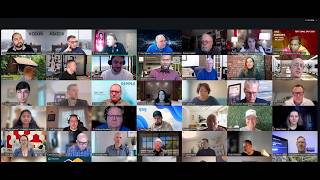
Michael Pilato hosts a bi-weekly roundtable for founders, CROs, and CMOs on using AI tools like ChatGPT and Claude for sales and marketing. They discuss hyper-personalized LinkedIn outreach, the risks of over-automation, and why authenticity still matters when AI writes your messages.
Chapters
So we'll get started here in a little bit, just letting all these, uh, real people in. And I'll have one note taker, which is mine, so it will be posted on, uh, like my YouTube channel. Or just let me know if you, if you don't know where that's at. But if you could put in, in the, um, in the chat who you are, what you do, why you joined. Yeah, I'm gonna mute Paul here. Um, why you came and, and what are you trying to— what are you trying to figure out? Like, what's working, what's not? Um, you know, a lot of AI conversations lately. Got some pretty good AI people on this call today. Sales and marketing people we got. We got some founders. Um, some new people. Looks like Melanie Fox. I haven't seen her before. Hi. Um, This is not a place to pitch. This is not a place to, like, raise your hand 5 times and engage with the ground table. It's, it's meant for everybody to kind of engage what's working, what's not. What have you learned? What have you figured out that's a really good piece of tech maybe, or something that didn't work strategy-wise, tactic-wise? It's really more of a safe spot for us to kind of all chat. You know, the more founders, CROs, CMOs on this call, that's what I really want. You know, we have another roundtable that's kind of more for sales and marketing folks. That's, that's fine to have those folks on. But this is more leadership type conversation that I want to kind of focus in on. I'm Michael Pilato. I'm the CEO and founder of Full Throttle Full Auto Leads. Um, it's, uh, basically a place that I built about 5 years ago to help do roundtables and masterminds. I'm gonna start podcasting pretty soon, but the whole idea is just to be able to learn from each other. Why I do it is not just because I like just to talk or hear people talk. It's also because when you do things like roundtables or masterminds or events, it becomes a kind of a lead funnel for people, or at least a way to build a relationship. So that's why I do it, and I help build that for other teams, other companies, other clients of clients, or partners. I've had people— I have people out here that have built me— built this roundtable as well, um, that like David Amir and so forth. And like Ray Stevens helped me a while back. So If you want to continue to be on and rebel, um, she's, she's killing it for me right now. Um, so, um, those— that really matters to me. If you're going to come on every week, if you're going to help build it, um, I need your help because it's, it's not just— can't be on my shoulders to help build. It's something I'm doing for free. So, um, so get with Victor and I and tell us, you know, how you can work with us. Basically what I do is take like someone's LinkedIn and say, let's look at your first connections and let's build this roundtable even with your first connections and say that, you know, Michael and I are doing a roundtable together. Um, we're talking about AI, or we could do even a one-off versus do drive them to this roundtable. The whole idea is just to, to cross-pollinate people that we all know, and then we get, you know, we get 50, 60, 70 people on this roundtable. So, yeah, if you could put your information in chat, tell us why you, why you came, what you're doing. I'm going to kind of introduce Rebel and David because, again, they helped build this roundtable today. And I'm very gracious to them being able to trust me with their LinkedIn and also trust me with their contacts. And, and also, I think they have a lot of great things that they're doing on their end as a company and as a person. So Rebel, why don't you, why don't you kind of introduce yourself real quick?
Sure. Thanks, Michael. And I'm, I love to hear that I'm killing it for you. So, so I'm Rebel Risdi with Rebel Marketing and Rebel Labs. We are an AI-forward agency. So I'm a marketing strategist and what we've been focusing a lot on for our clients is, I'm sure a lot of people are interested, is AI. In how to strategize and integrate AI into their marketing and sales. My background is really brand management and messaging, so I've always been very strong in that and act as a fractional CMO for my clients often. And we're really excited for this year. We've been doing some fun things with AI and building out what we call teammates, AI teammates for our clients. And yeah, I'm excited to join the roundtable and It's been interesting working with Michael. I'm reconnecting with a lot of people that I haven't talked to in a long time, so that's been really fun too.
Yeah, and like, if you think about when you do these types of things with me, or even yourself, right, you have— some people have thousands of first connections they haven't talked to. And what are you going to do, say, hey, I just wanted to check in with you, how's the new year going? That's crap, right? No one cares that you're just you're just, you're just saying hi. Give them a reason why to talk with you, which is, hey, I'm doing this event, I want to get your feedback, I want to see what your thoughts are, if you want to join. Um, it, it, it gets them, um, on the back of your— it gets them back on your top of funnel, right? They see you, you see them, and if anything, it's, it's not a bad thing. And the reason why, like, Rebel or, uh, David or, um, else is on here that I— that, that just helped me, uh, Noah, um, get to kind of do like a little mini hi, here's what I do, because they help. But obviously we can't have 40, 50 of those going on, so we're going to be talking more about strategy than intros. But I just want to kind of give the thanks to those folks first. So let's, let's go to, um, Noah real quick, and then David, and then we're kind of getting into why we're here today.
Hey, Michael. Hey, everybody. Great to see everyone. Noah Pusey, CEO of Ripple Analytics. We help you keep your thumb on the pulse of how your people are interacting. We do assessments. We help managers obtain feedback from their direct reports so that they can make better decisions, more objective decisions, make the workplace a better place to work. I'm here to, you know, spread the love and help people and expand their networks and share some of the goods, the bads, and everything else I've learned in running companies for over 20 years. Um, recovering lawyer and, uh, love to, love to network. So thanks for having me on, Mike.
And what's something you've learned? I'll ask this to Rebel later on too. Um, what's something you learned tech-wise, strategy-wise, um, that, that was great or something that just did not, that bombed? And the thing is, like, whether you're in sales or black belt in jiu-jitsu like I am, you lose and you learn, right? It's like The only way you get better is if you take lessons from what went well and what didn't go well. So what's something, a life lesson in business that's a quick, like, 30-second, hey, I found this tech, or I found this strategy, or I did and it wasn't a good idea?
Yeah, I mean, I use AI. I use ChatGPT to respond to LinkedIn posts that I like, but I don't want to spend 10 minutes thinking of how to respond to a post of someone in my 7,500+ network on LinkedIn. Makes it less intimidating. Intimidating. You know, you're putting this out to the world, so you want it to sound okay. And then you tweak it. Obviously, we all know that using it right, right from the platform is dangerous. And it doesn't, you know, don't be too edgy. Just, just have a nice little response, get a like, get a few likes, and, and, and, and respond to the post you like.
Yeah, I, I, I noticed that when I, with my automation approach, again, if it's not really If it's not authentic, it's not going to work. And if it's too like, hey, I see that you worked with the NFL and you're a veteran. I mean, it's regurgitating what it knows about me from, from, from my profile. Don't be that guy or girl doing that. Yep. Everybody knows what's on your LinkedIn. If you're going to use AI and make it look like AI, then it's going to be crap. So, you know, thanks for sharing. Hey, do you know anything about this conference coming up? What's your thoughts on it? That's a very good question about your opinion. Opinions are great to ask about because it's not going to be a yes or no, or not going to be a salesy— you're not asking them, you're not trying to sell them anything. So think about that when you're, when you're leaving comments, and automate what you can that doesn't look like it's automated to open the door. Then this, this whole approach is about business dating, just like dating in real life. So get to know someone. Don't just throw up on them your whole life story and expect them to be in love with you. That doesn't work that way. David.
I'm muting. Hey, Michael, thanks again for having me and thanks again for introducing me. I'm David Demir. I'm an entrepreneur right now. I'm starting maybe 2 or 3 different businesses. I just came out of a large consultancy firm that I started 10 years ago and I sold my part in it. The main reason I wanted to spread, really spread the love that Michael created here is because I truly believe in the power of community. I love the atmosphere that was created here. And for that reason, I gladly helped out Michael, and I'm happy if anyone that I invited joined today. And also, since you ask a question, Michael, maybe I will also refer to it, what's an interesting strategy or AI thing that I encountered. So I want to say about myself, I'm more into creating businesses and leading them. I find that managing people is not about telling them what to do. It's more about creating the environment, the atmosphere that enables them. And the lesson I learned really recently in the last few days is that it's not enough to coach someone as a leader in your company. It's also good to have some checks and balances, talk to their team more, understand how it goes. Because what I learned is that people really try to please me in the end. And whenever I spoke to that manager, Everything seemed fine, but they neglected to check how it worked with his team, which ended up as a very negative experience for them. It was tragic really, because what I saw is that was too much pressure on him, and this is how it was responded. So my lesson learned is try to find ways to add checks and balances when you try to coach someone as a leader. Thank you, David.
I'm going to call on some people I haven't really ever met, got to meet. So like Douglas Brown. Douglas, why don't you tell us who you are and a tactic tip or strategy, whether it's AI or SaaS, that you want to pass on, a strategy or tactic that you worked on that you liked or that did not work well.
Sure.
Hi everyone. My name is Douglas Brown. Pleasure to be here. I'm with a company called Manage2Retain. Probably along similar lines to what Noah is doing, we help kind of managers, support managers in better understanding their employees and supporting their employees. And I would use AI, I think, excuse me, a lot for content creation. You know, I don't use it so much for responses on LinkedIn, but I use it a lot for content creation and also research. Those are the areas that I focus on, and I'm just looking to network with people. And that's the reason that I joined today, is to learn a little bit more about the, the people that are here and what their needs are and how I can help in any way.
Yeah, I would definitely suggest that the whole posting and commenting on LinkedIn is just a small part of what the power is. Doing the one-to-one, you got 200 invites a week that you can do. And like, again, what I do is I automate that approach to get leads. So you can do that either by yourself or hire someone or, or use me. But the thing is, if you just post, you're hitting the people that already might know of you and that might not even have time to read your post, right? So personally, I have 30,000 connections. I don't get tons of people like reading my post, but I did start using a thing called Blaze.ai which does like posting on all this different, um, content sites like LinkedIn, uh, Twitter or X, and, um, Instagram, Facebook, all these different, uh, sites, even your WordPress site. Because I don't really want to sit there and post all the time. I want to kind of do one-to-one marketing, one-to-one comp-based marketing. So that's a good one that I use. I don't really, you know, I have any affiliation with them. They're not bad.
They're—
I'm sure there's other companies that do um, it creates posts from your— all your content and then the post for you. That's something I don't really want to sit there and do each day, but I would try that. But, um, how about, um, Ben, real quick, how do you spell that? Um, Blaze. I'll put it in here. And I learned this from here, so I'm not taking any credit. I don't know who told me this on on, uh, on the roundtable, but I bought it. It was like $700 for a year and a half or something. Again, I do not want to come up with content, look for a picture. I mean, even has like little animation, and it just puts content up to me based on AI and, and stuff that's on my, uh, that I load up on that folder that it's kind of like a Google Drive that you put up on. So I think it's pretty good. I don't think it's awesome, but I think it's pretty good. And for $500 to $700 for 12 to 14 months, it's not a bad deal. Ryan Flynn, why don't you kind of tell us what you know and what you do? Again, make this about a learning expression or content. Obviously, tell us in 30 seconds what you do, but make this more about teaching versus a pitch.
Sure. Thank you very much for having me, Michael, and the rest of the team here. This is awesome. What I do is I help business owners with FP&A consulting and we do wealth management. So we help with exit planning and getting people ready to move on to the next chapter of their lives. So AI has been a huge boon for what we do because it helps us move through data much faster. So when we're doing analysis and running different kinds of scenarios, we can leverage AI tools to do all of that kind of stuff, and we can game things out faster. So just our ability to be in front of the client and help them move through their life, through the things that are challenging them, just goes smoother and faster.
So what are you— so what are you— are you taking their financials and saying, is there a pattern here? Like, what are you— like, I've been using AI for a lot of different things. For me, I have Fireflies, which is a note-taker. And Fireflies has AI built in. I said, hey, help me write a, uh, uh, an email summing up the conversation I just had and next steps, and it does an awesome job. That would take me 40 minutes to probably really do a thoughtful, here's what we talked about, here's the next steps. And so that's what I use AI for every day, is the note-taker to sum it up, but also integrate it into HubSpot so it's there. But the biggest is sum up the conversation or even sum up the roundtable and post that on, on my LinkedIn and say, here's what we talked about today.
I don't—
that's a lot of busy work I don't want to do. So what do you—
it's just a ton of time.
It's just, you know, so for us it's just like ingesting. So we can ingest data, uh, we can, and we can break data down and help understand what's going on in a business owner's books. And we can break it apart into different segments so we can when we're going through the analysis of what's happening in a business and we're looking for value drivers and we're looking for ways to accelerate value, we can start to model out. Just, it makes us move through the financial modeling process much faster. So we use it there. But then I also use it in like, we use Zox, right, to, to do exactly what you just said you do with Firefly. So we use Zox, that's for financial planners.
Data, your financial data in a separate instance, because I know if you put it on chat, it goes out to the Ethernet. Yeah.
So for us in our world, everything has to be kind of airlocked. So we can't, we can't let, we can't use non-proprietary systems. So everything that we have is built and designed specifically for our institution. So it has to stay within our world. So it doesn't get out. And that's how we ensure things stay secure. Obviously, I can't say like, Hey, this is Michael Filato, my client. His Social Security number is this, this, and this, and he lives here. And like, can't say any of that, but we could say high-level, full-throttle, full-auto leads. Uh, here's what the business does, annual revenues here. Yeah, we're looking to move to this or that. So we can break it down that way. But then we also have all these other efficiencies, like you said, like with Fireflies. I said we use Zox. Um, and then I forget who was saying, but you know, for content creation on, on LinkedIn, We're all doing so many different things, right? It's just, but like, you know, you have to post a couple times a week and it's got to be authentic, but you can get the prompts and then you can get the information and you go and make it your own. But at least you got the first words on the page from AI. So I mean, I use it all the time.
I just had, so I just went to a thing called, um, um, summit in Utah, so Silicon Slopes. And I saw from the CMO's post, like, there was like women in business, there was like 40 people she tagged. So I had looked at it, I'm like, I didn't talk to all these people because I'm not a— I wasn't at the ladies, uh, uh, conference part of that. I'm like, I was just asking them like how they like the summit. Again, instead of— I get these things from people and it's like, here's what we do, I could talk to you about how we save this. I'm like, I almost want to say, do you know, realize you're just spamming me on, on email or LinkedIn, mostly LinkedIn at this part. But yeah, you gotta just ask, think about if you're going up to someone at a bar, whether it's a business person or someone you're trying to date, and not throw up and just be obnoxious, because that's what so much of this is, especially on email and LinkedIn.
Well, so I saw this great commercial that came out of the Super Bowl. It's Christopher Walken. It's a Miller Lite commercial, right? And the kid's sitting at the bar trying to figure out how to talk to these beautiful ladies next to him. And one of the ladies is looking over and Christopher Walken goes, she likes you, go talk to her. And it's like he doesn't know what to do. So Christopher Walken gives him a beer, two Miller Lites, and says, go talk to her. Right? Then it ends with it's Miller time and he gets the girl. But the whole point is like It's what everybody in sales knows. Tell the truth, lead with value, and just follow through. It's like, show up and follow through. 4 things you gotta do.
That's it. Yeah.
Everything else takes care of itself.
Rebel, you didn't, you didn't get to talk about a tactic or tip or strategy. I know you have something that you can impose on, on the, on the wheel there.
Oh my gosh. Um, when I think about like how much I learned last year, we tried a lot of things and AI just evolved so quickly. You know, it was really hard to keep up. I think what I found the most useful that I tell a lot of my clients, if you're stuck, first of all, just try. If you are minimum with at least one of the LLMs and, you know, now with agent mode and there's so many advancements, like you can do a lot. But I think the next level is not looking at Chat or Gemini or Claude is just a souped-up version of Google, right? You really, if you're just going there to do a simple search, just go to Google. There you can just do so much more with the LLMs. And if you're not sure what to do, ask it. Just say, hey, Chat, what could I do with you? And let it help give you some ideas. Yeah. And you can grow from there.
Talk to it like a 5-year-old. Yeah. Sometimes I wind up putting like 6 or 7 prompts. I'm getting frustrated. It's like, listen, can you just produce the damn PDF?
Right. It seems to get worse, right, the more you're prompting it. So I think you're right, trying to work with it as if it is like a very intelligent unexperienced intern, right? You really have to kind of get it dialed in, focused, and just, uh, work with it. Like, if you had a new teammate, you wouldn't just throw them into the mix and say good luck. You would, yeah, train them, give them your processes, those types of things, and then connect the dots. I think that's where this year I see a lot of opportunity. It's now taking all the knowledge and experience that we've had with the LLMs and how they're growing and now leveraging agents and connecting agents, building out the automations that you were talking about, Michael. There's just like so much more we can do that we're going to start seeing this year in advancement. So at minimum, you should be using one LLM and getting really good at it.
And what's, what's the biggest—
are all AI have, have LLM or the, or those Those are the large language models. So that's your Chat, your Gemini, and Claude.
Yeah, right. But it's the same. I mean, how would you explain to someone what the difference between AI and LLM is? Or are they the same thing? Like, if you're having somebody on here that's pretty new to AI, well, how would you explain it?
Oh, that's a great question. I think it's kind of like the LLMs, like ChatGPT, Gemini, and Claude, are like your basic You can go in there, you can talk to it, it'll give you answers, do research, kind of like that one-on-one, one task at a time. Now then from there, like that would be like an AI assistant. And then you've got your workflows where you can connect these assistants together and have them do like a very planned out process or workflow. And then from there, you've got your AI agents. Where now they're becoming a little bit more independent. They can think on their own. You can give them like an output, a task, and they can go out and without you having to prompt and tell them exactly what to do, they can take certain actions on your behalf to get to the outcome you want. And then you've got your AI agent teams where you're actually connecting different agents who can work independently but connect to each other and work together as a team. That's how I see the 4 buckets. And you're using OpenAI or Claude or Gemini in all of those agent platforms, but then you're probably using different, very popular for us non-coders like N8N or Make. Then you've got the non, the vibe coding platforms like Lovable or Base44. But that's the 4 layers that I see.
I just learned what vibe coding is, which I think I understand it as It's basically you're coding with AI as kind of an assistant, right?
Yeah. And it's just, you're just speaking to it and telling it what you want. And that's the very simple version. If anybody's tried Vibe Coding, it's not that simple, but it basically, it allows people who are not developers an opportunity to code at you know, kind of a basic level and start developing things that we never could before.
Rajiv?
Yeah, I just kind of wanted to add to what Ryan said about, you know, showing up with truth and authenticity. Just to kind of add to that, I'll just kind of make a very brief point. So the thing is that when you show up as you are, you just need to be ready for possible two reactions. One reaction could be, oh my God, you're speaking my language. I get you. I like you. And the opposite of that, which is, oh my God, I find that so abrasive. And I think that you should be okay with that because, you know, you will always polarize someone. And I think if you step into your truth and you're okay with that and just own that, I think that's kind of like the fastest path to finding your people. And that's the, that's the point that I wanted to make.
One of the things that I like, Rajiv, is, um, when I get on a Zoom call before and say, so what grabbed your attention to book a time with me?
That's the great—
that's instead of saying, what keeps you up at night? Asking that question, they'll tell you like, well, this is what's going on, this is how I feel, this is why I booked you, versus you kind of spilling about what you do, having no idea what they do. So it's the same thing, like if you, if you're meeting someone at a networking event, tell me what you do and, you know, what, what kind of made you come out tonight? You know, it's like They'll tell you that way, you know, you don't always have to be too abrasive, you know, because I'm guilty of that as well. But you want to kind of also not go completely against their values. If you're trying to partner with them, it doesn't matter what your values are, it matters, can you help them or not? Ian?
Yeah.
So I'm doing a couple of things with AI right now that I think are kind of interesting.
Quickly tell us who you are, what you do, just so we get a sense of where you're coming from in the hemisphere.
So I'm the executive VP of strategy for an owner group that owns 3 companies. One's Verified First, which is a background screening company. Another is a credtech, which is a company we acquired about a year ago that does compliance as a service. And the third one is called Safety Services Company, which provides OSHA manuals and OSHA training, mostly in the construction industry. But I'm responsible really for like all the sales, marketing, product, vendor strategies for those companies and developing them and then launching them.
Okay.
So, um, but, uh, one of the things we're doing with AI right now is developing a sales strategy for, um, some of our partners that involves— and it's been able to do a whole bunch of stuff for us, like writing personas for different roles or job types, taking that, developing the messaging And then on the fly using it, this is mostly through Gemini we're doing this, for our SDR teams to write specific messages for those different individuals that we're targeting.
So are you finding that SDR teams are still worth, I mean, a lot of people are dumping the whole SDR approach because it's, you know, $50,000, $60,000, $70,000 a month per person. They're getting like couple leads. I see a lot of people go into a little bit of an automation top of funnel and then hiring more, a little more sophisticated SDRs, but they're more on the somewhat in between their startup job and their senior AE job.
Yeah, we're getting there, you know, with that initial automation. I don't think we're exactly where we want to be yet on that front. But one thing that SDRs have done really well for us, we have a very brilliant person running that team, is on the enterprise level and creating opportunities for our enterprise teams. So that's worked fairly well. I still think there's more work to do. I think we could do better, which is what this kind of AI effort is all about, right? Improving messaging and getting more output out of it. But, you know, we just launched it. We'll see how that works. But really, I used AI for most of that initial development. The other thing I'm doing is using Claude to launch AE engagement and lead management platform. And that's been, you know, I, I've really fallen in love with Claude. I think it's a great tool for, you know, writing code. It's been awesome.
So Claude is more for code, or Claude would take the place of ChatGPT?
It could take the place of ChatGPT, but, you know, most of the folks I know and some of the friends that I have that are using Claude, most seem to be using it for writing code.
Okay. I've seen Justin. Justin Counts. Oh, hey.
Hey, Michael, how are you? Sorry, I have a little bit of a cold. Hi, guys. Justin Counts. I run an AI-enhanced strategy consulting company. And so I just wanted to tell you guys something that's working for me, which I think is an opportunity. We got into what's an LLM, what's generative AI, AI assistant, assisted AI, right? These are all different steps along the chain of understanding. And I was working with the local Chamber of Commerce. I live in Michigan. And I was telling the local chamber about these design sprints that I do for leadership teams. And he was, oh, that's very cool. That's very neat what you're doing. But my audience, you know, call it 50-year-old to 70-year-old leaders of companies, small and medium-sized businesses, they just want to understand the vocabulary, how it works, and give me some functional things that I can do today to insert in my workflows, right? And so I said, that's awesome. What if I stood up cohorts You know, less than 20 people meet once a week, do a bit of vocabulary, do it, do an actionable one step you can take today using prompt engineering, context engineering, very simple, very accessible. And then a bit of networking, you know, what's working for you, kind of what you're doing here, Michael, right? And he said, let's do it. And so this Chamber of Commerce chief operating officer, he's signing me up for 4 sessions. Over a 90-day period, right? So you get 12 classes, in a sense, classes, coaching, whatever you want to call it. But there is a tremendous need by existing leaders who have all the money to just get to the basics. So I just give that to you guys. If you can reach out to your network, that's been working for me in the past 30 days.
Well, thanks for that feedback. How about Andrew?
Yes, sir.
Good morning. How are we doing? Andrew Hornbeck, founder of Hornbeck Strategic Services. We do information security centered around the defense and commercial space industries. It's been a couple of months since we had a chance to chat with you guys regarding the AI thing. Something that I have noticed in operation is that ChatGPT and Microsoft Copilot will mislead you as far as their capabilities go. I've had this happen with both platforms. I try to avoid using either if I can at this point because of that. And it, you know, a lot of people will say, oh, it's because they're hallucinating. No, if you ask a platform specifically, can you send me an email, and you know that it can't, and the platform comes back and says, oh sure, I'll send you an email, walk away from it. Understand the capabilities of the platform, before you really dive heavily invested into it. Now, that said, we do use Gemini. I'm happy with Google Gemini. And a lot of what I'm using it for is either very quick content creation as far as, you know, draw me a picture, or if I've created something and I need, you know, another set of eyes to look at it, to go through and verify what I've got, I'll throw it in there, get an idea of, you know, is this, is, you know, passable because a lot of times, you know, I will sit down and just fly through writing something. It's like, okay, I better have this looked at before I send it out. And that allows me to keep that level of control about what I'm sending out and how I'm representing myself and my brand. And I think that a lot of people that are diving very heavily into AI, you know, if you don't have your platform trained properly, it could dilute what your messaging and what you're trying to say. So just, you know, some warnings out there.
Different projects too, at least on ChatGPT, because if you put everything in one kind of query, it's gonna start mixing up all your content and all your clients and all your ideas into one place. So just make sure you kind of use, like, organization on that stuff. Rob?
Hey, good morning everybody. Good morning, Michael. Thank you so much for inviting me here. So now for something completely different. So I'm the founder of Peak State Performance. And what I do is I travel the world and I teach leaders how to tap into the third intelligence, which is physical intelligence, to lead better with more intention, building high-performance, trusting, high-growth cultures. So that's what I do. And I've, I got exposed to this. I had a 40-year career in high tech in, as a business leader. And I came off the back of that and realized that we are now, because of AI and because of all the technology and the social media, we're sort of drifting apart. And the human connection is still so important. And I, I know I heard all these comments before about how, how you engage with people or how you talk to them and how you go at them and so forth and how you be authentic. And this physical intelligence I was exposed to while I was in Europe for a couple of years, I brought it back here to the US. And now I'm activating and igniting cultures with this new thing, this physical intelligence, simple body movements that release these chemicals on demand and give you so much control and power as you lead your team.
What's a 2-second version of a tip?
Yeah, so, well, there's like 4 body movements that I use all the time. One of them is the oxytocin, which is like the Kate Winslet where you spread your arms apart and you're releasing oxytocin, which we know is a love hormone. But this is also the hormone of belonging to something bigger than yourself, building trust, having grace for others. These are all things that really ignite cultures, and we need this so badly today. Everybody thinks it's great, you know, we can work at home and work remote. But the cultures are not engaged as much. And, you know, Gallup comes out every year saying engaged cultures are more profitable, sometimes over 20%. So I just wanted to share something different. If you're interested, you know, my website's in the chat. I'm traveling around. This is my mission now. I'm retired from corporate and I just want to spread this message to leaders so they understand the power of their own body and how they can actually lead better and live better and actually love better too.
Melanie Fox.
Hey everybody, thanks for having me. I've never been to this meeting, but I love how Michael Filotto, Full Throttle sounds. It's like a rhyme, but it's not a rhyme.
So I was just like the hip-hop song.
I'm doing this.
This is cool.
So, um, so I'm based in New York. I'm a speech coach. I do both accent reduction and dialect coaching for corporations and actors, and I do presentation and interview training. And I've been using AI more than I used to. I'm very, a bit OCD about my content and it was stifling my productivity in posting. So I trained my ChatGPT on my own posts that I wrote and I made, you know, when you make your own little bot inside the ChatGPT, you make your own GPT. So I took my web designer's thoughts on exactly the length and the style, and I have it ask me a few questions so that I can answer it. And it knows my style so well that when it puts out a blog for me— this is in blog making for my website— it does a pretty good job. Then I edit it, and then I put it into a system called Quillbot and do an AI checker, like an AI detector, because if you put blog stuff that's kind of AI-like on your website, it will punish you for the AI content. So Quillbot is a good AI to check for.
You put that in the chat.
Yes.
There's also a long dash that, that AI puts into your messaging. You should take those out. There's some telltale one things that you should look for. But yeah, Quillbot. I've heard of.
Yeah.
I'll put that one in. And I think, uh, one of the tips that, uh, my web designer gave me, this is Claudia Hernandez in case anybody wants my web designer. Um, she said that It's a great idea. And also, if you know Joe Apfelbaum, he's an AI automations guy and LinkedIn expert. They both mentioned that it's good to write it with one AI and then check it in another because a lot of times the AI kind of falls in love with its own message. And so I know it doesn't have human traits, but it seems to not detect its own markers. So if you write it with the help of one type of AI tool, then AI detector, check it in another. And QuillBot seems to be a good checker. I know she likes Claude more than ChatGPT. I kind of seem like a GPT fan, but then I bring it into Quill. So it's sort of like me giving info, the AI giving me back a blog, me doing some editing, and then putting it in, in this QuillBot AI detector to just, just get the edges out. And I will say My ChatGPT is doing so well at my own voice that a lot of times the QuillBot won't detect anything. But when I did a combo article with someone else and collaborated, they used a lot more AI than they let on. And QuillBot found that 50% of their writing had AI markers in it. So then you just rewrite those sections and put it back in. So it's a bit of an iterative process. But by the way, this is such a cool meeting. Thanks for having me.
Thank you. Ella. Elza.
Hi, everyone. I'm Elza Malik. I'm based in Chicago, and I run a behavioral research and engineering lab. I probably use AI pretty similarly to what everyone else has mentioned. But internally, we use it in our research efforts and our pilots quite extensively. So everything from behavioral annotation through interpretation of how someone, a particular sentiment is, not just language and voice, but also how people are sitting. And so we take a ton of huge datasets and then we run it through our annotation set and say, this is where it's going. So that's been a pretty big game changer for us because we've been able to run pilots at a significantly more rapid pace than we have in the past, which then gets our clients their results way faster around it. And I think part of the distinction is AI is a great accelerator for what you want to do. It doesn't necessarily replace the human elements that, you know, make human-to-human connection way more powerful. It just gets you to that step.
Way faster.
And that's one of the big things that we've been able to kind of perfect on our own. So, Michael, I think you mentioned, you know, getting your meeting notes in place, like, that's great. And then I can send that out to everybody. But the purpose is to prep everybody for when we meet the next time around. And then we can have the most effective person-to-person conversation. And all of our research is kind of showing that the importance of that human to human. It used to be, oh, I don't want to, you know, meet somebody for coffee because now I'm, I'm too busy. And now we're kind of thriving for those kind of moments because I'm, I'm inundated in too much data to human conversations.
Well, I noticed when I went to a conference last week and there's a lot of people ask me what I do and there's— not to be mean, but I would never want to explain myself to someone that has nothing to be like a certain even partner of mine. So I do like the Zoom approach, but I do like going out with a plan to these events and making sure that if I'm going to talk to people, I'm not just standing behind my booth and going explaining what I do. So I always ask people, what do you do, so I could maybe reference what I do better for you before they ask me what I do, right? So, but if anybody knows any good conferences coming up too, I just went to um, the thing called the Summit. It was called Silicon Slopes. Um, there is Possible that's coming up in Miami. That's kind of a tech conference. Um, there's Saastr, like May 10th or 12th. S-A-A-S-T-R. So let me know if anybody's going to that. And I, I always like to kind of use other events as an anchor 'Cause if they're going to an event, they're people that would wanna talk to. Even if you're not going, that's a good tool to say, hey, are you going to Possible? I just wanted to see if you're gonna be in Miami. And even if they say no, you still got, hey, I'm actually gonna be doing my own route, or I'd love to get a virtual cup of coffee or a cup of coffee with you. Think about it, how it opens the door for you. Not just that, are you going or not? And that's the end of discussion. That's not the reason why you ask an open-ended question.
Hey, Michael, I'll throw another one out there. AI Next conference in Vegas in May. I'll be speaking at that one. So if anyone's going to the AI Next conference, let me know.
Yeah, put that in the chat, please.
Hey, thanks for having me, Michael. Hello, everyone. I'm Santos. I'm the CEO at Live Human AI. We focus on voice AI, and I think Ian brought up kind of the SDR work and that kind of came up. And I think, I think that's a hot topic in the space when I meet with a lot of CEOs and say, you know, are they going to invest in SDRs? You know, is the return there? Heavy overhead. You know, some companies will get zero leads, some will get, you know, multiple leads depending on kind of the training of them. So I figured I would share a couple of findings that we have from a data set perspective for any of those people who are either testing or utilizing voice AI for outreach and as part of your cadence. I know, I, you know, we talked a lot about email and text.
Well, I don't want to get into— this is some people— I just don't want to make this about pitches. So I want to talk about tactics and strategies because, yes, we're kind of leaned into a little pitching today. I don't— I want to kind of keep away from that. Um, so if you can make it more— you can put your, your, your information about what you do in the chat, but I just want to make— talk about more about overall strategies, like, yeah, SDRs versus, uh, virtual SDRs or a Genic, you know, what's— is it really more for high volume, you know, transactional, or can you use it for something that's very like a $60,000 a month enterprise approach? I mean, I personally think it's more of a transactional thing because if I feel like I'm talking to a bot and I'm trying to buy SAP for my company, I'm not going to do it. So what are your thoughts on like, what's the best new thing that, that agentic live human or AI approach is, was working without kind of sounding like a commercial for what you—
Yeah.
So volume definitely works, right? So these are active campaigns right now. So like, so like HPE is a, we're running a campaign for them for a, you know, multi-million dollar whatever migration that works, but it not at volume, right? So, you know, we could run a campaign for 2 weeks and only get 1 actual lead, but we A/B test and we found that the AI identifying itself as AI typically works a little bit better in that scenario, not trying to kind of trick the person in a sense. That helps. What we found in volume, it works, is just trying to utilize the AI to identify intent with voice, right? So not necessarily setting an appointment, right? Everyone wants to go bottom of the funnel. But like it can identify that intent and that interest and then send a follow-up text to get them to open something just like a content syndication lead. That works, seems to be working very, very well. And we've A/B tested both it identifying as the AI and not identifying as the AI, and they both do work pretty, pretty well if it is kind of that kind of voice verification. So, you know, I just want to share that because some people, a lot of people will go straight to that bottom of the funnel, want an appointment, you know, want that on their calendar. But that tactic to kind of get that voice verified intent is a great way to utilize the AI at scale.
Cool. Thank you. Thank you.
Kush.
Kushy.
Yes, that's correct.
Yeah.
Hi, Michael. Hi, everybody. So great to meet you all. So I'm Kushy. Basically, I help founders and executives grow their personal brands on LinkedIn. So, uh, I actually have 4 tips to share. So one is related to—
let's just do one just so, because we have to get to other people too.
Okay, sure. So one thing is like, you know, related to the LinkedIn outbound. So I feel like, you know, hyper-personalization has been helping me a lot to at least generate around 10 to 18 booked meetings in a month. So what I generally do is that I just go to a LinkedIn profile and then there's an option to save the person's profile as a PDF, right? And I then just upload that PDF into ChatGPT and I say, can you just like, you know, uh, write a super personalized message based on the person's background? And then I also give the company's website and then write something on the company and then how we can help them.
You just gotta, you just gotta, um, like Ctrl+A, Ctrl+C instead of doing all those tips. You don't need to put— make it a PDF. To, to, to make that work like that.
But, um, yeah, actually I tried like, you know, both the methods of like Ctrl+C, Ctrl+V and also the PDF method, but I feel like, you know, these LLMs also, the way we try to put the input in a more organized manner, I was able to see like better results in this one. So, uh, yeah, with this hyper-personalization, I was actually able to book like a lot of meetings. Um, and like, can I share like one more thing, or do— are we running out of time?
Yeah, I just want to make sure we only got 10 minutes left. Let me go to MK.
Sure, nobody's okay.
Thank you, Michael. Thank you, MK Marsden. I think it's really important for people to understand what LLMs are. So I'm a computer scientist since 1982, been programming in neurolinguistic programming in different platforms. Large language, keyword language, modules are to convert language to math. When we started computers, we had 2 choices. We'd go bits and bytes, or we would go language. 1s and 0s won, and we've been trying to catch up on the language side ever since. So when you're thinking about LLMs or ChatGPT, and I have to say, I'm really pissed off at Sam Altman for launching ChatGPT to consumers because it's confused the space and made it really dangerous. People are writing code with no data governance. They're leaving their back doors open where all of their customer files are exposed, their invoicing files are exposed because they don't know how to build enterprise-class solutions. So when you're looking at LLMs, recognize that what you are doing is you are taking language and changing it to a math concept, and then you are predicting the next word. So use it for that. Do not use it— it doesn't know what time of day it is. It doesn't know that today is February 10th. It doesn't do mathematics. It doesn't do data governance. It doesn't do enterprise security. So my request, as someone who's been programming in it for a long time, is Please be careful. You are exposing your IP to public domain. You're sharing your leads with a bunch of other people that you may or may not necessarily want to share them with. So if you actually would like to talk about developing in artificial intelligence, I am happy to speak to you. We work with all the big agencies. We help them identify everything about their customers in a very secure secure GDPR HIPAA compliant method. And it is not something you program into code, cloud code, without understanding the whole enterprise requirement. So please use it for language. It's really strong there. Please be very, very careful what you're doing in your business with artificial intelligence.
Uh, yeah, yeah, I'm actually gonna echo what MK just said. I'm the CEO and the founder of Polygraph AI. I don't even know how I got this invitation to join this meeting, uh, but it, it's been very eye-opening. I want to bring up two very important risk factors to your attention. One, there is a crazy amount of wiretapping lawsuits going on in marketing and sales environment for people utilizing AI today. And you are wiretapping if you are not following certain privacy activities. If you need help, again, reach out to me. I would be happy to assist on it. The second very big risk that you are taking in the name of so-called automation is that let's take your email reachouts. I'm about to share a case study from one of our clients, Bluebird Sales. When they were using OpenAI and Claude as agents to do their email reachouts, their open rate and response rate died almost dramatically. And then we helped them to put a security measure in the middle. And as a result, it jumped by 24%, just the open rate we are talking about. So don't just jump in and, you know, be excited by the name of automation and speed. That automation and speed. Wiretapping lawsuit starts from $7,500 per case. If you have sent 100 emails utilizing AI, that's basically end of your business. If you're a small business, you are not my target audience. I'm not pitching you. I work with larger enterprises, but happy to give you a little bit of a training or something like that on it if anyone would like to, to collaborate. Uh, again, I'm not selling it.
Thank you, appreciate you, Michael. I got, I gotta jump in a couple of minutes because I have another roundtable right after this. So I just want to close this out with like maybe 30 seconds each, and then if anybody— if anybody— we're doing a, I'm doing a roundtable for, um, Immediately, it's called. And it's, it's for more of a paid media council roundtable. So if you're in paid media and they want to join, there is— I'll send you guys the link for that. But go ahead, Michael.
Yeah, Michael Seeley, executive and business coach. I'll be real quick here. Quickly about me. I'm a former professional bike racer, also background in counseling psychology. That's the angle. That I use for my coaching. I have some AI tips here. I'm going to send this in the chat, a bunch of stuff here. Main message I have is branding. Check yourself in all of the LLMs, Claude, Perplexity, Gemini, all these, and just check out what it's saying about your brand. I think that's really important because there will be some misinformation in there, some false stuff. I check myself and make sure. So look into that. The way you can make sure that AI is consistent with your branding and your messaging is looking at all your social profiles and having your verbiage exactly the same that describes your business. Make it consistent across all platforms. That's just really good practice in general. But, LLMs will pick up stuff from all your social and it will kind of combine it and make up stuff about you. So make sure that you use the exact same verbiage and sentences in all of your, you know, in your LinkedIn and all your socials, on your website, everywhere. Make sure that's consistent and updated with all your services. Otherwise, people searching for you will look at, you know, search on ChatGPT or whatever, and they're gonna lie about, they're gonna lie because it's gonna aggregate information that's not gonna even So really you gotta be vigilant about your messaging and your branding across all platforms. I'll, I'm gonna send something right now in the chat. These are a lot of things that I use. If you want to make sure your branding is consistent, a nice powerful tool is press releases. They're about $50 apiece. There's one called PR Log. I'll put that in the chat. You can send out press releases on your own business yourself. And LLMs pick it up as gospel. They love these things even though they have low domain authority. They're just like, it's, it's a hack. But be careful, don't spam your own press releases, otherwise you'll get punished by Google. But it's a way to control your branding and messaging. So thank you.
Thank you.
Yeah, let's, Ben, if you can make it real quick, the next roundtable, I'm gonna hop off, but it's on this room. Um, and it's like I said, it's, it's, it's not my roundtable, it's for Immediately, and they're— they do basically programmatic media. So if you guys want to join that, you're welcome to. Um, just be understanding that, that, that's— I'm doing that for a client who is basically hired me for that. So I'm gonna hop off this in about 2 minutes and then go back in so that it does a new recording. Um, Ben, go ahead.
Michael, I'll keep it super brief. Guys, Ben Tempest, co-founder of a boutique IT consulting firm. We help Fortune 2000 companies find Series A, Series B, Series C startups. So I'm going to go completely off the AI thing. I've been really getting into referrals lately, and I think a lot of people should start looking into that. I've closed about $1 million+ in referrals in the last year. I get about 5 to 10 leads a month. Um, the whole premise is everybody has a person that knows everybody. Work with those people, build great relationships with those people, and they can be your lead source. That's it.
Yeah, I actually take that approach, which is how I got into, uh, this whole using other people's LinkedIn to get people to come to the roundtable, which turns into a lead. And so that's a great thing. And obviously, if, if everybody wants to kind of help each other out. All right, guys, thank you. Um, hopefully we'll see some of you on the next one.
Thanks, Michael.
Bye-bye.
More from Michael

Full Throttle Leaders Podcast- Laura Fu is a (GTM) leader, author, and revenue systems operator




Full Throttle Leaders Podcast- with Gwen Lafage, VP Marketing at Sinch, on GTM

Full Throttle Leaders Podcast- with Spencer Ricks, Head of Marketing at BoxHouse




