July 25, 2024
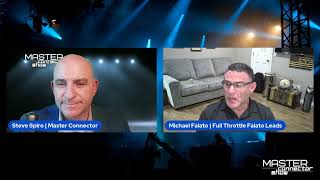
Michael Falato, CEO of Full Throttle Lead Automation, shares how to find prospects already signaling interest on LinkedIn. He recommends joining up to 100 LinkedIn groups, scraping event attendee lists, and using intent data to target people actively looking. Automation can scale outreach to 5,000 messages monthly while staying personalized through A/B testing and engagement.
Chapters
Different's great, but doing—
being different for the sake of being different, I'm not a big fan of, right?
If you just want to be different for the sake of technology, um, I would hide behind it.
And you don't have to—
you start to hear some of their challenges.
And yes, because it speaks to the core of who you are and what drives you forward. Because what makes you different is what drives you.
What's going on, friends? Steve Spiro, the Master Connector, coming at you live and direct. And I am flying solo. My, my, my good buddy, friend of 25-plus years, Rob Genovese, is Having fun in the sun right now down, uh, I think he's at the shore getting some, some beach time. Beautiful day to be at the beach today. But, uh, I am here, uh, for those of you who don't, um, know much about the Master Connector Show, I'll give you a little bit of background and story on that. Um, I know Rob kind of does a really good job of setting things up. So, uh, you know, I was doing a bunch of stuff on LinkedIn, growing my LinkedIn and, and, you know, kind of minding my own business. But also wanting to grow a speaking career, you know, as I continue to grow that. Anyway, started to embark on video. In fact, I reached out to my good friend Rob Genovese, who is now my co-host here, and he suggested you should get some, start doing some video. So I did that. And then along the way, LinkedIn Live was, was hard to get a license for or whatever. It was like exclusive. It was really hard. So I, I actually just for the kicks and giggles put my application in and to my shock and dismay, about 5 weeks later it was approved. So now I had this, this, this really coveted thing at the time that I knew I needed to do something with. It would be a waste if I didn't do something with it. So I reached out to my friend Cameron, and Cameron, I had been on— he had a show. It wasn't on LinkedIn Live, but it was on YouTube, and it was really well done, network TV production quality. Long story short, we embarked on it together and, uh, launched in November 2020 the, the LinkedIn Live, um, you know, show, uh, you know, we call the Master Connector Show. And, and, and it was, uh, incredible, uh, working with him for quite a while. Uh, he has a very successful event staffing company that was dead during COVID Long story short, uh, he's, he's back, uh, full bore with that. And I needed to figure out what I was going to do. And, and I didn't want to, you know, I love what we do, you know, even though it was way outside of my comfort zone. As Rob talks about, he and I are both from former shy guy, so being out in the spotlight is not what I expect, and broadcast was something I'm— it's completely foreign to me. But, um, anyway, long story short, I reached out to Rob and I said, you know, hey, would you consider being a co-host with me now that, you know, Cameron is kind of looking to go a different direction? And he's like, yeah, I'd love that. So we partnered up. I think we've done like 22 episodes. Today is episode 171, so I'm extremely excited about today and Uh, it's just been an incredible blessing. So, uh, welcome to some of the folks on the show here. Donnie, good to see you, sir. Uh, I know Donnie and I had a great conversation from a connection through LinkedIn, and this is the Master Connector Show, and it's about connection. It's about real connection. It's not about just adding numbers and networking, and we're gonna talk about networking, but you know, in this show, we encourage people to be LinkedIn participants, not LinkedIn lurkers. So we want you to get in the comments. Connect with each other. Get on. We don't know you're on here. By putting your name and where you're from and, you know, maybe what you do, we're not going to know you're here. So make sure you're in the comments connecting and letting us know you're here. We'd love to know the city, the state, and all those kinds of things where you're tuning in from. And if you like what you see, share it. Share it out to community, you know. But most importantly, just let us know. And along the way, as we go through, you know, talking to Michael, who's going to be our guest, we'll talk about him. In a moment. Uh, you know, make sure you have some questions and put those in the comments. But today we're gonna be talking about taking your network to the next level. It's gonna be a great show. Uh, so, so here's what I wanna talk about today, right? You know, as the master connector, I've always emphasized the importance of taking your network to the next level, and I've done it on stage, you know, so I love talking about that, right? And elevating your network means actively seeking to add value to others, you know, fostering deeper, and more meaningful connections. You know, it's not just about collecting business cards or adding a new connection on LinkedIn here, right? You know, I think it's humorous. People have these great, you know, followings, but you never get to speak to anybody. I think it's ridiculous. But building relationships that are mutually beneficial and rooted in trust. I mean, I'm a huge believer in adding value and being others-focused and being a go-giver. It's a big part of our community. But part of our, the essence of our show. And Yolanda is on here with us. I appreciate you, Yolanda, checking in here. Great, great friend of the show. Uh, Yolanda, the show's not the same unless you're here with us. So I appreciate you. But, you know, leveraging platforms like LinkedIn effectively can amplify your reach and influence, uh, you know, connecting you with like-minded professionals globally, right? Personally, uh, you know, personal storytelling, like, you know, plays a crucial role in this process, which allows you to share your journey, inspire others, and create a sense of community, which again, another part of our pillar of our show, right? Building community and growing connections. But remember, a strong network isn't just about quantity. It's about the quality of your interactions and the genuine connections you've cultivated. Again, you know what, why being connected? I say this all the time. I get on a Connect call. What the heck is the sense of being on, you know, have a new connection unless you know something about them beyond what's written in their profile. So I'll take it beyond the, the, the screen, take it outside of the platform, right? But by being authentic, again, another pillar here, right? Intentionally and be service-oriented. You can transform your network into a powerful catalyst for personal and professional growth, right? Another pillar, right? Being others-focused, being a go-giver. So, uh, it is gonna be an incredible show. Uh, I know you're gonna get some incredible value from today. So if you're ready, I want you to go into the, into the comments right now. Again, we're, we're, we're participants, not LinkedIn lurkers, right? So type in hashtag let's go, and I am going to introduce our amazing guest for you guys, and, and you're gonna love him. So Michael Filato, you know, Michael is the founder and CEO of Full Throttle Filato Leads. He has over 25 years of enterprise sales experience lead generation, and recruiting automation. He is a US Air Force veteran. Thank you for your service, sir. Uh, as well as a Brazilian jiu-jitsu black belt, Muay Thai student. Muay Thai is another martial art if you don't know what that means. He's also a tenor saxophonist.
Whoa.
Right. Michael has sold to the NFL, UFC, AT&T, Sprint, Invesco, CBS, and hundreds of other Fortune 500s. And startups. He knows that producing quality leads and making appointments can be a huge drain on resources, so he has started his own lead generation automation company. He's also a, uh, USCAF veteran, a solid guy all around. I mentioned the veteran part, with over 25 years. So just, it's going to be incredible. So if you would, please welcome to the stage and give him an incredible Master Connector welcome on the comments. Mr. Michael Filato. How you doing, sir?
Reporting his duty, sir.
Absolutely. Thank you again for your service. We appreciate you big time.
Thank you.
And yeah, and, uh, we got some people chiming in here. It's all right. So, so yeah, if you want, maybe just, just a, just a second on, on a little bit more about you, and then I'm going to get into some questions, if you would, uh, because the audience wants to hear your perspective because you've done an incredible job and you've got incredible you know, background and resume, if you will.
Yeah, I've been in sales for 25 years and was always just hustling to get leads and figuring out, is there a better way of doing this? Work smarter, not harder. So that's kind of how I got into this business, and I help other folks just kind of spend more time selling, less time hunting. So that's really what I'm doing in life. I really enjoy the sales game, and just like the show, and just like when you you get on the meeting, don't make it about you. Talk about how you can help them. And that's what I love about what you're doing, Steve.
I appreciate you big time, Michael. So listen, you know, we all know, or many of us know, about the, you know, Simon Sinek, and he did the Golden Circle TEDx talk, which by the way, at some point I will be on TEDx stage. You count that, take that to the bank. But he did a great talk on the Golden Circle and did a book called Start With Why. Right? So we want to talk about why. So community, type in hashtag why as we get into this next question, right? So, um, why— you know, the, the, the question is, why do you feel that you want to take things to the next level? What would be the, the why behind taking your networking to the next level?
Are you asking me or your audience right now?
I'm asking you, actually.
Sure. Okay.
And the audience, you could chime in too.
Audience, please feel free to Well, you have all these connections of 25 years, 50 years, whatever, however old you are, whether it's 5 years you've been in business. Um, most people are not taking advantage of their own contacts and figuring out how to keep in touch with them, or they're doing it manually. So a lot of people are thinking about like, how do you automate things? How is AI, how is ChatGPT going to get involved in what they do? The whole idea is to take out the monotony approach of what you're doing and spend more time being strategic, coming up with problems and solutions that they can even help them with, and making messages about who cares, so what, why you tell me this, how does it help me with my company, and how does it make me money, who have you done this for. Not I do this, I sell that, and I have features and functions. That's sales. It's taking it too far in an initial conversation to sell if you don't understand the problem, whether it's email, LinkedIn, roundtables, or anything else. Learn more about why someone showed up before you get into your pitch. You're on mute, Steve.
I appreciate that. Thank you. Rookie mistake here, but there we go. Thank you, Michael, for looking out. Yeah, you know, it's interesting, right? I love that what you just said, and you know, being in sales, right? Business development. And you know, by the way, if If you're not classically in sales and you are in a relationship, you're married, you sold, you know, you're, you're in sales, uh, you got somebody, or you, or you got somebody to hire you, you know, you sold. You have to sell yourself to get that job. So sales is key, but understanding what people really want, you know, it's classic Dale Carnegie, right? You know, you give, you know, you, you, you know, you find out what somebody wants and they'll move heaven and earth to get it, right? So, uh, absolutely important to kind of understand their needs, wants, desires before you start to look to pitch them. And I see this all the time on LinkedIn, unfortunately, with these, these pitchy messages, you know, that just want you— and I'm like, I don't even read them. I really don't. You know, I see a scroller, I'm like, I'm not even gonna bother. So, but hey, you, you have a phrase, and I— so, so, committee, uh, along the lines of, right, we heard this, this phrase, teach a man to fish, uh, you know, you, you, you— well, give a man a fish, you feed him for a day. Teach him how to fish, you feed him for a lifetime. Type in hashtag fish. It's not gonna be that question, but here's the question. It's related to fishing, right? I know you speak about, you know, fishing where people fish. I think you've, you've mentioned that. How does that apply to effective networking, Michael?
Well, instead of what I learned, okay, advertisers. If you're going to go after advertisers, wouldn't you go after someone that's advertising already?
Sure.
So when I was at Monster in '96, I would go through Monster Board I would go through the job listings and go, okay, who's posting jobs right now? I'll go after those people because they already understand that classified ads are how you get people to apply for jobs. So I started that whole approach, like advertisers advertise, fish for people fish. If people are going to the event trade show and it's about what you do, why wouldn't you go after that list first? I see you're speaking, I see you're attending, I see that you're exhibiting. I wanted to have a cup of coffee with you while I'm there, or let's set up a virtual cup of coffee, um, before and after. Use those as anchors is what I call them. But fish where people fish. There's intent data, there's signal data, there's job posting data, there's, um, intent data around what they like, what technologies they use. All this should be tier 1, who I should go after. You have a TAM, total addressable market, but who is most likely to be interested in what you do and start there. So Fisher People Fish is basically work smarter, not necessarily harder.
I love that. Yeah, I mean, it's, it's, it seems like common sense, right? And, you know, but I heard this years ago, common sense is not so common, right? So, you know, um, but hey, we sort of started to talk a little bit about strategies. So I know we did the, you know, one of the 5 W's. Back when I was in, in school, they talked about, and you're interviewing somebody, you go with the 5 W's. I want to talk about what— so community, type in hashtag what as we get into the next piece of this, right? Uh, and so what strategies do you recommend for networking on, on social platforms like LinkedIn? Any particular strategies that you find have worked really well for you?
Um, groups. There's— you can join up to 100 groups on LinkedIn.
There you go.
Without automation, you could send messages to any of those people on those groups for free. You don't need to email credits, which is like a way of knowing. I automate that, but I give these tips like you should think about doing this on your own. If you need help, great, use me. But groups are a big thing. Next thing is, um, events. There's tons of events that even someone like yourself would host, and if there's 2,000 people going to the event and it's relative to what you do for a living that you'd sell, why wouldn't you scrape that list off of LinkedIn? You have to register first, then you can see who's attending and scrape that list using Chrome extensions or, or some LinkedIn, uh, tools to extract those names and basically make sure you hit those people, right? The last thing must be is, uh, events in person, right? You got exhibitors and speakers. Those are people you want to talk to as well. So That's very important.
I love it. You know, one of the things that I'm doing a lot more nowadays is I'm, I'm back actually visiting audio rooms. You know, LinkedIn now has the audio. It took what I guess, uh, Clubhouse was doing and they took it now and, and now applied in this platform, which I think is way better because Clubhouse was cool, but it was pretty kludgy. There was some things you couldn't do, but I love getting into Clubhouse and then you can actually not— sometimes you could— well, not only do you see the the who's, who's there. Challenge with the, with the LinkedIn video like we're on here is unfortunately unless somebody gets in the comments, we don't know who's here. But with, with audio, you could see everyone that's attending and then you could go and do a connect request. You could check out their profile or even better, if you hear them speak and you're like, okay, that person is interesting to me, uh, you can now go ahead and, and it's a little bit more manual. You're talking a little bit more of a automated process, but I feel like that's a good way to expand. And then what I also like to work on, use, is the tool that LinkedIn has, which is, you know, it's called nowadays Grow. Like, there's two tabs up on LinkedIn when you go into your network. One is on Catch Up, which is like— I like Catch Up a lot, you know. You know, congrats on your anniversary, because, you know, you have a, you know, 29,000 connections like I'm at And now, yeah, I could add more, but I have like, you know, there's a great book I read years back and it's called Acres of Diamonds. And the story of the, of the book is this guy is, he, he always wanted to go and chase his dream and, and, you know, be very wealthy. And he knew he wanted to go and, and this great adventure to, to find diamonds. And he wound up, uh, traveling and he, he basically became bankrupt and He had to sell his house and, uh, because he didn't find his, his, his treasures, obviously. Just, he just spent all his money. Well, the, the new family that took over the house, they're looking outside the kitchen window and they look and they see a little— it's a stream in the back of the, of the house— and they see something, you know, sparkling or shining. And they went and investigated, and it turns out there were diamonds in the stream. And he went traveling the world to find the diamonds Meanwhile, they're right in his backyard, right? So acres of diamonds. So a lot of times we have, we have gold, there's gold in our hills, right? There's, there's gold in what we have, right? We have, you know, my case. So I like to leverage the chat, but the other one that I really like to work with is Grow, right? So there's a section that again, I don't do the, I don't pay for LinkedIn Premium. So I like to leverage what I can for free. I'm not cheap. I just wanted to be, I'm frugal. Right? Like, why, why you spend if you don't have to spend, right?
You do need Sales Navigator to be very successful in LinkedIn.
You, you can, you can, but I, I'm just gonna give for those who don't wanna invest. This is my technique, right? So, and that, and that is cuz you get a certain amount of searches on LinkedIn cuz you could search for a particular, if you wanna search for, I don't know, my case, you know, event planners is a good contact for me. So, You search event planners, you're gonna run out at some point. There's a certain amount of X number, finite number of searches you could do on LinkedIn when you, when you don't have the paid-for version.
Right.
Well, and a way around that is you can actually use, excuse me, the, the You May Know section under Grow. And it says, hey, under this category, you know, your recent searches, your recent activities, these might be good people you should connect with. And you don't leverage those, those, uh, those searches. So just another way to do it. But there's lots of cool things you could do with LinkedIn. But, um, anyway, community, I want to make sure that we, we understand that today, uh, we're talking about taking your network to the next level. And, um, please, if you have any questions for, for Michael, he's an expert, please put it in the comments, or, you know, just in general, we could talk about it for sure. All right, so, so because we're talking about next level, uh, community, type in hashtag Next level, because we want to talk about that now and, and, and hear, um, what, what are some unique strategies, Michael, that, that you've, uh, that you found? And I know you mentioned some strategies and that's cool, and maybe it's redundant, but what are some things that you feel that, that, that are unique to take things to the next level with in terms of your network?
Yeah, I've been, uh, adding profile likes and comments and their stories. I And I really wasn't a big believer in that because I wanted to get out invites in mails. And my big strategy is driving people to either book a meeting or come to my roundtable, which is similar to like, hey, let's do an interview, right? But mine's more a group. Everybody gives 2 ideas and you get back 30. And that's kind of what gets you a lot of leads too, is kind of give to get. But every message should be, why should I care, right? And if you use connections and comments as a way to kind of just warm up the lead, that's really the best way to do it. There's ways to pull data from LinkedIn and get their email addresses. We were talking about LinkedIn Sales Navigator. If I want to pull everybody that Steve Sparrow is connected to and say, I think I saw, you know, Steve wanted to say hi. It's real easy for me to do without even asking you. So there's ways to kind of see second, third connections, who's associated with who, for me to pull from everybody from a group and automate that whole approach to those people. I send out 5,000 in-mails, invites, messages on LinkedIn a month. It's virtually impossible to hire a virtual assistant, or if you're doing it yourself, it's really not a great way of going. So Again, spend— be more strategic in life. There's not— I could tell you, like, this is the way I've done it the whole my life. Well, great, good for you. The problem is you're doing it, you keep on doing the same thing over and over, you expect different results. You're not. And just because you've been doing it that whole time doesn't mean— that's the old way of thinking. I'm 53 years old, I'm constantly changing what I'm doing every single day because there's good ways and bad ways of doing things and better ways. Yeah.
I appreciate that. You were just talking about Einstein's definition of insanity, right? Doing the same thing over and over again. So Yolanda, who we appreciate big time, Yolanda has a question. What are some ways to leverage LinkedIn Sales Navigator beyond what you've probably already talked about already? Anything else?
I would say there's a button that says posted on LinkedIn recently. They're active, right? There's intent data switch now, you can do that. There's so many different ways to kind of think about fish where people fish approach, right? Think smarter, better, faster. If they're in a group, they're seeking information. If they go into an event, they're raising their hand. Just be careful of going after people that are at every event, which means that they don't have much to do. Like if I have someone coming to one of my roundtables every month, and always available. There's a— there's— you got to have someone that's actually in the business and making money to help you make money. If it's someone just there to network, great. I don't want to do that with the same people every month. Yeah, so, um, it's just make sure your targets, your TAM, your addressable market, your ICP, your ideal customer profile, is thought about and strategically filtered And then you're A/B testing your content, your approach. Why should people care with the A/B approach? Because you're going to see that works and that doesn't. Let's stop doing that. But the biggest thing I've learned is stop putting out what you do and start asking them if they want to be on something like a podcast, like your show, like my roundtables, like a mastermind, or come to an event. Give something versus sell something. I love that.
That's, that's right up my alley. I mean, and it's not just my alley, it's, it's the way it is, right? It's, it's the WIFM, right? In sales, the what's in it for me, you know, you want to give something and, you know, I've had really good success on getting people to take a call with me and I'm not trying to sell anything and they feel that they understand that. And after they're done talking to me, they know that I wasn't trying to sell them anything. But it— but I, but I've had some amazing collaborations and, you know, had the best 3 financial years of my life. I believe it's because of that mentality of making sure I'm giving versus taking, right? So I love that you're earning, you're earning, or you're building relationship, you know.
It's like, that's, yeah, that's the key. Open and get the door open and then see if there's a fit. But There was a video, if you look at it, like show someone throwing up LinkedIn messaging in real life. I forgot where it was. And so someone would walk up to the— hey, I'm Michael Fulop, I do lead generation. People are like, what the hell, get away. That's what it is like when you're sending someone— if you connect with somebody, you just throw up on them an email, especially on LinkedIn, you're going to get kicked off of LinkedIn and get LinkedIn jail.
So —or just not be effective. Yeah.
Think about how you like to be talked to. Yeah. And make a common sense thought of maybe I shouldn't sell so fast. It's business dating, like dating in real life. Are you going to tell someone, you are so beautiful, I want to marry you? Well, you might scare that woman off that day. Definitely. For sure.
That's a great analogy.
Don't try to sell something too fast. So don't sell. Learn about them. And ask 3 to 4 questions of that person's answers, right? So you told me you're not getting enough leads. Well, tell me about your, your, uh, your lead gen approach or not. Do you have SDRs? Do you have a sales team? What automation tools? I'm asking all these questions, and the first question is, what brought you to the table today, Steve? What— why did you take this call? And they tell me everything I need to know without me being pushy, salesy, or investigative reporting style. It's more about this is being naturally curious to want to know and be authentic.
I absolutely love that. So we're getting to the— it's this, this time just flies by trying to keep the show to 30 minutes. It's been amazing. So we have a couple of questions. I'm gonna try to sneak in here. Um, you know, it's funny, it's funny. So type in hashtag effective, right? But, you know, you mentioned, you know, hey, you marry you, whatever. I don't know about you. I don't know if any one of the other people in our community here are getting these questions and, uh, these, these emails. And oh, this is a question from Donnie. So we're going to get to you, Donnie, in a minute. Let me just finish my thought. So I get these messages from people from China, India, not only on LinkedIn, but also on my, on my cell phone, random questions, because they want to try to create a relationship. And I know it's a scam, right? Um, but here's the real question, and this is a legitimate question here. In terms of effective, Michael, what are some effective ways to maintain and nurture professional relationships remotely? What's your perspective on that?
That would be my roundtable approach. Okay. Yeah. Giving them— the whole idea is make them feel special. Would you like to be a featured guest, special guest speaker, special guest, whatever it is? That's kind of a way to kind of keep them entertained or engaged. If you give 2 tactics that you've learned and get 20 back, that's a pretty good, pretty good tool for you to get them on. And you're learning something, I'm learning something, and everybody else is learning something. So that's the, that's the kind of way to do it. Um, I'll link my automation approach. I basically will like their comments, follow them, and again, if you're doing this manually and doing this like while you're watching TV, you could be cramping your thumb. It's just, it's a really bad approach just to do this by yourself. Yep, I appreciate it.
Well, I want to just, uh, you know, call out former— an amazing former co-host of mine, Cameron Toth. I don't know if his ears are ringing because I, in my opening, uh, statement, I talked about you, Cameron. So I appreciate you being on here with the show. And welcome to La Charles James. I'm not sure, uh, if, if we're connected or he comes in through, uh, through you, Michael. But, um, and I want to get to Donnie's question, and then I think we're going to stop there. So maybe you can help this for him here. How do you start building your network, and what are some great principles to follow? Donnie asks.
So basically, by building your network, you don't do it manually, right? You join groups, which a lot of stuff I mentioned earlier. Join groups on LinkedIn. Um, make sure you're looking at local and Regional and national and international groups that you can join, get their list, ingest them into your LinkedIn, connect with them. And then if you gotta have to me Sales Navigator, so you can look at everybody else's connections and go, who are your second connections? And go, hey, I see, you know, Tom, Steve, you know, whatever, Samantha, and I wanna connect with you. Don't sell in the messaging. Yeah, absolutely. Don't take everybody's advice. Don't say first name in the subject line. Don't do this. Don't throw up on it. You know what, do what works for you, and you can only know what works for you by A/B testing it. But you might want to work with someone that's doing this for 40 different profiles a day versus, versus trying it out yourself. Because as a jiu-jitsu guy or Air Force guy or sales guy, you lose and you learn. I did that, that didn't work, so let's do it this way. I've already done all that stuff so you don't have to.
Absolutely. I want to just give a quick shout out, and then I'm going to ask you to ask, tell the audience, what our community, what your offer is. But I want to give a shout out. Pam and I just recently connected. It's good to have you on here with us, Pam. Good to have you on here. I know that she had some meetings, so she was going to join us whenever she was done. But hey, tell us a little bit, Michael, number one, about, you know, what potential offer you have for the community, and then also best way to reach you and, and any closing comments you have.
Yeah, well, what I'd like to do is I'd like to work with someone helping them grow their LinkedIn. And I do this as kind of a 20 to 30 day trial where I help them. I help them get on LinkedIn and email and I basically give them a way to kind of really 10x what they're doing. And there's a way for me to do it where I get something out of it too, because to me, whenever I do something, it has to be a win-win. So I'll gladly explain that, um, based on your profile and what you, what you've done and who your profile goes out to, to see if it's a good fit for me and for you. So it needs to be, like I said, a win-win. Um, my— the best way is to text me probably, um, because my, my, my, uh, email address is long, michael@fullthrottlefulautoleads.com. You can email me. My cell is 512-639-3375. First text me because I don't like answering the robocalls that I get. Um, like email, LinkedIn, you gotta, you gotta earn some trust before you reach out to somebody. To me, you only call people now that you've built some sort of rapport up to because I don't think anybody's answering the phone. So this automation approach on email, LinkedIn is important. You get phone calls and I know it's a call center, I hang up.
Absolutely, same here. Well, Michael, we really appreciate you being on the show. You, you've You definitely brought some incredible value. Uh, we— I'm gonna put you in the green room if you're around to stick around to say, say goodbye. But, uh, thank you again for all you do, and I know the community appreciates you big time. Appreciate you, sir. Thank you. All right, well, good stuff. Well, that was awesome. Um, so hey, uh, you guys know that, uh, I've got a book, uh, so if you have a chance and you haven't had a chance to, to check out my book, uh, definitely check it out. Uh, it's The Tao of a Master Connector, and, and, um, It was a labor of love for me, so just check it out, get a copy of your own if you like. Um, and, uh, but yeah, and you could find it on Amazon, you could, you could find it on Audible. So, but next week we're gonna have an amazing show. It's gonna be, uh, episode 172, and we're gonna have Maria Trusa with The Power of Forgiveness. Gonna be incredible show, July 24th, week from now. Uh, same bad time, same bad channel. If you love what this this has been for you. Share with the community. Make sure you're, you know, you're liking and sharing. We appreciate that. And again, Yolanda, we appreciate you and everyone else that was on here today. And go to the Master Connector Show, right? If you want to check out more, kind of learn what some of the new— the next up-and-coming episodes are. If you're interested in being a show sponsor of an episode, go to masterconnector.show and you could learn more. But I want to close with a statement, right? A lot of you may know her name, right? Sara Blakely, the founder of Spanx. You know, she took her network to the next level by persistently reaching out to influential people in the fashion industry. Despite initial rejections, her strategic approach and determination led her to connect with top Neiman Marcus buyer, which eventually catapulted her brand into the spotlight. This pivotal connection not only transformed her business, but also underscored the power of tenacity and strategic networking in achieving extraordinary success. Remember folks, it's not, uh, it's not about being shy, you know, like I was, right? Just reach out. Let's reach out. You never know who you can help or who you can inspire and, and be a blessing to as well. So, uh, let's be, make sure to be that light for sure. And we will see you Next week, same bad time, same bad channel.
Appreciate you guys. And you don't have to—
you start to hear some of their challenges.
And yes, because it speaks to the core of who you are and what drives you forward, because what makes you different is what drives
More from Michael




Full Throttle Leaders Podcast- with Gwen Lafage, VP Marketing at Sinch, on GTM

Full Throttle Leaders Podcast- with Spencer Ricks, Head of Marketing at BoxHouse





