Mastermind Event Title: The Blueprint for CRO Success
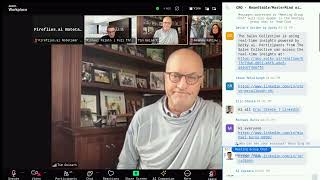
Michael Falato and Warren host 30-40 CROs and revenue leaders discussing three forces reshaping the role: the end of growth-at-all-costs, chronic misalignment between sales and marketing, and AI's impact on revenue operations. Warren argues CROs must evolve from sales leaders into integrators of the entire revenue function, balancing quarterly pressure with long-term retention metrics.
Chapters
This meeting is being recorded.
Hello, we're gonna get started here in a little bit. We're just gonna let people kind of get into the room and then, uh, Warren and I will kick it off. All right, make you— Warren, I'll give you kind of a co-host.
Great, love that.
Probably get started at 12:05, about 4 minutes from now. So in the meantime, if you guys can put your information in the chat, who you are, what you do, and maybe your LinkedIn, so that way if there is some interesting things you want to talk to each other about and you don't want to kind of take up the whole time of the group, then you guys can reach out to each other. And we are recording this, so we're not going to make it public, but we are recording it. There's plenty of note-takers in here that I don't feel like trying to figure out who's, who's a note-taker or what. But so, yeah, keep it, keep it, keep that in mind, that's all. But we have a, we have a really good guest here today, or I would say not guest, but co-host from the CRO Collective. And he's gonna be kind of leading most of the conversation since I've been doing these roundtables for a while and he does them on his own, but kind of came together and said, hey, let's do this together. 'Cause I handle top of funnel, he kind of manages the whole CRO processing and information on what to do and what not to do and how to bring all these things together. And just, he's going to talk a little bit more about it. So we definitely complement each other in what we do. So that's kind of why we brought this together. But we'll get started in a couple of minutes. But in the meantime, I'm going to put my information in the calendar. I mean, I'm in the group chat. If you do want a copy of the video, send it, send me a request on email and I'll do this. But here's my information. It's a lot of links there, but yeah. Warren, why don't you kind of give a little bit of overview of what we're going to be doing today, and then we'll kind of jump into it a little bit in about 2 minutes. But why are we here today?
Thanks, thanks, Mike. So, hi everyone. So some great familiar faces I see here. Hey, Tim. And I've seen you in a year. It's beautiful. I saw some of your people recently. Amanda, Eric, it's great. I'm really glad to see some faces here. So as Mike said, he and I spoke last week or two weeks ago or so, and we thought it would be great to have this discussion together. As some of you may know, I'm the founder of the CRO Collective, and the organization was developed around 5 years ago with the purpose specifically of bringing greater definition to the role of Chief Revenue Officer. Helping chief revenue officers develop skills to be competent in the role as it's being evolving, and help companies build what I call CRO-ready organizations. So the point of this kind of roundtable today is kind of talk about that a bit. First, helping everybody define the role, how it's evolving, and then provide some practical ways that you could survive the role, which is, it can be brutal. And there's some ways in which we, I work with my clients to help make sure that they set themselves up for success and they know how to basically navigate the role once they get it so they can succeed in it.
Awesome.
And, um, thanks for having me, Mike. I appreciate it.
No worries. Um, and I'm Michael Filato. I'm the founder and CEO of Full Throttle Filato Leads. And basically the reason— one of the reasons why I do this is because I do work with CROs, CMOs, and so forth to handle their top of funnel. Um, I automate their LinkedIn, their emails. We do roundtables just like this for your clients because it's way better to talk about how to help each other versus sell what you do. And that's kind of why we do these types of things. But today we're gonna be letting kind of Warren spread his knowledge a little bit more 'cause I think it's more up his alley than mine as far as the CRO role and what it means and what the things that I've seen as, you know, as a VP of sales or a salesperson is seeing the CRO kind of take over the marketing and sales. Sometimes it's just sales, sometimes it's marketing, sometimes the SDR team is part of the CRO. Sometimes it's not, it's just like, what's going on here? So that's kind of the reason why we're doing this. What we really want to do to kick this off is not make this about our products, services, or solutions, is to find out what kind of grabbed your attention to even say, yeah, I want to, I want to come to this today. So 30 seconds, because we have, you know, I don't know, about probably at least 20 people here. Um, who you are, what you do, where you're based. What grabbed your attention to come to this roundtable mastermind today? And maybe preface something that you're working on that you might need some support or help on, like, hey, I'm trying to do this and I need— I want to bounce this off the room. Or something that you failed at, you're like, uh, I didn't— don't do this, I did this, and we can all learn from each other. All ideas, give give one or two things that you learn, and they're going to get 40 because everybody else is going to give it. And then Warren's kind of going to kick it off after that and kind of talk about what he's heard. And, uh, we'd all love to refer business to each other too. We're all in sales and marketing and so forth, so let's try to do that. But, um, let's go with, um, uh, Jason Myers. Like, give us a little background of who you are, what you're doing. Please keep it to like a minute. And then we'll kind of dig deeper after everybody opens up.
I think 30 seconds would be good. We have 34 people, so yeah, let's, uh, let's keep it to at least 30 seconds.
It's, it's, well, it's 34 pe— it's, it's 34 people, but not, there's no takers in there, so it's probably not 30, but got it. But 30 seconds. 30 seconds.
Yeah.
Hi, I'm, uh, Jason Myers. Uh, company is Austin Lawrence Group. We're a digital marketing agency. Uh, I'm the CRO. We are a small agency, but I'm working with a lot of clients on sales enablement right now. So very interested in the topic of, you know, CRO's functionality in general and where the position is going, like, and how to, you know, how we, you know, we're particularly interested in companies that have a CRO as the leader where they don't have a CMO counterpart. And interested in how a lot of that is evolving in the SaaS world.
Right. Sounds good. All right, let's go with— let's go with— where would I find him? I'm just looking at Michael Burns. We can't hear you, Michael. You're not on mute, so something to do with your audio. We'll come back to you in a little bit. How about Amanda?
Sure.
Hi, I'm Amanda Kahlo. I am, I was formerly the CEO and founder of SixSense. I am now the CEO and founder of OneMind. I'm here today. We are building digital superhumans to help CROs. So embrace AI. They are a face, voice, and brain that can do the job of your salesperson, your SDR, ride-along sales engineer. They can give the pitch, give the demo, answer the hard questions, but I'm here really to learn and hear what your pains are and how we can help solve for that.
Yeah, I met Ben and I didn't get to say hi to you last week at the GTM, but you gotta check out their AI virtual salesperson. It's like talking to a human like this and it's incredible.
So thank you. I appreciate that.
I want to talk to you, Amanda, as well, because I really had a good discussion. Ben, Ben was a CRO at, um, at, at WeWork. So she got a pretty good, uh, partner to, to kind of launch this as well.
Yeah. So you can talk to the— how about, yeah, I just say you can go to onemind.com to talk to a superhuman. Just experience it for yourself. That's the best way to learn.
Yep. Yep. I already tried that too. Um, let's go back to Michael Burns.
All right.
Take 2. Does that work? All right, awesome.
Hi everybody, I'm Michael Burns here. I'm Chief Revenue Officer at vFairs. We're an event technology company. I'm based out of New York, and I, whenever I get a message from Warren about content or a roundtable, if I could make it, I go. So that's what really spurred me to show up today, and I'm hoping to hear some innovative strategies around expansion. Obviously, NRR is a big deal for all of us, especially these days. And I'm hoping for some brilliance from the group on something I haven't turned over tried.
Awesome. Thanks, Michael. Morgan.
Hey, everybody.
Apologies for being a little bit tardy. Had a leadership session that went a little over. Morgan Gebhardt, until very recently, CRO at CloudFactory, AI training and enablement. Company and platform currently working on building something entirely new. It's centered around community as well as doing some fractional advisory work. I'm here because, you know, I share a common view with Warren about the role of the CRO, what it is and what it isn't. A strong proponent for a CRO being an integrator or breaker of silos. And the owner of a full customer lifecycle, the entirety of go-to-market, not just sales. And I am here because I always enjoy listening and learning from my peers.
Awesome. Thanks, Morgan. Sarah Storm.
Yes.
Hi guys.
Happy to be here. So my name is Sarah. I'm the CRO of a smaller agency that works with, well, basically supporting SaaS companies. And I've been in revenue 22 years now. It's been forever, my entire career. Done all the roles from SDR, AE, VP Sales, CRO. We are mainly working with SaaS companies that are located in the European area. Have some fractional work as well as a CRO and as a VP Sales depending on the customer. And super exciting to see you guys. And I also recognize Amanda from another group that I'm part of, a bit more political. Uh, so this is going to be a super interesting conversation. Uh, and also I think that what you mentioned about AI being a supportive agent to the CRO, I did an article last week about how AI will replace SDRs and AEs in the SMB space. It's going to be super interesting how this evolves and what CROs should do to sort of move because they need to move.
And where are you based, Sarah?
I'm out of Stockholm, Sweden.
Tim, how you doing? Good, Michael.
Good to see you guys. My name is Tim Geisert. I'm the CRO of a company called Octus IQ. This is really our third company that we've started. First company was a company called Connexo that we sold to IBM. Octus IQ, kind of a goofy name, but it's Latin for growth. IQ is smart. What we do is we're quickly becoming the fastest, largest assessment company for B2B sales organizations, and we're in many ways getting pulled into companies like Dell, Honeywell, Toast, and others to help them really shape what is their sales force of the future using our talent assessment tools and our platform to help them use it for selection. Good to see you guys today and looking forward to hearing what the— what's happening in the marketplace.
Thanks, Tim. How about David Reed?
Going on everybody.
I'm a VP of sales at a sales training and coaching company specifically for the trades. And what piqued my interest is I've always been on the new business side of things and there's a gap in the current organization on the customer success side.
And so I'm hopeful that we can talk a little bit about that as well.
Awesome. Uh, Eric Steele and then AJ.
Hey everybody.
Eric Steele, based in Dallas. I'm on my second private equity-backed CRO role. I'm with a company called SIB and we do cost reduction. I would imagine that the work we do could pay for the services that all of you represent. We help a client basically improve their EBITDA, their margins by removing below-the-line costs. It's all performance-based. There's no upfront cost. We're about $100 million in revenue, about 600 employees, and rapidly growing and excited to be here. I'm a huge fan of Warren. I've gone through his cohort, the CRO Collective, 2 different times, and we've been kind of inseparable for like the past 3 years. He's a mentor, he's an advisor. I'm a big fan. So great to meet everyone. Oh, and I'm— we're working on 2025 planning right now. So any advice, any support, any lessons learned on that would be wonderful.
Thank you. Thanks, Eric.
AJ.
Hey everybody, nice to see you all and the many note takers in here. So I'm based in— well, actually I'm from New York. I'm here now, but I live in Vietnam. I moved to Asia a couple years ago and I run Revenue Boost, which is an outbound agency. So yeah, I always like to get connected with others and learn what's working now on the sales development side, because obviously that's been changing a lot. But also kind of wanted to understand more of the CRO role side of things because, you know, as a lead gen company, we always spot gaps with our clients and their sales processes as they're growing. Um, and it's good to have other people to refer to, but also to understand like how I could better help them or maybe how we could even offer some consulting services around that. So, um, so yeah, looking forward to, to being here.
Great. Uh, George. Good afternoon, everybody.
George Stakos. I'm based in Toronto, Canada. I'm currently a strategic consultant after a, you know, a whirlwind career, over 30 years of executive experience at leading technology companies. I was at a couple startups that we subsequently sold that I helped lead, and then most recently I finished my role at Equifax Canada as the Chief Marketing Officer. So I bring both the sales side because I've led sales organizations and I've led marketing organizations. So hopefully that insight might be useful to the group in leading both sides of the house or sometimes melded within the CRO role. And really my interest is just understanding, hearing, and what others have to say that, you know, I've been a fractional CRO myself. In several companies and just understanding some of the contemporary challenges and issues is always good. So I like to maintain connection with my peer group.
Thanks, George. Uh, Stephen Thomas.
Hey everybody, Stephen Thomas, CRO at SIGRA, we're a SaaS data protection firm based, George, out of Toronto, and I'm based out of Austin, Texas. Here, I know of Warren and have done some work with Michael in the past. Big fans of both. And frankly, just always good to hear what's going on and shake up my own mind. For example, Amanda's quick bit on the AI agent and everything that's going on there. For a smaller org, we're about 130 folks trying to sort out how to incorporate some of those technologies while operating the business and then launch a new platform. We just got a lot of moving parts and so finding out what's working and what's easiest from an implementation perspective to really add to the funnel and as well our customer service needs is what I'd love to pick up today.
Great. Thank you, Stephen. How about Steve McCulloch?
Yeah, I think I'm the other Steve.
Hello everybody.
Steve McCullough. I'm a 20-plus-year veteran of B2B SaaS and technology firms ranging in the $10 to $100 million range is where I've focused my career. I'm now embarking upon a shift into being a fractional CRO/CSO. So been, been aware of CRO Collective for a few years, but today I'm a first-time caller, so I'm glad here to be with everyone. I think one of the things I'm very interested in for Amanda and others is, you know, where, where are we likely to see AI really make impact as it moves from the marketing function to the sales function? That to me is, is going to be an area to watch. So I'm interested in learning what others think about that. So thank you.
Thanks, Paul. And then, uh, Perjo.
Good morning, uh, Paul Cayley here. Um, pleased to be able to, uh, get some time with everyone. So I'm currently a fractional, um, CRO, Chief Partner Officer, helping, uh, mid-sized, early-stage companies, um, build out their sales go-to-market. And I have left behind about 30 years of corporate work. I've worked at Siemens, Dell, HP, Flex, AWS. So taking all the learnings from big companies as well as startups and learning is why I'm here today. I'd love to hear any best practices and and see what are some of the key things that are happening in and around sales. So thank you.
Thank you.
Hi, and I'm Pirjo, actually originally from Finland. So that's why the name is pronounced Pirjo, close to my colleague Sara, you know, in the Nordic countries. Basically, I live in Boston right now. I've been here over 20 years. I've been part of a number of startups selling specifically technology, networking, those kind of things to either telcos or large entities. So kind of a very different sales cycle and process than selling to consumers or small businesses. So just kind of similarly as my colleagues here, very curious to hear about the learnings and changes. And obviously, like MySpace specifically, things have changed. There's a very much personal selling and meetings because these are very large ticket items, multimillion dollar sales. Deals and that has somewhat changed after COVID, more virtual environment. So very curious about if anybody else has similar experiences and how has that changed their sales processes or lead or prospecting.
So.
Thank you. Who hasn't gone? Carlos, I think hasn't gone yet and Rob and Brandon, right? I think those are the three that were.
Hey everyone, it's Carlos. My name is Carlos Restrepo and I'm out of Jacksonville, Florida. I work with Avis. We do member management software and mostly we work with associations. That's where my background is. But when you start thinking about member management, it pretty much leads into subscription and pretty much what SaaS recurring revenue is all about. So we focus on organizations that have membership, community, volunteers, and events, and we put it all under one website. My background is in customer success, so trying to deal with new sales and breaking into the market is always the challenge. And so I'm always looking to learn. How new sales focuses on bringing in the customer. I know how to keep the customer. I just need to see how you guys bring in the customer.
Gotcha. Gotcha. Who else is in here?
Yeah, Michael, I haven't gone yet, so I'm sorry.
My camera's on either.
Good to see you again, Michael. I joined because, you know, when I see anything with you or Warren on, I'm always going to be joining those sessions. So I'm the chief revenue officer at One Paper Lane. Which is a process automation platform based out of New York City. We're in 6 countries and growing rapidly, but I'm here to really find out what everyone's doing around the sort of in their partner channel for go-to-market and whether you've kind of found that that's starting to be a less effective channel these days and also what you're doing around lead generation, which has been a topic of of focus for me for this last year. So happy to exchange ideas there as well.
Thank you.
Thank you. Nice to see you again, Gerry. Brandon and Rob, then we can get to Warren's input.
Yeah, nice to see you again, Michael, and good seeing you at the go-to-market event in Austin, Texas. Haven't met you yet, Warren, but hopefully soon. So my name is Brandon Taylor. I am the CRO of a global food and beverage software company. Revenue-wise, we're roughly about $140 million. And, you know, my past is having scaled a couple of companies, you know, from $7 to $100 billion over a period of like 7 or 8 years. I also have a couple of black eyes that didn't work. So, you know, and some broken teeth and chipped teeth and broken bones. But what I found is, is back when, you know, you know, it was so hard in the past to do this type of stuff is because I wasn't networked with other CROs. I wasn't networked with go-to-market, you know, network. And that's why I'm here today, because I believe that most all problems have been solved somewhere by someone. And a lot of times you learn it from meetings like this. So happy to be here. And once again, I sent a message on the thing. Sorry, I had a kid appointment pop up that I'm gonna have to— I'm gonna have to leave a little early for my kid, but Nice to meet everyone.
You know, this, this is number one, kids are number two. Let's get this right.
Exactly right.
Yeah. Rob.
Hello, Rob Badell, fractional CRO, VP of sales, whatever title you want to give me. I'm the sales dude. I work with multiple companies building out, make sure they have a sales process that everyone follows the same sales process to get the same client results, make sure they have lead scoring set up to establish communication between sales and marketing. I work with a couple different companies right now, starting with a couple more. And I'm not sure if anyone else is aware of this, but LinkedIn has been going crazy for me, and people have been reaching out, contacting me, say, hey, listen, I want to work with you. Uh, so I'm not sure if anyone else is seeing that, but it's very interesting.
Yeah, there's a lot of, uh, people that will hit the services button and reverse sell you. I don't know if you've seen that, but it's It's kind of, it's a little bit sneaky, but people are kind of doing that as a Legion approach. And it's, you're trying to tell people what your services are and they use that button to send you a free email. So I don't know if you're pertaining to that, but that's interesting. And then I just hired Cindy Steele, who's on the call. She just started maybe a couple days ago, known for 11 years. She's going to help me with, uh, sales and marketing and overall operational approach. So once you say hi, Cindy.
Hi everyone, my name is Cindy Steele. Um, I actually live in Austin, Texas. I've known Michael for— geez, it's been over 13 years. Uh, we met, uh, my son does jiu-jitsu and now professional UFC fighter, but that's how we met. And when we were relocated to Austin, I've been in the medical healthcare care, dental, uh, operations field for quite some time. Um, and I also have owned a couple of small businesses. Uh, and now I think I'm just, uh, I feel like I'm kind of plateaued at where I'm at, being that technology is and how it's evolving and moving forward in the future. I feel like that this is a good opportunity, knowing Michael and not having any experience whatsoever within the terminology of sales and marketing and what feel like, uh, being here at these type of meetings is going to be educational for me, uh, take in anything I can from anyone, and then of course, uh, follow and learn from Michael and Victor as well.
So yeah, I'm excited to have Cindy aboard. I just wanted you guys to, to see her because you're going to probably— if you ever work with me, you're gonna, you're gonna work with her. I think that's everybody Did anybody just come? I thought I saw a new person just pop on in here. I think that's everybody. Um, so we got through that and we still have 35 minutes. So now we're going to get into, um, some best practices, thoughts, um, just overall experiences with Warren in, in this, in this, the CRO approach that he has with people and what he does. And it's not going to be commercial, it's not going to be a sales pitch, it's really just it's just really just trying to help each other. And we're— this is going to be interactive. It's going to be, hey, what have you gone through? What do you see?
Yeah, thank you very much, everybody. Really great, great group here. And all your requests are very pertinent to the stuff I'm working on. So I think to kind of let the framework of this conversation, you should first be kind of lay a couple of things that are going on right now. We're in a very unique time.
Right.
Everybody knows there's like 2 or 3 monsoons happening at the same time right now. Right. One is we've kind of left this overindulgent cost growth at all costs phase of business that we've enjoyed for a while and it sort of exhausted itself. And as a result, we're finding for a number of reasons, probably COVID being one of them, probably mostly it's really economics, right? Money is really very expensive now. And so as a result, it sort of sobered up a lot of the way companies go to market. And I think the idea of just trying to grow as many subscribers as possible profitability is a dead-on-arrival sort of notion right now, which I think is a good thing. That's a big shift. It's not a small thing. And it means that market companies are going to market a lot differently.
They have to be leaner.
They have to get customers. They have to think about the customer a lot more than they used to. And what's been happening for the last 20 years or so is that the customer's largely, for the most part, been ignored at the expense of top-line revenues. And so that shift is, is having a big impact on the way companies are going to market right now. It's, it's a big change and companies are adjusting to it. They're trying to figure out the right way to manage. I think it's also being impacted by the way they're being funded because PE firms and VC firms are traditionally looking to try and get growth as quickly as possible from the companies they invest in. And they tend to drive the culture to get that done as quickly as possible. And there's a good bit of a, shift going on between the way companies are actually driving their revenue and the way they're being— the investors are doing. So there's, there's a, a recalibration between the investment community and businesses right now. That's really interesting to see how it's shaking out. Money isn't flowing the same way. The results are not expected, but what's missing is new models and how to manage this new expectation. 'Cause there's so much have been codified in the last 10 or 15 years around how to drive companies' growth so quickly. What do you do now when you wanna slow that down? It's, it's, it's a very kind of a strange thing. People are trying to slow down something they're used to going very quickly. So that's one thing. Second thing that's going on too is that it, the, this issue has exposed something that has been pervasive in companies, which is revenue misalignment. When I say revenue misalignment, I mean something we're all familiar with, and that is sales, marketing, customer success organizations have traditionally almost operated like 3 different companies in one. And they don't operate on the same page. And as a result, we haven't really been able to fully see the full effect of the way in which that decreases value for customers and customer retention because we've always focused so much on top line revenues that sort of made up the difference for all the deficiencies and the ways in which companies are processed and organized. And the other third thing that's going on too is what I think 8 or 9 people mentioned here is AI and automated technologies, which is having a massive impact on the way people go to market right now. And these are things that are going to not stop, right? These are massively important things. They're not trends. These are changes and shifts. What does that mean for this purpose of this conversation? That's because the chief revenue officer role has shifted, right? It's actually coming back to what it was originally intended to be. And I wanted to kind of talk a bit about that because this is gonna affect how everyone on this call is thinking. So if you are a chief revenue officer or if you're a founder of a company and you're thinking about a go-to-market leader, the issue that's been happening right now, basically as a predication on the go-to-market and revenue misalignment issue I talked about, is that CROs for the last maybe 15 years, which is really only about how long they've been around, have largely been hired to focus specifically on sales. The vast majority of CROs run sales organizations, and that's an incorrect way to operate a sales organization. Chief Revenue Officers should be running the entire revenue operation, which means all the customer-facing parts of the business. You should be operating the sales, marketing, customer success organizations, maybe even channel partnerships, which I know has mentioned a couple times, and they should have a RevOps function that reports into them too. Maybe I could see the RevOps function focusing with a, with a CFO. It's another conversation. Generally speaking, the CRO role has evolved and become a much more complex role. I know there's a couple people on this call whom I know intimately who've gone through this and they're currently operating that way. But this is a major shift for a number of reasons. One, CROs need to be trained differently in order to be able to know how to do that, and the competencies have changed for CROs. And number two is businesses that hire chief revenue officers need to think differently about the reason they're hiring them and how to make sure that they're appointing them properly so that they succeed. And because they're not, too many CROs have the title but don't have the right job. And they're not being supported properly by the organizations that hire them. And they tend to last around 16 or 17 months. So it makes it more complicated for a CRO to succeed. However, I'm confident that in the next, I'd say 3 to 5 years, most CROs will be operating in the way that I'm talking about. It's already, the shift is already happening. I started my business 5 years ago. I'm already seeing that's happening. I'm seeing more and more LinkedIn posts for CRO roles be much more inclusive in their job descriptions about being a much more revenue-driven leader as opposed than somebody who runs sales. So what does that mean for people who are in the role? The main issue that most people have who are CROs right now, they're sort of faced with this conundrum, which is, okay, so I'm listening to what Warren's saying. I agree with him. I think the CRO role should be a lot more strategic. However, I'm one of these people that was hired as a CRO to run sales. So now what do I do? It's a difficult spot. And a lot of my clients I'm working with, they're trying to work themselves through The transition. And the second one is, I'm looking for a CRO role or I'm gonna move into a CRO role. How do I ensure that I have the competencies that I need to be able to succeed in a role like that? And secondarily, more importantly, how do I make sure the company that I'm working with knows how to properly appoint me, support me so that I can do that job so that I don't get sucked into a sales role, which happens to most CROs if they don't do it properly. Or that's sort of the framework of the conversation. I just wanna start and maybe get some thoughts on this from everybody in the room as pertains to that so we can kind of maybe address it. That's, I hope that'll make sense. Any questions too?
I'm open to, yeah. Warren, Carlos has a question. Sounds like a shift to CROs and CCOs. How would that work out?
You mean chief customer officers or chief Carlos?
Why don't you explain a little bit further?
Yeah.
The chief customer officer where a lot of that, like you had the new sales and transition into renewals and accounts, customer success and all that support.
Yes.
Delivery.
Yep.
100%. So, you know, I think that's gonna be the most important part of the business that's gonna change. If we're moving away from the growth at all costs model, the alternative of that is the customer at all costs model, right? So, you know, customer journeys, customer life cycles, right? These are all really important parts of the way businesses are operating, right? And in my view, I think the customer should be viewed at the point at which they're first touched by a marketing message, the point that they renew, not the point that they buy, but the point that they renew. So if I look at my organization to, as that whole arc of a customer, the customer success organization is vitally important to making sure that the handoff between sales and customer success is, is efficient. It's not right now. Most companies dump, you know, the sales organization dumps a bunch of customers into the customer success organization and And it almost starts the whole cycle all over again. And I think that's changing. So do I think that there should be a chief customer officer as well as a chief, a CRO?
Sure.
I think there's a lot of ways in which the organizations are gonna structure their hierarchies of their C-suite. My proposition, and I kind of kicked the tires in this for 5 years now, is regardless of that, the CRO should be the leader of the revenue operation and responsible for all those functions. So organization wants to hire a Chief Customer Officer and give them that title, fine. People like nice titles. I think they've, it could be useful for somebody in their career, but I still do believe that as a separate entity, we risk the idea of that becoming another silo, which is usually what ends up happening. The idea is to kind of figure out a way to build systems and processes that don't allow for factions and silos to grow. Which is really like almost like a, it's almost like a, like gravity. Companies almost want to become siloed. It takes effort to not do so.
We got a question from Morgan.
Hey Morgan.
Warren, how you doing today?
Yep. Great.
Awesome. So a little bit of leading the jury here. But you mentioned, you mentioned RevOps. And I was chatting a couple weeks ago with a bunch of folks in the C-suite at a, you know, new York City-based, $100 million plus SaaS company, you know, strong growth, all the good stuff, looking to replace their chief sales officer. And they were explicitly, and not get them out of the organization, but basically leveling the guy, you know, hit the proverbial ceiling. And they were looking for what they stated to be a CRO, chatted with their CMO who was in seat. So right there, one potential complexity through that journey, very clear about what a CRO is and isn't, right? And I articulated that first touch through the renewal journey. Where I landed was a conversation with the CFO who stated unequivocally that he had recently taken rev ops away from that CSO and that it absolutely had to report to the CFO in order to keep sales honest. Now, you know, I gave him my counterpoints, but I'm very curious to hear from you how you would articulate the rationale for the right way to have RevOps and CRO.
Yeah, it's a great question. And I love this, you know, Eric and I are, he's probably smiling right now because he just had this conversation. So, you know, I'm not fixed on this. I do think here's, it's an interesting conundrum. And I'd say there's, there's probably two ways you can play this one in my view. And I've seen it work both ways. One is that when a, when a CRO first gets their job or when they're, when they're, they're sort of given this sort of remit in the the way that I'm describing it, my view is the first thing they should do is get a RevOps leader that run that part of the organization. You need an intelligence engine, you need someone who's got their hands on the data and can build a system and process to coalesce across all those functions right now. There's a sales enablement function, right? There's a marketing enablement function. These are like siloing the silos. It's, it's, it's really entrenchment. It's not good. A RevOps leader, a good one, will know how to carry those things across all three of the, of those functions. So there's one thing that I think first that's just established that that's critical. Who does the RevOps person report to? I mean, I'd say optimally, if I'm a chief revenue officer and I've been one, I want a, a RevOps leader to be my counterpart. 'Cause they're the ones who are gonna gimme the intelligence for me to be able to make the kind of decisions I need to make. It's, it is a, it's a, it's a vital thing. That being said, I have seen successful instances where this RevOps person reports into the CFO. Because there is a critical measurement function on finance as it relates to the RevOps too. But here's the, what the caveat to that, I'd say if I was gonna have a CRO, I mean a CFO have a, the RevOps function, it would be vital that the CFO and the CRO have the right relationship. 'Cause that can be another silo. And I've seen, look at this balloon stuff. I don't know what the hell that is. Is I think that there's a way in which this can be done I'm in the midst of developing some content around this topic, which you'll hear in about the next week or so. This, this exact topic, which is what's the relationship between a CRO and the CFO? And when it's done right, my opinion, the CFO could be the most important secret weapon to a chief revenue officer if you have the right relationship. And I think it's an untapped opportunity to build a, a relationship or a coalition between those two functions. In which case, I think it would make sense for me to rev ops to report to the CFO as long as I don't wanna repeat myself, the CFO is not sort of at odds with the CRO and fighting over turf around who, who owns the financing of the revenue operations. That's, that's the way I look at it.
I wanted to introduce someone that's really dear to me and who is a CRO and actually ran for governor of California. and, uh, uh, he's one of the fathers of CRM from PeopleSoft and one of my mentors. And they came on a little bit after we did intros. Sam, why don't you tell us a little bit about you real quick, and then we'll get into some more questions for Warren.
Mike, Michael, it's good to see you. It's good to be on the call. Yeah, I, I appreciate this conversation. You know, we, uh, there was a, there was a small group of us back in 1983 that had an idea that we had no idea would turn into the CRM industry, but it did. And, and we, we were on the ground floor of, of what is now something far beyond what we could have imagined. But for me, yeah, I've been in the industry since 1981, and I started with IBM '84 when AT&T Bell Labs and IBM launched the first independent operating system and independent software programming language, C and Unix. There was a group of us in our mid-20s that jumped ship and we literally created the software industry and happened to be on the ground floor of that. And our claim to fame was to write the first contact management software ever before there was a platform for it and then trying to figure out how to make a living. And all of that before it was called customer relationship management. We called it the business development cycle and just have had a tremendous career around CRM. So it's great to be on the call. I, you know, thinking of the CRO, the chief revenue officer, for me, what I continue to preach constantly is centering back to an effective customer relationship management strategy. The CRM strategy to me, if you are a CRO, I can't even imagine that you would enter into that without first having a real clear hand on your CRM strategy. In other words, the CRO to me is the strategist of the organization. And it all comes back to, for me, what is your strategy? And I agree that there, you know, unity in the organization and bringing all the pieces together is critical. I've run a consulting firm, a boutique software firm for quite some time. And I have worked with companies that have had complex customer interactions, multiple divisions, and trying to work with the same customer. And for me, the acquisition strategy and the retention strategy come hand in hand around a robust CRM strategy. I just got back from Atlanta last week where the brain trust of location-based marketing, you know, these next generations of how we market, how we identify customers, you know, and the, and the sky's the limit. And we continue to stretch the edges of the envelope on marketing and understanding our customers. But one thing that we began with, which I believe is continually important, is having an effective CRM strategy in the midst of all of the technologies and all that we've learned in the industry. And so my hope in this conversation is that we don't overlook that vital piece of the equation. And the CRO to me has to be someone that has deep experience on the strategy side and knows how to bring these pieces together and, and to be effective in the market. So I appreciate, Michael, the chance to share a few things and love, love this conversation.
Yeah, Sam, um, when I was at NextEdge, was the energy consulting company that, that we both worked at, he hired me. And I don't know if there was fractional CROs back then, or VPs of sales. I don't think there was a word fractional, but that's what he was, um, because they basically, um, didn't have someone to do that full-time. So he's kind of— you're probably one of the fathers of a fractional, fractional work in the sales.
I, I am. That's what I do, fractional CRO. And, uh, And, you know, and it's been an incredible journey to work with so many companies. And usually I get called in when they're having real struggles with customer retention. And, you know, to me, one of the leading indicators that the organization is slipping off the cliff and needs a revitalization is the retention. How effective are they in retaining customers? You know, because, you know, you can, you can acquire a new customer and, and, you know, and to me, one of the leading indicators that you need a chief revenue officer is, is when you can't keep customers as fast as you get them, you're losing them. And the retention strategy to me is the foundation. It used to be that the acquisition strategy was the most important thing, but for me it's the retention.
It's customer retention. That's it.
And so that becomes to me the leading indicator that we have, Houston, we have a problem. And, you know, and I love, Warren, what you're speaking about because what tends to happen is the CEO says, though, I'm gonna solve this problem to just fire my head of sales. And after you go through enough of them, you know, and you realize, you know—
We don't have a sales problem, we have a systems problem. That's right. Exactly.
Exactly. And that's when I usually get called in.
Exactly.
Same here.
I mean, the problem is we have— and thank you so much. You're really great. Great stuff is, you know, we have a, we have a symptomatic approach to solving problems in businesses. It has to go away. It's, we have systems problems. It's not symptomatic problems. Now, I'm not saying we don't have sales problems.
Right.
We don't have, we have sales motion problems. Right? We have go-to-market, all that stuff. But that's not the issue. Those are symptoms of a systemic issue, which is usually the fact that the organization isn't really operating under one drum. And I think the customer should be, you know, Sam, the dollar was at the center of the strategy. The customer has to be the center of the strategy. It's a completely different way of looking at the business. And so, you know, if, if we, if we think, and the reason why I say from first touch to, to, to renewal renewal is the success, not the sale. The renewal is the success, right? I'd even go so far as to say advocacy with after renewal is success, right? When your customers are talking about you and getting you more customers, that if, you know, if the chief revenue officer is focused on that, the entire way they're gonna run their organization is gonna be different than just trying to fill the bucket with more sales leaders or salespeople to solve a churn problem, which has been the way we've been running companies for a long time. And unfortunately, the, we've been rewarded for it.
That's right.
So I think the chief revenue officer has a really amazing opportunity right now to build a much more customer-centric organization, which, you know, look, no one did this better than Bezos, you know, and we're all, we're all benefiting from that. Who doesn't press the Amazon button 3 times a day? So, I mean, it works. The good news is that he had to spend $1 trillion to do it. You don't have to do that anymore.
You know, and let me say this, it's, you know, the, the thing I always, I always take a step back with my clients and I said, look, we need to understand that there, there, you're, you're at the core of your CRM strategy is how do you build a genuine relationship with your company and this company, you know, if you're B2B, you know, if you're in a B2B space. And if you think about the dynamics of relationship, they're an absolute, right? And they transcend, you know, how we build relationships individually transcends into a business. And so starting to think about how do I build a relationship between two companies when you rise above and you start thinking that way and then downstream you look at, systems and strategies and people and products and value and all the other pieces, it becomes a, it becomes a really productive way to start to think about this. And a CRO has to be someone that has the mindset. It's about relationship, right? It's not the individual relationship as much as this company and this company. How do I build a relationship between these two organizations? That are complex, have, you know, have many different dynamics, you can get far. And yeah.
I got a question for you guys, especially all you CROs, is especially when I was at a company, either PE, VC, or public, always quarterly, you're only good as your last quarter or last month. And they were always worrying about that versus the little bit of a, mid to longer-term goals of the company. So how— what's your recommendation or advice for CROs that are having that type of pressure put on them that's too soon for the longer picture?
Want to take that one? I can, I can address it.
Go ahead, Warren.
Well, look, this, this, this is the problem with the role You know, if I join an organization that hasn't made this shift, they're probably still operating under an acquisition-focused business model, right? Which means I'm gonna be pulled into a stream that's going at a certain speed and I'm gonna be asked to just paddle fast enough to go along with the motion of the company's speed. And that's it. I'm sort of sucked into it. You know, the, what I do is I try and tell my clients is that if they're looking for Chief Revenue Officer roles today, Find out where they're at in their own growth maturity. Are they still in the kind of old operating on the growth at all costs model while they're trying to be profitable? Because they don't, haven't figured out how to make the shift between those two cultures because you're, you're, you're, they're still operating under the old playbook, but they're trying to do a different thing.
Yeah.
So you have to be the interrupter. You have to come in as the expert and say, look, I'm, I'm here to help build a more longer-term sustainable business as opposed to trying to just keep doing the same thing over and over again. And, you know, when I'm, when I'm coaching and working with my CRO clients, what I'm helping them do is change the shift in the culture of the revenue operation so that it sort of slows down the cadence around the customer as opposed to around acquisition. And this is not an easy thing to do, particularly if they already have covenants and other things that they're responsible for. But the reality is that Most companies you meet today probably want to slow things down and be more profitable. They just don't know how. If they're looking for a chief revenue officer, my opinion is they should be looking for one because they want that intelligence and they want to know how to do that, not just bring somebody into the organization to go along with the way they're doing things. And I think that should— that's, that's a big red flag if you get a company that basically said, we just really want you to run sales and just run at our, our pace. Don't worry about it. You're probably not gonna really be able to get off the boat and you're gonna end up stuck in that, in that, in that current. So I think if you're, if you're trying to do it while you're already in the job, look, you need buy-in from the CEO and the founder. You have to be in lockstep. It all comes down to the, the head of the company, you know, I mean, there's a couple of CEOs and founders here in this organization. You're the ones that are gonna drive the rhythm of the organization. It's your responsibility. So if you're finding just based on this conversation, You're finding that you find, wow, I'm really in acquisition mode. There is a point where that's appropriate. If you're still under $10 or $15 million in revenues, then you should be in acquisition mode. That's, that, that's natural. That's the stage you're at. When you reach $25, $30, $40 million in revenues, you should be thinking about making a shift now to customer centricity and profitability because that's now where you have enough operational complexity that you need to remove the silos and build all that stuff. So stages are really a critical part of this conversation. And I talk to my clients a lot about what stage the company's at. I've seen companies hire CROs when they're at $2 million in revenues. It's insane to me, right? Like, what are you doing hiring a chief revenue officer for? Usually it's because they just want to find some candidate that wants that title. And it's a kind of a collusional relationship. You shouldn't be taking a job as a chief revenue officer in a company that isn't above $15, $20 million in revenues. I'd say even maybe over $30 million where there's enough complexity where the things we're talking about are relevant. I see someone made a comment right now. There's always short-term pressures. Of course there are. And I'm not proposing that there aren't going to be short-term pressures, but short-term pressures are, they need to be part of the system of a long-term strategy, not short-term as the strategy. There's a difference. And that's what I'm trying to get at here is that it's, it has to be, we do short hops towards a long-term goal, right? And I think there's a difference in the way you run your organization that way. If, if, if you're not being, if you're not seeing the organization operating from that kind of culture, you're probably gonna get caught up in a lot of short-term thinking, which leads to very not well thought out decisions. A lot of tactics, very little strategy, a lot of churn, right? Everything's in crisis mode. Everything feels like it's always emergency mode all the time. You know, there's a time for that. Everyone's worked at startups here. We know that there's probably an appropriate time for that. There's a point at which you need to slow things down. Anyway, I don't know if I'm answering the question, but these are important parts. I'd say the key to it is stage of the company, founder philosophy. Those two things need to be really a key part of the way you evaluate how to keep things more siloed. I'm less siloed.
Yeah. And I would add to that what Warren said. I agree I agree with that. It's, you know, when I come into an organization in my fractional role, the first thing that needs to shift, you know, when you think about short-term revenue, you miss a quarter and, you know, what do you do now is, but we tend to think on the acquisition side, very transactional, right? So let's get the next transaction. And for me, we have to take a step back and one of the first things I do is I shift the narrative and the thinking of our sales acquisition strategy from transactional-based to commitment-based. You have to start thinking customer commitment-based. And because ultimately, if the goal is to build a relationship between these two organizations, then downstream, your sales strategy, your marketing strategy, that drive acquisition and retention has to radically shift from a bunch of salespeople that you yell, go sell something, and then at the end of the day, what'd you sell, you know, to something much more strategic that looks at driving, developing customer commitments around the value proposition of the organization based on receptivity to your value. So, you know, every organization I meet with, there's this sense we can sell to anyone everything, you know, let's just go you know, and they tend to get bigger than their britches, right? They tend to think, you know, we can compete with any company in this market for, with all of our products. And you have to build the right foundation as a CRO that really helps you shift the behavior of the organization from, you know, tactical to strategic. And the very idea of a chief, for me, A lot of organizations I say no to because I say you're not really interested in a CRO. You, you're really not. You're interested in a VP of sales to drive revenue. In fact, there was one of the organ— one of the questions was, what if you have a, what if you have a founder that wants to sell his business in 3 years? And what I say is, I'm not interested. You could get yourself a VP of sales and come up with a goal, a transactional goal of where you want to go and sell your business. I bless you, God bless you, go do your thing. You don't want or need a CRO for that kind of, uh, strategy. And I wouldn't, I would not take those jobs. In fact, I've said no to a lot of those kinds of organizations. If you're looking for a CRO, you're looking for someone to build the kind of foundation where you're building the business. The owner has a passion for their company, their product. They believe in it. They believe it'll make a, you know, it, it will make a difference in the markets. That they're serving. That is the profile that you're after if you are going to be a successful CRO. And if the business is looking for transactional revenue, I would be very cautious of jumping into that business. I would look for those organizations that are thinking much more strategically. And, uh, and, and, you know, I've found my, my greatest success as a fractional CRO are companies that have gotten to that threshold where, okay, their products and their services have been proven in the market, but they're flatlined. They just— they're just stuck and they're not growing. The retention is off. And what do I do now? They are the ones that are in the best position to look for a CRO. And again, everything about the organization on the revenue side all of the revenue parts of the business need to be, need to be, you know, need to be completely re-engineered from acquisition to retention, from transaction-based to commitment-based. And where you start to look at things very differently, you look at ideal customer profile, not just every profile. You start, you have to start to bring unity within the organization. It's really fun for me 'Cause I get a lot of organizations that say, we're gonna spend $1 million and get an outside consultant to tell us our markets and our customers. And you get all these people inside that are like, you're not even gonna ask me who has been working with the customers for the last 20 years? You're gonna go outside to tell me about my customers? And there's things like that that need to be re-engineered to bring unity inside and start thinking different.
So again, it's probably asking your customers why they picked you, not just your employees.
Exactly. Ask your customers why you picked and really dig into your, your, your key customer-facing business units and leaders. Tell me about our customers. And so there really needs to be a complete shift. And again, Michael, to what you asked, if you miss a quarter, you know, and they're more concerned about that, then I would suggest that, you know, it's because you're still focusing transactional versus commitment-based. So in other words, there should be leading indicators that tell you that if I miss a quarter, but we're building customer commitments to a plan that's telling us that we're moving in the right direction, then I would say we're fine. If I miss a quarter and we're not gaining the customer commitments, then I would say we have a bigger issue. And again, a dashboard, a CRO needs a different kind of dashboard, uh, than what you typically see from a senior vice president of sales, uh, or, or your sales leader. And, and again, that's another dynamic that needs to be brought into this.
Well, we're running out of time. I know everybody probably, especially at your level, you got things going on just like I do and other calls. So I'm going to be holding these CRO summits, having Sams and Warrens of the world kind of bestow their, their, their credence, their, their interests, what they do and so forth. I'd love if you wanted to kind of lead one of these CRO roundtables to kind of write to me and as say here's what we want to copy or here's what we want to talk about. And the whole idea is A, communicate with other CROs, B, refer business to your team or your company or your salespeople, because the whole idea here is also build a circle of trust and influence. Obviously, I would love any referrals for me or anyone else in here. Obviously, I do these types of things for my clients to get their prospects interested. It's always good to kind of say, we want you to be an expert, or we want you to be on our roundtable, or we want you to be on a podcast. It's all done because people want to learn about the pains without selling to them. That's why I do these roundtables as well. So happy to chat with you one-on-one. Happy— hopefully you guys can discuss each other with each other to help each other. But I'm— I plan on doing this, um, every 3 weeks probably. I'll send out an invite for the next one. And if you, like, again, if you kind of want to talk about a certain topic, you know, maybe we can do that. Sam, maybe you can do the next one for us since you had a pretty good information about what you're talking about today. We'll talk about that. And then maybe whoever wants to do the next one, we're going to have different features each time we do this. Other thing is please invite other CROs. VPs of sales, I think it's important too. CEOs, COOs, those kind of are sometimes the CROs in companies as well. And, uh, thank you for, for making time for this first, uh, CRO Roundtable that we're doing. So thank you, everybody. Take care. Let me know if you need the recording, I'll send it to you.
Bye, guys.
Bye-bye.
Bye.
Thank you.
More from Michael

Full Throttle Leaders Podcast- Laura Fu is a (GTM) leader, author, and revenue systems operator




Full Throttle Leaders Podcast- with Gwen Lafage, VP Marketing at Sinch, on GTM

Full Throttle Leaders Podcast- with Spencer Ricks, Head of Marketing at BoxHouse




