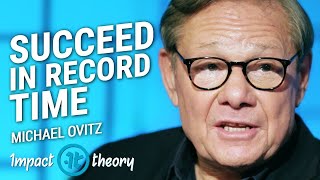
Michael Ovitz co-founded CAA and represented Spielberg and Meryl Streep. He built the agency to 1,400 clients by adopting a feared public persona, enforcing strict rules like never lie and return calls by end of day, and playing a win-at-all-costs game that eventually fractured his relationship with Disney's Michael Eisner.
Chapters
Michael Ovitz is at the table. This morning, he rose from working in a mailroom to become a super agent representing some of Hollywood's biggest stars. Ovitz co founded Creative Artists Agency, a dominating force in the talent agent business. He helped shape the careers of, listen to this roster. Steven Spielberg, Meryl Streep, Bill Murray, and David Letterman. He is also the agent behind classic movies like Jurassic Park, Ghostbusters, Schindler's List, and Rain Man. His new memoir is called who Is Michael Ovitz? And that's CAA Red. Michael, we should mention that although he's no longer part of caa, I have to tell you that I am a CA girl. Very, very proud to be represented by the firm. And so we begin. Michael Ovitz.
There's always full disclosure.
Yes, I know. I like that. Transparency.
Yes, yes, yes. I mean, I was very fascinated by your book because you were really at one point considered powerful, the most feared and the most hated. Now, I know nobody likes to be called the most hated, but were you okay with being called the most powerful and the most feared? And what role did you play in any of those characterizations of yourself?
Well, you said it perfectly, Gail. It was a role. A role. It was a role. I played a role. I made a decision that the buck had to stop with me. We had 1400 clients. There were a lot of executives in the company, and somebody had to make the trains run on time. So the decision was made to go out and to create someone who dealt with authority and was interested in getting things done. That does not always make for a popular camper.
No. I was very surprised, too, Michael, at how candid you were. You actually named names. You took numbers. You also talked about the mistakes you've made. Do say this. You always wanted to make clients think they're your friends. But remember, they are not your friends. They are clients. And in the end, the clients were loyal and the friends betrayed you. And you named the friends who betrayed you. But people could say you also did your fair share of betraying, too.
I think that's fair. I think that in the course of doing what I did, it's impossible to please everybody all the time when you.
But it's more, Michael, than pleasing everybody. You did some things on both sides, though, that people could say were ruthless, that were ambitious, and were just outright wrong.
Unequivocally, we went out to win. And when you go out to win, you make certain sacrifices. And it's not always pleasant when you go out to win. But winning at all Costs was something that was critical to me.
I thought one of the interesting things too, that was the passion behind what you were doing. Winning at all costs. But also your four commandments, which any good leader has a set of values that gets communicated all the time throughout the company. Number one, never lie. Right. Number two, return every call by the.
End of the day.
Number three, follow up, don't leave people guessing. And every phone, desk, phone at CA bore the message. Communicate, talk about that.
Well, we were in a business of communication. And if one of the things that was prevalent in the agency business before we got into it was this concept of not telling the truth. Knowledge is power. And a lot of people thought they could have power by telling things that weren't true.
Flattery.
Flattery. Getting into conversations with people and saying things that you knew weren't true.
You, Barbra Streisand called you and started complaining about not getting equal pay, but that they weren't treating women fairly. And what did you say to her?
Well, I actually thought she was right, which was interesting. But I probably had run out of patients by that time.
But didn't you also say she's no longer. That the young boys are no longer talking about it?
Well, I had a 15 year old son at the time and she wasn't on the list of who they were talking about. That didn't, that did not detract from her talent. She was just moving to a different demographic.
But no woman wants to hear I'm no longer hot.
My mother moved to that other demographic and they fired her. When you were being your most ruthless, was that you doing it or the role? And how did you know who was which?
Well, you get confused because you start to play that role and you become that person. And we, I was in a position where we were in a service business and our assets walked out the door every night. And those assets were the agents that worked in the company and the clients that we all represented. In order to be able to keep the peace and keep the trains running on time, it was very important to create an invincible chain with no weak link in it. And that no weak link turned out to be the weak link.
What kind of toll does that take?
It took a big toll on me. It's why I wrote this book. Took a big 10 years to write this book.
I see why it took 10 years. You talk about the Disney deal with Michael Eisner, who was your very good friend. I mean, it was so shocking when Eisner and Ovitz were no longer talking because you said it was the biggest mistake of your life. You feel that Michael Eisner really betrayed you at that particular time. He brought you in under one circumstance, and then it ended up something else.
Well, I lived with Michael in his hospital room after he had had a heart attack, and I was there every day, every night for seven straight days. His wife and my wife and I were very friendly, loved him like a brother, loved his family. I was shocked when I walked into his house to meet the two other senior executives that were supposed to be reporting to me, and they said they wouldn't report to me, and he didn't back me up.
We're going to have to leave that on a cliffhanger.
That's right. I'm going to have to tell Michael Ovitz that we got to go. Sorry, Michael.
We got to go.
We got to go.
We're just getting started.
We really are. No, thanks. Who is Michael Ovitz? Goes on sale tomorrow. You're watching CBS THIS morning. We'll be right back.