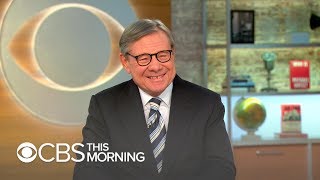
Michael Ovitz on His Legacy in Hollywood, CAA, & The Book That Tells It All | #AskGaryVee 293
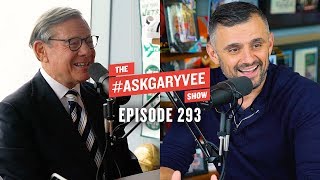
Michael Ovitz founded CAA in 1974 and pioneered talent packaging, putting together deals like Ghostbusters. He packaged roughly 300 films and as many TV shows, then spent time as a Disney executive, which he calls his biggest mistake. Ovitz discusses his new book and how the entertainment industry has transformed.
Chapters
On this episode, the Legend. I don't say that lightly. The legend, Michael Ovitz is in the building. Hey, everybody, this is Gary Vay ner Chuk. And this is episode 293 of the AskGaryVee Show. And this is gonna be one that I will watch probably for the rest of my life, every two, four, five, seven years, because I'm gonna think of it very fondly. I don't throw this around very easily, but an absolute legend has walked in. The title, this book cover. I'm sure you're seeing it. For people listening on the podcast, Google it. Who is Michael Ovitz? Is something that we're gonna answer here. Please Facebook, I know you're watching right now. Please put in your phone numbers. This is a rare opportunity. Michael is such an icon and mogul of culture, which is what I appreciate, and I'll go into that in a minute. But the at this point of his career and all the things he's focused on, the ability to actually ask him a question is far and few between. So I'm excited that our format is going to allow two or three of you to ask him a question. And as you listen, if you know who he is, I'm sure you've got seven or eight questions lined up. But for some that don't, as we start putting down the blocks in this episode, I think you're going to get really excited. Michael, thank you so much for being here.
Thanks for having me.
For the people that are watching right now that don't know who you are, what is the kind of two to three minute Cliff Notes of who you are professionally, personally, wherever you want to take it.
I'm someone who started out in the mailroom at a large agency and went off with some partners to start our own company and started what I think to this day, 40 plus years later, is the definitive artists agency in the world, and that is Creative Artists Agency.
So for everybody who's not from the Hollywood world or the business world, and you're playing in your own silo, CIA is a global leader today. Michael and his partners left William Morris, which is also a major player now within a merger. Wme in Hollywood land, this is royalty, you know, in every industry. I came more from the liquor business first and then Silicon Valley culture, which you've put a big flag in. And we'll get into that later. But if you're aware of the LA business scene, there are no bigger businesses that have been built. And in the talent representation agency world, CA is at the Top. And Michael is really. I have so many friends who are agents in LA and New York and other parts of the world. And when I first, because of my wine show on YouTube, started having interest in that world, the amount of times I heard in the wine world, not as much though Michael has a nice collection of wine. But as soon as I even sniffed into anything that looked like representation of talent in the world, the name Michael Lovitz got thrown around so many times. I was super intrigued. And so many people that I admire, my contemporaries really unbelievably look up to you. You really, and I don't know how you'll answer to this, but like, you absolutely changed the paradigm of what a talent agent is and was and to this day looked upon. I mean, I'm not sure if it's really been replicated. Is that something that you think is great? Is that something that you think is fabricated by the market? Is that over? You know, obviously somebody who's an agent always wants to find that balance between the talent being at the forefront. But you became very well known and a mogul and did incorporate incredible things. How do you reconcile being in a place in your life right now where you can write a book called who is Michael Ovitz? And have it on the COVID and just have so many people know who you are and the impact you've had to such a big part? I mean, I think Hollywood. Michael, real quick and I'll stop talking soon. I think Hollywood is the great machine of America. I think America's brand in the world is actually driven by the machine that Hollywood was. In a lot of ways, Silicon Valley and social media is now playing a little bit of that role. But it's kind of unbelievable that you were top dog of the machine that probably allows America to be top dog in the world. Do you ever take a step back and say, holy crap.
You know, there's no time to take a step back and think about that. When I decided to write the book, it was more about trying to have some record of all the stories and all the different things that we did. But to get right to the heart of your question about what we did, when we started in the agency business, agents basically would field offers for clients. They would look, they would pick up the phone, they'd pick up the phone and someone would call and say, is Gary available for such and such a day to do such and such a project? And it was pretty much a business that moved to. To a pretty slow clock. And we made a decision while we were at William Morris and watched this company, which was terrific, a great company, but suffering from a disease that all companies do, which is lack of transition to younger people with younger and fresher ideas. And the more senior people were running the company, and it was basically stalling out. And we came up with this idea that it was really important for the talent to be in the driver's seat. How do you do that? How do you get the talent from being in second position to being in first position? And it was the financiers, the buyers, the studios, the networks, the publishing houses, the record companies, all of whom were in the driver's seat. And we decided what we could do is we would start to encourage our clients to meet with each other, meet with other creative people, and pretty much keep all of their ideas to themselves and their group until we could take them out completely as a package. And by doing that over a period of years and within a very short period of time.
What period of time? Just for.
So we started in late 70. December of 74, officially January of 75.
Okay.
And it took us probably.
Is it true Some like, I've done enough homework. And there's been other books and Google articles and documentaries. You guys were planning to start a little bit later, but then word within William Morris was heard, and this way you guys had to move quicker.
Yeah, well, what happened was I went to the City national bank, which was a local bank in Beverly hills, for a $100,000 loan for us to get started. And I didn't think that they would call the treasurer of William Morris in New York. And. And he called the CFO in la, and he called the president. They called us and said, you guys can leave. Which was moved our plan along a little faster than we expected.
So December, January 74, 75.
And then by when, say by early 80s, we were in the position where we were selling packaged material with all of our clients.
And for everybody who, you know, I have a lot of people who aren't on, probably don't know all the Hollywood, you know, terminology. Package would be like a big star with a big director. Like, what are the pieces of a package in the way that you guys created it?
To us, a package was anything that was built around what we called a motor. So you needed one client who was a motor. And let's just take an example.
Please use an example. You have great stories. So give me a real package.
Well, a real package would have been. A real package would have been. Let's just take a simple one. Ghostbusters.
Okay.
So Dan Aykroyd is not just a brilliant performer, he's a writer. And he came up with this idea about three Saturday Night Live type guys running around New York City chasing ghosts.
Okay.
And the one line, just what you just did, you have to laugh. The one line gave the project to simultaneously to Bill Murray and to Ivan Reitman. Ivan, who was great producer, director. Ivan had done Stripes with Bill Murray and Meatballs. He produced Animal House, which was one of the great comedies of all time. And Bill, nobody funnier than Bill Murray. I mean, that sense of humor is beyond. Of all time. I mean, beyond extraordinary. So Bill and Danny and Ivan met and they decided on Harold Ramis May Rest in Peace. It was from Chicago's second city as a co writer. And the third, Ghostbuster. And that put together a complete film right there. We had three stars, we had three writers, and we had a director.
And then you go to studio, then we went. You reversed the leverage to the package which made bids instead of going and giving the IP exactly right.
Normally the studio would come to us and say, we have this script called Ghostbusters and we want your style, we want this. Well, they'd say, we want this director, we want this writer. And they'd come one step at a time. We came with the whole thing completely put together for them. All they had to do is say yes or no.
That's right.
And we did not give them much time to say no.
How quickly did the rest of the market, so this packaging, which gave you guys competitive advantage of a new formula to go to market, did the other agencies quickly jump on board and start doing it themselves or did they kind of sit and push against it for a while and then later succumb to it and do it as well?
Well, fortunately for us, the competition was slow to react. And while they, in their inability to move quickly.
Audacity.
We started to sign.
By the way, it's what's happening to Vaynermedia right now. In the moments of their audacity, we. While they scrutinize it, we land grab it.
All I know is in the two weeks since I've been up here, it looks like you have double the staff.
And so in their slowness, in their.
Slowness, we started to sign other clients. And once we hit critical mass of a majority of it was over, because you can't package without the elements. And we had three quarters of the elements. So there was no competition. And it was the same problem for the studios. They had absolutely the ability to make contracts, but we had the creative people. So what we were trying to do was keep the creative people working together and hold their ideas until we could put them together completely.
Facebook, if you're watching live now, I know a lot of you listening to the podcast or watching on film, but if you're watching now, please put in your phone number. It's an amazing opportunity to get a question into one of the legends of culture, in my opinion. Obviously, because as we keep going through this, what Michael was able to do and disrupt, not only in Hollywood, I'm doing a little of the talking. Bled in by doing some incredible work for Coca Cola and other things and started to disrupt Madison Avenue. And now in these days, and we've spent less time talking about this. So I don't know as much, but is spending enormous amount of times in SF and with the contemporaries in Silicon Valley. So if you're. In my opinion, because I have context to both the audience and Michael's career and what he's up to. If you were a creator and you want to ask a question in a macro, and often if you're listening or watching, you know how much I talk about history tells you the future. I think there's no better time to call now. So put in your phone numbers, give Andy kind of your questions. Andy's looking right now. So what happens next, Michael? So late, you know, mid-70s, you start this company with two other. More than that.
Right. There were five of us.
Later across the way, it became kind of more core. Like Core three. Right. After five. Right. For different reasons.
One of the guys retired. One of the guys kind of took a little bit of a backseat, but stayed with us. Yeah, but it was really Ron Meyer and Bill Haber and myself.
And you guys had a core run for quite a while.
We had a good run. We had a good run.
It's really incredible, isn't it? Well, what was the biggest challenge of running a three headed monster? You know, that's tough. I always say two cooks in the kitchen is already difficult.
Well, I was really lucky. I had really good partners and we all split things up in a really interesting way.
Yep.
So Ron was fantastic with the people inside the company and also was great with handling actors and actresses. And Bill, no one better at putting television shows together. I mean, the guy had this extraordinary ability to read material and ideas and just instantaneously figure out if he could sell them as TV shows. And that left me an extraordinarily wide open field to run. So no one really stopped me from doing anything. And we Had a different idea every week of what to do. A different idea. And these guys supported it. As a matter of fact, when we came up with the idea of working for Coca Cola and handling all their advertising, worldwide ad budget of over $600 million. And their prior agency was McCann Erickson, they had 365 account executives. We came up with this idea that we could do this and do it better and we could do it for less money and we could do it with six people. And Bill Haber came in as one of those six people. And we produced over 35 commercials a year for 10 years, including the polar bears, which still run to this day.
That's right.
And we did it with something that is known well today, but in those days didn't exist. It's called outsourcing. And go figure. What can I tell you? We were outsourcing animation. We didn't have to own all the animators. We're outsourcing all of the production. But our clients basically directed these spots. And we were doing 35 spots for the cost of seven.
That's right.
That were being done by the large agency. And it was incredibly well coordinated. And Bill spent an enormous amount of time on it.
Michael, let's jump to the book for a second. When is the book out?
Tomorrow.
Amazing.
It's out here today. Gary. Right here.
I'm very excited. I'm about to sell this. I'm about to flip this real quick on the Internet for a margin because people have to wait.
You sell those with your jet ticket.
Exactly. Michael, what's the one story in here that is either a clarification. I mean, you have such. I mean, guys, I'm telling you, when you Google, whether it's Steven Seagal, whether, like it's incredible, the breadth. You know what's amazing about what Michael has done? A lot of us have careers, but we're known within our industry. What's amazing about being a pioneer and at the tippy top, and I'm talking number one of Hollywood is like Ghostbusters. Everyone's like, oh, like my favorite stories of the old days is like which actor almost was who. Right. I think Ron managed Sylvester Stallone. Is that correct?
That's correct.
So I remember in somewhere I heard that Sylvester Stallone was almost Beverly Hills Cop. Do you know about this? Is this. I mean, I don't know what you. Listen, there's a lot of things that go on here that I don't know. Like, I'm asking you, like, there's truth to that, right?
There's so many movies.
But tell me that one. Cause that one to me, when you think Eddie as Beverly Hill Cops. And now you're telling me, wait, Sly was strategically. Or Ron or you or whoever was saying this would be good for your career because you're so Rambo'd and rockied out. This can show a different side of you.
Right.
Just the thought that it was this close to Sylvester Stallone being Beverly Hills Cop, I think is fascinating.
It is true. But you have to realize that these things. There are so many films that had different elements attached to them, and the elements changed.
I get it.
And they changed.
Give me another one, Michael. Cause this is what I could sip for. Like, give me one. Because to me, that's what everybody. People are like, literally in the comments now.
Holy shit.
Sly was almost like, what's another one? In the 11th hour that the actor changed out or somebody said no and they regretted it forever.
There's one in the book. Tell me Schindler's List and Cape Fear, where Spielberg and Scorsese traded films.
That's.
And the. Marty. Marty developed Schindler's List, and Stephen developed Cape Fear and Wild. Steven wanted to do Schindler's List for a whole series. Of course, mostly personal.
Yep.
Marty, who is one of the two of the greatest filmmakers in the history of the universe, both doing projects that they basically decided would be better if they switched projects.
That's nuts. Yeah. Like, just looking at all your faces and I'm sure it's good to me. So what story in here? Because there's so many stories. What did you either clarify and. Or what's a story in here that nobody's heard before?
Oh, I couldn't even answer that, Gary. There's. There are so many stories in this book that happen. The book basically was designed originally as 10 deals was the name of the book. And that was 10 years ago.
And you felt that you could. One more time. And that was 10 years ago.
10 years ago.
So you thought through a series of telling stories about 10 specific deals that you could help all the entrepreneurs and executives of, like, take the nuances from these 10 separate deals. Here's a complete package and a blueprint for you to navigate.
And what happened while I was doing it is that the publisher kept asking for more information. And as I was working up in the Valley, the brilliant young people that I work with, the men and women, they were asking questions about why did this work? Why did this not work? They were as interested in the mistakes as they were in the Success. So I started to write more and more and more. And the stories went beyond the deals. They went into actual stories of the creative process. You know, it's really fascinating and you of all people will appreciate this. How do you define creativity? I will never forget, and it's in the book. Sitting in Japan. I had flown in, I'd been on a 13 hour flight, went to the hotel, took a shower, got ready, went to dinner, which is the middle of the night in la, went to dinner in Japan with the head of Matsushita Electric and five of his associates. I was with four of my associates from ca and the course of me literally having the most extraordinary time staying awake, I get asked this question by this senior Matsusha official. What is creativity? Now that question is almost impossible to answer. But in a strange way I tried to answer it or show some peaks of it in the book. How does a film like Rain man or Tootsie or Ghostbusters or Jurassic park or Goodfellows, how do these movies get put together from a one line idea?
That's right.
So it's one line that's verbal and you look down the road and three years later you're watching it in a movie theater. I will never, till the day I disappear off the planet, ever lose sight of what an extraordinary privilege it has been to be involved in that process, learn the process, be involved with people that understand the process and, and it can actually transform an idea into something you can read, see or hear.
In hindsight, Michael, that's amazing. In hindsight. I really wanted to ask this question and you're going to play it off and be humble, but I really want you to answer it. So please do this for me now that you can look back on it. And I think about people I hate like Michael Jordan and Tom Brady. But this is more business. Like there's, you know, this is what, this is the life of a 42 year old new York fan. We just happen to luckily be in the prime eras of like these players that are our competitors. What in hindsight, what did it feel like to truly be at the top of the game of a game of that size in those, however you def. You know, I'm sure everybody could define it differently. Some may say it was an 11 year run, a three year run, a four day run, you know, I'm not gonna allow you to dodge it and say Gary, I never looked at it that way. It's inconceivable that you didn't understand at some point, holy cow. Or I'm so glad I did it. This is what I set out to do, that you had an era where you were disproportionately the most powerful guy in Hollywood. How does it. Do you feel like now that you look back on it, did you not realize it? Did it feel like it. Was it an over pressure? Like, what does it feel like to be in that. In the eye of the storm, in the white heat moment for a prolonged period of time of a game that's so visual.
So first of all, you do feel it and you understand it. The question is, do you believe it? And I never believed it.
You understood it.
I understood it. And I'll tell you why I understood it because it's really a good question. I understood it because we had the ability to get things done that no one else could do.
Right.
So when you have that kind of Midas touch and you're on what I call a positive role, which is that everything that you're touching is working.
Yes.
The amount of films and TV shows that we put together, we had a 15 year run that was unheard of. And I don't think I'll ever be duplicated. We packaged close to 300 movies, probably an equal number of television shows. And you've seen the list of the films. They're iconic now. Does that mean that you let all that go to your head? We tried to basically handle it as best we could, but there are others around you that make it affected, that are affected. And there are people that write about you or people that are jealous or people that have been burned in the wake.
That's right.
Of the power curve. There's, there's frankly a lot of negatives that get rolled into that great big positive. So for me, I used to try to say to the staff, we have this giant club. Don't ever, ever touch it. Don't even reach for it.
Let's get a call in.
Everybody knows that we have this power to be able to get things made. When we got Marty Scorsese's Last Temptation of Christ made.
Yes.
Which no one could touch or get done, that was the. And when we got Rain man made, it was a movie that languished. It was put into turnaround by Warner Brothers, which means they basically rejected it and said anyone that wants it could have it. We went through four directors and ended up getting it made and it won six Academy Awards. These kinds of things prove that you have the ability. The issue is there are people in the wake of it. Sure.
The collateral, that's collateral damage.
I must say, the collateral damage was bigger than I ever.
And the collateral is multifaceted because it's not just professional. It's personal.
No, it's everything.
Yeah. That's the thing. I think people don't realize. Right. It's not only your employees or your competitors. It is your spouses and children. And there's so much collateral with that.
Kind of white heat, it's a sea of collateral damage, and there's not much you can do about it. I don't know anyone that experience the kind of run that we did that didn't have the collateral damage. And one of the reasons I wrote the book is that I came to the realization that it wasn't so good that we had all this collateral damage. And I often ask myself, could we have done it differently?
And what do you come up with in your own head nowadays?
You know, this is going to be not a popular answer, but could have done it a little differently, but not a lot. Yeah.
Because I think. I apologize for jumping in. I'm gonna understand that because as a creative businessman, like, look, the reality is I am who I am. Like. Like. Like I'm aware that I'm gonna be in the similar realization I already am about things that are not.
What you don't realize is that you're. It's like throwing a stone into a still water, and you have a series of concentric circles. You don't realize that you're the stone.
Yeah.
So it's not the first concentric circle that's an issue, or the second or the third. It's. It's the one way out there that you don't know exists. And there are people that work for you, and they're all out here, they're speaking for you 100%. They don't all say the right thing.
I default the other way. I really. I mean it. I think the only. You know, the way I tried to thoughtfully think about it over time is I default into when they are saying the right thing. You just can't control certain things.
So we tried hard to control it.
Yes.
And that's why we were viewed as controlling, and we were viewed having Stepford as having Stepford agents.
Hello, Nikki, it's Gary Vaynerchuk. You're on the AskGaryVee show with Michael Ovitz.
Wow.
Hello.
Hello. What's your question? Thank you.
So I guess I should just ask my question.
Yeah, that's a good idea.
Basically, I just wanted to ask, with being with Creative Artist Agency, what's something that when you work with a lot of other people, kind of high profile, that you don't want them to do that. You're like, oh, this is a mistake they made. They could have had been my client. But.
Yeah, you mean something you did, you don't want them to do.
Like, what's the mistake that when you have artists who want to be your client, something that they do that prevents you from saying yes to them.
Oh, you mean the other way, where when you're at the top, like a CIA, what would a emerging actor, actress, director, athlete say that could actually turn off CAA from saying, you know what? You're not the right client for us? Is that the question?
Correct.
Interesting.
That's. You know, I've never.
Answer's always yes. We want as many clients as possible.
Normally the answer is yes. So I've never thought about that.
You know what's funny? I think about. It's funny that both of you and I reacted that way. A lot of people talk about be thoughtful about what, you know, my team, very senior people, lots of great people, we have to be thoughtful about who we bring in. They need to be the right kind of client. I'm like, yes, yes, yes. You know, it's funny that we both reacted that way. Have you ever had a meeting where you were court. Let's go this way because I'd love to hear it a play on that question. Did you ever court somebody? Cause you're like, oh, my God, that would be a crown jewel. Or that'd be a big get for the firm. And I know you went whale hunting. Was there ever. As you were whale hunting through the years, when you actually got closer to it, you said, oh, shit, she or he is such a headache, or they have this vulnerability, or somebody in our stable has emerged as a direct competitor and we don't have the bandwidth. Was there ever. To her point, was there ever any of that?
Yeah, we. We had one situation which was really difficult for us, which is we, as you've already mentioned, we handled Sylvester Stallone, and he was very competitive with Arnold Schwarzenegger. And Arnold was somebody that I really wanted to represent because he was the. He's. First of all, he's the most terrific guy. He's really smart, and he really understood the paradigm of the action movie better than anybody. If you look back at his body of work, it's pretty amazing. And I went after Arnold and wanted him, and it got back to Sly, and he wasn't particularly happy about it, and that's that. That was that.
Is there a reason you're asking that question? Are you going through a path or anything like you're trying to navigate?
Well, the reason why I asked is because I feel like as someone who's in Los Angeles and is, you know, along with thousands, hundreds of thousands of other people, what is it? People always ask, oh, what should I do to get into the door? And so I was like, is there something that I shouldn't do to. When I'm trying to get into the door? Because it seems like everybody has an answer for how to get into the door, but not like, hey, make sure you don't do this.
You know, I think short of anything illegal, I think anything short of illegal or immoral, you should do whatever you feel you have to do to move your career ahead. We didn't. We were lucky. We went after talented people. And at the end of the day, talent wins out always. And I think it's when you're young, you have to look for breaks. You really have to look for breaks. And they may be social, they may be business, they may be because you've got an idea. Let's not forget we spoke about Stallone. This guy wrote a script called Rocky on Spec on spec on his own dime and sold his damn dog. Everybody wanted to buy that script and move him out of it. And to his credit, he said, no me, no script.
That's hard when you're hungry.
It's really hard when you're hungry. A lot of guts to do that. Because he was offered a lot of money for that script.
The thing that's different today than some of those years past for Sly or when you were at CAA is people can now go direct to consumer. You can now produce content and use the distribution of an Instagram or YouTube or a podcast to absolutely give you leverage to be courted in a very interesting way. In the way that you created packaging. With leveraging to studios, the human can now create content to build leverage to have people bid for them.
Absolutely.
That's what happened to me, by the way. Real quick, my little quick CA story is I started a wine show on YouTube in 2006 and July of 2007 after showing up on Conan late night because the producers reached out to me because they were watching it on YouTube. The next morning I had an email from Endeavor before the merger, William Morris, others, everybody, ironically. But CAA then said on my show that I was going to Hollywood to find an agent. It was like this funny joke. Cause I thought it was crazy. And then I got an email from some people that worked at caa. They were having a fantasy football draft that day and they said, why don't you come and hang out with us? I said, yes. But they didn't say they were from caa. They said, what are you doing here? I said, I'm going to see these Hollywood agents. They said, are you going to see caa? I said, no. And they made it happen. And that's who I ended up signing with. That was all based on me producing a wine show in a store in Springfield, New Jersey. There was no moving to LA and waiting on tables and going to auditions. We have an incredible world we live in now where you can create the leverage for you on the back of the Internet.
Different, different time, Completely different. In our day, There were roughly 25 companies that controlled the complete gate. In other words, the barrier to entry was severe. You had seven studios, you had four networks, you had five publishing houses, you had five record companies and probably, you know, 10 companies in Europe that controlled everything that you would read, see and hear. Our company had relationships with all these companies. The end, if you were a client, you, you got in the door. If you weren't a client, you had trouble getting in the door. Today, this person that called in, if they could make something three minutes long using their iPhone or a small Sony camera, they could put it up. And if it went viral, good God, who knows.
Kiki, do you love me? The dance. He's in Drake. Shiggy's in Drake's video. Four months later, one video on Instagram it goes. I mean, it's just incredible time and.
It'S the only song my 3 year old grandson wants to hear.
I get it, I get it. Who's this? Brad? Let's see what Brad has to say, Michael, then we'll go back a little bit into the book.
Good afternoon, this is Brad.
Brad, this is Gary Vaynerchuk and you're on the AskGaryVee show with Michael Ovitz.
Oh my gosh. I'm having an out of body experience.
Well, that is a very good thing, my friend.
Thank you so much for tuning in.
No worries. What is your question, my friend?
Well, I know that Mr. Ovitz, you had a tough slog with Disney that ended poorly. Just wanted to get your comments on what lessons you took from that session.
Don't go to Disney now. That doesn't include the theme parks. I happen to like them. No, as I said in the book, it's the biggest career mistake I ever made. Completely misjudged it. And it's a, it's a really good example of how and why not to be your own counsel.
And you know, it's funny you brought that up once when we first met about not being your own counsel and the value of why we're sitting together for everybody at home. Just give them the one to two minute Cliff Notes. Obviously the three of us know what we're talking about, but I think it would be fascinating for everybody at home. What is the Disney chapter?
The Disney chapter is about starts with my set of meetings with Michael Eisner.
Yes.
It goes through the time when he had a heart attack and I stayed in the hospital with him for five to six days. And he asked me to come on board to originally be the co CEO. And then that went back down to being the president and coo and then it went to be the president. And then when I showed up at his house for our first meeting prior to starting, all the people who were supposed to report to me, he decided weren't going to report to me. So it was kind of over before it started.
Yeah. And did you know that at that point I had.
Well, I knew at the minute that point you knew. I knew it when I was sitting in his living room at his house when the, when he had the CFO and the chief legal officer there and they said they weren't going to report to me and he didn't do anything about it.
You said, okay, well, I mean, if.
He was the CEO that really wanted this to work and he wanted a partner, I mean, what we were trying to do was set up a partnership the way Bob Dailey and Terry Sumo had at Warner's or Don Keogh and Roberto Goiza, Coca Cola, or Tom Murphy and Dan Burke at ABC Cap Cities. These were powerful partnerships. These were big companies. Disney was about to buy abc. It was going to be a behemoth company more than one person could run. So the concept was to create a dynamic partnership.
Understood. Thanks for the call, brother.
Hey, thanks, Gary. I wanted to ask quick question. What do you know about Okanagan wines?
I know that the Pinot Noir from that region super intrigued me. Like right before I made the transition to Silicon Valley from the wine world, I thought that British Columbia and Vancouver and Okanagan region specifically were making wines that I thought were world class, but not nobody knew how to market them. In the same way that I look at Baja California, Mexico, I think the two best wines in the world that nobody knows anything about are Okanagan, Pinot Noirs. And Baja California Cabernets from Mexico. Because if you roll up on anybody and talk about wine, Mexico and Vancouver are not coming out of their mouth. So what I know about them is they're obnoxiously high quality with absolutely no brand awareness.
Fantastic.
Thank you. Got it.
And I thought Okanaga was in Japan.
I know you're a big, you know, you're, you know, you, you love Japan, huh?
I love Japan.
Like, that's like. Do you still, do you go there often at this point?
I haven't recently, but I used to go once a month.
Once a month?
Once a month, yeah.
Oh, man, that's hardcore. We're going to leave it off here. I want to use the final time for Michael. I have so many entrepreneurs, young entrepreneurs, all ages, but I know the base of who's listening to this show. Lot of 15 to 35 with plenty older. But like, what's at this point, as somebody who's spent the last decade plus in Silicon Valley culture and all those leaders, obviously la, just a man of the world with Japan and New York, you've played it, you've played it at the highest levels for the last three, four, five decades. What do you think is the universal things that people should be thinking about regardless of the Internet? Not Internet, regardless, regardless of the time, no networks, unlimited networks with the Internet. What are the traits or the characteristics when what you've had is a really amazing first eye view into both creative and business titans that have been able to be successful. It's not just. That's what's so beautiful about the business you had. And much of what I like about Vayner is that I get other views into the world. You've had that at the highest levels. And are there a theme or two of individuals that are able to succeed or is there anything that stands out?
It's a great question. Nothing has changed for me from the day I started in the entertainment business through today. When I work up in the valley between San Francisco and San Jose, it is all about the person.
100%.
It's all about the person. Nothing else matters to me. They could have an idea that you think is good. If the person's great, invest in the person. Maybe their second or third idea will be better than their first. But it's all about, give me a.
Historic story in pop culture. I think we'd all enjoy that. You so believed in the person where their first idea wasn't as strong and the second one was they made, I don't know, Transformers or, you Know, whatever.
Well, you can frankly look to almost any director and early work.
Yeah.
You know, but you look at their early work, it doesn't look anything like their mature work, where you look at some of the actors that started out. I mean, Sidney Pollock, who's a great director, who was very important to CA Started out as an actor, and frankly, he wasn't a great actor when he started out. He started out with Redford, and Redford turned out to be a better actor. And Sidney turned out to be an extraordinary director who then became a great actor. And if you remember his role in Tootsie, where he played the agent, which I thought was really kind of fun since I got to coach him, and everyone starts out slow, and the careers that, to me are the best are like trains coming out of a station. I am not big on instantaneous stardom. I don't think.
You think it's a vulnerability.
I think it's a huge vulnerability because there's nowhere to go but down.
Can you think of an example of somebody who was able to calibrate instant fame and then build on top of that over time? Does anything come to mind when I say that? I mean, I think of, like.
I don't want to comment on anybody's career per se, but I will say that in the music business, it's a big danger.
Yeah. One hit wonder. I was the first song. Yeah. It's tough.
You know, it's. It's really.
And it happens so fast.
It happens fast. They come and go, and it's really unfortunate. You know, we were in the business of building careers, Gary. We were in the business marathons. Well, we. We were in for the long run.
Yeah.
You know, when you meet Tom Cruise at 19, you want to make sure that it lasts, especially when you believe in the person. You don't want to have somebody flame out quickly. And by the way, with bringing up the point that you raised, when you look at today's world with instantaneous communication and 5G around the corner, oh, my God, it's just too easy to flame out.
You know what I love about you That I have so many people I interact with. The fact that I believe that 5G is one of the most outrageous technologies that are here. This is not like, wait to what have you. And the fact that so few people are bringing it up and the fact that you dropped that subtly in this interview is like, I personally enjoy that. I tend to do things like that, make references to things like, do you believe that anybody. Are you stunned by how few people Understand how big of a technology change 5G is gonna be over the next couple years.
What I'm stunned by is how few people in the world really have grasped the changes that technology are bringing right now, beyond what they think. They think they're big, but they're humongous. And when they start looking at what's happening coming down the road, 5G is the tip of the iceberg. Let's get into AI. Sure. It's a whole different game, 100%. I mean, the applications for this are beyond comprehension, particularly to businesses that are stratified businesses. These businesses, these big businesses, the Fortune 500 companies. This has got to be at the very top of their agenda of priorities.
Yeah, but it's not, because everything's Wall street dynamics and they're trying to maximize margin every 90 days.
One of the things I learned early on is don't think in quarters. And I learned that by traveling to asia in the 80s. Don't think in quarters. Start thinking long term, watching how different cultures react to different things. The other thing I learned in Asia, which was great, is have some respect for your elders. And now that I'm an elder, I like that respect.
You like that much more now than back then. Michael, what parting shots? What did we not cover in this session that you'd like to talk about? Or anything that's on your mind or things that you'd like people to think about?
No, I don't. I think you've covered pretty much everything. I mean, there's a zillion stories in the Naked City.
That's right.
And I've got a lot of stories in the book.
Let me ask one thing. This. The 4 to 7 to 11 people that you gave this book to already that have read it, these are clearly people that have been your friends for 30 years or family member. What's been the feedback you've gotten from this book that either feels best and. Or is most surprising that you didn't see. But three people have commented on that already.
Well, the person that I gave the book to through the whole writing of the book is the person I live with and Tamara Mellon. And she's the one who would say.
To me, you're full of shit.
This really stinks, you know, this is awful. This is the person who I trust. She's been pretty positive on the end result.
And how does it feel the day before the book? Are you excited? I mean, you were, you know. Am I correct? Like, you. You not expl. But you. You had some. Like, you were very interested in the publishing game back in the day. And like, you saw a lot of opportunity in that space that other people didn't see.
I. We represented usually half the New York Times bestseller list on a weekly basis.
So as somebody who sat on the.
Other side, this has been the most bizarre experience, Starting with when I started talking to you.
Yep.
I told you that when we talked. This is insane. I planned the publicity trips. I planned all of the different shows that people would do. I would supervise anything that the big authors would do. And I would sometimes sit in when they did some of the interviews. I find this to be absolutely hysterical that I'm on this side of the table. I can't believe it.
If you're watching, I highly recommend you pick this up on Amazon or your local bookstore. I have a very funny. Listen, a lot of you know my spiel. I'm un believably passionate about history telling you the future. And when you get to see players play it at the highest level and articulate, especially in storytelling form, I know that this audience, especially how it reacts to me, picks up on those nuances. I think this will be extremely beneficial to a lot of you. Whether you know Michael deeply or don't know him at all. I have a funny feeling a lot of you will appreciate it. So pick it up. Support this man. And Michael, I appreciate you being on.
Thank you so much, Gary.
Now, the question of the day.
Question of the day.
This is our thing. For every guest, you get to ask the question. What is your question to the Vayner Nation?
My question is pretty simple. We are in the middle right now of audience viewership change.
Yes.
And it is. We're dead center in the middle of it. We come from a world, at least I do, where we watch things day and date. And now we're in a world where everything is streamed on demand. And I want to know what the audience thinks of this new change and what it's done also to the unique film. The uniqueness of the film business with television and the on demand world has kind of taken the spark out of the film business.
Yeah, I think that's right. Michael, thank you so much, my friend. Good health. You keep asking questions, will keep answering them.
More from Michael


396 - Michael Ovitz: The Most Cut-Throat, Competitive Business in The World… How He Changed Holly...

Uncomfortable Truths About Being a Great CEO: With GaryVee, Michael Ovitz & Elliott Bisnow
The Best Advice Ever for Succeeding In Record Time | Michael Ovitz on Impact Theory