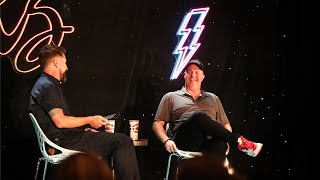
How Ron Johnson Built the Apple Store | Fireside Chat with Michael P. Owens
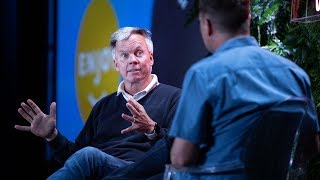
Ron Johnson, who designed the Apple Store and later led JCPenney, talks about building retail from Target to Apple to his mobile-retail startup Enjoy. He invented the Genius Bar, worked directly with Steve Jobs, and now argues physical stores win because they deliver experiences online cannot. His new company brings the full store experience to customers' homes.
Chapters
About 3 or 4 months ago, Ron Johnson posted a video on LinkedIn that really talked about where retail is today, physical retail. It's about 8 minutes long, and the second I saw that, I reached out and I'm like, you got to come speak at Retail Spaces, and he finally agreed. I'm not going to show that 8-minute video right now, but we're going to show an abridged version, a little 60-second clip to give you an idea what that video is all about.
It was just 5 years ago that many of the smartest people here in Silicon Valley were saying, "The end of the physical store." Macy's yesterday announcing a big drop in sales, much worse than expected. They're both going into the gutter. Well, the reality is crappy malls and bad stores can't compete anymore. There's too many great choices. And so all retail stores to compete have to do something you can't get online, and then creating this seamless physical digital experience. You know, we did that early on at Apple. We invented the idea of an experience through Genius Bars. Well, I'm here with my team at Enjoy trying to create the next forefront of commerce. And what we've discovered is since customers obviously love the convenience of online, yet still value the confidence and the experience they get in the store, what if you do both? That would be revolutionary.
Ladies and gentlemen, Ron Johnson.
What are the odds you pick a video where I'm wearing the same— I promise I don't wear this every day like my boss used to. And then the other funny story is I was talking to the audio engineers while we were waiting And they were telling me all these stories about Costco. I said, what's the worst thing that's ever happened? You know, today things just work. Then you start the video, there's no sound. Well done, guys.
Well, I didn't go through your whole bio when we introduced you. I want to spend, I guess, half of our time talking about the Ron Johnson story from where up to Enjoy today. So let's start from the beginning. How did Ron Johnson get into retail?
I just love stores. So I grew up in Edina, Minnesota, which was 1.1 miles from the original enclosed shopping mall, Southdale Center. And so I grew up going there. I just felt energy being in stores. I went to Stanford, Harvard Business School. And I thought of what to do after school. I took out 800 cases and sorted them by which ones did I enjoy. And all the ones I liked were either retail or consumer marketing. And then I thought, you know, I want to do something for a lifetime, not just for a job. And so my first job after Harvard Business School was unloading trucks for 6 months at a Mervyn store in the San Fernando Valley. But I spent my whole time kind of just figuring out what does it take to make retail work.
OK. And then you start— obviously Apple we talked about. But you spent 15 years—
I spent 15 years at Target.
15 years at Target.
Yeah, and that's where Steve— Steve reached out to have me do the stores because of some of the work I had led at Target, always with the team. But it was— it's interesting. I was going to do one aside real quick. Everyone is so caught up with the disruption from online shopping. And all it is is the latest disruptor to retail. When I grew up, the mall disrupted Main Street. How could a little Main Street compete with a shopping mall that's 1 million square feet with big department stores and specialty stores. Main Street's figured out, Main Street's fought back. It took a long time. Then the specialty store, like people from Columbus, limited the gap. The middle of the mall disrupted the department stores because edited and better content and better merchandise. And then you had big box stores that went after toys and consumer electronics. And remember all the category killers, golf. They disrupted segments of the department store. And then you finally get to Walmart disrupting the whole discount. And then you have online. This is only the latest disruptor. What's interesting about online shopping, though, it's the only one that created the tools to disrupt it back. And so we're in a world now where I believe the physical store has the upper hand. More digital people are racing to physical than physical to digital. Amazon, to me, is a pretty crappy website. They've got great one-click shopping. Their distribution now is really pretty slow compared to a lot of the on-demand kind of— even Target with its ship partnership. The reality is Target and Walmart are better positioned for the next decade than Amazon because of its physical presence. Does that make sense? Yeah. What was your question?
We're already going to the future. I was going back into the past.
So Target. So I'll give you an example. And this is what I would— a couple lessons I'll try to leave. You can't improve your way to innovation. Trying to get a little better will just let you keep up with what's going on. All innovation comes from your imagination. I really believe that. And I learned that— I was kind of the head merchant for home at Target. And Target was competing with Walmart, but Walmart had a much better cost structure. They were located in rural markets. We were urban. And we couldn't compete on price. And so we tried to do fashion and basics, and we were much more fashionable. Well, fashion is good, but you have a lot of markdowns. And by the time you look at it, you have the same margin as basics. It's just kind of different. And so I had this idea, what if you could deliver design, good design at Target? You could get the markup of fashion without any markdowns. Because the best items have been in the assortment for a decade. Just like even Locker Basics that get updated. So that was an imagination. And I thought, how do you take a gondola in a Target store, 24 feet, think of that as a plain canvas. And what if you were painting the merchandise onto that canvas? And we started from the design of the products to the packaging. We put out the first backers in retail. We had all the photography done that it would all work together. And it really caught hold. And that's when Target really became known affectionately as Tar-jay.
Tar-jay, yeah.
But it was one little idea that we executed. Does that make sense? And so you've got to imagine a better way to interrupt consumers who have a lot of choices. And Target now this month is celebrating 20 years of design partnerships. That was the first one, the Michael Graves. They've done hundreds, maybe 200.
So you were SVP of merchandising.
I was a VP of merchandising. I was just about— when I went to Apple, they wanted me to become the SVP, but I said, no, I'm going to go to Apple.
But how did you integrate with store design and—
Oh, I worked them all. It was great. We had a store design team. And in the basement of the Target headquarters, there was what was called the planogram room. And you could go down there and just play with merchandise. So every day I'd be down there. With the team on fixtures and trying to figure out how do we improve. Presentation is really critical. I mean, nothing's more important than location of the store. That's your first chance to succeed. And then the environment you put the merchandise in that the merchandise can flourish. You guys all have really important jobs. I mean that. And so I spend a lot of time every day interfacing with the store design team.
OK, so then Target to Apple. How did that come about?
Steve called and said, would you like to come out? I'd like to meet you. At that time, Apple was 3% market share, kind of a cult brand for creative pros. There wasn't a consumer business. That was all Microsoft. But I had just done this thing at Target on design, and it caught fire. But we had to do that with good products trying to be great. Apple had truly great computers, but nobody knew it. You know where Apple was sold? The biggest retailer that sold Apple at the time? Where? Wasn't even in Best Buy. Sears. Really? Sears had store in store. The rest were these little mom and pop resellers. And so I came in to build an Apple, a retail strategy for Apple. But I wanted to do it because I thought it'd be a challenge. At Target, they kind of had you, if you're a merchant, you're a merchant. If you're a store guy, you're a store guy or gal. There wasn't much growth. But I felt this would give me a chance to build something from scratch inside a large company. And I thought it'd be fun to work for Steve or with Steve on that. And the interesting one was the first meeting we had, I said, so tell me about the product line. I mean, he goes, well, it's right here. It's on the table. And it's an 8-by-4 conference room table. He said, we have 2 laptops and 2 desktops. And then I said, well, how big is the brand? He goes, oh, we're huge. And at the time, he was on the Gap board. I said, is your brand as big as the Gap? Oh, much bigger. And I said, well, then we've got to build a 6,000-square-foot store. Because the first impression people have from you is The size, the impact of your store, that's what gets them interested. And I said, if we build a little store, nobody will care. But in the mall, if we can walk in and have 50 feet of frontage, 100 feet of depth, we will have impact. And he agreed with that. But that's what enabled the Apple Store to truly invent things. Because that'd be a lot of space for 4 products. So we simply just said to start, it's very simple. If someone's going to switch to Mac, you've got to support them. So 50% of the space is for owners, 50% for discovery. Well, that was a very easy thing to do. Then we built out genius bars and theaters and things. They were really interesting. But we had the luxury of space, which I know for all of you is a challenge because— but you actually do have the luxury of space today because All stores are too big. All stores were designed pre-internet. Macy's was like the smorgasbord of everything. That's what a department store was. That was the early version of Amazon. Amazon is just a digital version of what Macy's or Walmart or Target were. And beyond that, it's a bunch of crappy stuff that no one buys. But the majority of it is basically Walmart online. And they're trying to get into Macy's online with their fashion thing. But it's really not that inventive. It's just online shopping.
So the first Apple Store opened in 2001, right?
In Glendale and— Tyson's Corner. Tyson's Corner, both.
And by the time you left, there were 400 stores around that. What was the biggest shift? What were the lessons learned from the first Apple Stores up until when you got there?
Oh, I mean, every day you learn lessons. I mean that. I mean, if you're attuned, you learn every day. There's kind of a funny story, though. So Steve was such— an imaginative thinker. And we opened our first— it's always fun in retail to open flagship stores. And our first one was the one in SoHo. Many of you have maybe been there in New York, the original post office. Station A is still on the thing. And we opened that store, and the whole story was interesting. So that morning, the day before, Apple used to have 4 Macworlds a year. You probably forgot that. One in the Bay Area, one in New York, one in Japan, and one in Paris. And we had just had Macworld New York at the Javits Center. And I said, Steve, we're going to open the store. We're going to open early. It's going to be so crowded at like 8 o'clock. So he gets up early, which he didn't like to do, came down from the Four Seasons. And every Apple Store, 1,000 people in line. Here we are in New York, 50 people. And Steve goes, why did I get up? Why do I do this? I should just quit. Nobody understands and nobody cares what Apple does. But I hadn't realized nobody gets up early in SoHo. I mean, that's what you do.
So that was the first store?
No, that was the first New York store, yeah.
Oh, I thought the one up at 15th.
But then by noon, so Steve left, not in his best mood. But at noon, SoHo got its rhythm in the store. We started having 1,000 people an hour come through the store. So I called Steve. I said, you're coming back. Get in the car right now. He came down at 1 o'clock, and we stood on the bridge of the second floor until 8:00 PM. 8 hours, 9, whatever that was, 7 hours? My math sounds good. Steve and I stood on the bridge, and he just absorbed his customer base. And it was really a wonderful moment. But the day after that, he takes me out to dinner afterward, and he said, Ron, I know we love these big stores. But imagine what's the smallest store we could imagine? We could maybe build hundreds of those at a time versus these big stores. And so we built a 600-square-foot store. We opened 11 of them right after that, and they were a disaster. But it's because we didn't think hard enough. And we'll talk later about what I've created, what we're creating now to enjoy, which is the mobile retail store. And it's a vehicle that's a lot smaller than a physical store, and it has no fixed location, and it's got a lot of assets, but we'll talk about that.
So what was it like working with Steve Jobs?
It was really interesting. He was super smart, super kind, super direct. Yeah. So he wore his opinions on his sleeves. You know, you knew where he stood every day. My first My wife didn't love this, but we moved to California. I had 2 young kids at the time, 2 and 4. And Steve said, so what time do you go to bed? And I said, well, I get the kids down by 8:00. He goes, good. I'll call at 8:00 then. I said, OK. He called every night for a year at 8:00. The phone would ring. Ron? Steve? Yeah? Quiet? How was your day? I felt like I had a girlfriend in 8th grade. But he said to me, he said, Ron, I want you to get to know me so well that you'll know how I think. Then the rest of your career at Apple, you don't have to come to me for one decision unless you don't think you know how I think about it. And so all those Apple surgeons— this guy is the most detailed manager in the world. In the last years, now he was not healthy, every 6 months, you know, I'd say, come on, can you come over and look at some of the designs we're building? And we have models of flagship stores, 15 around the world, and Steve loved doing it, but he was busy. But he trusted that much that he delegated all of that to us, right? So there's a lesson about really trying to, if you're leading people, helping them understand how you think. You gotta overcommunicate. Sometimes to really help people understand. Yeah.
So then you go from the world's most innovative company to JCPenney, right? Tell us about that.
Yeah, you know, I was, I was kind of bored at Apple. Now we had opened stores in 14 countries. They were all doing well. And I loved the merchandising. And my roots were kind of going through Mervyn's department stores and And this is— please don't repeat. None of this goes out, does it?
No, no, no.
But we'd go to a mall, and I'd say to the Apple team, let's just park by the Penny store. They'll always be parking, and we can get in and remember where our car was. Because the store was not doing well, but it had a great heritage. And so I got a call to join the board, and I kind of thought, well, maybe I could do that. And then when I interviewed with the board, they said, would you like to be be the CEO. And I thought, well, I like innovating. It was really fun at Target to do design. It was fun to imagine those Apple Stores. What if you could reimagine the department store? I said, that'd be fun. So I went to Penney's to do that. And it was really good. No, I'm kidding. No, it was bad. But it's funny. You learn lessons. We had the absolutely right strategy. We were going to open 100 shops in the store. It's basically what you see Selfridges doing, what everyone's doing now, what Story's about, what, you know, Penneys is doing, you know, like the Sephora in the store. We were going to compete on engagement and experience and not merchandise. To do that, you had to break one bad habit. You know, we all have bad habits, personally, companies. Blind your customer. You know, having something 60% off, there's no regular price. The merchandise was never at regular price, maybe 2 weeks in its whole lifetime. And then having coupons. Well, for a Penney's to win, it's not going to happen through private labels imitating those brands. It's going to get new people to want to sell there, right? But to get great brands to come into an environment like a Penney's, You need price integrity. So I said, we're going to take the drug out and all the promotion and find out where the real base of solid customer support is, and then we'll build back. We'll start adding shops and new brands. But to do that, it was really hard because our sales went down about 20%.
Well, I think some of the criticism you got was that you did things too fast.
Yeah, I did. And I made a choice. 'Cause the alternative to me was just falling into the system and not people just not having the courage to step up. But this was not a company disposed to change. I had been in the Valley where things move like this. So I misjudged the culture, went too fast. I'll tell you though, the 80% who stayed loved that every day was a good day to shop. The NPS was off the charts. The employees loved it in the store because They weren't changing signs all the time. They were just merchandising, keeping things pretty. But unfortunately, after about a year, I finally told the board, I said, look, if you're not having fun, I'm not either. And if you want to go back, you ought to go sooner than later because to retain that customer, you better move quick. And they decided to do that. The sad truth though, I left, the stock was $18. It's now under $1. It hasn't gotten pretty. Prettier. So you've got to be careful because sometimes the future has left you. And if you're going to get to the other side, you've got to have the courage to see it through. Nothing good is easy. You have to will it to success. You've got to work it really hard.
So imagine you stayed on. What could have changed?
Oh, I think— well, so in our first year, we, in 6 months to 9 months maybe, We put in our top 600 stores, which is about 80% of the volume, 10 store-within-stores like Levi's shop, Izod shop, Liz Claiborne shops, and they did really well. That got to about 25% of the foot store was redone. So in 4 years, the complete store would've been transformed and would look like, kind of like wide aisle, polished concrete floors with all these different shops. And who knows how they're done? We don't get to know. We didn't get to find out.
Well, on the topic of department stores, I have an image I want to show here up on the side, or maybe see it down here. But I saw this on Twitter the other day, and it's a pretty remarkable stat if it's accurate. I'm guessing it is. Everything on Twitter is real, right? But it's saying department store retail sales have posted growth on just 2 months in the past 8 years. So what is your vision for the future of department stores?
No, it's a completely— let's be honest. And for those of you who work at the stores, just know it's a completely out of touch, outdated format for the way modern people shop. In the old days, the department store is where we went to discover what was new, what we should buy. We had a monthly magazine like Vogue that we could read, or we'd go to a store. And people would just go to the mall and hang out because they wanted to find the trends, right? Today your trends are on your smartphone, your Instagram feed, all these things. So you shop much more transactionally. So in that world you don't have any patience for large stores, difficult to navigate, hard to find things, over-assorted stores. And you walk through one of these big department stores and with the traffic being down you feel like You're a fool for being there because no one else is there. You get beyond the cosmetics floor, they're empty most of the time. And so it's a really tough position they're in. The only solution is to pare back to much, much fewer stores in great locations. And that's what we've learned. We're way over-stored in the country. For any concept, unless it's like a Walmart or a Target, somewhere around 300 stores is probably the most you need to serve your customer combined with digital. And so you look at Macy's, 600, 700 stores, it's way too many, it's painful, but you gotta get smaller, I really believe.
So we're gonna move now to Enjoy. So in 2014 you founded Enjoy and you've proclaimed it as the next channel for retail. Can you explain what that is? Explain Enjoy.
To me it's pretty, it seems, it always seems obvious if it's an idea you have in your head. And all you have is your own ideas, right? Did you guys see the movie Stars Born? We all did, right? I love that line, there's just 12 notes. And he loved the way you see them, right? Every musician has 12 notes and they gotta put them together. And we all have our own view of where the world's going. You just gotta express it. So my belief is that we're in the very early days of online commerce. It has only been 25 years since the first person clicked and placed an order. When I was at Apple, one of our stores, the Regent Street store in London, right there in Mayfair, has had the same landlord for 1,000 years. Same family's owned the building 1,000 years. So physical retail has a head start, right? So by comparison, Online's really early. Well, in the physical world, like, you guys all know London probably pretty well. There's 3 streets that intersect. Oxford Street is Main Street, low price, struggling right now. Bond Street is luxury. And then Regent Street is a little of both. Well, the premier products have always had a premier last mile since the history of retail. But in online shopping, they all have the same last mile. It's a delivery to the doorstep. Why would a premier company— and the reason they don't have a lot of online sales is they don't want their customer to be treated that way. They want more. And so what we're doing is we're taking the premier brands in the world, going deep, and reinventing a new channel for them, which I call the mobile retail experience or store. And so you take a company like, you know, AT&T is a really got a great network. I don't know that we all love going to their stores, but we now, when you order from AT&T, you have two choices. You get your product, you pick it up in an AT&T store, or one of our full-time employees brings it to you through the door. And then we'll spend on average 30 minutes with you. If you just want to drop it off, we'll do that, some 45. We'll activate your phone. We'll set it up. We'll teach you how to use it. We'll connect it to your life. We'll review your bills. If you need extra products, we bring them with us. So screensavers, this, AirPods, whatever you want. But we're kind of bringing that retail experience through the door. Now we're now doing that for AT&T, British Telecom in the UK, a new partner in Canada launching this fall, and then we're doing it for a handful of others here. But we're not doing it with a lot of products. Because there are a lot of big companies that need a new channel. So like when I was at Apple, one retailer with a new channel, the Apple Stores now do $25 billion. The companies we work with are all $100 billion or more. So if we can be 10% to 20% of their sales, that's a pretty good-sized business. So we are inventing mobile retail through great brands. We're starting electronics. Unlike Amazon started in books, they were in their fourth year when they went to their next category. We're in our fourth year, but we currently serve 60% of the US with our partners, 60% of the UK, so we're getting there. I would imagine older generations, like especially for a tech product, really our happiest customers are the young ones. Young people who— who's— you just saw the early data on here on smartphone. Who's ordering everything online like groceries? Young people value convenience, right? So for them, we deliver convenience. They also like experience. They stare at Airbnb. They like to meet new people. They like to chat while you're doing this. Young people don't want to do the work. They don't want to hassle with setting up a product. Sure, they technically could. That's not what they do. So young people love having experience by another relatively young person. Older people like it for the help. Young moms love it because do you want to take your 2 kids and wait in line at the AT&T store or the Apple store? No. So in the unhurried comfort of your home, you get help. So because we're taking over the cart, we're basically taking over the last mile for our partners completely. All of the customers who buy that have no other choice but to have an experience with us.
So the economics on that, customer does not pay for it.
Free. Free to the customer. For the partner, it turns their cost of delivery into a profit center after they pay us. But it's true. It's true. So think of Apple right now. Read about Apple. Device sales, the smartphones, have slowed the upgrade cycle. So what are they trying to do? Growing services, right? So they're launching TV services, music services, news services. Services like that. Apple TV is a big deal. So when the product gets delivered to the door by the dumb delivery, how much deep engagement does Apple get for that? Zero. All they've got is a cost. Now when we bring the product through the door, as an example, let me introduce you to the world of Apple TV. Would you like to try this? You know, we're spending all that time. Every time we add value through or extra products that we might bring with us, that's enhancing the profitability of that specific transaction. So we then share in the profit of that, and that's how we make money, is what happens in the experience. No different than a store. You know, you think about it like a partner of ours. If they wanted to open their own retail stores, they'd have to invest money to build the stores, they'd give it inventory, And then they'd monetize traffic that comes through the door. And it's free to get traffic, right? They invest to integrate with Enjoy, you know, all the technology integration. They give us inventory that we manage locally, so it's on demand, so it's consigned. And then we share value when you go through the door, just like a retail store, except the location is a customer's home or office. So it's basically fundamental retail economics. But as a company, we have no assets. We have no inventory. We have no leases. Our vehicles we lease. The only expense we have are our full-time employees. Nice.
So consumer expectations have changed a lot, right? And you're serving that need. Looking to the future, 10, 20 years from now, where do you see things? Like, where do you see the retail landscape in 10, 20 years?
I can see today, I can get instant But there clearly will have many fewer stores. But I believe the physical place will have the upper hand, and I think we'll be just going there less frequently and spending more time. And I take that because I live— like, I grew up a mile from the first mall. I now live in the center where for 2 decades venture capitalists have been trying to disrupt retail. All of the new disruptors fundamentally are based here, all the technologies, where I live, right? Webvan tried to do groceries 20 years ago. Instacart, Postmates, all these people trying to do fast delivery are right there. You know, Google, Apple, on and on, right? Marc Andreessen is Offices, well, his house is across the street. But Mark said, software is going to eat the store. There will be no stores 80 years from now. We'll buy online. Well, he was dead wrong. The hardest parking spot in Northern California is Stanford Shopping Center on the weekend. So here in the land where they're trying to kill the mall, Stanford Shopping Center is the hardest parking spot. But they've reinvented, right? Crappy food at a food court, they've got healthy food from like True Kitchen and Life Kitchen and all those things. Instead of going there just to shop for clothes, you now go to exercise class at SoulCycle. And right next door is the Peloton store where you can go buy your bike to bring to the home or your treadmill. And you go on and on. And all the brands that are there are new incoming. Everlane's open just now. So Everlane, the digital brand. Has the physical presence at Stanford, and now I can finally get a physical experience. It's got all the luxury towns. There's huge Apple Stores. So when you do retail right, people flock. They will not tolerate tired retail. And we all feel that the moment we walk into a space, right? You can tell when something's tired and has no energy and something has energy, right? And so you've got to find a way to get your energy into the physical space. When you do that, I mean, we are social people. We're not just going to sit home all day and shop online and go, I get to unload the box and take the cardboard out and recycle it. And if I don't like it, I go return it. That's not a very good experience. Online shopping is not a good experience. It's a good sense of convenience. So for basic goods, it's great. But for others, it's not. And so I think we'll have fewer stores, but they'll be very exciting place to shop. They will be, as we heard earlier, the technology will get out of the way, as it always should. But it'll be the foundation of every experience we have. And I think the smartphone will be the big part of that. But I think the physical place will reemerge. And I actually think we're entering a golden area for the top 25% of retailers. You look at Target stores, I mean, they're kicking it. 4% traffic growth, 40% online growth. They got ahead of the curve, they invested, they've got great delivery, great pickup in store, renewed environment in store, better merchandise. They're performing better than any point in their 60-year life, right? And that golden age will grow as more retailers shut down. When the moderate department stores start shutting down and closing stores, Target has great moderate apparel. That's where those people can go shop. And so it's really a golden age for a great retailer. And it's the end of the age for the bottom retailers. Does that make sense? Because to compete today, you've got to invest in technology. You've got to invest in your physical environment. You've got to have great merchants. The cost of being great has gone up. But the returns are greater.
So we have a lot of people in this audience, well, the whole audience are heads of store development, real estate. Do you see that role specifically within store development and real estate changing? It has to change, do you believe, in terms of—
Oh, I think it's a huge— you guys have a huge opportunity, right? There's 5 ways retailers compete. Price, anytime you lower price, you lose. It's short-term, it's temporary, so you don't want to compete on price. Price. Product, that's really important. But it's hard, right? You're good season, bad season, it's hard to be right all the time, right? Place. Place is the physical manifestation of a brand. You think of Target, those white floors. Those white floors said we're clean, we're bright, they had great lighting. Think of Crate Barrel. Place really matters. That's something you control. And it doesn't take a lot of money to make a great place. We were redoing Penney's. It was shocking to me for $60 a square foot how much sparkle I could put into that shopping environment. So I think it's really a critical thing. Then you got promotion. But promotion doesn't work anymore. It's too expensive online. No one reads newspapers. So you don't have marketing. Production or operations. So the big things are merchandise in place, and then people, I guess, was the other one. You have people you don't control. But people are only there if you can get people into the store. So I think the physical place is really important. So each of you should wake up, how do I reimagine my place? How big is it? What can I do in there? What are the experiences I can help create? And don't get caught up too much in whiz- bang technology. People respond emotionally to places. You all walked in this resort. You responded right away. What did I think of it? They have this little table at the entry with these 5 flowers. If they didn't have it, it'd be 200 feet of just open hallway. But that one little fixture broke the entry, right? Every little detail adds up. And so I think you guys have huge jobs.
Since you say that, so do you walk into a space and you observe those things often when you go into retail and hotels and everything?
Mm-hmm.
Interesting. So we only have—
I think we all do. Yeah. So we just don't— I don't know. The one thing I have is a very good visual memory. So I've been going through stores so much, but I could walk entire Regent Street, and at the end, if you asked me what was in the window of any store, I would know. 'Cause I can see something and somehow I log it and I remember it. And I think that is something I just have an ability to do.
[Speaker:JB] So we're coming close on time here, and I want to have the ability to allow the audience to ask you some questions. I'm sure they will. But one thing I had here, and we hit on some of these, but when you look at a legacy retailer, and let's say one of the big convenience or pharmacy chains that have thousands of stores out there, out there, and with Amazon delivery. Like, if you were leading one of those companies, what would you look to do now?
Well, like Walgreens. I think pharmacy is really big. There's an older group. You've got to pick categories you can win. You can't try to be me too. You've got to pick categories and win. But they've got convenience. Like, I would figure out how to have no checkout. I mean, why would you ever have to check out in a store? We learned today you put bottles in New York and people don't steal. Imagine just be able to walk in and walk out, what Amazon's trying to do with Go. I really think people like to shop. They hate the transaction. I love going to the grocery store, but then I wonder how many people in line, how long will it take, how many bags will I have. I really think I would figure out— I would solve checkout. So there'd be no checkout, just walk in, walk out. I would edit the assortment. I would dominate just a couple of categories where I really found a way to compete. One of those would be pharmacy. I don't know what the others would be. Maybe serving the on-demand workforce with great food. You know, more people work on demand. 20 million people work on demand today. Than work in physical places. No one's figured out how do I serve them. Imagine creating a place that was the best place for every Uber driver, Lyft driver, Postmates runner to stop by and get their convenience merchandise. There's a lot of ways you could tackle that if you wanted to. So I don't think anyone hasn't— well, some have a pretty hard hand, but like those companies could be really do well, I would think.
Yeah, yeah. So I want to go to the audience here, which I can't really see. But do we have a mic? Jason's got a mic there. Do you have any questions? Lee's got a question for you there.
So given the kind of short lifetime you had at Penney's, we never really got to get a look at the vision that you had. So had you been given the time, like, Imagine, you know, 10 years, what would JCPenney— But we had built it out. So we took, we had built out a whole store that we had built out, I think 70,000 to 100,000 square feet in a little tired shopping center near Plano. And it was really, everybody came through it, thought it was really cool. So we went, we basically said we're overstore, right? The stores are too big. So what most people do is they shut a floor and I cut the store size in half or by a third. We said no, let's invest in common area. So we took aisles from 6 feet to I think it was 10 foot 6 inches. And it was amazing what having— and you do that over the whole store, it consumes about 20% to 30% of the space. All you gotta do is polish concrete. It was very inexpensive to do. To do that, but suddenly the environment was different. Then we said lighting. We got to get great lighting in. So we went to all halogen, different kinds of lighting that create a lot of texture through the light. And then we started to do really just shop and shop. How do you then carve out the space where nothing's bigger than 1,500 square feet? So in 100,000 square feet, I can have maybe 60 shops. Then you make a list. We need activewear. Let's have a Nike shop. Let's have a Sephora shop. We started merchandising. We were just merchandising like a mall owner would do. How do I create the right mix? But the feeling I had is you have to break down the mass of the department store into small boutiques in a new fresh environment. So we built this all out. It was really beautiful. But the way to get there, you can't do it all at once. Because it would be too big of a disruption to close all the stores and do it. You couldn't do one whole store because you have to get 60 shop owners to believe in you. So we said let's get the first 10 and we got those and we put those in and then we're gonna do the next 10 and then build momentum and in 4 years we would have built that out. But, you know, a lot of people have trouble stomaching difficult sales. Right? But I had been through that and, you know, believed that if you really want to change, you're going to lose in the short run to perhaps win. There's no guarantee. Who knows how we would have done? But we had hoped to create a modernized Penny that would have better merchandise than Target, but would have a similar demographic, if you will, a little more apparel and home-driven than convenience foods, but who knows. Any idea about food in there as well? Oh, we had food, yeah. Well, we had one version where we were going to partner with Whole Foods. And Whole Foods, you know, on the whole bottom, you come in through Whole Foods and then you have two floors. Because I knew Walter Robb's— that was our big store, was just to partner with the right partners. And we thought that would send a signal with the right environment as to the customer you want to attract, because they've We got a very good demographic. But we didn't want to do that ourselves. Way too complicated. But you don't have to do it yourself. Selfridges does over $1 billion a year. I think it might be $2 billion in that store on Oxford and Marble Arch. They don't do any of it themselves. They're a landlord, and they provide a common environment for all these people to do it. The customer doesn't know that. So you don't have to be held to a model that it's either all us or all them. You can sublease space. Big stores have attractive rents that go back years and years. So you've got a built-in cost advantage to sublease that space to someone, whatever the economics are. So that's what we were trying to do. Good question from Mr. Columbus.
Do we have any additional questions in the room here?
I'm sorry.
I can't see. So I know we're running a little bit over on time here. So I guess just the final thing I would just want to ask is about Enjoy. Tell us what's in store for— well, not in store.
I can't tell you who our new partners are. We got 2 new partners next year that will be really— I think next year, if I came back next year, I think you'd all say, oh, I've heard of you. I've seen it. It kind of reminds me of the Apple Stores. Nobody knew the Apple Store. Doors till the iPod came out in 2004. And then there was a product for everybody, and people wanted digital music. Every great company has a moment where you get a chance to kind of get noticed and get attention. And I think we've got those coming up next spring. I'm sure you do. So keep your fingers crossed. Yeah.
Mine are. Well, listen, again, it's a real treat to have you here with us finally. And thanks for sharing your story. And best of luck with Enjoy.
Thanks. Thank you.
More from Michael
Aging in Place vs. Senior Living | Ryan Frederick (Here) and Michael Owens (SLIF) in conversation