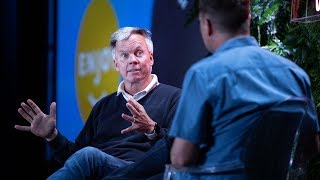
How Torchy's Tacos Became ''Damn Good'' | Founder Mike Rypka In-conversation
Torchy's Tacos founder Mike Rypka built the brand from a single food truck in Austin to over 100 locations by maxing credit cards and hand-delivering chips. He discusses the "damn good" mission, scaling challenges through people-first culture, pandemic adaptations, and Project Blue Sky, an initiative to simplify menus and add automation while keeping food scratch-made.
Chapters
So you and I only just spoke a couple days, and for people that are not familiar, I actually moved to Austin from Brooklyn a couple years ago, and that's what— that was my first introduction to Torchy's Tacos, and I've been hooked ever since. But what really stuck out to me is as Every Torchy's is pretty unique. And we're going to show these images up on the background here. Obviously, we're talking a lot about restaurant design. You guys have some really cool funky designs. We're going to get into that. But your story is awesome because you started from here in Austin with one food truck and now over 100 locations in 14 states. Really quick, just tell us, what were the lessons learned over this past 17—
What lesson wasn't learned? A lot has been learned, obviously. I think I really had a passion for food. I'm a chef by trade. My first job, I was a fry cook at Popeye's Fried Chicken. I was 13. I lied on my application so I could get a job. And just have always just loved food and really, really especially street food, street food culture. You think about the cities you go to and you ask someone on the corner, hey, where should I go eat and typically they're like, oh, there's a great pizza joint around the corner. And I kind of wanted that vibe. And people ask me sometimes, hey, did you have regrets or this and that? And I used to sometimes think, well, it'd have been nice if I had some more money because back then, yeah, I mean, even now if you start a new concept, they're not actually doling money out at the banks to help you open a restaurant. And, um, but I think in the same sense, like, it made me really hungry to go out and get business. And, you know, I maxed out my credit cards, I took a loan on my house, I pretty much put everything on black, um, and said, okay, this has got to work. Yeah. And, um, you know, so that, you know, I learned a lot from that. Um, you know, one of our core values in the company is tenacity. So obviously I started the company with a ton of tenacity and just, you know, I was relentless. You know, I had an old red Vespa scooter and I'd load it, load the back of it up with chips and salsa and I'd hand out chips and salsa to every dentist's office, tire shop, didn't matter who you were. I was shoving food in your face just to get people to try the food so we could, you know, build a business.
So for you going from the first location, which was a truck to, you know, multiple brick and mortar locations, What do you say was the toughest period, right? Was it getting from 3 or 4 locations, getting to that 3 or 4 to say 10? Or what was the kind of the real learnings and the pain points along that growth trajectory?
Well, you know, it's funny. I think there's this misconception that like, oh, you've gotten to a certain level, you've somehow arrived. And I mean, I think all of us could admit here that like the last 3 years have probably been the toughest 3 years in the history of restaurants. So this last 3 years has been very tough.
Yeah.
Obviously that first 3 years The first year or two was very tough just in terms of just, you know, I didn't have any financial backing. So I was literally week to week, paycheck to paycheck, a lot of stress with that. I mean, there were literally, you know, payday was on Friday and there'd be Wednesdays I'd be looking at my checking account like, there's no way I'm gonna make payroll on Friday. And, you know, we'd get some catering order a write-up in the local newspaper and we'd get just enough so paychecks wouldn't bounce. And so those days were tough. And we've had different life cycles of where things would get tough. We'd have to adjust, learn. Anytime you expand, and we expand pretty quickly throughout our history. I mean, we've only been in business for, call it 17 years now, and got over 100 locations. That's a lot of expansion over that time period. So we've definitely had, you know, heartaches and hardships along the way, along with a lot of the success.
Yeah. So as I was mentioning earlier, you know, if you look at the locations, you guys have a pretty funky design. Can you tell us a little just about the name Torchy's and obviously the baby devil? What's the origin there?
So, you know, we like to say if you've been to one Torchy's, you've been to one Torchy's. And we kind of do that on purpose. The formats within the restaurant are the same in terms of the kitchen layout and the way the bar's laid out. But we definitely try to do things different in terms of the look and feel. Torchy's actually came from my original business partner. He actually had, back in the '90s, maybe had a little too much to drink. And he was at a late night taco place here in Austin. He had a vision, if you will, of kind of an Airstream with neon torches and flames coming out of the Y. And that name just sort of stuck in the back of his head. He just kind of forgot about it and put it away. And we were trying to come up with names. He literally woke up one morning. He was like, dude, I got the name. I got the name. And we talked about it and he said it and I was like, holy cow, that's it. And we were very purposeful even though we started in a taco truck about making sure that we had good branding. Branding and a good feel. Yeah, we wanted a good logo, and I came up with the, the baby devil. We, we talked about, like, you know, an actual torch. We talked about pitchforks. Same kind of epiphany. I, you know, woke up in the morning and kind of first thought of the day, I was kind of battling my head, like, what should it be? And it just came to me that, like, this kind of cute little baby devil would represent Torchy perfect. And I told them that. And we—
You didn't piss off any religious groups? Like, I'm not sending my kid into that devil-worshipping taco place?
I'm not going to lie. We've had some hate mail here and there. I think we have— actually, we have one drive-through location. Well, we have a couple now. But our first one, we actually got a Bible thrown at the lady at the register. People are pretty overzealous. Yeah, yeah.
So you hit on it before, and I like that. If you've been to One Torchy's, you've been to One Torchy's. And we produce a lot of content in retail spaces, restaurant spaces, hotel spaces. And there's a lot of brands that a lot of their locations look the same. And that's what I think is something that gives you guys, I think, a competitive advantage outside of, of course, the wonderful tacos. But also your colleague who's also here in the room, Pete Terry's, you both have some really unique restaurant designs that I think stand out. And I think that that's something that I think a lot of restaurant chains would like to do, but I guess it gets more expensive to do it. And do you find that in terms of always giving each location, I guess, some unique designs, do you factor that into kind of what you're doing? And has it become more expensive, or do you figure out ways to— keep the development costs down?
Yeah, I mean, I don't think anyone's cracked the code this last couple years. I mean, we're probably paying 30, 35% more than we were even 2 years ago to build out our restaurants. So that part's gotten challenging. We try to sort of incorporate, you know, some of our roots. You know, you think about, you know, we started kind of in a food truck on the street. So there's a lot of sort of elements of that in our— we use graffiti and things like that. But then we also have this kind of sort of modern, sort of elegant piece to our restaurants as well. And that sort of kind of pays ode to our foods, very chef-driven. I created all the recipes and everything's made from scratch. And so every day in every kitchen, we make it all from scratch. So we kind of, you know, pay towards that. It is challenging. And I think as we've evolved, we've maybe some of that creativity slimmed down a little bit as you start to really expand. But we still have quite a big palette in terms of what we can use. And we've kind of honed in on different elements. And then we just figure out ways we can place them different in the store so that it gives each restaurant its own unique feel.
Yeah, and that's something that, you know, and again, I only experienced Torchy's for the first time 2 years ago, so that's 15 years into your existence. But I can see that there's a strong brand identity. There's a strong vibe. You can even see it with your staff and your workforce. And which we didn't hit on, it's on your hat, is that your slogan is you guys have damn good tacos. That's actually what we titled this session, what it means to be damn good. So how did that come about, and what does damn good mean to Mike Ripka?
So that's actually our mission statement, to be damn good. Real simple, real succinct. Kind of applies to everything. That actually came from our customers in the early days of opening. My original logo, I kind of— my very badly designed skills designed it. And eventually, after about a month of being open, got an actual graphic designer to help us. But the damn good came from our customers. And, you know, they would literally come up and say, damn, these tacos are damn, these tacos are good. And so we decided to put it there. And mainly, it was sort of this guiding light of like, if you're going to say it's damn good, it better be damn good. So it was really kind of a way to raise our own standard in terms of making sure that we delivered on an extra very high level to our guests. And that was really the purpose behind it. And that's been— we have— such a great culture in our company, especially around the food. And, you know, people are super passionate. Like our prep cooks are super passionate about any time they make a recipe, taking tasting spoons to the manager. And, you know, when stuff is great, we celebrate it, make a really big deal. And, you know, recipe books out every station all day long, making sure that stuff's done correctly. So it's really allowed us to kind of really have a high level in terms of that. Yeah.
So you hit on before, you know, of course, the pandemic and, you know, I guess a lot we've been talking about here a lot today about all the innovation and disruption that has happened over, of course, over the last few years. Or anything you see changing in terms of the customers for you in terms of when it comes down to convenience? Are you doing any more designs now with pickup windows or Are you looking for more drive-through locations or?
We're not really a drive-through brand. We've done a few and we've actually, some of the ones we tried, we've actually flipped to more of a pickup window. We just, we don't have the ticket times to be able to do that because we make everything from order, make everything to order. And so, you know, we've definitely leaned into some of that. You know, we're not like, oh, every restaurant from now on is going to have a pickup window. I wouldn't say that. But, We've been doing, yeah, we got the shelves like everybody else. That's definitely helped. Yeah, we've kind of taken the approach where the shelves are more for our guests. And then, you know, we'll keep like the DoorDash and third-party guys behind the counter.
Okay.
And the main reason we do that is we've found we've had a lot more inaccuracies where they grab the wrong— grab the wrong— leave it out front. And so that helps. And it also helps us develop that relationship with those folks. And because they're, you know, they're an extension of your brand basically if they're going to deliver your food somewhere. So. Yeah. Yeah. I mean, we do, you know, we've also been testing these pass-through cubbies. So basically the shelves on steroids and they're right next to the expo station. So that way we can just pass them right through to the cubbies. And you've got see-through into the kitchen. It also gives our staff a chance to interact with the guests and vice versa. So if they need something else or if they have questions, someone's right there, they can help them. And it's not some shelf just kind of off in the corner.
Yeah, so I know from the locations that I go to, I mean, you guys do have a pretty good percentage of people dining in the restaurant, right?
Like, yeah, we definitely favor more to dine in for sure.
Okay, so on the topic of scaling, you know, I guess as you get to over 100 locations now in 14 states, how do you maintain that, you know, the same vibe as you go into different states? You know, you obviously started here in Austin, expanded in Texas, and now you're in Florida and a bunch of other states. Do you find that that's challenging, or for you as kind of, you know, the founder, like, do you have to make any compromises to as you launch new locations to kind of keep the same vibe of Torchy's?
You know, not too much. I think, you know, we're in a people business, right? So it's really about the people you hire. We haven't gotten to robots quite yet. We're moving there. But we're really in the people business. So we invest a ton of money in training. We invest a lot in the development of our folks. We try to do a lot of internal promotes so that, you know, a new store has, you know, at least one person on the management team that's been baked into our system. Can't always do that, but we try to wherever we can, which allows for a lot of growth and opportunity in the company in terms of development.
So you have the managing partners program, right?
Yep, yep, we do that. So each of our, um, you know, what most people call a GM, we call a managing partner. So they share in the profits of the business, um, and, uh, that works out really well. It's had a lot of buy-in from our folks, um, so that helps as well. And then, um, you know, really just, um, you know, honing in on that training, making sure that, you know, our folks got what they need to to do the right stuff for the right reasons.
So workforce, of course, is a big topic in the industry. Have you guys been still, like I guess your peers, struggling on the workforce front?
Knock on wood, we've done pretty good on that front. I mean, we've had a month or two here where we've struggled. Again, like I said, we focus real high on our culture, very people first, making sure that our folks are taken care of. We pay very competitively, although that bar keeps raising, as you guys all know. Every time you turn around, someone's offering a dollar more somewhere else. So we've had our challenges with that as well. Another thing we do is we do a tip share with all our employees, which really helps out a lot. So in a lot of restaurants, that ends up being another $4 or $5 an hour.
But from what I understand, you're an accessible CEO that like staff can actually reach out to you, right?
I got the open-door policy. Anybody anywhere can give me a call anytime.
Anyone?
Anyone. The dishwasher in Dallas can call me if he needs to.
Well, that's obviously a good thing. But in terms of, you know, efficiency and obviously in the workforce, are there any things that you're looking to do to potentially operate the restaurants with maybe some less bodies? Are you looking at any automation, robotics, or—
Yeah, we're actually in the middle of what we call Project Blue sky, blue skies ahead, everybody. And that is basically some menu optimization and then also looking at different menu or different kitchen layouts as well as some automated equipment and things like that that we can lean into. We're about to— I'll be in the kitchen probably the next 6 weeks myself working on all that. Making sure that we get that right and figure that out. It's not going to be easier on our guests because there's going to be some things that we have to take off the menu. Like I said, we're very scratch-made. I'm not willing to compromise on that. So in order to make it easier, we got to have less items and get more out of the ones we're actually using. So trying to figure out that right balance. We're about to do a bunch of customer intercepts to kind of get some feedback and make sure that at least our customers willing and open to where we're thinking. And hopefully, you know, we'll have kind of what that's going to be, at least for the future, going probably finish in the next 8 weeks. Then we'll have to put that in our schedule of development and get it in test.
So I find that interesting. You said that you're going to spend the next 6 weeks in the kitchen. So obviously that's where your passion lies, right, as a chef.
Yeah.
Do you find now, as, you know, as CEO of a large chain, that you— it's it's tough to kind of be in the kitchen and working on menu stuff as well as the business?
Yes and no. I mean, I've got a great team. I learned early on in my career, hire people that are better than you. And so I've really tried to do that. I couldn't stay there forever. You won't see me cooking on the line in our restaurants. But when it comes to R&D stuff, I'm definitely involved. You know, I'll— I'm not gonna be there 9 to 5 for the next 6 weeks, but I'll definitely be there and involved quite a bit. So cool.
So just to hit on the, on the development side of things, cost-wise, we actually had some roundtables today, a number of roundtables in here just on that topic, because that's the number one thing that a lot of the people in this room are interested in. How are you managing that? Anything interesting that you guys are doing to kind of get ahead of that? I know there's no silver bullet, but Maybe you have one for us.
I mean, I wish I did. Um, you know, I mean, we, we definitely, uh, took it in the pants last year from a margin perspective. I think we were a little late to the game on pricing, um, and, uh, which could argue could have helped us too. Our transactions performed better than the industry, but, um, you know, we, we've We do a lot of pre-buying, like we've got a year's worth of switchgear for our buildouts. We've pre-ordered HVAC systems with our, you know, companies that we work with. We do a lot of long-term buying in terms of, you know, food and meat and chicken and things like that. So we've done as much of that where we can to kind of at least make sure we know we've got product. But it hasn't been easy. I think one thing that's helped us a little bit is because we're so from scratch, we've got a little more flexibility so we can pivot to different partners if we need to, at least from a food side. We're not so locked into so many proprietary items, which helps us. But it's been a dogfight out there for all of us. I mean, it's been really hard.
Have you had to raise any prices in the menus or?
Yeah, yeah, we've, we've, we've taken last year, we took about 10% price. 10%.
So now how do you figure that out? Like where's, what's the bar, right? I know there's been some, not naming some other companies.
I mean, I don't know that it's been a real science necessarily. It's been, it's had more to do with just, you know, kind of, you know, we look at a lot of competitive analysis, kind of where people are at. You also got to factor in, you know, I mean, wage rates just went through the roof. This last couple of years and especially the last 18 months. And then, you know, food last year was just ridiculous. And so we just, you know, methodically kept taking it up. I think we took a price increase just about every quarter this last year.
Did you?
And, you know, I think this year we're probably going to try to stay flat if we can. I think You know, there's— I don't— maybe you guys are seeing this, you know, transactions are a little, a little stable, if not flat and not deflated. Yeah. You know, kind of depends on the market, I think. But I think trans for everyone's going to be a dogfight this year just because, you know, there's so much talk out there about the economy and everything else and, you know, a lot of job loss out there.
So what's your outlook for like the next couple of years? You think we're going to see costs come down a little bit or?
Yeah, I mean, we've seen, we've seen at least in our brand, we've seen food come down. I think labor is probably flat this next year. You know, I'd love to see, you know, build costs go back down. I don't, you know, usually once it—
I think everybody in this room would like to see that.
Once it raises up, it tends to not want to go back down again. But I do think, you know, that seems to be at least the availability of things seem to be getting more available. You know, I mean, we've had, you know, I talked to you about those switchgears. Like last year we had to punt 7 locations in our development plan. Just a lot of it was landlord driven. And then some of it was, you know, like the switchgears we had ordered a year before that. And still we're waiting on them to get in so we could open our doors and just different things like that. I think it's going to be bumpy this next year on all levels. I think we'll, we'll see a lot of this. And, you know, the hope is, at least from a lot of the finance guys and bankers and stuff I talk out there, that, you know, things will start to hopefully ramp up in '24. But this Next year's probably gonna be bumpy for all of us. Put your seatbelts on.
Yeah, and on the topic of expansion, so you guys are in 14 states. Where do you see, like in the next 5, 10 years, like what's, do you have an idea, kind of double, doubling the portfolio or?
So we're probably, you know, we're committed to about a 10 to 15% growth rate year over year. We'd like to stay in that range. And we may or may not be able to speed that up a little bit. I don't like getting too over our skis when it comes to development. I think a lot of people, they get excited, they get hungry. They sell maybe more than what they can deliver. I think a lot's got to change from today's environment to get some stability, especially to even depend on any more growth than that, just because You know, you watch in the, uh, you know, people report. I mean, so many people missed their targets this last year. It's just really hard to, hard to nail. Yeah. So I think too, like, you know, when you're talking to investors and stuff, you really need to talk more in ranges versus a certain number, um, just because there's too much, just too much, um, kind of uncertainty right now to really depend on.
Yeah, I was talking with somebody yesterday and I didn't realize it, Whataburger's, they're here. I don't know if they're in the, Whataburger in the room? How many locations do you guys have in Texas?
Texas?
Yeah.
700.
700. Goddamn.
That's crazy, just in the state of Texas.
That's a lot.
So why go to 14 states? You can open up 700 Torchy's. You don't have to travel as far.
Yeah, yeah. Well, we need, I think Whataburger and certain brands, you know, they can, you know, they got smaller rings to where they don't cannibalize on themselves.
Yeah.
We have pretty high AUVs. Our AUVs are, you know, 3.8, 3.9 per unit. So we, you know, you gotta space those out a little bit to keep those up there, you know, but we usually, Try to keep our spacing, you know, 5 miles is about as far as, as close as we like to get.
Well, there's a lot more taco places in Texas than there are burger places too. So there's more competition out there.
Yes, yes.
Especially in Austin.
Yeah, there's tons of taco places for sure.
Yeah, would it be smart to start a taco concept today in Austin?
I mean, I don't know. Depends on how good the food is, I guess.
So we have a couple of minutes left, and if we have a minute for— if anybody has any burning questions, we can, you know, answer them. But I got a couple of rapid-fire questions for you. So here we go. Really, flour or corn?
Corn.
Why?
I don't do a lot of gluten. There you go. What's your most—
what's the most profitable Torchy's location?
Let's see, right now it's Frisco.
Frisco, interesting. We're actually doing an event up there in a few weeks, and that's like a happening spot actually. Yeah, interesting. Best tacos in Austin besides Torchy's?
Veracruz.
Veracruz, all right, great breakfast tacos. If you were to start a new concept, what cuisine?
Something a little more simpler. We have 9 proteins on our menu today. I'm jealous of all you chicken guys, man.
Is it true you put crack cocaine in your queso?
Yeah, that's the little white stuff we put on top.
Favorite band?
Ooh, Metallica.
Metallica. All right, cool. There you go. Your biggest pet peeve about the restaurant industry today?
My biggest pet peeve. I think people are overcorrecting when it comes to COVID. I think people genuinely still want to dine in most of the time. I think third-party delivery, I don't know how— I think it'll have a place. Getting too cost prohibitive. No one's really figured out how to make the last mile delivery profitable. I think— I don't know. I just think people are making a lot of changes, maybe too much, leaning into too much of that over a crisis that happened over 2 years.
So we didn't hit on this, but ghost kitchens, do you guys do any of that? No.
Not a fan.
Not a fan.
Got it.
Are you a basketball fan?
So-so, yeah.
Who's going to win tonight, UConn or San Diego?
I'm going to go San Diego.
San Diego, OK. My partner Mike is on the way right now. He's a UConn guy to go watch the game.
Well, they've won a bunch. Let's give another guy a chance.
Do we have any questions from the audience out here? And I can't see— someone's got a question. Yeah, it's gonna get you a microphone. Yeah, get the microphone over there.
I'm not shy. It's good to see everybody.
Can you actually see them?
I can see them over the haze.
Yeah, good call on Metallica, by the way. How much pushback do you get in communities putting a little baby devil up on a signpost in certain places? Do you ever get pushback on that?
Not too much. We've gotten pushback on damn good once or twice. We used to put it very prominently so that you could see it shining out of the restaurant. We've actually dialed that back. That's one of the sort of heartbreakers as being the founder is some of the compromises you have to make. So we still have it in our restaurants. We just don't shine it to the outside. You can still see it if you're in the restaurant. Got it.
Well, you have that one location. I think it's up at Mueller. Mueller.
Mueller.
Yeah. And you've got the one that's actually like a big devil that's spinning around on the top.
Yes. Yes.
Yeah.
Yeah. Do we have any additional questions? There's one more over there. Building on the last presentation, what music do you play in your restaurants?
Metallica. Kill them all. Now actually, we play a lot of alt rock, probably is kind of the main genre we play. You know, just kind of level and easy. I did like your presentation, so. Yeah.
And I can't see, do we have any more questions, Jason? Hang on a minute, yep. One more. Oh, you got to be careful. This is media, so whatever you say is probably going to show up in print.
That's right.
I burned him before, don't worry. No, I was just going to say, you know, there was a time when the restaurant industry was full of founder-led brands. Not very frequent these days. I mean, how do you think that that actually helps you guys, the fact that you're involved day to day, you get to see and oversee all these things that we're talking about as somebody who was there really from the beginning with that vision.
I think it does make a difference. I think one thing is I've been and worked every position that every employee has worked in the business, literally. I did payroll. I washed dishes, I cooked, I cleaned, I bussed tables.
You created the logo.
I helped create the logo. I did menus. I helped design the website. I did all that stuff. And so I think there's some validity there. And then also, I think it's really helped me to embrace people that are really good at what they do in their job and letting them just flourish. You know, like, okay, you're a badass finance guy, like, go to town, right? Show me some stuff. I want to learn, you know. And when you do that and let people shine, um, it really, I think, lifts up the entire team.
Yeah, I agree. Well, that was a— I think we're out of time, but Oh, we have one more. Yeah, quick question. So as a founder, right, what compromise that you actually made to your team that you, you know, that's, that's kind of hurting and but you still compromised? So like if I made compromises that, that have hurt operation or design or anything?
I mean, we haven't We haven't compromised that much, to be honest with you. We've been, we made changes, but I wouldn't call them compromises. We've made changes in terms of, you know, when we started, we weren't doing these huge volumes, you know, and now we've got some stores that, you know, do $5, $5.5 million, which is a lot of business for us. Had to make some changes to adapt to that to make sure that we can handle the business. And I wouldn't call those compromises. They're just changes as the business has evolved.
Well, listen, Mike, I know your time— we kept you a little late here. But this has been a real treat to have you with us. And it's awesome, man. Thank you so much for joining us.
Great to have you. Thanks a lot, man. Appreciate it. Thank you.
More from Michael
Aging in Place vs. Senior Living | Ryan Frederick (Here) and Michael Owens (SLIF) in conversation