Building Cloudflare for the Next 50 Years | Co-founder Cloudflare Michelle Zatlyn
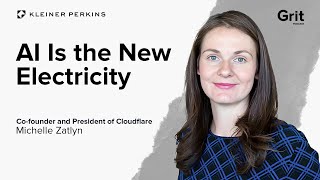
This is a podcast interview (Grit) with Michelle Zatlyn, co‑founder and president of Cloudflare, reflecting on Cloudflare's 15th birthday and long-term ambition to be a generational (50‑year) company. Michelle discusses leadership challenges—recruiting, always‑be‑closing, outliving hires who leave for CEO roles—how founders live with decisions longer than others, and the balance between hands‑on and delegating. She describes personal rituals (prioritizing sleep, saying no, spending time with customers, having weekly EA planning), travel and calendar rhythms, and keeping levity in culture. Michelle also explains how AI (LLMs) threatens the web's existing content monetization model by answering users without directing traffic to original sources; she outlines potential technical and business responses (access control, micro‑payments, X402 protocol) and Cloudflare’s role in providing visibility, bot management, and facilitating publisher control.
Chapters
You look at the invention of the Internet and then the invention of AI. If it feels like it's everywhere and happening all at once, it's because it's faster than things we've seen in the last 30 years and it makes sense. I think the best analogy for AI is like the invention of electricity. Could you imagine when they first brought out the light bulb to how you think about electricity today, where it's just everything, it's all tied back to the invention of electricity. So AI is going to be the same. It's just going to transcend every single thing. But it puts the business model at the web at risk. The way that all of these AI services work is they go crawl the web for all this content to feed their LLMs with to be able to go give you the answers. Before AI existed, what happened is if you wanted something, you go search on a browser, you see something, you click on it and you go to the website to learn about it or to buy something. When you go to your perplexity or the OpenAI or the ChatGPT or whatever you're using, do you go back and look at the original source? No, you just read it right there. The original source isn't getting compensated. And so if you're a content creator and you're no longer getting paid for the what you're creating, what's your incentive to keep creating it?
Welcome to grit. I'm juven partner at Kleiner Perkins, a show where we go beyond the highlight reel and explore the personal and professional challenges of building history making companies today. On grit, we have Michelle Zatlin for part two of grit. Part one was a few years ago and I would encourage everyone to listen. Michelle is the co founder and president of Cloudflare, one of the most iconic and important enterprise software companies of our generation. We talk about a whole bunch of stuff. Michelle and I have become friends since the last episode and we get to reflect on her ability to build an enduring franchise. We get to talk about some of the personal things that come with company building, the usual. Enjoy the episode. You know, you know what I was, what I was looking at last night?
What?
Cloudflare is an $80 billion company. Are you kidding?
What?
Like that is like. Come on, let's just be honest for a second. That is absurd.
Thank you. So proud. And we've done really well for our shareholders, which is maybe the best part, which includes our employees and investors who've believed in us and we've driven really great returns and so it's great. And you know, my very cheesy saying, but we're just getting started. I still believe that we're just getting started.
But are you still getting started?
Well, okay, let me just say. So it's interesting. We just turned 15 years old. About a month ago, we had our 15th birthday. And I love a birthday celebration. So we marked the occasion. It was super fun. And every year during our birthday week, we give a lot. A lot of gifts back to the Internet, Like, a lot of products and announcements back to the Internet. But this year, we really celebrated with our team, which was so special. But guess who turned 50 in April? Microsoft turned 50 in April. And, you know, of course they came first. And so we were able to watch how they celebrated and they brought their founders back and they had Steve Ballmer come and Satya. So they had all. Yeah, it was really cool how they celebrated their 50th birthday. And I had this moment, Jubin, where, you know, again, I. Last time I saw you, you kind of teased me for saying we're just getting started. And I do get teased about it, but I'm like, one day cloudflare will turn 50 years old. Like, I actually think. Believe that's true. And so that's why I say we're just getting started, because we're 15 years in, so it's still early. Like, we have way more headway. Head. Headway ahead of us than behind us. And so just kind of an interesting perspective, I guess. And so that's. That's why I say it.
Okay. You're inspired by those that came ahead of you. But, like, the. Okay, so Cloudflare is 15 years in.
Yes.
That also by default, considering, you know, like, you were there from day one.
Yes.
Means you're 15 years in.
Totally.
So I, like, pick apart those two things for a second.
Okay.
The business and then. Michelle.
Okay.
Like, doing anything for 15 years is hard. Does it feel hard still? Does it feel hard still?
Honest.
Honest question. Does it feel hard still?
It. This is so cheesy because it's. It's a little bit of that situation where until you're in the situation, you don't really know how you'll react. I think I would have had that point of view if I wasn't in the situation. But being in the situation, it does not feel hard. Like, I love it. I love my job. I love what I get to do. I feel like I'm the luckiest person in the world. And yes, there are days that are really hard, too. And it's a lot of work but it's like, I wouldn't trade it for anything and I do not think the grass is greener. And so I actually, like, appreciate this awesome adventure I'm having. And I love that, you know, in the grand Meta Meta, it's going so well and, and that there's still so many innings left ahead of us, and I think that that's pretty cool. So. But if you'd asked me before I started Cloudflare, am I going to be there? Like, will you be doing this in 15 years? I probably would have said no way or at anything. Because it's like, seems like there's so many things to do in life, but, like, what I'm doing right now is exactly where I want to be right now.
Yeah. Well, good for you. I'm excited for you. I'm happy for you.
Thank you.
But yeah, I was still thinking about you the other day. I saw, I saw, like, there's some, like, I don't know, heavy hitter sales leader that came from ServiceNow, that was at Cloudflare for a year, year and a half, and now just took the CEO job of MongoDB. MongoDB.
Yes.
And I'm like, I got a great job. Like, that's a big job. You should, you know. Okay, like, fair.
Yes.
But I'm like, he. And I looked, I looked to see how long he was at Cloudflare. I was like, maybe a year and a half.
A year.
A year, yes. And I was thinking about you because I'm like, man, she probably fought tooth and nail to get him there. And I'm just using this person as an example. Okay.
Yes.
Tooth and nail to get him there.
Yeah.
He was responsible for a huge part of her business.
Of course, she.
He probably rolled into somebody that rolled into you.
He reports Matthew, but. Yes, yeah. Or he does report to Matthew. Yes, yes, yes.
And so I'm like, man, the amount of calories that they probably spent trying to convince this guy, and this guy is a. Literally just a metaphor. Metaphor for all the other people that you probably have to go do this with. And then in a year now, you have to go do it again. Like, and I'm just thinking about you, like to the question of the energy thing, like those moments of like, oh my God, I have to go do that again.
Okay, well, okay, so interesting. A couple things. First, the two mantras of any high growth company, whether you're a founder or a leader at those companies, and I know a lot of your listeners are also leaders. It's always be recruiting, always Be closing. Those are the two mantras. You're constantly closing deals because revenue is queen. Like, it is the scoreboard. It matters a ton. And you're always recruiting because just when you think you're done, then it's. You got to get going again. So mantras. And 15 years in, those are still the mantras. And I joke about it. I was on a customer call yesterday with an earlier stage company, and. And someone on the call was like, oh, you just hired someone that I wanted to hire. And I said, actually, you know, I actually have former people I would totally recommend to you. I'll give you some names. And I was like, always be recruiting, always be closing. They joked like, it's like, it's just when you're in it, that's the two things that matter. And it just takes up so much time, plus your day job. So that's the first thing. The second thing is it's amazing that in this case, his name, cj, was recruited to go be CEO of this other publicly traded company. I mean, that's a huge. That the CE job at Cloudflare was not available. And so it's pretty amazing that these publicly traded companies are coming to our team of talent to go give them the CEO job. That. That is flattering. Flattering.
It's true. At least he's not, like, taking a, you know, like, Director of the west job at.
It's definitely not that. That's a very different thing. So this is. We're happy for him. I mean, we understand. And a lot of people, their dreams are to be CEO of a company. And this. Those jobs do not come up all the time, though, especially the good ones. And so, again, we're happy for him. But, yes, of course. Moment I found out I had a little bit of, oh, my gosh, we got to go do this again. I did. I did. I did. So I would be lying if I didn't. I. Absolutely. And so in that exact moment, was I like, this is the best job in the world? Absolutely not.
Wow. I can't believe you got the CEO job. I'm so excited for him. I can't wait to go do that all over again.
No. I'm a human. I have. But you go through the stages of grief, which. And then you're like, okay, and. And we're going to be okay. And this is the best. This is a killer job. And so it's interesting, these folks come in and they show you what best in class looks like, and you reset the bar. You're like, great. Let's go find, you know, the successor. And I think that's been actually maybe one of the hardest lessons of being a founder, and this is really more for the founders on the call, is you end up being at your companies longer than anyone you hire and you outlive a lot of them. And it's interesting, you just learn a lot about people, how they join companies, how they leave companies, and so you. And the journey ends up being a lot longer. And so sometimes I'm just so eternally grateful that I have a co founder, Matthew, where we've been kind of there together and. And, you know, we know we'll never leave each other high and dry. Like, I love that. I love having a partner in crime.
Yeah. Is the. Is the lesson that you feel like you've learned that you basically, I mean, you have quite literally outlasted everyone besides your co founder?
Yeah.
Is the lesson that people are fickle, like, is the lesson that you can't count on them? Like, is the lesson. Are you salty? Like, is the lesson that. Is the lesson that you live with decisions longer than anybody else does that.
That. That one. You live with decisions longer than anyone else. And so at first, I used to get a little off. I took it much more personally when somebody left before I felt like their time at the company was done. It felt like, how can you be leaving? We just are just getting started. We have all these things to do. What are you doing? But I've again, with. With age and then with why, with wisdom, I mean, or with experience. I've just kind of realized, actually this is just part just how it is. And I don't want to be salty about it. I don't. It's. It's. People aren't fickle. They have their lives to manage and whatnot. And again, you. So many folks are great about how they join and leave. So it's not that. It's just more about, we probably will be here longer than most of the folks that come. And so you do have to live with the decisions. And I think that that's just kind of an interesting thing. And you kind of say, okay, great, it's okay. You take it less personally when someone leaves. You're just like, wishing them all the best because the world is a connected place. Yeah.
And so, like, can I pull on that a little bit?
Sure.
Like, if you're, if you're living, if you have really internalized this idea that whatever decision somebody else makes, I'm stuck with.
Okay. That's. That's the okay, sure. All right, let's go with that.
If you believe that. Okay, then do you then become far more involved? Like, this is what Brian Chesky was talking about, like in his like, famous founder mode speech. Like, what I took most away from it.
Yes.
Is basically that he kept listening to other people.
Yes.
And both he thought their judgment was not as good as they claimed it to be because even though they had a pedigree and a resume, they were missing a lot of context about Airbnb. But secondly, and maybe more importantly, whatever decision they made, selfishly, he was going to be stuck with because inevitably they would leave the company or get fired. And he was there. And so that was the, like, catalyst to get him back into the decision tree of most decisions. Because he was like, if for nothing else, I'm going to have to deal with this when you won't.
So I don't know 100%. I understand why Brian would say that. Yeah, yeah, I understand it. It's, it's you just these, you create these companies. And again, we're so lucky to be part of the founders. Although honestly, we're nothing without the whole team. So I'm a big believer and it takes the whole team rolling in the same direction. And like, one person can make such an outsized impact at a company our size still, we're only 4,800 people. Like, someone comes in like they can huge impact at, at Cloudflare and help really drive things forward. And I'm like forever grateful to be able to work with a whole swath of incredible people. And we celebrate the team often. But there is these things where it's like, okay, I mean, I think the founders play a role where you can have long term perspective like that. That's actually maybe the best part about being a founder. You take the long term perspective and, and it's just kind of built in because it's just like you think you're building something generational. I think we're going to turn 51 year. I think Cloudflare is going to be a generational company. Some people might laugh at me if they heard me say that, because they don't know us. So they're like, who's this person? Other people are like, heck, yeah, I'm going to be there with you. You know, let's go, let's go make it happen. And so that long term perspective, I think you make different decisions than if you're just thinking about, hey, how do I get this decision done right now? Because I got a whole host of.
Other things to get to 15 years later. Have you gone through the helicopter mom to the, you know, let the kids do whatever they want and party at the house to back. Like, have you, have you done the, like the back and forth?
I think I've been an accordion. Of course. You go to the different seasons, different seasons of life. I'm an accordion.
I like the accordion. I like that.
And I think that actually that's healthy. And you know, you find different perspectives and sometimes you like, you do do these, you kind of ebb and flow. Different seasons, different chapters of a company, different seasons of life, different seasons of a company. Absolutely. And I think sometimes there's times to lean in and be into the details and other times to zoom out and say, actually you make the decision, I trust you. And, and, and, and you, you have to give your team that, that agency to be able to go make the decision because that's how they learn and that's how they get better. And you have to be okay with mistakes. And you know, again, there's lots of people ahead of me that have spoken about this where it's okay to make an honorable mistake or you know, a foot fault. I actually like that analogy. I think a foot fault, like, yeah, fine, that probably wasn't the right call, but it's a footfall. It's not that big of a deal. That's how you learn. And actually it's interesting for a lot of people who join companies, it's actually you want to put yourself in that situation. You want to be at a company where you get to make the decision and when you maybe get wrong and have a footfall that you, you get the feedback loop of, that wasn't the right call. Okay, what am I going to learn from this? So next time you have better, better judgment to make the right call. That's, it's not that I have perfect judgment or Matthew has perfect judgment, it's just we've been, we've had more cycles of footfalls.
What are your rituals these days? Like, like if you believe you're going to play a 50 year game.
Yes.
And you've been playing a 15 year game.
Yes.
You must have developed some things that you hold near and dear to you. I wonder, like, what are those things? Like, okay, kids, but like that's a pretty meta level. Like being specific about like what are the things in a day, in a week, in a month, in a year when you and your EA sit down and like plan the calendar. Like, what are the things.
Okay.
That you like, really hold near and dear.
Okay. This is why like podcasts like yours are so helpful. Because I learn, I listen to other folks and learn from them what they do. And then I'm like trying to apply so a couple things. First of all, like, the power of relationships. I, I, I think the power relationships are incredibly powerful. And so how you treat your team, your co founder, your partner in life, your kids, your investors, your board, all the above, like, I do think relationships matter. And, and so that is kind of like a North Star. I'll get to more specific rituals. The second thing is I cannot emphasize enough that spending time with your customers solves all problems because they tell you exactly what you need to be focused on. Because in this world I have so many balls in the air and I have a list of demands where there are more balls being thrown up. Like there's just way more things to do than time or people to do it. And that can be paralyzing and overwhelming. And what's interesting is if you go spend time with a customer, you kind of hear, exactly. Obviously they don't go through and tell you your priority list, but they tell you what they care about. And then you basically make better decisions of how to prioritize and it becomes crystal clear of like, honestly, these are the things to focus on, then you can make progress on those. And that feels good. It's like this self reinforcing cycle. So those are, that's kind of the meta level that I think are really healthy on a more ritual this year. It's interesting. So I'm, I am in the camp of sleep is the greatest drug of all. I think all the research shows that too. But like, I love a good night's sleep. For me, like the best thing is to get a good night's sleep. You make better decisions, you feel better.
That's good.
Like nine hours.
That's, that's a great night sleep.
Yes. Yeah.
And, and is it, do you go to bed late and wake up late or do you go to bed early and wake up early?
I mean, I go to bed early and get up late on those days because it's just, it's a lot of hours. But you feel you are better. Like, I just, like you get refueled.
Yeah.
So I'm a big believer in that.
I was at a thing where the United, United Airlines CEO was like, yeah, I get eight and a half hours of sleep. I'm not ashamed to say it. I get eight and a half hours of sleep every night.
Awesome.
And I'm like, that's legit.
Well, and Roger Federer, he gets 12 hours of sleep a night and he's pretty darn good at what he does. 12, 12 hours.
That's a lot.
I know, but he's, but, but he's like, I mean, for him, he's got the physical tax on his body, but his body has to recover. And I, I think there's a little bit of folks who think sleep is a weakness, and I actually think it's a superpower. So that's a ritual that I believe in. And then it's interesting. This year I had a New Year's resolution where at the end of the year, I don't think I, I wouldn't judge myself. I wouldn't grade myself very high. But it's listening to those ahead of me where I'm like, okay, this is the year where I'm going to say no to more things. Because it's just, I get invited to a lot of things I like. There's a lot of things that I just like. I'm trying to create more space in my life. And so I've said no to a lot more. I've created more space in my life. It's hard. It's hard.
Can you, can you give me practical examples of things that you used to say yes to that most people would say yes to that you now say no to?
Well, I'm trying. So again, I give myself.
What are the trade offs?
I mean. Yes. Yeah, well, that's, it's interesting. That is a trade off. So it's interesting when you say no. You definitely have more time in your calendar and more space. You're less scheduled. And so I think that there is, you're more available when things come up. Less canceling. So there's less of that dopamine hit of a fire drill. Like you just, you, you, you got to get rid of all of that. And there is more space and you have more time to read or listen or think. And I think that that's very. But the, the trade offs are you're less connected to what's going on day to day or you're less connected to the ecosystem. And so some of the things I've said no to more this year are dinners or events, things that I would really have gone to in the past because I think that there's a lot of value in learning from peers and outside of your company. But they take up a lot of time. I joke that I could eat out. I could, I could go to a work dinner every night of the year for sure.
You could go to a work dinner every night of the year just taking Cloudflare employees out.
Well, I could do that too. That's not even the ones that I organize exactly. Like, it's just, it's, it's the amount and which is amazing to be given.
These, invited to like this conference in Dubai and they put you up at the nicest hotel and you go speak at. You're the keynote conference. And maybe you used to justify that by saying I'll bring my husband and kids and you know, we should do this. And now you're like, I'm just not.
Going to do it again this year. It's, it's the, this is, was an experiment again.
How's it going?
Well, again, it's going okay, but it's at. Again, I give myself a mediocre grade and I'm a tough grader. But it's, it's hard because there, there's, there's value in sometimes showing up to the event in, in Dubai or Saudi Arabia. You, you honestly actually it's interesting that you pick the Middle east because I have gone there two times in the last year and gosh, if people haven't been there, you should go there. It is really, it is a thousand percent worth going to. It is so different than what it's like in the United States right now. And in the sense of it's a can do attitude. They have the money, you can be as skeptical as you want. But gosh, the optimism, the vision and like seeing is believing. It was very powerful to go to both a Saudi and the United Arab Emirates. Like I, I was really quite impressed both times. And so I definitely think. And so you expand in ways you never go quite, go back to the same shape. And so you have to go to some of these things. You absolutely have to go to these events. But back to what I've tried to this year is I've been much more choos. So I still go to some, but I say no to a lot more, which means I'm missing out on dinners. And so what you're really missing out on is the peer conversations with folks of okay, how are, how are these 10 other companies at this small group dinner that would have been great at Boulevard. How are they thinking about AI at their companies?
Totally.
You know, and, and is that going to make or break your career? No. But could you have got gotten a glimpse of information? Probably. Right. But I, but that's something an example where I'm like, hey, I'm just Gonna create space in my, in my, in my life this year. And so that's, that's an, that's a, that's. That' 20. That's a good example, the way that.
I think about it.
Okay, tell me.
I definitely don't get invited to nearly the amount of things that you do, but I have my fair share of, you know, people that I could hang out with. Okay.
Yes. Yeah.
And the, the, the, the flip side is like, let's just say you, you hit me up and you're like, hey, let's go grab a coffee or dinner.
Yes. Okay.
And it's like, like the world is not going to stop moving if I say yes or no.
No.
Okay. And I would like to see you. You. And I'm like, okay. I'm in a very privileged spot where Michelle, who is someone that I think highly of that is doing what I think are very interesting things, is wants to go spend 30 minutes. And I'm like, it's almost like I owe it, like, because I'm in this position to have these opportunities, I feel like I almost owe it to myself to take advantage of it because I'm interested in. Of course, you know, like, that's, that's the problem.
Yes. No. And, and like, Evan is interesting. I mean, it's, I mean that is amazing. Like, how many people would love to have that opportunity that you had to hang out with him yesterday? Totally.
Like, I got, but I got, but I got on a plane.
Yeah.
I was up at, you know, I was up at 4:30 to work out.
Yeah.
Then I got on a plane.
Right.
Then I go down there. Then I hang out with him for an hour and a half. Then I get on the plane back. Right. And so, you know, there's a, there is a. But I'm, but I'm like, like, of course I'm going to do that.
Yes.
Because, like, because I have the opportunity to do that and I want to make the most of that.
I don't know. No, I think that's amazing. And, and, and I also have that, wow, this is a great opportunity. This is amazing. And, and I, I never want to be one of those cynical people. I just don't want to become cynical and like rigid. And so, you know, one of the other rituals I would say that I've really centered on this year just tied to this a little bit, is like, like, have fun. You know, these, like, again, life doesn't have to be so serious. Like, let's have fun while we're doing these really big Things. And, and you can both drive great outcomes and have a good time doing it.
Yeah.
And I. And. And so anyhow, that book's humor. Seriously. That came out a couple years ago, actually. Oh. It's basically, it's. I. I think it's really interesting where basically the, the data shows that actually having levity and humor at work is actually a positive, not a negative. And there's a lot of research. It's. It came out of Stanford. It's. It's a good. It's that premise I liked. I read that book and I was like, huh. And so this year that's another ritual. Just like, you know what we do, the goalposts, keep moving the results, all these sorts of things. We're mission critical infrastructure for our customers. And let's also, like, be grateful and have fun while we're doing it because, like, that's the whole point of life, folks.
Totally. Okay, so sleep.
Sleep.
Got it.
Okay.
Nine hours?
Well, not every night, but I'm just saying it feels heavy. Maybe eight. Eight.
Do you have an eight sleep?
I don't, I don't need that because you don't need it. I just sleep well. I'm like, I. Yes. Is it.
Is the room cold? Do you have blackout shades?
I mean, we have both. Yes.
Okay. Yeah.
But. But my husband really wants it, so it's on. It's on the list to. To figure out.
Okay. We're a month from Christmas.
Yes. Actually. It's a good holiday gift.
It will. It will be the best gift. How long have you been married?
14 years.
It'll be the best gift in 14 years.
Okay. This is actually. Thank you. This is very helpful.
It'll be the. We are not investors. I have no claim. I have nothing to gain from this. It will be the best gift you've ever given.
Okay. I'm gonna. Thank you, Jamie. I hope Jamie's not listening to this, but I'm gonna get this. Okay.
It's amazing.
Okay.
And like, okay, not for nothing, I'm not gonna, like, make this a whole commercial. But. But if you sleep with different temperatures, like if you like it warm and he likes it cold, for example. It has different temperatures.
Yes.
You don't just have to, like, open the wind, you know, do you have.
The mattress cover or do you have the whole mattress?
I got the whole shebang, but you can do both.
Okay, but do you. And do the whole shebang. Does it come with, like a computer on the side that you can.
It comes with a computer on the side.
Okay. Yeah. They should put that in the marketing material.
It comes with like a, like literally, it looks like a computer.
Right. Okay. Where do you put that?
I put it to the side of the bed, like next to my. My nightstand. And it's also where you originally pour the water in, because the water feeds pipes into the mattress that then cools the bed. And by the way, it's dynamically cooling it. So in the middle of the night, as my temperature, my body temperature rises and falls, the bed is.
Is. And can you hear the fan in the computer? No, you can't hear the fan.
Nothing.
Okay.
Nothing.
All right, well, nothing. You did that. You should be a common advisor for that.
I know, I know.
You need some, you need some. You need some share, some shares or kind of a royalty for every sale that you just influence. This is my 2025 holiday.
Good. Well, it's expensive enough that if I got a royalty, I might be a rich man. Okay. Sleep. Got it.
Okay.
Saying no to more things. Fair year.
The year of. No, this year.
Okay. But like, let's imagine like, do you sit down with your EA every week? Yes, every week.
Every week.
What time? What day?
Fridays.
Fridays we look out.
And the next week, of course, and sometimes the next two weeks.
At the next two weeks. And these, these days, how are you blocking time? Where does that time typically get blocked? Do you have like a, A, an amount of travel that you are basically tolerant to? Like, how do you think about all that?
I mean, I guess yes, yes, and yes. Again, back to. There are a lot of aspects of my job, as you just pointed out. So it's okay. Internal. The, the. So part of my job is spending time internally on these projects, helping people make decisions, weighing in. You know, I think that that's a big part of it. And then one on ones with the folks that, you know, are my, are my. Are that. That I'm responsible for having regular one on one. So that's like very internal focused work. And there's, there's different rhythms of the business I like to call at different seasons. Like whether it's compensation cycle season. That's something that I'm involved in at Cloudflare. That's like a big lot of internal meetings with both our clients. Total rewards team, but also all the leaders of all the teams. I actually love that because you're like, that's like very operationally heavy, but so important. I actually think compensation is such an important topic for how companies do it. And, and we want to be really thoughtful about it. So these are examples of Things where it's like during that season we do that twice a year. That's like an intense rhythm of the business for example. But we don't do that all year long. So that's kind of part of my week is internal sorts of responsibilities, both in groups or with one on ones. The this next group is customers. I mean I'd spend a lot of time with our customers. I love it. Back to my point of it's a perfect North Star. One of my board members, Mark Hawkins, he was very, he joined Salesforce when they had about 3 billion in revenue and was there through about 30 billion in revenue or beyond. Which is an amazing, which is an amazing 3 to 30 billion. And we, we're about 2 billion. So we're at this stage and Mark really when he joined the board was just sharing with me he's like how much time he spent with the customer and how that was just like such a, like it just, just is so clarifying and I cannot imagine like Mark told me this and then I start to do it and now I'm just like a huge evangelist for it. It's everybody should just be engineers, product managers, like ev, like a marketer. Not you know, it doesn't to be every day but just go sit in because all of a sudden the copy you're writing and debating about you're like actually the customer doesn't like any of that. They describe it this way and you just get so much better. Like it's so much better. All this time we waste internally debating or trying to decide, it's just so much clearer. It's like let' it done like this is what they want. And so I love spending time with customers and so on a weekly basis it's a lot of it is either online like emails that we're going back and forth with or setting up calls. And then sometimes it's in person things. Dinners, lunches, coffees, in person meetings, executive briefings. Like these are, these are words that are now part of my life where eight years ago as a founder or an EBC I would have been probably rolled my eyes. Turns out they're valuable. So I'm all foreign ebc. And so, so there's some. And of course the a, you know, if it's a, if it's a Google Meet or zoom call, it's much lightweight versus which is, you know there's like no travel time versus something that's in person. So those sorts of things kind of take up the other part of the calendar and then there's some space back to the. What I'm saying. And then there's the travel, which, you know, there's a lot of. Part of my job is to represent Cloudflare at events. So go do speaking, things like this, you know, come speak to you. I mean, this is part of my job. Go represent us at that conference in Saudi Arabia. Leap, which is the conference. Like, go and do that travel. Then how do you make a whole kind of itinerary out of it? So when I'm traveling and so I pick and choose on what I'm doing from a travel perspective. And now we have a big executive team, so we actually have a tracker that shows. Okay, here are all the countries. Cloudflare has kind of 20 countries around the world that we do, like, a lot of business in. Okay. Which executive has been there recently and who needs to go next? And then, you know, I fit myself into that schedule.
That's cool.
Yeah, it's helpful.
Is there, like, how do I say this? I'm only asking you because I think you'll shoot me straight.
Okay.
Because we're friends.
Okay.
And maybe you'll lie to me. That's fine. Okay. Have you had to ward off the allure of the sexy things of the job? Let me give you examples.
Okay.
And you tell me yes or no. Oh, Michelle. Like, you know, you're a big public company executive now. Like, you need. Need, you know, a chief of staff, an assistant, five people at home working on your behalf. Like, all the things that, like this. The army of people. That's like one version of this.
Yes. Yeah.
Okay, another. Well, you can't drive yourself. Like, you know, you got. You need a driver. Like, you're a big company executive now. You're a co. Founder, whatever. Oh, Michelle. Like, you're the co. Founder of an $80 billion company. You need bodyguards. Like, you can't walk around San Francisco. And, And I think, like, these are really, like, these are. These are actual problems that it's crazy that you probably have, but you actually, like, these are things that you have to decide in a given day. And I talk to a lot of executives and they actually have to make these decisions. And I think on the one hand, the, the. My observation, okay. Is that a lot of times they sound cooler than they are.
Absolutely. Okay, I agree. And.
But on the other hand, it's like the same thing. You're like, well, do I. Do I need security? I don't know. Like, geez, I've never thought about that before. Like, I guess if I am Walking around San Francisco at 10:00pm Is it like the worst idea? Like, or like a driver? Like I'll be more productive. So you could talk yourself in any of these things, right? A company jet. Like, well, if we have executives going to 40 countries, like, maybe it makes sense to have a company jet.
Yeah.
So these are like real actually. Like, so anyway, I just.
Yes.
Reaction.
I don't think you're wrong. I think you're. I think those are decisions people have to make and, and it's, it, there's not a lot of places to look for inspiration for who's done it best.
Right.
And so actually it's interesting that you brought it up. I actually think like you could just do like a whole blog post or you know, comparison of kind of how different people do it and without even names and just kind of create like strawmans of here are the options here, how folks do it. Because I actually think there's, there's not a lot of benchmarking around this and it's complicated to navigate and most people are figuring it out for the first time. So I think you're exactly right on. You know, it's interesting what you're, when you're describing it and this is like a little bit, maybe like one level up. But I do think it's interesting. So I was just back. So Matthew and I met at Harvard Business School and I was back there last week and, and I tried to go back to the school. That school changed my life and it really made a huge imprin. Taught me. So I really give back to the school by going back. And so I get on the plane and I go and I talk to the students and every time I'm there, I'm just left so inspired. But I, I, it was, I reminded last week of something and I'll just repeat it here. So it's interesting. Two things happened, both HBs related. So first, if you go to Harvard Business School on the last day of class, like the whole year you're doing these cases, you're putting yourself in these situations and trying to decide what you would do in that situation. So it's like good leadership training, but on the last day of class, they flip the script. In the very last day of class, the professor kind of gives you a life lesson. Lesson. Okay. And so second year and again, I've always been like eager and love to learn. And this professor, his name was Paul Marshall, he took a class, I took his class Managing in a Turnaround. It was a very popular class, hard to get into he was a phenomenal professor. Phenomenal. And I remember on the last day of class, he said the following to all of us. He said, all of you are going to be so successful in your life that at some point you're no longer going to have to do the day to day things. You're not going to have to take public transportation because you're going to have the driver. You're not going to have to go get groceries because they'll get delivered to you or you'll have someone to go get that. And he said, I recommend, I recommend all of you, I encourage all you not to lose touch with reality as you become successful in life. Now I was a second year HBS student where I really did not feel like that was going to be me one day. I just didn't think that that was, I didn't even. That was not where I'd come from at all. But like, I still remember his words and like, don't lose touch with reality. Okay, now fast forward. This is gonna sound obscene, but one of the other things I get to go to is the World Economic Forum in Davos every year. It's super interesting group of people, all the world leaders, the politicians, the media, the journalists, the business leaders from around the world. It's super interesting. Say what you want to say, but it's like super interesting to be there. Big honor to be invited. And Harvard had a reception there. And the, the dean at the time, Dean Noria gave a little talk to the group. And this is before Cloudflare was public. We were still a pretty. And he remember him saying, he's like, you know, and Harvard Business School is all about grooming the next set of leaders. They're committed to helping create the next set of leaders in the world. And he said, look, most people really applaud leaders in bad times, but actually if you look at the research, most people do the right thing in a bad time. In a crisis, most people step up. You actually see a lot of people stepping up in crises more than you don't. Of course there's some examples, but you see it more. He's like, but what we don't talk enough about is when things are going really well, when that gets to your head as a leader. And I actually think there's something really to that. Like some of the things that, like losing touch with reality, creating this whole other universe for yourself, you kind of lose touch and it's like, and do you start to make, is that healthy or not? And so those things have really kind of spoken to me. And so I try to stay grounded in reality, Jovan, and keep doing a great job as a leader of Cloudflare.
That's a good answer. Answer. But, like, do you not want to indulge?
I don't spend that much time thinking about it because there's the higher value place of my time. But I, I, it's, it's again, I like to do a lot of great stuff. And I, I try not to have fomo. I mean, I guess fear of missing out. You try not. You kind of say, hey, what's important to you? What values are important to you? Yeah, and I kind of have my values. And then you could try things. You can try saying, okay, let me go try that. I don't like that. I'm gonna. Again, is that, is that an irreversible decision? Some of these things. Some of these things are not irreversible decisions. So you can go and you're like, actually, I didn't like that. And then you kind of, Then you're like, actually, I. I feel pretty confident that other people might be choosing that, but I'm going to stick with what I chose.
Yeah.
So I don't know.
Yeah, okay, fair enough.
But you should do the benchmarking. Yeah, you should go, but you got to make it anonymous because I think that that would, like, more like blinded.
Yeah, yeah, yeah. It would be a, you know, it would be a fun exercise. If I asked all of my guests, okay, who has a jet? A lot of them would say, me. And then of you, how big is it? And then I'll start benchmarking.
I think you should start asking a series of these questions, and you can kind of draw a store. A straw man.
That would be awesome.
Well, and it's so interesting. I actually have a lot to say about this, not just about first generation wealth creation. Because of technology, because of AI and because of crypto is happening so much earlier. I do not think people understand first generation wealth creation.
Are you first generation?
Thousand percent? It is. To move income brackets or socioeconomic brackets, like I have done, is very hard. And there are very few people around you to help you. And again, AI is only going to create more of this. And so I actually think there's a huge opportunity here. I hope someone solves it.
Does it give you trust issues? Meaning, like, if, if I was just thinking, like, okay, who could you go to if you're like, all right, I have billions of dollars and I don't know what to do with it, and I didn't expect to have it. Okay, what do I do with it? Okay, okay. Like, I don't know. You're going to go to like a wealth manager and they're going to like tell you, like, like out take a fee to tell you, like, how do you like? I like, like, it's kind of a weird problem.
I'm coming to you. Where is your blog post? I need. I. I don't know. First of all, I don't have that, but I don't know. Like, I really don't know. And so, and there's. It's, it is. It is. I, I actually think the op that what's changed is there's a lot more first generation wealth creators. A lot more. A lot of the other wealth was family passed down inherited and the parents or the grandparents set it all up so the owners now have inherited the structure that helps them manage all of it.
Right.
For first generation wealth creators, there is an opportunity for people out there to create services and businesses to help to help that industry flourish. And so there you go.
I'll tell you what, in San Francisco right now, there is probably every OpenAI and anthropic tender a new wave of first generation wealth creators.
Perfect example. There are others too. Nvidia.
Nvidia and Nvidia. That's right. Actually, there's plenty.
There's plenty. There's many. And people are just kind of navigating it a little bit blindly.
We can do better, you and I. Whenever you and I see each other, it's in the city. It's always in San Francisco. Grab coffee or whatever.
Yes.
And, and you're like kind of a, you're, you like, ride for the city.
I do. I'm like, let's go, sf.
You're in the city.
I live in the city. I work in the city.
You raise your kids here.
My kids are here.
How do you feel about, how do you feel about it right now?
Oh, we're on the rise.
It feels good, doesn't it?
So feels so. I'm so happy. I think Mayor Lori is doing a fantastic job, actually. It's just a reminder of how a leader make a big difference.
Yeah.
None of the conditions have changed, but he is doing a fantastic job. So I'm excited about that. In 8. I think he's doing a great job for the city. I'm here for our resurgence. I love it. It's getting better every single week. Obviously we have a long way to go, but I've heard, I heard mayor, I follow him on Instagram if You don't. You should. He does lots of little videos and goes and sees the small businesses and talks a lot. But just some of the data I've heard him say recently is like, crime is down by 30%. Crime is down by 40% in Union Square. Commerce is up 12% year over year. Like the. They get the data from Visa, they can see spending is up. So that's great. These. These things are great. We need. We have to go further. But San Francisco is such a special place. And the more that I travel the world, I love seeing the world, but I'm like, we're so lucky to live where we get to live. And. And San Francisco should be one of the best cities in the world. We. It was not the last decade because of the way the leadership ran the city, but I think we. I think that we're on the right track.
You know that. You know that feeling when you're flying into SFO and you, like, you see, like, Salesforce Tower and you see, like, the water.
Golden Gate Park.
Yes. And it's, like, usually, like, pretty decent weather, and you're like, San Francisco, SFO is like a really nice airport, and you're just, like, flying in. You're like, oh, yeah, yeah.
20 minutes from downtown. It's just so civilized. It's really. No, we have our problems, but it's just. It's a really. I do not think it gets the credit it deserves. Yeah, it's been. It's been very good to us, and so I'm proud to call it home. Um, I'm proud to call it home.
Can I get your take on something else unrelated to some of this stuff? Uh, was it today? Yesterday? I saw. I saw Amazon yelling at Perplexity for using. And you. You were going to be able to explain it better than I can. So first explain it for us and then tell me what you think about it. But basically, yelling at Perplexity for their agents, doing shopping on people's behalfs, basically within Amazon.
Yes.
And Cloudflare has a role in all of.
Uh.
So, like, let's put the Cloudflare role aside, because I do think it just makes you informed about the topic.
Yes.
So tell us about the topic. I think it's very timely right now. And then. And then what you think about it, for sure.
Well, it's interesting. Okay, so. AI, big deal. Like, huge deal. So fun changing everything. Okay. And. And that's not going away. It's. And if you just look like. If you look at, like, the invention of the Internet and Then the, the invention of AI or kind of the adoption, it's going five times faster than like mobile. Like it's just if it feels like it's everywhere and happening, all it's because it's faster than things we've seen in the last 30 years and it makes sense. So I think the best analogy for AI is like the invention of electricity. And could you imagine when they first brought out the light bulb to how you think about electricity today, where it's just everything, like even this podcasting system we're using and how you can now watch this stuff online. It's like it's all tied back to the invention of electricity. So AI is going to be the same. It's just going to transcend every single thing. Okay, so that's amazing and exciting. So what's interesting, and I think that there's. But it puts the business model at the web at risk. And what do I mean by that? So the way that all of these AI services work is they go crawl the web for all this content to feed their LLMs with to be able to go give you the answers. Now before AI existed, what happened is if you wanted something, you go search on, on a browser, you know, pick your browser of choice, Safari, Chrome, Mozilla, for those of you doing Mozilla and, and you, you, you, you see something, you click on it and you go to the website to learn about it or to buy something. And there was actually a whole business model behind the scenes actually like where it's like how got reimbursed for these sorts of things for the, for creating the content. The idea like there's a whole business model there. But if the AI crawlers go crawl the web and get all the content, when you go to your, your perplexity or the OpenAI or the chat, like whoever ChatGPT or whatever you're using, do you go back and look at the original source? No, you just read it right there. The original source isn't getting compensated. And so if you're a content creator and you're no longer getting paid for the, what you're creating, creating, what's your incentive to keep creating it? There isn't anything. And so the business model of the web is currently at risk with the rise of AI. And so AI is not going away. It's a good thing, but there's gotta be a new business model. And so part of the idea, and this is what we're working on, is saying, okay, how can we help? And part of it is, okay, if you are that content creator, that publisher, that media company. Should the AI crawler be able to call, come crawl all your articles and put them in their LLM, or should you have to pay them for that? The media companies say you need to pay me for if you're going to use my content in your LLMs. I think that that's a reasonable sort of, sort of business model. But then how do you do the exchange? And so there's a lot of technology behind the scenes that's happening where the groups are coming together, both the AI crawlers, the media companies, all the content creators, and then the technologists are coming to say, okay, can we create a new business model where, where as the I crawlers come to my come crawl the content, I can either say, no, you can't take my content. And they respect that. Like, if someone says, don't crawl my content, whoever's coming try to crawl it should respect that, or they can say, actually crawl my content. But then this is what, for this fee, I want you to pay this for it. Some sort of exchange of value that way. And so it's pretty cool. We'll go through all the details, but There's Coinbase and us helped launch a new protocol online called the X402 code, which basically says, yeah, you can, you can take this content if you pay me something for it. And then it's like, okay, can you use something like cryptocurrency to help be.
The value gate for the agent to then pay the toll?
Well, I don't like those words because gate and toll seem negative. It's more of a business model of saying, you're coming to take this content that I created, you can take it as long as you pay me something for it. And maybe some people are saying, I'm free, my content's free. Some people will choose that. Others might say, hey, it's 25 cents. And other people say, no, this values content's really valuable. That's how the web works today in many ways. There's an exchange of value. It's just, it's interesting in this new model, how do you go forward? And so I think there's a path forward there. There's a lot of. It's interesting, the crypto rise the last few years has allowed the Rails to be able to create the payments, the micro payments, because some of these payments are going to be small, like they're not going to be checks you're sending the small businesses or the content creators. But this idea of we, I do think we want original content. I think that's something the world wants and craves and needs. Those people should get paid. The AI crawler should be able to get it as long as they're agreeing to the business model.
And what's cloudflare's role in that?
Well, we, it's interesting. So we, we have about 20% of the web using our service today. So we have millions of publishers using our service and this is kind of where we help see it. And you can just, I've heard, spending time with customers back to my thing is, they've said, hey, look, I can see that on a daily basis the AI crawlers are coming to my site 2500 times to get my content every day. Now there's a lot of wastage right now because it's moved so quickly. But by the way, in cloud computing, someone's paying for every request that comes to your site, whether it's a human or an AI crawler. Like that company has to pay for that request back to their cloud provider. And so it's expensive. There's just a lot of expense happening from all of this kind of extra crawling. And they're like, by the way, they're coming and they're calling me 25 cents and I'm not. And I'm seeing my traffic down because they're not sending traffic back. So my costs are up on the like infrastructure side, but I'm not seeing the eyeballs because the eyeballs stay within the AI company's chapter bot. So they're frustrated. And so they kept saying, now our world is pre, kind of all of this was part of what our customers hire us to do is to do cyber security for them. We make the Internet faster for our customers, more secure and more reliable. And so our customers were saying, okay, we, they hire us to do cyber security. We help stop all sorts of ion attacks which by the way are at like all time highs. It's scary. We, we, we help protect employees who are getting fished also all time high scary. But this idea of like, okay, there's been this rise of bots the last eight years, like before AI, just tons of bots roaming the Internet, trying to take content, do malicious things. And so bot management is like a big term in cybersecurity land. But really what this is is actually I want to know who's coming to my site and I want to be able to have access control. I want to have control as the content owner. Should that bot be able to access my site or not? And so we just Help facilitate that. We help give the visibility. Here's everyone coming to your site. Is it a search engine? Is it a bot, is it human? The visibility? And then you have the control to decide, yes, allowed, yes, not allow. And then now the next part is actually, yes, allow, but pay me this and help. Help be the technology that can help facilitate it. I think it's pretty cool. And I don't know how it's all going to turn out, but I love that these hard problems that are going to be a big part of the next 10 years of the world web, I think is gonna be a huge part of the next web that we get a seat at the table to help figure out the solution.
Yeah. One of the things that this reminded me of, I can't remember if we talked about it the first time we sat down for this, was the thing that has been imbued in Cloudflare's DNA from the beginning that I really think highly of, is that you, you have made something relatively unsexy.
Sexy.
And what I mean by that is. And like, like, that's not. Like, that's a compliment, not an insult.
Yes. No, I, I took it as that. So that.
Okay, good. Like, Stripe did the same thing. Yeah, like, like there are certain companies that have been able to do this, and I think the core audience that you have made feel are really a part of, or you have really enticed to want to make a part of Cloudflare story is technical talent. And it started with your blogs from the very beginning, where you all were writing. Correct me if I'm wrong, but engineering blogs.
Yes.
No, about, like the. Basically that you were just talking about how hard the problems were that you were solving. Solving. And in the early days of Cloudflare, a bunch of great engineers that you probably didn't deserve to go work there just became fascinated by the problems that you were working on and you had somehow sexified these, these technical problems. I did just make that up.
I don't know if that's a word out, if it is a word, don't like it. But yeah, okay. Yes. Yeah.
You have made these, you have made these problems more appealing. And, and you know, even now when you talk about, about it, it still sounds like that. Like, it's still. And by the way, these are interesting problems, but the way that, like, you articulate it is, it's very much. It's been a part of the company's story for a very long time.
You know, it's so funny. I laugh when you said we've made infrastructure sexy because I remember we launched way back when. This is kind of makes me sound like a dinosaur, but we launched at the time at TechCrunch Disrupt. On stage, it was like a big deal. And you probably wouldn't do that today, but back then it was like the hot thing to do. Back to. It was the cool kids thing to do, and it was cool to be part of the cool. Now you would do YC for anybody who's charting company. Now you would do yc. That's the new cool. That's the new cool kids thing. But at the time, TechCrunch Disrupt, that was like a cool place to launch. And five years later, we went back to TechCrunch at Disrupt and they gave us like a muffler and they described us as like, muffler, muffle. Muffler repair for the Internet. And it was funny. I don't think that was meant as a compliment, but this point is like, we build infrastructure with. Some people might describe as boring, but it's incredibly important. And when it works, it's magical. Just like plumbing at home. But. And, but when it doesn't work, it's really painted off. They normally don't think about it, but it's interesting. I heard Diane. Diane von Fertensberg speak recently, and she said in front of this group of business leaders, she's like, she. She what? She said in front of this group of business leaders, mostly men, was generosity is sexy. And I was like, wow, I can't believe you just got up in front of a group of men and said, generosity is sexy. So I kind of like having this oh my gosh moment where you're like, infrastructure is sexy. You've made it sexy. And I'm like, oh, wow. I guess so. Yes. There we go. I never thought I would have said that on a podcast. There you go. Yeah, I. There you go. We've. We've. It's. You know, sometimes I talk to founders who start businesses that sound. Want to start something that sounds cool. Consumer, like, especially like, often consumer good something they understand it sounds cool. And I like, those are. There's so many great businesses like Snap and others that have done that. So it's not that they don't exist, but I'm also like, honestly, sometimes doing something that's boring can be like, Is actually a better business model. And so be smart. And, And. And what I always say is, like, look, people are like, like, did you always want to be in infrastructure? Of course not. No one dreams that they're going to be in this. But I was drawn to the problem and I was drawn to this idea of like, wow, if we can help make the Internet safer, we can help make it faster, we can make it more reliable. If we can help make businesses mod, like operate in this modern world, I would be proud to be a part of that. And that's how I decided to start it. Like, that's how I decided to say, okay, I'm not an expert in this area, but if we succeed, I will be proud to be a part of it. And actually that's where it's like, yeah, I'm proud to be a part of this. And we've turned something that maybe some people don't think about into being like, actually this is pretty darn cool. And it's something every single startup needs, every single developer needs. High school kids need it. Small businesses, big companies, governments around the world, every single company, any, any country around the world, those companies can use our service. It's pretty darn cool. The reach, it's something, it's a very large problem that's horizontal. And whether you're sitting in Sri Lanka or Malaysia or the UK or United States, they all have the exact same problem.
Well, Michelle, the public markets agree with you, which is why you're valued at $80 billion doing 2 billion of revenue today. Because there is a big problem that you're solving.
Yes.
Yeah. And so I, by the way, that's so awesome to hear, like hear you say that. I do enjoy meeting all of my guests, but I especially like it when I feel like the good people are in charge of the good. So I feel it gives me the warm and fuzzies that you're at the helm.
Thank you.
I completely agree with you on your point of the like, the way that I describe it. Okay, tell me is like so many people that I meet today, especially today in AI, because like AI, everybody wants to be a founder, the whole thing. Right.
It's a good idea. Better valuations.
Yeah, exactly. But they all have to go through the like, metamorphosis of doing cool stuff stuff to solving real problems. And I see so many, especially engineers that are very infatuated by the next text to voice model, like by the tech.
Yeah.
And a lot of times they end up going through the metamorphosis of like, solved a cool problem that nobody cared about and they're like, okay, on the next one, I want to either start or join a company that solves a problem that people really care about about. Because ultimately what is Sexy going to your point is solving customer problems. Boy, is it really fun to actually solve customer problems. And so you know, I think as we go through these technology shifts, this one being most profound, it does feel like people have to go through that metamorphosis.
You know, it's, you're reminding me of something. So I Hunter, you said that so well and I remember so we were those founders back in the early days and I, you know in the valley, we live in Silicon Valley. My impression is that the technology is what you get rewarded. That is what gets heralded and, and celebrated is the technologists, the engineers. It's like what are you doing? What are you inventing? Okay. And so it's really when you're here, like that's what the focus is on, which is amazing because that's, there's just so much value there. But I, and I remember having this moment we used to think, we kind of used to poo poo sales. Like we like Matthew. Oh you know, like we're too cool for that a little bit. This is early on obviously we, I don't think that anymore. I might get in trouble for telling the story, but I promise we don't think of that anymore. But early on we were a little bit like oh like, like we just, we kind of, we poo pooed sales and revenue technologies. We just said our, we were just so enamored by the, our global network and the products and like what the pro, like we were like, but we're just inventing the future and the patents we were filing. But, and I wish I had realized this earlier so I, I hope maybe I helped one of the founders listening realize it earlier because I did eventually go through that metamorphosis and realized it. I just wish it had been earlier because we would have made even faster progress earlier is actually cool. Technology is absolutely cool. But you know what's ever even cooler? A great business model and the what you get measured on, it's actually impossible to compare technologies. Actually you get no value for having better tech than someone else. What you get measured on is your revenue, you growth and your gross margins and actually the financials. And so as soon as we started to realize, well actually it's cool that we have this but what we're going to get measured on are the business metrics. Okay, let's get serious about that. And, and thankfully that happened, you know, when we were, you know, sub $100 million. And I, I, I still wish I had had that realization even earlier because I think we would have gotten to 100 million faster, that means we would have gone to a billion faster and all the sorts of things. And it's just like, actually the tech is cool, but what's really cool is also solving customers problems and getting paid for it along the way. And whatever that means in your business is like even cooler. And that's how you're going to get measured. And even today, if you look at how we're measured in terms of a multiple compared to others, people compare us to other like high growth companies that we don't compete with. It's none of our competitors we get compared to other organizations like Palantir. We don't compete at all. Like, if anything we're complementary. But it's like more about, okay, what's their revenue growth compared to your revenue growth? Because investors are trying, trying to decide, do I put my money into the Shopify stock, into the Palantir stock, into the Cloudflare stock? They're not necessarily deciding. We've already kind of won our category. They're trying to pick between us and other high growth company opportunities. So it's interesting. And so I didn't really understand that when I was in the tech is the cool. Where the tech cool. We have cool tech.
Totally.
So it's. You need that. But what you really need is a great business model on top. So don't run away from the numbers. And you don't have to be the cfo. Like obviously you don't be the head of sales either. You can hire great executives to do that for you. But appreciate what they're bringing to the value. Be a product led company, be an engineering led company, but appreciate the value that your go to market teams are bringing, your finance teams are bringing. That's a winning formula.
Yeah. It reminds me of, of something that Evan from Snap said to me yesterday. I was asking him like, you know, when you dropped out of Stanford, went to your dad's house with your founders, with your co founders and your first engineers to like tell them about what you were doing. Mm. Were you like embarrassed to talk about like this thing that was like, you know, so at the time everybody thought gimmicky or whatever. And he was like, you know, we were growing like crazy. And he's like, so no, I've, I've never been embarrassed by users. I've never been like, I've never been embarrassed by users. And I was like, man, that's a banger. That's.
Yeah, that's a good, that's a great question and a Great answer.
Yeah. Like, it's a great answer. So, anyway, thank you for doing this. I. I appreciate you. Maybe. What was this? Three years? Two.
Three years. It was. It was 20. 22. Three. Yeah.
You're like, oh, Juan, what are. Well, come on. It's like we. We did everything the first time. Like, everything the first time. I could speak to you once every couple weeks and have plenty to talk about.
Oh, well, I will just say that I went back and re. Listened to our. Our conversation from 2022, and I was like, wow, there was a lot of great insights. I thought it was pretty good.
It's pretty good.
This one was pretty good, too, I think. Pretty good.
Pretty good. Thank you for doing it. I hope I get to see you soon. That's it for now. If you like the episode, please leave us a review or go back into the archives, where we've done more than 200 episodes with some fantastic folks. This podcast is a Kleiner Perkins production, and I'm Juven. Thanks for listening.
More from Michelle






SF Conference 2013 CASE STUDY: Michelle Zatlyn - Scaling a Company To A Billion Views A Day




