Cloudflare Turns 15: The Origin Story with Michelle Zatlyn & Matthew Prince
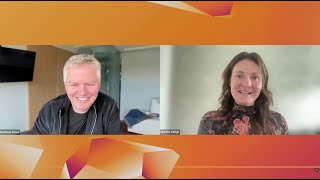
A recorded interview/transcript celebrating Cloudflare’s 15th anniversary in which co‑founders Michelle Zatlyn and Matthew Prince recount the company’s origins at Harvard Business School and Project Honeypot, early community‑driven technical work (collecting donated servers, first users), the TechCrunch Disrupt 2010 launch, early hiring and fundraising, pivotal mission‑driven product decisions (free encryption, IPv6 gateway), ongoing culture rituals (birthday/innovation weeks, Beer Meeting), and reflections on the next 15 years.
Chapters
And please welcome to the floor Cloudflare.
Right, right.
Hi there. We're the co founders of cloudflare.
The entire Cloudflare team is proud of the service we have built. We're excited about the opportunity to launch Cloudflare to the world at TechCrunch Disrupt.
This literally is the definition of a disruption. So let's get started again. I'm Matthew Prince, this is Michelle Zatlin. Lee Holloway is in the back of the room. We're for the three co founders of Cloudflare. The entire Cloudflare team is here with us today. And you know, launching is a sacred event. You only get to do it once and we couldn't be more excited than to be doing it at TechCrunch Disrupt. Our vision is that we're going to power the Internet.
Great pitch around the world. Thank you to everyone at Cloudflare. We would not be the company we are without you.
Happy birthday, team. Happy birthday, Cloudflare. Let's keep living up to our mission of helping build a better Internet. Thank you for being part of the team.
Hello, everyone and welcome to a special episode of this week in Net. This week we're celebrating Clawflare's 15th anniversary. It's our crystal anniversary, symbolizing clarity, sparkle and endurance. Launched on September 27, 2010 at TechCrunch Disrupt, Clother began as a school project idea in January 2009 between two Harvard Business School students in their 30s, Michelle Zatlin from Canada and Matthew Prince from Utah in the US that summer they moved to San Francisco to join Lee Holloway and and set up their first office above a nail salon in Palo Alto, not far from where Steve Jobs lived. Culture often takes shape from people's personalities, from chance, and from the mission they share. That's what this episode is all about. Clothford Journey More focus in the early Days Given that for the full 15 years, I would need a few hours of podcast, we'll also reflect on the work of co founder Lee Holloway, who whose technical vision remains foundational. He stepped down in 2016 after being diagnosed with frontotemporal dementia. But his influence lives on, even in the codename of Koffler's IPO in 2019. Project Holloway. So in this special birthday week episode, I'll be talking with two of Koffler's co founders, Michelle Zetlin and Matthew Prince, about the early days, the culture that emerged, and how Claufer grew in what it is today. And stay tuned. At the end, we'll have a small Easter egg featuring the journalist who first wrote about Koffler at TechCrunch Disrupt. Now, without further ado, here's my conversation with Matthew Prince and Michelle Zetle. Hello, Michelle. Hello, Matthew.
How are you?
Hi, Zora. It's good to see you.
So happy to be here. Hello.
Actually, you're returning. You're both returning to the show. Last year you were here separately. Now you're together. So big difference there.
Yeah, it's great. Always great. One of the things that I miss about not being in San Francisco is I don't get to spend as much time with Michelle live. But it's great with times like this to be here together.
We're here to celebrate 15 years of Cloudflare. But before that, actually, where are you right now in the world? Where does the show find you?
So I'm in Park City, Utah, as we're recording this. But actually, when this goes live, I'm going to be in Lisbon, and I'm really excited to celebrate Cloudflare's 15th birthday with our team in the Lisbon office.
So fun. And I'm in San Francisco and I will also be here for our 15th birthday at the end of the month. And I can't wait to celebrate with our team here. And I know our team is hard at work planning some fun activities, not only as we give things back to the Internet, which is our tradition on our birthday, but also to celebrate with our team, because everyone who makes Cloudflare what it is on a daily basis and cares so much makes sense.
Actually, I'm in our Lisbon office library, so I'm already in our Lisbon office. Specifically. One of the things I want to start with, actually, is a question that it came directly today from Drama. Grand coming to you both. So I think it's actually a good way to start things because it goes to the first days where you met. So it's a little bit on that, which is specifically here. When you met at Harvard Business school more than 10 years ago, what qualities did you see in each other that made you want to create a company together?
I remember business students are usually pretty obnoxious. They're all trying to make a point that nobody has ever said before and sort of trying to always make themselves look really good. And I remember in the first few sessions of class, there was one person there who I kept being like, wow, she's really doing business school wrong. She's always trying to highlight other people's points, or it didn't seem like she really wanted to be the center of attention. She wanted to just find what the Right answer was. And that was Michelle. And I think that that was the characteristic that I think we still see in Michelle to this day.
Good.
Good. Thank you, Zhao. We've known each other for 17 years, which is closer to 20 than 15, so it's been a long time. And that question. Leave it to John to have a question to take us way back to a moment in time. And it's interesting. So being back in the classroom, being a student. And so Matthew. Matthew always is a very intelligent person, incredibly smart, and a great storyteller. So in class, he had a lot of interesting things to say. And I thought that was. I was very much drawn to that. And so even outside of the classroom, you know, at business school, you hang out a lot. There's a lot of social time. And, you know, at night, whether it be the group of kids, students, I guess not really kids, students dancing, maybe trying to flirt with folks. There's a group of people playing beer pong. There was a group of people just chatting. And Matthew and I were often in that group, chatting, but not just about what was going on. It was about ideas. And Matthew was kind of this printing press of ideas and topics, and it was super fun, and I was really drawn to that and I loved to engage with it. And so I think that that was super interesting. And I fast forward to today and for all of us who are lucky to know Matthew, he's an incredible idea person and an incredible storyteller. And it is. Sometimes they're so audacious, you're like, that, that will never work. And other times you're like, actually, that is brilliant. And so it's just such a privilege to get to have a business partner like Matthew, because that's rare in today's world.
Quite interesting to see. And I know a bit of that history. It's in our site, even we have a page called Our History, our. Our Story that explained a bit of the first moments, even during Project Honeypot. That was around when you were at Harvard. Project Honeypot, right. It was a company already. But of course, that's not. Kofer Kaufer came later. How was that process of, okay, there's this project from Matthew and Lee Holloway at the time, and now we need to create a plan. We need to create a company. How was that process of having the idea and making it work?
Yeah, I mean, so Project Honeypot was something that Lee and I had built in a former company called Unspam. And we built it largely because, again, Paul Graham, who went on to start Y Combinator he threw a conference at MIT called the MIT Anti Spam Conference. And he invited me to come speak. And I gave a talk one year because I was an attorney, and he asked me to. I gave a talk on basically how to write laws to throw spammers in jail. And it went over well, even though it was a very technical audience. And he's like, come back and just give the same talk. And I was like, paul, there's going to be 95% of the audience. It's exactly the same. They're. They were nice enough to humor the lawyer the first year, but not the second year. And so I went to Lee and I said, who is just straight out of college, young engineer on our team. I said, could we build a system that actually tracked how bad guys operated online? And we built it not to do anything other than get data that was sufficient to give a talk at this conference and then put it in the corner and. And largely forgot about it. But over the course of the next several years, we launched it in, gosh, it was probably 2004, and then it was three years later that I first went to business school and I met Michelle. And over that period of time, over 100,000 people had signed up for it. And I remember as I was pitching ideas to Michelle, because I really wanted to start something with Michelle, I described a whole bunch of things that were, in retrospect, horrible ideas. But at some point, I was describing Project Honeypot to Michelle, and she was just. She was like, I don't understand this. She kept asking, why do people want to. Why would they want to sign up for it? Why would they waste their time? What do they get out of it? And I was sort of exasperated. I was like, michelle, don't get it. They want to track the bad guys. And she's like, yeah, but why does that matter? And I finally said, because someday they want us to actually stop them. And she was like, that's it. That's the idea. That's what we should build. And so that was the transition from where Project Honeypot was sort of the genesis of the idea, but was really kind of just a data gathering project. It was really. When Michelle said, no, no, no, the real opportunity is, can you actually not just track the bad guys, but actually stop them?
Yeah, it was, you know, it's amazing. You know, there's a lot of things in your life that you forget, but there's some things that stick with you forever. And I feel like that exchange where it was like, wait, why does people sign up and what do they get? And I don't really get it. And what do you do with like, what, how does this whole thing work? And then Matthew finally being like, because one day they want us to use the threat data to make, to actually stop the bad attackers. I feel like that will be forever imprinted in my brain. And, and it was almost like the light bulb went off. And I think it's interesting because there's a lot of folks today who do projects on the side or community based towards things. And I think this is a great example where Matthew and Lee worked on that for about five, six years before, like really. And that was great. It was its own thing and it was working. But it went on as the stepping stool to be a foundation for, for something much bigger. And so I think it's just a good reminder in life that life is a collection of experiences and really to go collect a bunch because that's where the richness comes from. And so thank you, Matthew Lee, for starting Project Honeybud and thank you, Paul Graham for the anti spam conference. Because without that it would be, you know, maybe we'd still be here, but it would be definitely different path.
Yeah, I mean the other, the other story that, that we haven't, I don't think told in a long time was, I remember early on we, so we, we'd, we'd. We won a business plan competition. Michelle and I had moved out to California, which is where, where Lee was, but we didn't have any money really to build this. And we were like, how are we going to get servers? Because we knew we needed to build this ourselves. And Lee and I were sitting in the corner like, how are we going to do this? How will we figure it out? Maybe we need to raise money earlier. And Michelle pipes up and says, you guys talk about how passionate the Project Honeypot community is. Why don't you just reach out to them and see if they have any surfers? And Lee and I were like, that's the dumbest idea we've ever heard. And Michelle was just persistent. She said, just, it doesn't hurt to ask. And so we had the zip codes of where everyone was. And so we gathered anyone who was basically within 50 miles of San Francisco or Palo Alto where we were, we sent an email to. And the response rate was just extraordinary. And people would be like, oh yeah, I've got an old server. So anyway, I don't know if it works or not, but if you come here and pick it up, you can have it. And so Michelle, she had a little Jetta and she actually drove around to each of these different project Honey Pot community members gathering up this just hodgepodge collections of service and none of them worked. But we were able to sort of Frankenstein enough pieces together in order to do that. But I think the thing that was actually almost as important was on those drives, Michelle also talked about to every one of the different people and said, hey, here's what we're thinking about. Every time she'd come back, you know, she'd come back with servers, but she'd also come back with sort of ideas of what customers wanted that we could, that we could build. And that was, that was super important for the early days of what we ended up building.
Now. Can you think about that, like literally emailing kind of a group of people saying, hey, does anyone have extra servers lying away? And now for those of you listening, you're like, why do you, why would extra servers being lying around? Because cloud computing really wasn't a thing back then. It was just getting started. This was 2009. At the time when we were doing, when we started to work on this idea, there was a, like the headlines of all of, you know, your favorite substack or take your, take your, whatever TechCrunch articles take. The media of the time was, is cloud computing a fad or not? And so it's very new, wasn't really well adopted yet. And so it was just kind of like this transition where you were going from a hardware world to a cloud based world. And I think what's interesting is the power of community by asking people feel, want to be, feel part of something. And it was interesting that Matthew and Lee had built this really powerful community approach honeypot where people really had a lot of, they were very frustrated with kind of the state of the Internet and a lot of bad actors online. And so they're like, oh, I do. If I can contribute to helping solve that, I'm interested. And it was really interesting. The power of community, the power of humans, human relationships. And I think maybe the servers ended up not being that, that useful, but the connections of meeting those people and hearing some of those neural things. And early on when you're starting a company, you have no idea whether you have something. You know, you, 10 times a day you're like, oh, we're on to the next big thing. Oh my God, we're going to go out of business. Like, it's just, it's so many highs and lows. I mean, I'm not exaggerating. Literally 10 times in a day. And you've got your parents saying, what are you working on? You have your friends who got these kind of nice sign on bonuses, that really fancy job saying, what are you guys doing? We're like, we're building something.
Driving around, collecting servers.
Yeah, we're building something. And so it just felt good to be able to talk to some folks who are like, oh, that's really interesting. When you're ready, I want to sign up and use it. Which feels so validating when you're building something. So I was like, when you're ready, I'm ready to say yes. Because it's really hard to get those first customers to sign up. And so that was it kept us going, kept me going anyway.
Makes sense.
Those first projip users were also the first cloudflare users. We emailed them and our first data center was actually in Chicago. And so we only had one, right. Today we have hundreds, but we had one. And so we wanted the performance to be good. So we looked for people who were in the Chicago area and we sort of signed them up as the first users. And the email, the way you used to sign up for Cloudflare was we targeted people who had GoDaddy accounts and we built a little tool, I guess we call it an agent today, that would log into GoDaddy and change your name servers. But we sent an email out and it was literally like, hey, go to this site and Type in your GoDaddy username and password and then push a button and we're going to go make your site faster. And the number. And again, these are people who had signed up for a security service. And the number of people, first of all, who said, absolutely, I'll go do that. And they just went and did it because they really trusted this community that we'd built. But then they would almost inevitably write back about 10 minutes later and say, hey, did I just fall for a phishing scam? And we're like, no, no, don't worry. It was right. We obviously changed the way that you'd sign up for Cloudflare. But early on that community was so critical to getting everything going from the idea to, to the actual physical equipment and then even the first customers, everyone.
We would kind of send folks, 10 people would sign up and basically. And then the next. We'd send the next wave and we kind of go. We kept getting better every time. And I almost did a. Back then. Again, 15 years has gone by. So Skype was the communication tool of choice back then. And I almost Skyped every customer who signed up and be like, okay, what do you see? How do you like, like, what do you like about it in your words? It was really, at the time, Eric Reese's kind of like the voice of the customer was really big. And so I was kind of hearing it from the customer's words, like how they were experiencing our service from their, their side. Because, you know, we were down in an office and Palo Alto above a nail salon. Like we, we, the, the, the, the eight of us who were really doing this at this time, by this time we were, we were working together every single day, shoulder to shoulder. We were having lunch every day together. We were living and breathing this it. Those early users who first started as Project, then Cloudflare, in their own words, what they liked, what they didn't like. And of course along the way we got some people who are like, I'm never going to use this service. You're like, oh, thanks for the feedback. We'll come back to you in a little bit. Once, once we're, once we're further along. And so you gotta, you gotta find your early adopters and then keep going.
Always a technical company from the get go. Specifically, even the first users came from that technical background. Project Honeypot. This reminds me also the fact when Steve Jobs said, hey, when you need something, just ask. If you explain what you need it for, people potentially will give it and help. And it goes along this story as well in terms of, hey, servers were needed. There was a community explaining why those are needed and maybe they want to participate in a way. In what way? From the get go, the winning the Harvard Business School plan there was the real ignite to create the company before TechCrunch Disrupt in 2010. So this was 2009 Harvard and then the official Cloudflare company starts. In terms of the 15 years that we're celebrating, was TechCrunch Disrupt in what way? That process of becoming a company really was, was set in motion because of the winning of the Harvard Business Plan there.
Yeah, I think it's always hard to say when things really start. So Michelle and I started talking about this idea back in January of 2009. We started working kind of on the business plan over the course of that semester. I think it was March when we came up with the name March or April of 2009. We ended up winning the business plan competition in May of 2009. We incorporated the company in July, raised money in November and then hired our first employees. Started in January of 2010. So in every one of those steps, it wasn't totally clear. Was this just kind of a school project or was it going to be something more? I think the point at which I thought, gosh, I guess we're really doing that is probably the moment where you extend the first offers to employees, because that all of a sudden it's not just us being crazy, but now other people are betting their careers on us. And so probably sometime in the. After we'd raised money and before they actually started, sometime in there, I was like, gosh, I guess we're really doing this. But again, these things kind of. They sort of sneak up on you in various ways. And I think that was when we started hiring people and signed the lease and moved into the office space. That was sort of what it was, but it was kind of real for the first time.
When other folks, you're like, oh, wow, they're leaving another job to come work at this point, you're like, okay, we're not in. This is not a school project anymore. This is people's lives and livelihood. It's interesting because sometimes you think about, gosh, I mean, all the things, all the conversations that lined up. I mean, add on to Matthew and I met at business school in Boston, and he grew up in Utah. I was from Canada. Lee was living out in Cupertino, California. And we decided to kind of pack our stuff up in a U Haul and move out here to give it a go. And, you know, I think about, like, the courage it takes to show up in a new place to think, hey, you're going to try and raise some money and start a company. Sometimes I think, like, I'm not sure I would do that again, you know, gosh, I'm so glad we did, but you kind of don't know and it's actually okay. And I think that one of the things I've learned along the way and even from that moment is I think opportunities present themselves to people all the time. It is not obvious. It was not obvious we should do this. I think Matthew did a good job. It's like, it's hard to know when it started there was something there. We kept pursuing it, but we had other optionalities and we kind of kept narrowing the optionality. We kept getting more and more into this and we were very committed. But it was interesting that I think people see opportunities all the time. Most people just don't take them. And I like to tell the story where it wasn't obvious that we should take this opportunity because that's I think sometimes the best opportunity, it's not obvious, you have to go make it obvious. And so it was just one of these things where the stars aligned. It was almost like the universe helped us align everything, but in a very kind of foggy way. And every time we took an action, we learned more and got better at it. And so the other big thing that I think has been a big learning around Cloudflare in those early days is we were just a group of doers. We really were. When you, when you start a company, you have nothing. You, we, you seem to do everything. You gotta pull the email list, you gotta email the customers, you gotta do all this, you gotta write every single line of code, you gotta do all these things. And it's through the action of doing and talking to people and calling potential customers and hearing the heart definitely never gonna use you to. Oh my God, I love this. You finally, because of you, I finally slept through the night for the first time in five years because of your service. Oh, wow. Those sorts of things are impactful. You get better and you learn more. And so I think that's the other thing is sometimes if you have an idea and you find yourself, oh, I'm thinking about whether I want to do it or not. By actually going through the action of doing and getting started, you learn a lot more to make a better informed decision than just talking about it and thinking about it.
Yeah. And it was amazing how long it still felt incredibly fragile. Like, I remember that we had moved. So our original office was in Palo Alto. It was 542 Emerson street in Palo Alto. It was across from. It's above a nail salon next to a basically smoke shop across the street from. From a not very good Thai restaurant. And, and, and then we moved in, I think February of 2011, from there up to San Francisco. We were in The Print Center, 665 Third street in San Francisco. And, and Michelle and I had desks that were, were facing each other and we had a phone. And the phone rang and the caller ID said LinkedIn on it. And I knew that Michelle had. They really recruited Michelle to be an executive at LinkedIn and she had turned it down to come to Cloudflare. And I remember my heart just sinking thinking, oh, God, I hope Michelle's not going to leave to go. And again, this is after. At that point, we'd gotten a lot bigger, we'd raised even more money. And I remember telling Michelle that and she was like, what, are you crazy? Of course I'm committed to this. We're on it. But it was even two years in, it still wasn't. It felt like we were onto something, but it also still felt incredibly fragile. And I think even today.
I was.
Watching this interview of Steve Ballmer talk about Microsoft in the 90s, which I remember as being this kind of behemoth and, and just dominating the industry in so many ways. And the entire time he's recounting those days, talking about how just terrified they were that they were going to get crushed and they were afraid of IBM and they were afraid of all of these other things that were going on. And I think that that's the thing that even if you look and see companies that look very successful, like Cloudflare is today, from the outside, what you don't see is the inside of just all of the. Everyone stays anxious throughout the entire thing. And I think we still are very much in that there's a lot left to do. There's a lot that can still go wrong, and that means we have to show up to work every day and just continue to execute.
Makes sense. TechCrunch Disruption September 2010. How big was it for the company in terms of launching, in terms of creating the guidelines that came to be bringing awareness how big it was?
You know, I think it was. So we had. It had kind of been our plan before Disrupt existed. There was the TechCrunch 50, I think it was called, which is a startup competition. And, and I remember we were sitting in the office when we were reading the news that they canceled the TechCrunch 50. And we're like, oh, my gosh, what do we do? Because our plan had been, we wanted some kind of launch event to allow us to really introduce cloudflare to the world and also to give our team kind of a deadline to shoot for. And we really wanted it to be in the fall of 2010, because we thought it was. It took about nine months to build kind of the initial prototype of. Of Cloudflare. And, and so I remember we reached out to everyone we could to figure it out, and we learned pretty quickly that they were actually going to recreate sort of this. This thing, but they were going to call it Disrupt. And so we were the. I think they did the first one actually in New York in the spring, and then we applied to be part of it in the. In the fall. And our, our application at first was just terrible. Like, I. I still have some of the videos of it, and it was just. It was really awful. But we worked on it and we refined it and I think we did a really good job with the pitch, but it was terrifying. As Michelle and I got ready to get up on stage, there were still bugs that meant that the signup flow didn't work. We still had no way for people to pay us all kinds of things that just had to get done. And our team, there were eight of us at the time and every. Michelle and I were on stage, but the rest of the team, the other six were sitting in the audience connected to WI Fi fixing bugs. And I remember right as we went on stage, Lee gave me a thumbs up from the audience that it would work. Today, I think a lot of these demos, they're canned. We actually did it as a live demo and when we said you can sign up, people could literally sign up there in the audience. And we had maybe about 100 or, I can't remember, Michelle might remember better, a couple hundred customers that had been sort of early beta testers. And in that first day, thousands of people signed up and it was incredibly exciting to just watch how it took off. And so I think we still owe a ton to the early tech on Steam.
It was, I mean, Matthew did a great job. It was, you know, we were, we were unknown. We were an unknown team in the Silicon Valley. We had raised some venture, but we were unknown. Both we'd been under the radar because we were heads down building this, working hard, but we also just didn't. We were not in the mix. We did not have a lot of connections here. Matthew and I were unknown. I think today if we were starting a company, we're very known, it'd be very different. It'd be a very, totally different ball game. But back then, and I think that there is something that I give Silicon Valley a lot of credit to, where you can show up with a really good idea and raise a little bit money to see where you go. And so for us, we really wanted to kind of have a mark, the occasion of us launching in a way that didn't cost a lot of money because we didn't have a lot of money to spend. And it's hard to do that with media if you're not. Some folks do a really good job with media, but it's because they have a reputation and they're known again, that wasn't really a strategy for us. So TechCrunch Disrupt was a great place platform for us to kind of introduce ourselves to the world. And as Matthew said, it was one of the things was when you have a deadline, you can't move, gosh you got to shift, you got to get stuff done for that deadline. And we had a long list and we were working very hard leading up to that day because we really wanted to be ready for kind of this, this moment where we were putting ourselves in the, in, in the spotlight, which, again, introducing ourselves to the world. You want to make a good first impression because you just didn't know. We took it really seriously. I think at Cloudflare, we take most things really seriously, but we also, like, didn't make it so easy for ourselves. We had this kind of placeholder website. It was like, hey, Beta. We were trying to. And so we like, we launched the website when Matthew and I walked on stage. We took that very seriously, like the new website. So turning it over while we were walking on stage, you know, that, that was a risky move, but I think that that added to the element of kind of when we do things, we like to do it to a very high level. At Cloudflare, we really reach high, aim high. And it really brought our team together, like the eight of us, I mean, I think we were all worked hard, had tons of emotions, but it was one of these things where it's like, wow, what you can accomplish with this whole team is pretty exciting. We had about a thousand people customers as part of our beta up at that point, we'd grown it to about a thousand, but when we launched, the numbers just like skyrocketed because of what turned out to be the case. And we didn't really realize this going into Tape Disrupt was everybody in the audience was our demographic. They're all technical or everybody. A lot of, a lot of the readership of TechCrunch Disrupt were technical. So they all started to sign up as, as hobbyists to check out what this thing was because they kind of knew nothing. They had never heard of us before. And all of a sudden, whoa, this sounds interesting. At the same time, a lot of the venture capitalist associates were at TechCrunch Disrupt and all of a sudden they're like, wait, what's this company? I've never heard of. And if you're in venture, you're. You need to know what the up and coming companies are. That is the whole job. And so not only were we up and to the right kind of hockey stick growth from a customer acquisition perspective, when we launched on stage, we also had a lot of net new investor interest. And so I remember the few weeks after TechCrunch Disrupt being some of the busiest times at Cloudflare because we basically weren't sleeping, our business was skyrocketing in growth and we were meeting every venture. The opportunity was there to say we didn't need more money, but the opportunity presented itself. Maybe now is a good time to raise more money. So a month later, we ended up raising $20 million from NEA. But we had met a lot of other folks between the end of September and kind of the end of October where that. When that closed and it was. I don't know if you remember that, Matthew, but we were not sleeping a lot. We were both very quiet.
Yeah, it was. But it was. But it was super fun. I mean, it's not. There's nothing quite like when you build something, you know, seeing it actually getting used and seeing it. Seeing it working. And that was. And they were stressful times and they were hard times. And when Michelle says we weren't sleeping, literally my phone would go off at least every two hours because something broke and I was up trying to fix it and everyone was chipping in and it felt. It just felt like our hair was on fire. Then those early days.
I bet it also is interesting how it informs the rest what came next. Birthday weeks became a thing. Innovation weeks became a thing. And it's connected to a bit of that stress of making things work in a deadline. Also how to tell a story about what we want to achieve.
Right, yeah. And the history of birthday weeks started actually because of disruption. So a year after we had launched, they invited us back and they said, you know, it'd be really great if you could launch a product on stage. And we're like, well, what product can we build? And our team was really passionate about helping to build a better Internet. And so they said one of the things that a better Internet should have is we should have more IPv6 support. And that wasn't something that anyone was.
Going to pay for.
But we sort of talked ourselves into, this is a big deal because it actually will further the Internet. And so the very first product that was sort of a launch at our birthday was at Disrupt one year later. They invited us to be on stage and we announced that we were going to do this IPv4 to IPv6 and IPv6 to IPv4 Gateway. And when they were like, why is that a big deal? We started to talk about how it's really important for companies like cloudflare to always be thinking about how we can make the Internet better and give back to it. And we took what was kind of a boring product and made people really interested in it and that then started the tradition where every year we think, what are other things that we can do that are really moving the Internet forward? And how can we think of those as almost the gifts that Cloudflare gives back to the Internet? And it becomes one of the sort of most just really resonates across the entire team that week. And the products that we launched, which are not usually about us making more money, but they're usually about us doing things that make the Internet better, making encryption free, rolling out Cloudflare workers so that anyone can do that paper crawl was something that we announced before. And again, I think it all comes back to how do we think about how we actually can be doing those things that really help the Internet.
Interesting to see that Kauffler was runner up in the Tech Current Disrupt. The winner was a quickie that doesn't exist anymore. It was bought from Yahoo two years after.
But it's really, really smart. Interesting team. Some of the people from there did just some really interesting work. And you look across, especially the other alumni, Nick, who did Dataminer and a bunch of others that were at that same time, it's amazing to see how there were just a bunch of really interesting entrepreneurs, that many of them went on to continue to do really, really amazing things.
We don't have a lot of time, so I have a question from Stephanie Cohen actually about some pivotal moments where you made decisions that changed the course of the company throughout these 15 years. If you can recollect some once so.
Many, we became runner ups. The TechCrunch disrupts. We were bummed. I mean, you don't go shooting for first and come in second. We were super bummed. But Matthew's like, let's issue a press release, you know, celebrating the like, acclaiming.
We won the audience award. We were the audience choice.
Audience choice. And so we were the audience. We won the audience choice. And so I think that that's a little bit of you got to make these things what it is. So that kind of speaks. That's a small example, but just of the mindset of kind of what it took. There was a moment where there was a cloudbleed where there was this big kind of security vulnerability to open SSL was a big thing in the industry. And I remember our systems engineering team had been working on it for a long time. They're like, oh, it was. The question was, was it real or theoretical? And we'd been working on it for 10 days and we were able to replicate saying, oh, actually that it was actually practical. It was more a theoretical threat. And so our team was like, let's do, like, let's. Let's open it up to the community. So we. We kind of put something up on our server and we issued the Cloud the Heartbleed Challenge. And I remember we have a company meeting once a week. It's called Beer Meeting. It used to be on Fridays, now it's on Thursdays, and it was Friday Beer Meeting. That's how we used to end every week. And I remember someone in the audio in one of our teams, like, oh, my God, someone cracked it less than eight hours, and it was just this moment of like, oh, my God, like that. You have a lot of smart people at cloudflare, but there's also so many smart people in the community. So all these moments along the way that for sure changed how we think about it, how we have people internally think about it. Aim bigger, think bigger. How do you make something? How do you reframe the story? I think those things are just some of the examples. I'm sure I have so many others, but, Matthew, why don't you share some of yours? I want to hear yours.
I mean, I think that in 2014, the difference between the free version of Cloudflare and the paid version of Cloudflare, the biggest thing was the paid version included encryption, the free version didn't. And a bunch of our team came and said, hey, we say we're helping build a better Internet. A better Internet is clearly a more encrypted Internet. We need to bring encryption down to our free customers. Michelle and I were like, guys, then why would anyone pay for Cloudflare? That's the difference between the paid version. And the team was just like, listen, if we really believe in the mission, we should do this. And it was incredibly hard. It was a threat to kind of our underlying business model. It was a incredibly difficult technical challenge. We didn't know if we could actually manage the certificates. We didn't know if we could have the capacity to handle that much encrypted and decrypted traffic across the fleet of servers that we had. And then it was a business challenge because every ca. Every certificate authority at the time charged you per domain. And that wouldn't work because we couldn't keep signing up free domains and have to pay every new one. So we needed to be fixed. And there was no, let's encrypt. There was nothing else like it. And so we sort of made the decision that we were going to try and figure out how to do it and everyone was working on it. The technical team was doing that. Michelle was, was helping think through how we could actually create differentiation and plans as we were going forward. I was spending a ton of time just calling every CA in the world. And it was finally, literally the receptionist at GlobalSign who thought what we were doing was interesting and she championed it internally at GlobalSign for them to do basically a fixed fee CA deal with us. And I remember on September 27th of 2014, we pushed the button to turn encryption on across all of our free traffic. And it was one of those moments in time where there were all these services that monitored how much of the web was encrypted and overnight it doubled. And that was one of those times where the entire team looked at that. It was like, whoa, we did that. And it felt like one of those moments where we were actually living up to that mission of helping build a better Internet. And conversion rates did go down, but they went down a teeny, teeny, teeny bit. But what changed was the number of people signing up every day went up by 10x. And I've talked to the, we know the team now at let's Encrypt and everything, and they're like, the fact that you guys did that gave us the confidence to do that. And today the vast majority, 98% plus of the web is encrypted. And I think that as we look back on some of the things that we did that were the biggest, most meaningful, impactful things, that's the memory that keeps coming up. For me, that's a good one.
And I mean, just think about that. When we started, the web was not encrypted. It just wasn't. Less than 1% of all requests went over HTTPs, and now it's 98%. Not because of us, but we are one of the reasons why. Which is pretty amazing just in how much has changed on a technology standpoint, I think you forget about that. And so that moment was super special. It was hard, technically hard commercially, but not impossible. And there's a big difference between impossible and very hard. And it really like it. It set back to being audacious and what we're going to do. And then it created a cascading wave of other sorts of things. Then we started to push other protocols forward and become the place where we were helping move new protocols for the Internet forward, whether it was SPDY or TLS 1.3 or HTV3 or whatever it's been over the years. And then people come to work for us, these amazing technologists say, wow, I've been working on DNSSEC my whole life and actually if I'm gonna get any distribution of it coming, being part of the Cloudflare team is the only way that's gonna happen, because I see you as being such an important distribution channel. And then those people come and do this amazing work that sets up all these other things. And, and that's a true story with someone named Oliver. He came and he ended up helping us with kind of invent how we do our traffic management. And that's a big part of what we do. And so it's these things where these moments become kind of like threads that create all these other things. Ripples that almost end up being a tsunami in other ways. And, and so it's been, it's been a journey of a lifetime, but we're just getting started. So this is 15 years. And we're so proud and so fun to reminisce. And I'm glad we're doing this because one day clap will turn 30 and then 45, then 60, because I just think what we're doing is so important. And we're still early days out.
Definitely, definitely our time is up. Why not think about the next 15 years? If we can predict something about Colfer in the next 15 years.
I hope we continue to attract the best people in the world. I mean, I'm so thankful for all the team members who have bet on us and worked on us and, and really believe in the mission of what we're doing. I hope we'll continue to help build a better Internet. I think that this is a really unique time where the interface of the web is changing. It's changing from what has historically been dominated by search to what is going to be dominated by AI. I am incredibly proud of how our team is really thinking about as that change happens. How can we take the best things from the web of the past, learn about the mistakes that we've made? I think that there's a lot of just rage, bait and kind of ugliness that has happened as well. And then hopefully create the incentives and the business models to create a web of the future which is going to be as rich and vibrant and open as we all want it to be. And I think the fact that we can be a part of that. And again, we're not going to do it on our own. Our mission is not to build a better Internet. Our mission is to help build a better Internet. And that word help is incredibly important because we can't do it on our own. But I think over the next 15 years, Michelle talked about how it's incredible that over the last 15 years we went from a completely unencrypted web to a completely encrypted web. I hope that there are as many other things which are as meaningful and impactful and that we can really continue to live up to that mission of how do we help build a better Internet? And I think that's going to keep us busy not just for the next 15 years, but for a long time after that.
Definitely. I think that you think that the Internet's static. It's not. I think hopefully the listeners are getting a. A viewpoint of, wow, the Internet's about 30 years old and so it's kind of getting upgraded. It's being used and stretched in so many different ways. And again, we are one people in the ecosystem. Back to help on the help word that Matthew said of helping move it forward so that businesses and people can get everything out of it that it needs. And I just think we really play a critical role given our architecture and where we sit and the technical team we have. And that's, that's such a privilege. And it's, you know, the Internet's a miracle. It's added so much value to society and it's going to continue to do so. But there's real risks and challenges ahead. And so we're excited to help our customers, our businesses and people who use our service to get everything they need out of the Internet. Because it's not going anywhere.
Absolutely. And the Internet is done by people, by science, by companies. And it was great to learn a bit more on the first days of Koffler and how the first days actually inform the company's culture for future years. So that's quite interesting to also be a part of. Thank you for sharing.
Thank you so much. And happy birthday, Cloudflare.
Happy birthday, Cloudflare.
Happy birthday, Kaufer. And that's a wrap.
Hey, my name is Jason Kincaid and I wear a bunch of hats at Cloudflare. I product manage Cloudflare tv. I'm on the Strategic Programs team. I've worked here since late 2018 and before Cloudflare. Early in my career, I started as a reporter at TechCrunch, which I think we're going to be talking about. After that, I emceed TechCrunch Disrupt many times. I had the great fortune of appearing as myself in that capacity on HBO Silicon Valley. I wrote a book called the Burned Out Bloggers. Guide to prior and then I did a bunch of consulting for years before joining Cloudflare. So for those who don't know, TechCrunch Disrupt is the marquee tech conference. They hold it in several places around the world. Cloudflare launched TechCrunch Disrupt in San Francisco in 2010, and I was a reporter at the time. Candidly, TechCrunch Disrupt for reporters is basically a rush of adrenaline and caffeine and cranking out all the blog posts and making sure all the companies are getting the coverage they deserve. What I remember about cloudflare's launch, I have this memory of sitting at a table, probably writing some other posts, and then Michael Arrington, the founder of TechCrunch, who was my boss, said to me, I think he was standing next to Matthew, Matthew Prince founders of cloudflare, and he said, jason, can you write this one? And I said, yep. And sure enough, not too long later, I was more or less trying to live transcribe their presentation on the TechCrunch Disrupt stage. And if you read the blog post, I would say I did a passable job in that respect and I think turned out okay. But there are a bunch of typos I kind of want to go back and fix 15 years later. But, you know, I think for the startups, it's really a catalyst moment where it puts them in this pressure cooker where many of them have not presented in front of an audience this large. Typically, you're going to see a throng of 1,000 people seems to stretch out forever, and they're showing off their baby that they've been working on, maybe in secret for years. And cloudflare killed it with their presentation. I believe they won, they got runner up. They probably should have won it, but obviously it didn't hold them back and it's worked out for them. One of the great things about Disrupt is you see dozens of companies launch and some of them have demos that are super polished, and some of them have demos that kind of go off the rails because they're trying to showcase their technology live. And, you know, one of the things I learned really early on is you always want to give them the benefit of the doubt because you tend to be surprised. It's hard to pick the winners early on, even if you think you know the space really well. And I think that's one of the exciting things.
More from Michelle






SF Conference 2013 CASE STUDY: Michelle Zatlyn - Scaling a Company To A Billion Views A Day




