Female Founder Fireside Chat with Cloudflare's Michelle Zatlyn | Qualcomm Ventures
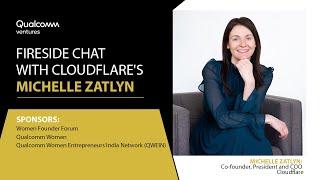
Michelle Zatlyn, Cloudflare co-founder, discusses building a company with 2,000 employees and 4 million customers. She covers hiring practices, early fundraising strategy, turning down misaligned investors, and managing leadership transitions as the company scales.
Questions this video answers
About 2,000 employees.
$33 billion (as stated by the moderator).
Around 4 million customers (phrase in transcript: '4 million').
About $2 million (seed/early round).
$500,000 offered on the spot.
Chapters
Welcome and thank you for joining Qualcomm Ventures virtual Fireside chat with Cloudflare's Michelle Zatlin. The objective of this event is to get insights from Michelle on how to scale a business. Today we are going to hear from Michelle co founder, CEO, coo, sorry and President of Cloudflare, a global network designed to provide secure, fast and reliable Internet access. Cloudflare is also a Qualcomm Ventures portfolio company. The talk with Michelle will focus on the following we'll hear about her journey from seed at Harvard to now a 33 billion IPO company. How did they manage to have a sustainable growth over the last 12 years of their business and some key leadership lessons that Michelle will share. From Seed to IPO stage now, since this is a virtual webinar, some logistical zoom things that we need to put forward, all the lines will be placed on mute so that we don't have any background noise through the conversations. We definitely want to encourage questions from the audience so there is a chat function at the bottom which will be disabled till we finish the main conversation. However, if you want to ask a question, please submit a question via that button at the bottom of the screen and we'll make sure you get to hear directly from Michelle to answer those questions. We also encourage you all to post about this event live on social using the hashtag QCBFounderLessons. Before we begin, just a quick overview about Qualcomm Ventures. Qualcomm Ventures is a strategic investment arm for Qualcomm Corporation. Qualcomm is one of the largest wireless and telecommunication company on the forefront of 5G. Qualcomm Ventures celebrated our 20th anniversary last November. We have about a billion dollar under management with about 150 plus company around the world. We are a close knit family of investment professionals in seven geographies. Investing in areas such as 5G security, AI, auto, IoT networking among others. In addition to providing capital to founders, we take pride in introducing them to technical expertise at Qualcomm Corporation and also bringing our global network to bear to scale the company. We're very fortunate to meet entrepreneurs like Michelle through this journey of Qualcomm Ventures. And today let's get into the meat of the discussion. Let's talk about Michelle. Michelle has had a fantastic journey. Michelle went to school in Canada in Business and chemistry before getting into Harvard Business School to study her mba. And that's where an interesting seed happened called Cloudflare. There she met her co founder Matthew Prince and I guess at the end of the MBA stint. Cloudflare was born. It's been 12 years of journey, Michelle, for you since the birth of Cloudflare. And now Cloudflare has, I think, maybe 2,000 employees around the world and a $33 billion market cap. Please join me in welcoming Michelle to the conversation. Michelle, before we get into the business aspect, we want to get to know you as a person. So a few questions of icebreaker style in rapid fire. Who is. Are you a single sibling?
No, I'm the middle child. I have two sisters.
What was your first job?
I worked in my dad's law office in my summers, doing random things.
That's really exciting. What's your comfort food, Michelle?
Love food. I love going to the farmer's market. I mean, actually, you know what? Really a good order of butter chicken.
That's my favorite dish from India. When you're not working, how do you spend your time?
Well, I have a family, and so I love to cook. I love to go to the farmer's market. I live in California. I grew up in a farming community in Canada, so I love going to get fresh fruits and vegetables from the market and then making an amazing meal and sharing it with friends, and so that's probably how I like to spend my time. And then hiking and getting outside and doing things. I like to do things.
Fantastic. What's your favorite app?
My favorite app? Well, I use Twitter too much, so that is bad. But Twitter's been around for a long time, so that's not a good one. I mean, right now it's been some of the. I have young kids, and so some of the school check in and check out with the new COVID protocols, dropping kids off at camps and picking them up. So some of those actually are pretty good.
Who do you admire most, Michelle?
I am. You know, I don't. I like. So it's hard for me to pick one answer for all these things. I'm kind of one of those people that like lots of different things, and so I admire a lot of different people. Uh, and actually, I think that's kind of the greatest thing where I feel like I can. I'm inspired by lots of different people. It's not just one. Um, and so there's people that I don't know that I think are amazing. Like, I was watching the US Women's Gymnast trials on the weekend, and Simone Biles and just how she's back competing, and she's literally the greatest. Like, I mean, how can you not be inspired by somebody like that? And she's just you know, puts her best foot forward every single time. I don't know Simone, but she inspires me. And then there's other people like my sisters, or people like you, Varsha, or other people I've just met in the industry who are doing amazing things that. That it's. I don't know. I think that that's actually one of the greatest things as a founder that no one told me is you get to meet a lot of really inspiring people along the way.
Anything that you can add to your bucket list now?
Well, I really want to go. I really want to go to Wimbledon. I've done the US Open, but I really want to go to Wimbledon in person. Or the French Open. I've never done that. I think that would be a really cool experience. That's on my list. I want to do a safari in Africa. I'm sure I'm going to do these things. I just haven't gotten to them yet. So they're on my list of things to do.
And any favorite book that you're reading.
Now, I just finished Humor Seriously, which is all about how you can bring more humor to the workplace. And actually it's an asset, not a liability. And I really like that book. So I'm trying to laugh more and smile more in these conversations and in meetings. It seems to be working. So thank you to Humor Seriously. And then Adam Grant's Think Again book was really. I mean, I just finished these, so I need a new book. If you have some ideas in the audience, please let me know. But Adam Grant's new book, Think Again about rethinking Decisions, actually is so prudent for a founder because you got to rethink things along the way. As you said, I've been doing Cloudflare for 12 years, and there are certain things that were so dogmatic to us early on that we rethought along the way, and thank God we did, otherwise I think it would have become a huge liability. And that's, again, no one told me that along the way, so that's something I learned. So his book really, I thought, was extremely. It's worth a read.
Bringing Humor is my favorite book, too, I think, especially during COVID it's been a good book to read and implement at home and also at work. That's good to know about you, Michelle. So getting into the meat of the discussion about Cloudflare, for those who are not familiar with Cloudflare, how would you describe the company in your own words?
Sure. Well, you did a really good job, Varsha. So I might just bring you along with me every time I do one of these things because you did a great job. So thank you. So what is Cloudflare? So Cloudflare's mission is to help build a better Internet. And what does that mean? Our customers are Internet properties. So all of you founders listening, your company, your applications, could be a Cloudflare customer. Blogs, websites, anybody trying to connect anything to the Internet could be a Cloudflare customer. And the reason why those people, those businesses become Cloudflare customers is we help make sure that they're fast, protected from cyber attacks and reliable around the world. So we do global performance reliability and cybersecurity for anything connected to the Internet. Websites, apps, blogs, workloads. And so it turns out the Internet's a complicated place and everything needs to be faster these days, everything needs to be more secure these days, and everything wants to be, needs to be more reliable these days. And our service, Cloudflare helps make that happen. And we are a very technical company, so we've invented a lot of technology to enable all of this global performance, security, reliability. But it's worked out really, really well. We've created something of real value because we've kind of been able to use technology to help take something that was very hard and expensive before and make it much more accessible and easy for any size business, from startups to 17% of the Fortune 1000. And so it's really Cloudflare has 4 million type 4 million customers, ranging from small developers to students to nonprofits to small business owners, a ton of entrepreneurs to these business, large businesses that all need to be faster, safer and more reliable. And that's what we do.
Internet has indeed become very fast and secure thanks to Cloudflare for all of us. Michelle, before you got to business school, tell us about your journey today and what do you think were some of the things that prepared you to take on the adventure of Cloudflare? I think we miss out some of our formative years as we get into college. And if you can point out a few things that really prepared you to take this big journey forward, that would be very helpful for our audience.
Sure, of course. Well, and I go to a lot of talks like this. I used to go to a lot when I was very early on. So I hope that this is useful for the audience and I want it to be useful for all of you. And so I, I think that the, you know, as I think back to the early stages of cloudflare, we're now 2,000 people. We're a publicly traded company, we do a lot of revenue. It's amazing. It's very different than the early stage of Cloudflare. And you know, I had had a lot of jobs before business school, I did a lot of different things and when you have jobs, you work on projects and I shipped a lot of things and I met a lot of people and I had worked at big companies like Toshiba as a product manager, I'd worked at Google, I'd also worked at a small companies, ones you've never heard of. And I had seen a lot of different sorts of things. And I do think that breadth of experience in hindsight have been helpful building Clover because I'd seen lots of different things, not just one way that things had been done. That doesn't mean it was always done properly. Everywhere I saw like at the early stage companies, I kind of was like, wow, we have no idea what we're doing there. And then at the big companies I was like, wow, they've been doing the same way for 25 years. There's no innovation. I mean, it's just like, nah, nah. And so it's interesting, kind of see that in my, in my 20s, getting that experience because I think life, looking back now, life is a collection of experiences. If you can collect a lot and then over time you connect the dots, figure out what you like, lean in more there, the things that you're like, actually I don't like that. I don't, I don't want to spend time doing that going forward. I think it's really valuable. And that was helpful starting Cloudflare because I had this breadth of experience and I knew early on, before I started to do Cloudflare, that what I really wanted to do is I wanted to work on something that I was proud of, that I thought was meaningful. That was very important to me because I'd had these different experiences before business school and I had done very well. I always got good performance reviews, I can put it that way. But there was a huge difference between some of the things I was personally very proud to be part of and other things where I'm like, okay, I'm doing well, but I actually don't really care about this industry or this topic. And even if I like my team, I liked everything about it. I just wasn't personally getting a satisfaction. And so that was one of the things I learned from this breadth of experience that to me, I really want to work on something meaningful. And so fast forward, when I was at hps, I started to meet Matthew. I met my business partner, Matthew Prince there, but we didn't know we were business partners, soon to be business partners. And he was talking about helping make the Internet safer for all these small business owners. And I really did not know a lot about it. I really was not an expert on that topic. But I just remember the moment kind of sitting there like a light bulb went off. And it was my litmus test of, huh, if we could make the Internet safer for all of these small business owners and therefore, and entrepreneurs and developers and everybody else. Because the big companies had good solutions 12 years ago, but no one else did. I was like, wow, I would be proud to be part of that. And so then it became like, okay, let's go learn a lot about this. So this curiosity. And so I do think this idea of caring about what I do. And then the second piece is because I'd done a lot of different things and I had a chemistry degree, I have a science degree, but then I found myself working in business. And then technology, this idea of the rate of which you learn actually becomes a huge secret weapon. And I think all the best founders. These are words from somebody named George Lee. He used to run investment banking at Goldman Sachs for many years, and now he's their CO cio. So he's not on the investment banking side. He now runs all of the systems for Goldman Sachs. And I remember about five years into Cloudflare was at an event like this. And you know, George has been taking companies all. He worked with all the great companies for 25 years. He knew all of them. And I kind of said, what, what the founders, what do they have in common? He's like, all the best founders have an incredibly high rate of learning. And it was like in that moment that his words kind of. I think it almost crystallized what I had been feeling personally. It's like you put yourself in these unsettling situations, and as a founder, you do, you're never fully prepared to be it. You're. You're going to find yourself in a situation that you are not anywhere near credible to make a decision, but you have to make a decision. And so all of a sudden it's like this rate of what you're learning matters a ton. And it doesn't mean you always have to get everything right. But can you learn from it, how fast you get better? I think that that was something that. Because I came from a kind of a background that wasn't so typical and tried all these different things, I got better at a high rate of learning. And I've held onto it because I think it's a really huge superpower. If you can do that.
That's amazing. So we were wondering, you came from business and science degree and entered a very technical field of security. And so you're wondering what gave you confidence to start this deep technology company. So it looks like your high rate of learning and some of your other experiences, but perhaps you want to point out a couple other things that made you take the plunge in a very, very deep technology area. Coming from the business side.
Yeah, you know, and it's. So there's two ways to answer this question. And so here. So answer one is, you know, I didn't really know. Well, first of all, I didn't really know what I was getting myself into. Like, let's be honest. And I think many founders on this call probably don't really understand. Didn't really understand what they were biting off either. And there are points along the way, early on, not, not, not, not recently, but the first five years, I was like, if I knew how hard this was, I'm not sure I would have done this. Like, I, you know, you almost, you're almost not prepared because you. Again, it's just, it's. Building companies is hard and it's also incredibly rewarding and exhilarating and amazing. So that's why you keep doing it. And so that's the amazing part. But like, there are a lot of points where I was like, this is very hard. Why did we take such a hard problem? Or why do we do this? And so on one side, you know, I don't want to, I think this, it wasn't so obvious that, oh, this is what I should do. It was kind of not obvious. And I kept, I kept trying to get further without having to with, without having to cut off all their optionalities. I didn't have another job. I was at business school. But I was like, okay, let's do it. Let's see where it goes. Let's see where it goes. And all of a sudden I'm like, oh my God, there's something here. I have to go see where it went. But it took me months, not, not days. And so I think that's point one where, you know, sometimes I think you people, there are some people who wake up and, and they say, I'm going to do this no matter what, and I'm going to will it into working. And that's a totally acceptable. And that's amazing. If you're that person, there's a bunch of people who aren't that. And I guess this, this talk, this, this part of this conversation is for you. It's like, it's okay, and you're going to hire people along the way who might not even know that they love. Are in love with what you're doing yet, but can they fall in love with it? I guess is. Is the sense. And, you know, the best people at Cloudflare often are people who come in and they're like, I didn't even know about Cloudflare. And I started to interview with you, and by the end, I am so excited about this opportunity I have to work here. I can't stop thinking about it. And it's almost like they get more and more and more excited about it the more time they spend with the company and the people and what they understanding. And I think that that was my experience early on where it wasn't so clear, but I just got more, you know, we went to look and we're like, wow, there's a big problem here. And I thought that was interesting. And then I was like, wow, we kind of came up with a really interesting technical solution. I was like, I realized that was an interesting thing. That, that's not so. That, that's not easy if you can figure that out. That's a, that's a big aha. And then we believe there was a business plan. And so I kind of fell more and more in love with it. So I guess there's piece of one of that of. And then the mission piece, the litmus piece was so important to me. Like, am I going to be proud to work on this? And I was like I said, even if I'm not an expert, I can learn at a high rate of learning. But if we were successful, would I be proud to be a part of it? And it's so interesting because again, I was just, you know, 12 years ago, this pretty young woman with this point of view, and now 12 years later, I'm like, wow, it came true and I am proud to be a part of it. Like, it's, it's so interesting. And then the other piece, and this, I think, is important to say. And I didn't think about it at the time, I really didn't. But now in hindsight, you kind of connect some of the dots is, you know, it's not that I bet on myself. I would never have, you know, if you met me when I, when I was making this decision. I don't think anyone have said that, but I kind of was like, I'm going to see where this goes. And if it doesn't work out, I have. I am employable in other ways. Like, I was like, I really, like, I'm like, I am highly employable. Like, I feel like if this doesn't work out, there'll be something else and I could be happy in lots of different places. And so I guess I did feel like I was also, you know, in hindsight, sometimes you also bet on yourself. And so I'm like, you know, I didn't worry so much about not knowing everything. I knew that I had a high rate of learning and I was smart and that I could learn. I was curious and I wanted to learn. And I had great founders to partner with that are helpful. And then the last piece, that was like, for me, deciding. But then the most important thing, and this is relevant for everybody on this call is early on, it's like, who you hire is the most important thing. And 2,000 people, same thing. Who we hire is the most important thing. And, you know, early on, Matthew Lee and I, we made a really good founding team, but we did not have a lot of that. We had some part of the industry experience, not all of it. And the types of people we went to recruit to try and complement our skill sets, we were so deliberate about that and we brought in really great people who did know more about it. And that's really important to complement yourself and your skill sets. And again, fast forward, 2,000 people later still matters. And I think that having a diverse team who have different skill sets, who know the problem area is helpful. And so that's something we did over time.
I'm going to touch upon that a bit. Michelle, you talked about hiring people and not outsourcing that decision to a recruiter. And do you still do that or was that more at the early stages of the business? And now as you've grown, it's very difficult to not outsource. Tell us about your hiring philosophy from seed to as you've grown forward.
Okay, so this is our floss. So the whole caveat is there are so many ways to be successful in life. So this is just the way that we use. You could go talk to five other successful companies and they probably have a totally different shade of this and they are equally successful. So people do this differently. The context for us was Matthew Lee and I showed up in the Valley and we work with kind of, I want to say, I mean, nobody's. We did not have your reputation here. You know, I was from Canada Matthew's from Utah. Lee worked for Matthew, his last company. We did not have a big president, we did not have a big network in Silicon Valley. Twelve years ago we showed up and we were smart kids with, with an idea. We were passionate about moving it forward. And so we started to work on this idea and we raised some money. We raised $2 million, which we thought was a lot of money. Now today that's like nothing. But back then it was a lot of money and we started to make progress and it turns out trying to get someone to come work for a 10 person company is really hard because there are lots of other great jobs in Silicon Valley. You could go work at Cloudflare now, you know, like today we're 2000 people. Like that's. And it's growing. You still have lots of ownership or you can go work at a really big company like Apple. Like there are lots of opportunity and optionality in the valley and most cities, not every city in most cities. And so it was really hard. So we kind of showed up here. We were really excited. We needed great talent. We, but we didn't have a big reputation. I think now if we want to start something else, we'd have a different, we'd have a reputation. So it would be a different, maybe a different strategy. And so this might resonate with some founders. Like oh, we just didn't have that. And we raised money from two firms, early benrock and Pelion, at a small firm. And so they also didn't have huge recruiting arms as part of their fund. Like today a lot of the funds help their portfolios come with knees with recruiting. That's a pretty new thing in the last five, six years. That didn't really exist 12 years ago and it got born out of it. It is so hard. So I help my portfolio companies and so here we are, we got to make progress. How do we recruit? And so actually the first 10 people weren't so hard and we did a lot of different things like LinkedIn and all these sorts of things. But what we ended up doing is Matthew Lee and I, the three founders, spent a lot of time doing it and actually that becomes an asset because people want like that became something that other people weren't doing. They got to meet the founders, we were there, we were showing up every day. We were clearly engaged. They're kind of about, you're joining a company that's less than 50 people. The leadership matters a ton. I think it matters at any stage, but it matters a lot at less than 50 people. And we would be showing up, meeting these people and they got a really good feel for what was like a cloud force. People would join and they would stay for a long time. We had really low attrition in those early years because of that. And so we kept, kept that. And as we hired managers, we said, you need to be involved. Of course we had a recruiting function to partner with them, but the manager has to be involved. And so fast forward today, we still do this. So managers, I mean, I like Matthew Lee and I are not recruiting everyone, but our managers spend 20 to 25% of their time recruiting, which is two hours every day or one day a week. It's a lot like, and that's for a team that's kind of like big and constantly hiring. If you're only hiring one or two people, then that's different. And they're heavily involved. And we have a recruiting function they partner with. And our, our theory is that when the managers are involved, there's better alignment and people stay for a long time. And you know, if you look at the, our attrition data from employees leaving people, the retention has been very high. And I think this is one of the reasons why, because the managers are just so involved, there's no mismatch. And so it actually has worked very well. I will say that now that we've been doing it for 10 years. Some things I've learned along the way is we've hired some managers who've come to join cloudflare. We're a large company, we have lots of people. They have senior people come, and if they're not used to doing that, it is very hard for them. If they're used to calling up the recruiting team saying, hey, I need three people to start on Monday. Recruiting is like, that just isn't. That's not how it works here. And they're like, what do you mean? They're like. And so we've had to go back and now when we're hiring managers, we put that in the hiring process. Can't. Let me tell you how we recruit here. Are you okay with that? And then they even say yes. And then they show up, they're like, well, I didn't actually think you meant that I had to do it. Yeah, we mean you have to do it. And so for some of the more senior managers, it's been difficult and for others, they love it. That's how they're used to working. And so I guess what I did not realize when I started my company is it is a Choice recruiting. This was a choice we made. It's become a huge, I think, asset to our company. But as a founder, look, we set that up and we provided that vision. And so those are the sorts of things that you have to decide what kind of place do you want, what kind of company do you want to build? Because those are the sorts of things that will, will accrue over time. And so that's one. A decision we made early that we've carried through and it still works for us. And, and I don't know, I just can't imagine doing it any other way.
Oh, it's great. I think low attrition rate in this, in this time is a testimony that your method is scaling very, very successfully. Let's talk about your first fundraise, Michelle. You did it at the hardest time in our industry after the bubble of 2009. And you talked about not being the part of the cool kids club in Silicon Valley and showing up here and raising money. Tell us about some of your experiences and what our founders, especially first time founders, can learn on how to raise the first 2 million or $1 million check for the seed round.
Yes. Yeah. Well, I'm happy to share some of the things that I remember along the way also with the caveat that I know that the fundraising environment has changed so much. And so I think some of the dynamics have just changed a lot. So some things that I think that don't get talked enough about, that I wish I had known. So I think that there's. Our Series a was a $2 million round, but over time we raised. I can't even remember anymore, which is kind of sad. 300 and some million. Yeah, I think, yeah, I think it was 3:30. It was over 300 million. Maybe it was 350. I can't remember before we went public and then we've raised another billion dollars since we've gone public, so that's just a little. So I've raised a lot of money in my career and I think the storytelling matters a ton. Like being a good communicator, telling the story. That's something that I've gotten a lot better at over the last 12 years. I used to kind of, I was a scientist before, so I kind of. People ask me a question, I'd answer the question, kind of like, is this red or blue?
I'm like black and white. Okay, yeah.
You know, or why? You know, it's this, it's like very specific. Very specific. That can sometimes be good, actually. What's even Better is that you can tell a story around it. And I think especially early on, the story, that pulling it together, the vision, the story that will set you apart. And I was really lucky. Matthew, who's my business partner, he's the CEO, we still work together. He's an incredible storyteller and I feel like I've gotten a lot better because of him. And he, I think he's a good storyteller because he studied English and computer science in college, which is kind of a combination. Yeah, very good combination. Uncommon. Oh, and by the way, he also went to law school and then business school. So he's kind of got this like triple threat. You know, he's a lawyer business and gets the tech and is an amazing communicator. He's an extremely talented individual. And so he's a very good storyteller. And so early on, potential investor, maybe like Varsha would ask a question and I would say, oh, it's red. And Matthew's way to answer, I feel like, would be like, well, let me tell you about this and that. And then by the end you're like, you're so drawn in. And he still says it's red, but has a lot more color and kind of like in the vision. And so like forward shirt, but like long term, what you're going to be thinking about. So, yes, today it's red, but really this is where we're going much better early on if you can do that. And so I think that telling the story early on can be very powerful. And that was especially powerful for us because we were a business that delayed metrics like revenue growth. We did not have a lot of revenue on day one. We started with a free plan and a $20 a month plan, and then we eventually added $200 a month. And now we have businesses paying us millions of dollars a year. But that took years. And it turns out $20 a month, your revenue does not grow very fast. It's just like it takes a lot of $20 a month to really grow your revenue really, really quickly. And so we used other metrics to help. We didn't have a lot of revenue on day one. We were not funded by our customers, let's put it that way. So I think the story where we were going and having other metrics to help illustrate that and the value we were delivering was really powerful early on. And as we've gone along, it's been a powerful, it's been important as we've gone public. And so I think that and the story has changed over time or evolved I guess. And so that's something that if you're not a good storyteller, it doesn't go away. So the more that you just kind of embrace it and get better at it, I think the, it'll serve you well and it'll just be something will get easier. So that's one. The second thing I would say. And you know, this is, this is the. Carl Ledbetter was a partner who led the round in Pelion. He did our series A. Scott Sundel led our series B round a year later from nea. They are still on our board to this day. So what's so interesting is it's the partner like who you raise money from matters so much less and the firm, but it's really the person at the firm that matters. And this is like, this is longevity and a real life example where Carl and Scott are still part of the story ten years later. And we want them to be because they know the business. It's kind of like Matthew and I, they have all this accrued knowledge and we want them there and they feel a part of it and they want to. And it doesn't always work out like that. When sometimes you raise money from investors where you don't feel like that you're like, oh well, it's a big name firm. I don't really like the partner, but I like the firm. I want one of these brand shiny eight top tier firms. And again, so I think the person matters a ton that you take money from and so do your diligence on them. And my favorite question was talking to some of their people they invested in and say tell me at a time where you had to go through a tricky situation with them and what they were like. And I think even though that Cloudflare has been a huge success story, there's been so many hard moments because building companies are hard and there have been so many hard moments. Even in this, you know, you zoom out, everything looks great up and to the right. But like in the moment there are a lot of bad things that, that, that you gotta deal with. And it's like would you be scared to call them or when you did call them, how did you react? And it's been interesting just seeing. And again, I've met a lot of people cause I've raised a lot of money. They're not everybody, not all investors act the same. And so if you're an investor listening to this, I think you really want to think about that. Like how are you partnering with your firm, are you being accretive? Are you causing more drama? You don't want to be causing drama for the company. The company's already got a lot of stuff going on. How can you be helpful on their timeline, not yours? These are different sorts of things. And so I think that the person matters a ton. So the storytelling, the person. And then ultimately the most important thing is just to make progress and to. To be successful, because that's what gives you more swings at the swings at the bat. Even when you have stumbles, if you're have a good thing going and a good business and you're doing what you say you're going to do, it's much easier to say, okay, this isn't going well. This is what we're going to do to fix it. If everything is not going well, well, that's. That's just disorganized. And so I think this part of. We were really obsessed with making momentum and doing what we said we were going to do, like, relentlessly obsessed about it. And I. That kind of took us from nobodies to being like, wow, these people know what they're doing and we are going to bet on them because they take this seriously and they do what they say they're going to do, and when they don't, they tell us why and then they go fix it. And we just kept making a lot of progress along the way, and I think that afforded us to kind of grow and give you the room to go from, wow, can they do it to, well, they're doing it to, oh, wow, I want to bet on them. How do I find more people like them?
How much time did it take to raise that first round? Michelle? It looks like storytelling was a key factor. Showing progress was a key factor. But did the first check come in after the firm got to know you over a period of time and saw the progress? Or was it, you know, love at first sight and said, okay, we love this story and we are going to go for this?
Yeah. Early on, it was interesting. It was a friend. So we were. We, Matthew and I went to business school together. We packed our stuff up in a U Haul. Him and his mother drove it from Boston to San Francisco. And we showed up in the summer of 2009, San Francisco. And I literally knew nobody. Like, I'd been to the city once before. So I don't understand how I did this. But you think back, I'm like, what was I thinking? I just packed up my life and moved to a city. But here I Was. And my boyfriend at the time was living in Canada. And anyhow, we ended up getting married and now have kids. So there's a happy ending there too. So I show up in the city. Matthew and his mom drive the U haul across the country. And one of our classmates, she was Bulgarian, and she said, hey, I have my childhood friend from Bulgaria who's an adventure. You got to meet her, Matthew. And I said, okay. And so we went for coffee in Menlo park and we met her friend. And it turns out Dafina did a lot of cybersecurity investing at Venrock, and she had worked at Microsoft and she was at Venrock, and she knew a lot about cybersecurity. And so we had talked to a couple investors to. Most did not understand what we were doing. Like, they just wanted us to spend the whole time talking about is there actually a problem? And what was interesting, as soon as we met Defina, there was no conversation about whether it was a problem. She understood the problem set very well because she knew cybersecurity. She was like, oh my God, it's a huge problem. Like, she's like, I get. And she kept saying. So she kept wanting to. She kept probing on the technology solution. How are you going to solve this? And we kept describing, we're going to build this reverse proxy and this and that, and we have this working prototype. And she was like, you have to come meet my partner right now. And so Ray Rothrock was the person she worked for. She was an associate at the time. She's now a partner at. God, I always get them mixed up.
Not iv USVP maybe.
Yeah, yeah, I always get IVP and USVP mixed up anyway. So, yeah, she's a partner now, but she was an associate at the time. And so her job was to find deal flow. So we went to meet Ray Rothrock. Ray rothrock has done 15 cybersecurity investments in his life. We were his. What ended up being his 16th. He'd done checkpoint, he'd done employees purva. He'd done a lot of cybersecurity investments on the hardware side. And we were like, we're basically doing this for the cloud and for everyone. And he's like, huh, I have no idea if this is going to work. I don't know, you guys, but if this works, this is going to be a huge company. And I absolutely. Because he understood the problem set so well and he just, he, for him it was the optionality to be involved. And so he offered to write us a Check on the spot. To which he said, I can write you a $500,000 check without checking with my partnership. I remember it's a Friday afternoon. We were up there, we had the model up that. Our business model up and anyway, kind of a scene out of Silicon Valley. And he said, I can write you a $500,000 check right now. And I probably would have been like, yeah, sure, I'll take in. And Matthew said, no. And I kicked him under the table. I was like, what are you doing? And Matthew said, no, that's not enough. And then Ray said, well, you got to come back and pitch to our partner partnership, because venture funds. And this is a whole other talk that we should do another time. Varsha is like, venture funds are. All partnerships are a partnership. So they have. They get judged by their partners, their peers. And so you want them to look good, not bad. And so we had to come back to the partner meeting on a Monday and do the pitch. And, you know, and we ended up raising $2 million a little bit more and with them, and we brought Pelion in with it. And so it was. I don't want to say easy fundraising. It's never easy, but it was kind of straightforward. We kind of knew. And we were really nervous for that partner meeting. There was moments where it didn't go, you know, when their lawyers calling our lawyers, when we didn't have lawyers, we got to find lawyers. We had no idea what we were doing. We had friends looking at term sheets because we had never really seen a term sheet before, negotiating clauses. But we were lucky. Venrock and Ray really gave us a clean term sheet. And he said, he's like, this is a plain vanilla, no bells and whistles. And 10 years later, I still use that term so many times, because what happened is that set the tone for every other round. We want clean terms. We don't want any bells and whistles. We don't want anything dirty, anything fancy. We want plain vanilla. And that doesn't seem important. I really did not care about that, like when I first started Cloudflare, but along the way, I cared about it so much because that's where so many entrepreneurs and venture funds get sideways in the follow on rounds, people's elbows come out. Varsha can probably tell you lots more stories than I can about. I want my pro rata. No, I'm not gonna let them in. You're like, but I really want them in. And it's. It is. I would say the egos come out. There's a lot of money involved, especially in success stories. It is interesting. And so the plain vanilla along the way was helpful. And the other thing that was helpful along the way is just everything was plain vanilla. And it set the. When we started to go raise our series C at this point, I knew what I was doing. I'd already done it two rounds. And our D, it was always like, we don't want any bells and whistles. And that's what we expect. And when they read the documents, they're like, wow, this is really plain vanilla. Okay, if your other investors have accepted that, we'll accept that too. And it kind of set the tone of who else we ended up partnering with over time and again. All those people we partnered with, including Qualcomm, I would say we're on really good terms with. And I think that that's a good outcome as a founder, because you read all those stories. I read them too. I've read the Twitter. I've read all those stories about founders hating each other and then having a huge spectacular founder of dispute. I've read all the stories about venture like cap, like the investors and the founders getting going, getting into fights. The VC almost always wins, by the way, except for some very odd instances. And then I've read all the stories about the boards that are messed up. And I think that what my advice to all of you are as founders is like, at the end of the day, it's your leadership that can help protect against that. It's not always your. It's. But you can make decisions along the way that help set you up for success. So you have minimal drama with your investors and your board. And I think that minimal drama is really good because you got a big job to build your company. And I think that that is. We took that really seriously. And I'll just tell you one quick story and then I'll pause. But it was our series C. And this is a story Matthew and I have told. And so maybe some of you have heard of it, but it was our Series C. Things were going really well, but we were still kind of the non. We were still not the cool kids. We still weren't. No one knew who we were. We were doing really well with nea. We had Venrock invested in us, which was cool, but those weren't the shiny, shiny firms. And a shiny, shiny firm came along, very famous investor came along, really liked our business, knew the enterprise space cold. This person is very famous. And we were a little starstruck. We're like, awesome. And then he Started to throw out, okay, we're going to do of a piece billion dollar valuation. And again that was a big deal back then. Like we're going to be there. I think that was before the pre. Unicorn, before I had even. Yeah, this was even before Eileen Lee had coined the term unicorn. But the point was it was a huge step up in valuation. It felt like validation. He was very famous. This is a very well known firm and just as we spent more time with this person, it just cleared that we were on different visions and we, and but we really were excited about like that we kind of felt we're falling in love with this idea. But we kind of kept having some red flags. You know when you're raising money you have to disclose it to your boards. We're telling, briefing the board about it. And at like, I mean at the 11th hour, I mean really very late, we had the term sheet. We were like, I just don't think that we want this person. We just feel like we're oil and vinegar. We feel like they have a different vision that we want. And so we didn't take the money and we didn't have an alternative. By the way. There was no, there was not another.
It was kind of one decision.
Yeah. So we, we walked away from a lot of money at a high valuation that his term sheet had tons of bells and whistles and we were just like it just. And we kept trying to say, well we don't really want that. And anyways we walked away six months and so we had to go unwind it with the board and all this stuff and I think everyone was like, okay, this is weird but okay. And six months later, six months later, which is an eternity in startup world, we ended up raising our series C. It was Union Square Ventures. They're great Internet investors. Brad Burnham, like wonderful assets, like been wonderful partner to Cloudflare. We ended up raising from them. But the valuation was not like 10% less, it was less than half, it was a lot lower because that's what they were willing to invest at. And so this is an example of. I actually think that very hard decision in the moment saved us a lot of headaches down the road. And that's what I mean by you can decide as a leader, you got to take this stuff seriously and make choices and so try and minimize drama in your business.
Those are very good insights, Michelle. So from the passionate story from seed to saying no to a very wonderful term sheet. So I think those are really good decisions that you made along the way. How has life changed post ipo? Tell us about how is your leadership changed post ipo? And how do you continue to sustain the growth from the $20 to $200? Some areas of business matrix that you would be willing to share with our audience? Yeah. No.
Well, there's so many things. Okay, so on the leadership style, I think this is an important point because again, I'm trying to share all the things I wish I'd known when I was a founder that I had heard other people say, because some of the things get said a lot, and I agree with a lot of those things. But there's some things that I'm like, why didn't anyone ever tell me this? So I'm trying to tell you all so you can all learn faster than I did.
We really appreciate it.
Exactly. Sometimes I meet people ahead of me. I'm like, tell me everything you did wrong so I can avoid it. It's like one of my favorite questions when I meet people who have businesses ahead of me. Or I met with Parker Harris, who's the founder of Salesforce, a year ago, and I was just like, like, I want to build Salesforce. They're a $200 billion market cap company. I'm like, well, what have you done right the last 10 years? And he's like, anyway, so that was a good. We'll come back and talk about that another time. So, leadership style. So some of the things that. One of the things that I did not fully understand and I. When I finally understood it, I think I got a lot better as a leader. So I always thought myself as a founder, and I am, and I'll always be a founder that no one can ever take that away from you. And for us, being a founder early on was about being like in the same room or maybe now it's in the same zoom screen, however you're doing that. But it was very like equal and very flat. And we're all in this together, and it was pretty clear what had to get done. So it was like, we're all in this together. And that works really well up until some point. But at some point you have a lot of people working for you and they're depending on you for their livelihood and you got to big responsibilities. And so at some point you have to add this, like, okay, not only are you a founder, but you're also a manager and you have to make decisions, and sometimes you're gonna make unpopular decisions. And all of a sudden, these people that you really like and that you know really well are Might disagree with you or question you. And so you have to see yourself as like a manager and like a leader and that. And so that was, I think, a hard transition for me early on. But once I got it, I got it. And then there was a new transition of like, okay, now I'm a business owner. We also at some point kind of had, ah. Aha. Like, well, we. We are onto something big. We have real revenue. And by real revenue, I mean, like tens of millions of dollars. Business metrics actually aren't an afterthought. You need to understand that and drive them. That's cool. Like, if you have awesome technology with great business, that is phenomenal. That is what you want to be. That, like a great technology without a good business. Not as good. Like, the really shiny businesses have both. And so. And we kind of always. I don't want to say. I just. I didn't really appreciate that. And so at some point I'm like, oh, my God, I'm also a business owner because I'm a founder and a big shareholder, and I'm a business owner. And so I, okay, I actually care about these metrics and, okay, well, who owns this? What are we doing about it? Are you doing a good job about it? Anyway, all these sorts of things. And then as a public company, then you're like an executive, like, which is, you know, now I'm an executive running huge team, lots of people reporting up into me. I think you go public. And now I'm like a director for the company, which is a whole other level. But it's. And they're all, I guess, similar, but they're different. And you kind of have to act different. And as an executive, you might do some things that you used to laugh at people about doing. Be like, oh, they like, you know, they like where you kind of, as an early stage come. You're like, we're never going to do that. But it's like, actually those things exist, like the planning and getting people excited and, you know, all those sorts of things are important. And so I think that that's been a journey. So my leadership has changed. And you go from as a founder doing a lot of things to as a manager doing less. You're empowering other people. To a business owner, you're like, okay, actually making decisions to allocate resources in a way that drive the biggest returns for your shareholders. Like, how do we make investments that will drive return ROI over time? To this executive where I'm like, oh, my God, like, I'm an executive I look like some. A character out of Silicon Valley sometimes. And. And you're like, okay. And so you wear all these different hats while still being a founder. And today, I mean, I do a lot less than I did when I was a founder. And my job is much more removing obstacles for teams, empowering people, saying actually like, helping find the connection points, almost being the glue, cutting across things, being like, hey, these things in swim lanes are going really well. But as from end to end, that's not going well. We got to figure out end to end how we can also take all these swim lanes and make the end to end going well. A lot of that because you're just there, you kind of have that purview, and all of a sudden you can ask those questions. And as soon as you do, it's like, oh, my God, unlock all this new value and you go do it again. And so it's changed so much, and one has not been better than the other. And I think that this has been like, the biggest lesson I've personally learned, and I wish I'd learned it earlier, is like, enjoy each stage you're at, because you can never go back. You can never go back to something before you're in where you are, you're moving forward. And so I've just really tried to, like, enjoy, learn, being in the moment that I am. And that doesn't mean my job is always so easy or wonderful or shiny. There's lots of things that are hard. Often, like, the hardest things come up to you. But, like, it's like, okay, what can I learn from this? Okay, let's get through this. Oh, my God, I can't wait for this tough conversation. It's going to be such a great learning experience. Experience. And I, like, literally sometimes give myself that pep talk. So I'm like, this is going to be awful, but no, I'm going to learn from it, and this will set me up for success. And back to the rate of learning is really important. So I think that trying to enjoy each stage and not trying to rush to get to the next stage because you just don't know. And I think just being where you are and it does change and evolve. One's not better than the other. But just being like, okay, it's going to change, and I'm okay with that at the right moment and I'm going to enjoy it for the moment it is, is really, I think, has served me well. So hopefully it'll serve some of you well.
Fantastic. I think I have one final question. Then we'll address some of the Q and A's from. From the audience. Looking from the outside, Michelle, you have it all. You have a fantastic career, you have a wonderful family, and you also have another entrepreneur at home. Your husband is also an entrepreneur. So perhaps in, you know, if you can give us your view on how you managed it all outside. You know, when you graduated from Harvard, you had an ambitious goal of getting it all, and you have achieved it. So some advice on how you manage two entrepreneurs at home as well as a thriving family.
Yeah. Okay. Well, thanks for the question. I'm actually glad. I think it's important for people to talk about. So I graduated from business school, and I knew I wanted to have a career. I knew I wanted to have a life partner, and then I thought I wanted to have a family like that. Didn't really know what that meant, but I like that idea. I come from a close family, and 10 years later, I kind of have that. I have a great career, I have a husband, and I have two great kids. And I'm like, huh, that's pretty cool that I kind of had a model out of business school. And then I made decisions along the way to help tilt the risk reward in that favor to make it happen. And so I think in the macro, I mean, lots of people do this. I mean, actually, I look around my life, I have so many people in my life that are in a life relationship with kids and successful, and both people work. And I think that that's great, and it's not for everyone, but if you want that, it's definitely possible. And so I look around and I'm like, wow, okay, that's great. And so how did I do that? I mean, I made decisions along the way, and some things were easy decisions and some were hard decisions. So what do I mean? Like, early on, I had my first child when Cloudflare had less than. I want to say. Like, it was like 60 people. We were really small, we were very early, and I was working all the time. I mean, I wish I could be one of these people who. Who only works 30 hours a week and can build a huge successful company. I really do. I just. I don't have that DNA.
I don't know.
Clearly I'm inefficient because that's just not me. So we were working all the time at Cloudflare and we were growing, and it was super exciting, and I loved it. But we were starting this family, and so here's an example of where I made a decision Where I made a decision. I'm like, okay, work is going well, we're about to have this baby. I also wanted to spend time with my life partner and there was not a lot of extra cycles a day and I was emotionally exhausted. I mean, I just think like the mental toll of building those early stage, the first five years, any, the first two to four years of building a company, I just think the mental toll is just unlike anyone can ever describe unless you've actually done it. And once you're out of it on the other side, you even forget. But like in. And I was like, this is so much. So I made the decision. And you know, we lived in San Francisco. I did not know the city very well and everyone else was living in all these other nice neighborhoods. And not, not that I didn't live in a nice neighborhood, but like I lived the street across across the street from my office, no commute time. And that was a decision. And again, my husband was like, we should move. And I'm like, because we were living in a studio and then the baby was coming. He's like, we need more space. I said, well, the baby can go in the closet. He's like, michelle, we need more space. And I was like, oh God, another decision outside of work, I don't have the bandwidth to do this. And so anyway, I was like, okay, fine, we'll get a bigger apartment. We got a two bedroom, but I just want it to be across the street from my office so I don't have to commute. And so that was a choice. It was a less great neighborhood than some other people would choose. It was a nice apartment across the street, but I had no commute time. And so then I could be at home with my new baby and then go to work, be at work and go home and be at home with my husband and our new child. And I literally spent 30 seconds commuting. And so that's a choice. And then eventually that choice, years later, we moved to a, a different neighborhood. And it was an eight minute drive to the office. And I was like, I couldn't go further. And then now we've ventured to 20, a 22 minute drive to the office. And that, that was a big deal. He's like, when I said it, I said, okay, I'm ready to move to a, you know, across the city. Jamie's like, you are? Because I had just been so dogmatic about no commute time. And then I realized, so that's like a very, it seems like a silly example, but that's an example of a choice. And I'll give you a counterexample. Early on, we had someone work for classes. He moved his life from Boston to Cloudflare to San Francisco to work for us. It was very early. And he chose to live in Santa Clara. I was like, and we. Our office is in Soma. And I was like, why are you living in Santa Clara? He's like, well, I want a big backyard and a house. And he had wife and two kids. And I'm like, that commute is really hard. And he's like, no, no, I'm going to live there. So he commuted every day from Cloud Clara. He didn't last very long at Claver. He's just like, this commute sucks. And I'm like, why did you choose to live there? And I'm like, I'm not moving the office. The office is in the same spot that it was. Why did you make that choice? And he kept trying to get us to move our office. And I'm just like, that's not how it works. And so anyway, it was interesting that that's an example of they did get the bigger house and the bigger yard in the nicer weather, but a lot longer commute. And that was unsustainable for him and his family over time. And so again, so there's a little bit of sliding door. Different situations, but sliding door. And then the second thing I will say, and I. I wish more people would talk about this is I'm a big believer it takes a village to have a career and a family. And like, I mean, village, like in a very loose way, where there are moments where it's like grandparents, aunts and uncles and cousins and nannies and nannies, friends and their husband's friend, like husbands of the friends of my nanny. And just like my circle of people who help us with our. Who help, I don't know, in our life is really, really wide. And some of those people I pay and some of those people I don't pay, but, like, it is so, so wide. And I wish more people spoke about that. And like, there's a day where I have a great. A woman who's worked for us for. Since my son was born. So she's been our Danny for seven years. And like, she was on.
She had to.
Her mom was sick. She had to go back to help her mom. And like, I was like, in a pinch, I had something I couldn't move for work. Jamie had something he couldn't move for work. But I had to get my kid from school. And like, it literally ended up being like, I'm not joking, like her friends, husbands who went to get him, like my son and brought him home and watched him like. And so it's just one of these things. And at first I was like, oh my God, I feel so guilty. But actually one of my friends was like, you're so lucky.
It does take a village then. Michelle, it's not just your village, but everybody around you. Okay, that's great to hear. I'm going to move to Q and A from the audience. I think we still have a few minutes to reflect on those. So one question from the audience is, congratulations on your success. You're an inspiration. What would you say were your biggest failures along the way to the top? And Michelle, if you could answer this in the next couple of minutes so we can get a few more questions in.
Yeah, sure. Shorter answers. That's fine. Varsha, you can just say Misha's speaks fewer words. So the biggest mistakes, you know, we always hired. We've made some missteps in hiring where you really wanted to will it to work on paper, like on paper. But the person just didn't. They had all the right background, big deals, kind of like the investor description I made. But instead of walking away, we hired the person. Very painful to unwind some of that. So that that's happened. And, and you know, again, I think in one of those cases, what I've learned is don't throw rocks. Why do we, like, it's more, okay, why did this happen? What are we going to do? Do not throw like your founders or leaders under the bus. Okay? We're in this together. Let's fix it together. We're going to get through it together. I think that that just sets you, makes a huge. It separates you from how other people might handle it with it, with an anger be like, like, you're fired for doing that. Like, we just never, we're like, this is not working out. What are we going to do about it? And we kind of band together and it's almost like you come out the other side, you're in the trenches together, you come out the side stronger and better. I think that's, that's been a huge mistake. The other thing, and this is a personal thing, back to my, you know, I built a cloud for my 30s and kids. I stopped, I stopped prioritizing my health, like my working out, physical health. And because I was just spending time at work and with my kids and, and so I just never had Time to work out. And that led to a huge back issue and I literally lost the year of my life. And so now I make time for that and I'm like, it's just as important as anything else. And like, I've scheduled in my calendar to be like, just taking care of your body. And so I think like, don't let your core go is really what I want to say. Because of my back issue is still haunts me. But you have to calendar that and nobody will do it for you. Like, you have to put it in there and tell your EA or whoever. It's like, I'm going to be doing this and no, don't schedule anything during that time. And you just, you have to take care of yourself. And that's a big mistake that I'm better at now. I always felt guilty for doing that, but now I don't.
Okay, we have another, another question. I'll just read it out here from, from the, from the screen. Do you have any specific actions that you have seen to help to be an ally for greater diversity, broadly gender, culture, etc. With respect to investments and, or in the workplace?
Yeah, I do. I think so. Okay, well, so just quickly. That's a big topic to say. Quickly. So the first is, if you work at a company as a leader, you need to talk about it with your leadership team. And so that's something. And that seems so obvious, but people don't. And why that's important is people are worried about putting their foot in their mouth. They're worried about saying something that's going to offend somebody if it's a man. They're worried about offending the women, or maybe it's a Caucasian person worried about offending an underrepresented minority. It happens all the time. So the more you talk about it, the better people get at talking about it and how it's more acceptable. And so at Cloudflare, I see this evidence that we care a lot about diversity. And we try and we share internally what a percentage of our team are women, which percent are under arms and minority. We try and goals, try and increase this every year. How are we doing against that? And we, we set goals and we share that internally. And so we talk about the leadership team all the time. And what's been interesting as we've done that is people have gotten better at it and some people are good at it, some people are bad. And so I think step one has talked about it. It seems so obvious, but lots of people miss that step. So I Think that's important. And if, even if you're in a bad place, like, okay, we clearly need to get better here. Let's get better at it. Whatever you focus on, you'll get better on. The second thing is, it doesn't just happen. It will not just happen. You have to make it happen. And it's not you. It's back to the hiring managers. Back to the hiring managers are the ones building their teams. They can help change the arc of this. They can help get more women into the technology industry. They can help get more underrepresented minorities into the tech industry. But they have to want to do it and be empowered to do it. And so I think that's the other piece where it's just like, you can do it.
It's not.
I mean, I can do it, but it's also like the manager. And it can be like the manager for a customer support team can help do it. Right? Like, those are great jobs. We all have wonderful jobs to offer. And so empowering your managers to care about and be thinking about it and telling them you can help make a difference, I think is a big deal. And then you just got to do the work. Like, you really have to do the work. This stuff does not just happen. And what do I mean? You have to source candidates. People might just apply. It might just look like a very uniform sort of candidate pool. Well, you have to go and you have to go and practically reach out to other folks or get to know them or ask around. And all the research shows if you say, hey, I'm looking to hire an engineering manager, I really would love it to be a woman or someone from underrepresented minority. People will refer those types of candidates to you if you ask specifically. So you can do it in a way that, that, that is genuine. But at the end of the day, it's like you can say everything you want, but it's like, do you walk the walk? So I think, like, ultimately, are you a company where people feel valued and can do great work and get rewarded? And so you got to start there. And if they are, then you can go start to get do the recruiting piece. But if you're a company that women aren't treated equally or aren't paid fairly, I mean, then you got to start there because otherwise you just can have a leaky bucket.
Sounds good. Michelle. I think we've come to the end of this scheduled webinar. We thank you very much. Especially since end of the quarter. And as a CEO, I'm sure You have many things to take care of but business. But thank you for great insights. Hopefully all of our entrepreneurs and investors will learn and have a better future forward. Thank you Michelle. We wish you success, continued success at Cloudbear.
Thanks so much for having me. Thanks everyone.
More from Michelle






SF Conference 2013 CASE STUDY: Michelle Zatlyn - Scaling a Company To A Billion Views A Day




