Mastering Velocity and Scalability to Serve the World’s Largest Organizations
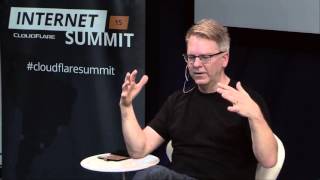
This is a live interview (Internet summit) with John Shewchuk (Microsoft) discussing how his team partners with large industrial firms and startups to build cloud, IoT, big-data and machine-learning solutions. He describes leading ~600+ engineers who embed with partners (GE, Siemens, Mesosphere, Cloudflare) to solve problems like telemetry aggregation, anomaly detection, predictive maintenance, and cross-platform work (Windows, iOS, Android). He contrasts Microsoft’s cultural/leadership shifts (openness, GitHub, collaboration) and highlights identity/security work (Windows Hello, Office Graph) and advice for startups on integrating with Microsoft enterprise APIs and Azure.
Questions this video answers
About over 600 software engineers.
22 years.
Chapters
Okay, so John and I stand between you and this beautiful evening. So we are wrapping up today's awesome Internet summit. So I'm very honored to be sitting here. For those who don't know, this is John Shouchuk. He told me that think about it as throwing a shoe at somebody, Chuck. So that actually really helped who, if you go to his LinkedIn profile, probably has the best LinkedIn profile I've ever seen. It actually inspired me to update mine. And the very first sentence is, I'm lucky to have what I think is the coolest job on the planet. I mean, how cool is that?
Well, in the software industry.
Okay, okay, now he's adding, exactly what is that? What do you do at Microsoft? I mean, what is your coolest job on the planet?
So Microsoft, I don't know how I landed this gig, but they gave me the job of leading a team of about over 600 software engineers whose only job it is to go out and partner with people all across the planet and do really cool stuff. And it's this kind of bizarre pay it forward model. We don't charge anything to do this, we work on any crazy kind of technology. And the hope is that in the process of doing these things and solving those hard problems, it's going to ultimately benefit Microsoft.
Wow, that is pretty cool. And so give us some examples of some of these companies you've partnered with and some of the sorts of things you get to work on.
Well, so the, at the kind of, the really big scale folks like General Electric have these massive industrial Internet systems. Siemens, Rockwell, they have oil rigs and they're situated all over the world. We help them aggregate that data, do machine learning over it, that kind of stuff. But it goes all the way down to the startups we partner with Sam Altman's Y Combinator here down in the valley. Just right nearby is Mesosphere. And I've had a young rockstar dev who's been embedded down here, coding away, checking in code into the kernel to help Mesosphere. Have the Mesos algorithm be able to schedule both Linux and Windows workload. So that kind of the first time there's been cluster management for their product, not for a Microsoft product.
That's great. So basically working with all of these, through working with all these different partners, you really get to see what's coming on the next horizon at both large organizations and small organizations. So tell us a little bit about what are some trends you're seeing emerging that you're personally really excited about.
Well, there's just so many kind of patterns that we end up seeing. You have to kind of break it into a couple different in different areas. Like there's patterns in big data, there's patterns around Iot, there's patterns around what's happening with machine learning. You know, those, I would say those are actually areas where we see the most projects often together. Like one of the most interesting things that I come across is just this huge influx of projects from these top industrial companies who have massive amounts of data. They're trying to stream it up to the cloud, put it into big data stores and then do analytics over that. And that analytics might be things like anomaly detection or predictive maintenance, but then they want to really take action on those things. So those are some of the kinds of things that we're seeing a lot of.
That's great. So within Internet of things, what are some of the trends your team is seeing? Because that's such a topic that we hear all the time. But what are some tangible real life examples of what you are seeing that the audience and those online may be interested in hearing about?
Well, just yesterday I had a little company from the Valley up, Richard McNiff's company, I forget the name of it. They're trying to understand how to go change the world around advertising. If you think about advertising in this day and age, broadcast advertising has become very ineffective. And so what they've done is they've switched to this mode of almost flipboard like storytelling in their app and all of these great stories are starting to show up on their platform. So we're having that conversation. We're talking about how they want to get that content out to any platform, including on Windows. So that was that conversation. Meanwhile, I had the top industrial and electronic signage company from Germany in and they have more Internet points of presence across that whole region of Europe than Google or anyone else because they've got these signs around, but they've done broadcast and that broadcast just isn't being effective. So I said, hey, we should get you two together. So the two CEOs got together, CTO and CEO got together and they're excited about a deal. And that was kind of yesterday. But I think it's indicative of this world of IoT. It's not just about. Sometimes people think about it as know Nest and SmartThings. Some people think about the kind of world of drones and things like that. The place I think the largest amount of data is in these existing businesses like the Rockwells, the ges, the oil and gas, the Pharmaceuticals, where all this stuff is flowing around.
That's great. That's great. So changing gears a little bit, you. You've been at Microsoft for 22 years. You guys rode a huge wave up.
Yep.
And then you've kind of stayed steady for a little bit, but then now you're kind of have a new revolution going on at Microsoft. And I know Andy McAfee just described you as potentially getting kneecapped, but tell us what.
Oh, it's fine.
Yeah, yeah. Tell us what it's like. What's it been like seeing all the different leadership changes and how has that impacted Microsoft in setting you up for the future?
Well, as you know, early on, Microsoft was one of the companies that helped pioneer the use of personal computing. And I used. I had the opportunity to work really closely with Bill and that was a very energetic time. Lots happening. I got to help build the version of Internet Explorer that was the version before people got mad at us. And I got to do this crazy thing called Visual Studio and Net. So those were super fun times. After Bill kind of stepped back, Ballmer came in and the focus of the company was very much on bringing those technologies into the enterprise. And I think if there was a reason that the company kind of started to lose its way is that the world was changing around us in terms of mobile and Internet. And so we have a new CTO in Satya. This is a guy who grew up doing mobile Internet, very comfortable in that world. I kind of think of him as an Internet citizen, whereas Bill and Steve, they loved Windows. And so I think it was a little hard for them to think about things like what we're doing now with bringing all of our apps across iOS and Android. In fact, I would say most of the kind of work that my team does just kind of wouldn't have been possible even back then. And, you know, I think some. He mentioned the evil empire. The Mesosphere guys were, you know, actually told us this. They thought of Microsoft as the crazy evil empire. And now we're sitting there checking in code together and they're having a great time working with us. Lots of partnership, just like with Cloudflare.
Well, we love working with you. So it sounds like there has been a big change. So the perception in the media and you feel it internally as well, even.
Little simple things like open source. My team primarily works on open source.
What did that conversation sound like when you had open source conversations internally five years ago?
Well, you heard bomber, right? It was, you know, that was anti capitalist. It was the end of the world. We had swarms of lawyers who would descend on anybody who even thought about doing it. Not anymore. Like I said, almost all the work my team does is out on GitHub. We do it in partnership with lots of other people.
That's great. That's amazing. It's amazing to hear that 100,000 person organization can change so drastically under certain leadership. That's pretty. That's an incredible business school study. So for the developers in the room or who are online, or companies who all of a sudden are saying to myself, oh, wow, we want to start working with Microsoft. This is cool. John is really cool. How do we start working? How do other companies think about engaging with Microsoft? I mean, you guys are a massive organization, lots of different verticals. What do you say to those who say who want to get started?
Well, there's a lot of documentation and other kinds of things out there. It really depends on kind of where you're coming from and where you want to get to. A lot of companies we work with, for example, are trying to create solutions that have very broad reach and so they're often looking at the Windows platform. We're seeing increased excitement around what we've done recently with Windows 10, so we're getting a lot of conversations around that. But I would say really right now the energy for many companies is around partnering with Microsoft in the enterprise space. We've got an incredible number of assets in terms of Windows Server and Active Directory. What we're doing with Azure, the Office suite is very, very popular among large organizations. And so what people are doing is they're writing applications that connect to all those APIs and they're leveraging Microsoft Salesforce to actually go be effective. It's probably the number one thing startups come and talk to us about.
Cool, Great, good.
Does that help?
Yeah, definitely. Absolutely. So if you're an entrepreneur sitting in this room or watching online or the next Y Combinator batch, what advice would you give them in terms of areas to focus on for the next five years? Looking at emerging trends. What, what aren't people thinking about that they should be?
What aren't they thinking about? Well, there's a couple of areas where I think people may underestimate how rapidly change is gonna occur. We just heard from the guy from Qualcomm who we work closely with. I think the ability to have high bandwidth, low latency connectivity, just make the assumption that it's gonna be ubiquitous and what will that change? And he talked about some great examples of real time control of devices I think deep learning, which I think a lot of people are pretty familiar with, is just going to sweep through the industry. It's already profoundly changing many of the products that existing older line industries have in place. And the example I might use is again back to the, the General Electrics, the Rockwells, the Siemens of the world. They've got petabytes of data going back 30 years on motors that are sitting out in the middle of oil fields and they just don't, they don't know what to do with it. And so the ability to bring that in, do anomaly detection on it with deep learning and then do the predictive maintenance, the amount of money that that can save an organization because one of those oil wells goes down, it's a big deal. So the thing I would suggest to people is just think about kind of those technologies that in the Moore's Law kind of way will continue to advance and look for the interstitials on them.
I have one more question. So if people have questions, start thinking about them now because I'm going to turn to the audience because I think I definitely want to give people an opportunity to chat with you. So you've been at Microsoft for 22 years. You may be there another 22 years, but who knows? But let's say if you could write your ideal job for the next five years, what would be some of the characteristics? What would it say for you?
There's kind of two things that I've been. I'm actually kind of thinking about that I love the current job, so I don't see any reason to go change. The ability to go work with all these awesome companies, help them solve problems. That's been fun. The one thing I worry about in the role is there's so much that we're doing and the consequences. I only really get the opportunity to participate in these projects on relatively short duration sprints. And as a technical person, I love to be able to just kind of close the door and disappear for a month or two and play with a new piece of technology. And I just don't get the opportunity to do that in this kind of role. So there's a. One of the projects that I launched when I was on the Windows Server team was around the rest APIs for Microsoft Office. We call it the Office Graph. And we've just been releasing that if you've ever used the Facebook APIs or any of those kind of social network APIs, we've got that now for enterprises, it's pretty cool. You can navigate through things like an organization down to your files, to the owners, to their boss or whatever it happens to be and get easy access to that. I'd love to take that technology and really push it. Add the machine learning in and a bunch of other fun things. So another thing I'm thinking about.
Nice, that's great. Are there any questions in the audience? Okay, great. Well, I have other questions. Oh, there is one here. We'll let the audience. Oh, Kalia.
One of the speakers earlier today was the president of Estonia who is talking about their digital stuff and their digital identity stuff for their citizens and some of the most advanced in the world. And I know Microsoft and you were part of leading this, was working on information cards and yeah, we used to.
Work on that together.
Yes. So I'm curious, like that didn't succeed in the market, which is what markets do they. They tell you these choices. But what is Microsoft doing now in that space and what should we be looking like, where is that going? Since we're on the next five years theme.
So in terms of what we're doing, we've made a pretty significant investment in trying to bring together the public identities that people might associate with a Microsoft account, but also the identities that people have in schools and in businesses. And we're trying to make that much more seamless. The thing that Information Cards did, this project that we had worked on a while ago was it was specifically looking at the challenges that people face being phished, being how do you really know the reputation of the folks on the other side of the, of the communication? And, you know, we still struggle with this ability to get spoofed inside of browsers and so on. So I'd love to see the world move increasingly away from passwords. In a lot of ways, I think that the app developers have the opportunity to go do this now that we have mobile devices that have biometrics on them. They're typically something that we don't lose. You combine that with a pin and I think you've got a very solid foundation for the upside of, for the clients to go identify to the servers. And then because they've already established those connections, we can use that to keep things running well. So we built some new technologies into Windows 10, Windows hello, and so on that you may have seen that's intended to do just that. For example, in the Windows hello demos that we've been doing, we use an intel camera that looks at the 3D person, looks at iris, other things like that, and makes a determination about whether that's you. And Lets you log into the device.
Do the early beta customers of that, do they like that or does it scare them?
I think it's the same reaction people had with the fingerprint readers. It's pretty common now that everybody uses them. You have to be a little sensitive about where that information gets transmitted. As long as it's maintained locally on the machine and not transmitted up to the cloud, where it could inadvertently be used for nefarious purposes or leaked or whatever, I think people are okay with it.
Great. That's great. This comes back to what the President of Estonia mentioned is data integrity.
Yes, exactly.
Do you guys spend a lot of time thinking about data integrity at Microsoft within your team?
Yes, I would say one of the very interesting trends I've seen over the years is if I were to roll back the clock five years and I would go talk to large companies about using the cloud to do computing, the assumption that they made was, wow, we will never release our secret data up to the cloud. It all has to be locked in, in on premises, because that's the safest place for it. What most companies have since discovered is that they are incredibly at risk. I've worked with major oil and gas companies who are compromised all over the place. Their directories, their identities have been essentially penetrated and sold to third parties. What those companies have come to us and said is, hey, you know, companies like you or Amazon or Google, where you're running these things at scale, you're under attack every single day. And so even though we may not be perfect, we spend an enormous amount of time looking at those systems. You know, I think people know that Windows ends up being the most attacked operating system simply because of the large numbers. As the other oss have grown in numbers, they see those same kind of attacks hitting them, and companies that make those products ultimately have to kind of step up to do the security and prevent the problems.
That's great.
That's one of the reasons that we love working with the cloudflare guys.
Well, one of the best things about technology is the rate of change. Things that were really popular five or ten years ago come up of fashion and new companies emerge, which is why it's so great to be an entrepreneur in the tech industry. And I love that Microsoft is having a new chapter open up. And it was great having you here today. Very excited for everything that you and your team, the organization, are looking forward to in the future. And I think that we're going to see a lot more from Microsoft going forward, which I think is great.
Thanks.
All right. Thank you, John.
More from Michelle






SF Conference 2013 CASE STUDY: Michelle Zatlyn - Scaling a Company To A Billion Views A Day




