Michelle Zatlyn (CloudFlare) at Startup Grind Global 2016
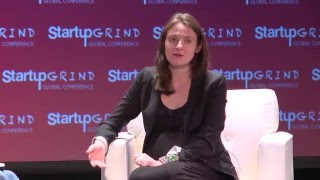
Live interview with Michelle Zatlyn (co‑founder & Head of User Experience, Cloudflare) at a Startup Grind event. Zatlyn describes Cloudflare’s mission—to make the Internet faster, more secure, and highly available—explains its origin from a Harvard project (Project Honeypot), recounts early startup practices (role division, three‑week planning cadence, accountability rituals), and gives company metrics and footprint (customer counts, daily signups, global points of presence, headcount, offices). The talk closes with a policy-focused discussion defending strong encryption and reflecting on the Apple vs. FBI debate and historical crypto backdoors.
Questions this video answers
Over 4 million web properties.
7,000 sites per day.
$72 million.
Unicorn status (achieved last year, per intro).
400 gigabytes (described as the biggest DoS attack).
Chapters
I am Shilpi Sharma. I am founder and the CEO of a company called Quantum Marketing Performance Company and also a director of Fremont Grind Chapter here. Today I am here to announce our next guest speaker. She is Michelle Zatlin. She is co founder and head of user experience. And people who don't know what Cloudflare does, I'm sure people know what bouncers do, right? So Cloudflare is a digital bouncer. Anybody who maliciously attacks web property, they takes care of it. Quick facts on Cloudflare. It's taking care of 2 million web properties right now, has raised $72 million from VCs like NEA, Union Square Ventures and got a unicorn status last year. So when I talk about Michelle, she has done a BS Business in Science and Chemistry, has a MBA from Harvard, worked with Google to Skibra, and has built two successful startups before this. She has an amazing experience. Last year she was nominated at top 15 women to watch in Tech by Inc. Magazine. So here let's welcome Michelle who is actually ruling Silicon Valley while creating the products we all love. Let's welcome Michelle Zetlin. And Brian park from our Startup Grind Chapter, Washington D.C. thank you.
How's it going, Michelle?
Great. How are you?
Great. I'm doing really well.
You guys have taken over Redwood City. That's awesome.
So, you know, we wanted to, I mean, obviously this, it's about right people, right product, you're at a ruthless prioritization. So let's get right to it. You know, Cloudflare is probably what I would say, the biggest startup that no one's ever heard of. But it's a good thing, right? Biggest startup that no one's ever heard of from the Valley. And when I was doing a little bit of research, I was like, wow, you guys are doing amazing things. So in just short detail, like, what is Cloudflare and what does it do?
Sure. So our mission as a company is to help make the Internet a better place. And that's how I always start at a dinner party and then I get a lot of ha. So what that means is our customers are anybody with a web property, a website, an app, an API. They sign up for Cloudflare and we help make sure that it is fast around the world. We protect them from a range of online cyber attacks. We make sure they're always online. So think global performance, cybersecurity, availability, load balancing, all the things that happen behind the scenes to make sure the Internet works. As consumers, we want it. We make easy for any application. Talking over the Internet. Possible. And so we have over 4 million web properties who've signed up and 7,000 sites who sign up a day. And so everyone from startups use cloudflare to big companies like Reddit, Yelp, New York Times. And so it really is catered, it's a service that anyone can use.
Sure.
So before we go on, anybody who have any questions for Michelle here, please go to ask.startupgrind.com and we'll look at those questions. You guys done some pretty, pretty amazing things, I mean, including preventing the biggest DoS attack in history, which was 400 gigabytes of attack. And then the other thing, you guys just recently won a crunchy award as the best enterprise startup. But in fact, you probably have a better startup that's coming up soon, right? Probably about a month and a half from now. But I mean, what's really amazing, that you beat out the githubs in the slack of the world. So that's pretty amazing. So let's talk about the beginning days. How did you start this company? From the business plan competition at Harvard?
Sure. I mean I literally started in your seats. So I was in your seats. Five years ago we started. It was an idea. I mean, just like every company, it was an idea that was spawned out of a problem that we identified. My business partners had done something called Project Honeypot. It was an open source, community based project that tracked web spammers online. And I knew nothing about web spammers at the time, but Matthew, my business partner, was telling me about Project HoneyPot and how 80,000 websites had signed up for this thing. And I was like, what do they get? He's like, oh, we track the web spammers around the Internet to know who's a good guy and who's a bad guy. And I was like, what does the website get? And he said, oh, well, they track the bad guys. And I was like, I kept asking all these questions. He's like, well then Project Honeypot works with law enforcement agencies to take down the spammers. So then the spam goes away. And I was like, doesn't that take a long time? And he said, yeah, it could take years. So then I went back to my original question of like, why does anyone sign up for this thing? And eventually he kind of got frustrated at me because I kept saying, why? Why, why? And he said, michelle, one day they want us to create a service that actually protects them from the web spammers and the attackers online. And I said, huh, that's interesting. And so we started to work on it. And what became this idea for helping, what became very clear was if you were a big enterprise, people spent a lot of money on security solutions. But if you were the rest of the Internet, there were no good solutions out there. They were all Band Aid. There's nothing. And we said the rest of the Internet is a massive market. And that's how we started to work on it. It was a school idea. We were at business school. So it started as a school project and by the end of the semester I was supposed to go work at LinkedIn, which in June of 2009 would have been a great job to take. Matthew was supposed to go do something. He had another opportunity lined up and we both packed our things in a U haul, moved from Boston to California. Matthew drove our things across the country with his mother. That's like the definition of scrappy startup. And we showed up in California with no reputation to start working on what we were, a problem we were really passionate about. And we felt like we had gained a lot of momentum. And the vision was let's create a service that were previously reserved for just Internet giants. So google.com is the greatest web property on the Internet, it's the fastest and it's always online. They've never been offline. I mean very rarely make that a service available to anybody else. So everyone could be just as fast and just as safe and just as reliable as google.com and five years later we have 250 people working at Cloudflare across three offices, so San Francisco, London and Singapore. We run this globally distributed network of 76 points of presence. We have 4 million customers, 7,000 sign up a day, we make money. It's kind of this idea has started to come a reality which has been pretty cool.
So again back to this whole thing about right people, right production. You know, when you first started, you know, you were sort of the non technical co founder surrounded by your two technical co founder of this infrastructure startup. So I mean kind of maybe you felt out of place. What did you do to sort of find your position into the startup. And a lot of these startups out here are sort of maybe in the same situation. What did you do?
Yeah, sure, when we started there was five, I mean there was three co founders and two original engineers. And you know, early on the thing that really mattered, we're a very technical company. I mean building web infrastructure is a very technical product. And early on like the coding, being able to code was a huge asset and I couldn't do that. And so you're right. For the first few months it was kind of like, what was I doing all day? And what's really important that, I mean, I think I had really. I'm lucky. Who I picked as co founders was Matthew's skillset was totally different than my skill set, which was totally different than Lee's skill set, who was our third co founder. And if you think of a Venn diagram, we had a little bit of overlap. So we had a shared vision, we trusted each other, but we covered a lot of surface area. And so you're right, early on, some of my skill sets weren't super, super valuable. But six months in a year, in two years in, they've become very, very valuable. And Cloudflare wouldn't be the company it is to today had I not been there from very early on. And so early on, while I wasn't actually coding, I did a lot of talking to customers. So back to this project Honeypot community. A bunch of them lived in the Bay Area. And so while Lee and Matthew and the rest of the engineers were coding, back to the office, I literally went and met a bunch of them in person to find out what do they like, what do they want to see, to kind of find out a little bit more product validation. A lot of it was like, how are we going to describe what we do to customers who aren't technical? And being non technical means you really have to make it. How are you going to say this in a way that people can understand? And then as soon as we had the sixth person, seventh person, and this is really important, all of a sudden I realized that everyone on the team, we only had seven people, didn't know what each other were doing. And I was like, if seven people don't know what they're doing, this is a problem. And so we started this kind of planning exercise where we'd go to, we'd plan in three week increments because three weeks in startup life is neither too short nor too long. It's almost perfect. And every three weeks we'd say, okay, what is everyone doing? And there'd be like three to five sticky post it notes assigned to each person on a big whiteboard. And at Friday at 5 o', clock, we, we'd all get around and everyone stand up and say, well, I was supposed to do these three to five things. I got these ones done. I didn't get this one done because of xyz. And at the end of three weeks, the goal was to try and have the board clear and that Seems silly, but the sense of accountability and ownership over what we were doing starting very early mattered a ton, because as we added to 15 people or 25 people, it was amazing how much we accomplished with that small team. Because every week or every three weeks, every, everyone knew exactly what they were working on. And on Fridays, they had to stand up in front of their peers and say, I either delivered or I didn't. And that was a really powerful thing. That, again, something that I helped bring to the table.
Wanted to quickly, because we only have six minutes here, and this topic is a really hot topic that I want to talk because I feel like you are the right person to talk about this. Again, right product, the wrong people. And what I'm talking about here is this whole Apple and FBI case. Okay, so in the past. So you have past exposure to this, obviously, with a startup that you guys acquired called Crypto Seal with Ryan Lackey, it's a YC bag startup, had to basically shut down his startup because the NSA was demanding the crypto keys. So you guys were sort of like in the middle there. So what is sort of your stance of app? Like, what? I mean, do you think they should be complying with the FBI?
Okay, there's no way that we're going to be able to have a conversation about this in the next 5 minutes and 13 seconds, but there's a couple things that I do think are important. So for some people who are like, what did Brian just say? Because there's probably a lot of people in the audience who have no idea what you're talking about, a lot of things in technology come down to policy, and I don't think that I fully appreciated that when I started Cloudflare. Thankfully, Matthew, one of my co founders, had a huge background on that, and we've built out a great team around that, and I've learned a lot. And so for all of you in there who think, oh, policy or what's going on in D.C. doesn't matter, that's not the right frame of mind, it will probably impact your business in some way. And I think Tim Cook last week basically writing this letter to his customers and taking something that Apple and the FBI have been working on for a long time, debating and bringing it to the public eye is really interesting and kind of shows how important this is as entrepreneurs, as tech companies, how we have to be part of the conversation. And it's not going away. It's only going to get more complicated. And so in this particular discussion, and thankfully, it's not my pay Grade to have to decide. Cloudflare strongly believes in strong encryption. And so what does that mean? So if you are interacting on the Internet, we believe that doing things over HTTPs is better for the world at large than not. And so as a company, we make that very simple. Our customers, we make super, super simple to adopt that. And we're very for strong encryption and we think long term that's better for all of us as citizens and then having weak encryption and so that we feel pretty strongly about.
What's really interesting about this Apple case is, I mean they're not being asked to break the encryption, right? Let's be clear. On the iPhone, they're not asking to break the encryption. They just want to disable the functionality to, to disable this, you know, after 10 wrong passwords, so prevents it from breaking. Right. So good point. It's a very specific use case, very narrow use case. And in fact Bill Gates had chimed in this morning saying that yeah, Apple should comply with the FBI.
This is when policy making is really tricky. When you have these really edge cases, it seems easy to get hung up of what you should do. The hard thing is it rarely becomes just a one off. And how I've heard it described before is like it becomes a slippery slope where, okay, well in this case if Apple gives the data, but then in this case they should or shouldn't and all of a sudden you don't have a good framework for anyone to operate within. And if you aren't clear, then that makes it really hard for companies and citizens to operate right. You need to be very clear. And so the edge case makes it very, very tricky. I think what again in this case there's a couple things that I think are impressive. The fact that Tim Cook and the FBI are talking about it publicly and that we live in a country where we can have this discussion publicly. I think that's amazing that they can do this and no one's getting thrown in jail or going to get charged and that we can actually have a public debate about it and you can have an opinion and that my mother can have an opinion and I think will end up in a better place because of that. That's really, really, really important. The other thing that again back to all of you in the audience is this is going to go to the Supreme Court likely if they don't come to a resolution and what the outcome of this is going to have some impact on my company and on your company and so we should all care. So if you don't have an opinion, you maybe want to start reading up about it and start having. Forming an opinion. Because when the. When, if they come to an impasse, where through debate and discussion, they can't come to a resolution, the courts will decide, and then there will be a new precedent that we all will have to operate with under. And so this is, again, this idea of, you know, D.C. seems like a far way away from the Valley, or if you built your startup in Israel or wherever it is, but paying attention to what's going on with US Policymaking and EU policymaking, because there's a lot of really interesting things going on there too, is up to all of us as an entrepreneur to embrace, because it does impact our businesses. Whether you think you want. Whether you thought you were going to become interested in policy or not, ultimately you do.
So my statement here, we have 45 seconds left. But I mean, there's a distinction between good detective work versus sloppy bad detective work, violating civil rights, probably privacy rights, and pretty much we don't want to encourage lazy work. So that's sort of like the FBI. So just really quick, though, I know that in the past, this is the crypto wars of the 90s, where they had this thing called the Clipper chip by the nsa. I don't know, maybe you guys were living then or old enough.
I'm sure many of these people were living then.
Yes, but it was essentially a backdoor where the NSA said, hey, all chips need to comply with this Clipper chip. And obviously that they were gonna take the crypto keys and put it into escrow. And in case they needed it, they'll get it. Obviously, the government lost that. So does it look like even if it goes up to the Supreme Court with Apple, it's gonna look like the courts are gonna favor Apple again.
This is why these things are really complicated, because history repeats itself often. Again, as entrepreneurs, we learn a lot of lessons from past entrepreneurs that we're inspired by. But again, on the policy side, a lot of things repeat itself. And so this is a good example of where, again, when you rationally, you're like, oh, this actually makes a lot of sense. But then in practice, the key got leaked and lost and got into the hands of the wrong people, and basically, worst case scenarios, scenario happened. And so you can easily use that exact same learning to this situation, which is why Apple is taking such a strong stance. And again, whether you agree with Apple or not, at least we live in a country where people can take strong stances and we can have a debate. So we actually end up in a place that's better for us as our economy and sets us up for success in the future. So I think that there are a lot of interesting lessons to be learned from the past.
Awesome.
Okay.
Well, thank you for coming out, Michelle.
Thank you very much. Thanks, Ryan. Yeah.
More from Michelle






SF Conference 2013 CASE STUDY: Michelle Zatlyn - Scaling a Company To A Billion Views A Day




