Michelle Zatlyn (Cloudflare) + Connie Loizos (StrictlyVC, TechCrunch) at Startup Grind Global 2021
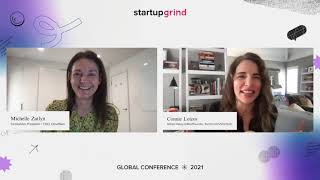
Fireside-chat with Cloudflare co‑founder Michelle Zatlyn covering Cloudflare’s origins (begun as an HBS school project), early validation (a survey of ~500 small websites/IT admins revealing a clear security/performance pain), meeting co‑founder Matthew Prince, raising early venture capital (Venrock led to a $2M seed), and lessons on investor selection, hiring, culture, governance (including an employee‑weighted dual‑class voting structure), and communicating with investors. Zatlyn emphasizes learning from business school, choosing investors for people over valuation, transparency with shareholders/employees, and continuous learning as a founder.
Chapters
Hi. I guess we're live.
We are live. This is the virtual world now, Connie.
I know, I know. It's so strange. Well, it's so great to see you. I wish it were in person.
Likewise. And thanks, Madeline, for the warm welcome.
Absolutely. So, as Madeline said, you started Cloudflare 12 years ago or so. It was this small project at the time. Now it's valued in the multiple billions of dollars. I looked right before we got billion, which is like quadruple where it was valued when you went public in the fall of 2019. Congratulations. So our obviously startup grind is followed by lots of founders who want to understand how you did it. Maybe we can just start at the very beginning and talk about you as a student. I mean, you were going to be a doctor. Did you come from a family of doctors? You grew up in Saskatchewan. What sort of drove that early ambition?
Yeah, no, definitely. Well, so you're right. So about 12 years ago, I was in all of your seats, or you know, where I was, had an idea, and we were working on it. It was early. And it's so interesting that you use the word project, because it really did start out as a school project. And for a long time my grandmother would affectionately refer to me saying, michelle, how's your project coming along? And I thought at some point I said, grandma, the project is now a company. But. But, you know, she for a long time described as a project. So just. I'm sure that resonates with some of the founders out there when your parents or grandparents are like, what are you doing? You get a real job anyhow. But I was. I had done a lot of different things. I did a lot of operating roles. And, you know, I'm a big believer in life is a collection of experiences. And some of the things I had experienced by working in different companies, big and small and growing and shrinking, was I found myself at business school, I was doing my mba, and. And I really wanted to join a company that I believed in what it was doing. Like, I just. That really mattered a lot of head jobs where I liked my job, but I didn't really. Wasn't really excited about what the company was working on. So I really wanted to do something where I was passionate about what we were working on, and I wanted to be what I said, part of the team that made it happen. And so I remember I was applying to do my MBA's in my MBA, and I remember my application said, I want to join a company like Google, before it was Google or Starbucks, before it was Starbucks. And win the hearts and minds of its customers. And point was, I was trying to be part of a team that was going to go build this idea and make it happen. And that's what I really set out to do. And we ended up kind of by accident starting a company. And many years later, I guess that's what I've been able to create with a great group of people. And we're still very early innings. So that's a little bit of my story of how I started to where I am today.
So first of all, this is a little bit of an aside, but I'm sure there are founders who wrestle with the cost benefit analysis of business school. Obviously you met your co founder there, but I mean, any advice on that front? Do you feel like it's, you know, do you think you could have gotten there without business school had you met Matthew? Or were there learnings in school that you think were important that you couldn't have gotten otherwise?
Yeah, no, I think it's a good question and one that comes up a lot. So let me preface by saying there are a lot of ways to be successful in life. There's not just one path. And so that should be both encouraging and maybe a little stressful because sometimes people are just like, what should I do to be successful? And the answer is there are lots of ways. And for every 10 stories you hear like mine, there's 10 counter examples, which is why it's a little bit confusing and noisy. There are a lot of people out there that say MBAs are a waste of time. I probably am not in that camp. It changed my life. So I'm in the very, it was a great experience. It opened my eyes and but to give some context, I mean, I was Canadian. I grew up in Canada. I spent my whole career working in Canada, which is wonderful. And I came to business school in the US And I happened to go to Harvard. And so it was my first time living in the United States. And that just by itself opens yourself up to opportunity. I mean, I just was, you know, the market here was much more competitive. Harvard is a very global program. And so not that I hadn't traveled, but it is different than when, when you're living in another country and it just, the bar really, I guess, got raised. And so while I had been ambitious and done well in Canada, I felt like I was in a whole different playing field here, which was a good experience. It was eye opening. I just thought, oh, wow, there is a lot more to the world than what I, what I what I saw. And so that was a good lesson to learn that I learned through my MBA program. The other thing is you mentioned saying originally I wanted to be a doctor. So I had a science degree undergrad, I had done science and I found myself working in business and tech and I loved it, but I did kind of miss some of the foundational tools. I really, I knew a lot about science. You want to talk about? You know, I was strong at analytical skills and math and data analysis, but some of the basics of business strategy, accounting, finance, I just, I had never taken anything like that before. And so there was a little bit of why I go to my MBA and learn about some of these areas. And those are real disciplines to learn about. And of course, you don't have to. There's amazing online learning today. So that's not the only reason to go. And then the third bucket, I would say, is you just meet an incredible group of people and actually events like Startup Grind or even TechCrunch Disrupt, where our company launched, you know, 10, 11 years ago. You meet a lot of people when you're building a company and at business school it's the same thing. You just meet a lot of people and you meet a lot of people in undergrad, but it's different when you're doing your masters. You're a little bit older. It's a smaller group. Everyone's motivated. They come from very different backgrounds. And so I fast forward today, you know, I'm 10 years out of business school or 11 years out of business school, and so many of my classmates have some impact in my career or my life, like, I mean, weekly. And I think that, that this idea, you just meet really an interesting group of people and you kind of grow together. You shouldn't underestimate it. And that's the same with a program like Y Combinator. Again, Startup Grind, where I just think, meet a lot of people because you're going to grow together and it's going to come in handy in some way.
That is terrific advice. Thank you for those insights. So obviously the biggest connection, the most crucial connection you made in business school was with your co founder, Matthew Prince. So tell me a little bit about meeting him. I know you were section mates and then I guess, you know, working on this then project and deciding, you know, maybe I'm not going to go to Google after grad school, maybe I'm going to stick with him and do this company, which was a risk.
It was a risk. And it's, you know, sometimes I, you know, I think that there's a cohort of people who know that they want to be an entrepreneur and that's all they want to do. And they just say, I'm going to find an idea until I, like will myself into starting a company. I was not that. And again, I think that there's a lot of people who are in that camp and that's great and that's absolutely valid. I was in this different camp of I wanted to go do something interesting and there was lots of things I could do. And you're right, Matthew and I started to work on what became cloudflare as a school project. And it was what really there was a couple of aha moments along the way that gave me conviction, but it was never black and white. And I think that for a lot of founders it's not black and white for a long time. You know that that old saying is, yeah, we're an overnight success, success story, 10 years in the making. And 10 years is a long time. Like it's just a long period of time. And so, so I think back, you know, we started to work on it and I had this huge aha that there was a big pain point. And what the pain point was that we saw was there are all in the Internet three tiers. There's kind of like the store compute application network and we don't need to go into all the details but there was just this big shift happening from like on premise hardware and software that you owned to to services in the cloud that you rented. And it was kind of clear on the cloud compute AWS was becoming popular. But again, 12 years ago it was like, that's just a fad. Salesforce was rising up and that was a cloud based application. And what Matthew and I saw and Lee, our third co founder were, hey, if that's gonna happen at those other two tiers, the third tier, the same thing has to happen. And where it manifested itself as a problem where again I was not an expert in this, but this is what gave me conviction around it was I did a survey, I did a survey to about 500 small businesses, IT administrators, webmasters back in the day. And the survey asked a lot about cybersecurity. It asked a lot about like, how much do you care about this problem and what are you doing to solve it. And again, these were small business owners or independent websites around the world. And the survey results were kind of almost like catnip. It was clear there's a pain point, there's a bunch of numerical answers, but then There was open free form. And in the free form, the answer said things like, web, web, Web spammers are criminals, they're the scourge of the Internet. Web summers are douche waffles. I don't know what that meant, but clearly there was a visceral Web spammers make me believe in the death penalty. I mean, it's free forum. And again, you don't have to be an expert to be like, there's a real pain point here. And again we start to look into why and there's a shift happening from again, hardware and software that you own to these cloud services. And then we came up, can we come up with a technical solution? And the second part of the survey was, what were you using today? And they were all using Band Aid solutions. And this was a perfect entrepreneurial pursuit of could we solve it with technology? And we came up with a cloud based idea that said, wow, we think we can capture the shift and not only do that for enterprises, but open up the market to entrepreneurs, to nonprofits, to small business owners. And we think that's a really big market. And that was what kind of gave me conviction. And I didn't know whether it was going to work. It was certainly not clear. I had lots of other options. Matthew had a lot of different options, but I did say, going back to my experiences before business school, saying, wow, if this works, I'd be really proud to be a part of it because we will help make the Internet faster and safer and more reliable for everybody. And I was like, I don't know if we're going to make it work, but if we do that, I would be really proud to say that I was part of the team that helped make that happen. And so that's where we found ourselves. A lot of classmates had great jobs, big signing bonuses, and there was. Matthew and I were packing our stuff up in a U Haul and him and his mother drove the U Haul from Boston to California, which by the way, is a long drive. They did it. I was very grateful that him and his mom did that for us. And we showed up in the summer of 09 in the Bay Area, really not knowing very many people except for some classmates and saying, let's try and make this idea, this project. Let's put our best foot forward and see if we can make it happen.
So you had a few things going for. You had this great idea. You also, I think, won a business school competition while at hbs. And then again, I would think that coming from hbs, it probably Opened some doors into venture firms or do they flock the school and say, we're sort of interested. I'm just curious to know how some of those early meetings went and if they were immediately receptive or not. Because also you mentioned. Mentioned 2009 was not the best time to be raising funding.
Yeah, it wasn't. 2009 was a. A bad. Was just a downtime. I was after the financial crisis of 08. So it was certainly. Things were not frothy, I'll put it that way. And obviously 2020 and 2021 have not been frothy for a different reason because of the pandemic and the COVID But it was different. It was. It was a. I'd say a depressed mood. The mood was. It was. Was not elevated. In a way, we were a little bit oblivious to that. I mean, we knew. But when you have an idea, you sort of. We have to see where this goes. And I think that really good entrepreneurs, like, if you actually think, like, what's the different definition of entrepreneurship? It's influencing resources that aren't in your control. And so you gotta take what you can to make things happen. And that's another way of why people call entrepreneurs scrappy. And so we showed up here, and you're right, we didn't know a lot of people. I wouldn't say people were flocking to meet us, but we had a couple leads and we used those to our advantages. And so we had done the business plan competition at HBS and we had won. And we were pretty humble, saying, that really means nothing. We stayed very grounded. We weren't like, oh, my God, we're going to be the next big thing. It was not that we thought about all the reasons why it wouldn't work, but it did open a door. One of the judges had been a partner at Highland Capital, great venture firm, and that he said, you really should come meet my tech partner. And so after our finals, we go and meet the tech partner. And we had no business taking that meeting. We were just so early. But in that meeting, they said, hey, we have these summer programs for. It was like a summer EIR program or a summer YC program almost, and the deadline had passed. But we were like, how do we get involved in that? Like, how can we be part of that? And we kind of followed up many times and, you know, to their credit, they said, sure, be part of it. And they let us do it out in the Bay Area. So that was a one more thing for us to be a part of it in The Bay Area, we met some others and, and we had some mentorship and access to partners. So that said, that's helpful because now you have a sense of purpose, right? You kind of, you feel like, okay, making some progress. And of course it's up to you to, to do something. And the second piece is. But we didn't really know a lot of investors and we were an idea that needed to raise money. We didn't have, we couldn't, we could not fund this ourselves. We, we have many customers today. We have three and a half million customers around the world today. But back then we had none. And so we funding it ourselves was not an source of funding for us. We knew we had to raise venture, we had to build something before we can generate revenue. So we were looking for venture. We were a very traditional venture backed type of company. And one of our classmates who was rooting for us, she was Bulgarian, said, hey Mike, my childhood friend is an investor in the value. You should meet her. And she does security investing. Awesome. So we had coffee with her. Her name's Defina Tancheva. And she, it was like a totally different sort of conversation because instead of trying to convince her what we were doing, she understood the problem set so well. She's like, oh, wow, you're going to open up access to these services. Madeline used the word democratize, like, we're going to open up these services that even if you're a small business, you could be secure and as fast as one of the Internet giants. She's like, wow, that's really cool. How are you going to do it? And so the conversation was much more about how we were going to solve it, which we loved. We were talking about all our ideas and the tech differentiation. And you know, very quickly she said, hey, come meet our partner. She was at Venrock at the time and now she's at US vp. And anyhow, and they ended up writing a term sheet and it was kind of ours to lose. And we again took that really seriously. And remember going to the partner day to present the partnership. And we really were a very earnest, eager team that like good business school students who were very earnest, very eager, very prepared. And the idea was, you know, I think from Ray Rothnock, Rothrock's perspective, as I've heard him tell the story now, or Venrock's perspective now, he had done 14 or 15 security investments when he met us, so he knew a lot about the problem space. And he saw, wow, you're just trying to democratize it. You're trying to open up, you're trying to bring again, these services that were very enterprise grade and give it to a lot of people. We raised $2 million today. That's laughable. Back then, that was a lot of money to us. And I think for him, he's like, if you can do this, this will be a big company and I want an option on the upside. And if not, it's a small, relatively small check for our partnership. And I did not appreciate that as a founder. To me, it seemed like a big deal getting a check. It is a big deal. But I think when you go raise money, especially early on, a lot of the startup founders here, understanding what it's like on the other side of the table. For the partner, where it was, again, it was a relatively small ask. On his size, it was a big fund. So if you're trying to get a big part of a fund, I think that's a harder ask than a small piece of a big fund. And he knew a lot about it. And I think for him, he's like, if this works, I'm going to have a good return. And it turns out it worked and he had a really, really good return.
That's great. Well, you know, I also wanted to ask, you know, when you were pitching people, you were with Matthew, but you were one of few women co founding enterprise startups at the time. I mean, obviously there have been some very famous women who've taken companies public. Diane Greene, Sandy Lerner. I remember Kim Palazzi of Marimba taking her company public many years ago and ended up being acquired afterward. But I just wonder. It's great that Venrock got it. I wonder if in other meetings you ever had any kind of, you know, uphill climb with VCs. I mean, things have changed so much, thankfully. But I just wonder if, you know, 11 years ago that wasn't the case.
There was an uphill climb, I think, and I still think that's an uphill climb today. It's hard to know how much is just gender or just generally. I actually think raising money is really hard for a lot of people, regardless of you're a man or a woman. Like, it is just. It's really hard. Is hard. And you hear these stories written by publications like TechCrunch where you feel like everybody else can do it and you're just like, wow, they make it look so easy. But as somebody who's raised at this point, I've raised over $1.3 billion between private and public. It's hard And I used to not like it at first and for lots of different reasons. The power dynamics, the, these people are very powerful, they're very, very well known, they are very smart. And you know, you have, you, you have an idea, you care so much and they find that one thing that you maybe don't know very much about and you're just like, oh my God. I, I'm. It's not going to happen. The deal is going to fall through or whatnot. So I think there's a lot of pieces around it and you hear terrible stories and all of those are true, by the way. So, so it's also, there's like a trust dynamic too. It's like, are you one of the good ones or not? And it's hard to know. I think that's getting easier to reference check. But what I, at some point along the way, so, so upfront, I really did not like it and I did not enjoy it. And yes, I have lots of stories. You know, Matthew and I, we were in, Lee, we were, you know, there's a three of us started the company. Lee was the engineer, he was at, he was, he was architecting the solution. So it was Matthew and I going to a lot of these fundraising of meetings and are you guys dating? And if that was dancers, definitely had to be. No, we aren't dating. So easy. But like it was implied. You can't be d if you want us to even think about you. And like it was just all these sorts of things. And again, you're just trying to make your idea come to life and you're just trying to find a good funder. But again my point, I think the lesson learned in retrospect is a couple of things that I did not appreciate upfront, which I, maybe I can share with the group because I hope this will be helpful to all, some of you, even to this day. I have shareholders. We're a public company, we have shareholders. I spend time with our shareholders. Matthew spends time with our shareholders. Actually, the quicker it's a skill to be able to raise money, whether it's private or public, the faster you embrace it and learn how to get better at the skill, the better it is for you and your business because it's almost likely if you've raised venture once, you're going to raise again and if you end up going public or even in an M and A acquisition, understanding how shareholder structures work and being good at that is really, really important. And I think that I did not appreciate that upfront. At some point, I Realized, oh my God, this is a repeat game. I got to do it again and again and again. I might as well just start to enjoy it at some point. I got to get better at it. It's not, you can't outsource it. At the end of the day, if you're the founder, if you're going to raise money venture, they want to meet you, you're part of the deal. And so you just got to, you got to learn how to play it and present yourself and your idea and whatnot. And as soon as that happened, it was more enjoyable. And I think that's part of the reason why when we went public we actually enjoyed the process and we actually engage with these investors and we're not intimidated by it. It's great. And so I think that that is a lesson learned. The second thing I will say, and sometimes I tell this advice and people say, well you guys were lucky, you had a lot of choices. And it was true. We had choices later on early on we didn't have a lot of choice is and you have more choice. When you have a successful business is and traction is choosing the person really matters. And it's just like hiring early employees or founders. Like if you're going to have a co founder, a business partner, you should be really thoughtful who that is. And if you're going to hire someone to come work at your company, you should be really thoughtful who they are. You should want them to stay for a while. If you're going to raise money from someone, if you're going to bring them onto your board, you should be thoughtful about these. And that's hard. It takes a lot of time and it takes a lot of your time. Again, you can't outsource that. And I think solving for the person versus the valuation of the term sheet much, much better. And whether places along the way where it was in our series C. This is a story I've told before, but I'll just give you an example. We had a very well known investor, very famous and it was a very high valuation, over a billion dollars. And you know again, when you're working so hard, we were four or five years in, it felt like validation and we ended up not raising money from that person because there was a lot of bells and whistles and we kind of were almost like oil and water in the sense of we wanted. We had this vision to help build a better Internet for everybody and they just had a different vision. And every time we met it was just kind of like it was Good. But we were kind of dancing on eggshells around each other, so we decided not to take that money. And six months later. And you have to take these things to the board. So we wound that down. Six months later, we raised money from Union Square Ventures. And an amazing investor totally gets the Internet. They were awesome. Brad Burnham came on our board at a much, much lower valuation. Like not 10% lower, more than half less. I think that that's an example of where we really optimize for the person, not the valuation. And it paid dividends after the fact. And so these things matter. Leadership matters. As a founder, you find yourself in situations, you've got to make hard calls. And I do you think when you're raising money, you should raise money from good people?
So a few things come to mind. One is the market right now. It's so counterintuitive in ways given what's really happening in the world, but it has become completely insanely frothy. There's deals being struck within days, if not weeks. How do people get a sense of more quickly about whether somebody's going to be a good fit? Do you have any sort of, you know, I mean, obviously there's a gut feel and you said due diligence is a little bit easier, but if you have any pointers for the founders out there.
Yeah, a couple. I mean, a couple practical things. So there's two things come to mind that again, were not obvious to us early on, and we were lucky to have people who kind of said, hey, careful, which was good. So I do think talking to other entrepreneurs they've worked with is a good. It is worth your time. I don't care how fast the deal is. Just you can look that up, what else they've been involved in and actually what my favorite question became as we got more. As we got larger and larger and more traction. So not necessarily series A or series B, but later on was, hey, can you introduce me to one of your founders? Where A, it wasn't successful or where you had an issue together and had to work through it together. I mean, and the really good ones will say, yeah, I'll tell. I'd love you. And what you want is an investor where there's an entrepreneur who's like, yeah, we had a really. The business didn't work and this is what this person was like, that experience. Or we had this terrible thing happen. And behind every successful story, you know, Coinbase, wilder S1 today, or behind all the successful stories, there's so many highs and lows. Behind the scenes. And so you want someone who's going to be there where. And the test that we used eventually, not in our series A, is what I learned. So I'm passing my wise words, my scar tissue on to all of you is the test that we use. So you want to check, and that's how I checked. But the other way I would. The way we thought about it as we went along was when something bad happens, and something bad always happens, would you be scared to call this investor? If the answer is yes, you shouldn't take money from them because bad things are going to happen, and you can't be a turtle. You got to get bad news out fast with your investors or your board. And that almost became a litmus test again along the way. And that might be helpful because that was not obvious to us up front, but was not in our calculus anyway. So checking with other people that have worked with them, and again, both successes and not successes, unsuccessful ventures, I think was very helpful to us.
That's great. And good advice to get bad news out fast rather than hide it. Fester, one other thing you mentioned that I thought was interesting was you said you had meetings where you were completely beefed up on a lot of things, but somebody asked you, somebody threw you a curveball, and you didn't know how to answer it. What is your advice for founders in that situation? Is it okay to be vulnerable and say, I don't know the answer to that. I'll get back to you, or do you have. Have to sort of, you know, there's such a. Like a fake it till you make it sort of mentality, especially in the Valley, just. I just wonder about that.
I call it the pufferfish strategy, Connie, where you got to be like, stand up. I remember in our, in our series B, we were, we. We had just launched a TechCrunch Disrupt. We kind of went from no, under the radar, no one knew us to we were the bell of the ball, belle of the ball, darling of the high school dance. And then we're meeting everybody, and we thought we were going to raise 6 or 8 million dollars. And we had to practice in a mirror saying that because it just felt like, who are we to raise $8 million for this idea? And we ended up raising 20. So we got to really practice in the mirror, but we did. And that's what I mean by puffer fish. You just got to like, you got. You have to learn that, the dynamics and how it all works anyhow. And that was totally natural for the Investor on the other side. It was really hard for us to do because we were the first times ever tried to raise that amount of money. But now you want me to raise $300 million, no problem. I can tell you what I'm going to do with $300 million, like done, but anyhow, so. But back then that was that the, everyone's different. So I guess you got to play to your strengths. And the one thing that I think also I've learned that was not obvious is and this was actually my husband who, you know, we've actually, he's, we've been dating. We were boyfriend and girlfriend when I started Cloudflare. We're now married, we have two kids. And I remember we were going on a roadshow, which is what you do before you go public and you're going to go meet with all these investors. And it was Matthew, myself and our cfo and I was about to leave to do this two week roadshow and I was so nervous and Jamie said to me, michelle, why are you nervous? And I was like, well, I don't want to blow it for the company. We're about to like go and present and I feel like I'm getting a grade after all these years. And he said, michelle, you've been building the business, you show up all the time, you know all the answers. And I think that what that meant was, you know, again, when we were talking to these really smart public market investors and it still translates to early stage private investors, is people are trying to ask questions to understand. And you can, you sure you can answer that question or you can reframe it to what is relevant to your business. And so what actually ended up happening a lot of times, and I think back to early stages at Cloudflare and then even today is we'll say, I want to understand, I don't know, where are you going to start with your go to market? What customers are you going after first? That was something we got really a lot early on. And at first our answer was like, we're not starting with one set of customers, we're going after the whole market. And people didn't like that. They're like, that's never going to work. And so then we got better at say, okay, look, I understand why you're asking that question, because a lot of go to markets for B2B business starts with one segment and you grow from there. The thing that's different about our business is we are a horizontal solution. Whether you are an entrepreneur or a small business or a Fortune 1000 company. You can use Cloudflare. And so we don't want to start with one segment because that's not what. We don't have the same mechanics as some of the other businesses out there. We're a very horizontal solution that can solve whether you're a small company or a big company's problem. And that's why we don't start with one segment. And that's why we're doing it this way. And it was a way to answer their question, but telling them more about the business. And so the next question they asked was more relevant. And so I think that it's the same with the information you present to investors early on or to your board. You should pick metrics that matter to your business. Don't let them pick it. Pick the ones that matter to your business. And I pick ones that move quickly. Personally, it would be another thing I learned along the way. But I think that reframing some of these questions and explaining, let me tell you how we think about it or how we why we think this is more important to our business are actually really helpful in conversing with either partners or investors or even a senior hire you're trying to recruit.
Well, you have learned so much along the way and I'm glad that you're sharing with other founders. I'm just wondering who was helping you because obviously your role has changed so much in the last 10 years. Again, Project to huge, hugely valuable publicly traded company. Did you have mentors? How did you sort of navigate these different and massive shifts along the way?
Yeah, it's, you know, starting a company as a founder to then once you have product market fit and getting traction, to actually then put putting your business hat on and be like, oh my God, okay, we have, we've actually can do what we said we thought we set out to do. Now we're going to build a business around it, which is a totally different phase. And then if you do choose to sell your company or go public, like that's a whole other other phase. And unfortunately there's not a manual. You can ready read this manual. You're all set. I wish.
There's so much out there that it's confusing. It's sort of like a fire hose of opinion.
There is a lot of fire hose of opinion. And kind of back to my. Where I started earlier was like, there's lots of ways to be successful for you. Ask 10 people, what do I do in this situation? You probably will get seven different answers. And all seven could work. And so at the end of the day you kind of got to take input, but then you choose. And so I think it sounds like I had formal mentors, but there were some things that I think are, that I did that were helpful. That will be, I think the audience here could relate to. So first of all, I showed up to things like this, like startup crying and I would listen to the people who were ahead of me and be like, oh, this is what they said. And some of it resonates, some of it didn't. And that was helpful and hopefully you make better decisions because of that. There's, you know, as you are more successful, you know, there's smaller curated groups where you show up and you literally can have one on one conversations with someone who's maybe three or four years ahead of you. And a lot of the venture firms do that. Or again, events gets put together or curated events, you can't do that all day long. So you got business to run. Be sure should, should show up to some of those because the people ahead of you, especially you, come with, hey, how did you build out your sales team? I remember I was at a event in Ireland and Dharmesh Shaw, who was at HubSpot a few years ahead of us, we happened to sit next to each other on the bus and I again back to my earnest, eager little student self. I was like, hey, we had been a very online, you know, small business, you know, 20 month, 200 month plan. So people just came to our website and we were going to build out an inside sales team. And HubSpot had that. And I was, for the whole bus ride, I was asking him questions, how much do you pay? How do you set commissions? Because I had no idea. And Dermot had just done that and he knew most of the answers. And again, whatever he didn't, he followed up with. And he's like, hey, you should maybe think about setting communal goals. It was just some of these insights that were actually really helpful. We kind of, again, you have to make it work for your business, but we're helpful in understanding and so you can learn from people above you. And then of course what also happens is you end up hiring a really strong leadership team. When you're small, it's the founders, the founding team. But as you become more successful, as you become a business, as you have good business metrics, you end up building on an executive team, a leadership team. And these executives have track records. They've worked at the Facebooks over the world, the salesforce of the world, the Apples, Googles, Microsofts of the world, they actually bring a lot of knowledge to your company. And they say, well, this is what I've seen before, or how, or what about this? And everybody's, everybody's spine kind of straightens because you have someone who has a little bit more of a experience in the business. And so even you as a founder get better, because now you're always the founder, but at some point you got to transition to this business owner, and then you got to transition to an executive of a very large company. And so learning from some of these, this strong leadership team and hiring really great people in, or even just interviewing them, you learn a lot. And you should never stop learning as a founder. Like that is the number one and never stop learning. So whether it's these, in personal relationships, conversations, reading, and just being open to saying, I need to figure out how to get better at this and how am I going to get better at that? I think that that is, at the end of the day, really important.
You know, it's interesting, it's a great point to think about learning internally rather than always seeking external sort of validation and advice. I also just wonder culture is so important. Cloudflare, from my sense as a distant outsider, seems to have a great culture. I mean, I was so enthusiastic about the company's sort of somewhat famous battle with the patent troll a few years ago. I thought that was sort of like a great move as a corporate citizen. I'm just wondering, you know, how you thought about that. You know, you got. You and Matthew have such sort of pleasant personalities. So did it sort of stem from that, or did you sort of sit down and say, here are the company's values and this is how we're going to telegraph it on a regular basis? What's that process like?
Yeah, you know, there are very few things in a small company that are democracy, but culture is one of them. It's kind of what the average believes is what the company becomes. And so, you know, again, we did not really quite appreciate that when we started Cloudflare, but it was kind of back to. We went to some of these events and I just remember hearing founders ahead of us, people like Drew Houston or Jeff Lawson, who's speaking here, and again, they were a couple years ahead of us and they were talking about how important people were. And again, we were just trying to do even a problem worth solving. We were still in the early, is there even something here? But again, once you realize, once you're like, wow, we are solving a problem, meaningful the other thing you got to realize as a, as a founder is companies are just collections of people, and your job is to get like. And that's a big responsibility of those people. And, you know, I don't think we started there, but we, we got there pretty quickly because we were learning from those ahead of us and listening. And now I totally echo it. The best part of my job are the people I get to work with. And we spend a lot of time trying to recruit great people into Cloudflare. And then once you're at Cloudflare, letting you do the best work of your life, because it feels like we're onto this huge opportunity. It doesn't matter of how good and how talented Matthew Prince is. He's incredibly talented. Genius. If we don't have all 1500 of us around the world doing the best work, we're not living up to our full potential as an opportunity and so, and growing. And so that is something that we got really learned early because the people ahead of us, we kind of heard it and then we saw it. And, you know, some of the, like, some of the things that, how it manifests itself is. I remember there was actually a really interesting article at TechCrunch years ago, 2015, actually, it comes back to. And it showed attrition by hot company by quarter. It was interesting. Every company has attrition. That's totally normal. The question is how much is normal for a growing company? And I think that there's a little bit of a, sometimes a narrative of like, oh, fire people quickly. Fire people quickly. And we were never really in that camp. And it's like, you spend a lot of time recruiting people, you should spend more time up front so they stay longer. That was kind of our point of view. Be more purposeful so they stay longer. And that doesn't mean the people you start with are the people you end with. These overnight Success stories take 10 years. There's journeys. People come and go for a bunch of reasons. Sometimes company messes up, sometimes they just have a new life thing they want to go do, and that's okay. But this article from TechCrunch Disrupt, it showed that, like, when I say attrition by quarter, like by the year, some companies were losing like 25% of their team every year, which is a lot. And we were always more in the 14%, which seemed like a lot healthier. So again, people leaving. But that was like one sign of, oh, back to people came to work level. They stayed. And again, we want to try and empower People to do the right work. And so then when you start to have that mentality, you start to make decisions around, okay, what do we stand for as a business? Do people feel valued? Can they, do they feel like they can. Do they feel that they can be productive? Like, that's the first point. Can you be productive? Do you like working here? And then you start to build a whole flywheel around that of paying attention to it and talking about it. Oh my God, are we, where are we falling short? Oh, we're falling short. Acknowledging where you're falling short and saying, let's go fix it. And, and sometimes today I still interview a lot of people. I spend hours, hours a week. Actually. Our recruiting team told me last year I did like one of the most number of interviews in, across the whole company. Like, recruiting is also one of those things. Always be recruiting. You never, you never forget, you never stop fundraising as a founder, you never stop recruiting as a founder anyhow. And, and I, like, I hear from people all the time where they ask me a question and they'll say, hey, what's diversity like at Cloudflare? And I have an answer. And they're like, wow, and we're not perfect. And you know, but this is what we are. Here's where we're trying to get to. Here's what's good. Here's where we need to work. And they're like, that is such a breath of fresh air. Most people do not answer that question. And I'm like, really? And I. So you just. So I guess those are decisions you get to craft as a, as a founder of, what kind of place, what kind of company do you want to be at? And I personally think the best companies, and this is a totally personal, unscientific answer, is, you know, if you can build a company that has a good business, you have to have a good business. You don't have a good business, nothing else matters. You have to have a good business if you're doing something meaningful. And again, I'm really proud of the work we do helping to make the Internet better, find that thing that's meaningful and you can be a place where people like to work and that your team is proud to be part of it, then you truly have something magical. Great.
And be transparent, as transparent as possible. It sounds like one thing that I thought was so great. We talked about this on the day that you went public. So I don't know if founders watching will know this, but you had established a dual class structure that gave just not management, but all employees, 10 times the voting rights of the shares sold to the public. I thought that was so great. And I don't know that anybody else has done that, do you?
I don't, I don't, I don't know of anyone else who's done it, but that doesn't mean that it doesn't exist. Maybe someone has and I think it's great.
But, but how did you, how did you guys decide on this sort of very unique structure?
Yeah, you know.
Your attention.
Well, it's just, it's, it's kind of, you know, I think it's one thing back to this values and culture. It's one thing to say, it's another thing. What do you do on a daily basis? What are your actions? Like, what's, what is someone's experience? And again, no company is perfect, but is the experience line up with what the company's saying. If those don't, then you got a big problem. Like a big problem. And back to this idea of. Along the way, we just realized Cloudflare is like, we have amazing technologists that come work for us and great people on the sales team, our customer support team. Like, people really care. And that's why it's the best part of my job. Like, people care. They're trying to do the right thing. And so along the way, there are fads. Term sheets have fads, financing terms have fads. There are trends that are in vogue now that weren't in vogue and some things are still in vogue. I mean, you kind of of study this and there's ebbs and flows to it. And so at some point, dual structures became, were a thing in the last decade, I guess, and a lot of people did in different ways. And a lot of people did it for maybe the founders or the senior leadership team. And that just.
It's like everyone else did it for the founders in the senior leaders.
Okay, well, you're being much more. But like for us it's just that, like, but, you know, coffee is not just about Matthew Lee and I, it's really about our team. And it just even saying that I feel almost like I'm cheating on our team, even uttering those words. It was like, no, we would never do it that way. And so it just was like, if we're going to do that, we should do it for everybody and for everyone who's showing up every day, who are putting their best foot forward to do this. It was important to us. And we were lucky that our investors thought that was really important. And it was just important to us because, again, at the end of the day, it was like, we are doing this together. You are nothing without a team.
Right? Well, I think it's terrific. I love talking to you. Apparently, we're out of time and we're about to get the hook, so we'll have to continue this conversation some other time. Thank you.
It was so great seeing you. Good luck to all the founders out there. Can't wait to see what you build.
Yeah. Thanks, everyone.
More from Michelle






SF Conference 2013 CASE STUDY: Michelle Zatlyn - Scaling a Company To A Billion Views A Day




