Michelle Zatlyn - From Picking Up Servers to Building Cloudflare's Billion $ Legacy | The Winwire
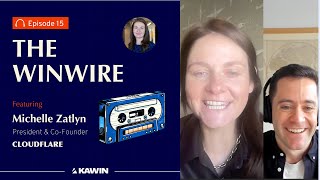
This is a long-form interview (YouTube podcast) with Michelle Zatlyn, co‑founder and COO of Cloudflare (published 2026‑01‑28). Michelle recounts early stories (summer 2009 server pickups from Project Honeypot users), the founders' ambition to build a generational company (co‑founding in 2010), the role of mission and delivering outsized customer value, and operating principles—transparency to build trust after incidents, long‑term decision making, and identifying “bit‑flip” growth moments (e.g., hosting‑partner partnerships that drove large volumes of signups). She also speaks candidly about startup highs/lows, family and work balance (having two children while scaling Cloudflare), leadership lessons (empowering decision‑makers, 10° over the horizon pilot analogy), and remaining goals (broadening access to secure, scalable infrastructure).
Questions this video answers
2026-01-28
2010
Over $1 billion
Nearly $30 billion
About 3,500 people
Chapters
And I'm reading this book about how it's likely we're going to fail, and I just remember throwing it onto the floor and said, I reject this narrative. And I didn't mean like, that's why we were successful, but I just was like, there's got to be a better narrative than you're likely going to fail.
I'm beyond excited to welcome Michelle Zatlin to the show today. Michelle is the co founder, president and COO of Cloudflare and a board member at Atlassian. She started in the plains of Saskatchewan and made her way to Silicon Valley, officially co founding Cloudflare in 2010 to protect and secure, secure the entire Internet. She has constantly challenged conventional narratives, and under her leadership, the company has soared to over $1 billion in revenue and nearly $30 billion in market cap. As a founder, I was particularly excited to speak with Michelle as I've been intrigued by her approach to balancing parenthood with early startup leadership. In this episode, we talk about everything from lesser known early Cloudflare stories to how transparency can be used as a weapon, to how Michelle has called her own shot in every stage. Without further ado, let's dive in with Michelle Zatlin.
Who?
Michelle, welcome to the podcast.
So thrilled to be here. Thank you so much for having me.
You know, actually, I came across a really funny tweet the other day from your co founder, Matthew Brinson. I think you might know what I'm talking about, but. But he recently shared an email exchange between you2 from 2009 where he had emailed you on a Sunday morning or a Saturday night about, you know, potential acquisition prices for Cloudflare. Right when you guys were starting. And for those who haven't seen it, Matthew sends you an email saying how he thinks the company could be bought in a few years for 250 or 500 million dollars. And you basically responded to him that, number one, that might be modest, and number two, you challenged him to think beyond acquisition. How could we build a really great company? And so I was super curious just to start off and ask you about your actual thoughts around that time and what you believed would happen.
Right.
Is that how you really thought about your goals?
That was. I, I did see that. I, I did happen to see that tweet and I think many others did, and said to Matt this week, I'm like, why don't you post that? I'm so embarrassed. But I mean, it was in a, in a, in a, in a teasing sort of way. Yeah, you know, it's Interesting. I mean, that was back in 2009. I mean, really, this was way before Cloudflare was. It was before it was just Matthew Lee and I talking about this idea and we were really passionate about it, but it, we had not raised any venture or we didn't have any customers yet. We certainly hadn't recruited any team, but we were, we were falling more and more in love with our idea every single day and more convinced. And I think one of the things that I didn't really realize when you started business, how often you talk to your co founders. I mean, we just, we're always texting or chatting constantly. And that was a moment where we just have these exchanges. And I think we, you know, the Ola Dodge is surround yourself with five people who are better than you. And Matthew Prince is extraordinarily talented in so many ways and made, and made me a better person. And I think that exchange was me maybe showing a little bit of my personality and, and, and a great exchange of how together you can make really great things happen. And so the moment was just. I was, I remember that there's lots of things I forget about Cloudflare Journey, but I do kind of remember that, that exchange a little bit. And just I was feeling ambitious and Matthew was ambitious too, so that's not a word anyone would not use to describe him. He's incredibly an ambitious person. But it was just one of these things where it's like we're just spawning. We were having more conviction every day that what we were going to be on could, working on could be a really big idea. And, you know, I think one of the things I'll just pause here is that I've learned since that exchange and just in my journey is there's so many ways to be successful in life. There really are. And you know, Matthew Lee and I, from day one, we're always kind of swinging for the fences. Something big, iconic, that means lots of revenue, lots of employees, lots of customers, high market cap. That was kind of our definition of success. But that's not the only definition of success. There's so many other ways to be successful too. And I think that the founders who know what outcomes they're playing for and then go really hard and leave it all in the field to get it, end up being a lot happier and satisfied that if you say one thing and try to do something else, I think we just were always very ambitious and swinging for the fences. And maybe that playful exchange from that, from that weekend is a early glimpse into how we were thinking, yeah, no.
I just thought it really interesting too because it strikes me as something that you would say in passing to someone as a joke or really naively of like, well, why not a trillion, you know, this could be the biggest company in the world. And, and honestly, you seem pretty serious.
Right.
And I don't think everyone necessarily has that degree of number one, conviction. Number two, the desire to really build that generational company that you were challenging in the first place.
Yes. And, and, and again, I just want to. And that's okay if you, if you haven't. But maybe hearing this conversation or seeing that tweet, all of a sudden you realize, wait, maybe I am putting limits on myself and let me think bigger. And so I don't, I. And, and I think that the, the lesson learned isn't that, oh, I had wrote that, it was way along the way that I had removed the limit on my mind and said, okay, let's more kind of what is part the art of what is possible? And I think that's like a really powerful leadership thing. It's like, what is the art of possible? Like, is that a true constraint or is that one that you're just putting on yourself and you can't do that all the time, but sometimes doing that. And I live in Silicon Valley and, and a lot has changed since that exchange in 2009. But one of the things that I just like, really appreciated, but when we, we picked up here to move to Silicon Valley to build a cloudflare purposefully and one thing you find here is a lot of people who are, who think really big. And so very quickly, if you're not thinking like that, you kind of are like, whoa, am I, is there something wrong with me? Should I be? You start to. And I think there's more places in the world where that's happening too, which I think is a really positive thing for entrepreneurship and great for local economies. I'm very pro that. But you gotta surround yourself with people who are kind of like, is that really constraint? Or, or am I giving myself permission to think about what is the art of possible? And again, we had been working on this for a few months and it was playful, but it was also just like we did have a thesis early on as we spent more time on our idea and making progress against it is, hey, this could be a really big company or it probably won't exist as a company. It didn't make sense as a, as a, a small company. It was because we were very capital intensive and all these sorts of things. And so that was some of the early kind of thesis and this playful exchange. And I think it's really fun as a founder to give yourself position, permission to think about what is possible. And whether it comes true or not is a different story. But giving yourself permission to have that conversation is a creative process that's important.
Actually, I heard a similar, you know, a related story and Matthew mentioned to me when we were talking a little bit, you know, I asked him about the most impactful moments in your guys partnership. One of the things he talked about was at business school he really wanted to work with you and he was always pitching you these ideas and you'd come back and you'd be like, yeah, that's a good business, but it's something, not something I want to do. So eventually got frustrated and said, well, what do you want to do then if these are good businesses? And you said something in that really changes perspective. Do you, do you remember what that was?
Yes, I do. I don't remember everything, but I remember this. And I think that the insight for the audience is, you know, there are a lot of good opportunities out there. There's a lot of, there are good, lots of many, many good ideas. But not all opportunities are the same sizes or shapes. So some, again, a little bit back to some are like a lot bigger than others. That doesn't make it better, just it's a difference. You want to be clear. The other piece is this is what I'm working on, something that I'm passionate about or I'm proud to be part of. And that was the exchange on, that was that's a good business, but I wouldn't be proud to work on that. And that was the point where like, what do you mean? And so like, look, this is this, that's going to make money and it's profitable and that's great, but it's not something that I would want to spend the next 10 years of my life waking up every single day thinking about and caring about and sweating the details over. Because again, a good business model is an important part of the equation, but not the only part. And so one of the things that really struck us with Cloudflare as we started to work on our idea, and I think it still strikes us today, is our mission at Cloudflare is to help build a better intranet. That's something that I'm incredibly proud and care a lot about working on every single day. And it's not just me, it's everyone at Cloudflare. And by the way our customers are proud that that's our mission. Not all of them, but some of them. And this idea of what I'm proud to be working on, this. That's not. Not everyone has the same orientation or filter on their decisions in life, but some people do. And that was one filter that I cared a lot when I was look, evaluate opportunities, the lens that I used. And I think like fast forward. If you look at a lot of these companies that do end up being larger, maybe the, the part of the, the. I don't want to say legends, but kind of like the fairy tales you hear of the success stories, they kind of all have these ambitious, bigger missions to them and companies, it doesn't matter how good the founders are, you have to get people to come and be part of it. You need. You need teammates to join, you need investors, you need board members. And if you have this mission that gets other people excited, kind of ignite something and you have this great job that all of a sudden gives you a different leg in the conversation, that, hey, I have the same job as somewhere else, but maybe I'm not as passionate or care as much about being part of that every single day. So I love, I love that we ended up building something that, where I'm really proud to be part of. I think Matthew would say he's very proud to be part of. He says that often. But it's beyond Matthew and I. It's really our team because it's not everyone. There's some people who are like, I don't really care about the Internet. No problem. You go, you know, you kind of, you go, do you. But I, I do think, like, when you think about what you are spending your time on on a daily basis, whether you're a founder and you're in a job and it's just a job, you don't really care what the company does. Maybe you could think maybe I could find the same job with a company that you do care what they're doing. And maybe there's like a part of you that will be a little bit more ignited or you'll discover something about yourself that wasn't that. That ended up being more important than you thought. Cause I think that's. Humans do really well on those conditions.
Yeah, I think it's hard.
Right.
Like, sometimes the, the mission changes or sometimes you have to be sort of practical about finding a passion for something as opposed to defining it. Right. I think the framework that, that Matthew mentioned that, you know, you had talked about was the, you know, delivering 10 times as much value as you capture. And so it sounds like you would assess your, your success on that mission pretty favorably at this point.
Yes, I would. Although it's, you know, it's always strange to say those words out loud. Easier Internal durometer. But you got to ask like, hey, am I, am I still proud of that? I'm part of this. Are we delivering more value than we capture to our customers? And, and again, I think absolutely the answer is yes. I think the Internet's better because clouds exist than if we didn't exist. Like, I think we're a force for good in the ecosystem. It's an ecosystem. We are one player ecosystem. And I'm, again, I'm really, I'm proud of all of that. And, and, and so the answer is yes. But it's. You have to be humble about these things too. I mean, the world is a big place where I kind of sometimes joke. It's like, we're at Thanksgiving. If you're at. This is a good analogy. If you're in North America where you go have Thanksgiving dinner and there's, you know, amazing buffet line and you get all, all your favorite things. I mean, clever. We're like a subset of the peas on your Thanksgiving play. Like, we're not. We're still early in what our journey is. And so while I'm like positive on this, on what we're doing and the impact we're making, we're still early. And I think it's all. That's kind of what's the fire in my belly to keep coming to work. The opportunity is huge. We, we keep showing up and working really well and continue to put our customers first and do this great work. We could end up doing something much bigger and iconic and be part of those fairy tales that are made of and that we all read about. And I think that would be kind of a privilege of a lifetime.
Well, I am curious. Like, clearly you stated that perspective pretty early and it impacted what you worked on in the first place. Now, I know over the past, I think it's 15 years now. I'm sure you faced a lot of those decisions, many decisions along the way. Would you say that, like that philosophy, that underlying philosophy, how has it actually impacted some of those day to day decisions or kind of seminal decisions that you guys have made throughout the life of the company? Have there been any that you really remember that you kind of were able to look at through that that you think could, could have changed something?
Yes. Well, you know, it was a Quick. Yes. Because early, you know, have this conversation today is just very different. If we'd had this conversation six years ago, six years ago we were still showing the world what was kind of in our heads and trying to make it a reality. I think now people have seen more of the canvas painted. It's not all painted but we, we, we've got, we have a good track record of execution. We have customers, we have revenue, we have over a billion dollars in revenue. I mean you don't just get a billion dollars revenue overnight. Like you've got to be, you have to be solving a problem. And we have many customers and we have 3,500 people that work at Cloudflare. So we had this thesis of if you're going to build this global network, you're going to be helping protect and, and secure and accelerate all this Internet traffic, that you're going to have a lot of people using it. That's how we kind of knew early on it was either going to be big or not or it wouldn't work and we're not gonna have any customers. That was kind of like our thesis early on but before we couldn't really show people before you had all these things in place. Some of the things we described internally was we were very long term focused. It takes time to build these things. Wasn't year one or two or three, but when we, I remember we would always, early on when we used to hire folks, we would bring everyone to San Francisco for an in person onboarding and I would do an onboarding session and Matthew would do an onboarding session and Lee, our third co founder would do an onboarding session. And one of the ones that Matthew his did is he always wrote like long term focus and therefore trust is really important. So when you're making a decision here, now that you're part of the Cloudflare team, do something that accrues trust over the long term because it's so important. We're in this for the long term generational company like we, this was not something where we were only playing to be around for three, four, five years. And that was something we, we really instill the responsibility in the, the folks that we were bringing in saying you're going to be asked to be making decisions on behalf of the company on a daily basis. And so when in doubt, put the customer first, put the Internet first like long term. Because we're, we're trying to build something long term in nature. And you know, you think, oh of course you would say that. But I Don't think everyone says that. It was, I think, a really small thing. It wasn't the reason why we were successful, though. It was an important piece of us having this language. And kind of everybody that hired heard the same, the same rationale, the why, why that was important. And again, whether you were in finance or in the sales team or engineering making a decision, we wanted people being like, okay, long term, long term. And I remember just a lot of early team members saying how much they appreciated that and how refreshing that was to hear from one of the leaders, because they just had never heard that before.
Well, it makes me think, like, are there any moments that you remember where making the decision that would inspire trust or customer love was really hard to do? And then conversely, are there any moments where you think you didn't deliver on that promise in ways that you might maybe regret?
Yes. Yeah, there are a couple examples. And it's interesting. I think the word trust today is used more frequently than it was back in 2010, 2011, 2012, for some good reasons. There's been some business models out there that have degraded public trust, and some people are, I would say, as citizens, a little bit fed up about their personal data being used in other places. Their. Their fed up about it. I think politic, like people who. Whose jobs are to protect citizens are saying, hey, whoa, whoa, whoa, whoa, whoa. We have to, as Internet transcend borders, we have to make sure that our citizens are protected. And so the word trust actually is a really interesting word. Years ago, I think, had a little bit slightly different meaning. It wasn't one that you heard so much. And so a moment to answer your question was obviously, again, lots of great things at Cloud. I'm really proud. But there's been lots of highs and lows. Sometimes, you know, 10 times in the same day, which is entrepreneurship, right? There's highs and lows. You know, you're like, oh, my God, the best thing just happened. And then followed by 10 minutes later, like, I've never felt so low in my life. And you're like, what? And then, you know, 25 minutes later, you're, You're. You end the day being like, okay, that was actually a really good day. And, and, and having to control these highs and lows. Lots of people have written about that over time anyhow. So there was one time where we had a network issue. Like, we had an issue delivering the service to our customers. And it was early. We were early. And one of the things we ended up having to decide on is what are we going to say about this and you all face this in your, whatever you're doing, something goes wrong at work, what are we going to say about it? And it can be on your team, it can be within the whole core for the company. It depends on what your level of seniority is, who, who's listening. And we were early, we really had no playbook and we didn't have to do anything really. Because if you looked around for other people in the industry, the kind of status quo was say nothing, don't explain what happened. And it was one of these things where we realized we, we decided it was a purposeful decision, saying, hey, we talked about being long term focused, building trust. One we believe one of the foundations of trust is transparency. It helps accrue trust, it helps explain. And so we said we're going to be more transparent about what happened than somebody would expect. And so we ended up being more transparent about this particular issue that happened. And what was interesting, we were nervous about it. We didn't know more customers signed up and that was not what we were expecting. We thought people would leave and they're like, you are the first vendor that actually told us what happened and actually acknowledged and you know, things go wrong all the time and most people don't tell you. And that's kind of what was accept acceptable or is acceptable. And you're the first partner that actually explained clearly and then what you're doing about it. So make sure you do what you say you're going to do about it and don't let it happen again. But thank you for being transparent about this. And so this word transparency since many years, many years later, cause I got, we're 13 years into our journey is one of the values of Cloudflare and we're very transparent internally. You know, we share a lot of information to our team, especially early on where why are we building this product or why is this important? Trying to share a lot of you could go and say hey, here are the. When we were about a thousand people, we had a spreadsheet that had the 200 most important or the hundred most important projects going on. At Cloudflare we were very transparent and like everyone could see how are they going red, yellow, green. And it was just doesn't matter what team you're on, it wasn't matter. It didn't matter if you're the first day here or 10th day. Everyone had this transparency and we. So that was like on the good side to help hey, everyone needs to understand the context which we're Operating at. You don't have to be experts in all this, but it's there for you if you have a question. But then also on things, in times of, of crises, we were also going to be transparent and explain the why and what we're doing about it. And I think that that's ended up over the course of 13 years. We've done that many times and it's been really powerful. But that's one example and that's how that came to be. And you know, another company could reasonably have made a different decision. And I guess this is where I'll just say to the founders listening or to anyone working at a growth companies, like this is kind of where leadership matters. Like you asked 10 smart people, you would have got 10 different answers. And this was something that, you know, Matthew Lee and I decided we're going to be more transparent in this situation. It ends up being this pebble that has become this really important part of Cloudflare's story.
Yeah, well, it only gets harder as you accrue more customers and more impact. Right where Cloudflare going down now, that would be pretty significant, um, economic value wise. And so if you don't make that decision early, certainly you won't make it later. It feels to me, and most people probably want to sweep those under the rug. And so it's a lot easier to just not be super transparent in those situations. And you know, the, the one other story that Matthew mentioned kind of made me think about it was around knowing your early customers. You know, as I heard you talking, I thought to myself, well, it's a lot easier in some ways. Or you're much more geared towards talenting to people when you actually know who they are or when you can kind of put a face to them. And one thing he talked about to me was the story about, you know, the scrappiness of the early days. And I've heard you talk about, you know, building your own desks and all this, but I haven't heard you talk about this, which was, you know, a little story about how you all needed servers and AWS wasn't really a huge thing at the time. And basically you, you sort of raised your hand and maybe went around the, the greater California area meeting customers. I'd love for you to talk a little more about that full story behind that.
And totally. And this is where maybe my Saskatchewan roots came in handy, like, oh, and so maybe your Baltimore roots or. And this is where it doesn't matter where you're from, you know, good old Fashioned hard work, do what it takes to activate or, or to make something happen is you can find anywhere in the world that's you, you know, that's, that's not one location. That's a. And so that's true. So early on, Matthew, Lee and I were working on this idea and we were really eager and just like anything I'm going to sign up, I want it to go well. And, and Lee was the technical architect and he was coding all, all day long, building the prototypes and, and Matthew was doing a bunch of things and, and this was before we had customers. So I was doing a lot of things, but I wasn't, I wasn't part of running the code, checking in the code. And so one of the things that I said, I kept always saying what can I do to help? What can I do to help? And one of the things is like, we need somewhere to run the code on. We need more servers. And we didn't have a lot of money. We hadn't raised venture. We did not have a nest egg that we were, this is something that we kind of were funding on our credit cards, let's put it that way. It was not, we, we were not flushed with cash at the time. And so there was definitely a financial constraint. And so you gotta be, you have to be constrained to drive creativity. And so we said, okay, what can we do? And Matthew and Lee, which is where part of the inspiration for cloudflare came from was something called Project Honeypot. It still exists today. And it was this community based project where people cared about helping identify new threats and web hackers online. That was this community of people. And so we were, had moved to Northern California and I had a car and so it was like, why don't we email this community that you say is so passionate about project and see if they have any extra servers lying around. Again, this is before cloud computing was, this is the summer of 2009. Cloud computing existed, but back then the conversations were like, is cloud computing a fad or not? Like it just wasn't as it wasn't. You just go put your credit card in and spin it up today like it is today. So just like the moment in time. And so we sent a note, we pulled the zip codes of Northern California and, and specifically the Bay Area. And we kind of sent a note saying, hey, we're working on this idea but we need some extra servers. Does anyone have any lying around? And it turns out when you ask a technical audience, do you have any extra servers lying around? A bunch Raised their hands. They were actually thrilled. They're like, I have a bunch of extra servers on lying around like they're yours, like, please make use of them. People want to be useful, they want things in their life to be useful. And so I took my Jetta and, and drove around picking up these servers from a, a bunch of Project Honey Pot users who. And I said, hey, look, we're working on this thing. We'll keep you posted and thank you so much for being part of it. And dropped them all off at, at Lee's house. And I remember there's like a huge stack on his porch and he was like, what am I going to do with this? And I think his wife at the time was like, where are we going to put these? But that's where we kind of built the prototype for some of the early prototypes for Cloud 4 on and, and so it's a fun story. You know, I don't. That story is never going to exactly relive itself, but I think that whatever I think a lot of people in this audience, audience can, can, can appeal to is constraints. We all have constraints. There's never enough money in the budget, there's never enough time, there's never enough people. It doesn't matter how big your company is or how small or how early. It's just like there's constraints everywhere. There's constraints in our personal lives, what we can and can't do. And you can have those, you know, weigh you down. And sometimes they do and they should, but other times like, okay, how do you, how do you make progress even though there's that constraint? And this is a place where we kind of were scrappy and ended up being a really fun story. And of course we didn't know that when we started, but it really has a happy ending.
Yeah, well, no, I mean, and beyond that, number one, it actually creates some customers with potential customers with skin in the game a little bit who are like giving you servers. And number two, I think this is something probably even more important, particularly in a technical audience of people who might not be, you know, as extroverted generally. But getting out there and actually talking to people, boots on the ground, getting ideas from folks who, who might be those potential customers and looking at them eye to eye and asking them what they might need. It's totally different situation.
It's a very well said, I think that that's one of the things that maybe just like separately. So this was the server where we asked him for a physical asset and early on that was A moment in time where it made sense. You wouldn't. That specific ass today wouldn't make very much sense. But even after that, we would ask, you know, we all do user research, customer research, what are your problems? Or this? But then following up saying, here's what we've done with that, people feel more connected to it. You know, like you're like, oh, thank you. And that before, during, and after, like that follow up step. It's amazing to me how few people do that last step. And you know, early on, you know, it could have been easy. Hey, does anyone have servers? And we know never pick them up or okay, does anyone need servers? We went and picked them up and never told them what we did with it. And so I think it was the second piece was we told them what we did with it and a lot of them ended up being early customers because they were excited to try it. And back to your point, Michael, I'm a little bit of skin of the game where they just felt more affiliated with it. And so this is not rocket science, but it's just, I think companies are groups of people, customers are people, partners are people, investors are people, board of directors of people. And sometimes I think we talk about business advice and you forget, like at the end of the day it's all people. And so the more you can have a human factor tied to it and kind of think, okay, how would I, what would I be interested in hearing or having an experience? I think you can really, I don't know, create a little bit of value or have that extra spark of magic.
I think it's a lesson everyone could take for sure. Now I know that the early days, there were a ton of those little moments where you just talked about how there are 10 ups and downs per day. And before we talked, and one thing we usually talk about on the Win Wire is at least one, you know, or several moments that, that really did contribute, whether it's something that really marked a kind of key achievement and how that happened, whether it's a customer or a deal or a partnership or a conversation. And I think you actually, you know, we talked before you called those bit flip moments is what you all referred to them as. And, you know, I wanted to ask you a little bit about, you know, the story behind any of those bit flips for you in terms of how, you know, it went down and, and your thinking behind it, how you plan that out and, and, you know, where you really think those, those key points.
Of leverage were, for sure. I love the. It was Ray Rothrock who is kind of a successful Silicon Valley investor. He was at Bedrock for many years. He has since retired and he did many investments and and Clever was his 15th cybersecurity investment. And so he, he had definitely seen a lot of companies scale and was his. He was the one who came up who he was. It's his term fit flip Matthew and I really liked that early on cause it was interesting. Lots of things are happening early on. You're taking a lot, you're taking a lot of information in every 15 minutes as a founder. Early days cause things are moving so quickly and that's important the day to day operations and making decisions like that's really important. There's also like what are the. What. What are things that are bit flips that change the structure of your growth curve, right? Like what are those? And so we always just really liked that framing and you know we used to kind of run. Keep a running list of what, what could be big flips and and you know some of you spend time on and some were just more back what's the art possible? And so some examples of that. And again these are early day stories. But one example in particular I remember was you know we, we sell to businesses. Some of those are developers or startup founders maybe listening on this call like that you will. Lots of entrepreneurial companies use cloud for your scaling. It needs to be fast, safe, reliable. We also today sell to large organizations and nonprofits as well as governments. We have all sorts of from small to large businesses using Cloudflare. We're a B2B company and so early on we had a signup process that was all online and self service where it was, you know, you came to our website and you kind of could sign up for our service without talking to anyone. And if you need to talk to someone you could. But it was like very direct one to one. Okay. So what was interesting was there was the hosting providers back in the day and again this is the market's moved a lot so because again before cloud computing what used to happen is you are a business and you might have hosted with somebody like a GoDaddy or a Hostgator or Bluehost. These are some names that probably bring back a dream host. There's a lot of this is, this is the era, this is the vintage of the, the of the story arc of the Internet. And HostGator called us and they were one of the large hosting providers at the time and they said hey, we have this problem where when our customers get attacked with a DDoS attack. It takes all of the other customers on that server offline. Can we give them as a. Can we, can we put Cloudflare in front of those customers under a cyber attack? I mean Michael, we had six people at Cloudflare when they called us or eight. Like we had less than 10 people when they called us. And it was one of these sorts of things. And, and long story short, I'm going to skip a bunch of things is long story short is we ended up becoming a tool in this hosting provider's toolkit where they're. When one of their customers came under somewhere attack, cyber attack, they basically put Cloudflare in front of them. And what ended up happening is they ended up, we ended up with a partnership where Cloudflare was, was offered to all of their customers. And at the time they had, call it a million customers and we had 800 customers. And so it was like an amazing flip flip moment for growing our customer growth that we didn't see upfront. It was kind of, this presented itself. So that's an example that was not planned. It presented. And we are like, whoa, this is really interesting. And for a long time we ended up doing that with many other hosting providers in the industry and, and it was a really important partnership and ecosystem. And all those people have, there's been a huge consolidation in that market. Those people have moved on to other things. But it's interesting, at Some point about 25% of all of our signups came through these hosting partner relationships where. And it kind of started with that bit flip. Cause we got this one big came. We were able to replicate that in lots of different places. And so that's an example of bit flip. And so there was. And there we always kind of list and I just think it's good because you're, you're asked to do a lot of things. We should do this, we should do that. You can't do everything. You gotta pick and choose. But being clear about what some of those bit flips could be and how do you stack the risk reward in your favor so they may come true more often than not because they're not all going to come true. Is is something that was always useful to us that might be useful useful to some of your audience.
Well, it sounds like you and the team did that pretty deliberately in a lot of areas where you already talked about having that list of here are the things we're planning on building, here are the components. Right? That's very transparent. You talk about planning for here are the moments that we really think could have a major impact on us as a company and would get us to that next level, whatever that next level is. I, yeah, I'm kind of sensing this really interesting theme here of planning can kind of drive the narrative a little bit, and you're not always going to get there. But I don't even think most people necessarily have that level of awareness beyond the one step in front of them, maybe, or just like more customers.
Right.
And it sounds like potentially deliberate.
Yes. Yeah. And, you know, I think actually I mentioned Ray earlier and again, we were lucky. We had lots of great investors and Scott Sindel still on our board. He. I mean, we've been working together 13 years. And Carl Ledbetter, we've been working together for 14 years. I mean, we, we have similar relationships. But it's interesting. Again, we, we had raised money from venture and you know, there's, there's lots of operators and founders who've done interesting things. And so we were early and spunky and ambitious, but you still have a lot to learn. Kind of back to your point. And, and we sat down with a successful founder who had a successful exit within the bedrock family like portfolio. And he kind of gave us this analogy that we ended up using a lot that might be helpful, I'd love to share here is he kind of said, hey, look, being a startup founder or being a CEO or CEO or president or just being at a growth company, it's like being a pilot. And being a pilot, there are actually two ways to crash the plane. And one that's kind of obvious is you go straight down to the ground. Obviously that's bad. So if you're like burning money, run out of money, you make bad decisions like that, that one was kind of obvious. But the second one was when you go straight up into the sky, you end up kind of hitting. You stall and you can crash. Like, it's like you can't go straight up either. And so, so the key to being good pilot is always being 10 degrees over the horizon. So I'm guessing some of your audience actually do fly. So that analogy might work really well. I, I am not a pilot. I'm not into that, but I, Everyone can understand. Okay. Actually, yeah, I don't want to crash. I don't want to go straight up. You got to manage expectations and so be 10 degrees over the horizon. And we use that a lot internally. So when things were going really well, we were getting all these customers, all this stuff. We were like, okay, managing expectations and saying okay, let's not get ahead of ourselves. Like, stay humble. And there's a lot of things that aren't so great, like, let's go fix those things so that. That that's in a better place. But then when you hit a bump or. Or you came to a turn in the road, you kind of remind people, okay, in the grand scheme of things, things are going really well. We should fix that. But let's not. Let's not. Let's not drive the plane into the ground. And I think that that analogy of 10 degrees over the horizon, it's a journey. It's not. It's a journey, not just one destination, was actually really helpful visual language that we used a lot early on as a founder where, you know, again, back to your point is you might not know that, but hopefully, listening to this conversation, you start to do that. And it was through that conversation we started to do it. And one of the things I love about entrepreneurship is how the industry gives its, like, pays it forward. So people write a lot about the stage they're at. There's all these communities, there's all these podcasts where people are willing to share some of their lessons for the. For the next generation of founders that just a few years behind, and it just kind of has that ethos. And so there's a lot to learn from those who are just ahead of you. And if you listen and you're curious and you're open, you can. You can quickly get. You can quickly learn these things. So it doesn't matter if you don't know it today, but when you listen to it, you're like, that makes sense. But now can you implement it? And I think you don't have to implement everything. And again, sometimes you ask 10 smart people to get 10 different answers. So you can also get paralyzed. You gotta be careful. You're in charge. You got. You gotta go execute on your idea. But I do think some input from those ahead of you help make you a better leader. And it turns out when you're building a company, being a leader is really important.
Yeah, well, I mean, as you talked, one of the interesting things that I observe is you all are far along this journey. It's not that you didn't talk a little bit about, hey, you know, the network went down, and here's how we were transparent. Right? That's a communication issue or kind of a decision. But one thing that I find can be a little challenging sometimes is the, you know, start and finish. Seems like this kind of smooth journey, partially because Most of the people you hear from had successes, so they ended up kind of in the right spot. And so that. That makes things sound a little bit better, you know, partially because I just don't think we. We want to really focus on the negative or the really hard parts. And, you know, it's really easy to just say it's really hard. Let me tell you how. Let me tell you. It's really hard. Next. And so I kind of. I was curious, you know, we talked about these early. This early stage scrappiness. You were an interesting part of your life. You just graduated business school without knowing at the time, right? Oh, it's all good because it'll work out. How do you kind of think about other folks who are really having a tough time? Early days when there aren't those resources that you have right now?
Yes. Yeah. No, it's. I know. It's. Sometimes you listen to these and you're like, oh, my gosh, it seems so easy. And it's. Again, that's why I like to remind people when. Even when it's successful, it's not easy. There's highs and lows. And I'm not joking. Ten times in a day. Like, high, low. You're working in a day where there were lots of good things and bad things. And actually Fred Wilson from Union Square Ventures out of New York, he was someone that I followed a lot. He used to blog all the time. They ended up investing kind of in our series C, who was kind of this legend who was almost like a mentor of someone. I now I know Fred, but at the time, we didn't. And we would follow him. And I remember he had this really good blog post talking about the highs and lows and what you really want to do as an entrepreneur. You want to get to the point where there are fewer highs, highs and lows, fewer fire drills, fewer things, actually. And I. And that does not happen when you have 10 people, but it starts to happen when you have 50, 60, 70, 80 people. Because when you're 10, people share the highs and lows. It's kind of part of building a company. But when you're 50, that's just not sustainable to. You kind of want to. You want to. You want to. Your job is to start to put the processes and systems and the repeatability in so there are fewer highs and lows on a given day. And I just remember that blog post of his being. Again, just. I'm sharing that because it's like we were learning all these things as we went. So Lots of highs and lows. And I, I don't, I don't, I'm not an expert on any of these things, but mainly just some things that I did that were helpful or I wish someone had told me that might have been helpful. So I'll just quickly go through those. I think that. So just knowing that the highs and lows are normal and they last kind of two to five years, you know, the first two to five years of a company are really hard. And I think it matters a little bit about how much product market fit you have. And it doesn't mean like you don't have product market fit. That's why five, five years and not two. Sometimes it's when you have product market fit, it's hard for five years because you're growing like a rocket ship and rocket ship growth is exciting but gosh, it's a lot to keep up to and I think if you. Again we were a big success story and, and again I loved. But there it was. It took. It just. You're. When you're growing really quickly to get the people to build the processes and the systems and everything just takes time. And so I think that the longer two to five time frame is not just because when it's not working well, sometimes when you. It's working really well, it also is hard for a long time. So, so there's the. I think just knowing that's the case. I think if you know that up front you might not start your company. And so it's a little bit like a human of like you just, you just go and you care about what you're working on. You're passionate about it. I think being honest yourself. Am I solving a problem? Are we doing a good job with it? Are we actually delivering value to somebody is like a good litmus test that we ask used used to ask ourselves early on and I used to ask myself and I'll just give you an example because some people measure revenue early really quickly and if you're making a lot of money early, awesome. Most ideas don't work out that way. It takes a lot longer. Right. And so you need something. You're like, well my revenue's moving slowly. I mean product takes what it takes to build approach to making progress. And you know you're not hiring thousand people overnight because how do you pay? Like you just can't. But the financials don't. The business model doesn't add up. And so how do you know how do you make progress? How do you have these other Touch points. I think early customers end up being really, was really valuable to us. I'll just give a couple examples where. I mean we were early on we had no idea we were passionate, but we didn't know yet that we had product market fit. And you know, you're working so hard on this. And I was lucky. I was from part. My family's really close. My parents, my siblings, my, my, my, my partner at the time who's now my husband. We're all very supportive, but like they could see that we were working very hard. And when they were saying like, how's it going? It was a hard question to answer. Cause it was like, well, I don't really have revenue and I'm not really sure, but you don't really want to say that. So you're like, good, but, but by the way, there's those highs and lows on a given day. However, one of the things that helped early on was customer feedback. And I remember a couple times where customers would write notes to us and maybe more than a couple times quite often saying things like, now that I've enabled Cloudflare in front of my. Call it website or business or whatever it was, all of a sudden I'm like, I remember one note was like, this is the first time I slept in through the night in five years. Because what was happening before was, hey, I used to get this, this cron job would, would go off every night at whatever hour and my pager would go off and I've, I've literally been up for. Every night for the last five years because I enabled Cloudflare. You helped manage that load on my, on my, on my precious server resources. This was the first good night sleep I got in five years. You're like, wow, that was not on my, like, that was like a pretty cool customer story. And I remember some others where just like they were just heartfelt of, like, finally I feel like somebody's helping me. Because everyone was all these IT administrators, people were tasked with running these projects online and there was nothing to help protect from the cyber attacks. And it helped nothing to make it faster. It was only. The only thing available when we started was solutions that were really targeted for the largest enterprise where the entry point started a hundred thousand dollars a year. And here was Cloudflare with a point of 25, 20amonth. And they were just like, this is amazing. And then we kind of had $200 a month and it was like we changed the market. And it was that these customer stories that, that helped weather what we were doing mattered. Like, they just cared so much. And I think that when you tap into somebody caring about something, they love it or they hate it so much better. And this is advice I've heard many times online than, I don't care. Indifference is bad. But like, this actually, like the law, like, and again, it wasn't everyone, not everyone loved it. It's fine. But the people, they're just like, this is. And some of those emails, that's what I would send to my, my mom and my dad, like, this is why I'm doing what I'm doing. And. Or say like, I'm so proud of you. But it's like, it was just interesting getting that. And then the other thing I'll just say that I wish someone had told me is, you know, I think coping. Everyone has different coping mechanisms. I think some are healthier coping mechanisms than either other. But like, it is, it is this intense experience being a founder and you kind of read it to lonely, you don't really know. And of course, even when you have co founders, it's like you'll have to go through it together. And everyone kind of has their own coping mechanism. So you got to, you got to figure out what works for you. Good night's sleep, you know, exercise. There are some unhealthy coping mechanisms that you've read plenty about online. I would say, you know, be careful of those vices and, and if you can get to this point where things are less high and low, then you see more clarity and more confidence, you're in more balanced place, but you gotta get there. And again, it takes some period of time. And so you just gotta. The only way through the tunnel sometimes is through the tunnel.
Yeah. Well, we're in an interesting time right now where I think in general, which is basically especially Silicon Valley, where you're, you know, everyone needs to be optimistic all the time and part of the job is promoting what you're doing as its future. But I think it's a problem that everybody has. No matter what stage, career you are, your age is, someone asks you and your family or friend says, how's work going? And basically you have a certain subset of responses that are normal, which is either it's good, Lord knows, might be good, might be terrible, but you don't want to further the conversation, really. Then you go the opposite medium, which is, yeah, it's terrible and all that, then you kind of seem like a sour a little bit. And so it really is not an open environment to talking about that in A nuanced way, especially if you're trying to be an evangelist for what you're doing.
Yeah, yeah. No, I think it's. I think it's true. And, you know, I think that there's more. You're exactly right. And, and, and, but. And I'll just say that I feel like today with a lot of the communities or the way people communicate, there's. It's better than maybe what was available. People are more open to talk about, hey, we have to take care of ourselves and it's normal. But. Yes. Yeah, it's not. You're exactly right. It's like, it's hard to sometimes say no. Things are really tough right now that when the person's asking whether they really want to hear that, it's not. We have work to do as a human species on how's it going? You kind of expect people to say, it's going great, and not like, oh, it's going okay, or it's not going so well. But I think we have some language and, and, and that we can use to, to continue to kind of evolve that. But I do think that entrepreneurship. Way more about entrepreneurship today than even 13 years ago. Like, there's just a lot more structure and programs and books and, like, resources and so things a little bit better understood, which is good. And we still have to make progress on saying it's okay to say, hey, it's tough right now, or it's a grind, but I'm excited to get to the other side or, you know, or not sure we have the right business model. We. I think sometimes being upfront about that, then maybe you'll find that. That nugget that helps get you to the next. To the next place.
Yeah. Well, it's funny, while you were talking, you were saying, you know, I don't know if people would do it if they knew how hard it was going to be. And the closest analogy I have in my mind, and I recently had a. Had a kid, and it's something people say all the time around, that is humans evolved, right. Especially, you know, females evolved in a way where they forget the pain of childbirth, you know, and if we didn't forget the pain of it, we would never do it again.
Right.
And I think there's an interesting analogy there, number one.
But.
But also it's something that I've heard you talk a little bit about family and wanting to counteract this narrative that women in particular can have an ambitious work life and a family and that you really were motivated to show people that it's really possible. I was really curious about that given selfish context as well. But how do you really achieve that balance? I know you had kids early in the Cloudflare days. Did you have specific policies, non negotiables, what kind of conversations did you need to have with your partner? And you know, has the dynamic shifted over time?
Yeah, that's a, that's a good question. I care a lot about this. You know, it's interesting with, with entrepreneurship or in tech, there's certain like, narratives, there's certain like, archetypes and certain narratives that you hear over and over again. And I think a lot of those are very true, but there's lots of narratives that you don't hear enough about. And that's why I care about this one where I feel like you can have a big life and a big career. Let's, that's what, how I sum this up of like big life, big career. And so for me, I do have two kids. I had them building Cloudflare early on and I'm like, I'm so proud of that. I love, I love that I have like, I love that I'm married, I love that I have kids. I love that I have this awesome career and job and I'm so passionate about it. That's not for everyone. It's, I'm not saying it's the only thing, but I'm proud of that and it's something I wanted and, and I'm trying and I want to enjoy all of that. And so I think sometimes what I used to see online was a lot of articles about how hard it is or why you can't. And, and, and I'm not saying it's not hard, of course it is. But I was like, okay, where's the good side of it? Like where you can and it is possible. And I'm a little bit more of a half glass full person than a class, half empty person by nature. And so I just decided, well, if I can't find the narratives online, I'm just going to start talking about it the way that I want to talk about it because it's my, my narrative, you know, it's my experience, it's what I want. Other, it might resonate with others and it's not going to resonate with everyone. And so that's why I do like to talk a little bit about it. I, I don't have a ton of advice, but I just think it is possible if you want it. And you know, are there ways that.
You think you were able to make that happen. Are there policies you put in place for yourself? Are there challenging conversations you had to have with your, your now husband of saying or even regrets that you have just about those moments? Because I mean I even find it hard for myself and I'm sure you have to lay down certain expectations.
Yes. And so okay, so a couple of things that I did that may or may not be helpful to others listening. And so I think it's. You got to give yourself grace to some time to figure things out. And so I think like now I probably have better non negotiables outlined than I did the first couple years. First players you don't know. And it's a little bit like at a startup I don't like when we make rules or decisions without like seeing getting some data like let's try it, let's see what we learn. And based on what we learn then you can write the policy and make it put more clear criteria guardrails in place versus you decide today you're going to get it wrong for example. And so I think it's the same in your personal life. And so so today I do have some more of those, that criteria but early on I was just like, okay, let's work. Like I, I just knew that hey, I'm excited to have these kids and I'm excited to go to work every day and it was like awesome. People used to ask me all the time, is it hard? I'm like no, I love going to work and I'm so excited I get to go home to the best people in the world. Like it was like one of these things where I didn't even like, like I never chose. I was like I was happy to do both because I wanted both. That was like early on, okay, that was. And the things that at the, at the time and again this has changed where this was a world where we used to go to the office every single day. Like every day, Monday to Friday, all day long. That was how our startup was. And so I was really busy. I had a, I had a rocket ship startup. I was so busy at work. Um, we had about 50 people, 60 people when I had my, my first child. And so I could not understand how I was going to commute. Like I just didn't know where that was going to fit into the time. And so I just got an apartment really close to my office. And by really close I mean like a two minute walk. And so it was like acro essentially across the street. And so that's not gonna work for everyone. And I picked a less great neighborhood to live in, but it was very close to my office, so that I was like, at home with my family. And then I would go to work, and my commute to work was literally two minutes. And then I'd be at work, and then I'd be home. And that's not gonna work for everyone. But that was like, one way early on that I managed it, that I didn't have to figure out time about how to get myself from here to there was like, I was in family mode, work mode. And that was one of the ways that I worked that I was able to manage early on. That, again, seems silly, but it was a decision. And, you know, over. Over the course of. I've now gotten employer working with so many people. Not everyone makes that decision. Like, I've heard people say, well, I can't live in that neighborhood. I need to live in the best neighborhood. Well, the best neighborhood's 25 minutes away from your office. So now you're commuting 50 minutes that you're either, you know, you gotta figure something out, which is fine. Like, that's. People will make a decision, but it's a decision. And you have decisions come with pros and cons. And so that was a decision I made that helped early on. Um, and I. The most important thing is I wanted to do it. And. And I think that was the most important thing. Fast forward today. Like, I have a lot of people who've asked me, how do you do it? And the answer is, you know, takes a village. Just like at work. It takes a village, like, in your personal life to make everything work. It takes a village. And because I wanted it, it's Was. Was great. And I feel like a lot of people work at Cloudflare. They're like, oh, I feel like I can have kids and have a career, and I'm proud of that. And I like seeing Michelle doing it. I'm doing it too. And that. That's great. And again, it's not for everyone, but it's something you're interested in. Like, there are lots of people who are doing it, so go talk to them about how they run their lives. I actually think, Michael, a great podcast would be like, how do you run your life? Because no one talks about it, but we all need to understand. Like, we're like, how do you. How do you get your kids to school? And how do you do this? And how do you manage all the things? I think it'd be super interesting if we shine some light on how we all run our lives in, in today's busy world, you are clearly someone who.
Views things as maybe you have. A greater than a hundred percent allocation is kind of how I'd look at it. Right? You're, you know, someone would say, well, there's 33% of this. 30% and you're missing. That could do both. Well, I have 200%. Right. And that's kind of the mentality you have to have and it sounds like you do. Not everyone necessarily gets there. I think a lot of people, you know, the, the only worry I have sometimes when people say this stuff is, is someone else a failure if they're not feeling like they're succeeding in both things. Right. And, and other people might feel like a failure if they don't achieve that. Whether it's at work, whether it's at home, feeling like there's that trade off.
Right. You know, it's interesting. I just, this is a, an aside and I don't know what the lesson learned is here from here, but I. When we were starting Cloudflare, there was a book, there was a book about founders and I was reading this book and the data is just very negative on starting a company. It was like the book base was like 90% of companies fail. And I'm paraphrasing and I'm thinking over a lot, but it was like, it was just very. On the, all the downside, all the risk, how it doesn't work, why it's so hard. It was just, it was, it was, it was, it was all true. Most companies don't work out. It was just written a lens. And I remember reading I lived in a studio apartment in Soma in San Francisco and, and my then boyfriend, now husband, lived in Vancouver. So we were doing long distance and you know, you're working on your idea and you care so much. I picked up my life and moved it to a brand new place where I knew very few people to, to, to give this thing a go. You kind of feel like, what am I doing? But okay, here I, like I have something, I gotta see where this goes. And I'm reading this book about how it's likely we're gonna fail. And I just remember throwing it onto the floor and said, I reject this narrative. And I didn't mean like that's why we were successful, but I just was like, there's gotta be a better narrative than you're likely gonna fail.
And that is the prevailing wisdom is with 90 plus percent and I'm not saying it's not true, but I think what you're trying to say is like you kind of can't believe that narrative if you want to stay in your right mind at any given moment or stay the, stay the course. And so a few of the things I thought about over this 13 plus year journey now is there are a lot of people that kind of come into the company and they could be impacted and don't actually necessarily. People don't understand who those are. And I kind of wanted to talk about two different sides of those coin quickly, which is, you know, number one, you know, is there someone who wasn't a founder from the earlier days of Cloudflare who, who made a big decision, powered a huge moment for the company? You know, there's a certain story behind that. And then, you know, similarly, is there someone who actually that you can think of, that joined on the later side, you know, past few years, past five years, whatever it might be, that also made a really big kind of decision or groundbreaking moment for the company, where things might have been different had they not been there?
Yes and yes. For sure. I mean, it's an easy answer. Yes and yes. And I know I gotta be careful because I have some good examples. But. Okay, so here's, here's the thing. I. Whether you're, so if you're a founder, okay, great, you gotta make your, you're making decisions all the time. There's a bunch of people listening who work at a high growth company or maybe want to start a company. You, those people are so important to be part of an early team like the builders. Like you need that. And really what entrepreneurship is about is you are put in a position to make a decision that you either don't have all the information on or you maybe don't feel fully. You're like, I'm not, am I, am I, am I qualified to make this decision? But there's no one else to make a decision. You're making it. That's how you learn as a person. Like whether you're a founder or you're working in a growth company, that's actually how you develop. Like you get this scar tissue, you're like, okay, I made the decision, I see how it through and now I can go do it again and become better. And so I encourage a lot of people to put yourself in a position where you gotta make a decision where you're not a hundred percent sure. Cause that's how you learn the most. And that's a little bit of leadership at the end of the day, okay, so like that. And so when I think about clever early on, yes, I'm very proud to be the founder. Matthew Lee and I look wonderful. You know, of course, yes, we play a role, but it doesn't. At some point, it actually doesn't matter how good Matthew Lee and I were. It was like, how. How great is everyone working together? How great is that product manager you hire? How great are the engineers writing the codes? The community manager person that we hired, employee number eight, he was our community manager for five years. And I remember, you know, he was online talking. This was like when Twitter was exploding and all the forums talking about Cloudflare. And I remember was hiring our first head of marketing. And I said to her, oh, part of the process. You're gonna meet someone named Damon. She's like, oh, Damon's a real person. I thought that was a bot. His name is everywhere. She's like, couldn't believe that was an actual person. She's like, I didn't think that was a real person. I was like, yes, because he was doing amazing work being the face of the Cloudflare, like, face of the company early on with the community, on these forums and bulletin boards around the world. And that was like one person who made a huge difference. And he was a number. Employee number eight at Cloudflare, I remember, and again stayed for a long time. And, and so just fast forward as I remember, I was at an event speaking, and someone asked me, how are you? And I was like, I'm a little stressed right now at the time, because I said, look, I feel like we have such a good team. They're making decisions, which they should be. Because again, not everything can come up to you. You never scale your business. So everything that's coming up to me is like all the gray stuff. It's like the things that are actually, you're like. Because we have such good people, they're deciding. But the things, the things that's like, I'm not sure what to do with this. And they get started to get escalated to you at some point. And that kind of happens between 100 and 400 people where you have really good people. They're making the decisions. But there's a lot of things that come up. It's not clear what to do because you're building, building. It's not sure she go left or right or she goes slightly left or really left. Like, it's kind of. And they surface it as good people would of like, hey, I wanted to get this on Your radar, What do you think? So there was like a period of time you're like, oh my God, okay, we got to make like, what's the strategy? What are we doing here? And figure out the process for that. And so for sure. And then just vice versa. Like fast forward to today. We try to make this where people are making decisions in the role for Cloudflare the best they can because that's how you scale and being really empowered. Distributed with checks and balances is a really powerful way to run a company nowadays. And you know, one of the tests that we say is, okay, how many people are in this meeting who's deciding like, and if its answer is like, well, part me, part you, part you, it's like, that's not good, I can't get a third of the decision. And you get a third of this. Like a third.
Well, that's the reason I, I asked that is I think people assume early on that the founders get all the credit pretty much for all their early work and it's rightfully so. But you know, there's a lot of people who are required to make big impacts. And then at the stage you are at, which is a large public company, I think a lot of people might assume, well, this is a well run machine. Certainly it's plug and play. Anyone can come in and just kind of, you know, do anything and don't realize that if someone comes in a bit later, right, you're just still in the early innings. In your opinion, what are some of those really big decisions that those people can kind of make? You can always make decisions coming from the outside. I mean, who are those kinds of people? Right? What are those big decisions that you're seeding on basically? Right?
Well, just. Can I give you one more practical example? Recently, and we were doing a big partnership with a large tech company and we had our VP of product, like somebody on our product team who reported the chief product officer, go to this partnership meeting. And I don't want to say the name company, everyone knows large tech company. And it was interesting our, because people, the way we ran the business where this particular product leader felt very powered to be able to make decisions about his area of the business. And of course we had someone from a partnership join and we had a couple other folks join and the other, the counterparts at the company that we were doing the partnership with said, wow, it's amazing how you can make the decision and that you don't have to go check. And, and again, I don't know how long we can hold onto it a much bigger company than us. But like I think that's the piece of can you hire great people, can you put the guardrails in place and the ecosystem? But like that's what great people want. That's what this person wanted. He wanted to be put in a position where he make decisions for his area. And you know, many times where, you know, we all have to recruit, we're all on the talent and great people to come join you. And one of the things that the great, truly great people are ask is like, can I make decisions or do I have to check all the time? And of course, you know, nobody wants to make a bad decision. No one shows up to work, say I'm going to do a bad decision. They want guardrails, they want to understand how do I make the thing. But they want to feel like they're empowered to be able to decide and make progress on something and have ownership on something. And so I think that if you can create that ecosystem that's really powerful and that's an art and a science and different companies do different ways. You need the checks and balance. You got to be able to inspect and trust but verify but like that is how you can actually end up doing more than you think you can at the same time. And when you're in build mode traction, those things matter a lot and can really carry. Carry you.
Yeah, well, it goes back to trust. And I mean I was thinking before we talked, what are the great, you know, companies out there today that have been around as long as you and been as successful And I can really only think of a few one hand where you have the original founding relationship and obviously Leah has a separate story there but you know, where you and Matthew were still together and, and able to somehow mediate those decisions in some way. And how do you think you've maintained that like mutual respect or how have you both stayed motivated, you know, beyond that in the same way?
Yeah, it companies are groups of people. I said it a couple times, you just can't forget that. And I best part of my job are the people I get to work with. People are smart, they care, they're good, they do try and do the right things. And when you can set that up in the pursuit of solving problems for customers, something you're passionate about or that you're proud to be part of with a good business model, I think that's the super secret sauce of building something that can be generational. And so that's what we're busy at. Cloudflare trying to do.
Yeah. I only have kind of two quick questions. You know, one of those is who are one or two, you know, mentors or leaders that have really impacted your career outside of the obvious ones we already talked about, is there anything kind of memorable around that?
Yeah, there's so many. There's been so many. I feel like there's. There's so many great people who been kind to me and great mentors, some that I know, some that I don't, and so just some quick names. So like Hillary Cowpow Adams. She's now an NEA who's a great. One of our main investors and wonderful. But she has had a great career at New Relic and Salesforce and Oracle. She's phenomenal. She's always been just so helpful to me in Cloudflare as we've scaled our business and our go to market. And I think she doesn't have to do that. She's not on our board. And I think genuinely there's just so many people who do these things because they just want other people to succeed. And Hillary is absolutely in that, in that camp. And so if you have a chance to get to know her, I highly recommend you will. You'll have a conversation and come out more. More elegant, speaking more clearly and more smoothly and elegant and graceful and just like, you'll be okay. I'm a better operator. I can go do this. And so for sure for. She is someone who definitely comes to mind. And then we, you know, I think, you know, sometimes we get hung up of like, we have to know these people. And again, I, there's. When you're successful, you get to know a lot of people and that's wonderful. But there's. I'm really grateful to people who write a lot of things down online so that you don't necessarily need to know them. You can just read what they're writing online and, and, and learn from it. And I think that there's like so many folks who do that in the public kind of on the horizon. And, and someone like Jason Lemkin, if you are building a SaaS company, I mean, he writes a lot of things about building companies that are very on point. And um, you know, I happen to know Jason now, but if you even don't like, there's just. It will make you better what you do and everyone on your team better at what you do. And it's very on point. And so I'm really grateful for the people who write things down and, and publish and that's why, that's why I agree to do things like this. Michael?
Yeah, absolutely. No, and I think everyone appreciates it. I guess the, the final question here is, you know, you talked a lot about delivering 10 times more value than you know, you set out. And, and yet you're still working at Cloudflare. And so if you were to kind of identify one thing that you haven't achieved yet that still kind of gets you excited in kind of a concrete way, what, you know, what do you think you haven't achieved yet on that list?
Well, I mean, I'm so proud of what we've done. I have a really cheesy saying that we're just getting started so there's so many things left to do. But like, what does that mean? You know, I think, you know, cybersecurity is scary. You know, these attacks online, they're scary. I think we have a chance to help make something like parts of cybersecurity, something you read about in history books, like a DDoS attack and whatnot. Like, I think these are things that we can help make something you read about in the history book, but not something you have to deal with on a day to day basis. We're making progress against that, but that's still many, many years out. And that's what again, motivates us to get up every single day. I think like, how do you build your idea without requiring a super technical team? And there's lots of people working on this, but I think are saying, hey, having the performance, the scalability, the privacy already baked into what you're doing, that's something that Cloudflare offers today in this modern day development. And that means you have the great idea, focus on that. But it's, it's less about, hey, can I hire, it's, it's less about, hey, can I get all, all the R and D exact folks lined up? It's, I'm going to use some of these things that are already baked in so I can focus on solving the business problem for our customers and spending time with customers. And I think some of these things that we can help make easier and just kind of by default uniform on the performance, secure security, reliability side, scalability side. That's something that I hear a lot from, from, from new entrepreneurs are like, I love that, I love that. It just scales because we're using cloud first global network, which is exactly what we intend. And so that's great. But we, there's, we still have work to do to get that in the hands of you know, every founder around the world. And so I think there's lots of things left to do and that's why we all show up every single day. And while we help yesterday we helped stop 140 billion cyber attacks, which is a huge number. But there's still a lot that are happening to other businesses. And so we need, we have a lot of work to do to help to help do that. So I say this cheesy saying that we're just getting started because I really believe it. And it's back to not all opportunities are the same size. Cloudfro is a big opportunity. I'm grateful that I get to work on it with really smart people and just so appreciative of our customers and partners and teammates who show up every day, every day to help us.
Yeah, I'm sure it makes it a lot easier to stay in the game. When you're solving a problem that big and that unsolvable, you never feel satisfied. But thank you so much for your time, Michelle. This is awesome.
Thanks for tuning in, everyone. Talk to you soon.
Thanks as always for joining us on another episode of the Win Wire. We'd appreciate if you could share it on LinkedIn or Twitter and rate us or leave us. A review on your favorite podcast platform helps others discover the show and join our growing community. Our contact information info is in the show notes, including our show email. You can see all episodes@thewinwire.com and then your favorite podcast player. And don't forget to subscribe so you never miss an episode.
More from Michelle






SF Conference 2013 CASE STUDY: Michelle Zatlyn - Scaling a Company To A Billion Views A Day




